Episode 17
Troy Hooper
CEO · Pepper Lunch
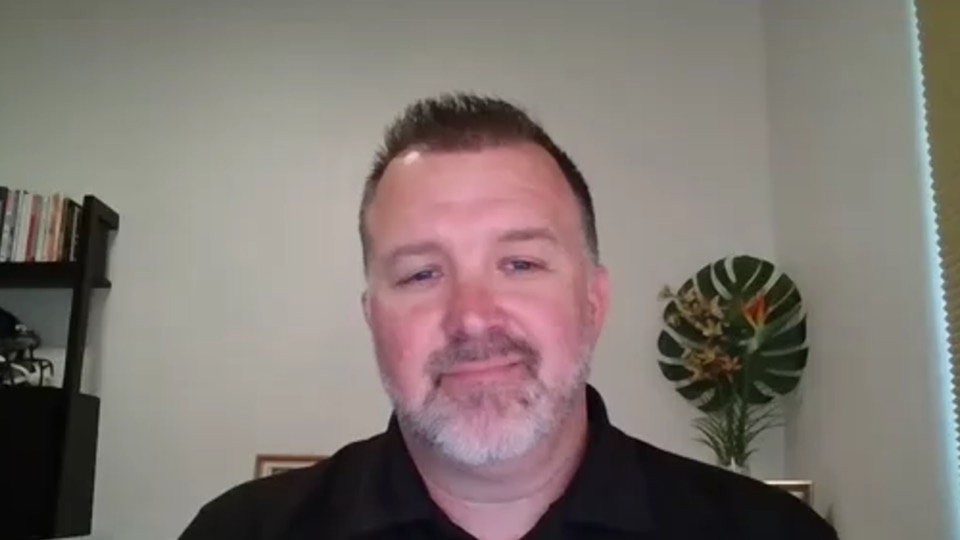
Troy Hooper, CEO Pepper Lunch, is the guest on episode 17 of the Restaurant Tech Trends podcast, hosted by Justin Foster.
 Play episode
What Troy and Justin discuss
- How technology is helping guests enjoy Japanese-style hospitality in North America while helping franchisees streamline operations
- Which tech is leading to $5 increases in average check
- The three W's restaurant leaders need to track to ensure tech launches work for all stakeholders
- Which technologies Troy sees as the most transformational in the industry over the next 3-5 years. Hint: is on the list!
Episode notes from the host
Join us on today's Restaurant Tech Trends, where Pepper Lunch Restaurants' CEO Troy Hooper sits down with our co-founder Justin Foster to discuss how technology enables guests, franchisees, and franchisors to create shared successes.
Transcript
Full transcript (2,714 words)
Machine-generated transcript; names may be misspelled.
0:00 Hi, everyone. Welcome to Restaurant Tech Trends, where we explore restaurant technology trends with some of the industry's biggest movers and shakers in a rapid fire short interview format. And today I'm very lucky to be joined by Troy Hooper, who is the CEO at Hot Pallet America, and he's also the host of the Pineapple Perspective podcast. For those of you that may not know, Hot Pallet America is the North American business unit of Pepper Lunch, which is a brand that operates over 540 locations worldwide. And in his role as CEO, Troy is responsible for expansion across the Western Hemisphere. And he's definitely doing something really right, because over the last two years, all North America locations have reported AUV increases of around $300,000. And Pepper Lunch is on track to reach 100 store openings in North America in 2025, up from the current nine today. So I think it's fair to say that the sky is the limit for this brand. Welcome, Troy. Hey, thanks for having me. Glad to be here. Absolutely. Well, Troy, we were just chatting. We haven't met in person before. I actually discovered you through Sean Walcheff's Rising Tides podcast. And I'm also quickly becoming a fan of your own podcast, the Pineapple Perspective.
1:20 I actually listened to your interview the other week with Josh Koppel. I thought it was great, by the way. I also caught part of your presentation at RLC, which I was really intrigued by. You talked a lot about how to build winning cultures, build winning teams and winning organizations. And we focus here very specifically on technology. And so I was really hoping that you could talk a little bit today about the intersection of technology and culture. And so the first question that I've got for you is that as guests continue to have rising expectations around speed of service, personalized experience, how have you guys at Pepper Lunch managed to meet those expectations while maintaining your brand's core identity? Yeah, thank you so much. And thanks for the kind words. And thanks for being a listener, observer of the podcast. Appreciate that. Look, for me as a CEO and as a department leader, manager, whatever roles I've had, I've always viewed the role in leadership as my job is to give resources, information, education, experience, tools, specific resources so that your team can excel and do their job the most efficiently and effectively as possible. Right. At Pepper Lunch, we have this experiential dining journey that our guests go on once they sit down and the food comes to them.
2:42 Our employees, our food runners explain to them how they can best enjoy, cook their food, customize their food the way they want. But before that, it was just across the counter transactional cashier style ordering. Right. We've recently is we started in January and through March, we've been implementing kiosks. We worked with Grubber and put these beautiful Samsung 22 inch lean back screens on the counters and digital menu boards. But we didn't just put kiosks out front and eliminate the cashier. I see. We we replaced that position with a hospitality host. Also, that term comes from Sean Walsh, by the way, early in the pandemic. He did something in his restaurant and called them hospitality host. You might think of them as a greeter plus a brand ambassador in one. Right. But our hospitality host is there to welcome you, greet you and sort of bifurcate our audience between those who have never been here before and those who are seasoned guests of the brand. If you've been seasoned guests. Great. What do you normally get? This is what I usually get. Oh, have you ever added the garlic chips or oh, my God, I love that, too. But I always add mushrooms. Right. Or I might change the sauce. Just a little suggestive selling that goes on top of that. And if you have any questions, I'm here for you. Go for it. Right. Those who've never been here before. The first time they come, we want to give them a little extra hospitality, a little bit more information.
4:00 So here's the kiosk. We have six categories of entrees that you're going to choose from and you can customize them. And here's what I love. If you've never been here, try this. Right. And I'm here if you have any questions. So something that I've never seen done before with a kiosk implementation, we wanted to add the element of hospitality and the Japanese welcome and really the Japanese hospitality that comes along with us on a global scale. We wanted to implement that here in the US. So that's the way we've crossed that intersection between high technology implementation of new technology, yet keeping the human element and human touch and the hospitality touch assigned. I love that example. Kiosks are obviously a really hot topic right now in the industry in general. Just last week, I was talking with Leon Devoyan at Dave's Hot Chicken, and he was also talking with me about a pilot that they were running with kiosks and how important it was to make sure that you weren't losing that face to face interaction with the cashier. And what you're doing is like pulling it even to the next level as you would need to do with a concept like pepper lunch. And I imagine your franchisees love it as well because it's really got to help them streamline their operations. Well, it's something I didn't mention in my opening comment about it is average basket size, average ticket is up over $5 in the stores that we've implemented kiosks in already so far.
5:22 So far average plates up over $1.50. So they're adding a little bit more to the plate, but they're adding sides and drinks as well. And the kiosk is really giving them not only that permission to take their time and discover those opportunities, but it's encouraging them and obviously presenting those opportunities pretty clearly. So we're very excited about that as well. I want to take this a little bit deeper because you're overseeing expansion throughout the entire Western Hemisphere. But pepper lunch is really a huge concept over in Asia. And we just talked about the kiosk concept. Are there other ways that you've had to change or you've changed the way that guests are interacting with technology that you think are maybe specific more to the North American market, things that wouldn't necessarily work well in Asia? Or is kiosks the thing right now? So, no, I mean, certainly we've done a lot of other things, you know, I'll say for off premise. Off premise was never a focus of the company previously. So for a guest facing experience, we have implemented a partnership between using Deliverect and Boxee. And so Deliverect would sort of replace Olo because Deliverect is a global company. We're actually testing a different kiosk system in Asia. And we're currently talking to Grubber about doing a rollout test of them for the kiosk in Asia.
6:38 But Deliverect is our aggregator. It's our one stop management tool for all third party and our first party online ordering. But the big unlock there is that not only does Deliverect deliver the order into toast and then onto our KDS through toast, but it actually also assigns off premise orders to the boxy locker system. And so Deliverect instantly manages the entire order process from beginning to end, whether it's third party or first party, and it assigns those to the boxy. So now our guests or the delivery drivers walk into the store or go to a dedicated space for retrieving their food. And the box has the guest name or number of the order on the box. It's pre assigned. It's really fun to watch. You can stand in the store and the boxes are dark and then all of a sudden they go yellow. One goes yellow, one goes green. There's this color system that says, oh, box has been assigned to a future order is being prepared now. As soon as the order is put into the box, the box lights up green and all of this happens automatically. So it's really cool. It's easy for our staff to know where to put that order for accuracy and accuracy of retrieval. But it's also easy for the guest or the delivery driver to come in and not have to stand in line, interact with an employee across the counter, figure out where the food is for this purpose of off premise.
7:56 They can just go straight to the lockers, look for the name or the order number, scan the code and the box will open and they retrieve it. So that's another sort of guest and or, you know, it's good for guests, not only guests doing their own takeaway, but it's good for, you know, segregating that delivery driver out of the line and not making them wait as well. Our guest on the other end is receiving their food faster, hotter, fresher because we've streamlined that opportunity. I love this just from a guest experience perspective. It's also super cool. And one other thing just on the vendor side, I've also had a really great experience with the guys over at Deliverect. They're really open and they make it very easy to integrate with their platform. Let's pull back a little bit and talk about how you as a CEO balance innovation with creating operational consistency and operational efficiency. How are you deciding when to adopt new technologies versus sticking with things that are tried and true that are working as is? Yeah, look, at the end of the day, for me, it all starts with the three way win. It has to be win, win, win. It has to be win for the guest. It has to be win for the franchisee, has to be win for the franchisor. So if there's value there for us, great.
9:12 We're really looking at value driven opportunities for our franchisees to run their business more effectively, more efficiently at a higher volume, etc. We want the guest if it's a guest facing or a guest benefit. You know, if the franchisee and the team at the store is able to do their job better, faster, easier, more efficiently at a greater scale than the guest is obviously a beneficiary. If it's a direct guest touching technology, then, of course, it has to have real value. Just can't be a shiny object syndrome or something cool and fun and cute. It's really got to have a true value proposition that matters. And so I look for that three way win. It doesn't have to be equal across the three. It certainly can have higher value to any one of those stakeholders. But really, it has to bring value and also not cause friction. A lot of things get tried or implemented that might create a value for one of the stakeholders but cause friction for another. And that's really not going to work out. It's just not going to have a long term success metric associated with it. So that's my litmus test. And I've promised to my franchisees that we are going to stick to that threshold, that test, that benchmark, that it has to make sense for everybody and especially make sense for their business. And if we continue to do that, then we'll have success not only in adoption and in usage, but in value proposition across the board.
10:33 Awesome. Well, that's a great segue to my very last question of our short interview here, Troy, which is as you're looking ahead, what are some of the trends in technology in particular that you're most excited about that you think are the most innovative, that aren't just hype, that you think are going to be transformative in the restaurant space over, say, the next three to five years? Yeah. So I've got like three. I always come top of the mind. One might sound like the buzzword of AI, but we want to start looking into the applicable value of AI. There's so many ways that it can illuminate information, make information more accessible and digestible, make information more actionable in your business. Back of the house, franchisor, franchisee, front facing, etc. And so AI as a component across the business sectors in our industry, I think is going to continue to explode. I think it's going to continue to consolidate and make things more efficient. So that's one that we're deep into. We've been on it for a couple of years. I'll give you an example. Pepper Lunch in the United States has not manually written a social media organic or paid advertisement by a human in over two years.
11:49 We trained our AI for over a year. We kept feeding it feedback. We kept adjusting and editing and putting that information back in. And we've had an AI agent creating all of our copy and content for two years or nearly all of two years. So that's one. You know, one more that's controversial, I think, when I say it out loud, some people are going to shake their head. Robots are still coming. I think we've had this early attempt. We've had this too early to market. We've had this sort of clunky fit and start around how robotics or automations, mechanical automations and assistance will work in our business. I don't know why anybody would still have a dirty mop bucket in their business. I think your floors should be getting cleaned by automated floor cleaning robots already. It's not what you do. It's how you do it. It's how you use the tool. I just I'm always dialed into what's going on in that space. And I'm watching very closely. Last thing I'll say that I think is coming and is disruptive. And I've been saying this for a couple of years, but I'm starting to see the application of the consolidation of the SaaS ecosystem. Right. Right now, today, our franchisees use 19 SaaS service products to run and support their business. The consolidation of that into more of wholesale operating systems, right, integrated operating systems that come sort of ready made to address multiple parts of your business at a deeper level.
13:16 I think today there's a lot of plug and play, add on, stack on solutions where they don't exactly always work as advertised or they don't work as deeply as the standalone product that was designed to do that thing does. But I think that investment by the larger players, whether it's point of sales or other technology players. And I think there's going to be some disruptive new players coming into the system with fully baked end to end operating systems, which will encapsulate or capture many of these disparate individual products. So SaaS fatigue is real. Death by a lot of $99 fees is real. The franchisees are pushing back and really questioning the value propositions of all of these mandated or forced upon products. So I've seen this coming and I've known some people have been building on this for a couple of years. A lot of them are getting close. Some of them are getting purchased and being brought into larger organizations to develop that mindset more deeply. So I think that that's on the horizon and we're going to start seeing, you know, maybe emerging brands or midsize brands start to adopt and validate the value proposition of that type of ecosystem rather than what we're sort of seeing today, which is this large mass of plugged together solutions that hopefully do work together or talk to each other.
14:35 Yeah. All right. Well, Troy, that's all the time that we have for today. I'd like to thank you very much for joining us here on Restaurant Tech Trends. Everyone, Troy Hooper, the CEO at Hot Pallet America and the host of the Pineapple Perspective podcast. Thanks, Troy. Thanks, Justin. Glad to be here. Thanks for having me.