Episode 81 · November 3, 2026
Ashley Helkenn
Sr. Director L&D + Ops Services · Bonchon
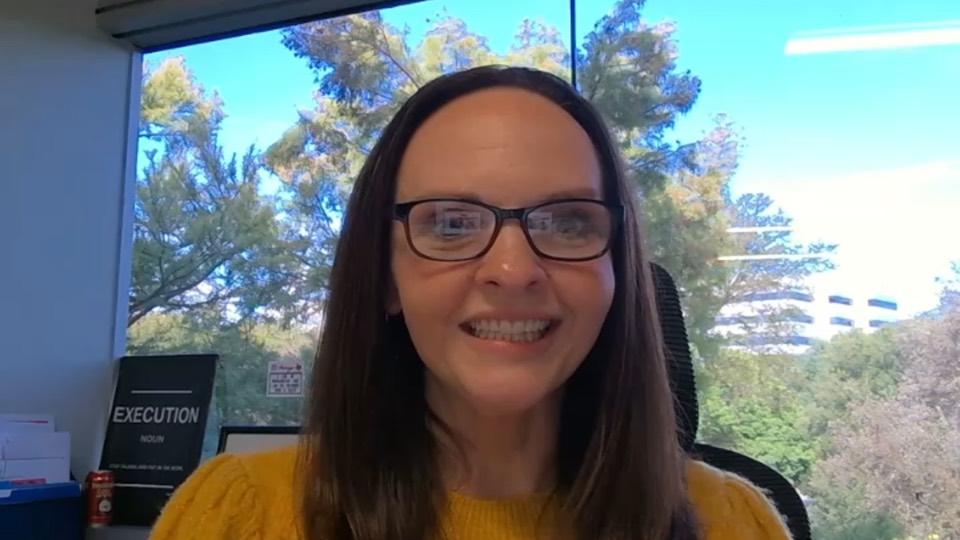
Ashley Helkenn, Sr. Director L&D + Ops Services at Bonchon, is the guest on episode 81 of the Restaurant Tech Trends podcast, hosted by Justin Foster.
 Play episode
What Ashley and Justin discuss
- How Bonchon made its back-of-house training WORDLESS, so a crew member can execute the same way no matter what language they speak or whether they can read (hint: color-coded scoops are involved)
- Why day one is about mastering ONE step of that double-fried, hand-brushed chicken instead of learning it all soup to nuts, and how that fights turnover
- The QR-code-to-trained-in-15-seconds setup, and why the stores with more engagement see earlier wins in sales and service scores
- Why so much scheduling tech becomes "expensive shelf software," and her take that operators don't have a tech fear, they have a time problem
- Best-of-breed vs. all-in-one at 150 US units, and why her goal is "better bucketing"
Also in this episode
- The rapid fire round, where Ashley picks a side on soy garlic vs. spicy and kiosk vs. human, names the best fried chicken that isn't Bonchon (not the answer you'd expect), and shares the one word every new crew member should hear on day one
Episode notes from the host
HERRRRE WE GO!! Time for the newest Restaurant Tech Trends! Today I sit down with Ashley Helkenn, Sr. Director of Learning & Development and Operations Services at Bonchon, the Korean fried chicken brand born in Busan in 2002 and now approaching 500 locations worldwide (150 in the US). Ashley started as Director of Training about four and a half years ago as the brand built the infrastructure to scale franchising. She'll tell you her heart has always been in operations, and it shows.
Ashley and I first met at one of our Future of Restaurant Tech dinners, and I'm so glad we finally made this one happen. Give it a watch and let me know what you think
Shout outs to Opus and Tattle for the training and guest feedback love along the way.
Transcript
Full transcript (7,399 words)
Machine-generated transcript; names may be misspelled.
0:00 Hey everyone, welcome to Restaurant Tech Trends where we explore restaurant technology trends with some of the industry's biggest movers and shakers in a rapid fire short interview format. This podcast is brought to you by Incept AI. Incept AI takes restaurant orders over the phone and in noisy drive-thrus with friendliness and precision. Learn more at Incept.ai. My guest today is Ashley Helkenn, Senior Director of Learning and Development and Operations Services at Incept.ai. Bonchon, the Korean fried chicken brand born in Busan in 2002. It's now approaching 500 locations around the world. 150 of those are in the US. And Ashley's job is making sure that double fried hand brushed chicken comes out right in every store from opening day and a brand new market to a Friday night rush with crews who speak a lot of different languages. Ashley, welcome to the show. Welcome. Thanks for having me. I'm excited to have you. You know, we met at one of our future restaurant tech dinners and we recently connected at I think it was an FS tech after party situation and we were chatting about the pod and I know we've been trying to do it for a while. So I'm glad we were able to finally make it work. And here we are. We're about to learn all about Bonchon and all the great things that you're doing there. So I'm, I'm pretty pumped up.
1:24 Me too. So let's do this. All right, let's do it. Let's talk first about what it is that you do at Bonchon. So you lead learning and development and operations. Tell us a little bit about what that job looked like when you started and what's changed since then and how much of that changes due to stuff that you've done. Um, oh, wow. Great question. I started about four and a half years ago. And when I came on, I was just director of training. And these two big things that happened kind of at the same time. One is that our infrastructure change so we could really scale franchising and growth. And our corporate office had just moved to Dallas. Okay, from New York City. So yeah, when I came on, a lot of it was really building that infrastructure to support our franchisees. So got to be you know, we're, we're a legacy startup where we've been around for 24 years, but in some ways, we're really in the building and scaling. So yeah, I got to be part of it from the very re beginning, I guess I'd say, and started in training, but my heart's in operations. It always has been. And I think that operations is based in learning and growth. So a lot of my work is really making sure that anything that we do that hits the field is field facing and field forward. So we clean up a lot of stuff in the back end, I end up being sometimes a bottleneck, but usually just a filter, and then funnel it out to the stores.
2:55 I love hearing that your heart is in operations. The longer I've been in this industry, and we were just chatting before the podcast, I've only been in the restaurant industry since late 2022. But the more people I interview on the podcast, I find that a lot of the leaders that are really excelling do have an ops background. So I think it's really cool that you bring that to this position. So you've been doing it four and a half years. So this was I'm just kind of running the math backwards. This was during COVID, or was like we were exiting COVID when you came in. We were exiting. It was one where if somebody was sick, everybody masked up. And then certain states still had mask regulations, but it was about then. Okay. And you said the infrastructure had changed. What specifically do you mean? Like what had changed or what was changing? We were building out our sales and development and really our brand identity, what it looks like to scale consistently, and what are the brand markers that we can fit into second gen locations. Okay. Yeah. And then just due to the worldwide supply chain, there were a lot of things with a lot of our products were manufactured internationally. Yes. And the cost to get the stateside just were killing operators. So how did we pivot and move? And documenting was very different. I think before there was a lot of, and there still was a lot of passion among our operators, but there was a lot of inherent knowledge.
4:18 And we really got to document not just the knowledge, but all the intangibles around it because food is just as much science as it is art. And if you treat one with a different weight, you lose something really special. Yeah. I know we're going to talk about this in a bit, but I think one of the really fascinating parts about Banshan to me is this multilingual environment. And I can think from a training and development perspective, like this has got to be extraordinarily challenging. How have you managed to like thrive in this multilingual space? I love it. You know, I grew up, I learned Spanish in my very first restaurant job and, and it really opened a lot of doors for me, but I've always struggled with restaurants that either only translate into Spanish or tell them they have to be able to read English. Like, why are we gatekeeping good service? But also there's only one language. So when I came to Banshan and saw the needs were very different. And we had a system that did not work very well for us. So it was really just a document repository. So we gave ourselves this challenge of how do we make our back of the house training wordless so that no matter what language you speak and what language I speak and whether or not either of us can read, can we get the same thing from the same content and video and execute the same way?
5:44 So you as my leader, can you coach me if we don't speak the same language? And we took this approach and it was hard and there was a lot of frustrating times, but we, we cracked the code and it was liberating, but also empowering. Okay. So when I'm just thinking about like modalities, like, are you doing a lot of like video training or these like, you know, sketch storyboards that you're using or how are you doing it? A lot of it. So we, uh, I'm careful about charts cause I don't like a lot of charts and postings cause I think they can get dirty in the kitchen. So we narrowed it down to what people need to know, but we also changed our smallwares package to where a one ounce scoop is a certain color. So I don't care if you know how much is in there. I care that you grab the right color. I see. Um, and so you can match from an image or from the recipe, it would literally have one yellow scoop and you know, okay, that's one yellow scoop of this. And the ingredient that's listed on there is the same thing that's on the label. Um, so it's really just a matching game. All right. We also use videos where you can add in like highlights and draw the eye. Um, we used iconography, which was cool. So this means you wash your, like one thing means you wash your hands.
6:59 The other means that you temperature it. Um, yeah. Or you keep it hot, keep it cold. So it was a, it was a fun project and it changed really how we approach it. This might be like an exact segue into it. I was about to ask, but you guys have, um, you know, your chicken is double fried. It's hand brushed with sauce. That's a lot of stuff that you have to deal with in a kitchen. That's moving really quickly. Is that like how you're training? Like just showing like the singles scoop of like this color. Like, how are you doing it? So that it comes out the same in like flower mound as it does in like Wesley chapel. You picked two of my favorite locations. Um, yeah, I think that a lot of the stuff that we know about how things work is the same way in training, but some way we don't think about it with food. So how do we measure what chicken is right? Like what does good chicken look like? And then we break it down and we, we work backwards. Like how do we measure it? How do we test it? How do we validate it? And our chicken has a lot of steps to it. We receive the chicken and then we process the chicken and then we work on the batter and then we first fry and then we second fry and then we paint and then we package. Um, and so we treat all of those as different steps.
8:16 And what it does is that allows us, uh, what we know is that when people feel confident about anything, they approach the next thing with confidence. So if on your first day, Justin, I could teach you to confidently brush chicken. That's all you have to do is just brush chicken. And there's a, there's a skill to it. We can validate it. And then by the end of the shift, you are brushing chicken and contributing to the shift. Then you, you walk away feeling like I'm not the new guy really. Like I have this skillset. So wherever we need you, we can plug and play you with this material. That's, um, helpful. There's easy ways to validate it. Um, yeah. And then you come back the next day and either you redo that, if that's where you're stationed or you can learn the other pieces, but this thought that you have to learn all the chicken soup to nuts, that's too much to learn at once. Or it can be. I see. So like in this example, you start them out with like brushing and then the next day would be like packaging. And like the next day would be sort of like that. Am I kind of correct? Yeah. Or, uh, the next day you come in, you could prep chicken depending on what time you come in. So you can learn to prep chicken and then they move you to the line to paint chicken. So you're learning one thing and then you get to go contribute to the next or, um, it allows our operators really. I mean, we all know labor's killer labor's killer and there's this thought and rightfully so that if I have to stop and train someone to something, I can just show them, then I'm paying, I'm paying this money and feel value.
9:45 So let's speed that up for them. I love this approach. It's like baby steps and like building new habits. It's like always easier to like start on things that are smaller rather than having to try to take on everything at once. I hadn't really thought about it from the perspective of the trainer before though, because you're right. Like these people are super busy. Like the kitchens are slammed. You've got to deal with the regular rushes when you've got a new person that's in there from their perspective, it would make it a lot easier to just do the one thing and like get that out of the way too. That's pretty cool. I like it. And then you can check it easily. I can see, are you painting? I don't have to watch the whole process to validate you. Yeah. No, I like it. Um, let's talk a little bit about the Opus, uh, mobile first platform. I'm not at all familiar with this platform. So you're going to have to tell us like what it is. Um, but it's apparently like a training system and like the crew can use it on their phones. Like how often are people actually using it and why did you put it in place? And like, what was broken before you guys started using it? Like real talk. So real talk. Yeah. Real talk. I was brought on to launch a system, uh, that was not restaurant friendly. Like they needed somebody to implement this LMS that they had brought on. And, um, and that's a lot of what I do.
11:00 So I came on and it's, it wasn't joint employer friendly. It wasn't user friendly. Um, there was one login per location. So we couldn't assign training because once one person finished, it was done. Um, so we had, it was just really like a toolbox. And the cool thing about that was we had to learn how to think differently about languages. We had to learn how to think differently about training. If you can't track courses, what do you, how do you train people? So, uh, when we were looking for a new system, um, I'm an active member of chart, the council of hotel and restaurant trainers. So I stay really connected with what is working in restaurants and the companies that are investing to make sure they're learning what end users need. And, uh, and there's, there's three big ones who are really involved in that. And they were one of them. Um, so we went through the process. It, uh, I think a lot of old school training kind of before COVID there was time, right? That's what COVID did is it taught us that time isn't a luxury, um, that you could build these really nice courses and you could be thoughtful. And then COVID happened and literally rules were changing daily. So if we could change it daily, obviously we can work faster. So this platform is really to get it into the hands of people who need it quickly. So can we build and deploy quickly? And can we bypass any hurdles?
12:16 Uh, cause sometimes a manager can be a hurdle. And so you can scan a QR code. The team member can sign up in about 15 seconds and have access to everything they need, but only what they need. And then, um, it actually gives us the ability to track it. Cause I'm an L and D learner. Justin says, I say a lot, so it's not as, um, contrary as it used to be, but I don't particularly care. Um, or that's not true. I don't use training completion as a judge of whether or not training is working. Um, I think engagement with any resource should count. So if you just ask Opus where you can say, um, you know, Korean fried chicken, or you can say street corn and it'll pop up all the resources around it. That to me is as important as if you went through a course. Yeah. Because. Well, and we were talking earlier about the multilingual environment as well. And I just have to ask, because I imagine you have crew members that probably have limited English skills and you probably have some people that are speak Korean and maybe some other languages as well in the stores with these like training modules that you have on Opus are those multilingual or are you still using more of like the visual diagramming? We do both. Um, I'm a, I'm a firm believer that, uh, you should use the tool that works best for you.
13:36 And if the tool isn't working, I can track that and I can show you other tools, but the platform automatically translates into over a hundred languages. So whatever language you sign up with on your app is the language that it deploys. Um, and so it can also read it to you. So you don't even have to be able to read. Um, you can just play it and listen mode. We still though, I think words get lost in a kitchen, right? If a picture is worth a thousand words in the kitchen, that's about 935 too many. So do we have a resource that draws your eye and your attention to what you need? If we do, and it's accompanied by words, it's just one reinforces the other. So no matter how you learn, we've met you. Yeah. I want to click on one of your earlier comments about sometimes the manager can be a hurdle and I'm kind of chuckling at that because that is quite a location dependent comment, but there's a lot of, that's kind of a truth bomb right there for a lot of locations. What are you actually seeing in terms of adoption of this platform? And if you see people use, if you see crew members using it more frequently, is that a signal to you that you need to like go in and like train the manager? Is that a positive signal or is it a negative signal when you see people using it a lot? It's a, it's a super positive signal. They can get access to the general content as long as they have a QR code.
14:51 And usually that comes from a manager's phone. Um, so the friction on the manager is to show them a QR code on your phone and they can get there. The manager then just has to assign them, um, a role and that's where they get their role specific content. Um, so we've tried to, to really outsource everything. Like there's two things you do. They scan a code and you click a button. Um, I think though, we, we like that a lot too. Um, you know, we're dealing with a lot of different personalities and some people, um, they, I, so my husband worked in restaurants too, for 50 years and his MO was he learned it. And then he shoulder to shoulder trained people. He didn't see the value in digital training for a long time, but his results were great. So you've got one engagement and a fully trained staff. Um, I, on the other hand, am a horrible cook. So, um, sounds like you married the right person. I did. I can run a kitchen. I just can't work a kitchen. Um, and so what I do is I make sure we all go through and then we practice together and we learn as a group. So our results would look the same. Um, and I think part of reading data is nuance, but also both of those scenarios involve the manager, either studying the information and working shoulder to shoulder or engaging their team.
16:11 Yeah. And people think they're doing one or they just. You know, don't. So we have to, to get to know our teams. And a lot of that's about relationship building and looking at the data to see what it tells us. I'll tell you the stores that have more engagement, see earlier results. Really? Interesting. Yeah. So the more people that are just have access to it, whether or not they practice, um, if they just have knowledge of it and awareness of it, we see earlier results and sales and then service scores and things like that. And, uh, I'm assuming that also tracks down to like perceptions of food quality. Are you measuring that as well? It does. Yeah. Okay. So we break up food quality, not just an overall food quality, but also value accuracy and packaging. So we can really segment data to see where, uh, where the breakdown is. I love it. It's pretty cool. All right. Um, I want to talk a little bit about your newer fast casual prototype, because this actually, I would imagine, I don't know what you're about to tell us, but I would imagine this changes a lot about how a Bonchon runs. What did this mean for like crew roles and how have you changed or have you changed how you train crews with this new format?
17:23 You know, at first it changed a lot. And I think because we really wanted to lean into the fast casual aspect. Um, and so we really differentiated roles and what ended up happening was we had a differentiated guest experience and it's not like it was Bonchon full and Bonchon light or Bonchon table, Bonchon counter guests would just come in expecting Bonchon. Yeah. And so we need to rethink the entire thing. So how do we keep it as a flexible format? Um, let it be guest first and franchisee first so that guests get what they need and franchisees are so profitable. So we actually have a lot more crossover. We started with what do we want to guess to feel when they leave a Bonchon? What do we want them to see when they're in a Bonchon? And what do we want it to taste like? And then we revamped it. So really the biggest difference is do you order at a table or do you order at a counter? Everything else about your experience should be the same. Drink refills, pre-busing, uh, dining room engagement should be the same. Yeah. And so it's actually easier to write training when you, when you morph it like that. Um, it's harder to encourage a cashier who gets paid an hourly rate to think like a server who gets paid on tips based on service. Yeah. So in that sense, that's where the training differentiates.
18:41 All right. Well, that makes sense. Um, I want to talk a little bit of, you guys have deployed, um, field business consultants. I think you call them, do you call them field business consultants at Bonchon? We call them, uh, field support coaches. Field support coaches. Okay. Yeah. So how do you balance training with like the in-person field support coaches? Along with digital. How are you like splitting that work up? Have you found there's like a secret recipe for like more in-person, more digital? Where have you kind of landed there? Or is it just like region specific location specific?
19:16 I think it's all of it. I think one reinforces the other. So, uh, we have our franchise business consultants, which do the big business market strategy, profitability work, our field support coaches. They do everything four walls. So they know front of the house, back of the house. They're really your operating point of contact. So they get in and they learn a team. And just like managing a team, some people work differently. We get that insight. And so we have everything available digitally. Um, they can go in and go this location. They take it digitally. They follow up there. They're using it correctly. And here's their, their scores as a result. We can also see sometimes that they're doing all this and their score didn't change. So they're in that location and they could tell us what's broken. Either it's content that's missing. It's a little bit nuanced, but we're, it's this constant feedback loop where we improve field coaching and they improve, uh, learning content. So I don't think it's really segmented. One just reinforces the other and it opens up this, uh, connection and trust. Yep. Well, um, you know, this podcast is called restaurant tech trends. And so I'm always interested in like little AI angles. So I'm curious, like when you're building your coaching materials, are you using AI to like help build any of these materials?
20:32 And like, how, how customized are these trainings? Like for each location, like are these field, um, you said field support coaches is what you call them, right? Are you like taking data, like out of the EOS and like comparing profitability of like one store versus another, like they're selling one menu item more than another. Like, are you aggregating all of this stuff and using that for your field support coaches to like help improve process training, like in the restaurants or is that on the horizon or what are you doing? Both. I think there's more to do, right? Uh, we use AI to look at data in a different way because we've always looked at data. That's just the history of restaurants. We can see trends. I think we're trained to look for certain things. We may miss others. We can slice our segment, our segments between fast, casual and full dine between lunch heavy and dinner heavy. We also have some restaurants that have a really solid middle day part. Okay. Um, like two to five PM sort of situation when you say middle day. Okay. Yeah. We're like huge middle of the day, not a great lunch, mediocre dinner, but the middle of the day is just solid going on. That's interesting. Yeah. And so what people eat during those day part changes too.
21:50 It also changes seasonally. Um, and so there's a lot of data that we use for our field support coaches. Um, and probably one of the coolest things we've seen is we can start to tie based on the location of the market, what the best upsell is. So in our urban core centers, um, in our heavy suburban, um, established neighborhoods, we know that if a guest orders chicken, they're more likely to order, uh, rice or French fries. So when you're trying to teach a server to upsell or a cashier to upsell, we can give them the easy wins because when people feel confident, they're more likely to try something else. Okay. So yeah. And our field coaches help reinforce that. Um, I want to pull that even one step further on the technology side. So either whether it's like kiosk or maybe phone in ordering, I don't know if you guys do AI phone in ordering. Are you taking that same knowledge and applying it to these channels as well for like recommended items that show up like on the kiosk based on the day part? Or are you like, do you guys even have any call in orders or not? Not so much. We are, we are piloting AI phone orders right now. We're in an early stage with that. Um, for our kiosks though, our kiosks do have that information. Um, and we build it out with everything about the brand and then it learns itself on that location specific.
23:11 So guests that order Jopche typically order donuts, it would bump that up in the recommendation. All right. That's cool. Um, let's keep going. I'm going with our tech lean. So we talked a little bit about Opus earlier. I'm curious specifically looking at like your L and D stack or the training tools that you're using. What are people relying on like most day to day right now? And are there any tools that you've tried that you pulled out? And if so, like what were they and why do you pull them out? Yeah. I think the, the biggest tech thing that, that we use, which is so old school, it's just the phone, right? Okay. That we want to talk about all this cool stuff, but at the end of the day, it's about making connections and being available and that's how it happens. Um, and so that's the one that, that is always top of mind that we don't ignore that connection and send them to a software. Um, we also use Tattle a lot, which is our guest feedback. Okay. Um, it gives us a lot of information directly from the guest and we can tie it to check. So we can see specific scores on specific food across day parts and channels and all of that fun stuff. Um, we use that a lot. We also use sales and, uh, labor apps for our, for our restaurants. Um, we use a couple different aggregate softwares that bring in data and give us highlights.
24:29 Um, but I think probably the, the biggest one we're using right now is there's an opus and Tattle actually integrate. Cool. And so one talks together and we, so we can segment the data that's coming in and then it pulls from our existing materials and then Opus can tell us what we're missing. Interesting. And then it tells Tattle how better to respond to guests and to give direct feedback of, Hey, Justin, your store struggles with this at this day part. Here's some things we suggest for you that are tailored to your specific gaps. Um, so that's been the best mover for us. I want to, I want to click a little bit on the guest feedback piece and you'll know this from our dinners. This is one of the things we like to talk about is the use of AI in handling guest feedback. Where do you guys draw the line between where AI handles that interaction versus where it needs to get handed off to a human to respond? So, uh, that's always a hard one. And I think it's hard for us too, because a lot of our operators are English as a second language and they worry about what responses look like. Um, and so we encourage them to use an AI responder that they can edit from within. Interesting. Um, so we're heavy into that because it really gives them a template. We do suggest they don't just use the stock response, but that it's also training them how to respond in real life.
25:50 Um, so we use that. We are pretty careful about, um, we have tags that flag things that depending on what the flag is, it would alert different people, but we try hard to be personally involved. These are flags like keywords that you're looking at, or you have a certain words that will flag a sentiment as being like positive or negative or something like that. And you would use that to determine if it gets escalated or not, like something like that. Yeah. And it could tell us like, is this a threat or is this a foodborne illness or is this a raving fan? Um, and it, those would get routed to different people who, who can better help with that. Okay, cool. Uh, let's talk a little bit about scheduling. So this is another like very hot topic where we have a lot of AI infused tech. Um, tell us a little bit about what you guys are doing for scheduling. Uh, have you seen any wins there? You know, yeah, yeah. But also that was like a, yeah, but no.
26:50 Scheduling is about like, does the manager buy in? Yeah. And, um, yes, yes. I think if it's easier for me to do it than to learn something new and then let it learn itself. A lot of people just don't engage. So to the expensive shelf software. Um, and so that's the hardest part is getting it into the front manager. We're starting with data around scheduling and then backing into ways that scheduling platforms can help. We, um, we just use some BI tools to run, um, uh, time change information. So we were able to segment on a location by location basis. Um, when the time changes, how long does that affect your sales? What affects your product mix and your sales trends? And then we were able to give a specific recommendations on how to redeploy labor to spread out and give a better experience versus just add an hour here. Um, you know, we were able to better deploy that so that for us, that's how we build trust. And then we can add tools that say, Hey, that worked really well for you. Now let's automate this next step. Um, but I don't think restaurants have a tech fear or restaurant operators. I think they have a time, right? Like who has time when you're running a restaurant and the fryer doesn't work and somebody called out.
28:06 I just, yeah. Always a topic. That's like super interesting to me because you have the ability to a hundred percent AI if I everything when it comes to scheduling, but I just see a lot of concepts. They struggle when it gets to like the GM that's putting together the schedule because you don't have all of the context that's relevant about what's going on in that employee's life. Like what events are happening in that area? Like sometimes it's even like weather dependent kind of stuff that impacts demand. And you know, how should you schedule around that? Um, so I'm always, I'm always curious to see how much brands are able to hand this off to AI versus like the GMs just resist it. And they're like, I'm just going to take complete charge of scheduling. So what we see and we see it everywhere, right? When you do new, um, prep sheets and new product mix and new order guides, there's a learning process. And the first time it goes wrong or that it schedules somebody who can't be there or who doesn't get along with whoever fixing it sometimes can take just as long as setting it up. And yeah, that my issue with tech in general for restaurants is that the people who sign tech agreements are people like me and you, right?
29:21 We're not the people who, when somebody's called out or they have to make a decision between a catering order or they're out of stock of something, we're not the ones saying, oh, it's just five minutes. Um, I know. Yeah. I, I, that's, you know, that's why I always like to say, and I do these like little LinkedIn videos. I'm like, spend time in the stores, spend time in the stores. Like the more time you can spend in the stores as someone that's above store, the better. Yes. Yeah. It's, it's, that's just like a religion. I feel like everyone in this industry should follow. You don't spend enough time in the stores. It's so easy to get divorced from like what the realities are on the ground. So anyway, I think that, you know, I think there's this thing of, we don't teach people how to give feedback. So when I'm busy, I just say it doesn't work. But as a, as a tech person or the implementer, I don't know what doesn't work. So does it not work or does it not work as is? And so we have to teach people like how to give feedback so we can make it better for them. So it's not just try and fail, try and fail, try and fail. Yeah. Agreed. A hundred percent. All right. Well, I think that's a good segue as we go a little bit more general and talking about tech in restaurants. So where do you see the most overhype out there right now?
30:40 And maybe what's an area that you feel like should be getting a little bit more attention than it is getting right now out in the broader restaurant tech space? I think just putting AI on something and saying that it's great or that it works better is really overhyped. That, yeah, so many people specialize in labor or back office or prep list or waste. And then you buy so many platforms that they overlap. So you're overpaying for things. Um, but I don't necessarily trust all in one. Okay. Not the balance.
31:21 Okay. So that, that's actually really insightful. So that, because that is another like macro trend we've got going on out here is like the platform consolidation and you fall on that spectrum. It sounds like you are more of like a believer in best of breed, at least for where you guys are at right now. Or you're more, where do you fall? Yeah. Up both. Right. I think that should be a set of things that are lumped together that are kind of always lumped together. Um, I don't want an all in one because we're not big enough at 150 us units. We're not big enough that if they also sign a 2000 unit brand that our needs get met. So that we retrofit into works for brand, what works for brands that aren't our size. So I like the leverage of smaller brands and more customizable. I also think there needs to be accountability that if there's a hallucination within a software, typically one would catch the other. Um, but when there's, we do labor and scheduling and we do scheduling and inventory that, you know, there's, I'm paying for two platforms that overlap. Yeah. So better bucketing. That's my goal. Okay. Better bucketing. I think we'll, we could probably talk about this for another 30 minutes, but I think we'll just, uh, leave it at that. I want to ask one more, just tech question.
32:39 Um, which obviously like learning training is supposed to deal with, which is turnover, right? I, I, I don't know the stat on this, but I think restaurants have got to be like the number one industry for turnover. If we're like, not number one, we've got to be like number two. Yeah. Is something that you're doing to help reduce turnover. And if you could offer just one generalized piece of advice for operators, like one thing that they could do tomorrow that would keep good people longer, what would it be?
33:14 I would say that one of the things that we're doing is we're segmenting things so people can give back right away versus having learned all of chicken or all of a station. Let's let you master one dish. And whenever that dish comes in, you make it while you're learning other things. People are more likely to come back. Um, and it also gives everybody this sense of pride. I think that's something every operator could do versus following traditional, be fully validated on a station before you're allowed to get back. Um, the, the thing that I learned early in my career, and it's kind of sad, but not everybody's going to make it. And I think that we either assume that people are going to make it or they're not, but why don't we just assume if it's your first job, let's make it the best first job. If it's a three week job, let's make it the best three week job. Um, and so if we keep you, let's keep you, but let's have the tools to make it the best first job, the best three week job, the best three year job. And however long they stay as they stay, but let's, let's not give up on people because we don't think they'll stay. Okay. Well, we've all heard the phrase, uh, hire slow, fire fast, right?
34:21 How do you coach your GMs on that? You know, I think, uh, I think right now it's hire fast, which is scary, but it's a numbers game, right? If you don't hire them right away, they're going to find somewhere else. Um, but I think you fire slow because as leaders, we have to say 90% of the reason people fail is on me. Um, whether they don't know they can't do, or they don't care. 90% of that's on me as a leader. And when I own that, then I can change the dynamics around it. Okay. Uh, it's just making me think about our earlier conversation about the manager sometimes being an obstacle to people ramping up in the reliance on the digital training materials and it's tough, man. Okay. So, uh, last question before we move to our rapid fire segment is I want to know, uh, five years from now, bonch on how does a new crew member get trained? What will be different then versus now? I think it will be a faster version of what we're working towards now. I think it will be a small snippets of learn and do learn and do learn and do. Um, I think we can ramp that up quicker through whatever tools get developed, whether it's virtual reality or hologram or motions, but small segments of learning to get very quick actionable done.
35:48 I think that's where it'll be. Okay. Well, I, I, I have to click on the virtual reality thing. Cause I've, I don't know if you've seen these like glasses that you can use now that like show you like the layout of the kitchen and stuff. And like, you're doing like a new build and like, it's showing you exactly like where to put everything in the stations and how they're laid out. Are you guys doing any of that stuff today? Are you playing around with it? No, I mean, I love it. Here's, I think it's great in, um, in a, in a sandbox environment where everything's the same. We don't scrape and build and you know, everything has exact layout. A lot of our times we retrofit second gen restaurants. So to reprogram that for every restaurant, I think is hard. I think technology will work its way up and I'm totally in then. Um, and so I totally keep up with it, but I don't think it's something we'd invest in until it can handle some of our hurdles. Right. Well, Ashley, I've really enjoyed interviewing you here today. It's time to move to our rapid fire segment of the interview. And for everyone that is watching or listening about to ask Ashley, a series of questions, the rules of engagement, Ashley are try to answer each one of these questions with one word. If you can, if you can't answer them with one word, try to answer with one sentence. And Ashley has no idea what these questions are that I'm about to hurt a ladder.
37:07 Are you ready, Ashley?
37:09 Sure. Ready enough. We're going to find out one way or the other. All right. Question number one, soy garlic or spicy?
37:18 Soy garlic. All right. Wings or drumsticks?
37:22 Wings. Kiosk or human at the counter?
37:27 Human. Really? OK. I love that answer, by the way. This is just one of the most fun debates that we have, but love that answer. I wish all franchisees answered the same way, but you and I both know that's not always the case. All right. What is the best fried chicken that isn't bonchon? My best friend's grandmother.
37:54 OK. Good one. What's one word every new crew member should hear on day one?
38:02 Jong. What is it?
38:07 It's called Jong. It's our hospitality, which is this Korean concept of care and attachment and social responsibility. And yeah, this everybody's welcome and we're all in this together. So we look out for each other. All right. I love that. That's cool. What was your first restaurant job?
38:28 Waitress. Can you say the brand? Bad waitress. Yeah, it was an independent restaurant called the Dogwood Cafe. The Dogwood Cafe. All right. And last one. Finish this sentence. Five years from now, training a new crew member takes blank.
38:49 Excitement.
38:51 I love it. Enthusiasm. We're all excited to be here at work every day. Every day. It's just a new world of opportunity.
39:01 I love it. All right. Ashley, I've really enjoyed chatting with you here today. I learned a lot about Bonchon. I learned a lot about training. This is an area that I'm not particularly well versed in. So I feel like my head is completely filled up and hopefully our listeners, viewers feel the same way. Everybody, Ashley Helkenn, Senior Director of Learning and Development and Operations Services at Bonchon. Thanks, Ashley. Thank you so much, Justin. I appreciate it. Have a great time. Thank you.