Episode 84 · November 12, 2026
Lance Vaught
President · Penn Station
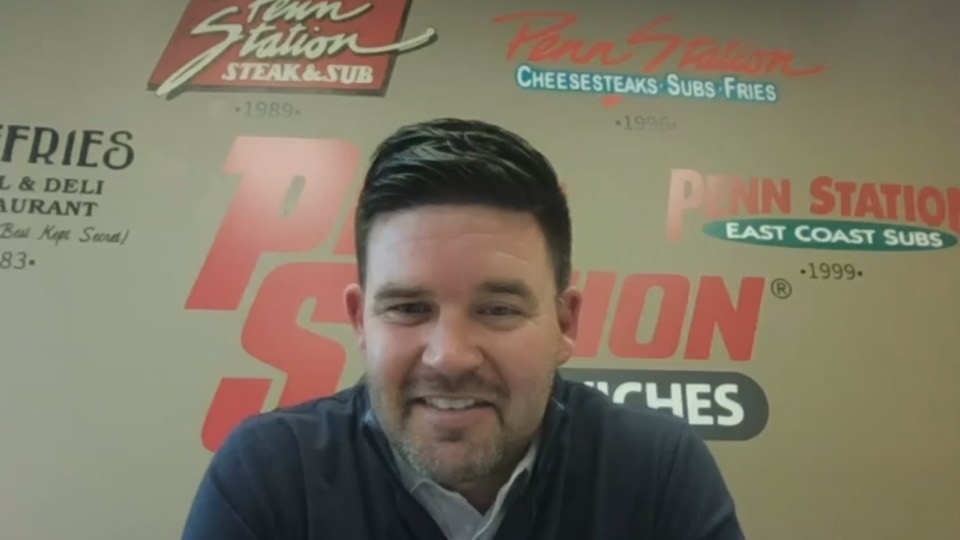
Lance Vaught, President at Penn Station, is the guest on episode 84 of the Restaurant Tech Trends podcast, hosted by Justin Foster.
 Play episode
What Lance and Justin discuss
- The six-dollar lesson that shapes how Lance thinks about every transaction
- Why he calls the franchisees who disagree with him FIRST
- How food-prep videos turned online ordering into a suggestive sell you do with your eyes
- What Lance expects kiosks to actually do for labor, and the "kiosk" he thinks beats them all
Also in this episode
- The pen-and-paper process Penn Station is ready to hand to AI, and a rapid fire with his go-to order (spicy brown mustard is involved) and the best non-Penn sub he's ever had
Episode notes from the host
New Restaurant Tech Trends is up! This week I'm talking with Lance Vaught, President of Penn Station! Lance started as a summer intern in 2003 and became president in 2022. Today the brand spans ~315 locations across 14 states with 68 franchisees and is known for grilled subs, fresh-cut fries and hand-squeezed lemonade, about 80% of the business is off-premise, too
Shout outs to Ovation for the guest feedback love along the way.
Transcript
Full transcript (10,466 words)
Machine-generated transcript; names may be misspelled.
0:00 Hey, everyone. Welcome to Restaurant Tech Trends, where we explore restaurant technology trends with some of the industry's biggest movers and shakers in a rapid fire short interview format. This podcast is brought to you by Incept AI. Incept AI takes restaurant orders over the phone and in noisy drive-thrus with friendliness and precision. Learn more at Incept AI. I'm pumped up for my guest today. Lance Vaught, he's president of Penn Station. This is the Cincinnati based fast casual brand with 300 plus locations known for grilled and cold subs and sandwiches, fresh cut fries and hand squeezed lemonade. Lance is a true lifer. I love these stories. He started as a summer intern in 2003, worked through nearly every operations and training role and became president in 2022. This year has been a big one. He led the brand through its biggest evolution in four decades, including a new name, a new identity and an expanded menu. Lance, welcome to the show. Justin, great to see you. Thanks for having me. We're going to have fun. It's going to be good. Gosh, your story is just so awesome, man. I mean, I love talking to people that have been in restaurants for a long time. This industry is filled with the hardest working, most decent people of any industry of that. I am 100% sure, but your story really takes the cake. I mean, starting out as an intern all the way to president at the same company. Tell us like, what did all of those years in the field teach you that you could not have learned any other way? And how does it show up in how you lead the brand today?
1:44 Yeah, it's certainly an uncommon path today, but I'm beyond blessed and fortunate to have walked down that path. Starting behind the counter, my first task, like so many of our early employees, was learning the detail cleaning of a restaurant, right? And you start to learn what is really the fabric behind the success and what it takes to be successful in the restaurant business. And from kind of that point on, really what I owe a lot of success to is learning people, right? Because we are in the people business and- We are. Which makes it great, right? It's easy to get passionate behind it. And in the franchise side, in particular, when you're asset like Penn Station, it's our franchisees. And so I was so fortunate to go on the road and open a lot of restaurants and share that special moment with franchisees, whether it be their first store or their 15th store, there's just an energy around it that was infectious and really had me hooked early on. I love it, man. I think, first of all, I totally agree. We're in the people business. It's all about people making food for people, serving people, interacting with guests. Obviously, you've got the franchisee side as well, working with those people or putting sometimes their life savings into opening new restaurants.
3:01 And I think this podcast is Restaurant Tech Trends, right? We're going to talk about technology in a little bit. But so easy to forget, especially on the technology side, that at the end of the day, we're about people. Can't let tech get in the way. Let's talk a bit about how you're operating right now day to day. So you are the president, but I think you're running the business with the founder, Jeff Osterfeld, still in the building, as far as I know. Tell us, how do you guys split the work? And what is it like when you've got the founder's fingerprints on everything? Because a lot of founders have a hard time letting go sometimes. You know what I mean? Yeah. So we've got an interesting setup. You're correct. So Jeff Osterfeld, our founder, started the brand in 1985, began franchising in 87. So we've had some big birthdays. And you're exactly right. It too is a blessing, right? A founder, no one will ever care about the brand as much as the founder, right? It's like being a parent. And the value for us at now 40 years young is that Jeff really keeps his finger on the menu, right? And we're kind of going through a phase even right now. But as there's cycles within the industry, menus can sometimes kind of lose and go off course. And a founder will keep that menu because they gave birth to it. They'll keep it on course in order to make sure that the brand doesn't lose its identity. And so Jeff, for us, focuses a lot on menu. He focuses on structure of the franchise agreement, right? Wants to make sure that we're providing a great return on investment that's attractive to franchisees. And more than anything else, he's here to mentor. I mean, he spends a lot of his time, you know, working with our COO and myself and some of our team members within the four walls of the office just to serve as a sounding board, right? He's got all this experience over 40 years, you know, where the success has been and where the failures, if we have failed, we're not perfect. And if we've made mistakes and just trying to help give us the support that we need to do the best that we can to provide for our franchisees and take care of customers. It sounds like a fantastic partnership. And we weren't planning on talking about menu, by the way, but I'm curious, like, how is the menu evolving? Like, where is the menu going right now? Yeah. So that was part of the rebrand this year, which has really been a lot of fun. And it wasn't a decision that started in 2026. It really started in 2019 as we saw the trend of off-premise continuing to grow. And, you know, we're known for our kind of, I'd like to believe, legendary grilled made-to-order subs on our fresh-baked bread where we slice all our
5:42 veggies and our cheese is fresh. But as that off-premise began to grow, we understood that we needed to make sure that we offered a product that holds well, you know, if you're going to, you know, enjoy it 15, 20, 30 minutes later. And in truth, our grilled subs are still awesome 30 minutes later, but it's different because you lose that temperature component to it. So we, what we wanted to do is bring the grilled subs and in the better sandwich category, that's what I like to call the QSR space for us, the better sandwich category. We've got some really successful competitors that, you know, we think very highly of that have built their whole brand around cold subs. And so we wanted to do the same as offer a quality cold offering. And this year we added a nine grain bread. So a sliced bread option that is phenomenal because there's the most commonly eaten sandwich is on sliced bread, right? But you've got to outperform what anybody can make at home and make just a flavor profile that they're excited about. And I think we've successfully done that. So it's been on the menu since April and then the early goings, you know, it takes a while when you've offered a grilled sub for 40 years to get a customer to try something that's new, but we've got some pox that are having some real success and we're looking forward to making it a bigger part of our marketing strategy in 2027. When you launched that sandwich, did it initially launch as a, like an LTO type of situation before it made it onto the menu or was it planned the whole way?
7:05 In hindsight, there could have been some value in dropping as an LTO, but we knew we needed to push the volume enough so that way we could get the manufacturer of our bread to have an interest in it. So we actually just rolled it out onto the menu. So what's really kind of how it's evolved, Justin, is we've got these classic sandwiches that you can get either on our white original bread that we bake in house and we've got a multi-grain that's baked in house and then we've got a nine grain bread. So think more of a higher end sliced bread with this great crust profile and nine grains to it. Real unique flavor profile. But if you want to get a club, oh yeah, I actually, I had one for lunch today. I had the club for lunch. It's, it's, it's just phenomenal. But so you can get our Italian on any of the three, or you can get a club on any of the three. And actually what makes this a little unique is if you want it still grilled on nine grain bread, which I really don't know many that are offering that you can do that too. And we're happy to do it. So it just added a little bit more flexibility for the on-premise, off-premise. And we all just want to provide great flavor profiles to our customers, right? We want them to become loyal. And the best way to do that is have a flavor profile that they crave. So we're all about the crave appeal. Talk about loyalty. And I want to talk more about off-prem in just a little bit, but since we're already talking about it, what is the profile right now on an off-prem and how do you see off-prem growing moving forward? Yeah, it's going to continue to grow. We live busy lifestyles, right? I mean, guys like you and I, we're similar in age. I mean, you're on the run all the time, but you shouldn't have to sacrifice quality because you're on the run. It's just the way that we live our lives. And so we've tried to adopt to that. So, you know, today for us, 80% of our product is carried out outside the four walls and about 20 is dine-in. And it has been interesting.
8:49 A few percentage points have picked up over the last, call it two years, but it's why we thrived during COVID. 60% of our business was already off-premise. So it wasn't much to pivot for us. It got as much as 95 because we were in the Midwest. So we had a lot of restaurants that, you know, dining rooms were closed for a period of time. During COVID. During COVID. Yeah. And it's bounced back between about 20 and 22% dine-in. And you can't replace a a grilled sub with fresh fries straight out of the oil in a dine-in scenario, but that just may not be in the position that you find yourself and you may be craving Penn Station. So I'd like to think it'll hold at about an 80, 20. I'd like to get a few points back for dine-in because it's just the optimal product, you know, the quality for the product. We're set up pretty good in order to take, if it were to tick up a little bit, we'd be okay. We'd be all right. Right. As you guys expand and open new locations, is the percentage of off-prem, you know, because it's so high, are you making the dining room smaller or how is your footprint for the new builds changing? Yeah, it is smaller. So historically we wanted to call it pre-2019. Again, we kind of saw this. We didn't see COVID coming. We're not, we're smart guys. We're not that smart. We don't have a crystal ball. But we did see the off-premise growing, right? We, you study your sales, you start to see that the consumer trends start to change.
10:09 So about 2019 is when we went from, we wanted kind of to be in that 1650 to as much 1800, maybe 2000 square feet if it was a unique opportunity that typically got you between 44 and 50 seats. We don't need that many seats any longer. So we're better off. So today we're looking to be in that like 24 to 30 seats seems to satisfy kind of what we're looking for. So we can get down into the 1400, low 1400s to 1600 square feet. And over the course of a 20 year lease, it's a really big difference for the, for the franchisee and what they're going to invest in their real estate. Yeah, for sure. All right. Well, let's talk a bit about operations. So I was reading, you have talked about getting back into restaurants and helping operators stay disciplined, you know, like any system, you've got your top performers and you've got those that are in the bottom quartile. Tell us a little bit about what discipline looks like inside of Penn Station today. And because you guys are so heavily franchised, like how do you keep operations consistent across 300 stores? I mean, it's like, what are you doing? What maybe not even just what are you doing, but what have you done especially that's worked especially well? Yeah. So I appreciate the question.
11:30 I'm an ops guy and I love this question because what you're keying in on is what a lot of franchise candidates come to us and say, Hey, I want to become a franchisee. I go to this restaurant, that restaurant, and I love it. But how do you maintain that? How do I know that my investment is protected when you've got 68 franchisees spread out across 315 locations in 14 states? It's a big operation. Number one, you got to select the right franchisees. Number one. So we spend a lot of time making sure that it's a good fit because it's really a lot like a marriage, right? I mean, we both have to win for the relationship to be successful. And in my role, our role, corporate wise, we have to consider what the candidate will bring to the system at large, right? You want them to bring positivity. You don't have to add to the success of the business. You don't want them to detract from it because everyone else before them that has joined all those franchisees, they're trusting us. They're trusting our judgment to sell to the right, the right hands. That's number one. Number two is you got to put your money where your mouth is. And for us, 65% of our payroll is invested in what we call area representatives. So franchise business consultants. So our ratio was one of the lowest in the segment. We have one area representative for about every 21 locations.
12:54 Typically what you hear is one per 50, one per 100. That's just not the way that we've set this up because if you're an ops driven concept, then you need to be involved in operations. So what do we do with inside the four walls? So we're consulting with franchisees through a performance evaluation. And it's everything. There's not a detail that it bypasses. And we go in and we make those evaluations six to eight times per year. And it's very detailed in way of consultation and a sit down, but also we leave six to seven pages of notes that are evaluating standards as it relates to quality, service, cleanliness, financial components, physical plant components. And then we even get down into into training, right? Because that's why franchisees get involved in a franchise. They want the template. They want to be able to execute the template in multiple locations. So we spend a lot of time assisting and understanding what tools are available to them in order to make sure that A, they're meeting the standard. They're consistent with their brethren throughout the system, but B, they're just continuing to grow their business because that's what customers respond to. Yeah. A couple more questions about franchisees. You talked about bringing positivity to the system. You talked about putting money where your mouth is. I love that by the way, and the low ratio of the FBCs. That's great. When you, is most of, is most of your growth coming from existing franchisees right now? Are you looking for multi-unit? Are you looking for owner operators? And then other than, you know, having, meeting the capital requirements, what specifically are you looking for? Is it like a, is it a values kind of thing? Is it a, you know, proven track record with other concepts? Like what makes like the ideal franchisee profile for Penn Station?
14:44 Justin, are you sure you're not in franchise sales? Because you like checked every, you checked every box, brother. I mean, that was pretty good. Yeah. You know, all the above, you know, we, we, you, you like to grow with existing franchisees because you want to help them reach their goals. Right. And if, um, uh, larger markets that, that's just not an option. You have to have multiple, you know, franchisees like in Cincinnati, we've got a lot of franchisees. Um, but in a smaller market, it's better to do business with just one franchisee ideally, right? There's a lot of value to that for them. And there's a lot of value, you know, for the brand. Um, but we lay out every market a little differently. Uh, the profile is, is you're right. We want somebody who, um, has industry experience because, um, we can teach you how to run a Penn Station restaurant effectively, efficiently, and profitably, but it can't teach you to love the industry. And if you love it, like I love it, like you love it, you love it. This is what you do. You can't imagine doing anything else. Um, but there is a romantic side, I think, especially to restaurants and franchise concepts that, um, yeah, want to get in, but you don't always want to do the work or have the dedication of the discipline that it, that it takes because it really is. I mean, we, we make our money on $14 transactions one after the next, after the next, after the next. And you asked early on about, you know, our founder being involved in, and he and I kind of, in the first interview, we went to our beach month location. It's where we do our training. And, uh, I'll never forget. He explained it just like that. Here's what we do. We take care of this customer. And at the time, the average ticket was six, $6, $6, right? So it was a while ago, but we're going to take care of this customer, $6. And we need to put X percentage to the bottom line. And if we do that every day with every customer, it'll continue to grow and we'll make a lot of money. And that's, that's proven to be, that's proven to be true. Um, but when it comes to, um, franchisees, new franchisees that come in, aside from just having industry experience, you're right. The capital is a piece of it. And, uh, there's a lot of over leveraging right now in this industry, uh, coming out of COVID. And it's really unfortunate. Um, you know, you keep up with the headlines and there's quite a bit of closures. We've had a few ourselves. We're doing a little bit of pruning as well. Um, that can be good for a brand, uh, but it's not necessarily good for the industry, right? Because it gives a little bit of a, um, a hurdle to get over. And I think it'll thin in 20, the remainder of 26 and 27, but I really hope we find bedrock for the industry and that in 28, we all get back to just growing. Um, but with the, uh, the issues with lending right now, right? Interest rates are high. That's tough because it's a penny's business and really just,
17:19 uh, there's too many tabletops in my opinion in the country right now. And we need a little bit of thinning in order to get back to solid operations, taking care of customers and providing a really strong return on investment for investors. So just to be clear, when you say there's going to be a little bit of thinning, are you referring to the industry as a whole, or are you referring specifically to Penn station? Yeah, no, we, we've got a couple of restaurants that likely will not, uh, remain in operations, but the industry as a whole, I mean, it's really a day doesn't go by without hearing about a bankruptcy, some of the hundreds, which is, which is tough, but I think that'll continue to happen. You know, what it reminds me of a little bit is when we came out of 2008, 2009, pretty difficult time. Um, it was a big run up in growth prior to, then we had some challenges, uh, within the economy. And, uh, what I take a lot of confidence in, I mean, there was a ton of challenges then, but I take a lot of confidence in that is the consumers in a better spot today, right? So while there may be over leveraging in the industry, as it relates to financing restaurants, the consumers in a better spot today than they were in 2009, not a great spot, but a better spot. That's true. Consumers in a bit of a better spot, but we, there's still inflationary pressures. Inflation has been pretty bad over the last four years that applies to food as well. Beef, especially. Um, I'm curious on for, for you guys, what are you doing to help your franchisees drive check? Yeah. What's been really successful for you? Yeah. Like what items are attaching well, uh, LTOs like the new sandwiches we were talking about? What, what is moving the needle there? Yeah. So, uh, this year we did introduce some new products, some fun LTOs, um, for the first time. And, uh, you know, we've had your, your best ideas come from your franchisees, right? It's why it's so important that you, you listen to them, um, every day they're with the customer, right? It's the ultimate focus group is just listening to your, to your franchisees. Uh, we rolled out a cheese sauce with our fresh cut fry that we're really proud of. Um, and it's selling well in the early goings. Um, we had some cool LTOs this year. We had a hot honey crisper, uh, sandwich. So it had onion straws on top of it. So you had kind of the great mouth feel and a little bit of heat, a little bit of sweet to it with a grilled chicken in between. It was phenomenal. Um, we've got, we're pretty excited about a grilled chicken, uh, chipotle sandwich that we'll roll out in the first quarter. Um, you know, we do a fresh squeezed lemonade, which is a little unique to us, uh, of course. And this year for the first time, we had a little bit of flavor to it because beverages were super hot on trend, uh, this summer. And so we had some success and, in fun and some of the LTOs, um, a win with the customer, but they're a win with your crew members,
19:56 right? You get, you get involved in restaurants cause you're creative, right? You want to find out the best sandwich, start talking to hourly employees. They will tell you the best combination of items. It's what they're eating at lunchtime every day. And so we rolled out a flavored lemonade that was, uh, was real popular with our team members. I I'm laughing because, uh, I haven't always had that same experience where crew members are loving the LTOs. Cause you know, it's a new thing you got to learn and you got to build it differently. And, you know, you can have little ops, you know, snafus and stuff that happened with the LTOs. But I, I, I guess I can't argue with the people in restaurants are creative. So I guess it makes sense. Um, you talked about listening to franchisees and I'm curious how you guys are set up. Do you have like franchisee advisory council when you have something big that you want to push through? How are you getting franchisee buy-in? Um, are you involving like every step of the way? How much of it is kind of top down? Do you find like the influential franchisees and like get them on board first and like sell it out to the rest of them? What's your, what, what's worked for you guys? Yeah. You know, we've got 68 franchisees in the system and I know, um, and they, they know, they know me too. I know everybody's name. Uh, their spouse's name and, and more often than not. Um, so we really spend a lot of time. So our relationships are really close. So we've got the formal advisory councils. So we have an FAC. Uh, they put a lot of time in, they do a really nice job. Um, we have some criteria to be on our, on our, uh, advisory council. Um, they have to have been a franchisee of the year. So it's a high ranking honor.
21:29 So they, you know, they have to be on their game because we want the very best representing their constituents. Um, so that's one, we also have a tech where, you know, we're talking tech today. We have a tech advisory council. Um, and they provide a lot of really good feedback because there's a lot of bugs that come with tech, right? And it needs to satisfy things needs to make the guest experience better. It needs to drive value there, but it also has to make the team member experience better, right? The whole goal is to make life easier on them, um, and help them in managing their restaurants, you know, et cetera. Uh, so yeah, but really for me, Justin, I, I want to be able to pick up the phone and call franchisees. So, um, I've never really done the strategy of, I guess, getting your larger franchise, get on board, service, your mouthpiece. I've heard that to me, if it's important to them, I call them, let's talk about it again. I grew up in ops. So I, I, I see these, uh, many of our franchisees as an extension of our family here at PSI. And so if I know there's a hot topic with somebody, I pick up the phone, I talk to them, you know, about it. If I know it's something that they brought up in the past and I want to pick their brain, I pick up the phone and talk to them about it. If I think there might be someone who's a dissenter, you're not going to make everybody happy. I gave up on that long, long time ago. In fact, you're probably not doing it right. If everybody agrees with you all the time, uh, but you call those guys first, right? And you may still agree to disagree, but at least they know you care about them. You care about hearing the rebuttal and that you're taking it into consideration. Um, but we are, you know, our call is to, to do what's best for the brand, make the best decision that we can both for the, um, the, uh, current system, but also thinking ahead of what's the system going to be like in 12 or 24 or 60 months and making decisions that, you know, we can stand behind, you know, in the future as well.
23:10 All right. Um, I do want to talk a little bit more about the rebrand, but since you were talking a bit about tech and this is restaurant tech trends and we're 23 minutes into this interview and we haven't really talked about tech yet, let's go there for just a minute. Yeah. So you say you have your tech advisory council. Um, I think one of the areas that I really like to talk with people about is where technology creates opportunities for hospitality and where technology gets in the way of hospitality. What technologies are you guys looking at or have you implemented that you think are genuinely creating new opportunities to create good hospitality moments and maybe what are some that you've tried in the past that you thought just were taken, taken away from that experience? Yeah. So, um, given the off premise is such a big part of, of the business today, we've really tried to focus most of our efforts on ensuring that it's a great guest experience outside of the four walls as it relates to technology. And that's really a couple fold. Um, you and I spoke a couple of weeks ago about, we were one of the first in the category to kind of jump into the, into the app. Right. And that was back in 2015, 2016 when, um, it wasn't really, uh, as frequently used. And so what comes with that is a lot of challenges. I mean, even back then, not every cell phone plan had unlimited internet access, right? So a customer would come in, they wouldn't be able to get on the wifi. They want to use their points. You can't get it pulled up on their phone. Yeah. That wasn't really a, that really wasn't a great experience. Right. And then, uh, coming out of COVID, we did app, what I call app 2.0. And with that, we really wanted to give, um, some advantages of being able to save your order, right? If you're the, if you get the same order, you and I were talking about at a stoplight, I want to be able to hit the same order simultaneously with hitting the brakes essentially in my, in my car. Right. I want it to be super efficient for me. Um, we wanted to make sure loyalty was embedded within there and it's not without its challenges on occasion, but we wanted to make sure it was all in one spot, you know, for the customer.
25:10 Um, more recently we've tried to bring, uh, part of the value of being a quick casual brand is that you see your food prepared right there in front of you. Right. But knowing that the off-premise is continuing to grow, um, we've teamed up with a, with a company who's helping us, uh, bring a lot of our social videos that really highlight the preparation of our food onto our website. So as you explore, if you're within the four walls of the restaurant, your eyes are seeing it, right? We hit all of your senses. It's great. Can't do that necessarily from your phone or your laptop or your iPad or whatever device that you happen to be on. So we're trying to ingrain that into as well to provide a better guest experience as you just kind of decide what it is that you want to order that day. Um, and in the early goings, that's been really positive. And I think, uh, in the year ahead, that might be a little bit of a game changer for us and a bit of an advantage maybe over our, over our competitors. But when you're using this technology to create this better experience during the ordering process, um, you can more fully showcase the preparation of the food, get those like, uh, taste buds, you know, starting to think about, imagine what it's going to taste like. Um, are your expectations in terms of how you're going to measure this? Is this going to be like sales? Is it going to be added check? Is it going to be CSAT? Like, what are you looking at or all of the above? Yeah. A little bit, all of the above, but, um, so for the, for the, it's like a digital suggestive cell, right. But then you do with your eyes because too often you're just asked so many questions when you're placing orders online, right? It's just question after question after question, but I'll, uh, give you the example of, we got a fresh cut fry and if you're dipping it in that cheese dipper, which is new to us, you may not know that we have a cheese dipper, but when you order that fry and the video pops up and it's showing that fry going in that cheese dipper, it's the visual suggestive cell, or maybe it's that lemonade where we're squeezing that lemon and showing like, Hey, lemonade's good. No matter what fresh squeezed lemonade is just way better.
27:02 And so seeing the time and effort and care that's put into it. Um, I've not really experienced a whole lot of that in the restaurant industry. I see it in retail, right? If you and I are shopping for shoes, it's real easy to change the colors and we decide what shoe want. You don't really see that much in restaurants just yet. And that's why I'm pretty excited about it for us. When, when you're 315 units strong, you got to look for advantages and technology that aren't mainstream yet. And that's what we're trying to do. Yeah, I agree with that fully. Um, I want to talk a little bit more about app 2.0 and you're an ops guy. So this is like one of my favorite topics, which is how you extend customizability and modifiers to digital channels, because obviously the more choice that you offer to your guests, the more that creates, you know, not streamlined, uh, processes in like building the actual sandwiches. Where do you guys fall on this, uh, continuum of offering all the options in digital channels, the most customizability to your guests versus pairing back the modifiers that are available in order to streamline ops. Wish you would have been in our office to referee this conversation. Uh, uh, early on, you know, it was tough. We, we relied heavily on, on the, uh, the tech partners that support us, uh, in order to get that done, because you're right. If you've dined in a Penn station, you know, uh, if you order it, uh, our cheesesteak or Philly cheesesteak, right. It's our claim to fame. We're going to ask you, would you like sauteed onions, mushrooms, or banana peppers?
28:35 Right. So those in itself, three different options. And then would you like mayonnaise, mustard, or pizza sauce? And then, Oh, by the way, maybe somebody says, Hey, I would like to add extra this, or I'd like to go like that. So what we decided was to go all in. So we waited on the development to go live until we were able to offer you every option that you would be able to get within the four walls of the restaurant. Again, if technology does it to me, not saying I'm right, but if it doesn't make the guest experience better, then we shouldn't be putting dollars to it. Everything that we spend here at Penn station, to me, it's pretty simple. Tell our team members, you can bring any idea you want, but if it doesn't make the guest experience better, then we don't have the funds for it because all of our funds are earmarked to make the guest experience better. It starts with the people. We've got an amazing team, right? We invest heavily in our team, but, but after that absent, really just team member investment, it's gotta be tech wise. Does it make this better for the guests? So when it came to the modifiers and the challenges, I mean, it was a major Rubik's cube exercise to figure all that out, but we've got, we did it and it's worked well. And, uh, I'm copying on every guest complaint and throughout the entire system. Thankfully, it's only every single one. I want to see every one of them. I want, I want to know every one of them. Um, in truth, I'm not responding to all of them. Our franchisees do, but we don't have, we don't get many, Justin. I mean, I'm being honest with you. We don't get a whole lot of them. Um, because we make sure that before we put anything out to the public, we double and triple and quadruple check. We will make mistakes. We have made mistakes, but we make far fewer of them because we make sure it's ready to roll before we put it out there. All right. Well, there's two things, you know, I, I, I have to have us riff on this just a little bit, because we're talking about, we're talking about making investments that are improving the guest experience.
30:22 And so I am very curious to learn, uh, number one, where have you guys fallen on the kiosk debate? Where's that sitting right now? And then I got a part two, cause I just got to tack on to your, you review every single piece of guest, every guest complaint, which is like nuts. What are you guys doing from like a guest feedback perspective? Are you using any AI automation to handle any of that? Is it all done manually? And what do you plan on doing moving forward? So two questions there, kiosk and then guest feedback. Yeah, they're great questions. Uh, we'll tackle kiosk. So, uh, in beta right now, right. I still think the greatest kiosk that we all have access to is this one right here. Right. Um, and, uh, you know, we've seen kiosks in certain industries thrive, and then we've also seen them retired. I'll use the airlines as an example, right? Kiosk used to be all over, uh, CVG here in Cincinnati and I liked it, but I saw a lot of people bypassing it. What I saw even more was when they weren't working. Well, now I don't see them at all. They've, they've essentially been retired in the airline industry, um, because they've been replaced, you know, with the phone. So don't hear me say they're archaic. They're not. Um, but in restaurants, you know, we, we modeled it. Uh, we are now testing them in our, in our company and location. Um, I think what's tough about it is it's a new learning experience with every brand, right. In, in the kiosk. And I do think our younger customer or Gen Z customer certainly gravitate towards it for sure. A customer who doesn't want to wait in line to place their order, certainly gravitate towards it. So there's a place. However, I don't believe the labor savings is necessarily what everybody felt like it would be three, four, five years ago, right. When they were more of a necessity, um, because maybe we couldn't have the verbal interaction because of COVID, et cetera. Um, so we're going to test it, but we're going to test it because it makes for a better guest experience. I think the labor is going to prove out to be negligible, uh, at best, but I, I still think I got a strong suspicion that, that this is going to win out. Why? Because it's also more convenient. You can place your order in advance. So you, so you wait, right. For us, we're cooking from a raw state. Everything's fresh that we do, right. So when you're cooking fresh, it's going to take six minutes to get a Penn Station sub and, um, you're six minutes ahead. If you place that order before you walk in the front door versus visiting the kiosk or, you know, um, interacting with a team member behind the counter. Are you guys going to experiment with pulling labor with the kiosks or you're just going to, how are you going to do it? You know, that's, that's a great question. I don't, I don't have the answer today. I think we'll, we'll, we'll get a better feel for it. Um, I think
32:58 more often than not what we're going to do, cause we run tight labor, you know, we've got every metric that you need a well-trained team member, what the value is and throughput, et cetera. I'd like to think that, um, those dollars will be spent better caring for the customer, more interaction in the dining room, uh, ensuring that, um, we get the food out faster because speed matters so much. Could there be some scenarios where there's labor savings? Sure. But in order for there to be a labor savings, it has to be an, there has to be an absolute factor to it, right? It's gotta be efficiency driven, meaning that, um, that kiosk would replace a team member for a full hour. Cause I don't know about other brands, but our team members don't really want to come in for 15 minutes and then walk, then walk out, right? They're there for two, three, four hours for their shift. And it's not like those kiosks are busy the entire time. So it doesn't fully replace and none of our team members in QSR are only taking orders maybe for seven or 17 or 27 minutes, but they've got other tasks that they complete. So for QSR anyways, I don't know that it's a labor savings. I think it's actually allows us, uh, to tackle other tasks that drive greater value to the customer while they're, you know, with us. Okay. And then guest feedback. Let's look back to that. So today we're a little old school. So everything does come in email, uh, franchisees are copied on those emails so they can quickly respond to them. We want to see them. Every one of our area representatives see them. They're regional franchise consultants, the team that oversees our, our area representatives, they see them. Uh, it allows you to keep a finger on the pulse, but for 2027, it is on our tech roadmap to do a, um, whether it be ovation or one of those types of, of different, uh, you know, Zach's great love Zach seem at every conference. Um, but we're going to go down that road and take a look at, um, you know, how that might fit in with Penn station and then what, uh, you know, additional value prop it presents to us. Okay. Yeah. By the way, I fully agree with you.
34:49 Zach is great. I, he's one of the guys, like he was helping us out before we raised our first round of funding. He was like, he's one of the guys that got me to like believe in this industry and like the value of the community in this industry. Um, you mentioned just a second ago having well-trained staff. And I did want to talk with you a little bit about training and where you're leveraging technology and training. So I read your training team is racked up a stack of apex awards. What's what's philosophy behind it? Um, how is training changing and are you guys leveraging AI with any of your, not just ops training, but like in helping your franchisees run their businesses better? Yeah. So from a training perspective, uh, in, in my opinion, I feel like that is the most important tool that we put in place, uh, for our franchisees. That's why they get into franchising. They want the playbook. Um, so we've migrated several years ago to a completely digital training program. And, uh, you know, Justin, we did it ourselves. So we had all the major brands and I've got a ton of respect for them and what they could do and putting together a training portal for us. Um, but we just couldn't find a way to make it feel like Penn station. And we wanted it to feel, you know, like Penn station, the way that we actually execute our, our training. So an off the shelf with some customization just wasn't right for us. We needed full customization. Um, so we did that. And the great part is, uh, we're able to provide it without any additional fees to our franchisees, uh, for it, which is, which is really great. So our team, a little bit self-taught, but, um, so we've got all of our tests are scored and then emails are sent to the store level. When a team member takes it, we track the amount of time everybody spends on it. So that way they've got benchmarks, all of our videos are uploaded on at our ops manual and our training manual are all uploaded to it. Uh, we've got, it's a communication hub for us as well. So in our ribbon up top, you know, we're discussing with, um, you know, what the new LTO is and that the new, what's new that's been put on the training portal, we do, uh, different types of incentives, right? Restaurants are supposed to be fun. So we try to have fun by taking it to the field. And so like we had, um, uh, our recent annual, uh, um, uh, donation drive, uh, we call our deals for down syndrome. We raised a lot of money for some unbelievable families. Um, we tracked how many were sold each day. So that way the crew at each individual restaurant knew where they ranked, right? A little competition is not a bad thing. And then we had it up to $25,000 in incentives that we gave out to team members, uh, who had, you know, a lot of success, they ranked high. So for us, uh, it's 100% digital because that is today's, I mean, the education system, right? Scholastically, they've moved to mostly
37:27 digital. Um, my kids come home and everything is digital right on, on, on their, on their MacBook. And we knew that we needed to do the same behind the counter. What we don't want is to have a training program that feels completely foreign to them in the way that they learn and prefer to learn. And today's learner, they want the digital, they want immediate, you know, you want to know immediately how they're doing. Um, and they want access that they can have on their time and when it's convenient for them. And it's not, it's not loose leaf paper any longer and copies and three ring binders. And this just makes it easier for management too, because they don't have to print things off, make copies, et cetera. It's all right there in one place for them. Right. Um, you know, we have probably the highest turnover in any industry. If we're not at the top, we're very near the top. Um, so keeping your crews happy and retaining them is important. And I'm curious if you have maybe just one tactical like tip or trick that you guys have built into your training program to, you know, make that, make it enjoyable for your new crew members. Um, and then just give a super quick snapshot. Like, how do you structure it? Like, are you doing like one sandwich at a time? Are you like, you got to learn the whole menu all at once? Like, how are you doing it to like create that early, those early wins for those new crew members?
38:52 Yeah. Great question. So the, the, the fun piece I'll address that one is, uh, we implemented gamification, uh, back three or four years ago. Right. So to, to gauge retention, not everybody wants to take a test, right? Heck I didn't like tests. Um, you got to take them, but nobody really likes tests. Right. But the gamification is, is the route to take. And so, um, it's, you know, really, really cool where the questions come in and you're scored, et cetera, but it's, uh, even like on speed, right? It's like how quickly you can do it. And so there's a lot of value. And so we've rotated some of the games. Um, there's typically three, uh, it's relatively inexpensive. It really is for the license to do it. Um, our train director of training is a big believer in it. I mean, he is all in on training and education, et cetera. And, and when he came to me and said, Hey, gamification is the path moving forward. And again, a little dated, so this isn't really new, but we've had it for about five years and there's, there's leaderboards and it'll show like who has scored the highest in these games. And it's not uncommon for somebody. I'll go into a restaurant when I'm out in the field and say, Hey, tell me one thing. If you were king for a day or queen for a day, what's the one thing you changed about Penn station? A lot of times what I hear is like, Hey, did you see where I was at on the leaderboard? I'm like, I have not, but I will check. Uh, but that's important to them. Right. So there's value in that. That's how, that's how they connect. Um, what was your, I want to address your second question, but I, um, just the, uh, the S how you structure the training at the beginning. So are you doing like one sandwich at a time? Do you have to learn the whole menu? Is it part of the menu you train on? Um, how are you making that as frictionless as possible? Yeah. So it's, it's a modular style.
40:29 Um, so for us, it's broken up in each of the stations that's on the line. So it gives management, the flexibility to say, Hey, I need to start somebody in this position. I need to fast forward to this particular role at this time. Cause this is the need. Then they can go back and you're exactly right. We've got a full menu scope and then we do break it down to individual sandwiches, but the Genesis is really where they're needed. You know, I'm going to need to hire somebody to work on the grill, et cetera. But the goal is to quickly within 60 days, have somebody complete each of the modules. So that way they can work any station on the line. And, uh, that's more fun when you're more fluid and you can be where you need to be with the flow of production rather than just being stuck in one spot. But, uh, it gives complete control to the manager to do what they need to do, uh, depending on where they see the individual needs to start. All right. All right. Well, we've only got time for a couple more and you know, this is restaurant tech trends. We got to talk about AI. So tell us where are you employing AI today in the business? Where is it creating the most value? And where do you think AI is still just not there yet and you wouldn't want to bring it into the business? Yeah. Well, we're, we're like everybody, we're super excited, but cautious. Um, you and I've discussed that, that brands have limited budgets, uh, and everything is just so new. So we're still educating ourselves on, on what those options are. We have leaned in, we always start with the customer.
41:52 And so we have leaned in with a company out in Seattle, uh, Zeekin, and they're doing the videos that are online for us. And we're having a lot of success. They can track what goes on the back end of your website to validate it with the spins that you make socially. Um, it's early on, but it's been positive thus far. Uh, we want to look into with our training program, like how we can lean in there, um, more so. So that way, um, the data that comes from it can kind of point us to where our team members are spending the most time. So whether that be that they're struggling in an area where maybe the tool's just not sufficient, like it requires greater detail. We need to lean in a little bit more. Um, we'd like to do that operationally with our performance evaluation. I'd mentioned earlier, you know, it's, it's six, seven pages of typed notes. Um, that's a lot of administration time that could be spent consulting. And so our, uh, senior VP of franchise services, which oversees operations for us, um, he's exploring of how we may automate some of that, uh, incorporate, you know, photos and videos, but still provide, uh, what's necessary, which is to allow them to know where they're either falling shy of our standard, meeting our standard, or hopefully exceeding the standard. And then how do you tie that all, all together while, without having 15 different vendors to support, right. And that's something that I think the tech community, I know they appreciate, at least the guys we work with, and I know you do, um, is we have limited resources, right. And we can't just spend all day sitting in meetings to discuss what tweaks we need to make and what the results have been. So as everything kind of digest and settle down, I'm pretty excited how it comes together. Um, but we're kind of leaning in a little bit in those three places, uh, right now. Okay. Um, what's one AI technology that you think is not, not ready right now that you wouldn't bring in? Yeah. You know, um, I think, I think with best intentions, um, some of the AI that just simply makes references, right. It's just finding answers to questions that you have. And what we found is that not always does it surface the correct answer. And I think that'll only get better, but that can lead you down a bit of a rabbit hole. So I'll lean into a little bit on from a marketing perspective there, right. If, if you're going to try to use it to, um, to get in the insights aren't always accurate because a, maybe you're not asking the right question or B, it just simply doesn't have the ability to surface it. So, you know, when you're talking about spending and marketing is very expensive, right. But you only have limited dollars. I think right now that's where some of the pitches that I've heard are still maybe a little
44:29 pie in the sky when it comes that we can, we can optimize the most efficient spending strategy that will lead to X amount of sales. Uh, maybe, maybe I don't think it's there, but I think the intentions are there and I think it'll get to that point. I mean, I think where, where we were this time last year, uh, to where we are today, I think is unbelievable. And it's exciting to be where will we be in the next six, nine, 12 months. Um, I think it only get better. We are, we are really living through a revolution right now. It is just crazy what you can do with technology today that you couldn't even do six months ago. It's crazy. Um, okay. Last question before we get to our rapid fire segment, um, Jeff has talked about bringing the brand up to 600 stores. What has to be true, um, in order for that to happen is the ops model stay the same. Do you need to make changes to your tech stack in order to get there? Or are you positioned well right now to just scale up? Yeah. Uh, first and foremost, you've got to provide a great return on investment for franchisees, right? Asset light. We depend on our franchisees. That is the mantra here at Penn. That's all that matters to us, uh, but you got to do it responsibly, right? And so that means we can't reach in areas that aren't going to provide a return. And as a rule, we're pretty, we're Midwestern guys, right? We're going to be pretty conservative. Uh, you know, measure twice, cut once is something that is only set around this office a thousand times a day. Um, so we're not, we're not going to reach, uh, we're not going to bring franchisees into the system that aren't a good cultural fit, you know, for us. So, um, we're fortunate that we're, you know, we're privately held.
46:01 Um, so we don't have any, our, our, our goals are in, in the pressure self-imposed, right? So we're not answering to anyone other than our franchisees and ourselves. So we're in a pretty good spot. Um, but yes, absolutely. I think technology will continue to only benefit us. Um, we just have to make sure we're building that right tech stack for our brand and that we're doing it to where we can measure the return on investment. And we have to be disciplined enough not to chase, uh, you know, there's a difference between a trend and a fad and we have to make sure that we are, we're following the right trends and we don't get caught in a fad. Right. Feel free to completely disregard this question or just say you won't answer it, but you talked about gas feedback potentially being in 2027. And you just mentioned you are going to be modernizing the tech stack. What are like one or two other things that you're going to be modernizing? Yeah, I think, um, yeah, I think we break it up in twofold. Here's what we'd really like to do. We'd like to work on some of our, uh, management functions. Right. So we're rolling out what for us, POS 2.0 and in typical Penn Station fashion, we've got a vendor, but we're working alongside of them. They only support us. Um, so that's number one, once we're able to do that, then I believe some of the, and I think AI will help a lot with this. What we'll be able to do to make our managers lives easier through improved management functions. And they can be small things like today. Um, we're still pen and paper to figure out our prep sheets, right. Versus being able to just combine all that in and not be on a spreadsheet. So get rid of the spreadsheets, get to where the, uh, control mechanisms come right out of the POS in order to allow for direction to be provided. That is like something I couldn't be more excited about. Like once we get to that point, the more time the general manager gets to spend with their team and their customer, the better, um, not having to deal with reporting and, um, you know, payment, et cetera. That's like the main goal for us. Took could not agree more have to check in with you 12 months from now to see how it's all playing out. Um, Lance, we're done with the formal questions portion of this interview.
48:06 Sure. As we wrap up here, we are moving to our rapid fire segment. So to everyone that is watching or listening, I'm about to ask Lance a series of questions. He has no idea what these questions are because I have not shared them with him in advance. Lance, the rules of engagement on these questions are try to answer each question with one word, if you can, and one sentence, if you can't, are you ready? All right, let's do it. All right. Won't have too many gotches in here. Grilled sub or cold sub grilled sub favorite grilled sub Philadelphia cheesesteak. All right. Classic fresh cut fries or hand squeezed lemonade, fresh cut fries. Sure. Go to Penn station order. Uh, regular cheesesteak on white with spicy brown mustard shot of teriyaki sauce. And this is like, this interview is making me more hungry than any interview that I haven't had lunch today, but gosh, I'm getting so hungry right now. Uh, what's the most underrated item on the menu? I think it's our grilled artichoke. Um, you know, I, uh, I observed the, uh, the Catholic holiday in the spring and, uh, it kind of gets you through to be able to have that, that, uh, sandwich that doesn't have meat on it, which is great. And artichoke's got a unique flavor profile. That's just really unique and good. And I don't know of anybody else that does a grilled artichoke sub like Penn station does it. It's delicious. Uh, we got to get them out here in Seattle. All right. Uh, most overhyped tech in restaurants right now.
49:39 Mm-hmm. I think that is, uh, the deliverable on, um, AI helping you with your marketing strategy. I think it's just not quite there yet. It's getting closer. Right. Now I've got a truly hard one for you. You're really gonna have to think about this one. What is the best sub that is not Penn station?
49:59 Okay. So, you know, we, we talked about Chicago earlier and every time I'm Chicago, I think an Italian beef sandwich is phenomenal. I mean, I love it. Anytime I'm going through the airport, it's, I hope I'm, my flight's not delayed. So I have an opportunity on here to get an Italian beef sandwich. I just, I think it's phenomenal. I think it's really good.
50:20 Oh man. I'm like drooling over here. All right. Last question before we wrap, finish this sentence five years from now, Penn station is blank.
50:31 Penn station is focused on their franchisees return on investment. Uh, their team members, uh, career success and, um, taking care of customers to where we're household name outside of the 14 state window we're in today. I love it. That was, that was a, that was a long sentence, but I think you did and captured the whole thing in one sentence. So we'll, we'll take it. It counts. Lance, I really want to thank you for your time here today. I've enjoyed getting to meet you both on this interview, as well as in our conversation that we had before everyone, Lance Vaught president of Penn station. Thanks Lance. Thank you, Justin. Appreciate it.