Episode 16
Krish Gopalakrishnan
fmr Act III, fmr SVP Digital Technology & Data, CAVA · CAVA
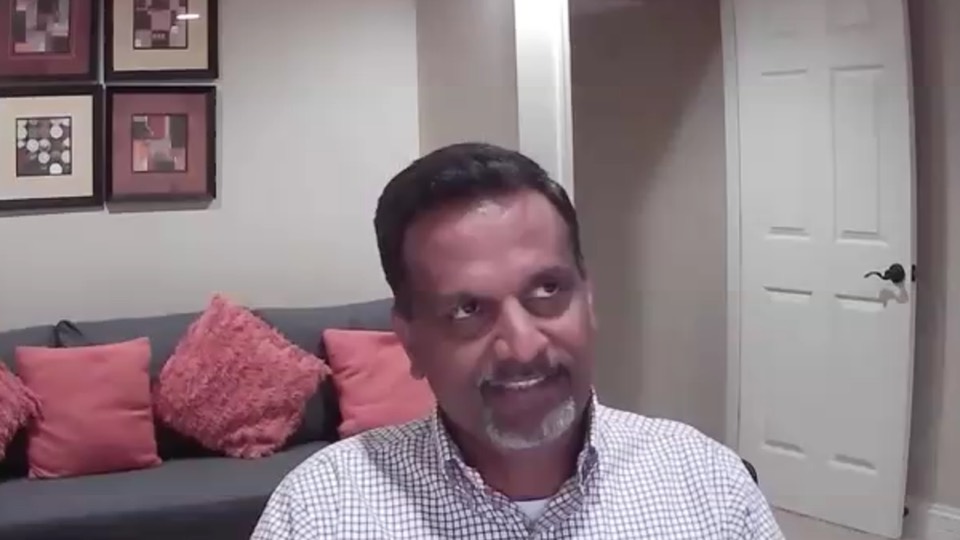
Krish Gopalakrishnan, fmr Act III, fmr SVP Digital Technology & Data atCAVA, is the guest on episode 16 of the Restaurant Tech Trends podcast, hosted by Justin Foster.
 Play episode
What Krish and Justin discuss
- Which digital technologies helped Panera reach 40% of total sales through digital channels
- How loyalty tech helped drive a 36% increase in digital sales at CAVA
- Which digital technologies Krish sees as the most impactful over the next five years
Episode notes from the host
Another great interview with a senior tech leader in the restaurant space... today, Incept AI co-founder Justin Foster sits down with Krish Gopalakrishnan, fractional CTO and former Group CTO at Act III Holdings, LLC and former SVP Digital Technology & Data at CAVA. Prior to that, Krish was also part of the core team working on the Panera Bread 2.0 transformation. He's been around the block and lays down his thoughts here.
Transcript
Full transcript (1,727 words)
Machine-generated transcript; names may be misspelled.
0:00 Hi, everyone, and welcome to Restaurant Tech Trends, where we explore restaurant technology trends with some of the industry's biggest movers and shakers in a rapid-fire short interview format. Today, I'm joined by Krish Gopalakrishnan. Krish has a super interesting background. I don't think I've ever met anyone like him before in industry. He's gone from the brand side to advisory, back to brand side, and now he's doing fractional. Among other things, led the enterprise architecture, MarTech, and the master data management team at Panera. And he was a key player in the Panera 2.0 transformational project. He'll tell us a little bit about that in just a minute. And later, he worked alongside Ron Shake, who's like an absolute legend in the industry, of course, at Act 3, and managed a small portfolio of restaurant companies. I think ranging from 15 plus units to 300 plus units. Brands like Tate, Life Alive, BJ's, Level 99, and CAVA. I think Act 3 also invested in Par. And after that, he went back to CAVA, or maybe not back to CAVA, but joined CAVA in a full-time capacity, and was part of the team that led to the successful IPO there. And as I mentioned, now he's a fractional CTO who's working with restaurant brands, helping them with their tech strategies. Welcome, Krish.
1:24 Krish Jensen, Thanks for having me here. Absolutely. I'm super excited that you joined today. Let's start with your time at Panera during the Panera 2.0 transformation project. I noticed that one of the things you had on your LinkedIn is you were part of the team that brought digital sales up to 40% of total sales, and I was really impressed by that. I was curious, what were some of the technologies that were brought to the forefront to reach that milestone? Yeah, I would say it all started with Ron's version of Panera 2.0. That's where it all started, right? And digital had a huge part in that journey, right? How do you provide that experience for the customer inside the restaurant and, you know, about the restaurant, we call it, right? The digital experience as well. And that strategy led to figuring out how do you bring that to light? We had, you know, mobile app, we had kiosk, you know, we had the digital experience and, you know, we talked about loyalty and all these were part of that strategy. And, you know, technology played a role in enabling that, right? So we worked on technologies that would help bring that strategy to life. And I would say a few key things that were involved is, you know, we went through transformation with our marketing platform, right? We built personalization. I mean, I know there's a lot of AI now. I'm talking about now eight years ago or 10 years ago, right? We were talking about one-to-one personalization, you know, Panera probably was the first one in the restaurant industry to do that, right? So we did master data management where, you know, I know some of the restaurants still use point of sale as kind of the, you know, master system for managing data, but we had our own centralized master data management platform that helped manage the data across all channels in a central place. There are a few key things that led to that, you know, success where technology played a role.
3:27 So this almost sounds like it's like the pre-CDP days. You guys sort of built your own CDP.
3:34 Yes. And there were, you know, some of the companies that are in the market now, right, that are CDP platforms, they were, you know, not there even, or at least they were in their early stages, right? Got it. Well, one of the things you just mentioned was loyalty was a big part of this. And I would definitely say Panera is known industry-wide for having a cutting edge leading loyalty program. And I noticed you transferred from some of your experience and success with loyalty at Panera to your time at CAVA. I think I saw digital sales increased by 36% or something like that when you were at CAVA. What did you do there to drive the growth in the loyalty program? Yeah, I would say, you know, CAVA is a fascinating brand and I give full credit to Brett Shulman, the CEO. You know, they started working with him in 2019. He's very tech forward, understands how tech plays into the restaurant space and, you know, several conversations with him. He had a loyalty vendor, you know, he realized that we are outgrowing and we migrated the loyalty platform. So it was more of a migration initially. And then we worked on improving the loyalty program. I know there was a huge loyalty program enhancement last year that was announced, right? And I mean, so that kind of helps, right? When you think about the evolution of loyalty at CAVA, you know, where you first move from a platform that's not scalable for the growth that CAVA has planned to a platform that now is scalable, but you got to add the program capabilities on top of it. So I would say all those things were happening over the course of time and, you know, CAVA is in a good position now where they're leveraging the capabilities. Well, there's no denying that the future of restaurants is increasingly digital. And given that you are Mr. Digital, what are some of the digital technologies you think are going to be the most disruptive in the restaurant industry over the coming, let's just say five years and why? I think there's, you know, things that we still have to solve in the digital space, right? I mean, digital is still fragmented from a standpoint when I talk about sales channels, right? Right. I even had a conversation with a small brand last week where, you know, they got web ordering, they got mobile app, they got third party ordering, they got meal plans, right? And these are all fragmented digital, you know, ordering channels and, you know, it all hits the operations,
6:12 right? And, you know, figuring out how do you, you know, manage your order volume. I think there's definitely room for improvements there from a digital standpoint. You probably commonly hear it as unified, commerce, right? Where we want to have a lot of restaurant technology companies or brands are trying to get to the unified technology where you can understand all the orders coming through, right? Including what's happening inside. So there's definitely an opportunity there. I would say conversational ordering is a big piece. You know, I see a lot of startups there trying to, you know, tackle that space, you know, that problem. I know when you asked about Panera 2.0, we attempted that during that time, you know, there was natural language processing at that time. But the hardware has also improved so much now, right? I mean, the speed which you can compute now has changed compared to five years. So I think those all help. So I'm really hoping, you know, conversational AI is going to help in ordering. It's going to help with customer support. You know, gamification is another one. I recently saw the, you know, Chipotle burrito day, right? They launched their second year of, you know, gamification that was interesting. You know, that engages a customer. I'm sure in the the back end, they are using some AI, right? To keep the customers engaged. Operational side, I think a lot of AI, I would say is needed more on the operational side, the back of the house.
7:46 I think you can make the associates life happy, you know, simplify things for them. That would in turn help to make the customer life happy, right? Whether it is inventory management. I mean, still associates struggle with stockouts, right? Stocking out at the right time. You know, how do you forecast your demand, whether it is labor or COGS, right? I still remember the days where the finance team is trying to forecast all these things and are going to hit the target. Are we going to miss a target? And I think there's a lot of data there that AI can help and, you know, improve. So I definitely feel that there's opportunities there for technology to help. Yeah, I would totally concur. A couple weeks ago, I was talking on here with Matt Wampler, who's the founder and CEO of ClearCogs. They're doing some really interesting forecasting stuff. And I agree with you also on the inventory piece. I don't know if you've seen the guys over at Nomad Go. They've got a really crazy solution that you basically just hold like your tablet up and it just scans your inventory. It's pretty, it's pretty sick, man. It's pretty incredible what you can do these days. I think technology is getting there. The other challenging part is, you know, how do you make it more cost efficient, right, for the brands? At the end of the day, you know, I've seen technologies, some of the technologies can solve, but it gets expensive and, you know, the ROI is not there. You know, so some of those things also play into account. I mean, things have gotten cheaper considering five years ago for the same technology.
9:20 The other thing I would like to add is also payments. And I was recently in India.
9:27 You know, it's amazing to see where their restaurants, most of the restaurants are completely digital payments. And I've seen very less people pull a card out. They're all, you know, paying digitally, right? And in the US, I still see in restaurants, a lot of cards being pulled out and paid. I think there's definitely room for improvement where, you know, the digital payments can, you know, help reduce friction at the register. For sure. China's crushing it on that too. The US is definitely far behind. Well, Krish, that's all the time that we have for today. I'm super glad that we got to spend a few minutes here to sit down. Everyone, Krish Gopalakrishnan. Krish, thank you. Thanks, Justin, for having me. Thanks for that conversation. Thank you.