Episode 18
Brock Weeks
Co-Founder & CEO · Savi
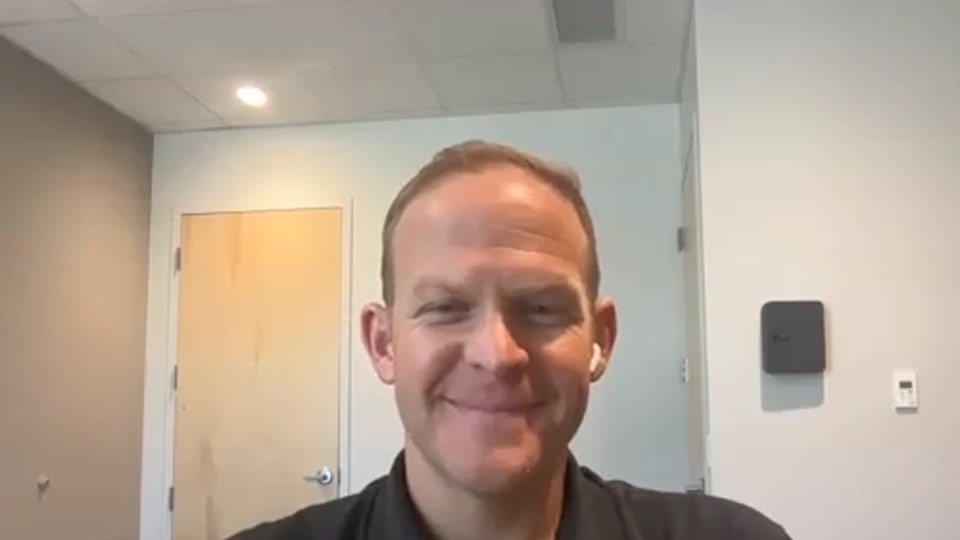
Brock Weeks, Co-Founder & CEO, Savi, is the guest on episode 18 of the Restaurant Tech Trends podcast, hosted by Justin Foster.
 Play episode
What Brock and Justin discuss
- Why Brock thinks of video as a platform and not a collection of disjointed problems that need solving - this is NOT the traditional way of thinking
- What's driving restaurant video from the edge to the cloud
- Which restaurant video use case Brock still doesn't think is ready for prime time despite having evaluated 100's of AI models
- How brands like Swig and Scooter's Coffee use video to drive service times down by 15%
- What Brock sees as the NUMBER ONE lesson he's taken away while building and scaling Savi. Hints:
Episode notes from the host
In today's Restaurant Tech Trends, we sit down with Savi Co-Founder & CEO Brock Weeks to discuss the future of video and video AI technology in restaurants.
Transcript
Full transcript (2,844 words)
Machine-generated transcript; names may be misspelled.
0:00 Hi everyone and welcome to Restaurant Tech Trends where we explore restaurant technology trends with some of the industry's biggest movers and shakers in a rapid fire short interview format. Before we dive in, I'd like to give a quick shout out to our sponsor, which entirely coincidentally is my company, Incept AI. For those of you who don't know, Incept AI is focused on taking restaurant orders over the phone and in noisy drive-thrus with friendliness and precision. Learn more at Incept.ai. Now let's get to the real reason why we're here today, our guest. Today I'm thrilled to welcome Brock Weeks, who is the founder and CEO of Savi, the cloud-first video and AI platform that's redefining how multi-unit restaurants, C-stores, and retailers turn security footage into actionable data. Brock launched Savi in 2018 after seeing how legacy DVRs locked valuable insights in back office closets and set out to move video fully to the cloud. Since then, Savi has grown to stream and analyze millions of hours of footage for brands like Marco's Pizza, Scooter's Coffee, and the Savory Fund's 175-store portfolio, helping operators uncover profit-driving behaviors and prevent loss. The company's momentum was underscored by a $12 million Series A round that was led by Next Coast Ventures to accelerate product innovation and channel partnerships.
1:26 Fresh off demoing his new computer vision capabilities at the 2025 National Restaurant Association show, Brock joins us today to explore the future of video-centric operations and where restaurant tech is headed over the next several years. Welcome, Brock. Yeah, thanks, Justin. Great to be with you. I'm excited to learn about the future of restaurant video today. So let's start off. You said that Savi was born with frustration with video stuck in a closet. What for you was the aha moment that pushed you to start this company? And is it the same thing that makes the company different today? Yeah, I've had a decade-plus long experience in the security space, whether it was security and automation and video, meeting with tons of different brands across retail and restaurants. And the same exact thing kept coming up. And essentially it was that it is really, really difficult to understand what's going on inside a store when you're operating tens to hundreds or thousands of those. You get data points being fed out, but really understanding like why are we seeing negative reviews about X, Y, Z? Is it a staffing issue? Is it a process problem? It is really hard to be able to do that. I found it fascinating though that they had cameras in there, a lot of them picking up video and audio streams of all of these interactions.
2:45 The issue is, is it's just like all the information on the internet. There's just vast, vast amounts of it. And the velocity of it is just increasing every day as more and more cameras are being put in more and more sites and time just continues to go on. So all of that data just builds and builds. And if it's trapped in a DDR, you can't really structure it very well in a back office being used as an expensive insurance policy. But if it could be used like every other good data set, so that one, you could access it simply to integrate it to other systems so that you could filter it and search it by things you knew in your business, like transaction data, labor data, employee names, things like that. And then lastly, our bet back in 2018 was that AI would become very, very powerful in analyzing massive amounts of data and surfacing programmatic insights. And those things came to happen, which they're happening before our eyes and honestly at a pace that I didn't quite anticipate. It would become one of the most valuable sensors in any physical retailer restaurant environment, which is just telling you everything that's going on. It just allows you to now structure it and surface insights that before really couldn't be done in an affordable, economical and reliable way. Well, let's drill into that just a little bit more because I think sometimes we hear about AI and all the great things that you can get from AI when you can analyze data more effectively.
4:09 But can you share with our audience a concrete example of how some of the insights that Savi is tracking have helped, you know, increase service speed or maybe reduce loss? Yeah, one thing to note, because there is so much smoke and mirrors in the AI and everyone, I laugh at how the terms are used and obviously not even half the time accurately. Right. But one thing to note, we don't actually even develop our own models in house. We don't have a team of PhDs doing that because we looked at it and just said, hey, it's nearly impossible for Amazon and Google and Microsoft and these guys to keep up with all of the different use cases of video. So our approach was, look, we're going to make it really easy to adopt this technology and we'll go find the most reliable, accurate and affordable models and build great products off of them. And we trust me, we have analyzed hundreds of different AI vendors and more than half of them from what they claim to what can actually be done. It's a false short. So as we've looked though, what are the concrete examples that actually drive ROI in a business? And the first one that's always in the top four things that affect negative reviews for restaurants and its speed of service, not only speed of service, but consistency of service. And it's de facto standard in the restaurant industry. You need to measure speed of service in the drive through.
5:26 Right. The current loop systems though, 70 to 85% accurate. You start introducing new systems, line busting, obviously they break, but is it not equally important to measure the guest experience on the inside of your store? And now with video and AI models without using PII information, you can accurately track the entire drive through experience of a guest from entering their property to leaving, pull through, park and wait, whatever it may be, as well as in store. So you can really understand we're making these investments in kiosk and changing and in great voice ordering tools like you all are developing. There's a lot of really great technology affecting the ecosystem. We just want to measure the impact on the guest experience and the total operations of the restaurant and video has all that insight and AI now constructed concretely for speed of service as one example. Got it. Well, help me understand a little bit more about the breadth of the feature set that Savi is bringing to the market today. When you look at computer vision specifically, what do you have live today and where do you kind of expect to be in the next 24 months with some of the R and D projects that you're working on right now? Yeah, it's getting really, really exciting. So the use case of speed of service, we call it customer flow.
6:43 So tracking humans and vehicles through experiences across multicam, which is called re-IDing the vehicle or person across those multiple areas. It's also getting really, really good at checking things like cleanliness, brand compliance, safety issues, those things that a lot of brands pay to have a secret shopper or district manager go out and mark and visually look at the appearance of a restaurant. That can all be done today using AI. One of the big aspects around, you know, order accuracy and some of the more minute details. Honestly, we haven't been able to find a vendor to be able to do that and scale that outside of a lab. But it is just crazy how we'll test models that 90 days ago weren't accurate and the rate at which they are progressing, the accuracy is now there today. And that used to take like a 24 month or 36 month iterative cycle and it just continues to compress. So I think the next two to three years are going to be really, really exciting on what types of insights and things you can track and measure with computer vision. I think our approach to it though, as we met with all these brands is what I think brands should think about it, whether it's with us or anyone else. And that's it. We'll go in and we'll talk with these brands, whether it's, you know, the head of ops, the IT innovation team, and they'll talk about all these great things they want to do with video.
8:00 And then we'll ask them about their infrastructure and store like what type of camera hardware you're running on and there's still, you know, oh, half of our stores are still on analog cameras. Yeah, right. Like, so you have to look at this process and there has to be, you know, a crawl, walk, jog, run process. And really that was one of the key reasons why we said you had to move it from out of the closet and move the processing from the edge to the cloud is that all of these use cases are going to continue to innovate. But the technology can exist, but if you can't adopt it, it doesn't do you any good. Or if the cost is such a barrier to adopt it, rip and replace, constantly be replacing infrastructure, replacing servers that have enough compute to be able to accomplish the tasks that the new models are able to do. Let's go back. I want to talk a little bit more about the drive through example that you shared. I have no doubt that this type of system reveals really important insights about speed of service, how long cars are waiting, are they driving off? But do you have an example of how a customer has used the insights from your system to make changes to their operations? Is there something that you can think of that would be worth sharing? Yeah, probably just the basics of being able to measure and traditional systems really looked at points in time and was more crisis management in the store, you know, red, yellow, green car, which led to actual behaviors that led to a negative customer experience.
9:25 But when you're able to really provide simple to digest granular insight to how you're performing, and just one to two metrics, or brands to be able to say, okay, if I focus on this, I'm going to improve it. You see throughput increase, service times decrease. But not only do you see that, you see employee morale and buy into the idea of okay, now I can see how the efforts I'm putting in are actually affecting things over time. So brands like Swig and Scooters have been able to drive down their service times and increase their throughput. I think Swig specifically was able to do that by about 15%. Which when you start to look at those peak times, just getting a couple, you know, additional customers through every single day, which I think is an important factor when you're measuring speed of service. It's not just about speed. It's about a consistent experience. I think Richard Bojangles, CIO said at one of the events that I was at recently that consistent services is important as quick service. And I think that's one of the key things that Vision allows you to do, is it allows you to just constantly always be tracking and measuring so that you can understand the consistent experience and the consistent things that are happening in your stores. Cool. Got it. Well, let's talk a little bit more about your fundraise.
10:41 You closed a $12 million Series A. Congratulations, by the way. That's really impressive. Thank you. Yeah. Well, we just emerged from the process ourselves a few months ago, so I know how much work goes into that. Yeah. You're still unscathed, so that's good, right? Like you survived. Still here alive and kicking. So just share with us a little bit more, like where have you focused that capital and how do you measure the ROI of deploying that capital against product versus, you know, go to market? Yeah, really, as we've looked at it, it's gone to the product. At the end of the day, we can create great systems here as a company. And you don't have to have a massive team. I think a lot of technology companies fall into the trap. We started to actually, of trying to scale sales, go to market teams too quick, specifically in the restaurant industry. It's a small industry. If you do a good job for a few people and it takes some time, right? You want to know you're really there. You're going to be there over the long haul for the industry. And you can actually get great scale just due to the nature of how the business works. So for us, we looked at it and said, if these bets we've made are truly going to come to pass, there's way too much opportunity for us to not be able to continue to invest and innovate. We can't stay stagnant. So the bulk of the capital actually has gone to R&D investment and then really just, you know, general marketing exposure, being able to attend industry events and support the industry.
12:05 Now looking two to five years ahead, what do you think the most popular use cases of video in restaurants and maybe quick service in particular are going to be? Where are you seeing the most pull right now from operators? Yeah, I think measuring the customer experience, safety of teams and brand compliance of teams, it's going to eliminate secret shoppers and the need for that type of stuff. The AI can just constantly be monitoring all of that. So brand compliance and cleanliness. And then lastly is the order accuracy. This is the one I'm most intrigued to see when it comes to like, because there's a lot of little nuance in there. But you also look at it and say, if you're just trying to prevent an issue of an off-prem delivery order, we can get as granular as trying to get accuracy on where the pickles placed on there on the right amount of pickles and mustard and whatnot. Or like, let's once again, crawl, walk, run. Let's start with just the quantity of orders, how many chicken sandwiches are supposed to go and burgers, drinks, things like that, and then go deep. But I do think video sensors and computer vision are going to become an integral part of the tech stack. Right now, they're not really recommended by most brands. They just let franchisees figure that out for themselves.
13:20 And I think you're going to see that shift as the value becomes more and more apparent through the insights to both the brand and the operator. Typically, a tech stack helps with top line and so the brands love it, or it helps with margin improvements so the franchisee operators love it. I think video is one of those unique tool sets that actually can serve both equally. Yeah, I agree. All right. Well, let's wrap up with just our last question. What is one thing that you've learned as you've built in Skeld Savi that you wish you knew earlier on? Some of the people that watch are also restaurant tech vendors and always curious to hear what the leaders in this space think about this question. How focus. There's a reason why every culture and every civilization throughout time has a saying about how if you chase two squirrels, you'll end up with non-right. I think in our industry, I think Toast is a great example of this. They could have expanded internationally. They could have done all of these things. Like they said, no, we're going to do a really, really simple to deploy point of sale system that does these five things well. And they did that for five to six years before you saw them even start to go into other parts of the restaurant. I think that's a good discipline for most of our technology companies to consider is let's do one thing really, really well for a large market.
14:38 Take it really, really deep and become the expert in that and then you can go a little bit more broad. For sure. Well, those are timeless words of wisdom. Brock, I'd like to thank you for your time in joining us here today. Everyone, Brock Weeks, founder and CEO of Savi. Brock, thank you. Yeah, thanks, Justin. Great to be with you. Thanks, Justin. Great to be with you.