Episode 57 · April 28, 2026
Ra'Chard Dennis
SVP Operations · Insomnia Cookies
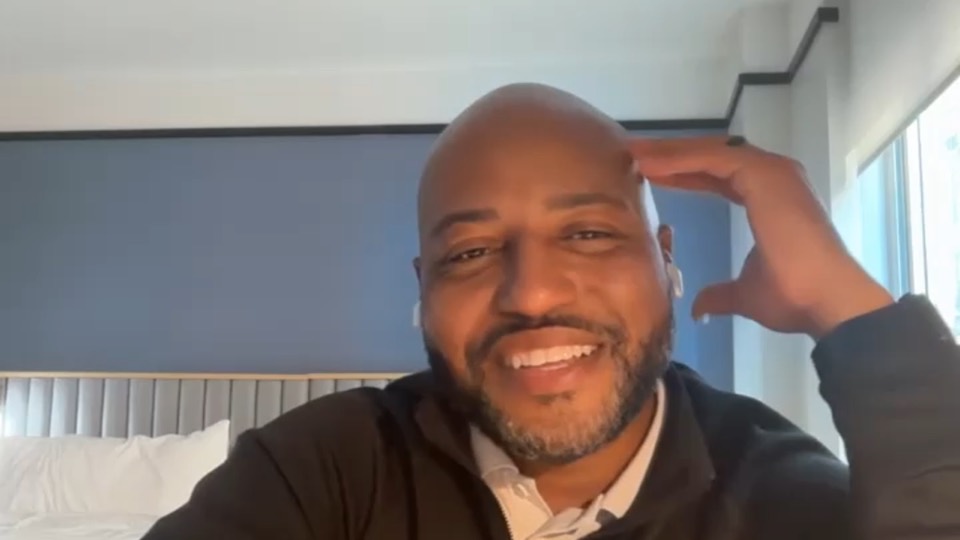
Ra'Chard Dennis, SVP Operations at Insomnia Cookies, is the guest on episode 57 of the Restaurant Tech Trends podcast, hosted by Justin Foster.
 Play episode
What Ra'Chard and Justin discuss
- How Insomnia is scaling from 360+ locations toward an 1,800-location global vision, and the "five strategic prongs" that are driving that growth
- Why Ra'Chard's mantra is "no cubicle decisions" and how asking his team "tell me where you're cheating" has become his secret weapon for surfacing field innovations worth codifying
- Ra'Chard's honest take on what gets oversold in the POS space and the RFP questions operators forget to ask that come back to bite them at 1AM
Also in this episode
- What Target taught Ra'Chard about leadership at age 24, how Insomnia balances in-house drivers vs third-party delivery, and his hot take on cookies for breakfast
- Rapid fire answers on dunk vs no-dunk, crispy vs gooey edges, and one flagship at 100% vs 500 at 80%.
Episode notes from the host
WARM COOKIES AT 2AM?!
On today's Restaurant Tech Trends I sit down with Rachard Dennis, SVP of Operations at Insomnia Cookies, the late-night delivery-first brand delivering warm cookies to your door when most restaurants are long closed. With stops at Target, Subway, Wingstop, Taco Bell, and Smalls Sliders along the way, Ra'Chard is a proven operator who knows execution is everything.
Thank you Ra'Chard for the field-tested perspective. This one's packed with ops gold for anyone scaling a multi-unit brand.
Transcript
Full transcript (5,718 words)
Machine-generated transcript; names may be misspelled.
0:00 Hey everyone, welcome to Restaurant Tech Trends where we explore restaurant technology trends with some of the industry's biggest movers and shakers in a rapid fire short interview format. This podcast is produced by Incept AI. Incept AI takes restaurant orders over the phone and in noisy drive-thrus with friendliness and precision. Learn more at Incept.ai. My next guest is Ra'Chard Dennis, SVP of operations at Insomnia Cookies. Very cool. He's a brand, one of the most unique and fast growing late night delivery concepts in the country. Ra'Chard has spent his career building and scaling operations at some seriously recognizable brands like Small Sliders, Wingstop, Subway, and Taco Bell. Today, he's the guy making sure warm cookies show up at your door at 2am. Very, very healthy. Every time without missing a beat. He's a proven operator who knows that in this industry, execution is everything. Welcome to the show. What a great introduction. I've got to have you follow me around so you can give an introduction when I meet new people. Thanks for having me. You the man. Let's go get it. Before we talk about insomnia cookies, I'd like to just chat a little bit about how you got to where you're at today. Follow your career progression. I saw you actually started at Target, which is kind of interesting. And I'm always curious to see how people make these leaps between. Industries. Tell me about like what made you make the jump from retail to restaurants and were there any lessons that you picked up on the retail side that you think most restaurant operators should know about? Yeah, I think it's like one of those things where people just, they stumble in into either retail or, or to restaurants. I mean, my degree was public relations and advertising, but I had the honor of actually working for Target when I was in college.
1:56 Um, so when I got done with college, they gave me a great opportunity to come in as a, as a management level. Um, and I learned a lot here, here are the couple of things that I learned my time at Target. I had this great flow team leader. So her job was to run the logistics flow, unloading the trucks, making sure the shelves get stocked and all that good stuff. And I was like 24 years old and she pulled me aside and she's like, your, your work ethic is like up here. Like your speed is like right here. And, but I'll tell you this, Mr. Charlie, you're very, very smart. The team hates you. And I was just like, what? She's like, the team hates you. And I had the privilege of getting like really good feedback early on in my career. And really what that feedback was is I wasn't taking the team along the journey and I wasn't really listening to them as far as what their thoughts were. So me getting that really, really early in my career, it really helped me out, um, during my time at other large companies. The other pieces I learned from, from retail I use still today in food is really those visual cues that you have to focus on in retail. Do you have full end caps? Do you have properly zoned shelves, right? Are you creating a journey or atmosphere for your customers to come in and actually buy something, have that impulse buy, Hey, I'm coming in for my detergent or coming in for my milk, but how can I get you to buy a shirt or buy a toy for your child?
3:23 And so that, that, that really ingrains that into you that I've used here in the restaurant world. And it's something that I call the IOC. It's the impressions of control, right? It's everything from how's your lobby look, how's the front doors look, are we clean? Are we inviting, um, are windows clean? One, it helps deter staff, right? But also creates that warm experience that we want our guests to come in and see. So yeah, a lot of, a lot of similarities to it, but, but they work together. Yeah. Well, I'll say one thing you mentioned that I think just immediately stuck out is making a good transition to restaurants is your boss said you are an extremely hardworking person. And I don't think that there is an industry outside of this one where people work harder. So the industry is lucky to have you. Um, let's go a little bit past target. Um, you spent nearly a decade at subway. Um, you went, uh, from being a franchise business consultant all the way to global senior director of restaurant operations and subway, as we all know, you know, it's one of the most complex franchise systems on earth. I think maybe subway might have more franchisees than any other restaurant worldwide. Um, if not pretty close, um, what did that experience teach you about the relationship between ops standards and franchisee buy-in, which as we know sometimes can be quite difficult to secure? How do you build one without losing the other? Uh, very, very carefully. It's, it's definitely a balancing act. I mean, I have to go back to my target time of that feedback I got about listening, right? Truly listening to what people are saying or trying to convey to you of what's working and what's not working. Me having that skillset and applying it into subway was perfect, right? Because when you're in that franchise type of world, it truly, it's a partnership that you're trying to cultivate, right? At the end of the day, we're all trying to win, which is make the brand the best as possible for the guest. Now at subway, the complexity of it was all the points that you've made. I mean, it's a, it was a 44,000 restaurant behemoth, right? Around the world. You had multiple franchisees and you had multiple approaches to the business. And so what I really learned is, is that you have to explain the why behind everything to the franchisees. They want to win, they want to be profitable, but you have to show how your ops standards can help them achieve the goals that they're trying to go after, which is having a successful business and having good returns
6:00 as well. So pretty much whenever it comes to rolling out new ops standards, just framing it through that lens of franchisee profitability, that's the key, would you say? It's, it's, it's really around, it's, it's one, it's, it's how can you protect the brand itself? That's the number one job of the company itself. And then the number two job is really to drive top line and bottom line to, to the franchisees. And it's, if you don't take the partnership, you're going to have a long road. And I had the privilege of working at subway during the $5 foot long where anything was possible, right? And then going through the business transformation of trying to run the business, but also fix the business at the same time, but also providing strategy and, and hopes by the wrong word, but, but hope for the franchisees that we're going to nail it on the next go around with that transformation. Got it. All right. Well, let's shift gears to, um, Wingstop. So when you're at Wingstop, you faced a bit of a different challenge. You led the opening of 80 international locations, and I think just around two years, what does it take from an ops perspective to open that many units that quickly across different countries? You've, you know, you've got different cultures, you know, do the same standards translate from one country to the next, or how much do you have to localize there? And what is the, the thing that most brands you think catastrophically underestimate when they go international? Yeah. Here's, here's, here's what I would tell you. Opening up 80 locations international was the easy part, right? The hard part is really assessing what markets we should be going into, right? And then all of the things that go into that from a labor profile perspective, what, what tech stack should we be using? Should we be using our tech stack or should we go local?
7:58 Um, just because of different hardware or service agreements that we can get in these countries as well. Um, and the last piece is really identifying the right partner or right franchisee or the right licensee that you want to use in these countries. Um, just because a lot of the things I've seen on the brand struggle with is understanding what they're good at from a brand perspective. Every brand has a brand and they have a product, they have a logo, but some brands might be great at supply chain. Some brands might be great at technology, but we were able to identify the things that we were good at from international perspective. And we leveraged the franchisees on the parts that we were not good at from an international perspective. So we would focus on marketing and we would focus on real estate. Those are the things that, that we were good at, but they were, we wanted to be better at. So we picked franchisees that can actually go do that as well. And then the last piece of it is, is really around the operations. It's the training elements of it. I'm really communicating what the standards are. Something that I call freedom in the framework. This is our brand. This is our product. This is our colors. Don't touch those, but everything else. Let's try to match that to one, the consumer needs, and then also the employee needs in that country as well too. That's where people really struggle, where they want to take their box that has been successful in the U S and try to drop that into Indonesia where the customer base in Indonesia is completely different than what you would see in the U S.
9:26 I see. That makes sense. Um, you know, I I'd like, this is restaurant tech trend. So I want to drill into one of the things you mentioned, which is localized tech stacks. You know, there are people in it CTOs that watch this and I can just see people's like hair standing up on their arms when they're, when someone is talking about having a heterogeneous tech infrastructure with, you know, different POSs and whatnot in different countries, like real talk, like, were you able to make it work or did you end up deciding to standardize and how did that like funnel back into like reporting and stuff like that? And how difficult did it make it to enforce, um, you know, brand policy? Yeah. During my time, during my time at Wingstop, we really did not really enforce a true tech stack. Um, at that point in time, um, I believe now that they probably have made some leaps and bounds and they probably have put in some type of standardization into Wingstop. But at that point in time, we didn't have that. I mean, our main focus at that point in time was one, getting the data from whatever tech stack that they had local. I mean, of course we didn't want them going out and buying like a mom and paus system. We wanted something that was true and that was tested and that was validated that, that the franchisees have used other concepts as well too. And we, of course we wanted the data to be able to help and support them in their business and give us transparency, um, into it. But, but a lot of the things that we did at Wingstop, even from a technology standpoint was, was our head of technology. She would validate the technology.
11:00 Is it, are we protected? Are we protecting ourselves? Are we protecting the franchisees? Are we making the right investments from a scalable standpoint? And then that's really, that's really something you have to think about from a franchise perspective. If it was corporately owned, we would definitely, definitely taking a different approach from a technology standpoint. Okay. Well, good answer. Um, let's talk about Insomnia Cookies. That's where we're at today. So, you know, Insomnia Cookies has a very unusual operating model for, you know, a restaurant, you know, runs until 3am and it's built around delivery as much as walk-in and your core customer tends to be, uh, awake a little bit later in the evening than I think the average restaurant patron. Uh, how does that late night delivery first model change the ops challenges that you're solving for compared to pretty much every other restaurant brand that you've worked at? Yeah. I mean, every, every brand has something unique about it. Right. And so here it's in our DNA to be up late night, right? Like we're insomniacs and, and our, what our job is, is to deliver that warm experience, that warm cookie to everybody that's awake. The challenges that, that I do face is that I use both third party delivery and I also use, I use my own delivery drivers at most of our locations. So there is a healthy balance, um, of, of us using our drivers compared to third party. My overall first choice always is to use our drivers. Um, for us, I can control the experience. I can, I can control that, make sure that a warm cookie is showing up and it's accurate and we're verifying it. With third party, I mean, you have your, you have your challenges at times. Sometimes the cookie can be late. Sometimes the cookie can be cold, um, as well. Um, but, but our, our, our primary goal is always our, our, our drivers from a, from a late night perspective.
13:01 I really, I really look at us very similar to like what I did at Taco Bell and you have different consumers at different day parts. Right. So I might have the soccer mom during the day. And then at late night, I'm going to have the college kids down in Austin, Texas that will, that will flood one of our bakeries from 1am till three o'clock in the morning. And at one o'clock and three o'clock in the morning, anything's possible at that point in time, but we will still want to deliver that, that warm and that safe experience to all of our guests. You know, I've got to ask this question, right? Yeah. Has insomnia cookies seen any growth patterns in its business that correspond to the legalization of certain substances or the opening of different types of retail establishments in close proximity to your stores? Maybe, maybe, I don't know. I don't know. That's a, I think that's a really good data point that somebody can probably go Google, but maybe.
13:57 All right. Well, let's talk about insomnia's growth. Um, I think the company is targeting 1800 locations globally over the next decade. I think you're, are you, you're around 350 today? Is that right? Yeah. We're over 360 right now and we're still going. Yeah. That's awesome. Um, I mean, that's like insane growth. We talked earlier about opening 80 wing stops internationally, and now we're talking about basically five X-ing, you know, the number of units that you've got from a purely operations standpoint, what has to be true before a brand is actually, ready to scale like that at that pace without the wheels just completely flying on. And it's, it's, it's as much, it's, it's process, process, process. I mean, it's, it's codifying our process from, from how we, we onboard our team on how we train our team. And then also how maniacal we are over a warm cookie. I mean, I can't, I can't tell you, like, I keep bringing up more. I mean, that's all we ever think about is, is, is how can we deliver that fresh cookie at all times? And how can we be consistent, um, as well too? So it's really just codifying the core. Now, one thing I will tell you is that's very unique to us in Insomnia is that this brand was built on a college campus.
15:18 So, so we really saturated the market from a, from a university perspective. And so now what we're doing is we're going from universities and we've gone to major cities like downtowns. And now what we're going into is more of the suburbs. So really we're following that journey of a person, of a young person, I'm going to college, I get a job, now I'm having a family. And now what we're targeting next is, is non-traditional, right? The train stations, the airports, and then the fifth prong is international. All five of those buckets are location. They operate different. They still deliver that warm experience, but the day parts are different where I deploy my drivers as well to what type of labor I use, what type of hours of operations I use, but, but it's all still true to codifying your ops and all of your processes. Got it. Well, let's, let's dive into that a little bit more. I think this actually ties in segues really well into the next question I wanted to ask you, which is about, um, being able to fix ops issues in the field versus in the office. And obviously you're catering to these different day parts. You're doing more non-traditional now you have different playbooks, you know, for each one of these different concepts. Um, how are you effectively making sure that you've got a team that can walk the floor, like read the schedule coach, you know, in real time? How, how do you build a culture of that kind of, uh, like real hands-on leadership and do that at scale? Like, how are you architecting the organization to actually be able to do that? And what role is technology playing to make that possible? If, if any, yeah, you know what? Long, long question, but then let me unpack that multiple different ways here.
17:07 So what I would say here, here, here at Insomnia, one of the benefits that I have working here is a CEO and founder. I mean, just, just, just the word founder of Seth who create the business is extremely helpful. I mean, we talk about hands-on, he's very, very hands-on and he's tasting cookies, he's showing up to locations and that really helps sets the tone, um, for us in the company. For me, one of the things I've always told all of my teams is, is no cubicle decisions, right? If you're going to make a decision, then you need to be out in the field to verify is it actually working as well too. So even for me right now, I'm actually on the road because I want to be out there in the field and see exactly what are the pain points that we need to go back and solve, right? And then also like to ask a question to team is saying, Hey, we just wrote this new process. Tell me where you're cheating. And they're like, what? I mean, just tell me where you're cheating. It's my way of understanding of like, we told you to do something this way, but you've maybe have found an easier path to actually execute. And then if, if you did, let's steal it and let's codify it. And then also from, from my op services team is what I told them all the time is, Hey guys, let's get an 80% there. Let the field take care of the other 20%. The last part, the last part of your question around technology as an, as an operator, I'm looking for technology to be an enabler, to make the business easier for us in operations, to really give us the data that we need so we can understand where our pain points are, where our successes are. And then also some new things that we're not thinking about as well. I mean, and then the last piece for me, just from a technology standpoint, I'm all about the UX. I'm all about the user experience. Like, like how can we, make technology just easier for our team members? Right. So, so, so I'm, I'm not naive thinking that our team members, this might be their second, this might be their second job. This might be their full-time job, right? They have other things going on. They have kids and priorities. We want to make this very straightforward. Right. And so that's where I look at technology from the, our button, our button placements, how we ring up sales, how we deploy our drivers. I want to make that really simple, less clicks, like less clicks leads to less errors. Sorry, I was very long-winded on that one.
19:27 Well, it was a long-winded question, so it deserved a long-winded answer. And I do want to dive a little bit more into some of the tech specifics, specifically on POS, but there's something that you mentioned that I, I'd like to click on just a little bit more, which is, you know, you create the op standards and then you go out in the field and then you see that an operator is doing something a little bit differently than what the standards say. And you use the line, you say, Hey, tell me what your cheat is. And some of those ideas I'm sure are really good ideas that you do want to codify. Like you're saying, but I'm sure there are probably some ideas that are not good ideas as well that you hear. How do you surface like the ones that are good versus like having that conversation with the operator saying like, eh, nah, I don't really think so. You need to come back to standard here. Cause that, that can be tough. Yeah, it could, it could be tough. I mean, the way I've always looked my, my career in operations is if somebody is doing something wrong to our standard, as long as they're not violating like our code of conduct or our food safety or our essence of a brand, then it's something that we should definitely be looking at, right? Like if you become closed-minded in this, in this world of restaurant or service industry, you're dead, right? You have to be able to be, to feel good about ambiguity and really pushing the line. I mean, from a technology standpoint, I mean, some of the challenges that, that, that any company of this size goes through is really communication. Is, is how can, how, how can you have that true organic back and forth communication with the frontline teams to, to the people that are sitting in our support centers will too, but, but to do it in a way of speed so we can hurry up and we can solve it and communicate out the new changes in processes. I mean, that's a challenge at times.
21:19 Yeah. Okay. That's a great answer. Um, let's move back over here to the tech stuff. Uh, so we talked about, you talked about button placement, fewer clicks, having technology not get in the way. Um, probably the most core piece of technology for any restaurant operation is the point of sale system. I believe you guys use revel as your POS and is the person that's running ops. How do you think about what you actually need from a point of sale system? What gets oversold to you? And if there was like one thing that your point of sale system could do that it's not doing today, what would that be? Yeah. Yeah. So this is what I need a POS to do for me in a very, very simple way. I mean, transactions are seconds, right? Um, it's speed is everything. And so, so I need, I need a POS that allows me to quickly ring up the order and then check for any kind of a loyalty and, and, and, and card reader and payment quickly in and out. Um, that's first step. Second, second step is really the data itself ability to be able to, to, to unpack all of the data out of the POS so that we can understand what's working and what's not. Um, give me one second. Okay. Sorry. Sorry about that, Justin. Pulling the, pulling all the data out is well too. One of the things that a couple of things that I think gets oversold from a technology standpoint in POS is when POS companies try to do multiple things, right? Hey, we're a one-stop shop. We can do all of this. We can do all of that.
23:09 When their core business could just be truly POS. Okay. We're a POS, but we're also a back office. We're also labor scheduler. We're also an LMS system. And then you kind of start getting elements of like, Hey, the POS is an A, but your LMS is a C and your labor is a B, right? That's not good for me. Right. The other, other elements that I don't think people really take into consideration is the service, right? A lot of times when you sit through the RFP, they're going to tell you all the great things about it. Hey, you're going to save money doing this. You're going to save money doing that. But you don't ask the questions of like, Hey, if my POS goes on at one o'clock in the morning, is somebody going to be available? Well, we're, well, we're working on that. No. I need to know. Right. And then the other piece of it too, is really based on where your company's vision is going. Cause I mean, you're going to lock yourself up for multiple years in this POS is. So if you have aspirations of international, you need to make sure that you're providing, you're going to provide a provider that can actually support you in the countries that you're going to hardware, software, and a service standpoint as well too. I think people just miss that. I think people just get so caught up on, Oh my gosh, I don't want to spend the money, but it's an investment into the business. Sorry. Very long winded. I'll get passionate about that. That was great. Feel free to just plead the fifth on this one, but is there anyone out there in the POS space that you think is doing a particularly good job right now that you'd want to shout out?
24:33 There's multiple, um, great POS systems out there. And I also think that there's some POS systems that don't exist today that will exist in the future, especially with look at AI. That's a very good dance around the question on that one. How's that? Totally fair. All right. Well, um, last question that I've got for you here. Uh, and I think a lot of people can relate to this situation. So insomnia, you guys recently completed a major ownership transition, um, from an ops perspective, what does private equity ownership change actually feel like for, for you from the inside, uh, the business and how has it changed, you know, what you're expected to deliver and how fast. And before you answer the question, let me just preface it with, I've talked with a lot of people that have gone through this exact situation that have encountered a lot of, um, ugly surprises or things that they weren't aware of. We're going to change a lot of org changes happen. Um, oftentimes these ownership transitions, um, share your experience. It's been phenomenal. It's been great. I mean, we, we, well, what we kind of look at it is, I mean, we have, we have different pillars of the company, right. Um, part of our long game, um, and, and the type of partners that we have right now from private equity, I mean, we're very aligned and we're very focused of where we're trying to take insomnia cookies. And I don't think we would be in this position if we didn't have our CEO and founder, which is Seth. And so he is a big proponent of where he's, where he wants the business to go. And we're all very aligned to it. Um, having this, this group with us has been extremely helpful from an insights perspective, from a data perspective.
26:19 And of course they're in different businesses and will too, they help really kind of guide us in, in the right direction. But no, I think it's been phenomenal. And I, and I also have heard the horror stories from other people that have gone through this. And I am actually extremely lucky to actually say that this has been nothing more than a very positive experience. So I actually, number one, I actually believe you. Uh, I, I, I do think you are very lucky. I think it's not the norm for that to happen. Um, so I do truly hope that that is the truth and that's the case because if, if so, like you're definitely in the minority. Um, that's awesome. All right. Well, Rashard, we're at the end of our formal questions, but we're not done yet. That's because we're going to finish this up with a series of rapid fire questions. Oh yeah. So yeah, Rashard, a little surprise for you. Got a series of questions I'm going to ask you for everyone that's watching or listening. Rashard has no idea what these questions are that I'm about to ask the rules of engagement. Rashard are try to answer each one of these questions with one word. If you can, if you can't answer with one word, try to do it with one sentence. Are you ready? Very long winded. Let's go. All right. Classic chocolate chip cookie or something wild off the menu. What are you ordering?
27:40 Chocolate chip. Chocolate chip. All right. This is a bit of a softball late night craving cookies or something savory cookies. All right. What's the best cookie dunk milk, coffee, or no dunk straight up, straight up. All right. Would you rather run one flagship location flawlessly or 500 locations at 80%? One flagship. 100%. You got to be a hundred percent. You got to get it right then. I got to get it right. Got to get it right. You got to get it right. Man, that was the hardest one. That's hard. You got to get the one right. Once you get the one perfect, then you can go out to the other. It's a domino. It's a domino effect. All right. Do you like your cookie edges to be warm and gooey or slightly crispy?
28:48 My personal choice is crispy. My personal choice. All right. We may have covered this. I'm not sure. Your first job in the restaurant industry. Was it glamorous or was it a total disaster?
29:09 Disaster. Disaster. Disaster. Can I give you more context, though? Or I can't. Is that against the rules? It was a country club in Indianapolis, Indiana. That's where I'm from. And so they hired me at the age of 15 to run the grill with no experience whatsoever. So I made a lot of rich golfers very, very angry. And some of the Colts players were there as well, too. So I didn't last long at all. Oh no oh no well look at you now so anyway uh last one that i've got for you cookies for breakfast acceptable or hard pass no no truly acceptable i mean cookies you can eat a cookie at any point in time absolutely you should if you're not doing that you're missing out uh serious question actually yeah um with the rise of like all these glp ones i can imagine this is probably having an impact on your business have you seen any negative impact from the rise of like ozempic uh terzepatide reddit any of these new um any of these new weight loss drugs no i mean honestly i think i think every service industry right now every service company right now is feeling some type of pressure from the macro i mean everything from from gas prices to to do cost of goods i mean everybody's seen something i mean i think everybody's is pulling back uh to really understand what's going to be happening next so to really kind of classify it as far as the the weight loss stuff it's really hard to really do that yeah okay well Ra'Chard i want to thank you very much for your time awesome interview man i'm really glad that we were able to meet in this format after we met one another for our dinner i think out in atlanta um dallas dallas my hometown dallas it was good it was good man it was it was perfect i think it was the first one that you guys did and i would say if if nobody has done it you have to do it um i don't like going to a lot of conferences and hearing the same thing but it was the first time being able to sit in a room with other operators uh hr people technology people and having like a true honest conversation about technology from a holistic perspective so i i actually found it very very beneficial and i would definitely do it again awesome man well we're going to be back in dallas uh later this summer i we might even be in i think in june we'll give you a heads up when we're out there um everybody Ra'Chard dennis svp of operations at insomnia cookies Ra'Chard thanks so much thank you have a good day see you later