Episode 56 · April 16, 2026
Kathy Alcaras
Multi-Unit Restaurant Technology Leader
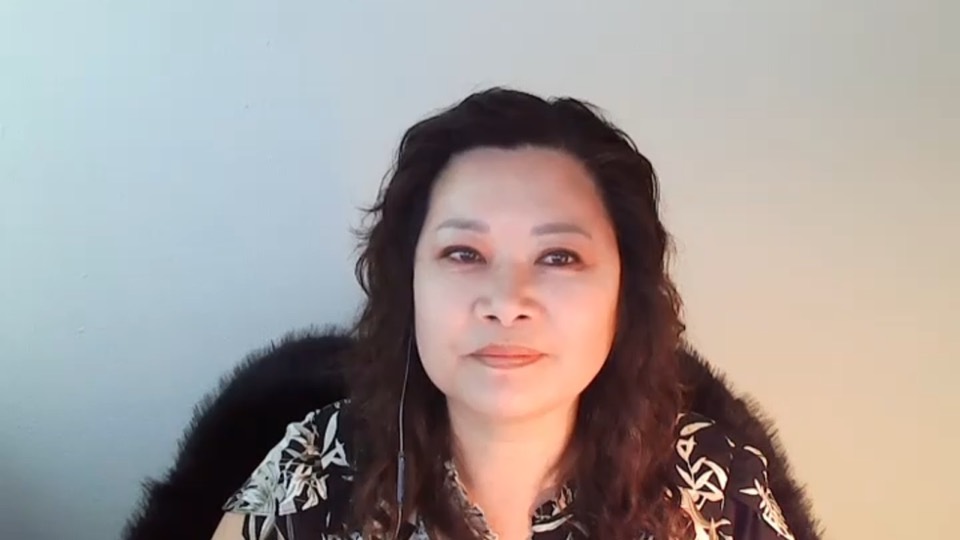
Kathy Alcaras, Multi-Unit Restaurant Technology Leader, is the guest on episode 56 of the Restaurant Tech Trends podcast, hosted by Justin Foster.
 Play episode
What Kathy and Justin discuss
- Why Kathy doesn't lead with technology - she leads with outcomes - and how 14 years on the ops floor made her a fundamentally different kind of IT leader
- How Kathy stood up online ordering in under two weeks during COVID - as an IT team of one - and the four-step playbook she used that still works today
- Why knowledge base management is the most underrated AI application in restaurants right now and why AI doesn't fail because of algorithms. It fails because of data
Also in this episode
- Kathy shares what she's looking for in her next chapter, what's changed (and what hasn't) for women in restaurant tech, and why the best partnerships in this industry feel like making a new friend for life
Episode notes from the host
40 years in restaurants. 14 on the ops floor before crossing over to tech. Today's guest has seen it all... and she's got the receipts.
Today on Restaurant Tech Trends I sit down with Kathy Alcaras, a multi-unit restaurant technology leader with stops at Polly's Pies, Grill Concepts, Eureka Restaurant Group, Jollibee Foods North America, and Pressed Juicery - plus she's a Hospitality Technology Top Women in Restaurant Technology Award winner.
Thank you Kathy for the candid conversation and for sharing a career's worth of hard-won perspective. The industry is better for having leaders like you in it.
Transcript
Full transcript (3,792 words)
Machine-generated transcript; names may be misspelled.
0:00 Hey everyone, welcome to Restaurant Tech Trends, where we explore restaurant technology trends with some of the industry's biggest movers and shakers in a rapid fire short interview format. This podcast is produced by Incept AI. Incept AI takes restaurant orders over the phone and in noisy drive-throughs with friendliness and precision. Learn more at Incept.ai. Today's guest is Kathy Alcaras, a restaurant technology leader with almost 40 years in the restaurant industry, including 14 years in operations before she crossed over onto the tech side. She's held IT leadership roles at Polly's Pies, Grill Concepts, Eureka Restaurant Group, Jollibee Foods North America, and most recently, Pressed Juicery. She's a Hospitality Technology Top Women in Restaurant Technology Award winner and sits on the board of the California Restaurant Foundation. Kathy, welcome to the show. Thank you so much for having me here. I'm really glad we got to do it. It was a pleasure meeting you the other week at Mertech. Absolutely. So, absolutely. You are quite a busy lady. We're going to talk about that in just a little bit, how you managed to fit all of this stuff into your schedule. But first, let's talk about how you got involved in restaurant tech. So, you know, I mentioned you spent 14 years on the operations side of restaurants before you crossed over to the dark side with us techies. Was there like a particular moment that made you realize that restaurant tech was your calling? Do you think that ops background makes you a fundamentally different kind of IT leader? Share your insights. Well, I did not have a single aha moment. It seems like it was a pattern I couldn't ignore. You know, throughout my operations career, I kept asking the same question.
1:54 There has to be a better way to do this. Everything was so manual. Whether it was inventory, scheduling, or P&L reporting, I was constantly looking for ways to reduce manual work and improve accuracy. And mind you, I was 16 years old at this time. When technology started to become more accessible in restaurants, I naturally gravitated toward it because it solved the exact problems I had been living with every day in my job. I say job then because it was not yet my career. The operations background absolutely makes me a different kind of IT leader. I don't lead with technology. I lead with outcomes. I understand that what it feels like on the floor during a rush, what a broken process costs in real dollars, and how adoption succeeds or fails at the store level. And that perspective keeps my team's focus on solutions that actually work in the real world and not just on paper. So I'm curious, having been an operator, does it make you more or less forgiving toward your technology vendors? I would say I'm more understanding because I understand that if they don't have the experience in the restaurants, they will not know what we have to go through. So willing, if they may, they come with us to our stores and experience what the pain we feel. And they will feel it as well.
3:22 And then they will push to their leadership on how to fix things on their end, rather than saying, oh, it's going to take about three weeks to fix this. I'll come and see what we're going through. So there. It's so important to spend time on the floor. And you know what? There's just no other industry like this industry where technology has such a brutal, immediate impact on operations. If it's broken, it's like really, really broken. And it happens right away. It does. It's not like, you know, so many different industries or, you know, you have software that breaks or something and, oh, you know, that can get fixed in a couple of months. Like, oh my gosh, it's just brutal. You got to do it right away. That's true.
4:04 Okay. Well, you've worked at brands across a huge range of sizes, from like Polly's Pies to Jollibee Foods North America, which is obviously a global company. I think they've got thousands of locations, 34 countries. Tell me a little bit about how the job of a restaurant IT leader changes as the brand gets bigger. And what are some things that smaller chains get wrong when they try to copy what the big guys do? Oh, definitely. The role of a restaurant IT leader evolves significantly as the brand grows. In smaller organizations, you are very much hands-on. You're building, running cables, climbing walls, building, and doing, often supporting systems directly. Speed and practicality matters most. But in larger global organizations, the role shifts to orchestration. My team at Jollibee was only responsible for the locations in the US and Canada, but were partnering with the global heads of departments, aligning cross-functional teams, managing vendors at scale, standardizing platforms, and ensuring consistency across regions while still allowing for local flexibility. And where smaller chains often struggle is trying to replicate an enterprise level complexity too early.
5:27 They overbuild and they invest in systems and processes that require scale to justify, which slows them down and creates unnecessary costs. So... Do you have an example of that? Can you think of one in your career? Um, well, my job is to stop it before it happens. So, uh, we have not gotten to that point. So, uh, I didn't want to create extra work for everyone and by everyone that includes myself. So if you feel like it's not a practical project to complete, or maybe if you would shift to a different type of, uh, solution, then you can stop, stop, stop the madness, right? And before it starts, um, I think the better approach is to build with intention, like put in place scalable foundations, but stay disciplined about simplicity. Complexity should be earned and not assumed. Yeah. Right. Well, I think that's actually a good segue into, um, something you did at Eureka restaurant group, where you built the brand's first online ordering platform. And you also rolled out, uh, contactless ordering during COVID. How did you do that quickly? And without a big IT department, without having things break? Is there like a playbook that you used for that, that you could share?
6:44 Yeah. Um, I would, I'd want to say we did it cause we had no choice, but at, at Eureka, we did not have the luxury of a large IT team. So we focused on what mattered most speed, stability and guest impact. And at that time, my team was furloughed during the pandemic. It was an IT department of one. And I was fortunate to have a great operations partner that gave me a crash course in guidance of the business as I was just a month into this new role. So the playbook I use, was pretty straightforward. Uh, first thing is prioritize the highest value use case first. So first priority for us was online ordering, um, because the restaurants were closed and they are only to go orders were accepted. So, um, it needs to integrate with the POS and the KDS. Uh, second thing is leveraging existing platforms instead of building from scratch. Aloha online was the existing platform and it integrates with itself and the KDS. So it made sense to go in that route. Third is to partner closely with operations to ensure adoption. I made sure I was present with operations to receive feedback and made immediate corrections. And that's key immediate corrections. Um, the fourth thing is in, uh, iterate quickly instead of waiting for perfection.
8:03 So did the online ordering work and integrated with POS? Yes. It took me under two weeks to implement, uh, when it usually takes about eight weeks with the adequate pilot and test phase. Um, but was it pretty? Not so much pictures came later. Um, during COVID that approach, uh, allowed us to stand up both online ordering and contactless solution quickly without over engineering the solution. And I think operators can still execute this way today, but it requires discipline. The technology landscape is more complex, but the principle hasn't changed. Focus on outcomes first and then features. The biggest risk today is, uh, moving too slowly because you're trying to get everything perfect, right? And the restaurant world, there is no such thing as a perfect solution. We often just make things work with compromise.
9:00 I want to dive in a little bit here because you talked about the importance of partnering with operations. And of course your background is as an operator and in operations. So are there any like specific, like little tips that you have about ways to really smooth that relationship between tech and operations and how, when do you bring ops in? How do you create the buy-in from ops? Um, how are you working with ops? Like as your partner, like what are some little things that you do that just make that go more smoothly? Yeah. First thing technology is to help people, not to just to have technology. Uh, operations is a very critical piece of the business, especially in the restaurants. Yeah. Partnering with operations should be done on day one. Uh, first ask them what their pain points are. What are we trying to resolve? Uh, what would they like us to help them do? Uh, you know, to eliminate, uh, the, the small work that then, then you can focus more on our, uh, customer service. Uh, get that relationship early on. Um, when you first start working with a company, ask them, can I work at a restaurant? Immersion is always important because you want to know how the business runs.
10:19 Uh, you want to know what the menu looks like and all this information is needed to build out your POS system anyway. So, um, having that relationship alone is going to be critical for your role in technology. Yeah. I always like to think of, and I'm curious if you agree, or if you think about it a little bit differently, but I always think about operations as the customer ultimately. And technology is basically helping the customer. And we need to think about operations as, you know, being the client, basically the internal client. Yes, true. And whatever we can do to eliminate menial work for them, like my, my worst, uh, part of, uh, starting my shift as a manager, when I was in operation, was doing the line check temperature check. And we call it line check buffet because after we take the temperature, we have to taste the food. So seven o'clock in the morning, you're tasting salad dressings. It's not a good taste in your mouth without eating breakfast yet. Um, but now we have temperature monitoring with, uh, automatic, uh, you know, probes and, and sends the information directly to a corporate office. So you don't have to fax it in, go back and it was faxing, email it in to your area director. Sorry. I said fax.
11:39 I said fax. Dating yourself. I know. Oh, no. That's so funny. Uh, all right. Well, let's shift gears to one of my favorite topics, uh, for this podcast, which is of course, AI. It's all anyone is talking about these days, AI and restaurant. Um, you have posted recently about AI and restaurants and how AI's moment has finally arrived. So what specifically changed to make you believe that? And what do you think the most underrated application AR of AI are in restaurants today that operators are just not talking about enough? I believe that the restaurants are not positive that AI is present, uh, presently available for them. But, um, and what's changed is not the concept of AI, but the practicality of it. Uh, we, we now have better data availability, availability across POS digital and back office systems. Uh, we have more accessible tools that don't require heavy data science teams. Uh, we are clear. We have clear operational use cases that tie directly into the business outcomes. So AI has moved from being just experimental to being actionable. And the most use, uh, the most meaningful use cases discussed at a conference that you, you and I were there. Um, they were talking about labor forecasting, knowledge-based management, um, operational insights and guest engagement. The, the focus is now on improving decisions, reducing friction and driving measurable outcomes. Right. And the most underrated application right now is probably a knowledge-based management. Uh, because I've written a whole bunch of knowledge base back going back 20 years and, um, having, having this knowledge-based management is critical for any company. Um, restaurants have a tremendous amount of institutional knowledge that is fragmented across systems, documents, and people like me. Uh, AI can centralize and surface that information in real time, which has a direct impact on training, uh, consistency, and the speed of the decision-making. And how many times have you heard this? AI does not fail because of algorithms. It failed because of data. I mean, AI tools can help clean data, but human discipline and ownership are still required. Right. We heard it here. Knowledge base. Knowledge base. That's where it's at.
14:19 Um, let's talk a little bit about some of your work outside of the office. So you put in a lot of volunteer hours. We've talked about that in the intro, um, with the California restaurant foundation. You're also working with the IFBTA. Um, first of all, it's hugely admirable that you do this. And I wish that more professionals in our industry took the time out to help advance the greater cause. So just huge kudos just in general. How do you find the time to do it? And what are you currently working to help advance with these groups? Yeah. So my involvement comes from a genuine belief that came from one of my mentors and that this industry gave me my career and I have a responsibility to give back. So I, I make time for it. Um, what makes, and then about IFBTA, what makes it different is that its focus is on practical applications. It's not just about trends. It's about how technology gets implemented in real restaurant environments and how we move the industry together forward or forward together. And I believe that the IFBTA plays a unique role because they sit at the intersection of operators, technology providers, and thought leadership. They create a space for honest conversations for what is actually working and what's, what is not. Um, the IFBTA holds quarterly meetings for each of their local chapters led by local chapter chairs. So Southern California has their own chapters and chapter chairs, and they vary from small to medium business as well as large corporations and attendees. And since not everyone has the budget to attend all industry conferences, these meetings offer a valuable space to share key takeaways. And they allow us to address important local issues while learning from one another's successes, setbacks and experiences. So I appreciate that. Okay. That's great. Let's keep talking about, you know, pushing things forward in industry. So you won the 2021 hospitality technology top women in restaurant technology innovator award. And you know, someone that's been in this industry now for almost four decades, um, you know, how much has the experience of being a woman in restaurant tech actually changed? You know, we've got world, we've got all these different groups that are out now, you know, where does the industry still have real work to do as you look ahead? True. I was, I was just speaking to a friend of mine that, uh, during the last conferences,
16:55 the glass conference we attended. And when I first started attending these conferences, that's, uh, maybe 16 years ago, there were just a handful. I mean, handful of female restaurant tech leaders that would regularly attend. It was great for us because, uh, there were no lions in the restroom yet, yet not so great because there is a lack of female representation in the industry.
17:19 But, but seriously, uh, there has been meaningful progress over the years. There are now more women in restaurant lead, uh, in leadership roles today, and there's a, and there is greater recognition of their contributions. Uh, that said, there is still work to be done. Representation is at the highest levels, uh, but still not where it should be. And there are still moments where women have to work harder to establish credibility. And I mean, the last conference, uh, awarded women for their progress and, and contribution to the industry. And we are now witnessing a growing group of brilliant, rising women leaders who have the potential to level the playing field in the near future. But what has changed most is the community today. Like you said, that we're the world and, um, and that there is a stronger support among women in the industry and more visibility for those coming up. The, that momentum does matter and it is something we need to continue to build on.
18:21 Yeah. It's really, I mean, obviously I'm, I'm looking on the outside, but it is really inspiring to see all of these groups coming together and helping build this sense of community. And I feel like it's a very positive thing, um, for the industry as a whole. So hopefully that continues to advance. Um, so, you know, right now, you know, you're in between roles after a brief career break, which kind of gives you a bit of a rare vantage point to look at the industry without having a badge on. What are you seeing clearly now that was maybe harder to see when you were inside a brand and what kind of opportunity would make you say yes to the next chapter? True. This recent career break has given me a clear review of the pace of challenge in our industry. It's, uh, provided me with the perspective of a restaurant technologist who can objectively evaluate the innovation presented at the conferences without being constrained by a budget limitation or specific project depends. So there's a lot of innovation, especially around AI. Uh, but there is also a gap between what is possible and what is practical for operators to implement. Uh, execution is still the differentiator when selecting these projects.
19:36 Um, what I'm looking for in my next role is an opportunity to lead, um, meaningful, how do you call it? Sorry. Meaningful transformation through technology and accompanied values, both operational discipline and innovation where technology is seen as a strategic driver, not just a support function. Um, my background is rooted in operations and scale through technology leadership, which gives me a practical perspective on strategy. I understand that strong strategies only matter if they can be executed consistently across the business. And what kind of opportunity do I want? Um, a leadership role where I can build scale and mentor teams where while develop, uh, delivering measurable business impacts. I'm eager to join a company with a strong culture and contribute to a success over maybe the next 15, 20 years. So, you know, until I retire. I said that. Hmm. Oh, 15 to 20 years. Yeah. That would be great. All right. Well, um, Kathy, we've made it to the end of our regular interview questions. We are now going to move on to our rapid fire section. And for everybody that is watching or listening, Kathy has no idea what these rapid fire questions are that I'm about to fire at her. The rules of engagement, Kathy are, try to answer these questions with one word, if you can, one sentence, if you can't.
21:14 Okay. Are you ready? Ready.
21:18 All right. Jollibee, chicken joy, or chow king? Which one wins on a cheat day? Jollibee, chicken joy. Fuck it. All right. Uh, you spent 15 years at grill concepts, I think. What's the one menu item you still crave? The chicken pot pie. Yeah. Mm. Oh, I like this one. QR code ordering. Love it as a guest, or do you secretly prefer flagging down a server? Uh, as a techie QR code.
21:56 You know, I always thought QR codes were really underrated. I feel like they've kind of disappeared a little bit over the past few years, especially as we've moved out of COVID, but. They were supposed, they were supposed to die before COVID started. And then, uh, it came back like a vengeance. Right? We were. Yeah. Yeah. Everyone was using it.
22:14 I wish, I wish more places still use it. Honestly, I feel like there's some are phasing it out, but I always appreciate it when there's one there. Uh, all right. You went to school in Hawaii. Poke bowl or plate lunch? Plate lunch.
22:30 What is the worst tech demo you've ever sat through? And how many minutes did you sit in it before you knew it was terrible? Well, luckily it was online. Do I have to say what it is? Uh, well, it was for like a little face, but maybe tell us the kind of technology it was. It was for a labor platform. Uh, I sat, I sat for about 15 minutes and then I told them I had a meeting to get. Uh, you know, I was gonna ask you this earlier, but let's just keep, let's make it a rapid fire. Um, you know, you've sat through a lot of vendor pitches over the years. What is the one mistake that you see vendors make when they're trying to sell you something? Let's see. The one mistake is, uh, they, the biggest mistake, they lead with features instead of business value. Cause once, once you, once you have a vendor that you trust, it's like you just made a new friend for life. Like you, for an example.
23:47 You've been in restaurant tech now for a while. What buzzword makes you cringe the most? Oh, I want to say latest and greatest. All right. Last one. Android or iPhone? Android.
24:09 You don't want to be in the blue bubble club? No, I'd like to be in red pill club. I'm.
24:19 Well, Kathy, I want to thank you very much for, um, taking some time out of your busy day to be here with me and with us today. Everyone, Kathy, I'll care us. Kathy. Thank you so much. Have a good week.