Episode 74 · August 27, 2026
Aaron LeClair
VP Technology · Jeff's Bagel Run
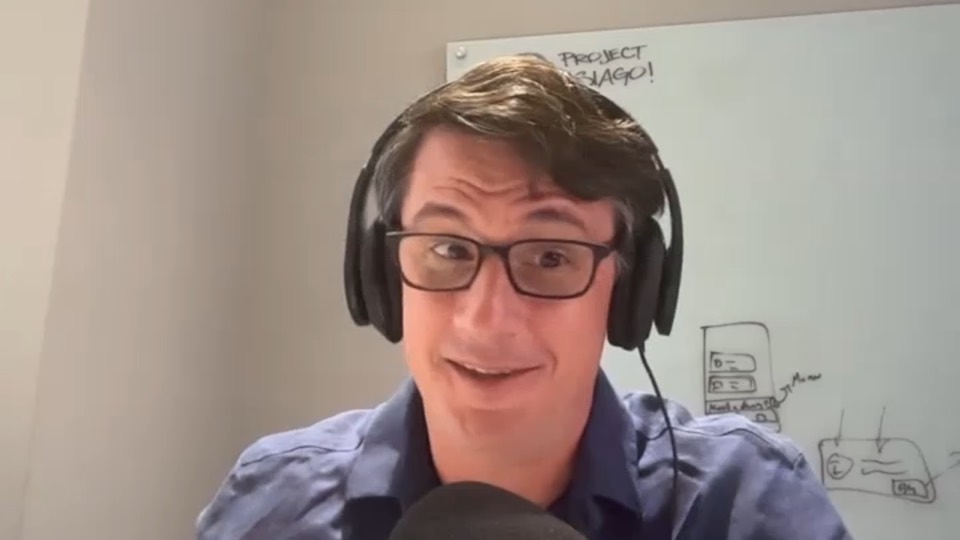
Aaron LeClair, VP Technology at Jeff's Bagel Run, is the guest on episode 74 of the Restaurant Tech Trends podcast, hosted by Justin Foster.
 Play episode
What Aaron and Justin discuss
- How "we just need one more piece of data" snowballed into building the ENTIRE stack in-house
- The two-layer forecasting problem that makes bagels harder to predict than pizza or donuts
- How they scaled the "what's hot?" moment every regular loves - without anyone yelling to the back
- The thing they could easily build but flat-out REFUSE to (prepare for a controversial take)
- Where he thinks the next phase of franchise growth is actually won - and it's not where everyone's looking
Also in this episode
- The rapid fire round: Aaron's no-diplomacy bagel order, the cream cheese schmear that actually KICKS, the restaurant tech he says is most overrated, and a coffee confession he admits is "basic."
Episode notes from the host
They built their own POS. For bagels. On purpose.
Today on Restaurant Tech Trends I sit down with Aaron LeClair, VP of Technology at Jeff's Bagel Run, the Orlando-born chain famous for bagels baked hot ALL day long, now closing in on 40 locations (and eyeing 50 by year's end). A career technologist who came up in defense, climate tech, and supply-chain startups, Aaron traded enterprise software for fresh-baked bagels and built the brand's tech stack - POS and all - from scratch.
Aaron's one of the rare builders who'll tell you exactly which tech to skip - and as someone whose own daughter works a bagel counter, I loved every minute of this one. Give it a watch and let me know what you think
Transcript
Full transcript (8,034 words)
Machine-generated transcript; names may be misspelled.
0:00 Hey everyone, welcome to Restaurant Tech Trends where we explore restaurant technology trends with some of the industry's biggest movers and shakers in a rapid fire short interview format. This podcast is brought to you by Incept AI. Incept AI takes restaurant orders over the phone and in noisy drive-thrus with friendliness and precision. Learn more at Incept.ai. My guest today is a career technologist who traded enterprise software for fresh baked bagels. And then built the tech behind one of the fastest growing bagel brands in the country. Aaron LeClair is vice president of technology at Jeff's Bagel Run, the Orlando born chain founded by Jeff and Danielle Pereira that grew from a home kitchen in farmers markets to just shy of 40 locations. I just learned might be up to 50 by the end of the year. They're famous for bagels baked hot all day long. Before bagels, Aaron was an enterprise CTO and a former colleague of Jeff's president, Justin Weatheridge. Back at you break I fix. Jeff's he built automation, which we're going to talk a little bit more about a fully in house stack, including POS, which is nuts kitchen display baking and the customer app that uses machine learning to predict exactly when to bake by store and by flavor. Aaron, welcome to the show.
1:22 Welcome to the show. I'm excited to have you here as well. We were just chatting. My daughter works at a bagel shop as well. So I'm well versed in the language of bagel. So I'm looking forward to learning more about all the great things that you guys are doing at Jeff's. But before we talk about Jeff's, I'd like to chat just a little bit more about your background and why you chose Jeff's. What in your background prompted you to get into a business selling bagels? You know, I was very much enjoying your intro. Thank you for that. But as I was looking at that or listening to that and thinking about how I got into this, it's yeah, I don't know that you choose bagels. I don't know if you go from anything to bagels intentionally. I don't know if that's like a directed path. But other than just generally loving bagels, that part wasn't hard. But the story is actually a little funny where so you mentioned that I had previously worked with our current president, Justin, here at Jeff's. And he's really the reason, if I'm honest, we our previous business, you break, I fix that business exited and sold in 2019.
2:41 And a lot of us just went our separate ways. And I went on to do some other gigs, some other startups. And somewhere around, I guess it would be 2023 now, Justin gave me a call and was like, hey, we should get together and hang out, grab some breakfast. And I'm like, Justin and I are friends, but we're not like random breakfast on a Tuesdays, you know, without chatting for a while, friends. At that time, we hadn't connected in a month or two. And so I'm like, that's a little strange. And so I tell my wife about it. And she's like, well, where are you going? Like, I don't know. I'll look at this text. Like someplace, you know, like it's a town next to our town. It's a place called Jeff's Bagel Run. She's like, oh, you need to go to this meeting. And so I went I went to this breakfast meeting with Justin and they were just starting to get, you know, involved with Jeff and Danielle. And so I went there. I met Jeff. I met Danielle. Justin was there. But more than anything, sat down and had a bagel and cliches intended like love at first bite. It was, you know, oven fresh. It's delicious. Jeff and Danielle were amazing. I know Justin, you know, he's anything he's getting into. I want to get into. So he said, yeah, we're going to build tech for bagels. I said, I don't know anymore. I love that.
3:58 And it's funny how things can just fall on your plate like that. And the thing about love at first bite, by the way, I totally get that with bagels, because when people eat bagels, they're so happy. Right. Everyone goes in. They're in a good mood. They want their favorite bagel, coffee or drink, something like that. And everyone just loves bagels. I mean, what's.
4:21 It's honestly one of my favorite parts about about this business and just this industry, you know, hospitality and the restaurant industry, which is, by the way, completely new to me. I came from defense originally and then did technology for a whole host of different startups and climate tech and supply chains and all kinds of different things. But first time in food and hospitality and it's very fun. I like this industry. It's it's our preview. You know, when I were again talking about when I worked with Justin and team at Ubreak, we always used to say, hey, we're here to support somebody on their worst day. Right. They come into our shop and they've broken their phone. Something else has happened like it's the worst day and we're going to try and lift them up. Food is different. People are coming in. They're excited. They're already excited. And then you just bring them further. And I love sitting in the shop and just working quietly and just watching people experience the brand, experience the food. And again, it's just a lot of, you know, employees are happy. Customers are happy. Well, when we get a little bit further interview, I want to talk with you a bit about how you're using technology to support that hospitality rather than getting in the way. That's one of my favorite topics. But let's save that for just a tick more. And let's talk about the early days when you were there. What how many stores were there when you first came in? And then what did the technology picture look like?
5:41 And what was the first problem you decided you were going to solve? Yeah, it's a great question. The when I so I got in early from that meeting, that meeting was sort of the beginning of the partnership. And when the partnership between Jeff and Danielle and Justin started, we had two locations. It was Jeff and Danielle's original two locations. And then we immediately started working on leases for the first batch of corporate stores. So like three or four corporate stores almost immediately. But they, you know, with construction and everything else, they were a little further out. So I got involved with our first store in build and two stores already established. And so jumped in the team. We had a couple of developers. And this is another favorite part about, you know, working with people that you enjoy. You know, two developers I had already worked with prior in a prior life with this group were already on staff. So I jumped in with them. They were already cranking on the POS system. So we launched our POS system with two stores, a third on the way. We launched our mobile app with about a handful of stores. And we launched a full loyalty program at about a dozen stores. I'm jumping ahead a little bit, but we've always been technology first. It doesn't, we didn't need a certain store count. We didn't need a certain amount of volume or revenue.
6:59 We knew that technology was going to be center to what we do here from day one. And so we just started building it. Well, let's talk about that. And I think this is a really interesting discussion to have at this point in time, because now we have all of these new AI tools that are making it much easier to build. And I talk with a lot more operators that are looking to build in areas that they previously would look to buy things off the shelf for. But back when you were doing it, these tools were not in the current state of maturity that they are right now. And they're getting better all the time. So it's crazy to say, it's only three years ago, but like everything's changing at light speed right now. I mean, even now compared to just a few months ago, it's, it's so much faster now, but it was a little bit different back then. And when I hear operators say, Hey, I'm going to build my own POS or, Hey, I'm going to build toast or I'm going to build par or Q or something. Sometimes I just kind of laugh at that because some of these systems are, you know, they're complicated and they've got to be built for like bulletproof scalability and reliability and maintainability and all that kind of stuff. But you guys wanted to go at your own. So what was the reason? Why didn't you go and say, Hey, let's just get something off the shelf. And it's, I think, as you pointed out, that question has become so much more acute and topical right now because the, what was perceived to be some of the blockers originally are starting to go away.
8:29 Now I've got more thoughts on what really the blockers are, but, but yes, that perception is shifting dramatically. And so I think a lot more people are asking this question where they wouldn't even have considered it before. When we came in, it was really more about the fact that when we looked at the original business, we looked at what Jeff and Danielle had created. It was very clear that the magic was in the oven, fresh bagels, right? We bake all day. So when you come into the store, the oven's running, you know, fresh trays are coming out. The racks are always getting refreshed. It's not sort of that classic model of, Hey, we're going to bake everything for the first two hours of the day. And then it sits. And so if you come into the shop at 1030, that stuff's been sitting there maybe since eight, right? Or seven. So the baking all day was, was the key piece. And it was this beautiful choreography between Jeff and Danielle and their staff and store. And we're like, all right, this is fantastic. But to scale this to a franchise, we knew we had to systemize this and automate it and support it with tools. And so that's where we jumped in. How do we, how do we solve the bake problem as we'd call it? How do we make bake something that anybody can do the way that we do it? And so we started building that technology first, but then it became sort of, in my intent was to sort of then bolt on from that core.
9:49 Like, okay, we'll have bake. And then like, let's not reinvent the wheel and the restaurant industry is an established industry. There's lots of tools that we can use. But what we found was we just needed one more piece of data. So like, Oh man, we need all the sales data. So now we've got to go and like, I guess we're building a POS because we need all this integrated real-time sales data, the way we need it to make sure that our bake algorithms and engines ran. So now that we're doing sales, we're like, well, if we're doing sales, I guess we're kind of getting pulled into KDS now. And so before we know it, as we sort of just keep solving all of these gaps, we've sort of taken down the whole stack. And one thing that I'll say, although that was not a hundred percent the intention in our previous lives, what we found as a franchise businesses owning the technology makes us that much better as a franchisor. Because a lot of franchising is a franchise operation is SOPs and playbooks and standardization and quality control. And it's so much easier as a brand early on, as young as we are to codify, refine, iterate on all of those things when you own the tools and control the tools that deliver it. And so I'll say that we sort of maybe took on more than we intended, but we always intended to have a centralized core of operational software to deliver the brand promise.
11:12 That's just, we learned that in a previous business. And we got here. Quick question. What is your footprint in terms of corporate owned in franchise stores today? We have, I'd say it's, have, I think about seven or eight corporate stores right now. So across the roughly 40. Okay. You know, less than 20%. I don't even know that we were planning on talking about this, but this piece of technology for bagels is really intriguing to me in demand forecasting, right? So I had a leader from a fairly large hundred unit Dunkin franchisee on here not too long ago. And they build a demand forecasting platform, working with it in partnership with an outside vendor. They call it DoeCast. And now we have automation. So fantastic.
12:14 There needs to be punts in wordplay. One of, I think the most sensitive categories to demand forecasting, because you're running out, like you're baking throughout the day. You've got like all sorts of externalities that impact demand, like weather, like events that are going on. How much of that tech have you built in-house? Is it all on your own or using something off the shelf? And then where is it just not there yet? Like where does it need to continue improving?
12:47 Well, all of it's in-house. We built it all in-house. We, you really highlight an important point around the sensitivity of bagels. And one of the things that are really sort of unique about bagels, as opposed to even other baked goods like pizzas or donuts or things like that, is the dough proving. We have an overnight proof on our dough. And so when you run out the next day, you're done. You're not going to whip up some more raw dough, you know, bagels to then bake. So it's actually kind of a two-layer forecasting where we're forecasting quantity for the entire day so that we have enough prep stock from the previous day. Because we know, like I said, once you're out, you're out. And so that's one layer. And then the second layer is what I sort of call on-demand baking, where throughout the day, how close can we get that tray, that bagel, to come out of the oven and then go into your hands? And so what's interesting is the consumption on a daily level of just sort of how much inventory to produce from a raw dough perspective. We feel like we've got that pretty nailed down. Like, obviously, there's, yes, there's some ramps with new stores and new markets.
14:06 And, you know, just sort of discovering, you know, there's a lot of dynamic nature in sales in general. In those conditions, like I said, you know, if you were in a new market that doesn't know our brand, or even just a new store location is going to go through its natural sort of settling as it establishes its customer base. But for the most part, certainly for established stores, an established can be four months, you know, or so from opening. So once we get that, the real trick is, can we actually predict within a 15 to 30 minute window when you're going to walk in and order your bagel? And that's the hard part. And that's the magic. And that's where we put a lot of other things. And again, why we need to own all the data and all the systems, because you're talking about things like, okay, what is your production rate? So what are the bagels that you're baking right now? What just came out of the oven? And what's the sales volume in real time? Like, what are the person at the register just order? What are the person before them just order? You know, what's, what is that stock consumption looking like? And then we, and then we start to analyze like, okay, now can we start to predict the next three people that are going to get? And, and again, not so much, it's not done sort of in that way. It's done more in terms of like, okay, per flavor, what is sort of the sales trends within these sort of buckets of time that we think are going to occur.
15:30 And that stuff is dynamic. So what we find is we're really, as we continue to build this and evolve this is, you know, as we continue to push up, push up against that theoretical limit of predictability of sales in general. So is that the most important piece is sort of the real time transactions that are going through on the register? Like, at what point do you know, like, okay, I'm going to put back in the kitchen. It's time to start baking the, this type of bagel. That algorithm that we have runs continuously. And so what we actually have, our big goal was to turn production, bagel production operationally similar to order management.
16:16 And so if you think about order management, it's very, you know, you've got your KDS and tickets are coming up and you're addressing tickets. We want to, our bake and our production to feel a lot like that too. And so what actually happens is they have a screen and it's just constantly getting orders for, for bagels. And so they're baking the trays on demand to the system. Now that's woven in and integrated, you know, in harmony with sort of the sales and transaction flow. Got it. But they don't need to care about that. And we'll get into this. This is what I'm talking about, like staying out of the way. They don't need to care about the bakers. They don't need to care about sales volume or all that stuff. They just get orders for bagels. Are you using any external data? So we've, we're obviously using sales data. We're using the real-time transaction data. What about like some of the stuff that I mentioned earlier, like weather, events, stuff like that?
17:09 That continues to sort of be a new horizon for us as far as like, okay, what, what's relevant? Right. We consider weather's a big one. Whether, whether it's one doing analytics on real-time sales is another one. Like is, is the day going faster than we anticipate? Is it going slower than we anticipated? Should we adjust? Like, again, there can be external events, like locale events, right? Like one thing that our predictor, this is kind of interesting. One thing that, that surprised us after the first couple of years is one of our locations, our earliest locations. Yeah. That's a university down here in central Florida. Yeah. So move-in day. So the algorithm picked up move-in day or move-in week, right? And so, so, you know, the other stores in the region and the market are, you know, don't really change. That one store sort of, you know, bumps up a little bit for, for move-in week. So things like that, we, we evaluate. And then I think a frontier, which is really interesting. And, you know, we work with our marketing teams. Like, okay, what's, what's available there? Like if we start tying into our social media trending and, and, and activity, is there LTO and marketing pushes that, that, that correlate that. The trick is getting things that correlate because not everything correlates like you might think, right?
18:25 If you don't have a very strong marketing engagement, maybe you put out marketing, but it doesn't, it's not impulse related, right? Like, okay, if I, if I drop this piece of marketing out there, like, are people going to respond immediately or is this more of a longer burn? Like you have to understand those dynamics to understand how it sort of correlates to the data. So, uh, yeah, it's been a fun journey of just continuing to refine and, and, and our team. Well, I got to tell you, I have never talked with anyone in bagels or sandwiches or donuts. That is as high tech as you guys are in terms of like running this, like all day baking, like figuring out dynamically what needs to be made. Like, I think you're way out ahead of where the industry is. And, um, it's obviously working cause you're expanding pretty quickly right now. And I'm really excited to see where it goes. This kind of leads to the next topic though, which is automation and hospitality. And this is another big thing right now in the age of AI, right? We have a lot of things that we can automate, including things that are like guest experience, right? Customer facing, um, where do you draw the line so that your crew, your employees can be human with your guests?
19:50 And are there any sort of like sacred cows where you've said, we're never putting technology in here. We always have to have the human interaction. This is, this one's pretty core for us just as an ethos as a company, uh, and comes from outside of tech as well. Um, you know, from the rest of the leadership team and just how we see our brand and what we really believe to be true is that the experience in store matters a lot. And we see ourselves as like a community bakery. And, and again, that's, it doesn't matter if there's 600 locations. If you walk into a Jeff, you should feel like you're walking into a local bagel shop and you're going to have a great experience and it's going to feel friendly and warm and engaging. And you're going to chat up your barista or you're going to, you know, the, the person giving you your bag of bagels is going to be like, I'll see you next week. So that's, that's the kind of environment that we want to create. And we're very bullish on the fact that that starts with the team in the store. And if they're burned overburdened or if they're doing tasks that, that don't add value to them or to, you know, to what they're doing for the customer, that stuff all roads and it slowly detracts.
21:06 And so that's really our litmus test when we look at anything we're about to do is, is this net additive? Is it, is it something they need to do or is it something for us? And so I think that's a big miss that a lot of tech and a lot of places start getting into is like, oh, we want one more data point or we want one more checklist or compliance process. And again, this stuff is necessary. I'm not claiming that we don't have some of that, but I think that's where people get into a trap where the tech that really the employees are in every day should, should lift them up, right? It should do something for them. It should give them a piece of information. I got a couple of examples, actually, sort of how we, how we think of this. So a great example of sort of what I would call additive tech to the experience is, as you know, like our, our bagels are oven fresh. That's the whole, that's the whole brand promise from, from the bagel perspective. And so one of the things we did early, and this is even Jeff Dano did, is sort of this cultural thing where regulars would walk up and ask what's hot, right? Like you get up to the register and say, hey, what's hot? Because, and then the register person would look back or yell or just know and be like, oh yeah, this just came out of the oven. This just came out of the oven. Because our customers will actually order a hot bagel versus like a flavor that maybe is their favorite.
22:23 Because, yeah, because trust me, a hot one is better than, of course, a hot one is just ultimate. And so, so that was a cultural thing in our shops. And again, so the question is, how do we scale that? So what we did is we actually connected our production systems to our point of sale. And so now in the point of sale window, as they're taking the order, there's a little badge in the top left corner of every bagel flavor that currently came out of the oven within the last, you know, within our freshness period. And then it disappears when it's gone. So they never have to yell back. They see it right there and they go, oh yeah, these ones, these ones. And so that's a great example of just like, okay, because we have access, because we have this data, it's all centralized and connected and integrated. We can create an experience for the customer and for the employee. That is an interesting example.
23:11 You know, the flip side of that argument is, of course, the customer, that's part of the customer experience. And they like hearing the person working the register yelling back and hearing something from the kitchen. But that is a great example. I am curious to learn where you guys fall on the kiosk spectrum. What are your thoughts about kiosks?
23:32 We may be a little controversial on kiosks because we've been pretty anti-kiosks. And that was an interesting journey for us because it's a great example of something that we could do, but we've chosen not to do. And so where we have our POS system, which, you know, we haven't really talked about the tech, but it really is an iPad-based application. So there's no limitation to throwing that, you know, a version of that on the other side of the counter. We also built our own custom, you know, customer mobile app, which we could reskin and put out in a tablet on the other counter. And when we talked about it, because, again, we could. So we sat down and said, OK, should we consider kiosks? And when we talked as a group, you highlighted it. We feel as if that interaction, that register interaction for those folks coming in store is core. And it's just part of who we are. And we we were worried, even though we felt like we could deliver a great experience from an ordering perspective in a kiosk. We didn't feel as if it was the Jeff's experience. And so I hold on. It's really fascinating to me. And I would love to see if we connect like a year from now, if you guys are still in the same spot as the argument for is like giving another option.
24:53 Higher check, which I think has been proven out across several brands, probably not all. But the argument really comes down to hospitality and authenticness of authenticity of the experience. And I'll I'll tell you, man, I mean, I've gone into brands where, you know, there's four kiosks that are up there. There's supposedly a cashier that's standing there at the register that's going to take your order. But they're busy bagging food or making drinks or doing something else. And these are brands that are paying lip service to hospitality. Right. But then I've seen other brands where it is truly more like there is someone there. They're there to help you. You can have that human interaction. But it's like you kind of have the kiosk on the side if that's your preference. So.
25:42 I think it can be done well and where it's not impossible to do well. I think I think as a franchise system, it's an interesting thing because it does introduce another element of coaching and SOPs and brand control. And so that always prevents, you know, presents an interesting sort of dynamic where we landed was and this was again, it's interesting as you sort of explore these things in in the in the context of like growth early on versus later on, as you said. And so what we sort of landed on was like, OK, we because we launched a native mobile app experience for customers so early, we're like, that's the kiosk we'll push. And so when we have long lines, we just walk the line and say, jump out of line, the apps, QR codes everywhere. If you want the hands off experience, we just funneled everybody because we do agree that that hands off experience is important. Not every customer wants a full interaction. There's people that just want to go. They just want to order quickly. We acknowledge that. But we kind of went with the notion of saying, hey, we've got the app. So that's sort of our. All right. Our alternative experience. Experience. And again, we'll because our app generally services quite fast. There's like an ASAP option with the app.
27:01 All right. Not a big deal to jump out of line. OK, let's talk a little bit more about growth. You just mentioned it. We've talked about it a couple of times already. We know you're almost at 40 stores. Hopefully we'll be at 50 by the end of the year. Have plans to grow well past 100 units. You're franchising. You've built pretty much all of your own technology with just a couple elements accepted from that.
27:26 I'm going to be like devil's advocate here and say you have to be encountering some scaling pains somewhere. Do you see? I've never met a technologist. I've never seen a piece of technology that didn't have some problem at some point. Right. So do you believe that all of the elements that you guys have built are going to be able to sustain you not just to 50 but to 100 plus units? Where are you starting to see the cracks and where are you thinking you might need to reevaluate if anywhere? Yeah.
28:04 I would be lying to you if I told you anything other than, you know, a list of things that are always challenges. Exactly. But yeah, you're always it's it's it's always a, you know, a hill to climb. One of the things that we really did early on, because you're boiling the ocean and we knew that, right? We knew when we came in that it was borderline ridiculous to try and build all the software in a restaurant from scratch, you know, as we're building up this brand. And thankfully, none of us being restaurant people, that's probably that ignorance got us past the point where we should have been scared. Yeah. And now we're just too far in it. But what we what we really did focus on, we intentionally phased it so that we really focused on all of the what I'll call the sales channels and the customer engagement channels in store operations first. And so, again, mobile app loyalty programs, we have integrated catering, we have all the in store, you know, KDS production, POS, all that stuff. We tackled all that. I think that's ready to scale. I feel we've spent years on it now. It's taken us from two to almost 40 stores. I feel really good about that.
29:20 Where we where we sort of stole that time was all of the back of house systems that come along with a franchise system. And so that's been my focus this year and will continue to be my focus across, you know, the next doubling of the business is back of house systems are critical. And I actually this is my opinion now, I think back of house systems are what actually gets you past the next sort of increments of, you know, of growth, because in the beginning, you're really trying to prove brand. It's it's it's not about tech. It's about people want this concept. Do other people want to buy in and open versions of this concept? Does it work in other markets? All these questions that you that you need to answer. Now, as we have our franchisees opening up second, third or more locations in their ADAs, they're scaling their businesses. Yeah. Now they need to run these things. And so that's where I'm excited to really focus. And and that's also, you know, I know this is sort of tangential, but like this is where it's interesting to see. OK, now is an opportunity for more integration and faster. I see bringing other tools in that are established because the back of the house is a little. But it's a lot.
30:35 I think an opportunity. It's all it's a lot, but it's also a better opportunity to be like, OK, you have a very specific tool that I can plug in and add value to our system and our and our franchisees. And that makes sense. So next year is going to look a lot different than the previous years. And I think so as we continue to grow back of how. Well, let's let's just click slightly into this. We don't have too much time to talk about it. When I think about like back of house, I've got inventory, scheduling, payroll, accounting. Are there any particular areas there where you see more opportunities for near term automation and potentially leaning on AI to help with those functions? I think so. I think back of house is actually a really exciting space. I know that the attractive side is a lot of people are on the customer side, which I think is appropriate. I think what the company that nails that is going to it's going to really enjoy some wins once that they get that right. But I think the back of house was sort of underserved. And so I think there's a real opportunity. I think for us specifically, one of the things that building our own software has really given us the chance to do is to tailor. And we tell this to potential franchisees.
31:51 Everything we've built is tailored to a Jeff's bagel run. There is not a single piece of software or function or code in there that does not serve that need. There's not an area that is meant for pizza shops and you just ignore it. It's all built for a Jeff's. So when I think of things like menu management, recipe management, food costs, COGS, things like that, that's a lot to build out. But we can build a version that's tailored to our business. And so I'm really excited about that zone. And again, once you start thinking about inventory controls, things like that, like I said, AI is an exciting sort of thing. Because it's like, can we make those human functions like doing cycle counts? Can that be faster? Can that be automated? Okay. And let's just do a little compare and contrast a little bit more. You kind of did just a little bit. But when you think about the opportunity back of house versus I agree with you, at least over the last couple of years, I think it's starting to change now. But I do agree there was more focus on front of house automation. Do you see any opportunities in front of house or guest experience that you think are particularly promising? Or do you think we're like not there yet? I think it's promising. I think the real challenge with AI right now, again, my soapbox thought is that the technology and the desire to bring product to market is outpacing the use case development of said technology.
33:18 You can do anything. It blows my mind. I mean, you can build pretty much any experience you could want out there with the AI tools. But how many of those things are really rooted in customer need and in a customer experience use case that resonates? And so when I think of AI right now and I think of specifically on the customer side, we're starting to open up a bigger portion of our system as drive-thrus. We're having a lot more drive-thru locations. So I think that's a rich area where I don't think that's a great experience. And I don't think that's a superhuman experience to begin with. Now, nobody, you know, people make fun of the brands out there that have tried. And it's like, oh, I've, you know, I've messed around with this AI robot at drive-thru. And so it's early days. But I think there's an experience there where you're not losing a human experience at the drive-thru because there's not one. Nobody goes away and be like, I really love that drive-thru experience. So I think that's a real place where I'd like to see something. You might be surprised to hear me say this given like what I do for my day job. But I actually agree with you. I don't think that AI in the drive-thru is all the way there yet when it comes to creating that supernatural experience that you get with a real person.
34:37 I think there are some areas where it really does help. I think speed of service, accuracy, greeting people right away, consistency and upsell. I think there are a lot of things that it is much better at than people. I think it's getting there on the naturalness piece. But it's not there yet. You can still tell. It's kind of like when you use Claude to help you write a document, right? You can look at the document and you can say, I know that Claude had a hand in this. And I feel like on the voice stuff, you still, no matter, it's close, but it's still kind of that uncanny valley where you're not all the way there. So anyway, agreed. And I think that's what's interesting about that as well. And this is where I think the company that will win will sort of fall asleep is that I don't, I think in a lot of use cases, AI is trying to replace a human. And I, as somebody that would be employing this technology, I'd be much more interested in like, show me a different experience. Don't, don't try to make it human. Just try to make it good. And so I think, because, because the uncanny valley thing is something we're always going to fight, rightly. It's a million times better than it was two years ago. It's unthinkable against voice technology 10 years ago. But, but we'll always know we're looking for that small little not human delta.
35:56 And so I'd just be curious, is there a way to make the whole experience different, but using this technology so that it's a better, at the end of the day, I want to order my food. You know, it's interesting. I don't want to digress too much on this, but I think one company that's done a pretty good job of that is Wendy's with their drive-through AI. They've done with Google. You go up there and they're like advertising that it's AI. It's like, there's a center digital board and it's like fresh AI. And like, you talk to the, the voice bot and it's very clear you're not talking to a person. They don't even try to make the voice sound like it's natural. And it's got like the little, you know, transcriptions and stuff that are showing up on there. So I think they've done a good job of creating that different experience that you're talking about. I think the challenges with that is like, man, it's demographics. You know, there's just, there's still some, a lot of people that they're just not ready for it and they don't, they don't want it. So anyway, bit of a digression. Let's finish out. We're going to talk a bit about industry. Give us a little tip. What is one piece of conventional wisdom about restaurant technology that you think is wrong or at least overdue for a rethink?
37:13 I honestly think this entire interview could be like that, but if you had to just distill it and just give us one, what would it be? So I'm new to the industry. So I thought about this question and it's kind of, you know, I think about this question a lot. And I don't know that I have a great answer from the standpoint of having no, you know, no real pedigree here. But one of the things that's really struck me, so maybe I'll take it from that angle. One of the things that's really struck me is as I've entered the industry and talked to a lot of industry people that have been in a lot longer than I have, is that data is a real challenge. And I feel like maybe the rethinking part is, is that, and this is going to be hard for the industry where the industry is really about systems aggregation, you know, just because historically people haven't tried to build their own thing, which I totally understand. And so they're always fighting this source of truth, this, you know, multiple systems, the systems overlap. I pay all this money. I use 20% of it. This is what I always hear when I'm in, you know, spaces in the industry. And so I think the thing to rethink is, I think data is going to end up being the most important part, not everything that we put on top of it.
38:32 And especially as you see AI growing, insights are getting commoditized, tools are scrambling. Most AI, if you give data to an AI, it's going to make some rationalization about it. Again, TBD on quality and all that stuff, but that will continue to get better. And so the question would be is, how do we, how do we get back to root data as a restaurant brand? And then how do I then start to layer on insights from there? And I think that's going to be the big challenge. We're sort of in this apocalypse of tools. I just talked to other people and they're like, I have 500 tools and I'm evaluating this vendor and this vendor. And I just think there's sort of a bubble there where there's, there's too much, there's too much to manage, there's too much to own. And I think some consolidation and some flattening of all that. I think we're going to see it not just in the next 10 years. I think we're going to see it in the next like two to three years. There's definitely, you know, some consolidation that we're due. So before we get to our rapid fire section, are there any vendors that you work with that you'd like to shout out that are doing a good job for you guys?
39:37 It's fair to say no, if you'd rather not do.
39:42 I would, I will say no. And if I, if I ever get invited back, I think there's a couple that we're actually got, we've got some contract negotiations with some, some, our first sort of true integrated partners outside of like low level services. That I'm excited about. And so hopefully I've got a, I've got a better answer next time. Sounds good. Fair enough. Well, Aaron, it is time to move to our rapid fire segment of this interview. And for everybody that is watching or listening, I'm about to ask Aaron a series of questions that he has not previewed. He has no idea what these questions are. In fact, he might've not even known that this segment was coming up in the interview. So Aaron, I did not engagement for this rapid fire segment. I'm going to ask you a question and try to answer the question with one word, if you can, and one sentence, if you cannot. Are you ready? Challenge.
40:36 I know. But let's go. Don't worry. Try not to have too many gotchas in here. Question number one, your Jeff's bagel run order. No diplomatic answer, please. What is the best bagel and what's on it? This is easy. It may be layered. So it's actually, my base is an Asiago everything. My favorite on the rotating menu is buffalo chicken pizza. Man, you got to try one of those.
41:06 Yeah. Are you a toasted man or are you a straight out of the oven man? So this is where Jeff's has opened my eyes. I'm a straight out of the oven guy. We didn't even have toasters in our stores. They're all, it's all oven fresh. And I don't toast when they're oven fresh. All right. Yeah. Interesting. That's definitely unique for sure. Love the brand.
41:31 Favorite cream cheese schmear. That one is the roasted jalapeno, which is actually spicy, which is rare. Like a lot of times you'll get places that will say something spicy, you know, oh, it's jalapeno. And then it doesn't like, I like spice. This one kicks, but I like it. Automation. Are you proud of the name? Yes or no.
42:01 Yes, but I can't take credit. So it's not my name. I just want to put that out into the sphere, you know, in the world that I did not create that name, but I am. All right. Puns. And I love it. What is the most overrated piece of restaurant tech today?
42:20 That's a good one.
42:23 Oh.
42:26 I would say.
42:33 Not naming any names. But I would say that a lot of these metric dashboards are just too much. Too much. As somebody that's building a lot of internal dashboards and metrics right now and realizing what a crazy space that is, I feel bad for anybody that's trying to balance 100 third-party dashboards. I feel like it would be death by data. So I think getting down to core insights should be everybody's goal. What's your go-to coffee order and does the app already know it? Oh, I wish the app did know it. That is favorite orders is prominent. Oh, it's coming. On the roadmap for the mobile app. Favorite coffee. So I'm actually, I'm going to make another admission here. I am actually a pumpkin spice latte guy. I'm one of those. I'm kind of basic like that. So I look forward to pumpkin season every year and I drink way too many of those. And then they go away. And I don't really drink them for another eight months. It is around the corner. That's when you know that summer is officially on its way out is when you start seeing those pumpkin spice latte signs everywhere.
43:51 Last question.
43:53 Finish this sentence. The best restaurant technology is the kind that blank.
44:02 Oh, yeah. Good answer. Really good answer. Well, Aaron, I'm really glad that we had the opportunity to meet here today. I have been exposed to the cutting edge of bagel technology here at Jeff's Bagel Run. Really appreciate all your insights. It's really cool to see what you guys are doing, especially as you're scaling pretty quickly. You definitely have a very different take on restaurant tech than most people that I have on here. And it's been really refreshing to see that you guys are having success with your model of going it alone and building so much of your technology in-house. Everybody, Aaron LeClair, vice president of technology at Jeff's Bagel Run. Thanks, Aaron.