Episode 70 · July 28, 2026
Marita Swift
VP Growth · The Big Biscuit
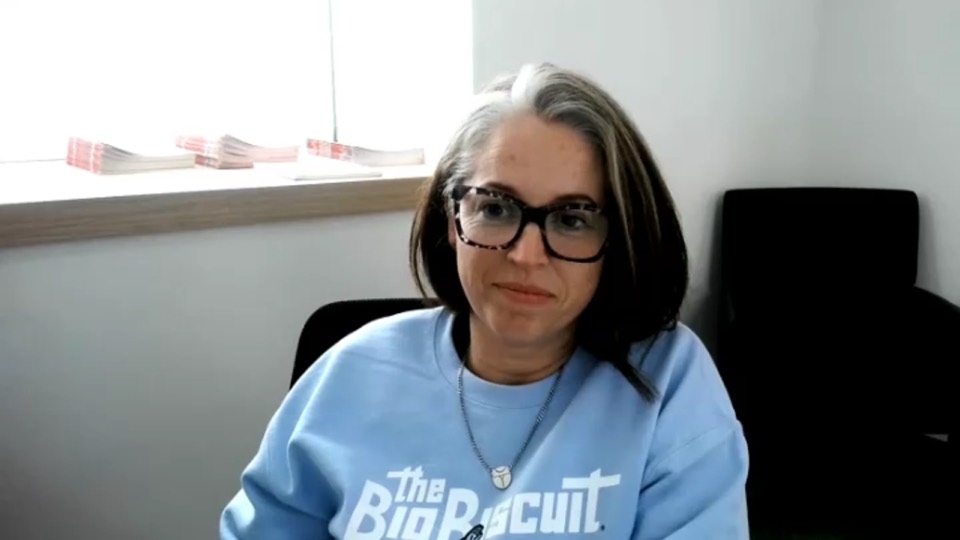
Marita Swift, VP Growth at The Big Biscuit, is the guest on episode 70 of the Restaurant Tech Trends podcast, hosted by Justin Foster.
 Play episode
What Marita and Justin discuss
- The chef-to-C-suite pivot: how a decade on the line (plus a psychology degree and a love of data) became a career building brands - and why she built an in-house agency instead of hiring one
- What "sustainable growth" really means when you're scaling a corporate footprint and a franchise base side by side and why she cares more about WHO she franchises with than WHERE
- Why the highest-quality franchise lead she gets is simply a guest who walks in already loving the product
- How Placer.ai became her company-wide superpower for site selection -plus the Momos guest-sentiment bet they sat on for three years before it finally clicked
- Her AI vision, fresh off the QSR Summit stage: closing the gap between the question and the decision, so teams spend more time building culture and less time guessing which way to go
Also in this episode
- The rapid fire round, where Marita settles knife skills vs. spreadsheet skills, names the one food trend she'd happily retire, and tells us in a single word what a great breakfast is really about.
Episode notes from the host
What kind of restaurant brand closes every location at 2:30 on purpose?
The kind that wants its people home for dinner.
Today on Restaurant Tech Trends I sit down with Marita Swift CFE, VP of Strategic Growth at The Big Biscuit, the nostalgic, all-American breakfast and lunch concept out of Kansas City that Franchise Times named a top breakout brand in 2024. Marita's path is unlike almost any growth exec I've had on: she spent 10+ years as a working executive chef in high-end scratch kitchens before pivoting into brand strategy, so she sees this business from the line cook station all the way to the franchise development deck.
Shout outs to Momos, Placer.ai, Restaurant365, DoorDash, and Tiphouse for the tech-stack love along the way.
Transcript
Full transcript (5,918 words)
Machine-generated transcript; names may be misspelled.
0:00 Hey everyone, welcome to Restaurant Tech Trends where we explore restaurant technology trends with some of the industry's biggest movers and shakers in a rapid fire short interview format. This podcast is brought to you by Incept AI. Incept AI takes restaurant orders over the phone and in noisy drive-thrus with friendliness and precision. Learn more at Incept.ai. I am joined today by the one and only Marita Swift, VP of Strategic Growth at The Big Biscuit. The all American breakfast and lunch concept out of Kansas City that's grown past 30 locations across Kansas, Missouri, Oklahoma, and Arkansas. Marita's path is very unlike most growth execs I've had on. She spent over a decade work as a working executive chef before she moved into brand strategy. So she sees this business from the line cook station all the way to the franchise development deck. Marita, welcome to the show. Thanks for having me. Glad to be here. Excited to have you on. I'm excited to learn a little bit more about your background. But actually, before we talk about your background, I'd like to learn a little bit more about The Big Biscuit because I think most people that will be listening or watching this probably have not heard of The Big Biscuit before.
1:16 I know that Franchise Times named you guys a top breakout brand in 2024. So tell us a bit about the brand, a bit about the footprint, and what makes you guys stand out in the breakfast and lunch day part. Thank you. Okay, I would love to. So the Big Biscuit is a breakfast and lunch concept out of Kansas City. We have 31 locations in four states. We're in Kansas, Missouri, Oklahoma, and Arkansas. We have 22 corporate locations and the rest are franchised. So we're building our, you know, corporate foundation right alongside of franchising. We have a very classic offering. So plate-sized pancakes, oversized buttermilk biscuits, traditional egg plates. You know, we sell a lot of black coffee at The Big Biscuit. So it's a very nostalgic, classic breakfast offering, very familiar, kind of a, you know, kind of a mid, what you would kind of think of as a Midwest breakfast. Gotcha. And just out of curiosity, since you guys are growing right now, do you think this is going to remain sort of a Midwest concept? Or are you going to go further east? Are you going to go further west? What is the crystal ball looking like these days?
2:32 We're definitely growing. We call it sustainable growth because we're very mindfully growing. We have our corporate footprint growing right alongside our franchise strategy. So building out a lot of systems here at the corporate office, you know, having a nice strong VP group, directors under them. So really trying to make sure that as we grow, we really are building out that foundation and that support system for ourselves and for our franchisees. But yeah, we'll definitely expand beyond the four states that we're in right now. I'm specifically looking at Texas, Tennessee. I've got some good opportunities in the St. Louis market. But we're open to the who, you know, we're looking at who we're going to franchise with more than where or how many locations. So that's kind of been more the focus of making sure that when we bring in a franchisee, it's the right fit. Are you mainly looking to partner with single unit operators or multi-unit? Multi-unit. We'd prefer five years of restauranteing and franchising experience and wanting having an appetite for multi-unit. OK, good to know. One thing that I thought was really interesting about you guys, I think this is right. You close every day at 2.30. And I've read that that's so team members can be home for dinner with their families.
3:48 Is that true? Yeah. So our ownership had Sonic. They were in QSR. OK. So I think a big part of wanting to move out of QSR was this desire to have a work-life balance. So our teams are out of there earlier. A lot of our, I mean, the GMs are out of there in the afternoon. Corporate office closed at 3.30. Hourly team members might get cut, you know, by 2 o'clock. Some of them. Wow. That is crazy. And gosh, QSR is just, oh, it's so brutal. Oh, my gosh. It's brutal. Yeah. And I'm, yeah. And those trends are so hard. A lot of restauranting is. I know. It is such a brutal industry for sure. Actually, I don't think I've ever met anyone in this industry that said that it was easy. OK. So I think we have a good picture of what the Big Biscuit looks like. We're certainly going to dive in a little bit further on what you're doing to grow, the kinds of systems that you're putting in place, and a little bit more into the tech because it is restaurant tech trends. But I would like to examine your career path a little bit deeper first. So you have a very unusual career trajectory. We talked about in the intro. You are an executive chef and culinary director on the op side. And then you pivoted to brand strategy.
5:04 I think in Novella Brandhouse. Is that right? And now you're leading strategic growth at the Big Biscuit, which I'd also like to know what that encompasses. Strategic growth. What does that exactly mean? But give us like the quick version. Walk us through your career journey. Tell us how it unfolded. And what is it that pulled you from the kitchen into brand and growth strategy? Yeah.
5:27 So I started running an expo line in the kitchen in high school, like late into high school. I was spending my high school weekends doing that. And worked all the way through college, worked into my 30s in the really high-end restaurant environment.
5:47 I think that when you are an executive, well, first of all, being an executive chef and being in the back of house, a scratch environment is a very addictive thing. There are a lot of dopamine hits that happen when you are putting out really high-end food all day, every day. It's an incredibly fun environment to be in, in your twenties. Hard, hard, but really fun. The culture around it. I mean, it's just, it's thrilling, I guess, you know, exhausting, but also just really thrilling. I have a hard time imagining my young years being really very different than they were because I was having a blast. But really hard work. It's very strategic. So when you're doing back of house culinary operations in a, in a one unit concept, you're, you're doing all the seasonal menus. You know, you're, I brought in a scratch bakery. The concept I worked for was 50% weddings and events, 20% corporate catering, 30% fine dining restaurant. And it was absolutely huge. So we're doing pharmaceutical dinners. We were doing rehearsal dinners plated. We were doing wedding receptions. We'd have a new year's Eve party with 600 people. So it was a really, really dynamic environment and a very strategic environment.
7:05 So my job was much more than someone that maybe works in an environment that is corporate from the beginning where everything's laid out for you and you're just executing mine was very strategic role from the, you know, always. So, you know, we brought in an in-house bakery. We started doing wedding ceremonies instead of just receptions. We brought everything back to scratch in my time there.
7:32 You know, it started social media, Instagram started when I was a chef. So I ran the Instagram account, you know, website, web development. I mean, I'm aging myself, but like I would say, down with the marketing and sales and do the web development and determine what images we were going to use and, you know, how we were going to lay out these, um, the pricing for a wedding package. We did like an all-inclusive wedding. So it's like $45 a person for, you know, 10 hors d'oeuvres plus a bar package. So there was just so much more going on than being, it was like, I had the responsibility of the back of house and I led the back of house, but I did so much more running the business at that point. I mean, this is like entrepreneur, it's a small business, right? Small business. So you are, I mean, you are running a business when you have a small business. That's the difference between these like franchise concepts. And what I did was I was boutique, small business. So you are wearing a ton of hats and it's a very strategic role. So when I wanted to leave that, so I did, I did that as a executive chef and I worked another concept and I did like the concepting for it. So I, um, wrote the menus we office for several months and then opened, um, the building and had multiple outlets with bars and restaurants and stuff like that.
8:52 And that was really fun because it was like, what are we going to be? You know, it was like really concepting, um, was exciting for me. And, and I was qualified to kind of look at that and answer that question. So that was really fun. Um, taught at a culinary school, culinary fundamentals, restaurant management, food safety, just did like some classes. And that was like part-time. Like I would do that. Um, just having three kids and working wasn't enough. So I had to do that too. You're like living a restaurant life. Oh my gosh. Is there anything that you can't do? That's nuts. Yes. There's a lot of stuff I can't do, but, um, and, and I'm, you know, I'm old. So this is a career, right? This is, we're talking about a long span of time for those different experiences, but, um, yeah. So ready to kind of move on from that. It's, it's a, it's a burnout deal. I have three kiddos. So after my third was born, it's just like, okay, how am I going to pivot? How am I going to change what I do? I also have a degree in psychology, which is kind of also just random, but I know that I love like data and I know that I love like understanding. And then I, so what I did was like, I journaled all the things that I didn't want to do anymore and all the things that I loved that I was doing. And I, um, I just kind of decided like the creative side of what I do is marketing, right?
10:14 Like I'm still working with product. I'm still working with food. Um, I still get to have all these ideas and energies, but I don't have to physically stand or write the schedule for this ops team, which is really hard. That in and of itself is just like a really hard thing for people that have done that before because it's a transient environment and you're the one that fills it when it doesn't, when the schedule doesn't get filled the way it says to you're the one that plugs in. So, uh, I just kind of figured out that it was marketing. I studied job descriptions and kind of figured, Oh, I need to have like hard marketing experience. And I had soft marketing experience. I had social media. I had web development. I had, um, you know, creating wedding packages and like writing menus, all that kind of stuff, menu innovation, which is owned by marketing departments for the most part. So I had a lot of soft skills, but like when I was actually trying to transition over, I found that people want to hire you for exactly what your expertise is. And they don't necessarily weigh into your soft skills as much. It's like, you're either a social media manager or you weren't, you know, it was like black and white thinking. Um, so I struggled with it. And so I, uh, had my girlfriend, um, who I'd worked with at, uh, another previous job owns a branding agency.
11:32 And so I went in under her and just said, I want to work with you. I'll do contract work. I want this hard, um, branding piece on my resume so that I can transition my career. And I went back and did a certification in brand management with Cornell. And I just kind of restructured my resume to kind of say like, Hey, you know, here's all these, these other ways that I can kind of present myself and I'm going to pivot myself over here. And it took about nine months to, to get, um, I got, ended up getting three job offers, like all at the same time, one of them being the big biscuit. Wow. That's nuts. But I, I, are you just on the marketing side right now? Because I thought you were also involved in the franchising side. I am. So, so yeah, so here, um, when I got here, I kind of developed the marketing team. So we really didn't have like a brand, um, a focus on the brand as much. It had really been like, okay, we're an emerging brand, right? So we're piecing everything together. Um, the CEOs, you know, managing the logos kind of thing. So I came in and, um, did, um, a brand architecture. So all the key messaging, the word wardrobe, um, a style guide, you know, took control of the, um, website, the social media, and kind of started building out this brand.
12:49 Um, and, um, hired a director of marketing, hired a public relations and communications manager, hired a great photographer, which I think is helps make our brand really distinct, um, and hired a graphic designer in-house. So instead of hiring an agency to work with us, I established one and built an in-house, essentially an in-house agency, which is just really helps us with our agility. We can make quick decisions. We can manage our brand really easily. We're all here every day, working together, able to leverage each other all the time. So I, I highly recommend an in-house agency. I love it. Um, I would never do it any other way. I don't think, but anyway, um, so kind of did that. And then, um, you know, I've been here for almost five years. So having a lot of success with that, um, and that, you know, I mean, like any leader, it's like you're, you're building up your team and then they can do it. So, um, our focus has been on, well, one of the ways that we can really grow and develop our business is to put more energy into our franchising. And so, um, I didn't know that much about franchising cause that's not the experience that I had. So, um, my CEO, Chad offered all, who's been a huge advocate for me growing. And we have a, just like a learning culture embedded in to our company, which is, I'm really grateful for, um, allowed me to do the certified franchise executive designation.
14:11 That the international franchise association offers. So I did that. Um, and it was, it was a great, um, I mean, it was 120 hours. It was pretty significant, but, um, they have a Fran guard class and that's the, really the nugget that if you were thinking about, I mean, every, anyone that's involved in franchising really should take this Fran guard class. Um, and that's just a number of hours and it teaches you franchise law because there's so many, it's just a highly regulated industry. Um, and so really like for me, even from a marketing perspective, I really can't market a franchise without understanding franchise law, right? Like you, you need to know what you can and can't do. And there's a lot that you cannot do. Yeah. Um, I'd like to dive into that just one level deeper. We talked a bit about, you know, some of the things that you're looking for in franchise partners said we're, um, multi unit, but also you're looking in, you're growing into different markets. You're going into, I think, Wichita, Manhattan, St. Louis, Dallas, Fort Worth, um, at least from what I can tell, what is the framework that you guys are using when you decide which markets to enter next and how much of that, um, how much of franchising law plays into the markets that you are actively evaluating when you're doing your site selection?
15:32 Well, we're not registering in every state. So, I mean, and we, and we could, you know, that's like an option for us, but we're, we're not, our, our model isn't a rapid growth model. So we're not just like, okay, register everywhere, blow it up everywhere. Take any inquiries that you can get. It's more like, um, we have the states that, um, I mean, there's some filing states. So like Texas is a filing state. So we did the filing in that, in that state. Um, but kind of where we've gotten the inspiration really has been, um, where we hear the chatter, you know, St. Louis is a sister market to us. So St. Louis wants to open a big biscuit. Um, so of course that's on the radar because our guests, they eat people from St. Louis eat the big biscuit. There's big biscuits within two and a half hours of St. Louis. And how are you finding your franchisees today? What are you doing? Going to conferences? Like you just, you talk about this two-tier growth strategy. You're doing national brand building conferences on LinkedIn. You're doing a lot of community work. Like, how are you discovering these people? I mean, the, the best inquiries I get are guests that come into our restaurants. That's the highest quality lead that I get. Really? I mean, yeah.
16:48 I guess not surprising, but that's cool. Yeah. But they're really high quality because they already love the brand and they love the product and they like want, they genuinely want one, um, in their community. So that's, I mean, that's the really ideal, the last, um, franchise group that we signed, which we don't have a lot of franchisees. We, we only have three franchisees, but, um, the last group that we signed, they've, they've known us for a long time and they've watched us grow and they're just really impressed by the infrastructure. Cause we do, I mean, we have, we have, um, four VPs, we have directors, we have dedicated supply chain, dedicated it, dedicated training. Um, you know, we have, we have VP of finance and a controller. We have a lot of resources. So we call it first in class corporate support, um, from our HQ. And, um, so they were just really impressed by watching us grow and they, they know us and they know the brand. And so they, um, they're going to open the Columbia market and they have like 30 plus Sonic. So they'll end up developing more once they kind of get the one, um, full service under their belt. And I expect that they'll select another market, but, um, another franchisee came in as a guest, like he had word of mouth heard, you're going to love this concept.
18:08 And they drove up, um, from Arkansas. They have the Northwest Arkansas market. Um, so yeah, I do want to dive a little bit deeper on the corporate infrastructure. That's actually what we're going to talk about next. Can you remind me one more time? What is the split of corporate and franchised locations? What's the count? 22 corporate. So majority is corporate. Yeah. And we're developing corporate. We've got this year, all three of our franchisees are anticipated to open a location and corporate is anticipated to open like up to four. Okay. That's very, very cool. So I know you guys have been really focused on building out corporate infrastructure, um, including digital marketing. And I'm curious, like, what are the specific bets that you're making right now on technology that you're able to directly tie to growth? And we'll also put like brand consistency across locations. Is it really more, um, like acquisition marketing? Is it loyalty stuff? Is it more just about building like the brand standards, op standards? Where are you making your tech bets right now? I mean, the, the new technology that we have is we brought in Mo most recently and that's with the reviews and the guest sentiment. And we had been really reluctant to do that.
19:24 Um, we had been considering that for the last like three years, but, um, it just wasn't such a time. I, it's kind of expensive to have it. We weren't spending enough time in it, um, to really warrant use to really warrant using it. And then we kind of hit that threshold where it's like, we're going to open six locations this year. We need to have, um, and you know, we need to have technology help us leverage our guests back. And then we're able to pull sentiment. So we kind of, there was a pain point with menu innovation where we didn't feel like we were really able to quickly understand the sentiment of our guests. And so that was kind of a pain point when we want to pull a report, we need to get it quickly and make sure it's accurate. And so having this platform kind of gave us that ability to do that. And then also having the op operators be able to like, look at that feedback in real time and be able to access that portal. So that's something that we brought in recently, um, from frandev and marketing. I use Placer AI and I really liked that a lot because I can go in to just today. I was talking to a prospect. Um, he came in for a brand presentation and, um, just showing him, I can create a tag where it's like, here's all my locations. And then here's this other community and here's the sites that look like my locations and just demographics.
20:42 There's like 45 different ways they're looking at it, but it's anything from like the population density to the psychographics demographics and all that kind of stuff. So I like Placer a lot. I kind of own the Placer for our company more or less. I spend the most time in it and I've extracted the most, um, you know, when we look at a site, they'll have me run like a place to report on it. So that's a piece of AI that I really like. Um, we're seeing a big, um, ROI in DoorDash right now, which has been really nice. So we were reluctant to do third party, uh, for a long time. Another hot topic, but yes, please. But we, but we, um, we went into Placer and kind of did like a deep dive into who our core audience was. And we just kind of realized like, well, okay, if this is, if our core audience is this, then they want this from us and we need to show up for them. And, and it's been, we've seen really significant results. So that's been, that's been really positive. Are there any other pieces of your tech stack that you would shout out as having been really instrumental to your recent growth for recent growth? I mean, um, trying to think I was just doing a tech stack thing yesterday. I mean, R365. So we just had a VP of finance that came in last year and she's like loves R365. So that's been huge for her. She brought in tip house recently and that's kind of helps with like the culture piece.
22:01 Um, okay. Okay. Uh, well, we were talking off camera a little bit before this about this conference that you just came back from the QSR summit, uh, innovation now, I think is what it was. Yeah. It's a lot. It's a big title that conference. It was a long name. And you were expressing your excitement about like some of the AI things that you were seeing just came out of a meeting talking about AI stuff. You know, it is the hot topic right now. We're talking about these dinners that we do. And like, everyone wants to talk about AI. You're a data person. You think it's really cool. All the things you can do with AI and data. Like, what do you think right now is like the coolest application of AI for restaurants? Like, where is it the most powerful? And what do you see this brand doing with AI maybe in the next 12 months that it isn't doing right now?
22:50 I mean, so the, the, the group I just got out of was talking about taking their POS and taking their reporting and building out their own dashboard where they could basically put in an inquiry that's anything from like strategic to when do I have less DoorDash sales because of the rain, like any, any kind of strategic thing or like resources and anything that they feed it. So if they feed it like their handbook and then a team member, even hourly team members could go in and say like, what does the handbook say about X? Yeah. That's pretty nice. That was what I was excited about when we were chatting before this started. Cause just the idea, I just love the idea of having the knowledge and like closing that gap where it takes, where it takes all the time to extract it. If we can make decisions quicker and like in the conference I did like a lecture on the intersection of technology and hospitality, but if we can make the decisions quicker and we could spend more time building culture and building purpose and like meaning for our brand and experiences for our guests and less like questioning the right way to go.
24:08 Um, and again, I studied psychology, so I love data. I love like the rationale of doing X or Y. And so, um, I feel like it just, it just gives you more decision-making power and, and maybe you spend less time going the wrong direction if you have these insights. Yeah. Um, I'll just shout out, there's a couple of vendors that I think do a good job in this area. One is called Hang and one is called Bicky. I don't know if you've heard it either of those guys, but I think they do a lot of what it is that you were just describing. I think it's going to be really interesting to look over the next 12 months to see how much of these capabilities can actually be built reliably in house using these new AI tools. Like how many of these vendors are just like not going to have like a purpose anymore because you can just build so much of it so quickly. Um, I honestly, I have varying opinions on that depending on the complexity of the, whatever piece of software it is that you're working with. But I think that is one of the trends that I'm looking at like very closely over the next 12 months. I know. I love Hang and I love Bicky. Um, and so then this one was a little bit, the, the gentleman I was speaking to was kind of, it took it to the next level, right?
25:24 Cause Bicky and hang are like tying, tying with my POS and this one was saying like you could dump your guidelines in and then your director of ops could build a deck for AM training. You know what I mean? Like it was, it was way more broad. What do you think about, um, so we talk a lot on here about demand forecasting and got some opinions on there too. And sort of the latest thing with demand forecasting is we know we're not just looking at like past sales trends, um, but also tying into external event data, weather data is another really big one. Yeah. How effective do you think these demand, uh, forecasting tools are today and how deeply is the big biscuit leaning in, in this area? So it's interesting that you say this because at this conference, I met a gentleman that was telling me that he can go in and do my digital marketing and then move my, my spend from Google to DoorDash in real time based on the weather for that day. And we have a meeting tomorrow.
26:37 I'm going to cut you one day later. I feel, but I was like, that's awesome. You know, cause I think that we don't have a specific digital marketer on our team. So we've like worked with our PR to do the digital we've done, um, we've had digital agencies we've worked with, but we don't have, we have an internal marketing team, but the digital we've outsourced it. And, um, it's just, it's complex. And so I was really liking what he was saying in terms of not only can I run your digital, but I can also leverage the different ways to spend, like manage that in real time. Um, cause it is when it's colder outside or it's raining, we do, um, have more third party, you know? So it's like what he was saying resonated. Um, but yeah, I don't, I don't, I don't know how I feel about that yet. So Marita, before we move into our rapid fire segment, I do have just one industry type of question for you about breakfast. So I hear little voices out in the marketplace that are saying the breakfast day part is plateauing a little bit. Obviously you guys are not subscribed to this school of thought. So I'm curious to learn a little bit more about what it is that you're doing that makes you so confident in the growth in this day part and like, what are others out there missing?
27:59 Okay. So, um, I will be honest. I have not heard these rumors about breakfast plateauing and I, um, do listen to a lot of, you know, industry articles. I go to a lot of conferences, so I'm pretty clocked in on it. That's just not something I've heard, but I will say that I do think that these legacy brands are out of favor and a brand like the big biscuit is kind of this modern version of something that's very nostalgic and very, you know, classic American, uh, comfort food. So I don't know that it's as much as the day part or the product as it is the branding or the product. Yeah. I definitely am hearing this more from some of the QSR fast casual focused legacy brands that are out there. I think that are struggling a little bit more here. Yeah. No, I mean, breakfast is, you know, it's great for us. We were, we talked about the kind of the work-life balance that's brought into breakfast or so there's a lot of operational security with that. People are really attracted, including everyone that works at this office in having more of a work-life balance built into being in the restaurant industry. Um, so that's really attractive. And then, you know, to us, it's like breakfast is the breakfast isn't going anywhere.
29:15 People love breakfast. Um, and casual dining is thriving. So we feel like we're in a great spot. All right. I love it. Well, we'll have to check back in again. Like I said, six months, we'll see how things are going. All right. So Marita, we are done with our, uh, standard interview question portion of this interview, but I've got a little surprise for you. Uh-oh. Now we are moving into what we call our rapid fire segment. So for everybody that is watching or listening, I'm about to ask Marita a set of questions that she has never seen before. She has no idea what I'm about to ask her. Marita, the rules of engagement on the rapid fire segment are try to answer each question with one word. If you can, if you can't answer with one word, try to do it with one sentence. Are you ready? I don't know. We're going to find out. Okay.
30:06 All right. Biscuits and gravy or chicken and waffles?
30:14 Biscuits and gravy. A bit of a softball for you. I thought you might pick that one. By the way, biscuits and gravy, no lie. That is actually my favorite food. Like just ask my wife anytime we go out. If it's breakfast, I got to try it. Okay. Question two. What time does your day actually start?
30:34 445. Oh my gosh. You're one of those people. I'm in the breakfast industry. It's true. What's one menu item you would never let leave the menu? I mean, our B&G for us, there's no way. Yeah.
30:53 Knife skills or spreadsheet skills? Which serves you more today? Oof. Today?
31:01 Let's make it harder. Let's just say over the course of your career. I have both.
31:08 My kids have knife skills. But if you have to pick one, what's your preferred? Knife skills or spreadsheet skills?
31:17 I mean, I'm attracted to knife skill. I don't know. That's... Too hard?
31:24 All right. I want to develop myself in spreadsheet skills. And I need my husband to have good knife skills. Fair answer. We'll let it slide. What's your standard coffee order? Oh, I'm black coffee. Just straight up. Okay. I like a very... First of all, I've been drinking coffee since forever. 15 probably started going to coffee houses. But I will have a oat milk latte with like a one pump of hazelnut if I'm going out. But I bought myself a coffee maker at home. So I don't do that very much right now. And then at work, I like to just have a hot black coffee. And I like kind of like a medium roast. Okay. I like it. If you could use one word to describe what it was like being a woman line cook in a male-dominated back-of-house industry, what would that word be? Fun. Fun? All right. I wanted to really kind of dive into that one earlier, but it didn't really fit in. So let's go on to the next one. What is one food trend that you wish would disappear?
32:40 I don't have anything for boba.
32:43 Okay.
32:45 Last one. A great breakfast is about blank.
32:53 Portions. All right. Portions. Well, Marita, I really appreciate you spending some time with us here today. This has been, I learn every single one of these podcasts that I do. It's a pleasure getting to know you here. Everybody, Marita Swift, VP of Strategic Growth at The Big Biscuit. Thanks, Marita. So nice to talk to you. Thank you for having me.
33:17 All right.