Episode 58 · April 30, 2026
David Cantu
CEO · Craftable
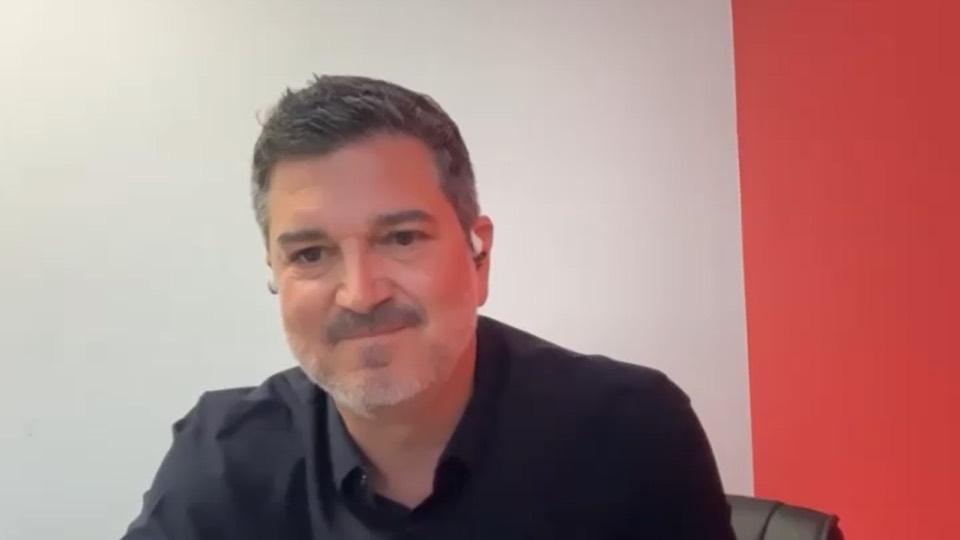
David Cantu, CEO at Craftable, is the guest on episode 58 of the Restaurant Tech Trends podcast, hosted by Justin Foster.
 Play episode
What David and Justin discuss
- The origin story of HotSchedules, born out of a real problem he was solving as a PF Chang's GM. See how the team bootstrapped through the dot-com implosion and 9/11 before scaling over a decade - all before ever taking a dime of PE money
- Why David believes the current AI wave is forcing legacy platforms to rebuild themselves from the ground up, and how Craftable rebuilt its architecture to be AI-native
- How Craftable surfaces margin erosion signals in real time, from a 35% spike in lime prices to kilowatt-level waste, and why visibility alone drove a 600 basis point P&L improvement at a restaurant David recently operated
Also in this episode
- David's candid take on the Founder's Dilemma and knowing when to self-select out, plus why ops-led tech buying usually beats CFO-led
- Rapid fire answers on lettuce wraps vs bloomin' onion and the most overlooked line item that kills restaurant margins
Episode notes from the host
FROM THE FLOOR TO THE BACK OFFICE
On today's Restaurant Tech Trends I sit down with David Cantu, CEO of Craftable and former co-founder of HotSchedules. David started on the floor at Outback Steakhouse and PF Chang's, then turned that operator DNA into a 20+ year run building tech that powers hospitality. Watch this for an insider's look into how David and the Craftable team are helping 80,000+ operators protect their margins today
Thank you David for sharing your hard-won wisdom from 20+ years of building in this industry.
Transcript
Full transcript (5,650 words)
Machine-generated transcript; names may be misspelled.
0:00 Hey everyone, welcome to Restaurant Tech Trends where we explore restaurant technology trends with some of the industry's biggest movers and shakers in a rapid fire short interview format. This podcast is produced by Incept AI. Incept AI takes restaurant orders over the phone and in noisy drive-thrus with friendliness and precision. Learn more at Incept.ai. My guest today is David Cantu. David started his career on the floor at Outback City. He was in a steakhouse in P.F. Chang's. Love that operator DNA. And then he turned that DNA into a 20 plus year run building the tech that powers hospitality at Hot Schedules, which he co-founded as well. He then led Black Box Intelligence and is now CEO of Craftable. And I just learned he was also a recent operator, which is super cool. Craftable is the intelligent back office that today helps over 80,000 operators protect their margins. David, welcome to the show. Good to be here. Thanks for having me. We were able to make it work. And I'm looking forward to seeing you at RLC and keeping in touch afterwards. Definitely. Let's talk about I love operators turned tech leaders. I just love these stories. I would love to hear your story. You started on the upside at Outback and PF Changs we were talking about in the intro before you pivoted into the tech. World. What prompted that? That's kind of a big leap. Like, why do you do it?
1:38 You know, I, well, one, I was focused on always being a restaurateur. I wanted to do my own restaurants and you need the capital to do so. And Outback and PF Chang's, they had a unique structure to where they had operating partnerships or proprietorships where they hand-selected the management to go open a restaurant, invest in that restaurant. And after five years, they'd buy that manager out. And so that was my path that I was going to do that and turn around and start building my own restaurant. And while I was at PF Chang's, this was in Austin, I hired Ray Polikowski, who was my co-founder of Hot Schedules. He was bartending, going through school. And, you know, he came to me one day and he asked if I would give him the schedule every week when I was done so he could post it on a website so he can go to the website and rather than calling up to the restaurant. At that time, we had about 130 employees. So you can imagine people were calling like, what time is the schedule going to be posted or is it posted? Or they'd call throughout the day, hey, what time do I come in? So we just did this simple thing of posting it on a, just a webpage. And it, you know, we had no more phone calls to the restaurant. Everybody would go to the webpage.
2:56 And he came up with an idea and asked if I'd be interested in starting a business with him. I was like, absolutely not, but I'll help you. You know, I was on my journey and, you know, the more that I started to do just the research of thinking like, wow, I'm managing millions of dollars in labor here and I'm using an Excel spreadsheet. I don't really know the cost structure as much. And, you know, we just, we started to, you know, design and then we brought on a third founder that actually built it. And we did the, you know, the pilot there in that, that PF Changs. And, you know, the, the staff just took to it instead of the management. And, you know, I started doing that on the side and we were scaling it and growing it. And I decided to take a leap of faith and jumped into it to do it full time at the worst time. It was during the dot-com implosion and during 9-11. So we bootstrapped it for like a decade before we ever got private equity invested. But, you know, we had scaled and grown the business, you know, for a decade with, I mean, some of the best of best brands. So it was, it was just by chance, Justin, I didn't even, you know, I didn't plan on that, you know, and, but what I loved is that I got to work with all these great brands and see how they operated. And I was like, just having the time of time of my life, you know, just learning from these, these amazing operators.
4:16 That's such a cool story. I love, I love two things about it. Um, well, I love more than two things, but I love the fact that you started a business that was solving a real problem that you were having and that you used yourself as the pilot. That's amazing. You're guaranteed to have a product that's going to work if you do that. And then, um, I love that you started in the.com implosion. Uh, so many startups that succeed are built when the economy is tanking. And I love the fact that you bootstrapped it. I've always done my startups bootstrapped my last one, 12 years, bootstrapped it. It's a hard road to go, but if you can do it, I mean, there's no, there's no better way. It's definitely a lot simpler. Um, let's talk a little bit more about hot schedules. We're moving to craftable. Um, you were there for 21 years. It's quite a long time. And I have to imagine at the beginning you would have, you had no idea how big it would become. When did you know that you were onto something like super, super big? And did you ever think it was going to be as big as it finally became? No, um, I didn't because I mean, I would even say the first five years it was, I remember for the longest time we had like 50 locations made up of a bunch of small companies.
5:36 And then we got our big break with this, this company, Johnny Carino's, uh, if you ever remember Johnny Carino's and, and, um, we got our big break there and, and, uh, all of a sudden we had 170 locations. And then it just, um, and I, I remember it, I was like, okay, someday we're going to have multiple people buy in the same day. Um, and then we just started to see this thing just transpire. And I never expected that it would scale or grow. And, you know, I would say that the time, you know, I would say 2010, 11, where we've got our first investment, um, that was the time we realized, okay, this thing is bigger than we are. And, you know, to hold it back on what we can scale and grow it. Um, we need the right resource. We need the right people around us. And, you know, I think that at that time it was, uh, most people can say it was like a lifestyle business. We just loved what we were doing. And, and, but like I said, it was, um, I think we at that time had maybe 70, 80 employees. And there was a lot of pressure because, you know, we, we had to perform for them. And, you know, every one of them, we, we, we provided equity for every, I think the first hundred employees. Um, so we, we wanted something bigger for them. And, you know, that's where we went out and found, you know, an investor at the time that, um, became a mentor of ours.
7:02 And, you know, I would say about a year and a half in that we decided to go get, you know, another investment from TPG capital growth. And the goal was to roll up a few companies and really scale it. And, you know, I think that point we did that, I mean, everything was just up into the right. And we were scaling and growing so quickly that, you know, we were international, um, with some of those rollups and I was finding myself traveling all over the world and, you know, from Australia to Asia Pacific into China and serving, you know, great global brands like Yum and Starbucks. And, um, it was like, it was my MBA. Do you remember what your ARR was when you took on that first investment?
7:48 We were around 12 million ARR when we took on that first investment. I mean, which is respectable after 10 years. I mean, at the time we didn't feel like it was just, you know, scaling, but I mean, looking back on it now, it's, I, I get to, you know, I interface with a lot of different entrepreneurs, startups. It's hard to hit that 10 million ARR much harder now. I, I, well, I would say it was hard then because we were competing against Excel spreadsheets and people really didn't think that they would invest in software as a service or subscription-based. And we were like one of the first SAS businesses specific to the restaurant. Got it. Well, um, you know, after hot schedules, you went on to black box intelligence as the CEO. And now of course you're leading craftable and I'm interested from your perspective as a founder, how did that work for you? I going from a company that you started and then popping yourself into a company that someone else has built. How do you as a CEO and as a former founder balance honoring, you know, what's already there with putting your own stamp on the business?
8:56 I mean, I, I think the, the, the first thing with, with black box intelligence, particularly the, the founders, Joni and Wally, who I've got tremendous respect for had, uh, I was taking time off, Justin. And honestly, I was, I was just for once not doing things maybe about four months in. And, um, so I went into a founder led business and grew and scaled that for, for three years. Um, I decided to take time off. I really jumped in quickly and I burned myself out and I joined multiple boards. Craftable was one of them. And I had no, I mean, at that point, you know, I was on multiple boards. I got back into the restaurant business. I wasn't planning on it, um, to come in, you know, to be the CEO. I was, as a board member, I was contributing, sharing my, you know, my thoughts on the scale and the growth. And this company was growing extremely well. Um, it was an exciting time. And, you know, the, the, the founder knew that it was time to hand over the reins, you know, he was having his first child. And, um, you know, I was actually in search of that, the CEO and we got down to a few CEOs and the, our, our investors and board members were asking me to take it. And, you know, I had a, I would say I really thought through this and I was running this restaurant and there was the light bulbs that were going on on like, you know, I see a great opportunity for craftable and it was a right time to step in. Um, and you know, it was, the team was very welcoming because I, I had joined, you know, their, their sales kickoff earlier that year and I got to meet a lot of the team. They knew my, my background having been a restaurateur still in it as well as building tech. Um, so, you know, it's, uh, it's never easy because you have to learn and understand and respect, you know, there's a reason why they're successful and there's a reason why to grow. Um, so it's, um, it's one of those things you have to look back and you have to determine what's working, what's not, and what is it going to take to scale?
11:00 And everything for me is foundational at a period of time and a company's maturity. And, you know, fortunately I had, I had been there at that scale and knew what it was going to take to get to another level. And, um, you know, I just, uh, I, I really pulled the team together. Is this your way of saying you guys are running roll-ups too or TBD? No, I, you know what, I, I would say it, while there, that was a potential, um, you know, it still could be a potential, um, on that front, um, where we're at with the technology today. I mean, the sky's the limit and you have to determine, do you want to build with what you have today and, you know, the advancements, or do you want to buy and rebuild? We, we've got so much ahead on, on the innovation front that we're heads down focusing on our core. That makes sense. And I think that's a perfect segue. Let's talk a little bit more about Craftable and what you guys are up to these days. So, um, from what I see, you kind of sit at the intersection of purchasing inventory and financial analytics for operators. And for someone that hasn't seen the platform, I haven't seen it. What does life for you, you know, look like before Craftable versus after?
12:19 I would say so before Craftable and after Craftable, um, you know, one thing, procurement inventory, a lot of people think of inventory of, I have to just count everything that I have, and I have a total, and this is, this is what it is. And this is what my food cost is. Um, that's really what they look at it. And just like scheduling, you know, they're scheduling, you schedule somebody, but there's so much beyond that. It's a labor management platform. So the, the prior to the tech, there's a lot of disconnected systems. There's a lot of manual work. Um, this sits across procurement operations, finance, and it today. Um, so most companies have these disconnected systems. It could even be labor or accounting. Those are other aspects of back office. Um, you know, I would say most bigger companies, you know, including hot schedules at the time we rolled up code lines and the goal was to integrate as much as we could and have, you know, a above store console or, or the ability to pull the data together, but it wasn't a seamless experience. Um, so I would say prior to Craftable, a lot of disconnected systems on, you know, across purchasing inventory, invoices, accounting, heavy manual work across spreadsheets and emails to after a fully connected system, a clean workflow, more automation built in that to where you will find in most cases, people are chasing people to get information or to send information. Um, so we looked just at a full end to end stack that streamlines the entire workflow from order. Got it. And you work with 80,000 operators today. Are you mainly targeted at independence? Are you working with like large multi-unit operators? Do you work with franchisees, franchisors? Where's your real sweet spot in the market today?
14:20 I mean, really the sweet spot is the multi-unit operator. Um, you know, and we, we've been fortunate. I mean, this is, we've, we're working with some of the best of the best from union square to Daniel blue to how Hakkasan FB society, um, Gordon Ramsey, Jose Andres group. I mean, great, great customers, great brands, a lot of the bigger hotel, um, that have, you know, restaurants in them from Davidson to pyramid. Um, you know, so both restaurants and hotels, hotels, they, they have restaurants in them, they have bars, they need to take inventory. Um, but we've extended beyond just the inventory to where we've done procurement to pay for hotels. That means they purchase anything and everything under their, their brand. It could be pillowcases to pillows, to TVs, to computer systems, to the equipment. So all of procurement from a hotel brand will go through us. We'll have all the vendor catalogs. So we've streamlined that entire ordering to where there's approval processes for certain, certain things that are purchased. Okay. I've, I've heard a lot of like, um, fine dining, some casual dining, obviously hospitality seems like it's a big push. What about like QSR, um, fast casual, are those segments of the market that you're attacking as well? Absolutely. Mo bettas, um, FB society, a lot of, are not, um, the, the, uh, Pure Greens is a growth brand juicery out of Florida. I mean, they're, so I would say everything that's fast, casual and full service, quick serve is an aspect of it. The way I define quick serve in my definition is mostly larger, highly franchised companies that serve burgers and chicken and other things. Um, we have not really gone there yet. It's a, it's a very fragmented space. Um, cost of acquisition is pretty great and it's just not an area that we've tried to tackle or go after because we want to be really smart with how we invest in the business and what their ICP. So I would say the ideal customer profile for us, you know, is, is essentially from that five locations to 200 locations.
16:40 Okay. And primarily, are you primarily working with the CFO, um, is, or is it the CEO, COO? Who is the person that's actually buying your software?
16:50 You know, this is such a strategic like solution for these brands on, on what they're purchasing, you know? So it's typically an operations led, you know, with strong CFOs, but CFOs, if CFOs are selecting tech for brands, they, they're, they're probably strong on the operations or it's sometimes just not a good idea. Operations should really own what their people are learning, using. So the best of the best, we go with the, the COO because they're, they know what their teams, they'll hold accountability. Um, if it's a CFO that's selecting. There's a few stories. Less than any, the ops. We'll let that one lie. Um, all right, well, let's talk a little bit more about some of the things that you, you've done at Craftable. So you came into the business at a very specific moment. Um, new brand identity, big AI push, growth mode. What's the first thing that you looked at and said, we got to fix this. And what did you look at and say, I'm not going to talk? Yeah.
18:01 Well, the first thing was alignment, like 100% alignment across the leadership team. And, you know, when you grow fast and things are moving, a lot of the departments aren't moving in the same direction or they believe they're trying to, but there, there's a lot of tension. And there could be a lot of frustration on this pressure to scale and grow. And, you know, with that comes the delivery too. So, uh, really the first thing I needed to do was really pull the leadership. We did a three day offsite with the leadership and, you know, they just shared everything. And, you know, what I learned is that there's, there's certain things culture for me is, it's just ingrained in everything that I do with respect to a business that I'm running. And, you know, this, this, from my early days without backing PF Chang's core values were something, you know, that I knew needed to be put in place for the scale and grow, because these core values, if they're aspirational, but if from CEO to all the leadership, if they're all following what those core values are and how we, you know, follow through with those on, you know, how we manage the day-to-day coach up or coach out.
19:16 On those, they, they turn into behaviors and those are the types of behaviors you want within your core values. So we formed the core values and the core values for us was going to be how we behave day-to-day. And when we saw things that were outside of those, those behaviors, you know, it would guide us back to what was expected of us. So that formation, I'm just a big objectives and key results of like, I like everything being very crystal clear on what is your role? What are you supposed to do? What are you supposed to deliver? So we broke that out and we were just maniacal about hitting our objectives, key results across all departments, rowing in the same direction with the same behaviors. That was, that was number one. And, you know, I didn't know that that was going to be what I was going to focus on, but, you know, realizing some of that friction and pressure across the teams, we needed, that's what we needed. How deep into your career were you when you learned that those things were so important? You mentioned core values all the way back from when you were on the operator side at PF Chang's, but like when you started Hot Schedules, did you, at that time, did you have like all the KPIs set out? Did you have like all the roles, core defined, the objectives? No. It took a while. No, I think coming from a restaurant into, you know, this very, very bootstrapped and, you know, we had essentially three, I consider them co-founders that joined with us and, but we had all of our roles and responsibilities. We learned that over time. I joined a professional like leadership organization, Vistage, and I was learning, I needed the gray hairs to tell me like, how do I grow this? Because I don't know what I'm doing.
20:57 And I was at least self-aware that, you know, I needed help. So I would say that I've been fortunate to have mentors of the objectives, key results of how do you keep everybody on track and sane when you're scaling? Because most people don't grow at 20 to 30% when you get to this scale. And it's, you know, that skill set needed across the leadership team going from, you know, different scales of 10 to 20 to 30 to 50 million to 100 million. You just need a skill set and the aptitude growing with that. So it's just, I don't know, I'm 53 years old. So I've been around a bit of understanding through trials and tribulations and what it takes to, you know, scale a business and when. Great. That's a fantastic answer. I want to pivot a little bit and talk about technology trends in the industry. This podcast is called Restaurant Tech Trends After All. Just before we came on, we were talking about how AI is disrupting a lot of SaaS companies, impacting valuations in the public markets. We're seeing that private markets too. So you've seen at least two major platform waves in restaurant tech, scheduling and labor with hot schedules and now back office operations with Craftable.
22:13 What does this AI wave disruption presence, whatever you want to call it, feel like to you from the inside compared to some of your earlier experiences in these earlier cycles? Well, one, I think everything success is a really around timing. And, you know, I think about the timing of having come in at the time I've come in and the advancements with AI is, I don't know, couldn't be better timing, Justin. And the way I've come in and the way I've come in and the way I've come in and the way I look at even the old, you know, the platforms, these legacy platforms, these companies have to reinvent themselves. We have come in to essentially rebuild ourselves. We looked at the, we rebuilt the architecture, the infrastructure to be AI native. The entire development team is leveraging to build. I mean, product management is now coding with obviously the human in the loop, but we are building at a breakneck speed. And the excitement of building something that has the intelligence of pattern recognition and that can truly do it, that it's not a wrapper over legacy tech that is manual in nature, have rule-based models.
23:43 You know, that it's an interesting time. I'm learning a lot on this run. I mean, on this, we have such an amazing engineering team led by our co-founder, Max Zatz, who's been coding for 13 years. He's pushing the envelope. And what we're delivering is not just the tool sets in a more, I would say, streamlined manner with the design. It's the intelligence behind the data sets and the intelligence where I see the greatest challenges. The restaurants being such a low margin business and probably be more impacted than ever. We are unveiling insights or signals of any margin erosion from the aspect of anything beyond food and beverage to where we're not just looking at a total cost. We're looking at an each, a gallon, a kilowatts to where they start to understand and they can zero in on what's happening and why are we seeing this waste. But we're also doing that with the revenue leakage. So it's just another, I would say, another incredible opportunity. I don't know what everybody else is doing, Justin, because I don't really, I don't look at the competitors.
25:00 I've always had that of like, we're competing the way I always look at it. We're competing against ourselves and we leverage our customers and our customers are going to tell us. And I do this with advisory boards. So we, we developed a customer advisory board, I think two months here with the restaurants and the hotel teams. And we took their feedback on what they wanted to see. And that's what led us to the redesign. You know, while we were, I believe, one of the better interfaces and easier to use, there were still some opportunities in the entire workflow. So, and, you know, they helped guide us in a direction and they're building with us. And it's great when you get a bunch of people like sharing, because a lot of times people go to one company and they design it for that company. And they try and shoehorn everybody else into that workflow or design where we get the benefit of a bunch of different, anywhere from hotels to quick serve, to fast casual, to fine dining. There's a nuance that you can build configurability into the way you design a workflow. I do want to dig a little bit more into some of these ways that your tech is moving the needle. But first, just an inside baseball question. Are you guys big fans of Claude Code?
26:13 We are very, very big fans of Claude Code. We are too, for sure.
26:19 Well, you were alluding to this, you know, you mentioned food costs, margin management, their perennial pain points. You gave a few examples. You said tracking things down to the kilowatt. But where are you seeing, if you can give maybe just one or two examples of how you guys are leveraging AI that's moving the needle for operators in like real numbers. Like, do you have a case study or something that you could cite where you could say like, gosh, we didn't have AI. We couldn't do this. But because we're using AI, we've moved the needle in a really measurable way for an operator.
26:51 So we've just released beta on this new version. We just released it. As a matter of fact, we released it yesterday. So the axis is there. And, you know, we've got we're we're evaluating the savings because the insights provided and we're managing this. I have a head of product that came from the advertising world. So he's looking at this from a different lens to where we're tracking and measuring to where they see an insight. They can select that they are going to action to where we determine, you know, what they're actioning and we're measuring the time savings. But immediately what's coming out of this is, you know, a change in price. Let's just say limes, for instance. We can see that there's a, you know, 35 percent increase in limes and what that would cost, you know, for the year based on that price. It's real time plate costs, too, on whether there's margin erosion from that plate. It could be a center of the plate item. We're seeing the costs go up. So this is signals coming directly to where they understand not that they're going to go change their price right away.
28:02 But our belief, it allows them to at least understand what's low margin. And are they going to run a contest on something that will cannibalize it to, you know, at least sell a more high margin item? Got it. All right. So we'll let you know here in the next 30 days. I mean, we're we're we're expecting that we're going to see significant savings on this because all we're doing is providing visibility. And having run a restaurant recently by teaching the managers P&L and understanding those, we we saw 600 basis points in savings in four months by focusing on the data and tying it to a variable. Well, we're looking forward to hearing more. It sounds like an extremely exciting rollout of this new beta. So sky's the limit, as you said earlier. Sure. Really quickly, before we move into our rapid fire segment, maybe in just like a sentence or two, if you mentioned you're you've done it, you've got your own advisory board. You sit on boards. I think you advise other startups. If you were to advise a restaurant tech founder today, someone that's just getting started, what is one thing that you would tell them that you wish someone had told you earlier on in your career?
29:17 That is, you know, the reason why it's hard to answer that, Justin, is because I do believe that people have to go through their own trials to learn. And it's just it's part of the journey that that I look back at everything because, trust me, I've made some mistakes and I go back and look at it. And, you know, I would I would say in scaling a business, the most difficult thing is when you start with a team, you know, the realization even you have to self select out at some point. You have to bring on people that have experience, that know how to get to another level, because there's I think there's it was a Harvard Business Review study or something. It was the founder's dilemma. And, you know, a lot of times founders want to lead and, you know, grow and scale it where, you know, sometimes you have to self select out and step aside. And sometimes you have to make tough decisions on bringing people over the people that started with you. And I think as long as people know and understand that they can set the right expectations and agree that not everybody can scale and grow a business together. Some people have done it, but it's just they're the exception. They're not the role because that's the toughest thing.
30:34 I mean, I one of the things I love is the people that grew with us and some I've got a person that was a director of operations with us. And now he's leading a division over at Olo and he's incredible. So I look back at people like that that just have the ability to always have a beginner's mind, learning, advancing, you know. But that's the one thing because that's I think any founder will probably look back and say, I wish I would. Are you referring to Spengo or a different one?
31:03 No, this is. Yeah. All right. Well, David, we're done with our formal interview questions. Thank you so much for sharing all of your insights. It's time to move to our rapid fire segment. So for everyone that's watching or listening right now, I'm about to ask David a series of questions. He has no idea what I'm about to ask him. The rules of engagement, David, are try to answer each one of these questions with one word, if you can. If you can't answer with one word, one sentence. Are you ready?
31:35 All right. What was your first restaurant job and did you actually like it?
31:42 Subway. Yes.
31:45 Bloom and onion or lettuce wraps. Which P.F. Chang's or Outback Steakhouse order lives rent free in your head?
31:55 Lettuce wraps. All right. What is the most overlooked line item that kills restaurant margins today?
32:06 Glasses of water. Water. Okay. Interesting.
32:10 All right. What is one thing operators say they want from software, but actually they don't need it all?
32:21 Oh, they all want their own special report with their own specific data on it. Paper invoicing. Annoying habit or somehow still defensible?
32:34 Annoying habit. All right. If you had to work a full shift in a restaurant somewhere tonight, what concept would it be and what would your role be?
32:46 Oh, wow. I would say bizarre meets as a sommelier. Although I'm going to have to pretend like I know all about one. All right. A man with good things. Just enough. I love it. David, I really want to thank you for your time and sharing your expertise with us here today. Everyone, David Cantu, CEO of Craftable. Thanks, David.