Episode 37 · September 23, 2025
Noah Glass
Founder & CEO · Olo
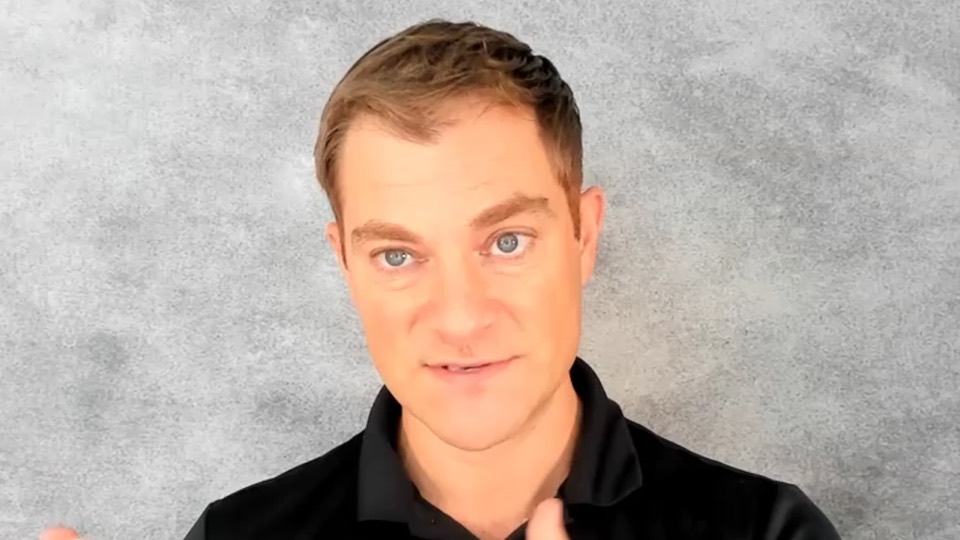
Noah Glass, Founder & CEO at Olo, is the guest on episode 37 of the Restaurant Tech Trends podcast, hosted by Justin Foster.
 Play episode
What Noah and Justin discuss
- How Noah sees digital hospitality breaking out of the app and touching 100% of transactions with Olo Pay and POS-linked data, so operators can personalize even in drive-thru and in-store.
- Why the next phase of restaurant marketing is agentic AI and true one-to-one personalization that remembers each guest and recommends what actually moves visits and check.
- First-party vs marketplaces: why Noah sees the real win as not just margin: it’s about owning the guest relationship and the data that powers smarter decisions.
Also in this episode
- A peek at OrderReady AI, kitchen “race car in the red” ops, and Noah’s founder mantra of being “grateful and unsatisfied.”
- Learn what one capability Olo dropped Noah would revisit if he could. HINT:
Episode notes from the host
"We are at the base camp of Mount Everest and have a beautiful climb ahead of us."
Today Restaurant Tech Trends welcomes a true industry heavyweight: Noah Glass, Founder & CEO at Olo.
Huge thanks to Noah for joining and for the candid take on where hospitality at scale is headed.
Transcript
Full transcript (2,510 words)
Machine-generated transcript; names may be misspelled.
0:00 Everyone, welcome to Restaurant Tech Trends where we explore restaurant technology trends with some of the industry's biggest movers and shakers in a rapid fire interview format. Today's podcast is produced by Incept AI. Incept AI is focused on taking restaurant orders over the phone and in noisy drive-throughs with friendliness and precision. Learn more at Incept.ai. Now, I can't believe that I'm talking with this man, someone who truly needs no introduction, Noah Glass, founder and CEO of Olo. Since launching the company in 2005, Noah has been at the forefront of digital transformation in restaurants. Today, Olo powers ordering, payments, and guest engagement across tens of thousands of restaurant locations with products like Olo Pay, Orderless, and Catering Plus designed to streamline operations and deepen the guest connection. We'll dig into how he defines hospitality in 2025, the role AI is playing in restaurant marketing and operations, how brands can balance first-party growth with marketplaces, and lessons he's learned as a founder, scaling one of the most influential platforms in the industry. Noah, welcome to the show.
1:22 Justin, thank you very much for having me. Let's start off by talking a little bit about digital hospitality. So you've been championing this idea of digital hospitality for years. How has that definition evolved in 2025? And what's the next frontier restaurants still aren't seeing? Well, I think 2025 is a really consequential milestone for hospitality. And it's really about that digital hospitality scaling into non-digital. I think that's the moment that we're in. And what I mean by that is, you know, traditionally I have talked about digital hospitality, qualifying our role in hospitality at Olo as the digital transactions. And I think we're at around 18% of industry transactions that are digital right now. The big leap that we made earlier this year was to announce that now we can touch all transactions, inclusive of the other 82% that are non-digital. And we've done that through our OloPay platform that you mentioned, and the ability to look at transactions that are happening on the POS and the drive-through in non-digital channels, and still be able to pull the data from those transactions, the the guest data that those transactions link to back into the guest data platform. So it enables us to do the things that we've been able to do in this small subset of overall transactions more holistically, and then have an impact across a brand's hospitality, not just the digital component of the brand's hospitality.
2:54 Let's shift gears a little bit and talk about restaurant marketing. I read a post that you'd made recently on LinkedIn where you talked about a shift in restaurant marketing where it will become increasingly driven by agentic AI and true one-to-one connections. And so I'm curious to hear from you, what does that look like in practice for brands using Olo today? And maybe how might that change, say, a year from now? I think marketing is a component of the broader category of personalization, but that's what I was referencing in that post. It's marketing and what we talk to guests about as we send outbound messages to them, thinking about what are they going to respond to? What's the right time to send a message? What's the right channel to send the message through? And what is the right message? Fundamentally, it's going to appeal to that guest and most likely drive them to act and hopefully increase their frequency or increase their spend at the restaurant, driving lifetime value for that guest. In the commerce experience, it's about knowing that guest and making them feel known. And that's really how I think you should define hospitality or how we all should define hospitality is making a guest feel known and cared for by the brand. Technology, AI has a great capability of storing all of that data, having that memory and being able to use that to really create a personalized experience, both in the communications and in the commerce experience.
4:20 And so when I think about the potential there, it's really how do I target messages or target recommendations in the commerce experience that are pitch perfect for that specific guest and move from a one size fits all kind of approach, which restaurants have always used to something that is much more one to one, one size fits one. And I think that's really, really powerful. And we're seeing those results in our efforts around personalization with cross sales and recommended items or showing somebody when they first get to the site, the orders that they've placed last time side by side with recommendations that are data driven recommendations from the platform and those personalization efforts. I'm curious to know also how you feel agentic AI is going to play a role in how restaurants balance first party growth through their own apps or website and third party marketplaces. There's been a lot of debate in the industry on this topic over the last couple of months. I'd like to hear from you. You know, how does Olo help restaurants orchestrate demand across first party and third party? And what's your philosophy on balancing guest acquisition with control and margin?
5:37 Yeah, I think so much. I was just commenting on something on LinkedIn minutes before we jumped on around this exact topic of third party versus first party and, you know, appealing to the guests to get them to order through the first party channel and why that's important. I think traditionally it's about, as you said, margin and profitability of those different channels. I think we over-focus on that. In my mind, it's more important that brands forge that direct relationship with guests and understand their guests better and better with every interaction, whether that's a commercial transaction or otherwise. And they just fundamentally don't get to do that on third party channels the way that they exist today. There's just no data sharing from the third party marketplace back to the brand. It's truly like they're in competition and the third party marketplace doesn't want to share first party data with the brand. So when that's the case, it's really imperative that brands have a great first party experience, build up that relationship with the guests. And I think the payoff of this is using things like agentic AI in the future to almost think about it as if the platform with agentic AI can operate like it's the best.
6:53 Waiter that you've ever had can understand everything about you, everything you've ever ordered, things you like, things you dislike and fine tune your experience as a result. That's kind of the image that I have in my head at Ola. We are focused on is how do we bring that to life based on all of the data that we're able to collect with the guests permission. Important to say that across every experience they have on the first party side of things. Yeah, I just think a lot about how so much of third party delivery in these marketplaces is built on the backbone of convenience, right? And if you're able to extract data, recommendations data, prior orders you have directly from restaurant, you kind of can remove with agentic AI this convenience barrier, and it makes it easier to recommend an order directly from a restaurant. I don't know who I don't think anyone really knows but we'll see how it unfolds, I guess. I think that's right, just me if you are in a place where you're identified as a guest you're in your known you're logged in. And then the discovery is happening through agentic AI based on everything that's known about you. The value, the convenience of a marketplace really has waned dramatically.
8:08 And I think that shifts the power balance back to brands. And it's something that we saw a little bit of a precursor in with Google food ordering. And I think we're going to see even more of that with agentic AI and I'm excited for that. Me too. All right. Well, let's keep talking about our magic word, AI. So what specific applications of AI today are moving the needle the most on profitability or productivity for all those customers? And why do you think that is? We're using AI across every component of Olo's product and in every product suite. So order, pay and engage. Engage, we've talked about a little bit with marketing automation. Pay great for authorization rate improvements and fraud prevention in using AI and doing that fraud scoring. In the ordering platform, obviously things like voice ordering are compelling and exciting and people love talking about them. I think that the things that we're doing in the personalization suite that are powered by AI are really powerful and moving the needle. And then one of the things that is maybe less sexy, but to your question, really boosting productivity and profitability are the back of the house components.
9:25 So knowing from the kitchen display system, how busy the kitchen is the moment, how fast an order can be prepared and using that real time data to inform. Can we take an additional order? When should we say the order will be ready? Or can we commit to this time? When should we fire this order so that it will be ready at that time? Those are maybe less sexy uses of AI, but wow, did they move the needle in terms of productivity. I like to think of the kitchen as our job is keep the kitchen running like a race car in the red and make it. We have this phrase shorthand, AP for as profitable as possible, as productive as possible. And that's really our goal in order ready AI. And it's really paying off for brands that are high volume brands like Cheesecake Factory, one of the very first ones using it, really upping their productivity. And at the same time, making sure that orders are ready and collected by the guest or the delivery driver just in time. So it's a better experience for the guest when they have food in mouth. I couldn't agree with you more. I mean, it's one of the most common things that I hear. I mean, I hear about restaurants that will just like turn off online ordering when the kitchen gets backed up. If you could just do it a little bit more intelligently, you totally eliminate that problem.
10:41 All right. Well, I originally knew of you, Noah, I have tremendous admiration for you as a founder in this space. And I want to know as someone that's grown one of the most successful restaurant tech startups really in history, what advice would you give to earlier founders like myself and other people that watch this podcast that are trying to scale product development, you know, hire the right early leadership and maintain culture as you cross the world. As you cross 10 employees and then 100 employees. I think a big thing that I know, you know, you and I have talked about over email is what we call day one mentality. And that's a borrowed phrase from Amazon. That's a thing that Jeff Bezos talks about a lot. The thing that I've been saying, which is maybe more proprietary at this point as a phrase, I've been saying a lot to the team, grateful and unsatisfied. That's my mentality. And we're 20 plus years into our journey. I still feel that way. Hugely grateful for where we are and all of the hard work and good luck that have gone into getting us to this place. At the same time, hugely unsatisfied because we're nowhere near the top of the mountain. I like to say we are at base camp of Mount Everest and we have a beautiful climb ahead of us.
11:56 But if you think we're at the top, you're in the wrong place. We are just at base camp. And I think that's because so much is changing so fast. And there are so many exciting new capabilities. AI, of course, is probably the most exciting thing right now, but that are reshaping our industry and it's changing by the day. And so it's so exciting while still being in line with our overall mission, which is hospitality at scale. How do we help restaurant brands make every guest feel like a regular by tapping into the technology of today? And we're better and better able to do that. They are better able to do that because of how technology is evolving. And just awesome to have a front row to see all that happening in this industry that we all love so much. I love it. All right. Well, we're out of time for our regular questions. So for everyone that's watching or listening, we're about to move to our rapid fire segment. So the rules of engagement, Noah, on rapid fire. Noah had no idea what these questions are. Try to answer with one word if you can, one sentence if you can't. Are you ready? Ready. All right. What is one misconception you had early on as a founder that you now regret or laugh at?
13:11 A thought that SMB restaurants and enterprise restaurants were similar. What's one feature or component or product you wish more brands actually turned on in Olo? Engage. I think using the guest data that we've collected for so long with the guest's permission is a really powerful asset that a lot of brands still don't know they can benefit from. Marketplace order share. Order share in 2027 higher, lower or flat in 2027 versus 2025. I think flat. And the reason why is that sorry to skip the rapid fire response, but I think, you know, delivery is a component and the much larger component is non delivery. And that is the brand's power alley and what they will own and gain share in faster than the marketplaces are able to to gain share and delivery. What's one idea or feature you abandoned that in hindsight you'd like to revisit? I think initially text message ordering is how we came to market, how we got some notoriety and it's coming back. It's coming back. People want to do things by text and we don't do it anymore.
14:27 What's your favorite way to recharge or take a break when the grind just gets to be too much? Hanging out with my family, my wife and my son are awesome and we all have a great time and laugh a lot together and nothing recharges my batteries more than that. That's awesome. I love it. Half the balance, no matter what family with work. Noah, I am very grateful. I thank you so much for spending a few minutes with me here today. Everyone, Noah Glass, founder and CEO of Olo. Thanks, Noah. Thanks, Justin.