Episode 52 · February 6, 2026
Amar Narain
CIO & VP Information Technology · Pizza Pizza
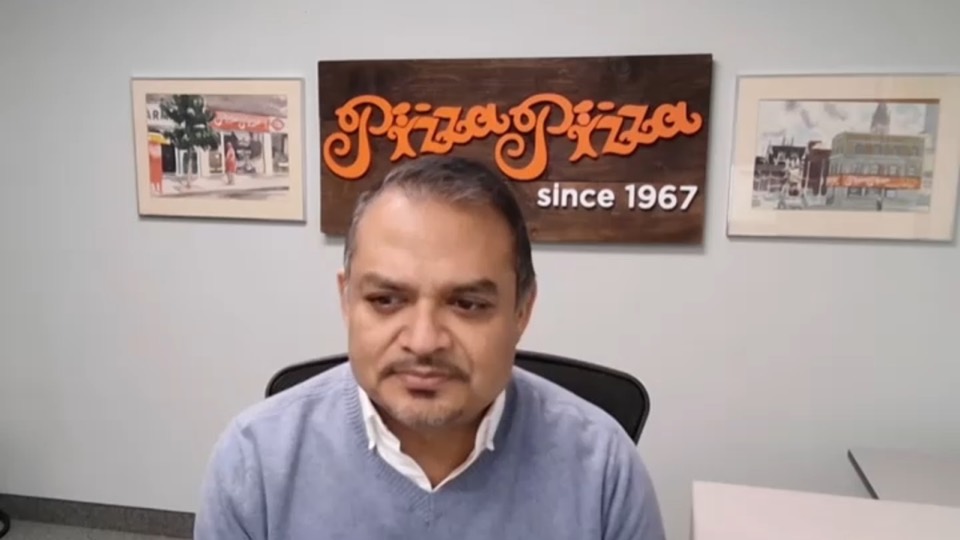
Amar Narain, CIO & VP Information Technology at Pizza Pizza, is the guest on episode 52 of the Restaurant Tech Trends podcast, hosted by Justin Foster.
 Play episode
What Amar and Justin discuss
- Why Pizza Pizza builds and doesn't buy its POS, apps, and call center stack and how owning the codebase lets them move faster and avoid vendor lock-in
- How driver tracking + SMS alerts improved delivery ETAs, reduced wait time at the door, and increased driver throughput
- Amar’s practical take on conversational AI for call centers: it must be as good as a human AND cheaper per interaction
- How they’re layering AI personalization into web + mobile so frequent guests see what they’re most likely to order first
- His no-BS modernization framework for legacy brands:
Also in this episode
- Amar’s thoughts on analytics, cloud transitions, and the operational realities most vendors never see from the store level.
Episode notes from the host
FROM DUMB TERMINALS TO CLOUD-NATIVE AI
Most restaurant tech leaders talk about digital transformation.
Very few have actually lived every era of it.
On today’s Restaurant Tech Trends, I sat down with Amar Narain, CIO & VP Information Technology at Pizza Pizza Limited. He's spent 20 years inside the same brand modernizing it step by step.
We’re talking:
• Unix + dumb terminals
• multiple full-stack rewrites
• cloud-native rebuilds
• fully custom POS / digital / call center
• and now AI agents
All while supporting 800+ restaurants and 20M+ orders a year.
Amar's experience is real-world, “don’t break the business” execution.
reduce friction --> align to business goals --> automate
If you’re a CIO, CTO, or operator sitting on legacy tech wondering where to start, this episode is a masterclass.
Thanks Amar for sharing the playbook.
Transcript
Full transcript (4,137 words)
Machine-generated transcript; names may be misspelled.
0:00 Hey everyone, welcome to Restaurant Tech Trends where we explore restaurant technology trends with some of the industry's biggest movers and shakers in a rapid fire short interview format. This podcast is produced by Incept AI. Incept AI takes restaurant orders over the phone and in noisy drive-thrus with friendliness and precision. Learn more at Incept.ai. I am truly excited for today's guest. We have been trying to get this thing scheduled for a long time and we're finally here. The day has arrived. The man himself, Mr. Amar Narain, who's the CIO and VP of Information Technology at Pizza Pizza. Amar has been with the company since 2000 and he's helped scale the technology behind a proudly Canadian brand that started in 1967 and today has grown to 800 plus restaurants coast to coast. Pizza Pizza processes 20 plus million orders a year, which means massive complexity across digital channels, contact centers and in store systems. And today we're going to dig into how Amar thinks about modernizing infrastructure, turning data into better guest experiences and keeping a legacy brand fast in a real time world. Amar, welcome to the show. Thank you. I'm truly pumped for this interview, man. I'm very, very excited.
1:30 So let's start off. Let's talk a bit about your time at Pizza Pizza. So you've been at Pizza Pizza for over two decades and you're now leading all technology. Tell us a little bit about some of the biggest ways the tech mandate at Pizza Pizza has changed since you joined. And how has that changed your priorities as a leader? Oh, well, it's been a long time. And if you think of 20 years plus ago, you were doing a lot of, you know, when I started out at Pizza Pizza, we were still using dump terminals. I don't know if anyone remember what dump terminal is.
2:07 I'm older than you. Yeah. Yeah. And those DOS-based Unix systems, not Linux, Unix. And we came from, we came a long way, you know, changing from those server-based system over to where we're at today. It's been a long journey. Yeah. If you look at the evolution of technology, it has evolved. So we could say 20 years ago, we probably changed our system about four or five times since then. And we're at a different evolution right now. Now we're evolving with, you know, quicker ways of doing development, quicker ways of providing data to the customers or business, you know, adding efficiency for operation, create different experience for customers, whether they're ordering from the call center or digital platforms or at the restaurant. So significant, significant change. It's like night and day, but it's an ever evolving world when it comes to technology. Yeah. And I know we're going to dive a little bit into some of those new customer experiences that you've rolled out. At the end of the day, though, it's really about the customer, right? And meeting the customer where they are and being in a customer-centric business. I'm sure we'll talk all about that.
3:34 But since you mentioned the dumb terminal thing, right? I know a big push has been moving Pizza Pizza into the cloud in modernizing your applications in a hybrid environment. Tell us, because you're coming from those 20 years, right? There's a lot of legacy infrastructure. There's legacy architecture that's out there, legacy systems. What were some of the hardest legacy constraints that you had to unwind as you have moved into the, you know, into this cloud push? And, you know, in your opinion, has it been worth the pain? Because I'm sure there's a lot of pain that accompanied that change. There was a lot of pain. There was a lot of challenges. Like I said, the legacy system, the data formatting, the schema of the database, when you're moving into a cloud platform, it's a completely different platform altogether when it comes to the way you set up your data. And one of the reasons why we moved to the cloud is we just don't want to do a lift and shift. We rewrite our entire code into the native platform of cloud. And doing so makes it more complicated to be backward compatible with your legacy system. So what we have to do, we have to have an interim system.
4:56 So there's extra effort now. You have to have an interim system where you have both of those systems talking to each other. It becomes more complex, but it gives you that next step to evolve and to say, hey, now, you know, we're in a transition state from legacy or you could say hybrid state as well. But I look at it as a transition state because we're planning on moving everything over to the cloud, but we just can't just cut it and set we're now into the cloud. So it's not possible. It would create too much risk for the business to do something like that.
5:33 Yeah, I'd like to dive in a little bit more. I'm curious because I know you guys build a lot of your own technology, right? And that's one of the things that's always struck me about Pizza Pizza is how much work you guys actually do in-house. As you're going through these shifts, how do you prioritize like building versus buying? Do you – what is the – is there a philosophy there or just tell us? Yeah, it's a really good question. One of the things when we look at our business, so if we look at from a retail standpoint where we have our restaurant POS, we have our e-commerce platform or digital platform, we call it, and we have our call center. Within those areas, we feel like if we can customize it to fit our business rules, to create that user experience where we have control over. And not only using – if we use a third-party platform, there's going to be so much of retrofitting we would have to do. So going with our own platform, redesigning it, and writing it from scratch allow us to do a lot more things. It gives us that agile and flexibility to say, hey, now we can add this module.
6:52 We can – if there's a new technology coming in place, this is what we can do, having that knowledge. And we don't have to worry about, you know, there's going to be a new version of a third-party. If you create – if you get an off-the-shelf application, you don't have to worry about, hey, there's a new version coming. You have to upgrade that version, and then it will break all the customization that you have done in the past. So for us, it was an easy decision to say, we're going to build our own. We're going to support our own. And we're going to evolve our own as we continue to add more and more technology.
7:27 And this includes your POS as well? You guys have built your own POS? That's right. Yeah, we build our own POSs. We have our own website, our own apps, and our own call center application.
7:40 You know, I – gosh, hats off, man. It is so hard to do that. I am thinking back to a few years ago. I know RBI was – before they did their announcement, they were going to work with POS. They were, like, going to build their own POS, and they weren't able to get it off the ground. It was this thing called RPOZ. But for you guys to have actually achieved it is pretty incredible in this day and age. So hats off. Thank you.
8:09 Let's talk a little bit about guest experience. You said that the customer experience has certainly evolved quite a bit. You guys recently rolled out a customer tracking system with Captive AI, I think is what it's called. Yeah, yeah. That's correct, yeah.
8:24 Yeah, so guests can basically – they can see their order status. They can see the driver route in real time. What did you learn from that rollout about customer expectations for transparency and speed? And how – or did it change your internal operations or driver behavior as you guys rolled that out? Yeah, when we rolled that out, obviously it was business case. And the whole intention is how do we augment our customer experience, right? The idea is, hey, can we have an Uber life? You know, we call it Uber life, where you can see where your driver is, how far away your driver is. And the most important part is when your driver is at your door, you don't have – the driver doesn't have to wait for the customer. Now the customer knows it's there, and the customer will just go out and reach their driver. Because now we add text messaging as well. So when the driver leaves the store, a text message goes to the customer. Once the driver is about to reach their house, another text message goes there and says the driver is about to reach your house. So it's prepared the customer to receive the order. So from a customer standpoint, great experience. From a driver standpoint, his turnaround time is much, much faster. If he can save a minute or two from a business side, that means he can do more deliveries.
9:43 He can get back to the store much faster and do another delivery. In addition to that, you know, apart from the customer, think of the franchising. Now the franchising can see where his driver is, how far away his driver is coming back, and know when to reassign the next order to go. And we have a complete heat map to understand where our delivery zones are, where we get delivered. So we can use those analytics. We are actually using those analytics to help the store improve on their delivery time. Try to understand where customers are coming from. And how can we, you know, augment some of the marketing areas as well to say, hey, can we focus on certain areas within our store? And those are the local marketing areas we can use. But most of the time we can say, hey, the store efficiency is X amount of time it takes to deliver an order. Can we improve that? And our customer getting their orders too late, because we do at times, we do a 40 minutes guarantee or it's a free pizza. So our driver has to be there within 40 minutes. All right. I want to click on just one little thing that you said, and this is very weedsy and tactical.
11:00 But you mentioned that you're now texting the customer when the driver leaves the store. And have you done any testing of like texting versus like mobile push? Do you see, you know, customers responding better to push or text or one way or the other? Sure. We were doing a mixed bag of both. And then we decided that, you know, we might as well stay with the text because not everyone ordered through an app. You would have to have an app to get that push. So what we said, we're going to centralize it and kind of focus on a single channel. It's easier for us to do that. Because if you place an order at the call center or you place an order on the website or the app, you're getting the same text. And so the consistency was very important for us to maintain. So that was one of the reasons. Initially, we started out with the app. But again, you have to have notification enabled. You have to have the app. Not everyone has the app. So the number of customers we were targeting is much less than using a text.
12:06 Makes sense. I love it. Simplicity and ease of use. Well, you know, we can't have an interview about restaurant technology without talking a little bit about AI, right? That's the big thing. So you were recently highlighted as a top technology leader and also featured at the Quant AI launch, talking about innovation. And I'd like to know inside Pizza Pizza, what does it actually look like to take an idea from something that's kind of like a cool AI demo and move it to being live in stores at scale? And while you think about that, I'd also like to know, you know, what are some of the AI things that you guys have been playing around with or you're rolling out right now? Yeah.
12:53 Taking something from an idea to a pilot to production is not an easy task because if you look at the restaurant industry, our margin is right. So if you're going to have budget for something, it has to work. We focus a lot on mainstream. So knowing the maturity of the technology is very, very important. Knowing that the capability is there. And once we've gone through that, obviously the pilot. And the pilot is the most important part to make decision because this is where the rest of the business will start playing with it. And that's where the selling point comes into the business saying, hey, this is a technology. We could do a pilot and demonstrate that the technology really works and there's value in it. So very, very important that the business needs to see the value. If we can see the value, get a quick ROI in it, that's where the business will come up and say, okay, we're supporting you more. This is a technology that will benefit the business. It will help us add value and provide better customer service at the same time. It makes sense. And man, on the vendor side, I totally agree with you. Gosh, those pilots are painful.
14:08 Sometimes they last a long time. Way longer than we would like. But on the second part of that, what are you doing on the AI side? Are there any AI projects that you guys are rolling right now or considering? Yeah, we are on the AI side of things. Like I said, on the pilot, we did a pilot with conversational AI to add AI agent to our call centers. So what we do is today, it's all human being. And when we look at our call center, based on the time of the day, events, unplanned events, you could have high spike of volume. And if you're not ready for that volume, then you have high abundance, which you kind of leave in money on the table at that point. So with AI agent, you know, part of that POC that we did, it was very successful. So we're currently on a project where we can say, hey, within, you know, can we automate the call center? Can we take maybe a portion of that call center, 20%, 30%, or 50%, how well it works, and convert that through an AI system? And the AI system, it doesn't have to be robotic. Like our target is, you know, we're setting the bar very high.
15:27 It has to be as good as an agent or even better than an agent, right? Because customer service, going back to our fundamental, customer service is very important. We don't want to give our customers who are calling in, you know, somewhat of a mediocre service. They have to be at that level where they always, with their expectation. So what we're doing is it has to be conversational. It can go back and forth just like a human would be. You can change order. You can replace order. You can make changes as you move back and forth. So the flexibility there has to be there. And, of course, the tone of it has to be similar to a human. So we're about 50% of that project that we're going, but we're hoping within the next few months we'll be able to make that live. Well, that's very exciting. And I certainly would agree with you that for a conversational AI, definitely one of the largest challenges in the space is naturalness of interaction and making sure that you're providing a human-like experience, especially for older guests. That might be a little bit more reticent to use this or adopt this kind of technology.
16:44 You know, another piece that I'm really curious to learn about here is on the cost side, because you guys have done such a great job streamlining your ops in your call center. And I'm sure you've gotten those call handling costs down to be very, very low. How are you seeing that shape up on like a per-interaction basis right now, the conversational AI versus like the human operator? Are you seeing it at parity? Is AI still a little more expensive? Is it a little bit cheaper? Where is that looking like right now? Well, that was another area when we were doing the business case is that, you know, if it's the same, it doesn't really make sense, right? It might be a little bit, because there's a lot more than just an agent. There's a lot more work behind the scenes to do scheduling and also anticipate a higher volume. But the way we look at it, hey, we should see some savings as part of an AI agent. And once we finish our negotiation, it is far less than an agent. You would hire an agent. And the way I look at it, these AI agents are there, whether you have a high peak or a low peak, they're always ready, and our abandonment should be as low as it can be. But definitely, from a business case, it is a cheaper solution for us.
18:03 All right. Well, Amar, you've described the restaurant landscape as being intensely customer-centric, and I know we talked about that a little bit earlier as well. When you look at your own tech stack, where do you still see friction in the guest journey? Like, where are the biggest opportunities to make the guest experience a bit smoother? And what technologies are you betting on to remove that friction over, say, like the next 12 to 24 months? Yeah. As I talk about the call center, we're using conversational AI there. But for the website and the apps, what we're doing is we're looking at redesigning. The idea is, how can we augment our customer experience? And it's not just redesigning it. It's just what we're doing in the background. We're adding AI to add customer customization or tailoring the customer journey through our apps and website. And an example of that, Justin, is if you were to order frequently from Pizza Pizza, we would know and understand your behavior. And based on that behavior, we'll try to customize that journey for you so that you know what you want. However, you'll still have access to the entire menu if you want to go outside of that behavior.
19:22 But we maintain that customer journey, keep it succinct, and hopefully, you know, it's a better customer service at the end of the day. And again, leveraging AI to do all that for the apps. And the store end, what we're doing is, apart from the POS ordering, we're letting customer know that if they place a pickup order, before they get to the store, we'll send them a text on letting them know that, hey, your order's ready. You can come at the store and pick it up. Likewise, if someone walks into the store to place an order, they'll know how long they have to wait for their pizza if they place an order. So, again, we're trying to augment that customer service, getting customers to come in whenever they need to pick up their order.
20:12 Reserves?
20:14 Oh, please continue. No, that's about it, pretty much from the call center side to the store.
20:25 I think those are three great examples. I love it. Well, for other CIOs and CTOs that are listening to this, right, people that might be a little bit behind where Pizza Pizza is at today. If you had to start over at a legacy restaurant brand and you had limited budget, what would your first few moves be in the first year to modernize the stack and improve value quickly? Yeah, if you look at a system, a legacy system, and knowing what I've gone through, the first thing you want to look at is how to reduce friction. If we can reduce friction, we're creating a better experience overall. The second one is decision making. If you're making a decision on what platform to modernize, you have to understand the business. Where are the business going? What are the strategy of that business? What's the vision of that business in three to five years? And then at the end is the simplest part, understanding AI today and the different types of software. That's how there's automation. If we can automate stuff, we're just making things more efficient. And those were the top three I would focus with limited budget.
21:42 All right. I love it. Well, we're out of time for our formal interview. And so it's time to move on to our rapid fire segment. So for everyone that's listening, Amar doesn't know what these questions are that I'm about to ask him. So, Amar, the rules of engagement are try to keep your answer to one word if you can. If you can't keep it to one word, one sentence. Are you ready? Absolutely. Let's go.
22:08 All right. We won't try to stump you too much here. Coffee or tea to help you power through a long day of meetings? Absolutely. Coffee. Coffee is number one. You'd like the drip or do you like the espresso? Oh, and I'll go with the drip. Espresso is probably not going to let me sleep at all. So.
22:28 All right. What is your favorite slice of pizza, pizza, pizza? I would say, and this one is controversial because it has pineapple on it. So it's with pineapple, banana pepper, and chicken. So either you love it or hate it. Amar.
22:46 I don't know, man. I think I'm going to have to take you on your word at that one. But you might be opening new windows into the future for people here. You know, expand your horizons.
22:58 What is one trend in restaurants that you are genuinely excited about right now? I would say we talk a lot about AI. And AI is something that we can automate. We can create quicker wins with. And one of the biggest parts with that is data analytics. If you focus on data analytics, you can provide insight to restaurant, franchisee, or even to our marketing or operation team. That will provide so much information for them to make decisions. Yeah, that's a really rapidly evolving space right now. So a lot of really cool things that are going on with predictive forecasting and demand modeling and things like that. All right. If there were one technology that you would be happy to never hear about again for restaurants, what would that technology be? Some of these restaurants, they have those pump bars. So I wouldn't like to see those manual things. Everything should be automated in every restaurant.
24:02 It should be automated, but only as long as it contributes to hospitality. Absolutely. Right? Don't want the tech. All right. And last one. Can you think of a favorite book or podcast that has influenced how you think about leadership or technology? I think there's not one specific podcast. There are so many podcasts out there. But the ones I look for is the one that teaches about new trend. Of course, leadership as well. And when you listen to your peers talking about new trends and what they're doing and their experience of it, that's where you can learn a lot from. And we know some new technology, some are more hyped than others. But at the end of the day, if you're going to implement something, you want to make sure it really works within your organization.
24:53 Right. Well, you heard it here, people. Amar, I really want to thank you for your time joining today. You are a man in demand. And this was extremely educational for me. I learned a lot. I know that our listeners are going to agree. Everyone, Amar Noreen, CIO and VP of Information Technology at Pizza Pizza. Thank you, Amar.