Episode 38 · September 25, 2025
Jason Rusk
EVP Restaurant Operations · Wonder
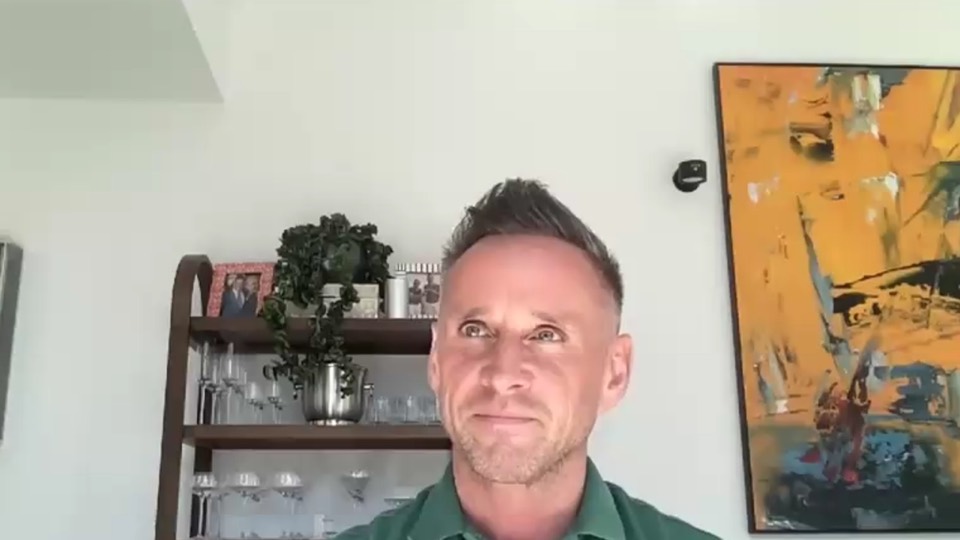
Jason Rusk, EVP Restaurant Operations at Wonder, is the guest on episode 38 of the Restaurant Tech Trends podcast, hosted by Justin Foster.
 Play episode
What Jason and Justin discuss
- The playbook to hit ~90 stores and why Wonder expects to pass 100 soon
- How QR-coded items turn expo into scan-and-bag accuracy that doesn’t clear the KDS until everything is in the bag
- Vision AI on the makeline: moving from “made” to “made right”
- Training at scale: replacing memorization with AI assistance and simulation-based decision training
Also in this episode
- Jason’s favorite pick from the Wonder roster, which expansion city he's most bullish on, and Wonder's entire 2025 summarized in one word!
Episode notes from the host
“It’s more than just a restaurant. It’s a platform.” - Jason Rusk, EVP of Restaurant Operations at Wonder
Today on Restaurant Tech Trends, Jason joins Incept AI co-founder Justin Foster and breaks down how Wonder is scaling a vertically integrated mealtime platform after a major raise, a brand refresh, and rapid expansion toward 90+ locations.
Thanks for joining, Jason!
Transcript
Full transcript (2,542 words)
Machine-generated transcript; names may be misspelled.
0:00 Hey everyone, welcome to Restaurant Tech Trends, where we explore restaurant technology trends with some of the industry's biggest movers and shakers in a rapid fire short interview format. Today's podcast is produced by Incept AI. Incept AI takes restaurant orders over the phone and in noisy drive-thrus with friendliness and precision. Learn more at Incept.ai. Now onto the show. Today I'm joined by Jason Rusk, EVP of Restaurant Operations at Wonder. Wonder has been on a tear. A $600 million raise to fuel expansion toward 90 plus locations by year end. A brand refresh that also brings local restaurants powered by Grubhub into the app. And a new labor planning deployment with Logile to scale ops discipline. Jason leads the people, systems, unit growth, and unit economics behind that push. Today we'll dig into what makes Wonder tick, how the brand is able to scale ops while opening a new unit almost every week, I think maybe even three today, which playbooks are working, and how he sees AI shaping the future of Wonder. Jason, welcome to the show. Thanks for having me. I'm really excited to be speaking with you here today. But first, let's talk a little bit about Wonder. I think there are still some folks in the industry that are not totally familiar with Wonder's model. So can you walk us through the core operating model of Wonder and tell us what differentiates it from a traditional franchise restaurant chain or a pure virtual kitchen? Yeah. First, thanks again for having me.
1:35 I really appreciate it. And I'm excited to share about what Wonder is doing. And I know that there is sometimes confusion about what is Wonder exactly. And I think the reason is because no one else has ever done anything like this before. If you think about Wonder, it's a fully integrated end-to-end ordering restaurant and delivery platform. And we really focus on all of the things that are pain points to consumers. How do we make mealtimes more enjoyable so that you can spend your time with your family? And how we do that is we have curated over three different restaurant brands. And some of those are partnered with chefs like Bobby Flay, Jose Andres. Some of them are world-famous restaurants like Tejas Barbecue or Maidon in Washington, D.C. And some we've created ourselves. And all of those restaurants fit into one building. Think of it kind of like a different type of food hall where you can get all these different menu items, cuisine types in a single order, whether you want to pick that up, eat it in the store or the restaurant, or get it delivered right to your front door. And so it's more than just a restaurant. It's a platform. It's a way that you can consume food in a whole new way. Totally different concept. And you've got a lot of investors backing you thinking this is the future of food. This is truly a unique vertically integrated model.
3:06 It's very cool. Now, speaking of the brand, I know that Wonder has gone through a recent rebrand, I think just earlier this month. Tell us a little bit about what the reason was behind that rebrand, and can consumers expect a different experience along with the new branding? Yeah, I think as Wonder really expanded into new categories with new capabilities, obviously, Grubhub and Blue Apron and others have come into the ecosystem of Wonder. We recognize that we needed a brand system that better reflected the full scope of what we offer today and where we're headed next. You'll see in the new branding, it is bold, it's fresh, and lends itself to scaling as Wonder continues to scale. That really blends the restaurant side as well as the platform to be the mealtime platform built to satisfy every craving without compromise. And I think that's the thing with food. We all crave food, but doing it without compromising, without people losing, that's really what it's focused on. Got it. I love it. Let's talk a little bit about your $600 million raise that was announced this May. I know that a big part of that was to help double the footprint. I think at the time it was 46 locations going up to 90 units this year. I'm curious, first of all, are you on pace to hit that 90? And then as you're adding all these additional units, how do you scale Kitchen Ops, talent, and supply chain fast enough to keep food quality and your 35-minute promise intact? You're opening a new unit pretty much every week right now. Yeah. So first, being able to hit the 90 locations, we are definitely on track on pace to be able to do 90 and maybe slightly higher than that. And within the first full three years, which we call it by February of next year, we'll be over 100 locations. That clip has never been done before. Certainly not as fast from zero to 100 in the industry that I've ever heard or seen.
5:08 But you're right. It creates some really unique challenges. Like how do you make sure that you find the right person? How do you make sure that the technology that you have supports it to make what we consider lightly trained labor to be able to consistently execute on what the promise of the food quality is? I mentioned we partner with chefs, high-quality chefs, and we know that delivering on great high-quality food is of the utmost importance. Now, for me, I think it always starts with having the right people. And I think many people in the restaurant industry will always tell you that. Your general managers, your management teams, above store support, it's critical that you have the right people. I think the difference with Wonder is what typically works. I think it takes even a little more. There's so much technology with being fully integrated, vertically integrated. And I think the key for us is really ensuring that the people that we bring on not only are comfortable with that, but also have the entrepreneurial mindset helping grow and build the business. This isn't just some big corporate restaurant company that you do what you're told. We implore people to be able to help solve some of the unique challenges that we have and help build the systems in the future. So it starts with the right people. The second thing, though, is really how we use the technology. And I think the technology in AI, which I know we'll spend more time talking about, is really key to make the lightly trained labor be able to execute, like using kitchen display systems that tell the team members step by step what to do and how to make the product. I definitely want to dig in in a couple minutes about corporate restaurants and how this is different and some of the changes in your playbooks you've made with this lightly trained labor. But before we do that, you touched a little bit on tech.
6:55 Let's talk about your new DC hub. What process and tech upgrades were required? Is this KDS upgrades like you were just talking about? What did you have to do so that a single line can execute that many SKUs without chaos at the pass? Yeah, there's really two areas that I would focus on that we do and do really well. One of them is we don't bundle things as restaurants. We bundle them as like cooking groups. So the way that you make a bowl from lime salt or the way that you make a bowl from Yossos is all built similarly. And so the tech allows you to be able to use it or treat it as an assembly line, whether there's one team member on the line building that bowl end to end or five team members on the line being able to slide and deploy it to the next person. And our technology allows for that build process to be able to happen and has cutoffs that tell the team member exactly where they need to pick up. And so that's one thing that's really unique. But I think the biggest piece of technology that has been really interesting to me is at Expo. In a traditional world, Expo is your aggregator and your bagger. And they're making sure that everything is in the bag. The challenge is with over 600 menu items, how is a team member, a lightly trained team member going to know all 600? Well, what we developed was a way for a QR code on the item to pop up, get scanned, and it just tells the person at Expo where to put it. And so when it goes off into that kind of bagging or parking lot space where they begin bagging, as you scan it into the bag, it won't bump off the kitchen display system until every item, every side, every thing, every utensil is in that bag. Everything gets scanned.
8:46 Took a highly skilled position and turned it into a bagger at a grocery store. I love it. That's amazing technology and accuracy 100%. Let's circle back to the difference between a corporate restaurant brand and then what you guys are trying to build here at Wonder. So previously, you were at Red Robin and you helped grow that chain from a regional player to 550 plus stores and you led off supply chain and off premise there. Are there any playbook pages like stuff from labor models or vendor partnerships, guest experience metrics that transferred cleanly to Wonder? And if so, which ones were they and which ones did you have to totally rip up or did you have to rip them all up? First, because it's not just a restaurant. It's so much more than that. There's so much more accessibility to things like Blue Apron and meal kits and everything else that it is nothing like a restaurant. However, there are things that you can take and learn like labor models. I know a lot of restaurant companies use time motion studies to develop labor deployment models. So those things do translate, however, not perfectly or cleanly because in a normal restaurant, you may only have 50 menu items at most where we have 600 and even more if you think about the different combinations.
10:05 And so getting a labor model that's very flexible to like cooking groups rather than down to the individual model or individual item allows us to model those items differently as we add change or do things differently so that your time motion study, your labor model you developed is flexible just as much as the restaurant is. And so I think that's across whether it's a labor model or a scheduling tool or whatever it might be from the tools that the operators use. There's pieces of it that are recognizable, but thinking about it completely different, which allows you to be able to redo what the industry norms are and do them differently, do them better rather than just tweaking them. It's a revolutionary model. It's not surprising that only some transfers over, but a lot has got to be built from the ground up. So wonder you want to be the mealtime super app bundling meal kits. You mentioned Blue Apron a second ago, and you've got taste made content from an ops lens. What integrations need to be totally bulletproof before that vision scales nationally? The full thing of from the time that an order is placed and degraded from the inventory. Our general managers don't do their own inventory, their own orders, their own checking in of the orders. It's all done through the technology from the time a guest or consumer orders to the time that it goes out the door. I think those things and really getting clear about forecasting and growth and how you scale that is something that is really key. The good news is the foundation, the baseline to be able to do that for us is there. I think as AI, the bigger thing that goes through my mind that we've got to solve is training 60 brand new general managers by 35 brand new general managers in a traditional way, which is a memorization based learning program that most concepts use that won't work in the future. And so as I think about what's really next, what's really needed, it's using AI for the memorization of things. My conveyor belt goes down or my refrigeration goes down. What do I do? I don't need to teach that. I just use AI and chat to be able to solve those problems. And then I pivot to a simulation based training, how people make decisions, what's the guardrails in which they're doing it, and begin coaching people on that, setting that framework up so that as real life happens, how to make better decisions rather than memorize everything from the operating model.
12:41 Got it. And I'm curious, I haven't really asked anyone about this in a while. Are you guys using vision AI on your make lines to see, are people putting the right amount of ingredients on a menu item before it gets shuttled down? Or is that still something that you think is off in the future? You talked about order accuracy and that you are right. In the off premise occasion, it's especially key. And with the scanning technology that I talked about, it takes care of, did every item get in the bag, but it doesn't necessarily address, does every item get made correctly? And we are in the process of using AI vision to be able to make sure that is done and really clear. So that I think is something that's really cool and exciting that's happening. There's more to come on that.
13:29 All right. Well, it's time to move on to our rapid fire questions. So for everyone that's watching or listening, Jason has no clue what I'm about to ask him right now. The rules of engagement on the rapid fire, Jason are try to answer with one word if you can. If you can't answer with one word, try to keep it to one sentence. Are you ready? Yep. All right. What's your favorite chef or what's your favorite concept on the wonder roster to eat when you're off duty? Dejas barbecue.
13:59 The first restaurant job you ever had? Red Robin. Really? Interesting. What's your favorite city for expansion for wonder over the next 18 months?
14:12 Boston. One podcast or one book that you would recommend to restaurant executives.
14:21 Good to great. That's my favorite as well. Interesting. All right. Pineapple on pizza. Yay. No.
14:31 Big thumbs up. Absolutely not. All right. Last one. If you could describe 2025 at wonder in one word, what would it be? I would say it would be bold. Bold. Everyone, Jason Rusk, EVP of restaurant operations at wonder. Jason, thanks so much for sharing your time with us here today. Thank you.