Episode 36 · September 17, 2025
Bill Lindsey
Partner & Co-Founder · COGS-Well
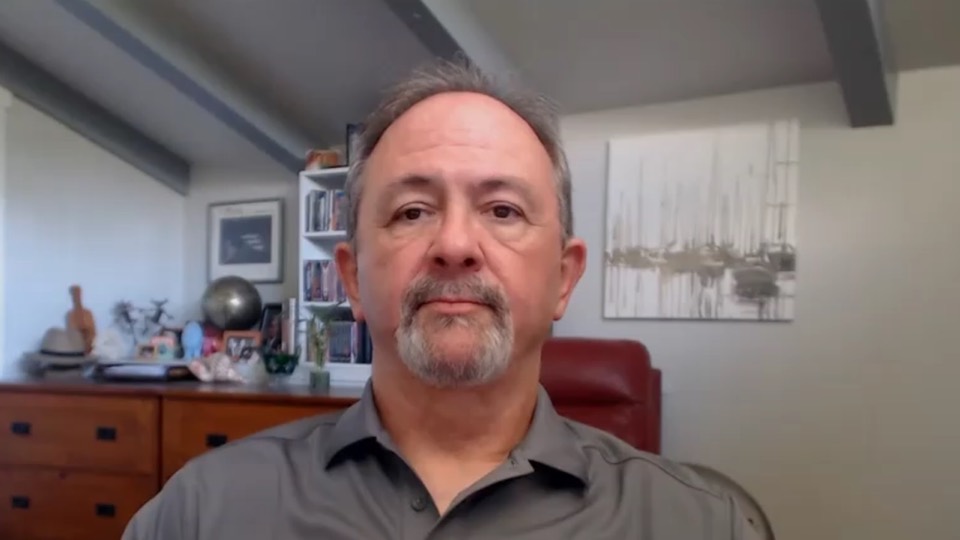
Bill Lindsey, Partner & Co-Founder, COGS-Well, is the guest on episode 36 of the Restaurant Tech Trends podcast, hosted by Justin Foster.
 Play episode
What Bill and Justin discuss
- How COGS-Well helps restaurants get set up in days (not months) by providing a standard packaging library that auto-maps vendor pack sizes to recipe units.
- How operators can get cleaner inventory counts by reducing garbage-in garbage-out errors
- Why taking a different approach to inventory management can lead to less busy-work and more time to run the restaurant.
Also in this episode
- Bill’s 3 cold calls 3 customers origin story, and why actual vs theoretical is still the hill to die on.
Episode notes from the host
Today on Restaurant Tech Trends I sit down with Bill Lindsey, Partner & Co-Founder at COGS-Well. Bill’s a builder and a TRUE entrepreneur: cash flow positive from day one and on his fifth back-office product for restaurants.
Working with his team, Bill's shipping fixes for the messy parts of managing restaurant inventory - and helping operators see value fast.
On a personal note, I admire Bill for taking the hard path in entrepreneurship. Building a bootstrapped startup is no joke in any industry; it's especially tough in restaurant tech and Bill is an example of perseverance to many - including me. Keep rocking it, Bill!
ROCK ON, BILL!
Transcript
Full transcript (2,527 words)
Machine-generated transcript; names may be misspelled.
0:00 Hey, everyone. Welcome to Restaurant Tech Trends, where we explore restaurant technology trends with some of the industry's biggest movers and shakers in a rapid-fire short interview format. Today's podcast is sponsored by Incept AI. Incept AI takes restaurant orders over the phone and in noisy drive-throughs with friendliness and precision. Learn more at incept.ai. Now, for today's guest, today we're joined by Bill Lindsey, partner and co-founder of COGS-Well, a leading provider of automated food and beverage cost management software. With a background in both restaurant operations and technology, pretty rare, Bill co-founded COGS-Well to help operators streamline inventory, reduce waste, and gain real-time insights into their cost of goods sold. And under his leadership, COGS-Well has partnered with major restaurant brands to make data-driven decisions more accessible and improve margins. Bill, welcome to the show. Thanks very much, Justin. I appreciate you having me on. I'm really glad that we get to speak in this format. I know we meet weekly sometimes in another call, so this is great. Let's talk a little bit about the founding of COGS-Well. So you founded COGS-Well in 2019, really decades building restaurant back-office tech. What problem in inventory and recipe management still wasn't solved? And why did that prompt you to start COGS-Well? Yeah, it's a great place to start. You know, the problem or the challenge, I should say, with all these restaurant inventory systems is they take way too long to set up.
1:38 There's a lot of manual data entry involved, and they're very vulnerable to misunderstandings or misdefinitions, if you will, of pack sizes. So with COGS-Well, we've solved those problems. We can do an inventory setup for our customers in just a couple days. Oh, wow. So it beats the two months that most people spend pounding in information, and we do it for our customers before we even bill them for the software. Oh, that's great. Well, you know, a lot of operators, they fail not at counting, but at building and maintaining a clean item master. And you guys have taken the unusual step of vendor-managed setup and an ongoing receiving audit. So what governance model makes that sustainable, and where do you still need the restaurant to play a role?
2:30 So the first thing is we developed or basically produced a standard packaging library. Okay. What we do is we have a database of every vendor pack description we've ever encountered on any invoice in North America, and we map those to our standard packaging. So when our software sees an invoice or an order guide and sees the pack size that's on that particular item, we already know in our software through machine learning, basically set up for that item all the way down to how you're going to count it, all the way down to the individual recipe units. Okay. So reasons that we can set up more quickly, but it's also more accurate. Generally, the problem comes in with pack sizes that are incorrect or they're not broken out properly. You know, if we see six hashtags slash 10, we know that that's six number 10 cans. We know there's six of them in a case. We know there's 103.9 volume ounces in every can right out the chute. And most systems, you're manually typing all that information in. So slight mistakes in the setup yield very unpredictable results on the back end. And we've eliminated that with our technology and our audit team monitors all that to make sure that everything that we receive on invoices matches up correctly. All right. Well, I think this is probably a pretty good segue into this next one, but maybe you can give us a little bit more detail here. So mapping menu items and modifiers to recipes and units is where a lot of these projects stall. What is the modern and defensible approach to auto mapping and unit libraries? So recipes remain accurate as the menus are changing.
4:09 Are there any lessons that you want to share on keeping menu engineering current? Yeah. So first thing is with most systems like ours, it's another manual process of typing in every item in the building that you're going to trade as a recipe and how you sell it, the category it goes in. We pull all that information directly from all the major brands of point of sale. So for every menu item and modifier that the client has in their point of sale, COGS-Well automatically creates the corresponding recipe item. I see. Including mapping the POS code. So there's no data entry there. It's automatically built. Now, the challenge for the customer is they open each one of those items and they fill in the ingredients using the items that we set up for them and maintain with our standard packaging library. Got it. By the way, it can go deep. Just so that you know, one of the big challenges is the modifiers need to be associated with the menu items. Yes. You know, don't just sell a burger. You want to know how many times you add cheese or no tomato, whatever those things may be. So COGS-Well has advanced technology that creates mappings of modifiers to menu items in a parent-child relationship. So you can roll all of the guest choices into the main menu item and get a very accurate report on how it performs.
5:30 That's great. We know all about item modifiers here at Incept as well. And there are a lot of intricacies in making sure that those modifiers are mapped appropriately to menu items. And certain times modifiers should be mapped to a menu item and they're not. And it really creates a lot of problems when it's not done correctly. Yeah. You get into the pre-modifiers. It's not just cheese. It's no cheese or extra cheese. Exactly. Well, clearly I'm picking up on automation as a theme here and a differentiator. You know, we've talked a lot about fast setup and reduced maintenance. When you have to choose though, between getting a client live quickly and achieving audit grade accuracy, how are you sequencing the rollout? So operators are feeling the value fast without compromising trust in the numbers. That's a really good question. So here's the process. Customers will either scan a month or two's worth of invoices or provide us with order guides. Our team uses that to import all the items into COGS-Well and they'll automatically create the items and build them into categories. Then we've built some advanced tools that our audit staff uses to mass validate is the term that we use. So they can go in and if it's meat, the odds are they're going to be catch weights with few exceptions. So we can comb through that data and clean it up. So imagine being able to build the inventory in 15 or 20 minutes and then spending the next day and a half combing through it to make sure that it's accurate and complete before we turn it over to the customer. And by the way, before we bill them for anything, we complete the setup, the initial setup of all the inventory items. So we turn over a functioning system on day one to our customers before they start paying for it.
7:21 Well, that's what customers like to hear right there. Let's dive a little bit more into the machine learning or AI part of this. So you've talked about using AI plus your expert auditors, but really where is machine learning adding real signal here? Like in terms of like helping you with item normalization, anomaly detection, like where is it actually making a difference? And where are you insisting on humans to protect data quality?
7:51 So, you know, I always, I'm always careful with the term AI because different people attach different levels of technology to AI. The machine learning in our software is based around the pack size information. I see. Most inventory systems will start by saying, is this item counted? Is it weighed? Is it a volume measured item? And then they'll assign each weighted ounce, volume ounce, and they build from the bottom up. COGS-Well builds from the top down because the data of record is how that item is purchased and received on an invoice. So by recognizing all those disparate pack sizes and mapping those to standard packaging, we get a top down build of the items right out the chute. That's generally very accurate from the start. With OCR technology, there are times when things are not read correctly. Yeah. And it'll come into the software and when we see something that costs dramatically more or less than what we expect, that triggers one of our auditors to go in and investigate and say, oh, it looks like it read it incorrectly. It's the wrong size case or it's a case of eight and not a case of six, that sort of thing. With OCR, sometimes they get misunderstood. The other thing is sometimes it's matching. What we want to be able to do is have the customers place an order and then match the invoice to develop a variance. Some vendors will put that purchase order number on the invoice and some won't. So one of the things that the software will do is say, I got an invoice with no PO number. Do I have any open purchase orders for that vendor in this store?
9:27 Is it roughly the same amount? And then it'll automatically map the two together and generate a variance. So we can get to the bottom pretty quickly with the technology that we've developed. There's a whole lot more detail in there than that. The other one too that I'll mention is some POS systems create redundant items, redundant menu items. So we have a mapping technology that if we see the same item in the same category, named exactly the same, they will auto map those items together so that the customer doesn't have to go in and do the obvious is probably the way to put it. That's great, man. I love it. Well, obviously, you know, being in this space, inventory is a crowded space in this industry. So if I'm an operator, what questions should I be asking of any vendor, whether it's COGS-Well or not, to avoid ending up with, you know, a brittle, high maintenance stack a year later? And what are like some common pitfalls that I should watch out for when evaluating total cost of ownership of a solution like COGS-Well? Yeah, by the way, brittle is a great term. I may use that myself. So the first question is, how many of these systems have you written and distributed in your career? Most of the companies that we're competing with, this is their first time around the track. This is number five for us.
10:55 We've had four other successful products, three other successful companies. So we've been down this road many times in the past. We've learned a lot of things that will work, but more importantly, we've learned a lot of things that will not work. Well, the first question is, how much experience do you really have? Do you only understand what you've done or do you understand a wider range of challenges? And maybe you've solved them in different ways and innovated things over the years. The second question I would ask them is, you know, anytime you ask a customer or a company for references, they're always going to refer you to their friends. So I always want to know, hey, who in our area uses your software? Because you probably know these people and can call them and say, how did it go for you? Did it work out well? Are there things that they're not telling me that I should know? And I think most importantly, you can tell by reading the agreement. If there's a, if the vendor's trying to get you to pay for a year up front, that to me says cash flow trouble.
11:55 Sure, I want to buy into somebody who's not cash stable, especially if you're in a subscription system. So friendly terms, cancel at any time. Those are to me are two green flags, red flags are annual contracts, or you have to agree to use this for a certain period of time. The other one we look at is what's the cost of setup. Many of our competitors will have somewhere between five and $25,000 in setup charges and training and the customer's doing most of the work. At COGS-Well, if you've got 15 restaurants and they all have basically the same menu, we'll set them all up for $950 flat. That includes interfaces to POS accounting, AP automation, if you need it, and ongoing training for the life of the product. That's awesome. And Bill, I just don't know, what is your funding model right now? Are you customer funded? Do you have investors? How's that working at COGS-Well? We've been cash positive since we started the company. We don't report to anybody but our customers. That is a great way to do it. That's how I've always done it with my startups until this one. So nothing better than being accountable to nobody but yourself and your customers.
13:11 And your customers. All right. So now everybody, we're going to move to some rapid fire questions. Bill has no idea what these questions are. So the rule on the rapid fires. That's right. It's Jeopardy style. One word, one sentence, if you can't do it in one word. You ready? I think so. All right. Which cost of goods metric do you think restaurateurs overlook most often?
13:40 Well, actual versus theoretical. I just have to say it's the most important one. All right. What has been your favorite moment or your favorite partnership since co-founding COGS-Well?
13:53 When we got the code ready for distribution, my partner said, go find us some customers. I made three phone calls. I had three customers sign up cold with me and I'll be forever grateful. Wow. I don't think I know anyone else ever in the world of sales, at least, that can say that they called up three people and got three customers as a result. So that's pretty incredible. It means a lot. What is the biggest operational challenge you see restaurants facing today? If you can, in just one word. Discipline. Okay. Which emerging technology or trend in the restaurant space excites you the most right now? AI, clearly. Anything more specific? Trying to replace some of the routine with insights. And I want AI to tell me something I don't already know in a way I never thought to look at it. Right. Makes sense. Well, Bill, I want to thank you for joining me here today. I'm so glad again that we were able to connect in this format. Everyone, Bill Lindsey, partner and co-founder of COGS-Well. Thanks, Bill. Thank you, Justin.