Episode 40 · October 9, 2025
Niko Papademetriou
Co-Founder & SVP Sales + Business Development · Qu
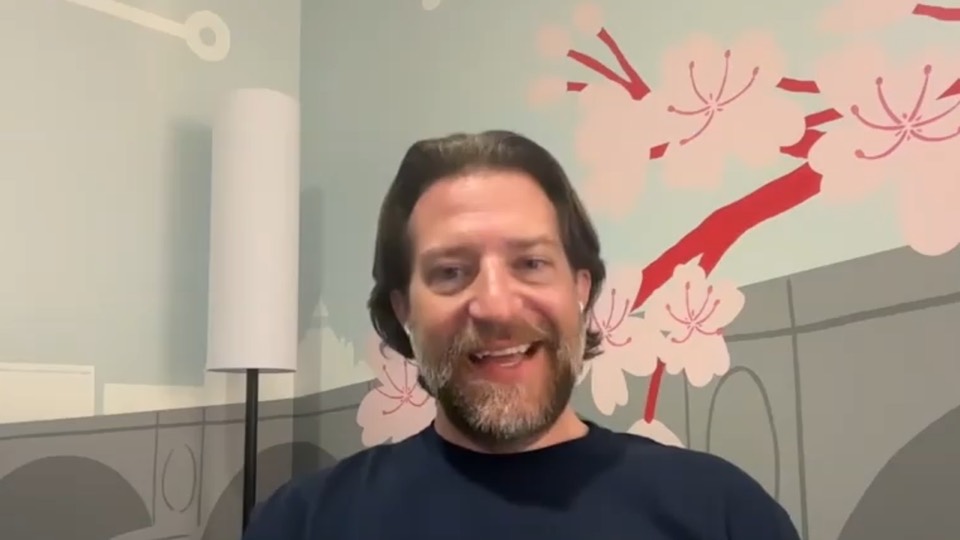
Niko Papademetriou, Co-Founder & SVP Sales + Business Development at Qu, is the guest on episode 40 of the Restaurant Tech Trends podcast, hosted by Justin Foster.
 Play episode
What Niko and Justin discuss
- Why 'edge' matters in restaurants: how Qu’s Qube A/E/IQ platform is pushing intelligence into the four walls for speed, uptime, and resiliency
- How Qube E uses sensors and equipment monitoring to catch fryer and HVAC failures before they happen
- The future of AI at the edge: Qube IQ demos showed how a $30 webcam + AI can identify ingredients, open checks, and add upsells - all offline
- Lessons from rolling out 2,200+ Jack in the Box locations in just 15 months, and what great change management looks like at the store level
Also in this episode
- Niko shares why he says Qu isn’t just selling POS they’re in the business of expectations and change management. Personally, I think this is a lesson 90%+ of revenue-side restaurant tech execs should learn.
Episode notes from the host
On TODAY’S Restaurant Tech Trends we're talking scale, edge, and resilience with THE ONE AND ONLY Niko Papademetriou, Co-Founder & SVP Sales & Business Development at Qu, a company that is lighting the enterprise restaurant POS space - and *beyond* - see what I did there - ON FIRE
Huge thanks to Niko for joining and breaking down what’s next for enterprise restaurant tech. This one’s a must-watch if you care about speed, uptime, and real-world AI in QSR.
Transcript
Full transcript (2,544 words)
Machine-generated transcript; names may be misspelled.
0:00 Hey, everyone. Welcome to Restaurant Tech Trends, where we explore restaurant technology trends with some of the industry's biggest movers and shakers in a rapid fire short interview format. Today's podcast is produced by Incept AI. Incept AI takes restaurant orders over the phone and in noisy drive-thrus with friendliness and precision. Learn more at Incept.ai. Now on to the show. Today, I'm joined by the one and only Niko Papademetriou, co-founder and SVP of sales and business development at Q, the enterprise platform behind fast, consistent ordering across kiosk, counter, and drive-through. Niko's helped some of the industry's most demanding brands modernize their stack, and now Q's Qube Edge platform is pushing more intelligence to the store so orders stay fast, accurate, and resilient, online or off. Today, we're going to dig into Q, Qube, and restaurant playbooks that actually scale. Niko, welcome to the show. Thank you. That was brilliant. Thank you so much. Excited to be here, Justin. Great to see you. Great to see you, as always. I have admired you for many years. Let's start off and talk about Qube. So this is the new big announcement. I saw you on stage at FSTech with Amir talking about it.
1:18 Tell us, what is Qube? What runs on it? And why does pushing compute to the edge matter? Yeah. First of all, again, thanks for having me on the show. Great program. I'm super excited to be here. Qube stands for Q Business Edge. Q-U Business Edge. And we call it Q for short. Comes in three flavors, A, E, and IQ, which we'll talk a little bit about today. But Q-A, we've had in market for four years.
1:52 We've sort of called it more of a colloquial name, and it's our edge device. Why is edge so important to restaurants? Because resiliency, stability, and speed are absolutely critical. If you ask a restaurant operator what they care about most in their point of sale system, they're going to say uptime, stability, and I just don't have to worry about it when I walk out the door or when I'm on vacation. And cloud is a brilliant thing. The world is built on cloud these days, of course. But there are some really unique challenges to restaurant operations and to bandwidth and latency and packet loss and things like that where your on-premises systems are maybe perhaps a little bit too tied to the cloud. It can impact operations. And so we take a little slice of the cloud and we bring it down into the restaurant and that lives on our edge device. That's the Q-U-B-A flavor program. Got it. Well, let's dive, let's double click just a little bit more into the different flavors of Q-U-B. So we talked about A, B, and IQ. Q-A-E and IQ. Q-U-B-E is our energy and equipment intelligence flavor of Q-U-B. So they build upon each other, they're progressive. So Q-U-B-E has all of Q-U-B-A, which focuses more on point of sale, kiosk, kitchen display system, and access sort of the hub between the cloud, the public cloud, and the local cloud and the devices and transactions that are transacting there in real time.
3:23 Q-U-B-E focuses on energy and equipment intelligence, where we've brought a LoRaWAN program and platform into the four walls of the restaurant to monitor and proactively engage and interact with the equipment within the four walls of the restaurant from, you know, temperature sensors on fryers, for example, to understanding, you know, a rooftop unit that might be about to fail because it's hard cycling on and off, on and off every 30 seconds. Being able to understand what's actually happening within the four walls of the restaurant really extends the view and the say of not just general managers, but facilities managers and the like. And then Cube IQ is our, again, includes everything from Cube A and Cube E. And Cube IQ brings AI into the four walls of the restaurant on our edge platform as well, helping with things like AI enabled upsell and cross-sell, looking at ways and patterns that we're able to unearth what's happening with a customer perhaps. And, and, you know, more efficiency from a kitchen and production optimization perspective, as well as who knows, you know, what the future holds.
4:40 Well, that's where we're going next. So I remember at FSTech, Q had in its Cube IQ display, you had a little computer vision set up there. And I think it was set up over an expo station. Yeah, like avocado and tortillas in there. Is that part of Cube IQ now, or that will be at some point in the future? How big is vision playing into this? We are excited about vision in general. We brought that to market to show what the art of the possible. It is not a product that we are productizing and selling today to our customers. It does work. And it really brings to fruition what you can do when you have a platform. So that demo that we were doing in real time with, with customers, prospects, and the market coming into our booth, that was happening in real time. That was happening completely offline. All right. We trained an LLM living on that edge device, living on our Cube IQ platform. And you could put different objects underneath just a $30 webcam, like a tortilla, like you said, like a bowl, like avocados, etc. And it's not just that it could identify what those were with 96 to 99% confidence levels, but it could also open a check, add the item to the check, add upsells and modifiers to the check, all being recognized through the camera. And of course, the LLM living on our edge device, and close the check. So you can imagine a world whereby you have a more holistic approach to check building, creation, building and closure across that ecosystem, all because of what we brought down into the four walls of the restaurant.
6:25 I think it's super cool. And there's also no doubt that AI in general is going to move increasingly to the edge in restaurants over the years. You know, we're obviously in the voice space. I'm curious to see how quickly all of that can filter down. I personally think we're still a few years off from everything moving into the four walls, but I do think it's moving in that direction. So you guys are definitely ahead of the curve there. Couldn't agree more for what it's worth. You're not going to bring the massive, super complex LLMs down into the four walls of the restaurant today. But there are already ways we think that we're seeing, that we're hearing and seeing of being able to sort of bifurcate some of those trips and do some stuff locally and do the sort of the bigger, heavier stuff in the cloud in that larger, broader LLM and be able to sort of bring those cohorts together and be more efficient in that regard. But I completely agree that we're years away. I don't know if it's three or 10. I'm not the person to make that judgment where you can do a lot more or maybe even all of it in the four walls of the restaurant. Yeah, for sure. Well, let's take a step back from Q and just talk about Q in general. Q started out sort of in the POS space. You've evolved beyond POS, but this is a hyper-competitive, crowded market. I'm curious to hear from you, why are operators hiring Q and what are the outcomes that they're typically looking for when they engage you guys?
7:47 Sure. Yeah. It is crowded. I'd say it's much less crowded where we play. Where we sit there, kind of five or six, depending on where you draw the line, that work in the 50, 500, 5,000 unit chain club. I think you know, Justin, but for anybody listening in who isn't aware, we focus exclusively on fast, casual, and quick service chains, generally in that 50 to multi-thousand unit neighborhood, whether corporate owned or franchised or anything in between.
8:21 I think that brands come to us when they don't think that the current plan, this sort of status quo is servicing them well. Now, that doesn't mean that we're any better or worse than anybody else. It really doesn't. We have to be really well aligned with a brand and the vision of that brand and how it should operate today and how it intends on operating in the future and working with its partners in the future in order to have a great relationship. Q is not the right solution for everyone and not every restaurant chain that falls within 50 to multi-thousand unit is a perfect customer or partner of Q's. They're coming to us when they see challenges in getting all of their disparate data sources into a more singular format that they can action off of more holistically and predictably and regularly. And we bring a different perspective to what that can look and feel like as a platform. It doesn't mean that they have to work with Q for everything from, you know, everything, tip of sword and customer facing all the way through everything back office. In fact, we don't really play on those two ends of that spectrum. We really focus on the commerce journey right in the middle. Got it. Well, I know this next question is going to be almost impossible to answer because every brand is unique, but let's just pretend there's a world where you've got a 2000 unit brand and they're running a legacy stack. Give us like the high level overview of what the staged path looks like to implement Q and cube without ripping everything all out at once.
10:00 Sure. Look, a lot of that from a time perspective, to your point, you could do 2000 units and in 15 months, you could do it in three years. I think you'd be incurring a lot of risk going on either end of that, past either end of that spectrum. Teams do work better when they have, you know, a consistent project that they can really more single thread and focused on. So we try to stray from like multi-year through two and a half, three, four plus year rollouts. You just don't find efficiency there. We just finished our Jack in the Box rollout a few months ago, actually. So we did about 2200 restaurants in 15 months. Thank you. And, and we found that when you have the right program leaders and you have the right buy-in across all of the organizations, it's not just the brand and Q, it's the brand, it's the franchisor and the franchisees. Most of the time it's Q, of course, it's the company that's running the program or perhaps, you know, rolling trucks and doing the implementation itself and creating a lot of those processes around that. You really have to have tight and organic alignment between those organizations. But yeah, I mean, you want to build programs, you want to test them in smaller, but increasing sized groups. And then when you do fail, which will happen, you want to sort of fall forward fast. When you lose momentum, you can really have a massive negative impact on the rollout itself. And so getting there in a purposeful manner, again, doing a group of five, maybe, or 50 and then 250 and having that be the way to scale to volume. But then from there, you can do two, three, 400 a month, you know, pretty replicably if you have the right machine in place.
11:41 Well, we're gone from here. Now let's come way down to here and focus on a micro and talk a bit about change management when moving to a new platform like Q. What do the best field leaders do that you see in terms of training and communications that makes new ordering flows stick at the store level? Yeah, I mean, look, you know, at a macro level, there's a reason why operators are focused on hyper focused on efficiency, because it's incredibly important. It's not just that one or two or four fewer button clicks per order or per item configured add up because they do believe me they add up to lots and lots of seconds and minutes in a day and hours in a week when it comes to just inputting an order, but it has all of the ancillary effects of that as well. How accurate is your order? How often, right? And so a different perspective around UI or UX user interface and an overall user experience is super important. I love that you brought up change management because I often joke we don't sell POS or even sell a platform. We sell expectation management and change management. And we bring tools in the form of our platform to help achieve business objectives for enterprises. The last thing I'll say there is that, you know, you do want familiarity, but you kind of don't want to overtrain. There is a sweet spot as you are doing a rollout in bringing familiarity to the users that are going to come into this platform. And then they're not hindering their ability to dive right into it and learn quickly. Humans are incredible. Our brains are incredible. And especially humans within the four walls of a restaurant are a unique bunch that pick things up very, very quickly. For sure. I never cease to be amazed at how adaptable restaurant employees and crew members are when picking up something new. It's just amazes me every time.
13:35 Yeah. All right. Well, Nico, we're out of time for our regular questions. All right. For everyone that's watching or listening, it's now time for our rapid fire segment. And Nico has no idea what the questions are that I'm about to ask him. The rules of engagement, Nico are try to answer each one of these with one word. If you can't, then one sentence. Are you ready? I'm ready. Let's go. All right. What's your go to coffee order before a big pitch? Uh, Venti Black, like play Starbucks. That was one thing, but one sentence. That's it. I think it counts. Thank you. The word edge makes you think of guitars, browsers, or hardware.
14:16 Me, hardware. Yeah. Okay. And last one, what is one demo disaster you've had that you can laugh about now?
14:26 Well, we had, I don't know, a year ago, we had a pitch where the demo site was broken and then the customer never showed, which was just fortuitous. And we rescheduled for the next day and everything was fine, but it would have been an absolute disaster. That's some good luck right there. All right, Nico, I want to thank you for your time and joining us here today. Everyone, Nico Papadimitrio, co-founder and SVP of sales and business development at Q. Thanks, Justin. Thanks so much. Thank you so much. Appreciate you having me. Thank you.