Episode 39 · October 7, 2025
Mark Landes
VP Technology · Snooze AM Eatery
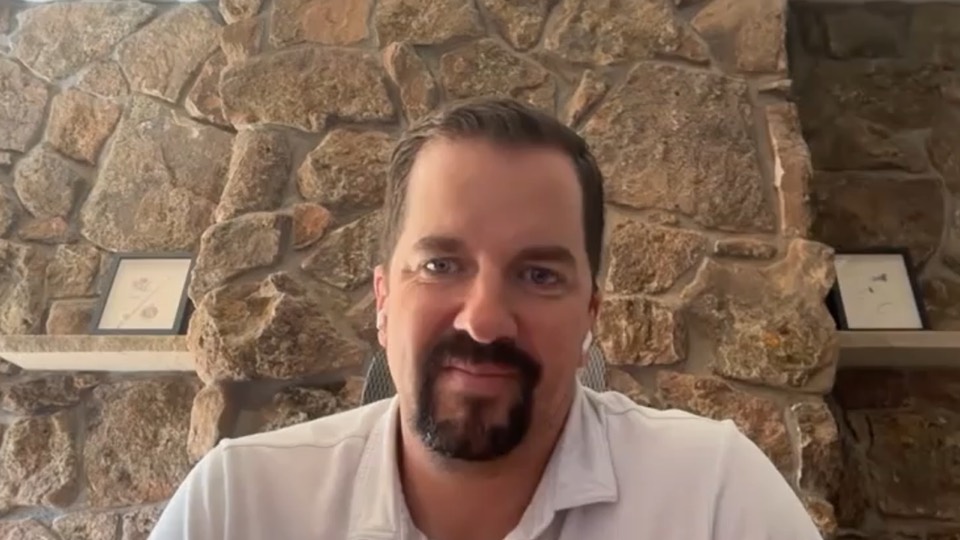
Mark Landes, VP Technology at Snooze AM Eatery, is the guest on episode 39 of the Restaurant Tech Trends podcast, hosted by Justin Foster.
 Play episode
What Mark and Justin discuss
- How Snooze’s Toast POS rollout + handhelds unlocked more table time for Snoozers and gave guests faster, more accurate orders. Even with Snooze’s famously customizable menu (allergies included!)
- Why adding QSR Automations KDS was a game-changer for handling modifiers and complexity in the back of house.
- How Snooze partnered with Bikky to connect POS data and guest behavior, using insights to tweak menu items monthly and boost retention.
- Where AI is making a real difference – from Axial Shift forecasting to new automation that frees staff to focus more on guests - and less on repetitive tasks.
Also in this episode
- Mark shares how Snooze’s rebrand rollout was fueled by data, his favorite brunch order (HINT: pancakes all day), and why classic maple syrup is still in it FTW! lol
Episode notes from the host
Today on Restaurant Tech Trends we’re talking brunch tech with Mark W. Landes, VP Technology at Snooze AM Eatery: the better-for-you brunch brand known for craveable pancakes, bright dining rooms, and waitlists that move because the tech actually WORKS.
Thank you Mark for giving us a peek at how Snooze is scaling hospitality and tech side by side.
Transcript
Full transcript (2,633 words)
Machine-generated transcript; names may be misspelled.
0:00 Hey everyone, welcome to Restaurant Tech Trends, where we explore restaurant technology trends with some of the industry's biggest movers and shakers in a rapid fire short interview format. Today's podcast is produced by Incept AI. Incept AI takes restaurant orders over the phone and in noisy drive-thrus with friendliness and precision. Learn more at Incept.ai. Now onto the show. Today I am joined by the one and only Mark Landes, VP of Technology at Snooze AM Eatery, the brunch brand known for craveable pancakes, bright dining rooms and lines that move because the tech actually works. Mark leads the platforms behind ordering, waitlist and seating, corporate tech and back of house ops. So guests get that weekend brunch magic on a Tuesday too. Mark, welcome to the show. Thank you, Justin. Great to be here. I'm glad we got to do it. I know we've been talking about it for a while and the day has finally arrived. So Snooze has recently gone through a new rebrand, Freshly Fueled. I'd love to hear just high level, what's the purpose behind the rebrand? And then is there any tech work that you had to put in that underpin this rollout? Yeah, absolutely. I mean, this is a huge project that was really a company wide, but really led by a marketing team. You know, we started thinking about this rebrand. You know, Snooze had been the same brand for a while and we felt like a refresh was needed. You know, kind of lines with where our customers are going, how our customer trends are trending. But where we started is really doing a quantitative and a qualitative analysis with a partner. You know, and so where tech leaned in is that, is that we really gave our P-mix over to this team. We talked them through how our data is shaped up, which is a little interesting because we moved from one POS system to another POS system in the middle of this. And how do we make all that data happen? So, you know, we leaned in there. Recently, since that work was completed, we have partnered with the marketing team and other teams to understand how our new menu is interacting with our guests, how those demographics are changing with those guests and those new menu items. And also we launched a new website. You know, our new website went up probably two weeks ago, which we're excited about, which really captures our new brand. That's awesome. Well, these rebrands are always so tough and there's so much work that goes on behind the scenes.
2:22 Sometimes they can take a while to work too. So I'm curious to check in six months from now and see how it's going. Let's talk a little bit about guest impact before we get into POS. Cause I mentioned you moved to new POS. I want to learn a little bit more about that. But when you think about guest impact first, which tech initiatives at Snooze do you think have delivered the biggest lift to guest experience or throughput in just say like the last 12 months? You know, the last 12 months is when we finished that POS rollout, Justin, and what we targeted with that POS rollout was how do we serve our guests better? How do we spend more time with our guests and impacting that guest experience? When you have somebody, one of our snoozers, as we call them, you know, a server that's running back from the table back to the terminal to put in an order. And then there's a line at the terminal as we get busy on the weekends, you know, that took time away that we spent with our guests. So when we rolled out toast, you know, we moved from a previous POS vendor over to toast. One of the key use cases that we were thinking about is the handhelds and how we would allow our snoozers to be more engaged and spend more time with our guests. In partnership with the toast rollout, you know, in the back of the house, we put in QSR automations. I think there is a lot of ability and a lot more clarity that we drove with QSR automations, you know, to the back of our house. One thing that we let you do is that you want to customize any dish that snooze, you can customize it any dish that snooze. That creates a tremendous amount of POS menu complexity. At QSR automations, when we put it on the KDS screens, really it was able to meet what we needed and provide the modifiers and the nested modifiers that let us deliver to the guests exactly what they wanted, exactly how they had it. Especially when we're thinking about allergies at snooze. It's the first question that we ask when you come sit at one of our tables and enjoy brunch with us. But how we had to do allergies because of the vast expanse of our menu, you know, that QSR was a big part of that and where we were able to go. Were you using handhelds before the toast rollout or was it?
4:29 No, we weren't. No, we had terminals set up across the restaurant, you know, and we put handhelds in everybody's hands and it changed what we were able to do. I think it's really made a positive impact on the guest experience. The guest experiences are true north at snooze. It's a total game changer in terms of guest experience, especially when you can't put in all of those complex modifiers and just have it work. Well, I said we were waiting to talk about POS, but we're already talking about it. So let's dig in a little bit more. You're operating toast, love toast. You're operating it everywhere now, I think. Tell us how is that platform and even more broadly, the toast ecosystem? How has it surprised you? Integrations, data, reliability, and also, you know, toast has historically been thought of as more like independent restaurants. It's definitely moving more mid-market and enterprise now. Where do you think there's still room to grow? Post has really surprised me with their ability to improve their product and the speed that they improve their product. You know, I'm lucky enough to sit on an advisory board with toast. And so where we see their product going and what they tell us that they want to do is really a two-way feed between their customers, which is us, the restaurants, but also between toast, what they're thinking. I can't tell you the number of things that have come out of one of those meetings or talking with somebody at toast that has led to initiatives that I want to take on internally at Snooze. At the same time, initiatives that we're doing at Snooze, pushing that to toast and they support it. So I think one of the biggest things that surprised me about toast is how much they care about the Snooze business and what we need to do. The integrations that they may not have that we need to push and also how we're using data. One thing that we did over the past 12 to 18 months is that we built an internal data team to really try to understand our customers better. Toast has been a good partner in that, whether it's through their beta API that we're early into opening up more API connections. But toast has been really surprising with what they've been able to partner with us and the speed of innovation that they're doing. They're always thinking about how do we make our restaurants better and how do we support our restaurants more?
6:45 It's great. You cannot function without partners that are supporting the business like that. I want to actually ask you a little bit about data. Where are you right now on the CDP continuum of things? Exploring, have you launched? What do you think? Are you using CDP right now to dig into finding menu innovations or anything like that? Yeah. So we launched, we partnered up with Biki, which I'm sure you know very well. We partnered up with Biki and we started to feed our data from Toast. Also, we fed them our previous data from our previous POS vendor. And so we have started to leverage Biki. We launched it in about April or May this year. We really use Biki to drive retention and understand our retention metrics around our menu dishes, you know, what kind of demographics align with specific menu items that we have. And it's driven some menu decisions that we currently implement on a monthly basis. You know, whether we're changing one items or two items or, you know, leveraging our weekday eats, understanding who is really into that and how that impacts retention for each restaurant in each region. Biki's been a huge partner of that. I think one of the best things about Biki is that we're able to take their data and cross-reference it with other stuff within our platform as well. Okay. So I'd like to actually ask a question about loyalty and how are you able today, or have you started to dive into cross-selling, up-selling for those guests on-prem that might not be a part of your loyalty program? Yeah. I mean, loyalty, we started, I believe in 2021 or 2022, which is before I started with Snooze. And so it was a big push to get loyalty up and understand how loyalty could impact Snooze. We also have Jaxx. We have different levels of Jaxx.
8:29 One thing that we're doing right now in order to do that up-sale and understand how our customers are interacting with our loyalty program is looking at how we can possibly reboot it. So we can do those up-sales and start integrate that stuff back into Toast. The amount of information that we have and some of the integrations between Toast and our loyalty partner, we're able to know what you had last time and how we're going to actually ask you to come back. If you have one mimosa last time, let's make sure that you get a mimosa this time, right? The mimosas are phenomenal. I mean, I get at least two. And so we're starting to understand our loyalty customers and what they are ordering. And I think the goal in the future is driving personalization around loyalty, really driving a more personalized experience. You're not just part of a loyalty, but you're really part of the series. Family, you come in, we know who you are, we know what you liked, we know what possibly you didn't like, so we can recommend a better situation. All right. Well, you know, this podcast is called Restaurant Tech Trends, and we cannot talk about tech trends in restaurants without talking a little bit about AI. So I'd like to hear from your perspective, you know, how is Snooze leveraging AI today? Are you doing forecasting, labor planning, inventory, ordering, guest messaging? And where do you see in the future, the biggest opportunities for AI?
9:51 It's Snooze. Oh, the main place that we're leveraging AI right now, we're actually leveraging and building our database and building our reporting. That's one of the main places that internally within the tech team, we're starting to really leverage AI to speed up and build our capacity. I think the biggest thing that we have done is that we recently brought in some AI forecasting. The AI forecasting has been a tremendous help for us, you know, pulling in different events, understanding our historical datas. Because we used to have, you know, what's our last four weeks, let's average our last four weeks. And that last four weeks was put out by the system, our managers then had to go change that forecast. And our managers were better than those last four weeks. Where we are right now is that we're actually getting a better forecasting from this AI system. And we've just started it. I expect that to only improve. Where we're really excited about going with AI or where I'm really excited about going with AI is kind of what we're doing internally within the tech team is how do we amplify our snoozers, not only in our mothership, which is our corporate office, how do we really amplify the people that are in the jobs and drive more automation so they can spend more time with a guest? So they can spend more time on things that are really going to add value to this rather than some of the repetitive tests. That's one of the biggest things that we're thinking about for next year is how do we build some of that automation in that allows us to focus on other things that are going to add more value for our guests and to our restaurants.
11:20 That's great. Are there any vendors that you want to shout out that you're working with on any of these initiatives? Yeah. So we recently moved over to Axial Shift. And so Axial Shift was a big changeover for us. We completed that probably in August. We went live everywhere. In August, we did a pilot at four of our locations in different markets with different labor models, you know, previous to that. But we launched everywhere with Axial Shift and we're using their AI forecasting. Really, we're looking for a one-for-one swap with what we're doing previously on scheduling and forecasting. We find to leverage Axial Shift, you know, more and more in the future. Great. Well, we're out of time for our regular questions, Mark. So we're going to move right into our rapid fire segment. And for anyone that's watching or listening, Mark has no clue what these questions are that I'm about to ask him. The way that this works, Mark, is I'll ask the question, try to answer with one word if you can. If you can't do it with one word, then do it with one sentence. Are you ready? I'm ready, Justin. Let's do it. All right, let's do it. Your go-to snooze order, pancakes, bennies, or both? Pancakes.
12:31 Are you a natural morning person or are you powered by coffee? Natural morning person. Wow, good for you, man. That's great. Yeah. 4.30 every day I just wake up, Justin. I only set an alarm. That's incredible. And actually, let me ask you this question next, because you hear a lot of books that say, hey, you know, the most productive people are those ones that get up at four in the morning, 4.30. Do you have one book or one podcast that you listen to that you'd recommend for others that are in the industry? I recently read a book called The Psychology of Money that was really, really interesting. And it leans into what your motivations are. I've really enjoyed that book.
13:17 Right. The Psychology of Money. The most overused word in restaurant tech right now? AI.
13:24 Yeah, for sure. How many tabs do you have open at any given moment? 5, 10, 25, or don't ask? 17. All right. Your all-time favorite syrup, classic maple, something spicy, fruit forward, or something else? Classic maple all day, every day, especially slope side syrup. Some of the best maple syrup out there. All right. You heard it here first, folks. Mark, I want to thank you very much for your time today. Everyone, Mark Landes, VP of Technology at Snooze AM Eatery. Thanks, Mark. Justin, thank you so much. Great time. Thank you.