Episode 41 · October 14, 2025
John Schattinger
VP Technology · Robeks
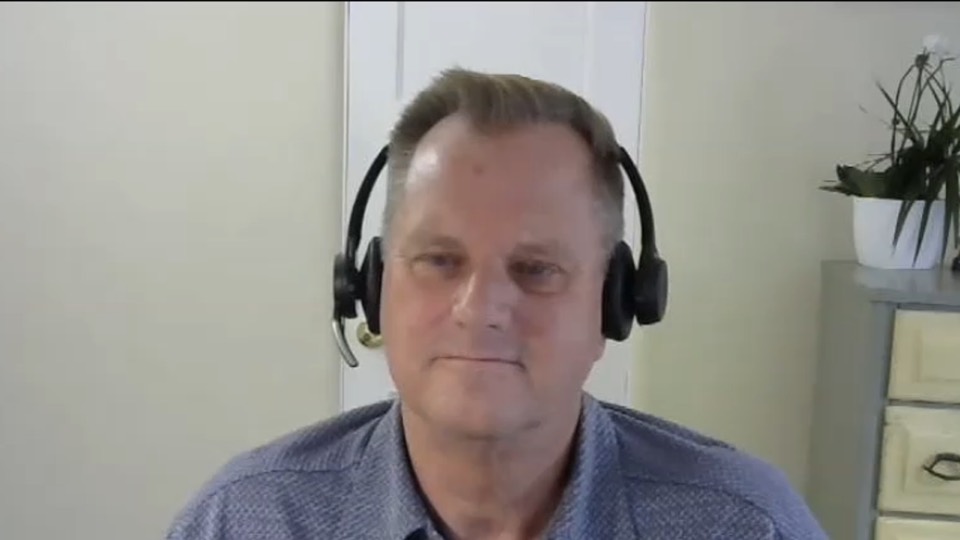
John Schattinger, VP Technology at Robeks, is the guest on episode 41 of the Restaurant Tech Trends podcast, hosted by Justin Foster.
 Play episode
What John and Justin discuss
- Why Robeks moved to a new POS solution and how it unlocked easier integrations and faster rollouts with partners.
- How shifting from dollars-for-points to a tiered, item-based structure improved margins and increased visit frequency for members hunting that free smoothie.
- Learn how Robeks' Harmonious Bites rollout is tracked with product mix plus retention and check analytics and guest sentiment to ensure upsell without cannibalization
- Where John sees practical AI: personalization and agentic coaching
Also in this episode
- What’s next at Robeks: John discusses first-party catering and digital voice ordering.
- Shout-out to the vendors mentioned in this episode who are helping make it possible at Robeks: Toast, Olo, Bikky, Tattle, and PAR Punchh. Vendor teamwork makes the dream work!
Episode notes from the host
New episode drop on Restaurant Tech Trends! Incept AI co-founder Justin Foster sat down with John Schattinger, VP Technology at Robeks, a fast-growing smoothie and juice brand turning tech into throughput across POS, loyalty, digital, and ops.
Huge thanks to John for a candid, metrics-forward convo.
Transcript
Full transcript (2,532 words)
Machine-generated transcript; names may be misspelled.
0:00 Hey, everyone. Welcome to Restaurant Tech Trends, where we explore restaurant technology trends with some of the industry's biggest movers and shakers in a rapid fire short interview format. Today's podcast is produced by, who would have ever known, Incept AI. Incept AI takes restaurant orders over the phone and in noisy drive-throughs with friendliness and precision. Learn more at incept.ai. Now, on to our guest. Today, I'm joined by John Schattinger, VP of Technology at Robeks, a fast-growing smoothie and juice brand where digital convenience meets fresh-made operations. John and his team are on a mission to turn tech into throughput, from ordering and loyalty to back-of-house tools that keep the line moving and the recipes consistent. If you care about speed, great guest experiences, and scaling systems without losing the craft, this one's for you. John, welcome to the show. Thank you for having me, Justin. I'm really excited to have you on. I know we've been trying to get this scheduled for a couple months, and the day is finally here. Let's start and look at your tenure at Robeks. So, you've been there, I think, since 2014. What were the biggest phases of Robeks tech modernization? Are there any achievements that you're particularly proud of?
1:16 Yeah. So, yeah, I've been at Robeks for just over 11 years now. And I think one of the biggest evolution from a technology standpoint was when we migrated over our legacy POS to a really true enterprise cloud-based POS system with Toast POS. Oh, cool. That migration really helped open the doors. We were able to easily integrate a lot of the current peripheral platforms that we were using, a rewards program, online ordering through Olo. But it also opened the doors to many other vendors that we're working with today, easily plugs into the POS. And it's just been really a game changer for us. You know, it's interesting with Toast because I think a lot of people in the industry still think of Toast as, you know, working with independent restaurants. And I know it's been a journey for them as they've moved into mid-market and enterprise. Were you among the first of one of those larger chains? And did you kind of help them juice up the platform, so to speak? Yeah, we were. We've been with them for over eight years now. And I've seen that, the great work they put into the enterprise mid-market sector. So they've been doing the hard work and it's been paying off. I love those guys. They're great guys.
2:32 Yeah. All right. Well, let's talk a little bit about how you architected the stack that supports Robeks Rewards. What were the crucial decisions you had to make there and which KPIs are most important to measuring ongoing success there? Yeah. So as you can imagine, a juice and smoothie brand, we're similar to your coffee houses, right? We get customers that, you know, we're their third, fourth stop in their daily routines. And so points, getting their points based on the purchases that they come in every day or every week is important to them. We made the decision about four years ago to kind of change our point structure, get away from the points for dollars and go to a more tiered approach where based on the points that they have and based on the tier level that they're at, they can get free menu items. This was a change we wanted to do because we found a more favorable margin by, by making that switch. But we also found that it actually brought in these loyalty members more frequently because now they're trying to get to their free smoothie that they always get. So they're going to wait and come back more often so they can get that free smoothie. And it also added a little bit more fun. It added a bit of a gamification to the loyalty program too. So it was a win-win for both the customers and for us, but I don't advocate changing point structures. If you have a loyalty program and you have a loyal following, it's really tough to change any kind of point structure because the customers do kind of get flustered and a bit angry, but our transition went fairly smoothly when we did this. Do you have any vendors that you want to shout out on the loyalty side that you work with on that? Yeah. So we did this when we came on board with Punch. And so we've been working with Punch for the last four or five years and they've been a great partner.
4:20 Very cool. Well, let's talk a little bit now about the Harmonious Bites rollout. And so that was also a big operational change. Tell us a bit, you know, how tech, you know, that's data forecasting, kitchen flow, POS changes that you had to make. What did you do there to de-risk the nationwide launch? Yeah. So I think everybody's experienced in this economy today, the challenges we have with our consumer spending is changing. Customers are coming in less frequently or they're purchasing less expensive items when they come in. So we felt the need that we need to kind of bolster our menu offerings and kind of put in additional food items that help complement our core items, which are the smoothies, juices, bowls, and avocado toast. Right. And so that's exactly what we did this summer. We rolled out our Harmonious Bites food program, and it's a great program. We have five food menu items that really do complement our core items. And they don't take away from our avocado toast, which our customers love. And so it's doing great right now. And I mean, we're kind of tracking the success of these food items. We're utilizing the old reliable approach of product mix percentages. And so that they're doing well there, but we're also leaning into our customer data platform that we have that provides a whole depth of metrics that we can utilize in order to gauge the success of any kind of new menu offerings that we're doing. And so we're looking at, you know, is it bringing in more customers?
5:53 Is it increasing that check average? Because that's our end game right there. Is it the customers reordering the menu item? Is it not cannibalizing any other menu items on our offering? So by looking at those metrics as well, on top of the product mix, we can confidently make better business decisions on what we're offering our customers. All right. Well, I'm curious about your CDP. Can you share who you're working with there? And then those insights that you talked about, the not cannibalizing your avocado toast and complementing the drink items, did you gather that intel from your CDP? Yes. So we've been using Viki, which is our customer data platform for just over a year now. And talking about great partners, they've been a great partner working with us side by side since day one. And we're utilizing all the data that we're getting. Every week is something new that we're learning about our guests and our guest segments and the way we approach our marketing with our customers, whether we're offering personalized communications to engage guests versus non-loyalty guests. Getting back to the harmonious bites. Yes, we're learning what our retention rate is of customers who are ordering these particular items. We're learning that our check averages are increasing with those customers that do order the harmonious bites. So that's not replacing any other items on the check, which is great. And we're getting great feedback from our customers on these bites as well. And we're learning that from our guest sentiment program, which is Tattle. So combining the Biki data that we're getting, as well as direct feedback from our customers, we're learning that these new menu items are actually doing pretty well. I love it. And I look forward to following the journey as it continues to evolve there. Let's take a step back and talk about just tech more generally in rolling new tech. So what is your approach when you're rolling something new out across a franchise system when franchisees are at probably, if your system is like most wildly different levels of readiness, how do you try to align them and how do you roll out? Well, we're 90% of our locations are, or I should say 95% of our locations are franchised owned, right? We have three corporate stores.
8:16 So anytime we have an initiative when we're rolling out new technologies, you know, it's our franchisees are awesome to work with, and they are very open to any new technology strategies that we have, as long as you let them know what the expected ROI is to be, or what is the problem that this new tech is going to resolve for them? Is it going to be make the operations more smoother? Is it going to help with the staffing levels that a lot of our locations are experiencing? And so once they know the end game of that, then they're on board with it. So they've been great. We usually start testing everything in-house before we go into a live environment in any of our stores. And that could be up to a month, a few months, depending on how big the project is. And then we will expand the pilot to a few of our stores. Most likely it's going to be one of our corporate stores, but we also want to encompass a lot of our franchisees. And we have a lot of franchisees that want to volunteer for certain projects. So we like to include them as well. And if that cuts the muster, then we can actually expand it for general release. All right. Makes sense. Well, we're already talking about tech and rolling tech out. So let's chat a little bit more deeply about AI. So, you know, I think a lot of people, they use AI just as like a blanket term, but there are so many areas across the business where you can leverage AI. You know, it could be order taking, personalization, demand forecasting, labor.
9:50 Where is Robax using AI today? And what are you most excited about with AI as you look into the future? Yeah. It's amazing how far AI has come and how much it has weaved into our daily operations and business tasks that we do every single day. I think where it's most effective is its ability for customer personalization is taking that gas data that we have and providing some kind of personalization, whether it's a marketing campaign or marketing email or product recommendations, as they place an order based off their prior guest journeys, upsell opportunities. I think that's where it's going to be most effective for us. We're also seeing the agentic AI as a powerful tool for us as it provides us a lot of recommendations and input based on the data that we collect, whether it's coming from our customer data platform, Vicky, or it's coming from our guest settlement program, such as TATTL, where we can actually provide recommendations or coach or regional managers or operations team as to how to better a particular category that they may need work on, such as order accuracy or speed of service or hospitality, that it could provide those recommendations. It could provide those best practices that we feed through our operations manual that we put into the system.
11:27 So AI will extract whatever is pertaining to order accuracy, and it will provide those suggestions to whoever's going to look at those coaching tips, whether it's our store manager or franchisees or operations team. So I think that's where it's going to be real useful for us.
11:47 That's very cool. Well, last question before we move on to our rapid fires. What are you most excited about as you look at your roadmap over, say, the next 12 to 18 months? I know we're behind the game on this one, but I'm excited to start developing our first party catering program.
12:07 We're not we weren't there prior because we were just kind of let's wait and see what happens with our new food program. We want to make sure that we have these food items that we can bundle with our core items that we have. And I think there's real opportunity for the breakfast segment within catering. And I think we can kind of jump on that bandwagon. And I think that would be real lucrative for us as well. So I'm real excited to get that started. We are rolling out a digital voice ordering program that, you know, we've neglected the phone system for so long. And we weren't 60 percent of our location. Believe it or not, we're not even answering the phone. So we're going to tackle that and see if we can kind of get some incremental business into our store locations as well. Very cool. I love it. Yeah. All right. Well, John, it's time for our rapid fires. The rules of engagement on these rapid fires. Try to keep your answer to one word if you can. If you can't, one sentence. So you ready?
13:07 I think so. Go for it. All right. What's your go to Robax order? What's in the cup? I like anything green. So I think I always go for the queen of all greens, which is one of our superfood smoothies. It has kale, spinach. I like anything with kale and spinach in it. So I love it. It has kale, spinach, banana, pineapple juice. I think that's my go to smoothie. And I always have it with an avocado toast. Our avocado toast can't be beat. So I always have to include that as well. The avocado toast plug. Got to get that in there. What's your favorite tiny UX improvement that you've shipped? I think one of the latest ones is the ability on our kiosk where people can actually log in at the start of their ordering process versus the end. That was a big change for our customers. And I think it's a real positive advantage for them. How many browser tabs is too many? Oh, you're asking the wrong person because I get overwhelmed if I have too many things opened up. So I would say more than five. More than five. We're the same. My wife, totally different. She's got like 500 tabs. I don't know how she does it. Freaks me out. Same. What is a dream feature you wish existed for smoothie make lines?
14:26 I would like to actually automate the distribution of when we put in our fruit and we put in our juices and we put in our hard pack, which is our yogurt. Somehow just get that automated.
14:41 All right. John, I want to thank you for joining me here today. Everyone, John Schattinger, VP of Technology at Robeks. Thanks, John. Thank you.