Episode 71 · July 30, 2026
Ken Knapton
CIO · WIN Brands (Costa Vida & FatCats Entertainment)
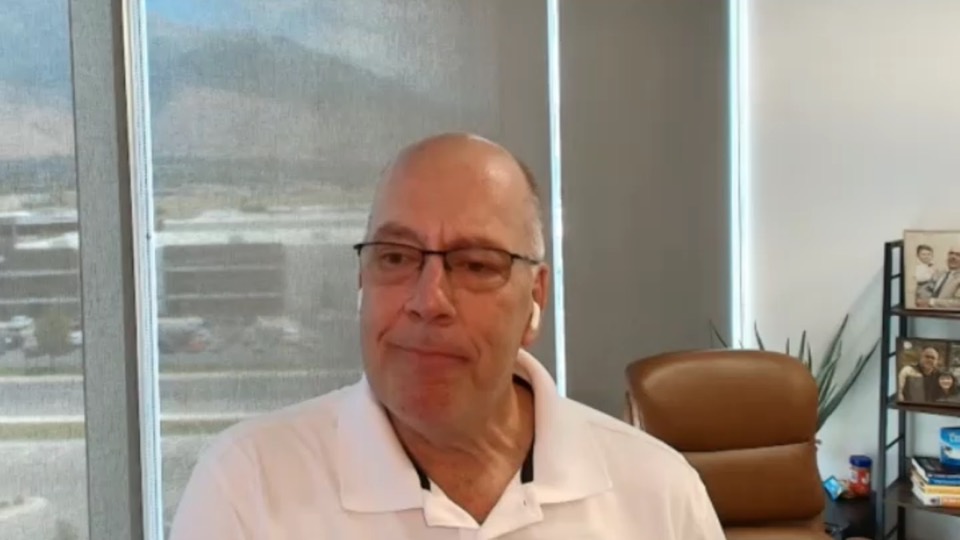
Ken Knapton, CIO at WIN Brands (Costa Vida & FatCats Entertainment), is the guest on episode 71 of the Restaurant Tech Trends podcast, hosted by Justin Foster.
 Play episode
What Ken and Justin discuss
- How he runs IT for two brands that could not look more different - a made-to-order burrito line and a 70,000-square-foot cinema-bowling-arcade - and where he found economies of scale everyone told him weren't there
- Tech debt as LEVERAGE, not liability - the ~20% "sweet spot," and why your org will never (and shouldn't) hit zero
- The "have the WHY conversation first" rule - and how a simple Fat Cats CRM request turned into a single customer-data foundation across both brands
- Why he's NOT chasing all-in-one nirvana - his four-vendor, best-of-breed, plug-and-play philosophy
- Where customer-facing AI is genuinely READY vs. still on the cusp - and why "watching your burrito be born" down the line is a brand promise he won't automate away
Also in this episode
- The rapid fire round, where Ken breaks the one-word rule twice, names the most OVERRATED tech in restaurants and reveals the best money he spent on tech this year.
Episode notes from the host
Tech debt isn't a liability to wipe out. It's leverage to manage - like debt on a balance sheet. Too much and you're bankrupt; too little and you can't move.
That's the idea Dr. Ken Knapton literally wrote the book on. Today on Restaurant Tech Trends I sit down with Ken, Chief Information Officer at WIN Brands, the parent company of Costa Vida, Fresh Mexican Grill and FatCats Entertainment. Ken took the scenic route into restaurants - two decades in the CIO seat across enterprise software, banking, and security - and it shows in how clearly he thinks about the why before anyone writes a line of code.
Shout outs to Toast, Olo, Snowflake, Tableau, and Sparkfly for the tech-stack love along the way.
Transcript
Full transcript (8,935 words)
Machine-generated transcript; names may be misspelled.
0:00 Hey everyone, welcome to Restaurant Tech Trends where we explore restaurant technology trends with some of the industry's biggest movers and shakers in a rapid fire short interview format. This podcast is brought to you by Incept AI. Incept AI takes restaurant orders over the phone and in noisy drive-throughs with friendliness and precision. Learn more at Incept.ai. Now on to our guest for today. I am joined by Dr. Ken Knapton, Chief Information Officer at WIN Brands the parent company of Costa Vida and FatCats. Ken took the scenic route into Restaurant Tech before he was involved in enterprise software, banking and security before he landed in hospitality. I'd like to hear a little bit more about that, Ken, as we get into this. He's a believer in deciding with 40 to 60% of the data instead of waiting for certainty, and he literally wrote the book on tech debt, reframing it as leverage rather than a liability. He thinks hard about the why before anyone writes a line of code. Ken, welcome to the show. Justin, thanks so much for having me. I'm excited to spend a few minutes with you. Looking forward to it. I'm glad to have you here on the podcast. As we were talking about before we got on here, it was great seeing you the other day in Salt Lake. I guess before we get into everything that you're working on right now and talk about the book and whatnot, I would just love to learn a little bit more about your path. I'm always interested in talking with guests about how they became involved in the restaurant industry. So what pulled you into this space given your background, which was pretty much like anything but restaurants?
1:42 Yeah, pretty much my experience in restaurants prior to this job was as a consumer. I love to eat, and I do like to eat out. But that's really the extent of my experience prior to this. As you mentioned, my history is really in high tech. I started as a software developer, worked in all kinds of other industries. I've been in the CIO seat for about 20 years. But never in the hospitality space or the restaurant space. I found myself at a point in my career where I had left my prior role, and I was doing some consulting. I was freelancing a little bit. And someone that I have known for 20 plus years is one of the executives here at Costa Vida, Fat Cats. And he reached out to me and said, you know, we're looking for someone who can mature our IT organization. We're looking for someone who can come in and help us out from that perspective. And I thought, well, you know, I love the brand. I eat at Costa Vida all the time.
3:02 Didn't know much about Fat Cats, but I thought, yeah, I mean, this is great. Someone, you know, that I've known, never worked with him, but I've known him.
3:11 I started to do a little bit of research before I came in for the interview, and I got my first kind of introduction to Wade Allen, who has been a prior guest on your podcast. Yes, he has. And I became impressed with him very, very quickly. Yeah. And so, you know, from there, it was really just a matter of recognizing that even though I don't have the experience in this industry, this was where I needed to be. So I jumped at the opportunity to come and, you know, help Wade with some of the changes he's trying to make here and to work with a friend of mine. And so here we are. That's awesome. I love that story. And I love when things just fortuitously work out that way. And by the way, you're definitely not the first person that's become impressed with Wade in a very short amount of time. He is a truly impressive individual, and he helps a lot of people out in this space, and we're really lucky to have him. So I'm glad you get to work with him. Got a great executive team there. Yeah. You know, I will just say one thing. I didn't plan on saying this. I have no idea if Wade's going to watch this or not. But I will say one of the concerns that I had, anybody who knows Wade, you know he has a technical background. He was actually, he had the CIO title for a little while, even though he admits that he didn't really want it. But he was in that role. And I will say one of my concerns walking in here was as great as he seemed, I saw him on podcasts and everything, I thought, you know, if he's bringing someone in to take that role, is that going to be a conflict?
4:45 Yeah. As he's taking on the president role, is that going to cause any, you know, concerns with me coming in and really leaning into the role the way that I need to? And having been here for going on two years, I can tell you that that concern was never, it never turned into reality. He's a phenomenal leader, and he allows his team to do what they do best. So that's awesome. That's good to hear that. And you know, every now and then you do hear, well, more than every now and then you hear horror stories of someone that's previously occupied a role and then they moved to another role. And it's sort of like, do you really have the ability to make your own decisions or do you kind of have to run them by someone every time? So I'm glad that's working out for you guys. Let's talk a little bit more about the business. So you actually are responsible for IT for two very different businesses.
5:39 Fat Cats looks nothing like Costa Vida. So tell us how or do you run IT services across these two brands that really look nothing alike operationally?
5:53 Yeah, it's a fascinating role, to be honest, which was, again, one of the things that drew me to this. Um, when I, when I interviewed here, Fat Cats was its own company, Costa Vida was its own company, and they were both, um, owned by the same individuals. And the, those, the two entrepreneurs that started the companies have been, um, uh, running them for, you know, 20 years, but they run them completely independently. Right. Um, and, and I was one of the first, one of a few first individuals that they brought in, a few executives that they brought in to kind of start to try to bridge that gap. Okay. They started to realize that, look, there have to be some economies of scale that we can find between these two organizations. Um, and they didn't have a lot of internal support, I should say in, in that thought process. Interesting. Um, and so they, they had hired this other individual I spoke about a minute ago from the HR perspective to try to bring the HR together. Um, they had a finance person that were bringing in a new CFO and then, and then myself. And, uh, and these two businesses were operating completely independently. They each had their own president, their own IT organization and, and, and, uh, you know, HR and everything.
7:10 Um, so, you know, I sat down with, and, and by the way, neither one of these are huge companies, right? And fat cats is smaller from a, from a revenue and, and, uh, uh, employee perspective than Costa Vida. Um, and so when I talk about the IT organization, it was very small and they lean very heavily on outsourced managed service, uh, provider, um, to, to help them with their work. I see. Um, but when I stepped into the role, the, the thought process from the people internally was essentially what you were just expressing that, look, are there even any economies of scale here? Are there any things that we can do together to the same? Because we are two very different brands. Um, and for those of you, for those of your, uh, listeners who, who aren't familiar, fat cats is a, um, entertainment organization. Um, we do cinema, bowling, golf, mini golf, arcade, right? All under one roof. So 70,000 square foot buildings. Um, and we do have a grill and our, and, and, um, concessions and all that stuff. So, um, so anyway, I sat down with the people here and they were like, no, there's nothing, we're completely separate. There's nothing we can do. That's the same. And I thought, well, that's, that's not the right answer. Yeah. Um, very quickly, we found that from a data perspective, there are a lot of things that we don't necessarily have the same data elements, but there are a lot of things from the process of how do you evaluate the business? How do you determine how well the business is going? How do you, what are the, what are the key, you know, metrics that you're looking at? And we could start to normalize some of those and bring them together.
8:54 And now we have a single set of reporting that goes across both Costa Vida and fat cats, very different data, right? Very different revenue streams, but the way that we look at it now is very similar. So as an executive team, we can look at those Costa Vida dashboard and the fat cats dashboard. And it's, it's very similar, right? The way that we're reporting the things that we're talking about, the way that we're looking at the, the, the numbers, the way that we define a customer, all of that kind of stuff. You mentioned with fat cats, you've got the grill and you've got concessions and obviously Costa Vida is a pure restaurant concept. Are you sharing like a POS across that? That's, that is a, that's a great question. Uh, no, we're not surprisingly. Okay. Um, and, and that's one of the things I would have thought that, uh, that would have happened before I came on. Right. Um, as I've talked to other of our peers in the fat cats world, they are, so we use toast at Costa Vida where a toast customer had been for a while. We love toast. It's a great product. Yeah. Um, and as I've looked in the, in the entertainment space, that was one of the first questions I asked was first of all, why aren't we using toast over there? And second of all, does anybody else like, like, would we be the first if we did that? And I found out that a lot of our peers actually are using, uh, their, the POS for the cinema and then toast for their, for their grill. So we wouldn't have been unique in doing that. I just had all partners the other, other week and they, they do that. And that's immediately what I'm saying when I think about fat cats is they're, they're using toast.
10:31 Yeah. And, and that, so we, we looked at that right up front. That was one of the first things I looked at. And then I realized that there are, there are many other things that we need to look at first. Yeah. It's certainly, if we're making the decision today, for me, it would be a no brainer, right? If we were starting fat cats today, I would say, of course, we're going to bring in toast and that's what we're going to use there. Um, right now we're using Vista, which is that that's our, our point of sale system for the cinema side of fat cats. And that also does all of our food and beverage, um, for those, uh, for those centers. And it works well enough. It's, it's, it's a good product as well. Um, and so, you know, the, the, the change cost is probably not the, the juice isn't worth the squeeze for making that change today. But if we were starting from scratch, I certainly would put them all in the same one. All right. Okay. Makes sense. Um, let's talk a little bit about, uh, your famous, uh, have the why conversation before we start writing any code. I think in today's era, you know, this conversation is probably more important than ever before. Literally everyone is writing their own apps. Now I just flipped into this podcast right out of cloud code, right? So the opportunity, but also can present a little bit of danger. So walk us through how this why conversation has played out for you. I guess over the course of your career, I I'd really be interested if there's, you've had this recently at Costa Vida before you guys have embarked on a new rollout or new product that you're working on. Yeah. So I'm just generally speaking, right. Again, I started as a software developer. So I, I understand the thought process as to starting to build something. And this was of course, long before AI, right. When we actually had to put hands on keyboards and, and, and write the code. Um, and as you are developing a system, especially an enterprise or what is going to be an enterprise system, you have to put a lot of thought into how it's going to be used, what it's going to be used for, how are people going to interact with it? What's the user experience going to be? Um, because it's, it's easy to develop something that does its job really, really well, but that nobody can use. Yeah. Because you haven't thought about the user experience or you haven't thought about the data behind the scenes or, or you haven't really, you know, you've spent so much
13:11 time focusing on this specific aspect that was important to you as a, as a developer, that this had to be pure or done correctly. And you didn't really think about, well, after that, once this is in place, this other thing is where we're trying to head to. And I didn't take that into account. And so really having that big picture, understanding the why, why are we working on this particular thing? What's the customer problem that we're trying to solve? What is the employee friction that we're trying to reduce, right? What is it that we're trying to, what's the end goal, right? It's, it's that, that famous, um, um, Stephen Covey, you know, seven habits that, you know, start with the end in mind. I think that applies, uh, in, you know, quite a bit to, uh, to developing any kind of software or automated solution. So it ties back to the whole tech, that thing, because you can go down the path of building something and end up somewhere that it's a great product, but it doesn't do what you need. And now you have to go back and make a whole bunch of changes because you didn't consider that upfront. Is there an example of a project at Costa Vida where you've had this discussion recently? You talked about the dashboards that you put together for Costa Vida and Fat Cats being sort of one of the first examples of where you created some synergy between these two brands. Um, have you gotten to that point yet here with one of these brands or not yet?
14:43 Yeah. So I think probably the, the, the best example, uh, again, it's early on. And so there's only a few things that we've really been able to dig our, dig our, our, our claws into. Um, but one of the first things that we looked at was really from the customer data perspective. Okay. As I mentioned, uh, Costa Vida has its customers and its customer data, Fat Cats has its customers and customer data and never the twain should meet, right? They were, they had their own systems and their own, they were doing their own thing. And we didn't necessarily know when someone walks into a Fat Cats, if they happen to be, uh, uh, Costa Vida loyalty customer. I see. We don't know that. Um, and so one of the things that we did was very early on, probably within a month of me starting here, um, someone on the Fat Cats, uh, team came and talked to me about the need for a new CRM and some, some new capabilities, what they had wasn't working. And they were coming at it from the perspective of their role in Fat Cats. This is, this is what we need. And, and this is what it's doing today. And we just need something to do it better. And, and before we went too far down that path, I had to kind of say, okay, hold on, let's just stop for a minute. I understand we're going to meet that need, but let's step back a minute and let's just talk about the bigger picture.
16:02 Let's talk about why, why is this not working? Why, why do you need it to do what you needed to do? And while having that conversation, let's also think about what might be happening over here on the Costa Vida side that you don't know anything about because you're in your Fat Cats world, right? And so by stepping back and then elevating the conversation, we were then able to realize that there's another initiative that was just beginning over on Costa Vida that these guys didn't know about and really didn't on the surface, didn't look like it had anything to do with a CRM. But we came to realize that if we put in place a different view of what they were trying to do over here, it could meet both needs. And then we could start to build this foundation where we'd have a single repository for all customer data that we could now understand, you know, loyalty here, loyalty there. Can we, can we share data? And so that really allowed us to, to kind of step back and still solve their problem, but solve it in a different way by thinking more about the bigger picture, right? The longer term goal. All right. Makes sense. Um, I want to skip ahead just a little bit and talk about just software development in general right now. Sure. Um, when we were at the dinner, we had a little bit of a conversation about the SaaS apocalypse and how easy it's become to sort of build your own tools. What is your thinking when it comes to enterprise software and in particular enterprise software that is designed for restaurants, um, about when it makes sense to build your own versus when it makes sense to get something off the shelf. And I'll just kind of put a little, you know, thought behind that. You know, I, I hear some people that say, Oh, you know, I'm just going to go rebuild toast. Sorry, dude, you're not going to go rebuild toast. Like, I don't really believe that kind of thing, but I do think there are, you know, some categories that are out there that probably are in danger, um, from just how easy it's become to build your own and how tired so many restaurant brands are of the death by a thousand $50 a month SaaS fees.
18:13 So I'd love to hear kind of your thinking on this. Um, if there's anything that you guys are exploring right now in Costa Vida, or you think you might, um, yeah. What do you think here? Yeah. It's, it's a fascinating topic. Um, and, and, uh, just, you know, again, I hearken back to that conversation at the dinner the other night. Um, I personally don't buy into this idea that, that, that there's the SaaS apocalypse, that all of the SaaS solutions are going to go away for the very reason you mentioned, right? I know people who, uh, or I can't say I know them personally. I've heard about people who are trying to, um, you know, build their own service now or build their own toast or build their own whatever. Um, and I will say that the, the challenge that I think most people are running into right now is that vibe coding and, and, um, being able to, to, to throw something together very, very quickly, um, for even for people who are not developers. Um, it's a beautiful thing because you can prototype very, very quickly. You can, you can visualize and, you know, I've always, my whole career, I've always said that, uh, it's an old agile, uh, um, uh, mantra. Um, people don't know what they want until they see it. And when they see it, they want something different, right? So as soon as you can visualize this and start tweaking it and working on it, you're going to get to what you want to have much faster. And AI vibe coding is great for that.
19:44 Where it starts to break down is in the scalability. Totally agree. So AI is going to give us these great solutions and you can even put some into production where before we had prototyping tools that just, you wouldn't ever be able to put it into production. Yeah. Now we can, but it still is an early prototype, an early version. And to get it from that initial kind of prototype to an enterprise solution that you can have thousands of people using, that's going to scale across your organization is, is a big leap. Yeah, totally. And I, I think about, um, just maintenance as well. I mean, that's definitely part of scalability as well. And I think one of the arguments that you just don't hear about as much in the press right now, because it's not as sexy is that, you know, there is a reason why vendors exist, right? These people are just spending their entire lives thinking about a particular problem and how to best address that particular problem. It's one thing to vibe code something over the weekend. It's another thing entirely to really get deep into that and think about all of the different like corner cases that can happen and all the different problems over a long period of time. So anyway. Oh yeah. Yeah, for sure. It's that, that tribal knowledge, right. That comes with an organization that's solely focused on that thing. Right. And yeah, I've, I actually worked for an organization years ago that, that built their own. So this is when I was working in the, uh, in the mortgage industry, they built their own loan processing system. Uh, and, and they needed to because others didn't exist. By the time I got there, there were some SaaS solutions that had come in place that were taking over the industry and that were doing very well, that, that served the purpose.
21:28 And it was a challenge to get this company to realize that we needed to get off of this solution because we weren't keeping up for the very reason you just mentioned, because these other companies were focused solely on what, what does this product need to do? Where does it need to go? What's the long-term vision? Yeah. Whereas the one that we had built was focused on what does our company need today? Yeah, exactly. Right. Not, not what does the industry need in six months or a year? Well, I think this is actually a nice segue because we're talking a little bit about financial services here and you have background that is required, uh, quite a strong security perspective, but you've also stated that you like moving forward with stuff when you only have 40 to 60% of the data. So how do you, uh, square that? Yeah. So it's a, it's a great question. Uh, and the, the, the 40 to 60%, uh, kind of idea, uh, comes from Colin Powell. He was the one that, that said that years ago he did his like 10 leadership things. And, and one of them was that, um, leaders will move forward when they have between 40 and 60% of the data. And that just stuck with me, uh, because it resonated. Um, and where that comes from is this, is this idea that as leaders, we can often get stuck in the analysis paralysis. We can say, we are not going to move forward until we know for a hundred percent certainty that this is going to work, or this is going to, or we have all the details ironed out. Um, and that if you wait for that, then you're going to be behind your competitors will have, will have surpassed you already. Yeah. Um, and so that, that's where that idea comes from that, you know, 40% is really on the low end 60%. If you're, if you're trying to get more certainty than the 60%, then you're probably going to be too slow.
23:25 Um, so somewhere in that range is, is a good, good enough data to move forward. You know, um, however, Oh, good. Go ahead. I was just going to say, and then please do continue after that. But I think the restaurant industry needs more people like you. This industry is notoriously slow when it comes to technology adoption. I think it's one of the slowest. Um, so anyway, kudos for you, please do continue. Yes. Well, thank you. Um, but so, so the, however, was your, your question about security, right? So there are some non-negotiables when it comes to security. And when we talk about the 40 to 60%, that's thinking about a new product, a new direction, a new channel, a new market, right? Where we're going to go. But as we start putting something in place, we shouldn't release a product or, or release something out to be used if it's only between 40 and 60% working, right? Those are, those are two different things. Um, and, and security, like I said, there are some non-negotiables. There's the low watermark that we just absolutely will not go forward with something unless our customer data is protected. Unless we know that we have, um, secure systems, um, mitigating vulnerabilities and liabilities, um, ensuring that we have, you know, multi-factor authentication, ensuring that our, that our, um, employee data is secure. So there are all these things that, that we have to just put in as anti into the game.
25:01 Okay. It doesn't matter how certain or uncertain we are about the market or the, or the, the process or the procedure or where we're going. We will not move forward unless we have that base level of security in place to ensure that we're protecting what we need to protect. All right. Makes sense. Great answer by the way, too. Um, I want to shift gears a little bit and talk a bit about your book. So you wrote, uh, tech debt, um, for a restaurant operator who isn't technical, how do you define that? Cause I think you define it a little bit differently than most people think about it. And how do you make the case that this is actually a business issue to manage versus an IT thing? And then I got another kind of follow on, but let's start there. But we'll, we'll, we'll start with that one. Okay. Uh, and really the questions that you just asked are the very reason that I wrote the book because, um, I was working for a company where everybody was talking about tech debt and, and we knew that we weren't able to do what we needed to do because we had so much tech debt, but nobody could define a company to work at. Oh, it was, it was, that's a, that's a whole nother podcast. Yeah. We'll, we'll talk about it. Uh, but, uh, but nobody defined it the same way. And, and the, the term tech debt really was coined by a word Cunningham back in the early 2000s when they were starting the whole agile, writing the agile manifesto and all that.
26:28 And it was focused on custom software development. So he was talking about developers writing software and, uh, cutting corners or doing whatever they need to do to get the product out the door, but it's all about custom software development. So in my role at, at, at the time, uh, as I mentioned, I've been in the CIO seat for, for 20 years or so. Um, I, so I was in the CIO role and I was thinking about the things that are holding our company back from being able to progress. And it was much broader than just custom software development. For example, we had a Salesforce implementation in our organization. We didn't write that it's a SAS solution, right? We, we license it comes off the shelf that was holding us back because our company had made certain configuration changes or set it up in a certain way or made certain customizations to it, that there were these things over here that we wanted to do, but we couldn't do them because we had configured Salesforce in this way. And in order to do these things, we had to go back and do some additional work, either from the data perspective or from the end user perspective, the workflow perspective to then allow us to go and do these things. And that gap, we have to go do this work to allow us to do that. That gap is tech debt.
27:50 Because as an executive team, you say, all of our competitors are doing this. We know it's possible. We want to go do that. And your tech team says, we can't until we do XYZ. That XYZ is usually tech debt. It's what's preventing you from being able to do what you need to do. So that's how I define tech debt. And in the restaurant industry, just like any other industry, lots of decisions get made, usually by executives, not by the frontline tech team, and sometimes not even by the technology executives. Sometimes from the other executives in the company, they want to go down this certain path. And the technology has to kind of follow that. And they're not given the time or the budget to go and do these other things that would be preparatory for this new thing. A prime example of that would be AI. Everybody wants to implement AI. If your data isn't ready, if you have data sprawl, if you don't have a single source of truth for your customer data, for example, you can put an AI solution on top of it, and you're not going to get the value because you have tech debt behind it that isn't ready for that solution.
29:14 Or in the case of AI, with one prompt, you might get value A, and then you might get value B with the next prompt that is identical.
29:22 Yeah. I would like to dive into this just a little bit more because you have talked about tech debt as leverage. And so I'm wondering, you know, what do you mean when you say that? And is there a good time to take on more? Like the AI thing is, I think, a perfect example, right? Everyone's racing to, you know, implement a million things, trying to solve a bunch of problems all at once. A lot of organizations, I would venture to say the vast majority, are not getting their data house in order first before implementing a bunch of these solutions on top. But so that's a problem. But you could also argue that, well, we can just move really fast right now and just think short term. So maybe it makes sense. Yeah.
30:11 Yeah, that's exactly what I mean by tech debt leverage. That's exactly what I mean by that concept. So the idea there is that when you talk about tech debt, you have to, first of all, define it, and then you have to measure it. Because if you're going to deal with tech debt, and when I say deal with it, reduce it, if you're going to eliminate some tech debt so that you can achieve your strategic goals, you have to have some measurement. And so as I started thinking about this measurement concept and the idea that tech debt, the whole term was put in place to use the analogy of financial debt, the analogy really holds true as you kind of expand the thought process around what tech debt is. And so that's where this idea of leverage came from. Everybody understands financial debt leverage. And everybody understands that financial debt leverage in and of itself is not necessarily a bad thing. Too much of it will bankrupt your company. Too little of it, and you can't move forward. You can't, you don't have the capital to go do what you need to. So sometimes you're going to pull that lever and take on a little financial debt. You're going to leverage yourself a little bit more in order to go after this strategic thing. The problem comes when you don't pay down that debt, right? So tech debt is the same way. That's why I talk about tech debt leverage. Because once you start measuring tech debt, you come to realize you will never be at zero. Just like when you drive a brand new car off the lot, it immediately starts to depreciate. Even if you're talking about a SaaS solution, the day you put in place that SaaS solution, you're beginning to accrue some tech debt.
31:55 Because at some point that SaaS solution is going to come out with a new version or a new feature or something that you're going to want to implement. And you're going to have to take time away from whatever you want to do strategically to build that framework over here. So nobody's ever going to be at zero. So the question then becomes, what's the right percentage? How much, how leveraged do you want to be in your organization? And sometimes you do pull that lever to say, we're going to increase our tech debt a little bit because we want to hit this market window, or we want to do this thing. The key is recognizing that you're doing that, doing it consciously, not doing it out of, you know, because you don't think about the technology, you're doing it consciously. And then you're going back and paying it down. Got it. That's why I talk about tech debt leverage the same way we talk about financial debt leverage. All right. Well, let's live in fantasy land here for just a minute. Is there a magic number that represents the appropriate amount of tech debt leverage? And then continuing on that line of thinking, if you were to architect your ideal IT organization, what percentage of that organization should be devoted to paying down that debt in a healthy organization? Boy, we're asking a tough question today.
33:22 Well, I did say it's fantasy land, so we... That's right. There you go. Fair enough. So I will say to question number one, what is the right number? My first answer to that is, go read the book. Because that's what we've got to start. But really, every company is going to have a different number. I believe it would be somewhere typically probably around 20% leverage is probably about where you're okay. But, you know, companies are going to be... Some companies are going to be more risk-averse. It really ties into your level of risk. How much tech debt leverage will you take on really means how risky can you be? How comfortable can you be with a higher level of risk? Yeah. Because the more leveraged you are from a tech debt perspective, the more risk you're taking on that you're not going to be able to come back from a conference and say, hey, I just learned this new thing about this really cool AI. And we can't implement it because we're too leveraged. We have a whole bunch of work to go do to get us down to where we're going to be able to implement this.
34:41 So again, I think from my general kind of perspective is 20% is probably the bottom where you'd want to be. And I think you start to get the law of diminishing returns if you're trying to drive below that. Because again, you're never going to get down to zero and you don't want to spend too much time focusing on reducing your tech debt rather than building the things that are going to help your company succeed. All right. Makes sense. Which leads then to your second question, which is in any IT organization, how much of that organization should be dedicated to driving that down, right? And my answer to that is I think the entire IT organization should be dedicated to it. I think everybody, every role in IT has some aspect that's going to be reducing the tech debt. We're removing friction. We're trying to prepare the organization. But I don't think that everybody in that organization should be driving down to zero. We should all understand where we are and just try to keep us at that goal of this is where we want to be from a tech debt perspective. Yeah. Well, I just love this way of thinking again, because this is truly a revolutionary way of approaching technology in the restaurant space. So glad to have your DNA here. Let's talk a little bit more about current state of what things are looking like. I want to particularly focus on Costa Vida and some of the things that you guys are working on now and in the future. Sure. Yeah.
36:11 We talked a bit about Toast at the beginning of this. Help us understand, you know, what are some of the key pieces of your tech stack? And what are some of the biggest gaps that you're looking to close here in, I mean, it's July, August, 2026 right now. What are you focused on kind of the back half of the year? Yeah. So our tech stack is, again, Toast is the POS. That's our primary, you know, the primary kind of foundation of our tech stack. We use Olo as well. So all of our third party stuff. We have a Snowflake and Tableau data tech stack as far as doing our analytics and visualizations. Loyalty, we're using Sparkfly. And a lot of these, by the way, we've already, one of the things that I've been focused on is kind of reduce and simplify because the tech stack was actually quite a bit more convoluted when I first came here. And so we've been slowly kind of removing some and reducing down to just what we really need in order to keep the business running. And as long as we're on the kind of the tech stack topic, I'll mention something. I think I mentioned this at the dinner the other night as well. But I personally believe that, you know, Nirvana is not a single solution that does everything for the company. From a tech stack perspective, Nirvana is four really key vendors that each do their own thing really well and who work together really well so that we have the ability to do what we need to with our data, make the workflows for our customers and our employees the way that we want. And if any one of them diverts or goes out of business or whatever, we can plug and play. We can pull another one in without having to redo our entire tech stack.
38:07 Right. So for me, I'm not looking for a thing. I'm not looking for toast to become everything so that we can get rid of snowflake and tableau and we can get rid of Olo. Right. I'm not looking for that.
38:20 So I think it's important to have a tech stack where you have some key vendors that you have great relationships with. Yeah. And who you can work with to make sure that they're working with each other. Well, I would just, um, we're toast partners as well, and I would give them a shout out. I think they've done a really great job architecting and ecosystem of other players that plug in pretty seamlessly with their offering. I don't know if that's been your experience or if there are other vendors that you think do a pretty good job, um, for you guys at Costa Vida. Yeah, I agree. I think toast has been a phenomenal partner. Um, I really enjoy all of my interactions with them. Uh, we, we get to, uh, interact at the highest levels in the organization when needed. Um, so I feel like they're a great partner and, uh, and, and, and they do have, you know, API access that, that allows others to work well with them. Um, I think we have a similar relationship with Olo. I really enjoy, uh, what we get from them. Um, and so, yeah, I think, I think that, uh, right now I feel like we're in a really good place with, with all of our partners. There's a couple that we're still working to get out of the tech stack, but for the ones that are our core, this is where we're going for the long term, uh, I feel really good about who we're working with and how they're working together with each other. Good. And then onto that second question, the back half of this year, what are some of the main things that you guys are focused on tackling right now where you might have some gaps? Yeah, I think, uh, this probably won't surprise anyone. Um, but we are, we are evaluating several areas where AI can help us both from an employee perspective, reducing friction, um, taking a workload off of employees. So building out some agents and things like that, as well as, excuse me, on the customer facing front, right. Things, things like, and again, you know, you obviously with you guys, you're, you're focused on, you know, the drive-through technology and, and all of that. Um, I think that's a huge area of opportunity. I think that, um, having opportunities for customers to engage with AI, to, to alleviate the workload on, on the backend is huge. The challenge that we have specifically at Costa Vida, and I'm, I'm sure there are other restaurants that, that have the same challenge.
40:40 We are very heavily, um, um, customer interaction focused. Yes, for sure. Right. In our, in our world, you know, you can, you can walk into some restaurants and there's a kiosk there and you walk in and you just choose your order on the kiosk and away you go and, and everybody's fine with us. It's not that way. Yeah. You walk into the line, you begin your order. As you walk down the line, you're kind of watching your burrito be born as it's going through the line. Right. Um, and so that human interaction is still really, really critical. It's part of our brand. Yeah. And we don't want to lose that. And so that's what we're looking at right now is how do we leverage AI, especially on the customer facing front to get the benefits that are going to make order accuracy better. Uh, that's going to make the improved speed. That's going to, um, allow us from a, from a, um, workforce perspective to offload some work so that people can focus on other things without interfering with that human interaction, right? Human to human, uh, that, that, that's so central to our brand. Okay. So let's, let's click on that a little bit because we were, I mean, even at this dinner, we were talking about kiosks and Wade was there and he was talking about his thoughts about kiosks. And we ended up talking about this for probably 20, 25 minutes out of the dinner. And there was an argument or not an argument, just different, different opinions about whether kiosks sort of dehumanize or, uh, take away, take the hospitality out of the experience. And we talked about ways that you could do it well and ways that you couldn't do it well. Where do you think customer facing AI today can do a really great job and you think there is a good path and where do you think straight talk, real talk, it's just not there yet. It's still either more hype or the technology is not developed enough in how soon do you see us getting there? Yeah. So, so great question. Um, I don't know that I have the answers yet, but just from my personal opinion, right? I think that, um, I think that AI is there from the digital interaction perspective. So something like, uh, an assistant on your website to help guide people, you know, that we're already using it for things like answering questions. What, what are your movie times? What restaurant, what are your hours? Things like that,
43:17 right? So AI can interact with people in a human way, a conversational way to just provide information that that's there. It's been there, I think for a long time. Uh, we're just calling it AI now. It was, it was doing that before, but now it's powered by AI. Right. So I think that's solid, right? That's there. Um, as we get into things like maybe an, an AI agent that might help you construct your order that might say, Hey, you have an allergy. Let's think about that as we're putting together your order on our website. Right. So things like that. I think that technology is, is there. I think it's, I think it's again, it's not a human voice. You know, you're interacting with an agent. You see that as an AI agent, you know, you're not chatting with a real person. So we're not, um, we're not being dishonest with our customers about who they're interacting with. Um, so I think that technology is there where we start to get into that, that, you know, we're right on the cusp is I think in the, the, the world that, that, uh, that you're in when we're talking about voice AI and we're talking about drive-through things like that, I think the technology is there. Um, and, and I think lots, lots of, there's lots of evidence that people are implementing that and very successful and it's working really, really well.
44:39 So I think the technology and the voice, right? Not sounding like a robot, that's all there for us. One of the challenges is, and this came up in the dinner, right? One of the challenges is that we don't want to, we're trying to figure out how to do something like that without offending our customers. We don't want someone to come up to the drive-through and have a voice of some, you know, teenage, you know, female, and then get to the drive-through and have a, a, a bearded middle-aged guy, right? That they, they didn't realize they were talking to an agent instead of a person. Yeah. Right. I'll just say, um, you know, you might be really shocked given what I do that I would say this, but I actually don't, I don't, I don't think that voice AI is all the way there yet. I think it's pretty close, but I think there are, there are definitely some situations, um, where it's not as flexible as what a human would, how a human would respond, or it doesn't always have the same situational awareness of human, you know, think about things like items are out of stock and you can just see it, but it's not marked in the POS voice agent that it's looking at the POS. If it's not 86, there's going to say, you got the item, you know, someone that's in the restaurant could just look and see that it's not there. So I, I still don't think it's all the way there.
46:03 I think it's really got darn close. And I think the, one of the challenges that I struggle with in this space is how robotic do you want to make that interaction seem? You talked about on the website where you've got the agent that's like assisting and you can see that it's AI and like, it's very, everyone knows what's there. You kind of have like on the voice AI thing, you can go like the, this is clearly an AI thing. You're talking to a robot. It's like very, clearly clear and understood. But the problem that you run into with that approach is you have people that are not comfortable with the technology. A lot of older people are not as comfortable with it. And then you go the other way, which is you try to push it all the way into the supernatural space where you'll be able to pick up a lot of those people that would otherwise be resistant to the technology, but you still aren't like a hundred percent. You might be like 96%, but you're not, you're not all the way there. So yeah, I definitely completely, agree. Yeah. I think we're on the same page here. And I, I would even take what you're just saying one, one step further into kiosks, which again, was a big discussion at this, at this dinner, because I think it's the same thing, right? We, there are some individuals who want to walk in and interact with a kiosk and we're just fine doing that. There are others who that's going to turn them away. Right. And so how do we, how do we achieve that balance where we provide what, what the, the, the people want to allow them to interact the way they want to without offending the other. Yeah. Right. Yeah. All right. Well, there's actually several more things I wanted to ask you, but we are unfortunately at time. So we're going to be moving into what we call the rapid fire segment of this. Oh no. Okay. And for everyone that is watching or listening, I'm about to ask Ken a series of questions and he has no idea what I'm about to ask him.
47:58 The rules of engagement can are try to answer each one of these questions with one word. If you can one sentence, if you can't, are you ready? I think so. We'll find out. Okay. All right. Build or buy.
48:17 Both.
48:19 Okay. That's one word.
48:23 Do you ship at 40% or wait for 90?
48:29 Neither.
48:32 You're playing me, man. You're playing me. I know. You didn't say that I had the answer. You know, you said one word.
48:41 All right. What is the, what's the most overrated technology in restaurants right now? Oof. AI. Okay. And the most underrated?
48:54 The POS. Okay. What is the first app that you open when you get into the office?
49:05 Tableau. Okay. Okay. AI in the drive-thru. Five years out, bigger or smaller than the hype?
49:16 Oh, uh, smaller, smaller than the hype for five years out. Yeah. Smaller. Your favorite item on the Costa Vida menu.
49:26 Steak burrito. Okay. Got to try it. You guys have restaurants in the Seattle area? Uh, we have, we have some on the West coast. Okay. I honestly don't know if we're in that specific area. I gotta, I gotta check it out. All right. I don't know how close we are to you. Okay. What is the best money you've spent on tech this year?
49:51 Wow. Uh, the best money on tech. That's a, that's a tough one. Um, you don't spend any money, right? Uh, people, it would be on people. I made a couple of really good hires. Yeah. Okay. Great. Great answer. Um, if you could share just in one sentence, a piece of advice for another CIO that's crossing into restaurants from another industry, what would it be? Uh, this is a very collaborative industry. Uh, one of the key kind of key learnings for me was that we are not all competing to own a customer. No one is going to go to Costa Vida every night of the week. Right. So we're very cooperative in this space, which is unique for me. Yeah, for sure. We are. Well, Ken, I really want to thank you for coming on here today. Um, it was great meeting you the other day at the dinner as well. I learned a lot here in this interview, everybody, Dr. Ken Knapton, chief information officer at win brands. Thank you, Ken. Thanks so much. It's been a lot of fun.