Episode 62 · June 17, 2026
Atul Sood
Chief Business Officer · Curry Up Now
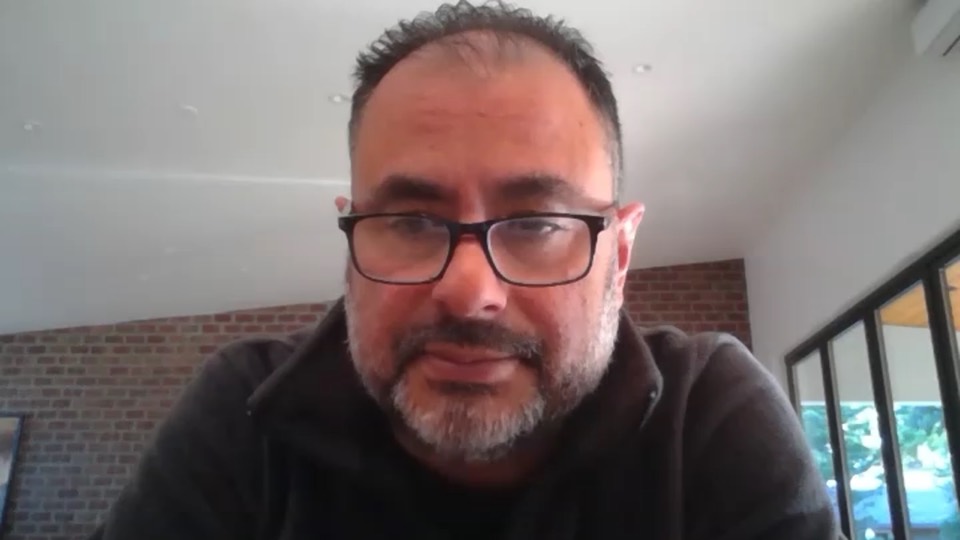
Atul Sood, Chief Business Officer at Curry Up Now, is the guest on episode 62 of the Restaurant Tech Trends podcast, hosted by Justin Foster.
 Play episode
What Atul and Justin discuss
- How Curry Up Now built a powerful 15-unit brand in the Bay Area and why franchisee interest is now heating up across the country - including in Birmingham, one of my favorite recent stops!
- How catering is poised to become an even more monster channel than it is today (~20% of sales - including delivery for up to 250 people on less than 24 hours' notice)
- Where Curry Up Now is placing its AI bets and where it's holding the line.
- Atul's take on point solutions: "I don't think they're products. I think they're features." And why platform plays like Ovation can be so compelling for brands at Curry Up Now's stage of growth
Also in this episode
- Where Atul sees capital flowing in restaurant tech this year, some hard-won founder advice from someone who's lived it, and some protips for founders to keep mental health operating at its peak
Episode notes from the host
On today's Restaurant Tech Trends I sat down with Atul Sood, Fractional Chief Business Officer at Curry Up Now.
Atul co-founded Kitchen United as its first employee, raised over $100M, struck the Kroger deal that put ghost kitchens inside grocery stores, and launched McDonald's global delivery partnerships before that. Now he's helping the pioneer of Indian fast casual gear up for its next chapter. First came Mexican, then Mediterranean... Atul says Indian is the next wave, and Curry Up Now is the next brand.
T'was great meeting you Atul and I'm excited to see where Curry Up Now is a year from today!
Transcript
Full transcript (4,449 words)
Machine-generated transcript; names may be misspelled.
0:00 Hey everyone, welcome to Restaurant Tech Trends where we explore restaurant technology trends with some of the industry's biggest movers and shakers in a rapid fire short interview format. This podcast is produced by Incept AI. Incept AI takes restaurant orders over the phone and in noisy drive-thrus with friendliness and precision. Learn more at Incept AI. My guest today, Atul Sood of Curry Up Now. He's a fractional business owner of Incept AI. Officer there. He also co-founded Kitchen United as its first employee and chief business officer, where he raised over a hundred million bucks. That's pretty nuts. He also struck the Kroger deal that put ghost kitchens inside grocery stores before he stepped up to run the company as CEO. Earlier, he launched McDonald's Delivery Partnerships as their global director of business development. And he started out, where else? Investment banking, right? That's totally logical. He lived in eight countries and built brand relationships with everyone from Chick-fil-A to Sweetgreen. Atul, welcome to the show. Super happy to be here and excited for the conversation. I'm excited as well. Well, I learned about you through Curry Up Now. I know you're a fractional chief business officer. You work with a lot of different brands, but I think a lot of folks in the industry don't know too much about Curry Up Now. So for people that haven't been, you know, tell us a bit about the concept, you know, what's the footprint and what makes Akash and Rana's brand stand out in the fast casual space? Well, I am thrilled to be part of the brand.
1:45 Really, Curry Up Now was the pioneer in the Indian fast casual space. We started 17 years ago. Bay Area is our base. Obviously, the Bay Area has a pretty heavy concentration of South Asians in general. Lots of appreciation for South Asian food and really built a very, very strong brand in the Bay Area over the last 17 years. We were early adopters of technology, which is relevant to this conversation. We're one of the first brands on Uber Eats back when Uber Eats was literally, motorcycles and bicycles with chicken tikka masala burritos in the back driving around San Francisco. And it's a fast casual place that is not necessarily Chipotle style walk down the line, but has a pretty diverse and varied menu. We have 15 units today, really have started growing beyond the Bay Area. We have units in Birmingham, Alabama, Flower Mound, Texas. They were an early adopter of Kitchen United, which is how I got to know Akash. And if you haven't met Akash, he is a brilliant entrepreneur and a little bit of a cowboy in the industry. He has a blue goatee. He has more piercings than any man or woman should have, but he's a great leader and an inspiring friend.
3:18 That's incredible. Wow. And I have to 100% concur with you on the quality of Indian cuisine in the Bay Area. My former co-founder lives in Saratoga. It was just down there a couple of weeks ago. I think I had the best like butter chicken I've ever had in my entire life on that trip. And I make a lot of trips out to Birmingham as well. Shockingly, I'm going to be a moderator this month. So I'll have to try it out when I go out there. All the locations corporate right now, you guys franchising, what's that? What's the pipeline look like for the stores? We are franchising as well. So a handful are franchised and have a lot of inbound interest to expand our franchise operations. It is a brand that is visible in the national scale. And one of the reasons I joined is I'm personally passionate about building a scalable national Indian fast casual. I think the timing is right. We've obviously had Mexican. CAVA is doing a great job of Mediterranean. I think Indian is going to be the next wave. And I think Curry Up Now is the next brand. So let's let's click one level down on that. It's been 17 years, 15 units. It's been pretty measured growth. Are you foreseeing like really rapid growth happening right now? And has the unlock been just like the trend the time is now like Indian cuisine, like now is the moment, because like what you said, we had Mexican, then we had Mediterranean, now it's Indian, or have there been other unlocks for the brand? Yeah, I would say it has been measured growth. We were on the verge of more aggressive expansion, just around the time COVID hit. And COVID hit the Bay Area market, I think, as hard as it hit New York, there was a lot of consumer flight outside of the Bay Area. And we kind of had to do a little bit of self self evaluation at that point, scaled back some of our expansion plans, will probably have measured growth for the next 12 to 18 months. And then have a few strategic things underway that I can't discuss right now, that will allow to accelerate that growth going forward.
5:46 I can't give us even just a little morsel. Give us a little hint. I think I just did.
5:52 All right, fair enough, fair enough. Well, you spent a lot of time in when you were at McDonald's working on delivering off prem. Curry Up now has got a strong dine in and full bar experience, plus you've got catering. How do you think about balancing off prem with protecting what makes Curry Up now a destination today? Yeah, I think it is a mix of both. Not all of our restaurants have the full bar. It's definitely a benefit to those that do. But the quality of the food and the food itself travels very well. I mean, it is why we were a pioneer with Uber Eats. We have embraced delivery as a channel. It really does travel very well. It, you know, a chicken to gum masala burrito tastes great 20, 30, 40 minutes after it's cooked and prepared. The other menu items do so as well. So we are fairly high delivery penetration. Catering is a big winner for us as well. Particularly in the Bay Area market, we are building catering across the other markets. Also, there's a lot of demand from corporates for catering and we do catering very, very well and professionally. And, you know, we have a less than 24 hour window where you can place catering orders and we will deliver them for up to 250 people. And really, really excited about the delivery channel continuing to grow for us. We're not not exclusive with any delivery vendor. I don't believe in exclusives with any delivery vendor.
7:47 I think the breadth of consumers order from multiple channels and we should embrace that. So definitely something we're going to continue to lean into and something we're very proud of right now. Can you tell us a little bit more about the catering part of the business in terms of percentage of sales? Like how fast is it growing? Yeah, it's about, if I get my numbers right, about 20% of the business right now, which is pretty high. That's really, really high. And is it growing faster than other parts of the business or about the same rate? About the same rate. We're going to be investing in it a little more heavily going forward. That's actually a topic of conversation I'm going to have with our cash later today. So it is something that's top of mind. Definitely, you know, Birmingham, for example, we've opened near the University of Alabama campus. Tons of catering opportunities for for hungry college students. Yeah, like I said, I'm definitely going to be checking that out next time I'm down there. Well, this restaurant, this podcast is called restaurant tech trends. So, you know, we got to dive a little bit into restaurant tech. And of course, the topic that everyone is talking about these days is AI in restaurants. So I would love to learn for Curry Up Now. Have there been any AI wins? Are you guys adopting AI for any particular business application, whether it's demand forecasting, labor scheduling, ordering delivery optimization? Like where are you using AI today or do you plan to use it in the near future?
9:33 We absolutely plan to use it. We've been, I guess, measured in our approach to AI adoption. Akash is a technologist at heart and so am I. And so we are definitely abreast of what's happening in the AI space and plan to roll out various AI initiatives for labor management, demand forecasting in the months ahead. Voice based ordering, as you know, is a key opportunity for all restaurants and agree that it's a key opportunity for us and incoming catering orders especially is where we see a big opportunity to manage labor better and serve customers better. AR marketing is also an area that we're going to invest in. I think there's a lot of marketing that is one to many right now can really do cohort and segment and individual specific marketing of offers through the adoption of AI. So that's another area where we will be engaging. I'd say one thing we're not doing is kind of the physical AI stuff. We're not putting robots in our kitchens. We're not doing any of that. Believe in the personal experience, interaction with a human being. And so the areas that we will be investing in are marketing, voice-based ordering, potentially voice-based recruiting, labor management, and demand forecasting.
11:08 What are the brand's thoughts on kiosks? You know, mixed. We like the human interaction. Not to say that there won't be kiosks in the stores, but we do like the human interaction. And the consumer often has questions about the product mix, right? Like what is really in this bowl or whatnot. And we run a lot of LTOs. So having the cashier explain the LTO to the consumer kind of upsell a little bit is part of our model. So we're never going to say never, but love the human interaction. Okay. I'd like to talk a bit about tech stack. You're 15 units right now. This can be kind of a very awkward time in a restaurant brand's growth in terms of adopting technology, because you've got a lot of vendors that are out there that are catering toward like large enterprise. And then you have other vendors that are catering more towards the independence. And you're kind of in this little like tweener space, right? Where you're growing, you're expanding, you're not yet huge, but you're certainly beyond your first few restaurants. And there's been a trend in the industry around, I don't want to call it platform consolidation, but just more of having like an all-in-one type of a stack. When you are looking at technology, what are your thoughts around all-in-one consolidated tools versus picking best of breed? And have you run into any obstacles where you want best of breed, but you're finding it's difficult just due to the chain size?
13:01 You know, I experienced this as I left Kitchen United and was actually looking for my next role before I joined CariUpNow, before I did some other fractional things. There are a lot of point solutions in the industry, just a lot. I know. I don't think they're products, I think they're features, right? And they weren't compelling to me to work for. I don't think they're compelling for CariUpNow to buy. There are more and more companies, particularly with the acceleration of development timeframes that are building kind of all-in-one stacks. I would use Ovation as an example. We're evaluating Ovation now. Great companies, actually great guy, great client roster. And they started off in one niche. They are building new capabilities into their product literally on a weekly basis. And it is very compelling. The POS systems, you know, we use Toast right now. And there are a number of POS systems that we should evaluate as well, talking to several of them right now. Not necessarily that we'll move away from what we've relied upon, but you got to keep up to date because there's so much happening. So I think the POS, the expansion of POS into other, into bolt-on solutions to make POS more of the brain of the operations is interesting. Expansion of companies like Ovation where they are able to take that guest interaction and feedback and really build more campaigns around that. And more engagement with the desk is very, with the guest is very compelling as well. So kind of on the, on the buy side, POS is important. And then on the engagement side, platforms like Ovation are important.
15:05 Yeah. You know, it's, it's funny, you mentioned one thing about the shortened dev cycles and just the pace of innovation that's happening. And it's absolutely, I mean, it's, it's true, right? It's totally out in the open. It's like, I can look at our own like PRs, like going like when before and after a Claude code, it's crazy, man. I mean, it's like, you can go twice or three times as fast working on some stuff. Um, you know, POS vendors, I feel like everyone's got a religion when it comes to POS. But, um, since you mentioned them all, I'll just give a quick shout out to toast. I think these guys have done a pretty good job from moving from that, like small independent oriented platform to, you know, moving up market and even into like large enterprise. I think those guys do a pretty good job there and their ecosystem is very good too. Then for vendors like us, they make it a lot easier, um, to integrate and that can help with scaling. It's just, it's challenging, right? Because there are a lot of point solutions and I hear from a lot of restaurateurs, you know, it's like this death by a thousand cuts. You've got like, you know, $150 a month solutions. And, you know, after a while that really starts to pile up in a low margin, uh, business. Um, yeah, anyway, that's exactly why, that's exactly why, uh, going with a platform plays better, right? Because if you're, if you're paying say a hundred dollars, uh, and I actually, I don't know how much ovation costs is it's based, but if you're paying a hundred dollars a month for ovation and then they roll out a new, uh, feature, which is somebody else's product and you pay, you know, $15 for that instead of another 50 and then $15 for the next one. Totally. Um, you can make it affordable and, uh, and, uh, um, beneficial to them. Um, and that's a better option for us. Totally. I totally, I totally agree. And I, I, I don't know where I fall on this. Honestly, I, I see the advantages of both because I think you're right. The dev cycles are getting crunched. It's a lot easier to put new stuff out. It is a lot easier to create features that were products. On the other hand, I'm not really sure where the line is between like the product is the feature is good enough versus it's like the absolute best that's out there. I think it just depends on the category anyway. Um, let's take a step back and talk about just restaurant tech in general. Um, you know, you advise a lot of different companies. You've got
17:45 your pulse on the industry, the tech industry a lot more generally than I think a lot of people do that are just focused on restaurant technology. Where are you seeing, and you're obviously in the valley as well. So where do you see, um, capital flowing in restaurant tech this year? And where do you think the next round of pain is going to show up here? Yeah. So I would say three areas. Uh, one is definitely what I said we're not investing in, which is physically AI and robotics, right? There's a lot of enthusiasm. Um, I advise a company called creator. They're a burger, uh, a burger robot. Um, that's actually been around for a while, but reinvented itself now. Um, I think there's a lot of investment that is pouring into, uh, hardware, um, and, uh, and robotics. I think it's necessary because it's not an inexpensive, um, uh, product to build. Um, so it requires a lot of upfront capital. Yeah. Um, so that's one, obviously AI, everybody's talking about AI valuations are actually reasonably good on the AI investment front. I, I, uh, um, I'm a co-founder in a marketing AI company. Um, and, uh, I know we have a very, uh, a very attractive valuation, so they're not as out of control as some other industries, uh, um, AI solutions are, uh, which I think is compelling for investors, whether they be angels or funds.
19:17 Um, and then, uh, the third area I'm super excited about this. There, there are two companies, um, um, uh, get and bytes, um, that do AI based ordering. Um, so if you think of, uh, the LLMs and the power they have, um, as broadly being the power to intercept the app ecosystem, um, are you going to order a year from now through door dash or through a company's, uh, uh, or are you going to order, uh, by telling Claude or chat GPT, Hey, I want pizza. I want pepperoni. Um, and I want it as fast as possible. Yeah. And help, help do that. Um, two questions on that, um, bite. This is a different bite than the bite kiosk company or same company. Yeah. It's different than Brandon Barton's company. Okay. Yeah. This area of. Yes. With two T's G E T T. So two different companies get G E T T and bite is this second company. Not, not one company get bite. Yeah. But bites, uh, plural bites, bites, bites. Got it. Got it. Got it. This, this topic of sort of disintermediating the third party delivery platforms or just for, for ordering at a restaurant where you might do, where you might pick up an order. This is like a really interesting area. Like are, because when you think about it, like door dash or you think about Uber eats, right? The reason people go to these platforms is because it's convenient, right? It's convenient. You know, the interface, you already got your credit card information stuck in there, but I do think there, you know, as more restaurants are able to build directly with like Claude or chat GPT, you can basically just use that as an ordering engine.
21:13 And then the restaurant can take advantage of all the loyalty data and stuff like that that they've collected. So it's going to be interesting to see how that plays out over the next, you know, couple years. Are we going to see third party kind of ease down as like more restaurants are pushing more into their own first party ordering and using those, um, uh, platforms as the interface to order? I don't know. Yeah. And, and GAT's really amazing. They already have 35,000, uh, restaurants on their platform. Um, they, you can, you can go online today and order pizza in Dallas and get it delivered through you by placing an order on, on chat GPT or, or Claude or Gemini. Um, uh, it's more economical for the restaurants themselves from a pricing perspective and a fee perspective. Um, and, uh, and, uh, you know, I, I'm, I'm, I'm really bullish on it. Cool. Well, um, I'd like to talk a little bit about your fractional and advisory work. Um, you know, obviously as a founder, I'm very interested in meeting with people that are working with a lot of other founders as we've talked about, you're super plugged into this industry. When you are advising a founder, what is something that you push on hardest, you know, at the beginning of the relationship that you think maybe their boards are not asking them?
22:38 I, I push on, uh, on the money front. Um, and I'll tell you, uh, I'll tell you exactly how. So I helped kitchen United raise over a hundred million dollars. Um, we were a capital intensive business. I think a lot of founders chase money as if that's the dream, um, uh, that raising the next round or raising, uh, 25, $50 million is the be all and end all. And I don't think it is. I think you should raise as little money as possible, uh, to get to the next stage. Um, and, um, that generally not the way founders are expected to behave. Uh, boards often encourage founders to raise more. Um, and I think you should raise literally as little as possible. Um, bootstrap for as long as you can be scrappy, even when you raise the money, uh, what we don't say, or what you didn't say about kitchen United, when we raised over a hundred million is that we spent it. Right. Right. You got to be judicious with your money as well. Um, and we were, I don't mean to throw us under the bus. We were, but it was a capital intensive industry. Um, so, uh, that is important. The other thing I, uh, advise a lot on is literally just board management. When you raise money, you're raising it from people as much as you are from institutions. Be careful who you put on your board. Uh, they're going to be very impactful to your personal life and serenity. Um, and you want good people who will have your back. Um, so it's not, um, it's not just the institution, right? It's not just Andreessen Horowitz or Sequoia. It is the partner at Andreessen Horowitz or Sequoia that you choose.
24:24 Yeah. You know, it's funny, man. Um, I've done two other startups for this one. Both of them were bootstrapped. The first one bootstrapped it for 12 years before selling that company. And this is the first one where we've ever raised capital. I didn't want to do it, but it, it's hard sometimes, you know, especially in this industry. Um, especially if you're more enterprise focused, you've got really long, like pilots and lead times and the sales cycles are tough. You've got franchising. It's that's hard. And, um, we basically, we had to raise the money, but I totally agree with you on super careful burn management, not being too aggressive, raising as little as possible. And that is sometimes at odds with what your board wants you to do. So yeah, the right board members for sure. Yeah. Uh, Hey, the other, the other thing I'd like to mention is, uh, um, is about mental health. I'm, I'm a big advocate of mental health awareness in restaurants and in tech, and, uh, it's hard being a founder or a co-founder and, uh, therapy is super helpful. Um, and taking care of your mental health is, uh, more important than anything else when you're running a company. So, um, so I often am a, you know, I'm obviously not licensed, but I've been done it and, and failed and struggled. And, uh, so I often help, um, just be a sounding board, be a shoulder for the founders I work with that, that ends up being really important too.
26:00 Yeah. Do you have any soundbite, um, pro tips you could share on the mental health, uh, tip like, uh, go gardening or run in the morning or any little sage advice you want to share?
26:13 Yeah. The most important is handed over in that, um, it's not, it's lonely being at the top and you need somebody, one person, at least, whether that be your therapist, your best friend, your partner, um, meaning like wife, husband, spouse, whatever, um, or, uh, or your parents, right? Just tell somebody everything. Tell them when you don't think the world is going to go your way. Tell them when you lost a deal, tell them when this investor pissed you off, um, tell them and get it off your shoulders. All right. Well, that's, uh, that's good advice to heed. Well, Atul, we've reached the end of our formal interview questions, but now it's time to move on to our rapid fire segment of this. Right. And for those of you that are watching or listening, the rules of engagement are this. Atul, about to ask you some questions, try to answer each of these questions with one word, if you can, if you can't answer with one word, try to keep it to one sentence. I promise I don't have too many gotchas in here. Are you ready? Okay. I'm good to go. All right. Ghost kitchen or drive through, which has the bigger decade ahead? Drive through. The most overrated word in restaurant tech right now.
27:33 AI. Yeah. I agree with that one. What is one QSR brand you'd bet your own money on?
27:43 McDonald's. Okay. Uh, you've lived in a lot of different cities. Which is your favorite?
27:51 Tokyo. Okay. I'm going to skip this next one. We already talked about kiosks. Um, um, we'll do it anyway. Kiosk app or voice for the next order you place.
28:04 Voice. All right. A menu item you could eat every day for a year.
28:12 Chicken tikka masala burrito.
28:15 The deal you're most proud of closing.
28:19 Kroger with Kitchen United. Right. What is the most underrated skill for a chief business officer?
28:28 Empathy. Say that one more time.
28:31 Empathy. Empathy. All right. And last one. Fill in the blank. In five years, every restaurant will have blank.
28:44 I was doing pretty well until this one. In five years, every restaurant, uh, will have, uh, AI based ordering, LLM based ordering. Oh, all right. Well, good news for us over here. All right, everyone. Yeah. Atul, I want to thank you very much for your time. We really appreciate it. Learned a lot today. Um, both about your own advisory practice, as well as curry up. Now I think our audience is really going to like that. Everyone, Atul Sood of Curry Up Now where he is fractional chief business officer. Thank you, sir. Thank you, Justin.