Episode 67 · July 9, 2026
Kimmie Dunlay
Sr Director Foodservice · Kept Companies
Kimmie Dunlay, Sr Director Foodservice at Kept Companies, is the guest on episode 67 of the Restaurant Tech Trends podcast, hosted by Justin Foster.
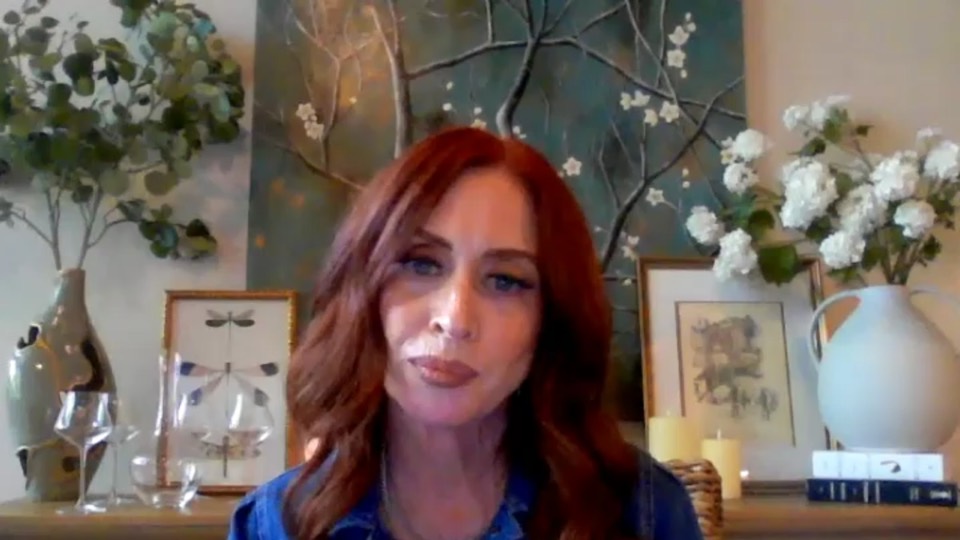 Play episode
What Kimmie and Justin discuss
- Why "self-performing" service is the whole ballgame for national consistency
- How AutoMist brings real technology to the very antiquated world of hood cleaning, and actually lowers insurance premiums
- The shift from reactive to preventative, and why the facilities function has to stop being seen as a cost center
- What "facilities intelligence" really means + data on your operation you probably don't have access to today
- The AI vision for turning 800 before-and-after job photos into instant answers on whether the work got done
Also in this episode
- The rapid fire round, where Kimmie reveals the hidden talent nobody on her team knows about
Episode notes from the host
The dirtiest corner of any restaurant tells you everything about how it's run, and Kimmie Dunlay has built a career on the infrastructure nobody sees to keep 'em clean. Today on Restaurant Tech Trends I sit down with the Senior Director of Food Service Strategy and Growth at Kept Companies, the nationwide self-performing facility partner keeping restaurant and grocery brands clean, safe, and open. Kimmie came up through restaurant ops and never lost the belief that what happens behind the line matters as much as what happens on it.
This one opened my eyes to a corner of the industry I knew close to zero about, and Kimmie made it fascinating. Give it a watch and let me know what you think
Shout outs to CarePro Painting, Restaurant Technologies, and Ecolab for the help along the way.
Transcript
Full transcript (4,752 words)
Machine-generated transcript; names may be misspelled.
0:00 Hey everyone, welcome to Restaurant Tech Trends where we explore restaurant technology trends with some of the industry's biggest movers and shakers in a rapid fire short interview format. This podcast is brought to you by Incept AI. Incept AI takes restaurant orders over the phone and in noisy drive-thrus with friendliness and precision. Learn more at Incept.ai. My guest today spent more than two decades in food service and hospitality before deciding to go to the next day. The real story was happening behind the kitchen. Kimmie Dunlay is senior director of food service strategy and growth at Kept Companies, where she's building out the intelligence driven facility solutions that national restaurant and grocery brands rely on to stay clean, safe and running. She started her career in restaurant ops, which is an amazing start to any career in this industry, I believe. And she's never lost the belief that the infrastructure behind the line matters just as much as what happens on its own. Kimmie, welcome to the show. Thank you, Justin, for having me. I appreciate it. I'm really excited to meet you here in person. You represent a part of the industry that I know remarkably little about. I know remarkably little about a lot of different corners of this industry, but the part that you represent, my knowledge, is truly close to zero. So I'm excited to learn more about this part of the industry. I'm excited to learn more about Kept Companies. So why don't we start there?
1:28 Can you give us a little bit more about Kept Companies? Can you give us a little bit more about Kept Companies? Can you give us the quick rundown of what Kept Companies is, what you do, who you guys serve, and what makes you different from the dozens of regional facility services companies that operators have used over the years? So Kept Companies is actually a facility service company. So we are nationwide, self-performing, anything from cleaning hoods to HVAC services to commercial interior and exterior painting. We even work in the grocery store business, and we also take repo grocery carts, if you want to call it that, because we have a technology that can do that. So we also do fleet washing. So any of the big fleets from Amazon to Coca-Cola and so forth, we do all the fleet washing. So it's a very big book of business that we do and different verticals. How long has Kept actually been in the food service space? Because it didn't start in this space. It's been like a lot of roll-ups that have happened over the years. It has. They keep morphing and morphing. It started about 50 years ago in fleet washing. So if you think about, like I said before, big fleet trucks and so forth, and then they started pretty much acquiring all these different pressure washing companies, HVAC service companies, painting companies, to really give a more robust national footprint to help companies have a single source provider.
2:58 I see. And the food service part of it, they've pretty much been in it, if you consider grocery, for about five or six years. And then that's why they brought me on to really expand that into the bigger food service industry and hospitality and non-commercial. Okay. I'd like to understand a little bit more about your guys' scale. So you've got, I think, 17, you've got, you certify 33,000 hoods a year is what I'm seeing right here. You've got a national network of 1,700 employees, 1,250 mobile units.
3:34 It's a lot. Break down what that actually means for, like, your average restaurant operator, because obviously, you know, this is a roll-up situation. You guys have pretty large scale. How does your scale help an operator? And are you working, by the way, second question kind of in there, are you working for like just big, huge brands? Are you working with like smaller independents as well? No, we work small independents as well. And if I could kind of answer that first part of your question, when you talk about scale, I mean, I think about two words. It's reach and consistency. So if you think about why we did what we did and acquired these companies to be a national self-performer, we're the only national self-performing company that can do nationwide. And that's including Alaska and Hawaii, by the way. I'm trying to get them to go Puerto Rico. We haven't gotten there yet, but yeah. Yeah. So this is really going to illuminate how little I actually know. I don't even know what a self-performing company is. What does that actually mean? That means we use our own employees, so we don't third party. You know, there's some companies that will third party vendors. But hey, can I be really honest with you? I didn't learn about self-performing that name until I came over to KEP. They use that term self-performing. I've always used, we use our own people, but self-performing seems to be the more appropriate term to use.
4:53 So I've inquired that into my vocabulary. All right. Well, it's locked up here for me now, too. So now I won't tell you. Learn something, right? Tell us a little bit about some of the biggest pain points that you hear from people that run restaurant facilities and ops from some of these multi-unit brands that people that are outside this world really don't understand or they don't see very often. Well, you know, when you think about it, you know, when you look at the asset or the location and the operation itself, it's the biggest pain point is when something breaks, it's either breaking right in the middle of a lunch rush or a dinner rush. Yeah. Or the HVAC system goes out in Texas in the middle of July and August. Like, that's the worst. So it becomes a very reactive position for that operator versus a proactive position, which is hard to take. You know that old cliche, if it's not broke, don't fix it. You know, we got to change that behavior. We got to change that mindset and be viewed as not a cost center, but actually a preventative cost center. Yeah. Well, you've been in this industry long enough to know that is quite the ask right there.
6:11 That is quite the challenge, right? It's a very thin margin business, but model it out. I'm sure the preventative care ends up costing less in the long run than waiting for things to just completely break and replace.
6:26 I'm asking this question, this next one is coming as an entrepreneur. I've been through a couple of different acquisitions of different tech companies. I think Kept has acquired 145 or something. I've got 130 something different companies. That's like completely like insane. Right. It is completely mind blowing. And I've been through it on the inside before. And that integration process is made to sound very clean and smooth. When it's represented to the outside world, you know, we're going to bring all of these synergies and resource sharing on the back end and da. And it doesn't always happen that way. So I would like to know from your vantage point at Kept, what has the playbook been for integrating an acquisition without losing what made that company or that product special? And maybe you could share just a little bit about how you came to be in the company there. You know, I think I think first and foremost, I think the way our company looks at it is how do we acquire these companies and not lose the trust that these companies have built up with their customers? Right. So by acquiring these, we're actually giving that customer and that business a more scalable and bigger footprint, you know, nationwide.
7:51 Right. So if you take CarePro, for instance, CarePro is a huge leader in our industry, you know, with commercialized painting. I mean, they do all the big brands, small brands, and they even do retail. So when you think of retail, you know, like Harbor Freight and so forth. And when you look at that, by coming on by us, acquiring them, it gives them the opportunity to have the infrastructure to grow that business that they didn't have before. And I think that's very important. And not to mention, we take we when you acquire a business, sometimes what happens? You have the fallout, the layoffs. Right. We don't do that. We actually take take on. I know you say that because I'm I am a part of that in a former company. Right. I know that's why you're laughing, because, you know, but we actually. We bring aboard that expertise that they've had to continue to grow that business and and find the placement, because when you acquire one hundred and forty six locations, the infrastructure changes within our own company. And we need those people to fill those voids that have the expertise, you know, putting the right butts in the right seat, so to speak. You know, I guess you could say I was part of that acquisition. Kept companies bought a product of the company that worked for Restaurant Technologies.
9:08 They had bought an automated hood cleaning system and I was a part of a restructure reorg and it just kind of aligned. It was perfect timing, I guess you could say. And I was kind of acquired as well. Adopted, I think, is the word that I use. I think I was adopted. All right. I like it. That's real talk. That's a real answer. Sure. I don't think I even have this as a question, but describe this automated hood cleaning technology that you have. Like, how does it work? How's it plug in? What's required to get it set up? I mean, this is podcast is called Restaurant Tech Trends and this is a restaurant technology. So. Right. Yeah. It doesn't always have to be about software. Right. It doesn't have to always be about it. Right. Technology is technology. So basically, auto mist was conceptually developed. If you think about when you go in the grocery store and you see that light mist going over the vegetables. Right. Yep. Take that same application and put it in the hood through the flue and the fan. So about 60 percent of fires are created in restaurants within the hood system because either the hood wasn't cleaned properly. You've got grease buildup. So now you have an automated system that daily sits there and spritzes that the detergent, food safe detergent, by the way, and mist to keep that build off.
10:34 So normally when you get your hoods clean, you're getting them cleaned quarterly. You've got all that buildup of grease that's that's occurring. And what auto mist does is limit, reduce and eliminates that buildup. And so, you know, Kept has been doing traditional hood cleaning, you know, for years and years and years. And so it almost made sense that auto mist found its home with Kept because, you know, I like to say that, you know, we're all up in the hood all the time. Right. So it makes sense. But now we can offer two different types of hood cleaning for customers, traditional and or auto mist. The other thing about auto mist is the fact that it does lower the risk of fires. So what we found is we are actually reducing casualty and property insurance premiums by having this. So, right. It's not all you know, you try to look for cost things. That's what you know, when you're trying to sell a service or product. You're right. It's all about cost. But there's also a value benefit to it as well. Right. You know, how much is it going to cost you when your building's on fire? So, you know, having auto mist installed really, really allowed us to kind of bring technology to a very antiquated service. I mean, I don't know much technology you can do with hood cleaning, but we're doing it.
11:51 So it just if we look at potential market across North America, how many restaurants have this technology involved right now? And how big is this market for you guys?
12:03 We you know, you got to I'm the type of person that I don't square peg round hole anything. It's got to make sense. It's got to make business sense for us. And it needs to make business sense for the customer. Right. And so we're in about roughly 4000 locations with auto mist. And where it truly makes sense is if you think about some of the QSRs, which you're involved in, especially those that are open 24 hours. When you get your hoods clean, you have to shut down your operation. We'll see with auto mist. You don't have to do that because it's constantly cleaning. We still come in and do quarterly inspections to make sure. Actually, we come out monthly to ensure that auto mist is functioning properly, that you have the detergent, that the nozzles are hitting all parts of your hood. It's it's doing the fan. It's doing everything that it's supposed to be doing. So we do that monthly and then do a quarterly inspection. But, you know, I like to think that, you know, some people ask, well, what makes sense for auto mist? Well, it depends on it depends on your history. Like, do you have a history of fires? Do you have a history of hood cleaning problems? Do you have a history of having compliance issue? We we meet all that. And so auto mist does, which is, you know, that, you know, factually speaking, from a compliance standpoint, fire marshals require you to have hood cleanings, depending upon if it's quarterly.
13:24 Bi-annual or even annually, depending upon what's going up the flue, meaning what is the fat content, the menu and what's underneath your hood. I see what most people don't know is that you have to be, you know, ICA certified. And that's the governing body that does exhaust compliancy out of thirty five hundred hood cleaners. There's only two of them out there that are that are really ICA certified. So we like to make sure that we're delivering that because compliancy of hood cleaning is is is a big factor for brands. All right. I like it. I learned something new here today. I'd like to learn. I'd like to lean a little bit more into this technology angle again, because this is Restaurant Tech Trends. You have described kept as a facility maintenance and a facilities intelligence partner. What does that intelligence side look like today? What does it mean and where is it going? And maybe also tell us a bit about some of the data that you capture on an operator's facility that maybe the operator themselves doesn't have access to today. Sure. I think, you know, knowing operators have data, too. Right. They have a ton of data that not only they can use, but their suppliers can use as well. But when you look across big brands and and what is going on from a facility standpoint, you know, the VP of operations or the VP of facilities maintenance might, you know, might not know what's going on the West Coast to the East Coast from an equipment standpoint.
14:57 And knowing that there's similarities and consistency with maybe one piece of equipment or in our case in hood cleaning. Right. We are now, you know, privy to finding out that there are some challenges with hood cleaning, meaning the cleaner showing up, actually doing the job and performing the work that there's being paid to do. Right. Right. We have the capabilities and exposure because of a national company that we can see that nationwide and we can sit there and collect all that data to give to the customer. You know, facilities intelligence for us is just recent. Like we've just uncovered the capabilities we can do and then also finding out from from the customers what their challenges are and how can we give them that information? Even if it's just finding out like going through an audit of hood cleaning, we provide pictures before, after and during. We also provide pictures of everything that we do while we're on site. How cool would it be if we had an AI platform that can go through all of those pictures and tell us if we're doing our job correctly and or if the customer is looking for a certain picture without going through 800 pictures to find it, it can use AI technology to do it for them.
16:12 And then also group in with invoicing. So that's just a little insight of kind of what we're working on. OK, so this is this is in development right now. This is in development.
16:23 Correct. OK, that's very, very cool.
16:27 Help me understand. You said you don't want to square peg round hole. You told me you're in, I think, thirty four thousand units today. Is that right? With autonomous with autonomous. With autonomous. Yeah. Going back over to autonomous. How many units do you think you could get autonomous in in like five years? Is this like sky's the limit, like 200,000 more restaurants, 100,000? Or is the industry like are you pretty much halfway there already? Did my president Jerry contact you to ask you that question? Did he even. I'm genuinely curious. I feel like Jerry's in here somewhere and I just can't see him because that sounds like a Jerry question, to be honest with you. You know, I think we're seeing a big movement. Automist has been around for for for a while. It was conceptually drawn out with Ecolab and then restaurant technologies acquired it and now we've acquired it. So think of it as as you know, the iPhone. Right. The iPhone comes out with one rendition and everybody's excited. They want number two and then they're excited. They want the number three. So here we are seeing what we can do with it next. Right. And where we can develop it. I think as we look at consolidation of services and centralizing services among the brands is that I could see us call it what there's a million restaurants out there.
17:51 I think I think we could probably. OK, Jerry, we could probably do a quarter of that. So I'll be conservative, you know, folks. Right. Yeah. There goes there goes my budget for next year, my team's budget for next year. That'll be awesome. But I think I think our development could really, you know, do a quarter to even half of that. It really boils down to now we're getting down to the nuts and bolts of getting service done. And when the service is not being performed, where do the brands have to go next? What can they not have to worry about anymore? And AutoMist does that. That's one thing that can be taken off their plate and it meets it meets all the requirements. All right. I love it. Thanks for letting me put you on the spot there a little bit. Oh, sure.
18:41 So let's take a quick look before you to our rapid fire segment. Look outside of Kept. And as you look at just facilities maintenance and facilities tech in restaurants, what do you think is sort of an underutilized or underrated piece of technology that most brands today are not paying enough attention to?
19:08 You know, I think it's the facilities. I think facilities technology is a big piece because, like I stated before, if you have a fryer go down, you know, in the middle of lunch, you're almost done. Right. And so how great would it be to find out if that fryer is going to go down prior to that lunch period? Right. Think of it as as this crystal ball that you're looking at to see if I can tell if I need to spend money, keep repairing a certain item or a certain piece of equipment, or should I just go and have it replaced? And then I'm for sure not going to know that I'm going to get shut down. I think the stronger and the more focus that we get on facilities intelligence. I think is going to eliminate a lot of problems and concerns for operators. I mean, when it really boils down to it, yes, there's costs, right? CFOs are looking at costs. How can we streamline, cut costs and so forth? Operators are looking at how can I ensure I'm going to have a smooth lunch? How am I going to ensure that my door is going to be open and I'm not going to be without a fryer or a reach in that goes down or a freezer that goes down and I lose product? So I think having facilities intelligence and technology driven to accumulate that data and there's companies out there that are doing it.
20:29 Yeah. It's the next step. I mean, I'm just curious when you're talking with your customers, these VPs of facilities, VPs of ops, kind of the hot segment that I see in the space right now is either on the connected sensor side. So you've got like temperature sensors, like reading is the fridge open. You've got and then you've got computer vision as well. Like is the back door open a crack? Is the is the fridge open a little bit like is someone where they're not supposed to be? That's kind of a bit of a different use case. But do you hear your customers talking about that technology at all right now? So that technology has been around for quite some time. I mean, I had it when I was running Einstein bagels, we we had a freezer sensor that would alert us if the freezer was dropping because we saved the bagels. Right. You got to go save a product that's in there that would alert us. It's it's how do you take that and understand where your energy savings can be. Right. And what is that doing of an overall cost perspective, I think, is the way to look at it. I mean, I think there's there's more technology that is technology is such a big word. Right. It's like when you when you say Coke, that really means soda. And well, that's for us in the South, by the way.
21:45 That's the way we look at it. But I mean, technology is such a big word. What falls meet those buckets in technology and and where are we going to keep doing something different? Because, you know, the definition of insanity, right? It's doing the same thing over and over again and expecting results. So if we keep doing that, then we're going to just be exactly where we are, which is status quo. So you got to you got to elevate and got to be on top of on top of it. You know. All right. Real talk. I like it. Well, Kimmie, I want to thank you for bearing through the formal interview portion of this podcast. So for everyone that is watching or listening, we're about to move to our rapid fire segment. And Kimmie, the way we do our rapid fire segment is I'm going to ask you a series of questions. And the rules of engagement are you're supposed to answer each question with one word. If you can one question, if you are one sentence, if you can't. Kimmie has no idea what I'm about to ask her. Kimmie, are you ready? The squirrels are loose. The squirrels are loose right now. Go ahead. We're just having fun here. All right. Number one. What's your coffee order that gets you through a conference week?
22:57 Really? I'm a simple girl. Black coffee. Splendid Supreme. That's it. So we were talking a little bit off camera before this. You're a Nashville person now. How do you like your hot chicken? Do you like zeroed or are you on the reaper up there? I like to enjoy my food. So I'm kind of somewhere in between. I'm a spicy girl. I love spice, but I don't like to sweat while I eat my food. All right. Fair enough. What's the best meal you've had on the road this year? Ooh, gosh, you're putting me on the spot there.
23:36 I'm a Mexican food girl, so I got to go back to my roots. I love Papacitos. I do. I mean, I just love the brand and I love the food. Yum. I haven't had lunch yet today, so making me hungry. What is one word that you would use to describe the RFMA show floor?
23:59 Elaboration. Okay. I used one word. You did? Congratulations.
24:07 What's the most underrated job in a restaurant that nobody thinks enough?
24:14 Oh, because I, okay, sorry, one word. Facilities. But can I elaborate that? Sure.
24:22 You know, if you look at facilities and engineers, you know, the hotel engineers and facilities, they're the guys that are fixing things. They're behind the scenes. They're actually behind the scenes controlling equipment and the building to ensure the guests have the experience they have. You know, when you look at hotel engineers, they're usually their offices in the basement. Nobody goes down there to see them. So I think it's, it's, we should applaud our facilities managers. They do a fantastic job of keeping those doors open. And I didn't realize that until I gotten involved in it. For sure. What is the worst job that you ever had before you were in food service? I started a lawn business in high school. Oh, okay. And that was difficult. I wouldn't say it was the worst, but it was very difficult. I've been in the industry since college. So, I mean, it's, I can't say there's a worse job, but lawn business, landscaping, that's a tough job. That's a tough job. Great cash. Tough job. Lots of sweat.
25:33 Okay. I want to hear your worst horror story. What is the dirtiest thing that you've ever seen walk through a back door of a kitchen? You can keep this PG.
25:47 Actually, it's, I wouldn't say it's necessarily in the kitchen as much as it is the back door, the back dock area. The, the grossness of just the accumulation of grease and the used cooking oil. I would say that laundry, just the back dock area seems to be kind of like a basement. It's the, just throw it down there, just do it down there. And then it just stinks and it smells and it's gross. I mean, that to me is just that. When I look at a back dock area, it tells me how they take care of their restaurant. I mean, because that's easily seen from outside in. Yeah. True. Okay. Last one. What is one hidden talent that you have that nobody on your team knows about?
26:43 Okay. When I was a kid, I barrel raced. Not, I did it once competitively when I was in Lampasas, Texas, but that's it. I can ride a horse and run around barrels. I love it. Competitive barrel racer. I don't think I've ever met a barrel racer before. That was like seven years old, but I do love to get on a horse and I do love to go around barrels. So yeah, that's it. A lot of barrels in your future. So. Yes, there are going to be that good cliche. That's, that's awesome. You remembered that. Yes, there are going to be barrels. Just ones that are filled with adult beverages. Mmm. Delicious. All right. Well, Kimmie, I really want to thank you for having fun with me here today. It's been a great interview. I learned a lot. Thanks for letting me be really stupid here. Thanks for letting me shoot off the hip. I really appreciate that. Absolutely. Everyone. It's Kimmie Dunlay, Senior Director of Food Service Strategy and Growth at Kept Companies. Thank you, Kimmie. Thank you, Justin.