Episode 66 · July 6, 2026
Eric Knott
CEO · Tiki Taco
Eric Knott, CEO at Tiki Taco, is the guest on episode 66 of the Restaurant Tech Trends podcast, hosted by Justin Foster.
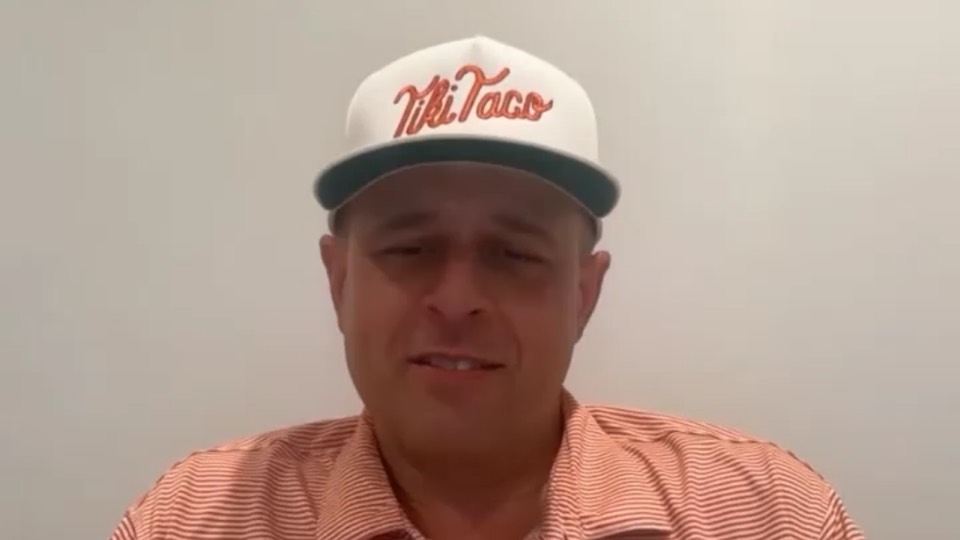 Play episode
What Eric and Justin discuss
- Why Tiki opens every restaurant 5-6 days BEFORE the grand opening
- How catering went from zero to ~12% of sales in under a year
- The "brand protector" model: how Eric actually partners with 3 founders without ego wars
- The Tiki Bucks playbook that turns local fundraisers into hundreds of first-time guests
- Where Eric lands on all-in-one vs best-of-breed across his 20-piece tech stack (shout outs to Toast, Restaurant365, Incentivo, Bikky, Byte and more)
Also in this episode
- Eric and I get into a great back-and-forth on voice + kiosks, whether the "ordering guilt" factor goes away when you have to say your order out loud, and why he runs AI at 80/20 on scheduling.
Episode notes from the host
Eric Knott spent a decade as COO of PDQ scaling 40+ stores from Tampa to New York, and he'll be the first to tell you he learned as much from what went wrong as what went right. Now CEO of Kansas City's Tiki Taco, he joined me on Restaurant Tech Trends to talk about the growth discipline he earned the hard way, the founder partnership that keeps him honest, and where AI actually pays off.
We also riff on how he uses Claude to turn ~100 restaurant publications a week into one Monday-morning brief.
Eric is one of the sharpest, most genuine operators I have had on the show, and you can tell community is in his DNA. Give this one a watch and let us know what you think.
Transcript
Full transcript (6,837 words)
Machine-generated transcript; names may be misspelled.
0:00 Hey, everyone. Welcome to Restaurant Tech Trends, where we explore restaurant technology trends with some of the industry's biggest movers and shakers in a rapid fire short interview format. This podcast is produced by Incept AI. Incept AI takes restaurant orders over the phone and in noisy drive-thrus with friendliness and precision. Learn more at Incept.ai. Now on to today's guest. I am joined by the one and the only Eric Knott, CEO of Tiki Taco, the Kansas City born fast casual brand serving up chef driven 95% from scratch tacos across a growing footprint of restaurants, a food truck, and even KU athletics venues and hospital cafeterias. Very cool. Before Tiki Taco, Eric spent over a decade as chief operating officer of PDQ, where he led the brand through 40 plus store openings. And earlier he sharpened his Ops chops at Outback Steakhouse. Eric is all about community, quality, and growth. Eric, welcome to the show. Thanks for having me. I got to say that your intro and the brand, I need to get, mine's a lot smaller. I need to get into it, you know? You got it. You got it. Yeah. You're repping though. You got the shirt, the cap.
1:19 I've got them on my shoes too. Do you really? Yes, I do. Yeah. That'd be a fun, I don't know if I can get it off right now, but I can show you. But it backs of them, backs of my shoes. One says Tiki, the other one says taco. Oh, that's awesome, man. I got to check that out. I got to, I got to order some of that swag for us over here too. All right. Well, before we get into Tiki Taco, I want to spend most of the time talking about Tiki Taco, but maybe just share with us a little bit about your time at PDQ. What did you learn at PDQ that you've carried over to Tiki Taco? Well, I got to say, I learned a lot and a lot of what you should do and probably some of what you shouldn't do. We grew that brand very quickly. And so I actually ran the second store as the operator and then moved into kind of the regional role and natural progression as you get bigger, right? Bigger jobs come about. But I think that probably being people focused, community driven, it's always been part of my DNA. I think Outback did a really good job. I started with them in the nineties and kind of carried on into PDQ. It was very helpful that the founder of PDQ was actually one of the founders of Outback. So that natural progression into that role with them. But that I think is the biggest thing that stuck with me throughout all three brands and now Tiki Taco is the community and people driven first. And then I think the biggest thing that I learned to kind of not do is grow too quickly, also too sporadically from a region perspective, right? Over at PAQ, we grew from Tampa to North Carolina, New Jersey, New York. And I think we just were a little bit too aggressive in the early days. Tell me a little bit more about what it means to you when you talk about a community driven concept. What does that mean right now? What would it mean then? And what does it mean now at Tiki Taco? How do you deal with the community? Like, what does that mean?
3:24 Yeah. So it's pretty much all the same throughout all the concepts and we start at the local level. And so our GMs at PDQ, we call them operating directors at that Outback Managing Partners, but essentially they need to become the mayor of their community. And so whether that's donating to the local school, being at a golf tournament, that's raising money for some organization, knowing your regulars that come in and out of your restaurant, basically my vision from a unit level is that people almost forget that it's Tiki Taco and think that it's Eric's place if I'm the GM there, or Justin, if you're a GM somewhere, it was Justin's place. I'm going to see Justin tonight, not going to see Tiki Taco. So I think that from the unit level perspective, and then each department or each person above that thinking that same way. So as you said, I wear Tiki gear even on days off, right? If I'm at the grocery store or at the dentist office or whatever, like I want everyone to be a walking billboard for our brand. And, you know, we give away like taco cards and burrito cards and trying to have fun. But the biggest thing, again, community outward facing. And then on the inward side, I really look at us as like a really big family, not as big as like a large company. We only have 135 employees or something like that. But it's just a really big family, almost like if you grew up in the 20s and 30s when they're having 15 or 20 kids and you got all your cousins, you know, running around.
5:08 So that's to me, you know, from a community standpoint, kind of what it means to us and myself. I'm curious, obviously, being out in the community is really important on catering side of a lot of businesses. How has that impacted what you guys do with catering? Yeah, funny story. So I started with Tiki July 1st of 2024, and we didn't have a catering program. And so we launched that in September of 2024. And it is now almost 12% of our sales sales via catering. And I think part of it has something to do with like the food travels really well. But the other part is, is that from a value perspective, you know, we're very aggressive on our catering pricing, which leads to a lot of frequency. And once you get the order, there's two things you have to do be accurate and be on time. That's it. Yeah, a lot of like corporate lunches and stuff like that. Tons, tons. Cool. Um, well, when you joined Tiki Taco, you said you were looking for a founder led company where you could make an impact. What did you see specifically about this brand that made you decide you wanted to lead Tiki Taco? It was three things. First, the food. The food is amazing. We have a 27 year old chef that now is an equity partner with us. And very creative. Everything at that point, I will tell you, we were about 85% made from scratch then. And so I fell in love with the food. The second is the atmosphere in the restaurant. It's very bright, very uplifting, very positive, very inclusive. So fell in love with the people that they had and the culture that they had established already. And then third, you know, because usually you can nail those first two. The third is that the founders were authentic human beings. And that was important to me. They just good people, good, good people. And so those three things kind of fell in love. And I don't know how that how we got from Tampa to Kansas City, but we're here. We're here now. Well, I would like to dive a little bit deeper into that relationship that you've got with the founders, because sometimes that can be kind of fraught. You know, someone from the outside comes in. You've referred to the founders as brand protectors. Like real talk. How does that partnership actually work like on a day to day basis? And do you think more brands should adopt this model? Yes, absolutely. To answer the
7:48 second part. So I do think of them as the brand protectors. I'm kind of lucky, though, I think in this specific scenario. So the three founders, they spent their entire life in branding and advertising. And I mostly keep them in that realm if I can to stay there to make sure that we're always doing things that are on brand. And if I ever get a little bit outside of what we do, they're there to say, hey, Eric, you know, pump the brakes. Let's let's talk about this. This is not, you know, who we are. And it's a it's a collaborative relationship. Let's say that. So we we will discuss debate things. Okay. And it's in a healthy way, in a healthy, very healthy way. And with the angle that we're all trying to do something that either is bettering or making better, I guess you can say the brand instead of egotistically, I want this to work because it's my or your idea. And there's a lot of there's a lot of back and forth. And then there's probably some conversation around getting clarity on what we're trying to do, or if they have the idea, whichever way you want to go with that.
9:06 But it's an interesting relationship. And I think that a lot of times people don't utilize their founders the right way. And therefore, they get busy in trying to be involved in everything. So can you peel back the curtain a little bit on that? Like, can you tell us what is an example of a recent discussion that you had where there might have been some disagreement and guys were able to come to consensus? A hundred percent. Ironically, about three weeks ago, we were talking about the most simple thing. You're probably going to laugh, but we have a patio on every restaurant and the surrounding, we're having a discussion about how to what do we put that surrounds the patio. And of course, I'm like, well, we'll just put this metal gate fence around it like everybody else does. Right. And they're like, No, you know, when we first did our first patio, we used a like a retention wall concrete retention wall. And then we put these halo lights on top of it. So it gets a little ambiance once the, you know, evening time comes in. Of course, me, I'm financially responsible. So that's like five times the cost right there. Exactly. So it's like we're debating over, you know, $6,500 from my metal fence versus $25,000 for the retaining wall. And we got to the, we got to the point where we are going to do the retaining wall if the landlord allows us to. If not, we're going to put in. So we both kind of got our points across, but you know, afterwards, you know, we got to the point and I was like, you know what? It does make a difference. It makes a difference. Not only how you feel when you're sitting there, blocking out some of the noise, you know, from some of the parking lots and stuff. Anyway, I'm going, I'm getting too far deep into the weeds here, but that was a scenario, an easier one, I would think, to get across the finish line. But yeah, that was, that was the latest and greatest of, of that. Yeah. Sometimes it's nice to have that third party in those conversations as well. The person that's unbiased. That's right. That's right. All right. Well, you guys are scaling fast right now across the KC Metro area. Just before we went on camera, we were talking about you're getting ready to open your next door beginning of July, right around when this episode is going to drop. Tell us a bit about your growth playbook.
11:30 What do you have planned out for the rest of 2026? Maybe even give us a peek into 2027. And what so far has been a bit harder than expected? You obviously went through a period of very rapid growth at PDQ. You talked a bit about some of the pitfalls of maybe going a little bit too fast. So how are you focused on growth or thinking about growth today? Yeah. So today we have five brick and mortars open. We are building five in the next eight months. So essentially doubling in size. And you are accurate. I think this is going to line up to drop the same day as we open our next restaurant in Liberty, Missouri. But, you know, I think that there's two things that stick out to me that from a growth plan standpoint that are important. Number one, I think that too many concepts just grow and continue to grow without taking a break. And I think it's important because, yes, it might seem crazy that we're going to build five and double in the next several months. However, we are going to take a break after that. And I think it's important that we go ahead and get them open quickly and then we pause and make sure that we're in a good place with those new five. And I think if we keep that kind of trajectory to ensure that our new stores open properly and then settle in properly months afterwards, then we don't have to worry about going back and fixing something that got out of the way because we're too focused on growth. We take that same approach when we look at how to open a restaurant. So typically your restaurant concepts, they'll do a couple friends and family days or something, and then they'll open and it's crazy busy and their trainers stay on site for a week or two.
13:22 And then they leave. I actually, it's so funny that you're at, we're talking about this. I just read a whole long post on LinkedIn about a guy went to a new national chain restaurant that opened in his, in his area. First time in was fantastic. Went back a month later and the wait was over an hour and it was chaos. And, you know, and I think that plays into what, what we do differently is we actually open the restaurant five, six days before the grand opening. We don't tell anybody. We just open the doors and whoever happens to come up, we serve that day. What happens is day one is kind of slow, but by day two, those people have told other people and it increasingly gets busier than one through six. And it's like a lead up that your team has to get properly trained, feel comfortable. And then, then you can do the grand opening crazy business. And then we stay on site for the first month after that. So there's a leadership person at each location for 30 days after we open the restaurant. How often are you sending the trainers back after that period of time? Do you do like quarterly cadence, monthly cadence? No, we have, we have, um, we have director of ops and we also have our, our chef who plays a large role in our, our ops. And so you'll see, you know, somebody from leadership usually once a week at, at minimum. Oh wow. Yeah. Okay. Really cool. Well, um, I want to shift gears a little bit. This podcast is called restaurant tech trends. So we got to talk a little bit about tech here. Uh, tell us a bit about your tech stack that you guys are running. Um, your POS, what are you doing for online ordering kiosks, et cetera? Uh, what's been the most recent piece of tech that you've added and how are you feeling about your stack as a whole right now? Yeah. So to give you a little glimpse. So two years ago we had two technologies, we had toast and we had QuickBooks and now we have 20 different technologies. Okay. Um, basic stack though is toast. We do instant TVO for online ordering loyalty in our app. We use restaurant 365, uh, pretty much all of their modules, accounting operations, ATS through payroll. Um, but that's kind of like our basic foundation, um, is going to be those three. And then, you know, we have my, my kind of strategy is, and you, we talked about earlier is let the machine do the work that the machine needs to do and let the people do the work that
16:02 the people need to do. So my goal is that we properly arm all of our people with the information to do what's necessary. Right. And we don't spend time going to look for where our opportunities lie or what we need to focus on. So we spend 99% of our time on actionable things that need to happen, whether that's, you know, guests in the dining room, team members on the team, et cetera, et cetera. And then to answer your last, this is actually a pretty cool piece of tech. We, uh, we started this conversation about community and it is an absolute manual, uh, process, whether it's, you know, reaching out to people, getting 501 C three letters and, you know, scheduling. So we rolled out a technology called force for good, fully automate the community process. And so, you know, it's attached to our website, the guest goes and basically submits an inquiry, puts all their information in it, then it gets approved and it's actually all connected to each restaurant, uh, calendar. So it pops up on their calendar. They know who it's for, what it is, when it needs to happen all the way through the donation, give back part, uh, to the organization. So, uh, that's the latest tech that we, that we rolled out.
17:25 So, uh, you said like many things I want to dive into. I want to talk about the 20 pieces of technology. I want to talk about technology getting in the way of people, you know, providing hospitality, but tell us a little bit more about this piece. People can go to the website and they submit like some kind of cause that's important to them. And that becomes something that people can donate to on the website. Well, it's more so, more so think about, uh, if you needed a in-kind donation or you wanted to schedule a give back day to do one of our restaurants or a golf tournament you wanted us to be out at, or, um, we do this, we do this thing called Tiki bucks. And so we get an organization, like we're getting ready to open our Liberty location where, you know, a school church, whichever organization we give you 250 or 500, uh, cards essentially. And each card is worth $10. You go out and sell those to people for $5. You keep the $5. And then I get 250 to 500 new guests to come in and try a restaurant that may not have ever come before. So it's a quick, easy way for an organization to raise money. You know, you think about the fact that they're probably going to raise, you know, somewhere in the neighborhood, two grand, 1500, 2000, depending on how many cards.
18:42 And then we all win. I say the organization, um, they're raising money, the consumer, they're getting basically a 50% discount on that and supporting the organization. And then I get people to come in to the restaurant for the first time. But all of that is automated. You go in, you say, I'm Justin, I'm with whichever organization you put up your 501 C three. It comes over to us. We take a look at it, we approve it. And it comes back to you and says, your cards will be delivered to you in 13 business days or whatever the case may be. All right. Cool. Or that was human, human papers and emails and all that stuff. Correct. Correct. Uh, okay. Well let's rewind a little bit. So you said you started out with, uh, toast and quick books and now you've got 20 pieces of technology. So I like to ask this question because I, this is a trend in our industry and I love to see where people fall on this spectrum and it has to do with platform consolidation. And I would characterize you guys as sort of entering the tweener stage of growth. And this is like exactly how, you know, how many units you have, how many you're planning to open, where you really start to feel the death by $50 per month, SaaS fees over, you know, all these different technologies that are out there. You've got a lot of point of sale providers out there that are trying to bring more capabilities in house. Where do you fall just generally, philosophically on this debate of you want everything in one versus you want best of breed for all?
20:30 Ironically, I just, um, led a round table about this exact conversation last week at a conference. And I think that there's no right answer. There's no wrong answer. I think a lot of it, it all depends on your size, what you're trying to accomplish with that technology. And so when I first brought on restaurant 365, I brought all of their modules. So instead of doing an ATS somewhere and onboarding somewhere, a payroll somewhere at that time, and even right now, it is better for us to maybe not have all of the bells and whistles for each module, but to have it in one place. I see. So I'm an in-between guy with this conversation. I think it depends on your business, depends on what you're trying to accomplish. I also think that our concept has been purposefully designed to lower the amount of manpower from a G and A standpoint because we're investing so heavily in technology. The opposite would be true in the restaurants. In the restaurants, we, yes, we're investing in a lot of technology, but we have not taken away from the human touch in the restaurant.
21:48 So this conversation like AI is going to replace people. We don't feel like that is the case. And we actually want to figure out how we can help speed people up and deliver a better result. But to answer your first question, I'd say that I'm both all in one and best in class because I'm doing both of those, right? Depending on the specific technology. And I think every business is different in not only what you're trying to accomplish, but also how large you are. Right? Yeah. Okay. Fair answer. You set this one up really nicely and we talked about it a little bit earlier, which is about having machines do the work that machines do, have people do the work that people do. And another hot topic about technology getting in the way of hospitality. Where do you guys draw that line? Where do you see today technology is like getting in the way of the guest experience or getting in the way of providing good hospitality? And where do you see in the restaurant technology enabling crews? Yeah. So I think, you know, for us, I'll give you an example. You walk into our restaurant and we give you optionality. And what I mean is you can go to the bar and have a full service experience.
23:13 You can use a kiosk. You can order from a cashier. You can order from your table. Or you can order, obviously, all of the third party, first party, you know, etc. My goal is, however, people want to use Tiki Taco, they can do that. And so, yes, does the kiosk give me a 10% lift in check? Does it attach, you know, 8 to 10% on the liquor and beer side? Does it not require me to have a body in front of it to guide the guests through it? Sure. However, there's still a large part of this world that wants that emotional connection where they have a conversation with somebody. And so we really stress the emphasis of like, do Tiki how you want to do Tiki. Like, if you want to use the, like me, if I'm on a call with somebody and I don't want to have an interaction at a restaurant, I go straight to the kiosk. I know what I'm doing. I put it in, I go sit down, finish my call, and maybe I'll have a conversation with somebody after I get off the call or after I eat. I think that you go to too many restaurants, the kiosk is your only option. Yeah. Right. And the worst is like, if you don't have it set up that way, to where if you have a kiosk next to a cashier stand, but there's never no one at the cashier stand, and you get these people that either don't know how to use it, I don't know who doesn't know how to use it at this point, but it's everywhere.
24:40 But, and, and there's no one there to provide a service if they chose that that's how they would want to go. Okay. So let's talk about kiosks really quickly, since we're already on it. When you think about restaurant design, how do you design that flow when someone walks in? Do you want them to see the cashier first, or do you want them to see the kiosk first? I actually put them right next to each other. And that that's for two reasons, actually. One, of course, I want them to see the kiosk, right? I want them to see that there is an option for it. However, I don't want it too far away from our people. And so a lot of cases, I wouldn't tell you that we try and steal people from the kiosk, but we let them know that we're here. And so you walk in, even if you walk right over to the kiosk, you know that you want to use that kiosk, you don't want to talk to anyone, we still will say, Hey there, how are you? If you have any questions right here. Yeah, it's funny. I was at a concept, I'm not going to name who they are, because I had them on here too, but very fast growing national chain. And it was clear that the restaurant design was supposed to be kiosk first, and there was a cashier station close to the kiosk. No one there.
26:03 Yeah. Yeah. It's very, very clear which way they wanted you to go. And that's what we're trying to break that mold. And I mean this in the general sense, is that I think that restaurants have become too transactional. And we're trying to bring the emotion back. And so that is the reason for the conversation when someone goes right to the kiosk, right? It's like, I want you to know that I'm here. And that if you need anything, you can come over. And actually, we joke around and we're like, Hey, that thing's got great pictures, but it can't talk back to you, you know, or something silly like that. But again, it's great because it does its job. We only put one in each restaurant. We use bite for our kiosk. Yeah. And so like, they do an amazing job of helping us when people do use the kiosk, right? So it has an AI driven back in to where it will start to change the recommendations as you hit different buttons on the screen, based off of previous interactions. Like if we had 8,000 people come through and they added avocado to a soft taco, it's going to now update that recommendation. Every time that you hit soft taco, it's going to say, you would you like to add avocado to this just because it has history of people doing that already.
27:23 All right. This is just like a pet question. I'm always curious here where people fall on this voice and kiosks. Do they go together or do they not go together? I think they will. I think they will. I don't think we're there yet. You think about the industry in itself. Kiosks were not a thing until airlines, grocery stores, and then your large restaurant chains, McDonald's, Shake Shack, etc. The guest starts to be trained how to use these things. Last time we saw each other, we were standing in front of a voice drive-through, right? We were. Yeah. And so what I think is going to happen is that we will get there. It might take six months, take six years. Not sure what the time frame is, but let me ask you a rebuttal question. Do you type or do you talk to your phone for text messages and emails? I talk to my phone for text messages and emails. I think there is a large untapped opportunity right now for voice ordering in restaurant mobile apps. I actually believe this is the case because of safety reasons. It's just very unsafe for people to be tapping on different things inside of the app as they're on their way to the restaurant when they're driving and voice is just a much more natural channel for that. I'm on the fence on this voice and kiosks thing, by the way, which we're in the voice AI space. You might think I'm like all in on it, but I'm just not totally convinced right now that that is the interface that people want to use when they're interacting with a kiosk.
29:21 And it has to do with the training thing that you're talking about because consumers have become so trained on, hey, here's this screen. I can just go touch this screen. I touched the picture on it that I think outside of, you know, some edge cases around accessibility.
29:40 I'm not sold on it yet. I'm not saying that it's not going to happen, but if you were to say that like two to five year range, I would probably fall closer to the five year than the two year. Yeah, I agree. I don't know how long it's going to take. I just, I watch people talk to their phones, like nonstop. And so what that tells me is that people's preference is starting to be talking to the phone instead of touching the screen. And I think you're at some point that the thing I don't like about those, the reason I love kiosks is because there's no guilt when you order from a kiosk, like people will just excessively order things. Totally. The moment they start verbalizing that and people can hear them, I think that we'll see our, our checklist go down. Yeah. I, I think you're probably, well, I don't know that you're right, but I think you probably are right. Um, there is definitely a guilt factor that goes away when you're ordering with the kiosk, you know, you want to order the 10 tacos. You might not tell that to a cashier, but 10, 10, enter and you're there. Um, you talked a bit about, uh, AI with the recommendations on the kiosks. And obviously AI is the hottest, you know, issue in the restaurant tech space right now. Um, I didn't go to NRA this year, but from what I heard, it was like AI everywhere, AI everything. And it's just getting to be so overwhelming. So I love to talk with brands and operators around where you're actually seeing a return right now with AI and where you think it is mostly hype. Obviously there are dozens, if not hundreds of use cases for bringing AI into the business, but where are you investing right now? And where do you think we're still a little bit early on?
31:32 Yeah. I mean, every vendor has it. Right. And I think it's a great thing if they don't, it's like you, you probably won't get a conversation with me depending on what, what it is, you know, you're selling, but like, I'll give you some use cases, uh, our CDP, uh, with Bickey, you know, the old days of having to build dashboards or go to find some report that you have to run. I just ask it a question, right? I just did it with my team last week. I, uh, I said, Hey, what's our, our top five selling items that, uh, will bring someone back? Basically, if you come one time to Tiki, what are the five items that are sold that are also sold the second time you come back? Right. And of course they're like, I have no idea. I said, watch this. Right. I just asked Vicky's AI, next thing you know, not only do we have our top five selling are by revenue, also by item, and then also by return visit. Right. And so utilization of AI to speed up knowledge, to know what direction to go in with things, I think has been a huge win for us. Right. And so now I can take that information. I can use it in my segmentation. I can use it in, uh, our marketing, you know, across the entire brand, meaning like, Hey, if I'm going to try and get somebody to come to Tiki, I need to use one of these top five items as the item to drive them in, because I know that I have a higher success rate to bring them back in a second time because their status is that 65 or 70% of people that visit your restaurant never come for a second visit. And so that to me is one really good example. I also, um, on a side note, personally, I read about a hundred restaurant publications a week.
33:26 And so, uh, a group of us, a group of us, uh, put together, um, using Claude where it basically, the inputs are all of these different publications. And then it brings me one brief on Monday morning of all of the publications. So I don't have to read a hundred different emails or click on a hundred different links. And we might get that out to the industry here soon. I'm still checking the security behind whether or not I'm able to do that or not, but, um, I thought that was a cool little nugget, but we, we use it just in your normal, like the team uses it for, uh, scheduling, right. And using weather and, um, historical data and, you know, all of the things, but I think that we're, people are missing is most likely they're not utilizing it to their advantage. They're, they're going down these, these deep dive rabbit holes and wasting a bunch of their time, um, in whatever platform you're using, Gemini or Claude, or I mean, people even use chat anymore, but, um, can you click on the scheduling piece? So this is another area where there's a lot of discussion right now. When you're talking about scheduling, you're talking about scheduling people on the floor at the restaurant, correct? Yeah. So, um, how much autonomy are you giving AI right now with your scheduling versus how much are your GMs involved in setting those schedules? Where do you draw the line?
34:54 I'd say it's about 80%, 80, 20. So it's 80% AI, right? Telling us, giving us the information around, I know sales are going to start happening at 1115. I know that they're going to die out at 145. I know they're going to pick back up at 545. And it tells me that I need three people in the kitchen from this time to this time, two people. However, that's all data. It's all fed in. And it's, it's relatively accurate, but what it doesn't know is that we have five catering orders tomorrow morning and we have an offsite location this week at this one restaurant at KU health or, uh, Menorah hospital, or we have a KU basketball game, you know, tonight or KU football game next Friday. So there's still a decent level of, of human responsibility that goes into writing that schedule. Yeah. Okay. Yeah. I'd say 80, 20. I might be a little, little, um, egregious on the 80. Well, it's still, that's still pretty heavy AI for sure. Um, I didn't have this question, but I did want to ask you about it since you just brought up non-trad. Um, as you look over your, uh, the openings, the five openings, uh, on the back half of this year, how many of those are non-trad locations? What are you thinking about? How do you feel about non-trad as a overall part of your business moving forward? So we have none of those. Those are all, uh, traditionals, uh, the fall, but we have, we have, uh, 25, uh, I call them off, off premise, but non-trad is fine too.
36:30 That we have 25 of them and they're, it, this whole, it started because we had a relationship with, um, someone over at the hospital near our first location. And they're like, Hey, we'd really like to bring in like something to change it up, you know, for our people. Would you be willing to come over once a week on Tuesday? And I'm like, yeah, of course. I mean, it's, it's two blocks from our restaurant. This would be great for branding and marketing and people know we're here. We opened the first day as 150 people online. I underestimated big time because I forgot, I thought, okay, hospital doctors, patients, you know, visitors got it. I completely spaced on admin, HR, tech departments. I mean, these things, these hospitals are massive, employed tons of people. So anyway, long story short, it was just like, Oh, this is a thing. This is a thing. Another hospital, another home office. We do like Garmin's home office. We, and now we do the federal reserve building. We do the nuclear facility and like, I just, we just onboarded two more this week. And so, and then stadiums, we have the, um, Jayhawks, KU Jayhawks, we have football and basketball, um, during their season. So it's been great. I mean, a lot, it takes a lot of planning and, and, um, logistical, um, strategy. Um, and I think that's why probably not everyone does it, you know, it's a little bit more difficult, um, impacts time and people. So we've just, we, we have this, uh, sales first mentality and it's, we, the answer is yes. And now how do we do it right when we, when we talk to people?
38:17 So, um, well, you've definitely stumbled on something that is working, so I'm excited to chat with you in six months and see where everything has landed. Um, so Eric, we're actually done with our formal interview part of this podcast. It's time to move on to our rapid fire segment. And for everyone that is watching or listening right now, I have some questions for Eric and he has no idea what these questions are that I'm about to ask him. The rules of engagement, Eric are try to answer each one of these questions with one word, if you can. And if you cannot answer with one word, try to keep it to one sentence. Okay. I got it. All right. Hard shell or soft shell, soft taco or burrito taco chicken or beef chicken. What is the best taco topping that people are sleeping on today?
39:18 Slaw. Slaw. All right. Uh, margarita or my tie. Margarita. Uh, drive through voice AI ready for prime time or not quite yet. Not quite yet. All right. What is one piece of restaurant tech you can't run a store without, you can't say POS? Um, ours would be ovation, guest feedback. All right, cool. Shout out to Zach. Uh, bigger headache, labor or food cost? Labor.
39:54 It's a good day to have a good day. Who on your team says it the best? Probably one of our founders, Lyndon. Okay. Uh, Tiki Taco at 50 locations. What year are we looking here?
40:15 20, 30. All right. That's nice and measured. Eric, I want to thank you for your time today. Thanks for playing with us on our rapid fire questions. Really do. It's always great seeing you, man. I love, I loved, uh, seeing you at this, uh, panel. It must've been at, uh, FSTech is where I first met you. And then obviously at RLC this year, it's really great to track all of the success that you guys are having everybody. Eric Knott CEO of Tiki Taco. Thank you, Eric. No, thank you, Justin. Pleasure. Pleasure.