Episode 77 · October 8, 2026
Sherif Mityas
CEO · BRIX Holdings
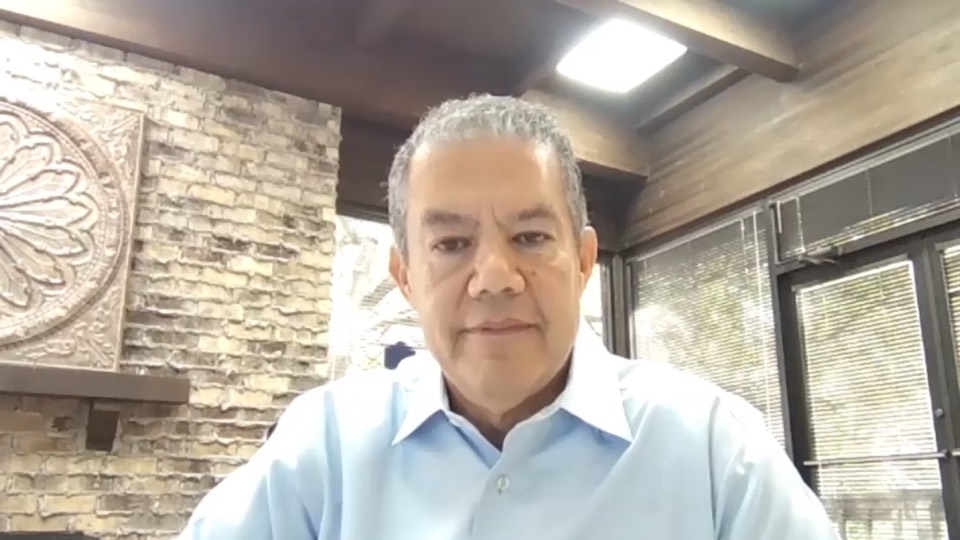
Sherif Mityas, CEO at BRIX Holdings, is the guest on episode 77 of the Restaurant Tech Trends podcast, hosted by Justin Foster.
 Play episode
What Sherif and Justin discuss
- "Newstalgia" - how Friendly’s added innovation and relevancy to its menu without ever touching the logo or the Hunka Chunka PB Fudge Sundae
- How BRIX went from three POS systems to one shared tech stack, and why that makes co-branded froyo and smoothie shops work
- Why he's building his own AI tools instead of buying, and why some vendors should be worried
- The personalized offer engine pulling 4-5x the redemption of a blanket coupon
- Where he lands on kiosks and dynamic pricing, and the guest trust line he won't cross for a few points of margin
Also in this episode
- Why frozen yogurt is suddenly exploding again, and a rapid fire round where Sherif settles SuperMelt vs Fishamajig and finishes "five years from now, the family dining booth is ___"
Episode notes from the host
Time for another Restaurant Tech Trends! In this episode I sit down with the exec who took TGI Fridays from dine-in only to ordering through Alexa! He's now running a 90-plus-year-old ice cream brand where 20%+ of sales are digital. Sherif Mityas is CEO of BRIX Holdings, the Dallas-based platform behind Friendly's Restaurants, Clean Juice, Orange Leaf Frozen Yogurt, Red Mango, LLC, and more (~250 units in all). Before BRIX, Sherif was Chief Experience Officer at Fridays where he was named one of the industry's top innovators by Nation's Restaurant News. Before that he ran Hollywood Video as CEO through the streaming disruption, and he's still applying some of the lessons learned during that stint in the restaurant world today.
Shout outs to Ovation, US Foods, and Dairy Farmers of America for the partner love along the way.
Transcript
Full transcript (7,974 words)
Machine-generated transcript; names may be misspelled.
0:00 Hey everyone, welcome to Restaurant Tech Trends where we explore restaurant technology trends with some of the industry's biggest movers and shakers in a rapid fire short interview format. This podcast is produced by Incept AI. Incept AI takes restaurant orders over the phone and in noisy drive-thrus with friendliness and precision. Learn more at Incept.ai. Very lucky today to have Sherif Mityas, CEO of BRIX Holdings. On is my guest. BRIX is the Dallas based platform behind Friendly's, Clean Juice, Orange Leaf, Red Mango and a handful of other brands, I think around 250 units in total. Before BRIX, Sherif was the chief experience officer at TGI Fridays where he introduced AI before AI was even a thing. He also was named one of the industry's top innovators by Nation's Restaurant News and before that, he's been a production of the industry's top innovators. He ran Hollywood Video as CEO, so definitely has a lot of experience with disruption, which we're going to spend a little bit of time talking about today. Today, he is leading a Friendly's turnaround under a new owner who started out as a Friendly's server.
1:15 Sherif, welcome to the show. Thanks for having me, Justin. Glad to have you on. Excited to learn more about Bricks, what you guys are doing, what's going on at Friendly's. Let's start with the time that you actually joined Bricks. I think it was in 2022. What was the situation like when you got there? What were some of the main challenges? And where did you start getting to work? And I'm especially interested, because you guys have so many brands, about some of the challenges that you faced specifically in running a multi-brand portfolio.
1:48 Yeah, I mean, it was a time just really kind of in COVID, coming out of COVID. We had a few brands at that point and really operated as separate brands, just under an umbrella. And so the discussion I had with our board at the time and my leadership team is we really need to create a very core shared service portfolio that would allow us to capture scale benefits, right? Across all the brands, right? So that we could have basically this portfolio where we could continue to acquire new brands and basically plug and play. So that means one supply chain, right? We don't buy, we don't have six people buying six different strawberries. We have one person buying strawberries for every brand. We have one IT team. We don't have six different POS or six different tech stacks. We've got one. And so it was really this opportunity to say, how do we build it? How do we create something that we can really utilize as a platform, as a foundation, to be able to go continually acquire great new brands, plug them in, and really create something that delivers scale benefits, allows us to accelerate the growth of those brands within our portfolio and allows us to have a great return for both our shareholders and investors while delivering great profitability for our franchisees.
3:24 That was the challenge and that's what we set out to do. And I'd say we've been doing a pretty good job at it. Well, I do want to talk in a bit about what makes a brand a good fit for the portfolio. But of course, this being restaurant tech trends, I'm very interested to learn about some of the challenges that you faced and some of the opportunities that presented themselves as you work to standardize the tech stack across those brands. In particular, POS, you've got multiple different menus, different kinds of concepts. Not all point-of-sale systems are designed to function equally well for those different types of concepts. What were some of the challenges that you faced? And is it truly seamless today or are we still working through some bumps?
4:11 I would say we're 90 plus percent there, in all honesty. And I don't think you ever get full to bright in this industry because things change so quickly. But when we started, we had three different POSs. Only one of the brands had a back office. We didn't have really any kind of guest feedback mechanism. We didn't have a consistent loyalty program. They were all different or non-existent. And so when we stepped back and said, OK, first of all, what do we need? Right. So versus what's out there, we started with obviously, as anyone should, the requirements. Right. So what does a Friendly's need versus an Orange Leaf versus a Smoothie Factory? And to your point, a sit-down family restaurant is very different than a walk-up Froyo place. Right. That has two people versus 20 people in a Friendly's. And so, but you get to the requirements. And at a certain point, certain things start to basically overlap. Right. You got to be able to make it a seamless ordering experience for a guest or a server.
5:26 You have to be able to connect with guests, whether they're inside or outside your restaurant, provide them an opportunity to order from you wherever and whenever they want to. You have to be able to understand what they're telling you and to utilize that information to make the experience better. So when you start with those requirements, then you go and say, OK, who out there can fulfill a majority of them? And so that took some time. But, you know, we got to a point where we found the right partners. We had to build certain things ourselves to be able to create a tech stack that now works across our portfolio and allows us even to look at cross-branding type opportunities. Right. So we have stores now that are co-branded. And so we have an orange leaf, you know, next to a clean juice. We have a smoothie factory that's co-located with a red mango. And so being able to have the same tech stack really makes those co-branded sites so much easier to execute, so much easier to interact with our guests. But you can't do that unless all the foundational work is done in place and executing at the right level. It makes sense.
6:41 You said something that I really want to glom onto here. You talked about using technology in a way that connects with guests. And I was actually listening to another podcast that you were on earlier this morning and you were talking a bit about that topic as well. And this happens to be one of my favorite topics because we are, after all, in the hospitality industry, right? We're an industry of people making food for people, serving it to people. There's a very personal connection that happens a lot of times at restaurants. Where do you see today technology enabling hospitality? And where do you see today technology still getting in the way of hospitality? And do you see, you know, for the technologies maybe that are still not quite there, how close are we to having those technologies be enablers of hospitality? That was kind of three questions in one there.
7:37 Yeah. No, I mean, so let's take it where technology is a no-brainer and where it's working. And I think, to me, that's where what I call things below the skin. So things that a guest doesn't see but needs to happen, right? So all the technology, all the AI that, you know, we have an AI agent that our franchisees use, that we use, that helps, you know, the GMs, helps our team, you know, understand traffic patterns, menu mix, to be able to understand waste, to be able to understand ordering, to be able to understand labor scheduling, all that stuff, right, that a GM or a franchise owner needs to make from a decision perspective every day. Behind the scenes, absolutely technology, right? Absolutely AI enabled, works like a charm. Mm-hmm. Now you start looking at, okay, now when you start seeing technology that interacts with a guest, right? So now you're saying, okay, a guest has to order on a phone or on a kiosk or through a drive-through. The technology that is enabled there, again, when implemented correctly, I think can be very valuable, create kind of more frictionless experiences for the guest and allows for better accuracy, faster turnaround, et cetera.
8:55 And they're not all there to bright yet. So let's not push that and say it's solved and it's all working wonderfully. Those technologies to me are still evolving, getting better. Will they? Absolutely.
9:08 I think when you start getting to the point though, where you're saying technology is going to replace servers that are friendlies. Absolutely not.
9:19 And that's where I think technology can help the server create a better experience, but not replace that server. And I'll give you an example. So let's say technology gets to a point where that server, because you're a loyalty member and you come sit down, they know who you are. Right. They know your favorite drink. They know your favorite ice cream. They know that your kids like red crayons versus blue. Whatever the information is that's been fed to that server right before they come to your table. How do you think that improves that experience when they come and say, welcome to friendlies? I'll get you your, I know you like our hunk a chunk of PB fudge sundae. I know it's your birthday next week. The Sunday's on me. Yeah. Now technology's created almost an immediate VIP experience, right? It made that server look like a rock star. Totally. That is, that's the next generation of technology enabled experiences. Doesn't replace the person, makes them better. Makes that experience with the guest so much more unique, so much more personalized.
10:34 That's where I see the future. Got it. Well, this is a little bit weedsy and we're going to dive deeper into tech, but I have to ask since we're talking about it right now, where do you fall on the kiosk debate? And I'll frame that question this way. There's a lot of chains out there that are deploying kiosks and the results, I don't want to say they're, you know, the same across the board, but a lot of brands are having success driving higher check. And there's an argument to be made saying, Hey, we're providing choice for the guest. You know, we want the guests to be able to interact with us in the way that they would like to interact with us. And some people, particularly younger generation might not want to talk with a server. So I sort of see that argument. Then I go into some concepts and what I see is like, there's a kiosk there, but if I want to place an order, like behind the counter, like there isn't anyone there, like actually paying attention to me, like they're making drinks, they're bagging food or something like that. And the pitch is, Oh, it's your choice yet. Yes. Like there's the option. You can do it. But really what we're trying to do is we're trying to pull labor and we're trying to drive check. So where do you, where do you stand on that spectrum?
11:50 Yeah, I'm a, I'm a firm believer that, uh, you're, we're always going to have a person behind the counter interacting with guests. So yes, we'll in certain instances with, for certain concepts, will we have a kiosk to provide a different opportunity for guests that don't want to interact? Absolutely. Why not? Right. People are doing that today on their phones, right? I basically your phone is your kiosk. You can order, pick up, come into the store and grab your food. Right. So having that kiosk is just a natural extension of your phone because you didn't plan ahead, but you still want to have that digital ordering experience, but replacing people behind the counter. Absolutely not. Again, this technology makes people better in, in our stores, not, not replacement. All right. I like it. Good answer. Well, let's zoom back out and talk a little bit about friendlies, um, and just the effort to turn the brand around. Um, you've modernized quite a bit at this brand. I'd like to know, you know, new things that you started doing, what you had to stop doing. And of course there's been the big headline really over the course of the last year, this drama playing out with Cracker Barrel, right? Where they did this big rebrand and there was like a bunch of backlash from guests and kind of was a disaster actually.
13:10 So how legacy brands are just really, really tough to turn around. So how have you been able to modernize without alienating your guests, new things you're doing? Would you have to stop doing? Yeah. I think it really comes down to understanding the core of what makes your brand special. Right. And in certain cases that might be the logo, right? That, that might be, you know, the interior decorations, right? People feel nostalgic coming in, right? In other cases, it might be a singular item on your menu. You can't replace or get rid of that item no matter what.
13:54 And so we went and talked to guests, right? We went and talked to folks and, you know, I talked to, to grandparents that have brought their grandkids in and they said, you know, they said when I was here as a grant, as my grandpa took me here after my little league game. Yeah. And I love that you still have the hunk of chunk of PB fudge sundae on the menu. Cause I remember having it as a kid. Now I got to bring my grandkid in those stories, right? Those you can never replace. Those are the things that are brand truths, so to speak. And we ensure that those are the things that you can't change. So the logo never going to change, right? Those core menu items never going to change. Um, the little kitschy things from, even from a decoration perspective in our stores, not going to change. Now, can we update the booths? Can we update the murals on the wall? Can we create and add new ice cream flavors that are now more relevant or more trendy? Not replace, add. Absolutely. Can we create more international flavors, right?
15:11 So they didn't have Mexican food. They didn't have tacos or quesadillas in the 1940 friendlies. But clearly it's a cuisine type that guests today look for, right? So adding certain things, looking at innovation from, from the eyes of what could people at different demographics, at different age groups really look for when they're coming into a sit-down restaurant. Absolutely. What kids, kids today, right? What kids ate 40 years ago? Yes, they still ate pasta, right? They still had chicken. But can we introduce a couple other fun things? Try them out. Yeah. Right? Those are things that continue to now create relevancy. And we use the term nostalgia. So nostalgia with some newness. I like that. To capture more people that have never even been to a friendlies, but not lose the people that live and die by what their image of friendlies is in their head. Got it. You talked a bit at the beginning about creating shared services for supply chain. And now we're talking a bit about adding menu items. I'm curious what your supply chain changes have meant for menu innovation.
16:32 And looking forward, focusing specifically on friendlies here, do you imagine the menu continuing to grow or are you removing a lot of the underperforming items on the menu? Like, and maybe I also want to kind of tack on a follow on there because we're talking about like the items that you absolutely cannot touch, right? It's like Costco with a dollar 50 hot dog, no matter what, like that's got to stay on there. Right. What do you do when you're faced with this challenge where you have like an item that you can't remove, but it might not be performing really well?
17:07 Yeah. And that's a great question. I think they'll, they'll always be items. I, well, first of all, from a supply chain perspective, the supply chain team works very closely with our culinary innovation team, right? They're in lockstep. So when we look at, you know, kind of what are the products that we're buying currently? What are we bringing into each of the stores? How can we make some of them multi-use, right? No, no one likes single use ingredients, right? But there'll be some here and there, especially when we do LTO items for a period of time. Right. We, we look at that from a, from an understanding on what's going to create some new news, what's going to create some relevancy to the menu based on either current trends, what's becoming hot from a cuisine type, et cetera. And so then we test certain things, right? So let's say, say for instance, we pulled in a, no pun intended, pulled pork sandwich for a while, right? Did it on LTO and we're like, okay, we just have pulled pork for this one, one sandwich, but we could do pulled pork on a loaded fries. We could do a pulled pork quesadilla. We could look at different ways to use it. Right. And so, but we're looking at what, what's resonating with the guest. We're looking at what's creating pull or chatter on social media.
18:24 We're looking at what's favorably being scored on Google and on, on our ovation scores, right? People are like loving this product. It can earn its right to be on our core menu. Then we'll test a lot of things. We do three to four LTOs a year where we test different products to see how much we can kind of innovate, see how far we can push a certain item or a certain cuisine or a certain menu. And that allows us to really understand from a guest perspective, again, what's, what can we do? Now, when I first started with Friendly's, the menu was massive. So the first thing I did was actually chop it in half, right? So we kind of culled, not the stuff that guests told us had to stay, but there was a lot of things that had come and gone through the years. Some had just stayed on the menu forever for no reason. You had to cull a bunch. Yeah. And then we slowly started adding, slowly started replacing. And so where I think we've got now is a nice, great core menu. That's a lot. Much smaller, but the favorites, so to speak. And then we'd layer in these LTOs four times a year with newness. Yeah. Something to try. And then they have the right to earn their way to the core menu.
19:41 Let's click just slightly onto the LTOs. We've got elevated beef prices right now. A lot of leaning into pork and into chicken. So when you're balancing food costs against trends that you see in the market and you talked about looking at social media, who wins that poll or are they in lockstep?
20:05 Well, to me, they have to be in lockstep. And if you're a restaurant brand and you ever get driven by creating menus and new innovation based on food cost alone, you're not going to make it. You have to create menu items that are actually going to drive guest interest, traffic, frequency. It's got to be good. It's got to be relevant. It's got to be what people want. And if you are just making decisions based on cost, you're going to fail.
20:46 Yeah, that makes sense. I like that. Long-term thinking. All right. Let's talk a bit about the legacy brands acquisition. I'm just curious, how has this impacted how you run the business day to day?
20:59 Yeah, I wouldn't say it's impacted the day to day. I think by having our new ownership, Amal Coley, who's our largest franchisee on the friendly side. Yep. Now in the ownership chair. It provides an additional level of perspective is the way I would frame it. The connection between franchisor and franchisee is critically important.
21:25 If that breaks, bad things happen. Yes. And by having Amal kind of in lockstep with us, sitting basically side by side with myself and our leadership team, it's always injecting that franchisee perspective. It's always injecting what does it mean to the franchisees out there? How is this good or bad? What are the pros and cons of these decisions on the franchisee? And it's just a great, it's almost like, because I have a person that does that on the guest side in my leadership team meetings. They're the voice of the guest in our leadership meetings. I have the voice of the franchisee now always in my leadership meetings, right? Because you have to balance both. And it's been invaluable to be able to have that perspective on an ongoing basis. I think it just makes us better as a franchisor. It makes us make better decisions.
22:18 And it also adds credibility, right? So when a franchisee asks, right, they'll call and say, well, why did you make this decision? Um, we've got, we've already got the answer because we had the largest franchisee help make that decision. Yeah. I mean, I think having a mall and having the franchisee leadership, the natural thing that I would think, and I think most people would think is that it's going to heighten the focus on profitability. And I think the flip side of that, you could make the argument saying, well, this could perhaps hinder long-term thinking or hurt innovation and risk-taking. Have you found since this change that friendlies in particular, but I guess any of the brands, has it hurt the ability to take risks? Or are you still willing to take risks like on maybe an unproven LTO or, you know, unproven menu item? Yeah, no, it hasn't hindered at all. Um, in fact, um, a mall to his credit continues to push us, uh, to continue to innovate, to continue to take risks, to continue to push the envelope in terms of what friendlies can and should be. Um, I mean, obviously he's got a great deal tied into almost a third of the friendlies chain, right?
23:37 So for him, it's not just how do I make bricks successful? It's very personal to him to make friendlies successful. Um, and he sees that as friendlies can't just stay the way it is. It can't just play it safe. There's too much competition. Too many people are doing new things, different things, too many new entrants into the marketplace. We need to continue to take risks, continue to innovate, continue to get better. Uh, and he's been a great champion of that. Okay. Well, I think that's a good segue to this next topic, which is about growth. Um, as you look a couple of years into the future, where is the growth coming from? Is it just unit counts? Is it new markets? Um, we talked earlier about, you know, adding brands. Is it from additional brands joining the platform? Where does it come from? Yeah, it's both organic and inorganic. So, you know, our, our plan, uh, when we just, we just finished up our, our long-term plan, which looks out, you know, kind of three to five years. Um, the, on the inorganic side, it's to acquire a new brand at least one per year. Okay. So we will continue to, we're in the market now, continue to, we're reviewing certain deals now. We will continue to do that with the expectation that we will close at least one per year.
24:54 Um, so that's, that's a no-brainer. On the, um, organic side, uh, we've got a pipeline now about 20-ish stores that'll open, uh, over the next 12 months. Um, that's across our brands. Um, we're going to have a couple new friendlies, uh, we've got frozen yogurt for some reason is exploding again. Uh, so we're going to have a lot new orange leaves and red mangoes. Up for 90s.
25:22 Everyone loves frozen yogurt again. I mean, it's insane. I mean, those brands are up double-digit comps. Um, they've been up positive comps for the last 12 quarters. So it's, um, it's, it's, um, we're going to ride the frozen yogurt wave through those two brands. Uh, but we've got lots of store openings there. And then, uh, obviously continuing on both the smoothie and the clean juice side. Uh, those are much more targeted in terms of the neighborhoods they can go in where they're successful. Uh, but from a growth perspective, we're looking to add at least 20 to 25 new stores per year. Again, over the next four to five years. All right. Well, let's, um, let's click a little bit on the acquisition side. Um, you said you're in market right now. What makes a brand a good fit for Bricks?
26:12 Yeah. I mean, I I'd say there's a couple of things. Um, when I look at due diligence, obviously, you know, our deal team looks at all the numbers and make sure there's four wall profitability for franchisees. There's a pipeline of growth. Uh, we obviously look for brands that are franchised or mostly franchised. Um, but I, I, from a brand perspective, I look at a few things. One is, um, I will go to the stores and I will just sit and watch. And, and occasionally talk to guests like I'm new here. Why do you come here? Are you a regular? And just see what they say, right? Is it because they know the owner? They, they, they love a certain menu item. They've always been here. What the service is great. What, what, what is it? What makes you come to this store for this product or this menu? Um, I'll read all the Google review scores, right? I want to understand what's the sentiment again, from a guest perspective, is this, does the brand, what I call have good bones? So it might be struggling. It might be down in comp a little bit, but are the bones right, right? In terms of, does it have something that makes it unique, something that makes it differentiated that a guest will buy a competitor and come to them?
27:31 Um, if the food, the service, the experience is all correct. Um, and so that to me is the most important. It goes beyond what cuisine type, what number of units. I mean, all the financials need to make sense, obviously, but if there's not guest connection, um, some sort of guest loyalty and some sort of guest sentiment that's positive, I, I look elsewhere. So I'm, I'm curious where you're kind of pattern matching as you're looking at these brands, like the bones are good. Are you seeing something in particular that's attractive to you? Like, um, maybe, you know, menu is too large supply chain is too complicated. Um, where, you know, you've had experience directly kind of flipping this around on the friendly side where you can say like, you know what? I've done that. I can do it with this brand. If this is like a plug and chug situation. Yeah. A hundred percent. And I think that's where you look at when you get to the food is good. Guests like it, but to your point, maybe they're not buying correctly. Right. Maybe the, they're operating standards in the store in the back off in the back of house is not good. So they're, they're, their waste is high and they're, these franchisees are not making any money, maybe the pricing's off maybe, um, you know, again, the financial structure of how they're, how they're operating today is, is, is poor, right.
29:01 Which has limited their growth. Those are things, things that to your point, we know how to do. We've done them before. And by plugging this brand into our portfolio, we check those things off and get this brand back on a growth trajectory. Absolutely.
29:18 Those are part of the decision criteria. But again, I got to make sure that's at least the fixable things we can do. The unfixable things is I have to redo your entire menu. I have to redo your entire value proposition. Those are.
29:34 Yeah. Okay. Well, let's flip it back a little bit more toward, uh, tech. Uh, and since you just mentioned pricing, you know, there's a lot of innovation happening in the industry right now, um, with pricing in particular and looking at menu CDP is a segment that's been taking off, uh, for the last several years in the restaurant tech ecosystem. What, how is technology helping you figure out the correct way to price? And are you a fan of dynamic pricing?
30:09 So first on the first question, I, I'm a big fan. Um, this is where an area where technology does play an important role in helping us determine pricing. Uh, not just kind of core every day, uh, but in large part promotional, right? So what should be some promotional pricing offers, discount programs, platforms, uh, LTO pricing, right? That, that is immensely valuable utilizing some of the AI tools that we have, um, to be able to look, scan competitive by market, right? So we have different tiers, right? So even pricing and, you know, one city in New Jersey is different than a pricing in a different city in New Jersey. Yep. Um, and so that technology hands down, extremely valuable dynamic pricing. Um, I'm going to be in the camp of not in, um, because it, to me, you know, if, if, if I know that my favorite burger at a friendly's is 11 99, um, I don't want to see it different just because of the time of day I come in that, that to me is not creating. And, you know, and I know it happens on airlines and hotels and even other restaurant chains, but in grocery stores, but I, to me, that's a trust factor with the guest that I'm not willing to break to make a few extra points of margin.
31:36 Yeah. This is interesting. And I think this is a segue talking about disruption and pace of technology adoption in the restaurant industry in general. So you were, of course, you were CEO at Hollywood video before, and that was during sort of the disruption brought about by streaming. And I think historically the restaurant industry has, I don't want to say just has been perceived, but is slow to adopt technology compared to some of the verticals that you mentioned, like retail travel.
32:09 But were there any lessons that you learned from your time at Hollywood video that you have brought into restaurants where you see disruption happening and you say, all right, we've got to make a change. We got to jump on this bandwagon.
32:26 Absolutely. And to me, it gets back to creating, utilizing technology to create experiences or engagement that the guest is looking for. So Hollywood video movie gallery, when I ran that chain, I had friends at Blockbuster. They were going through the same thing, obviously. And we had created an engagement and experience that was come to the store. Right. Clearly, guests were asking and saying, I want a different experience. I want a different engagement when I want to watch or rent a movie. And that pace of change happened so fast that all of us with stores couldn't, literally couldn't move fast enough to change the entire business model. Right. That was a fundamental shift in how guests wanted to consume that service and product. Yeah. Taking that to the restaurant space. Again, it's guests are looking for a different way to interact with restaurants. When they want food, and this has been driven not just by restaurants, but by our friends at DoorDash and Grubhub and Uber, right? They want things now.
33:43 They want things at their pace. They want where they are to be able to order, whether that's on their couch, in their car, in the restaurant. They want a seamless experience. So to me, bringing, that's what we brought. That's what I did at TGI Fridays, right? We started the entire digital ordering at Fridays when it didn't exist. The only way to order it is when I got there is you had to come into a restaurant, right? When I left, they were on every digital ordering platform. You could order through Alexa.
34:15 Wow. TGI Fridays, right? We brought that innovation to what had been a, you have to come into the restaurant to order. That was the only way you could interact. Yeah.
34:29 We, you know, so myself and obviously my credit to my team, we brought that innovation and we're doing the same thing here, bringing innovation to how people can interact and order. Right now, anyone who wants a Sunday at Friendly's can order in 15 different ways. Yeah. But you have a, you know, Friendly's is a legacy brand, right? Where is digital at today and where do you think it's going to be three years from now? Is it a huge growth driver right now or is it kind of plateaued? You know, it's interesting. I mean, you know, digital ordering for us, even from a 90 plus year old brand, right? So you would expect Friendly's, you know, well, who's going to order digitally? These are, again, grandparents coming in, right? 20 plus percent of our sales are digital. Okay. So is it going to become 40? Probably not. But 20% is still a big number, right? So we need to continue to make sure that that process, that engagement, that experience lives up to what it needs to be. Seamless, efficient, convenient, et cetera. And technology is going to get better. It's going to make that experience better. But will it ever become 40%?
35:46 No. Do I want it to become 40%? Probably not. Now, that could be different than my Clean Juice brand, right? Clean Juice, people want to order after their workout, before their workout. Come on by, pick it up, not talk to anybody.
36:02 That could be 40, 50, 60% of their orders. And I think everyone would be happy with that. So I think, again, you have to look at what the guest is telling you. How do they want to engage with your brand? And then utilize technology to support that. Don't push technology on people. That, to me, is the biggest learning that I've had through my career. Don't push it. Find out what they want and then give it to them and make sure they're having the best experience possible. All right. Well, let's talk a bit more about technology, but not necessarily technology interacting with guests. I was reading that you guys have built some of your own proprietary AI tools for marketing and business intelligence. And that's really interesting to me. I'd like to know, you know, why did you decide to do that versus buying off shelf? But then, even more broadly, we are all living through this big AI disruption right now. And it is, in a lot of ways, fundamentally changing how businesses operate. And I think is reshaping some of the narrative around build versus buy. Because what AI has done is it has flattened the playing field. It's made it a lot easier for operators to build their own technology solutions.
37:21 And frankly, I think, you know, for some vendors and ecosystem players that are out there in the technology space, that's going to be problematic. So where do you draw the line between build versus buy? Why did you make the decision to build your own AI tools around marketing and BI? And looking forward, where do you see your IT group, which you said is a shared services group, investing in building versus getting stuff off the shelf? Yeah, it's a great point you bring. And one that I think we're starting to see, not just here, but when I talk to my colleagues across the industry. To your point, it's becoming literally, I won't say easy, but much easier. Much easier. Much easier to just build it yourself. I mean, you have, I mean, you basically can ask, you know, Claude or one of the other, like, build me code to do this, right? You don't even need to have a coding degree. No. And so the opportunity to just say, here are my requirements. Make me an app that does X, Y, and Z and have it spit it out is remarkable. It is. And it's only going to get better, faster, cheaper, right?
38:38 And so I would be concerned if I was a vendor or a company out there that's their entire business model is making these things. I don't think that's a long-term play. Yeah. You know, for us, we're building more because it's just become easier and we get exactly what we want, right? I don't have to try to find the 90% solution, right? I can exactly get what I want because I'm building it for our brands, for our environment, for our guests. And our tools are amazing right now. And I, they mean, they get better every day. The technology team sends me an email going, we just made X, Y, and Z better. Try it. And I'm like amazed. I'm like, this is the coolest thing I've seen today. All right. So tell us, tell us, what are you building? Like, what are those things? And where, you know, what are the specific, I have in my head, like a few segments that I, I fear for the players that are out there. But I want to hear it from the source. Like, what are you guys building right now? Yeah. So obviously from a back of house, back office perspective, everything that helps a GM or franchisee run a store is on the AI tool.
40:01 I mean, it pulls in everything. It pulls in every amount of data that we have across all our trade vendors, our marketing agencies, our, you know, Google, our weather in each of the sites. I saw that. It pulls in everything, right? And it helps that GM or that franchise owner make decisions, really smart, timely decisions on how to run their operations, their store better. And then from a guest facing perspective, we built again, the tools that says, okay, for these, not these guests, for this guest, this is the offer on this day, on this time that should drive a visit. Right? So you talk about personalized marketing. We don't have to send out a $5 off coupon for a free smoothie or free Sunday anymore to 100,000 people on a Tuesday afternoon and hope we get 10% open rate. I can send Justin because I know you like our strawberry banana smoothie. And for whatever reason, you must work out on Tuesday because you're always buying a smoothie from us on a Tuesday around four o'clock. And you missed it last Tuesday.
41:16 What happened? What happened, Justin? I'm going to send you something Tuesday morning saying, Justin, come on back for your smoothie. Let us, you know, give you a toast, right? Because I want to try to upsell you because I know you like the smoothie and you like it on Tuesday. I'm going to send you something direct. All right, Sherif, can you give us some numbers? So we use the $5 coupon and now we're doing the personalized targeted offer based on historical purchase and when it is and the weather and all of this stuff. How much does it move the needle?
41:51 Yeah, so I'm not sure I want to share all my secret sauce, but, you know, a normal redemption, as you guys know, you know, kind of across the board. If you just sent out something to the world and you got a three to four percent, you'd be celebrating. Right. That would be a phenomenal redemption. Let's just say we get closer to four to five times that. Oh, wow. Okay. Yeah. Great. All right. Well, let's take the flip side. Let's talk about a technology that didn't deliver on its promise.
42:27 Give us an example of a failure.
42:31 Yeah. I mean, we've tested a lot of things that don't always work, you know, obviously. And so you can't you can't be batting a thousand. You know, we've tried a couple of different platforms that, you know, were supposedly going to help us, you know, create a greater connection between our ordering in store, out of store with loyalty, even tied to our third party partners. And to be honest with you, it just it got too confusing for the guest. Again, it was it was a hammer looking for a nail, to be honest with you. And whenever you start kind of chasing, this is something we learn on a continuous basis. Anytime you start chasing a shiny ball. Oh, this this looks cool. Right. From a new technology perspective. If there's not really, again, a guest need, a requirement driving it, don't don't look don't buy the hammer looking for a nail. And that's we've had that issue a couple of times. All right. Well, that's a great segue into the next question, which is the most overhyped piece of technology right now in restaurant tech that what is it right now? In your opinion.
43:44 Just lay it out there. Yeah, let's let's hear it overhyped technology.
43:50 You know, it's you're going to you're going to I think laugh about this, but I think it's the most overhyped and underhyped. I'm going to go back to AI because I honestly think some people are touting AI as the savior of everything and it needs to be applied everywhere. Yeah. And I fundamentally disagree with that. I think it has its place, as I mentioned. I think it's very helpful and useful and impactful and very specific use cases. Should it be applied everywhere? Is it the savior of all stores all the time with every decision? Absolutely not. All right. I agree with you on it being the most underhyped and the most overhyped, but I'm going to push you a little bit harder on those use cases because I think we can all agree that there are some great use cases for AI, especially when it comes to running financial analysis, pricing. A lot of automating back office stuff. I think there are a lot of brands that are seeing a lot of gains there. But I also think there are some areas that, frankly, are a little overhyped. So what are those specific use cases that you think are a little overhyped today? Yeah. Again, I think that it's going to replace every drive-through person.
45:11 It's going to replace the manager. And you don't need a manager because all the decisions will be made on the computer. Yeah. I think that's just overhyped. Yeah. I agree with that. I'm a little surprised you didn't say robotics, though, because I get that one a lot, too, when I ask that question. I still think we're always there. Yeah. Robotics, I wouldn't even put it in the category of overhyped because, you know, to me, that's nonsensical. I mean, it's gimmicky, right? You're going to have a robotic server. I know they have the flippy. Flippy, skippy, dippy, chippy, all those different ones. I mean, come on, guys. To me, that's a little crazy. If you want to use a theater, that's one thing, but it's not going to replace people. I agree with that fully. And, you know, it's interesting. There's all this talk these days about, you know, AI is going to replace humanity and, you know, humans and everything. And don't get me wrong. There are certain functions that people perform that will be replaced by AI. I do believe that firmly. But do you think people are going to be sitting down to watch an NFL Sunday game with a bunch of robots, like competing against one another?
46:27 It's not going to happen. You know, people still watch Jeopardy, even though Watson beat the top human competitor something like 15 years ago. Because there is still awe and there is still a place for human innovation and appreciating what humans can do. And I really do believe on this idea of, like, robotic servers. Like, I just don't see anything like that happening. I can't imagine going into a restaurant, you know, outside of maybe a, you know, a modern, like, sushi place or something like that, where it would just be kind of cool and quirky to have your food delivered by a robot. Right. I don't see that happening in a lot of restaurants. No. Okay. No, I agree. All right. Well, we're about to move into our rapid fire segment. But before we get there, quickly, do you have any vendors that you would like to shout out that have done a particularly good job for you guys in any of your brands? It's okay to decline this one, by the way, if you don't want to. Yeah, no, I'm okay to shout out the folks at Ovation. They've been awesome as our, you know, guest listening and feedback platform. We have them now across a number of our brands. They've been a fabulous partner. It gives us invaluable information, again, on what our guests are telling us, how to recover guests should they have a not so great experience.
47:47 They've been a great partner for us for a number of years. But we all, you know, we've got some great partners across the board.
48:23 Sherif has no idea that this segment is even coming at him right now. It's because he told me at the beginning he has not watched this podcast before. So, Sherif, the rules of engagement are about to toss out some questions to you. The rules are try to answer each question with one word if you can. If you cannot answer with one word, try to answer it with one sentence. Are you ready? I'm ready.
48:46 Friendly's Super Melt or the Fishamajig? Super Melt.
48:52 Sundae or Froyo?
48:55 Oh, Sundae. What's your favorite Friendly's ice cream flavor? Oh, Black Raspberry.
49:04 This one we kind of answered, but let's see if we get a different one this time. The most underrated tech right now in restaurants.
49:13 Most underrated tech.
49:17 Guest feedback platforms. Okay.
49:22 Window seat, aisle seat, or are you flying the plane yourself?
49:27 I have a pilot's license flying my plane.
49:32 I knew that. That's why we got that one there. So, not surprised at that one. All right. Last one. Finish this sentence. Five years from now, the family dining booth is blank.
49:48 Fun.
49:51 All right. Sherif, I want to thank you very much for your time here today. Really enjoyed getting to know you. Guys are doing a lot of really cool stuff. Excited to see what brand comes into the portfolio next. Everyone, Sherif Mityas, CEO of Bricks Holdings. Thanks, Sherif. Thank you.