Episode 59 · May 7, 2026
Margo Hughes
Executive Director Business Services · Bluemont Group
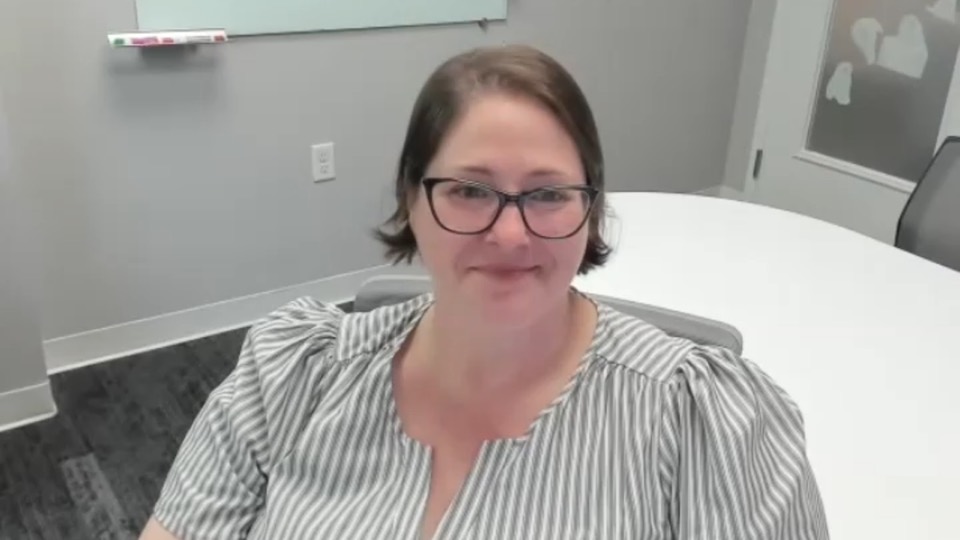
Margo Hughes, Executive Director Business Services at Bluemont Group, is the guest on episode 59 of the Restaurant Tech Trends podcast, hosted by Justin Foster.
 Play episode
What Margo and Justin discuss
- The wild origin story of Do'Cast
- How a $100/day waste problem becomes a $3M+ headache when you scale to 100 stores, and how Bluemont is on track to save another $1M
- Why over-optimizing waste actually means you're "managing your business down"
- The hyperlocal demand forecasting variables nobody sees coming: local election days, school field trips, sports games, weather, and that one neighborhood that always sells more sprinkles
- The puppy analogy every operator evaluating AI needs to hear.
Also in this episode
- Margo shares what's next on her hit list AND drops a hot take in our rapid fire round on whether AI is more hype or more substance in restaurants right now. You'll have to watch to hear it.
Episode notes from the host
DONUT WASTE: $3M PROBLEM, MEET YOUR MATCH
Today on Restaurant Tech Trends I'm joined by Margo Hughes, Executive Director of Business Services at Bluemont Group, a Dunkin' franchisee with ~100 locations across seven states. Margo's become one of the most visible voices in restaurant AI thanks to Do'Cast: the donut forecasting system Bluemont co-developed with PreciTaste that's already cut donut waste by up to 30%.
Margo, thank you for the puppy wisdom, and for proving that "small pond" reputations get built one great interview at a time. Now I gotta go try a sour cream donut.
Transcript
Full transcript (7,826 words)
Machine-generated transcript; names may be misspelled.
0:00 Hey everyone, welcome to Restaurant Tech Trends where we explore restaurant technology trends with some of the industry's biggest movers and shakers in a rapid fire short interview format. This podcast is produced by Incept AI. Incept AI takes restaurant orders over the phone and in noisy drive-thrus with friendliness and precision. Learn more at Incept.ai. My guest today is Margo Hughes, Executive Director of Business Services at Bluemont Group. A Dunkin' franchisee with roughly 100 locations across seven states. Margo started an agency work on Burger King before she moved into the Dunkin' family and she's become one of the more visible voices in restaurant AI thanks to Doughcast. We're going to learn all about Doughcast today. The donut forecasting system Bluemont co-developed with PressyTaste that has cut donut waste by up to 30%. I want to hear all about this. Donut waste is a huge problem with a huge problem with donuts, right? You never know how many you're supposed to make. You end up throwing out a bunch at the end of the day. So we're going to hear all about it today, folks. Margo, welcome to the show. Hi, thank you. I'm glad to be there. I think this is the second or third time we've met. We met originally at Mertech earlier this year. I saw your panel. I was very intrigued by what you had to say about donut forecasting. But before we get into Doughcast, let's talk a little bit about your background. You came up through the agency side. You're at Wonderman. You're working on Burger King before you crossed over to Dunkin'. What did agency life teach you about this industry? And what pulled you over here to the operator side?
1:47 Well, that was my first agency job out of college. And it really taught me a lot about the industry. And the number one thing it taught me is once you're in QSR, you're going to stay in QSR. It's a very small pond and you come across people that you worked with at different brands. And, you know, it's like, oh, people that were at Burger King are now at Dunkin' or Wendy's or, you know, Paris Baguette or lots of other great places. So, and I learned a lot about sales and where the sales come from, how you track, you know, how you grow in a targeted way. So you set your goal for a product and you launch it. It has to do a number of dollars per week, average weekly sales. And then that's how you get your annual percentage number. So I learned all of that baseline stuff at the agency. But one of the things that I think I've progressively gotten closer to the operation over the years is as the agency, you influence the franchisor, you know, in a field like Burger King, where there is a franchisor and then a franchisee. So on the agency side, you're working with the franchisor and trying to kind of influence them. And then the franchisor is influencing the franchisee. And now that I'm at the franchisee end of the spectrum, I'm much closer to the results, right?
3:09 Like things that happen actually impact our bottom line. It's not just directional. It's not just like our national numbers are up. That's great. It is, you know, actual stores, actual P&Ls, actual, you know, success or failure. You know, in some cases, those things really come down to execution. And in some cases, what's happening nationally doesn't really work for a local area. So those things really, I think, have developed over my career to get me closer to the results. I love that. I love that response. And you said two things that really stuck out for me. First of all, totally agree. This is a small pond, this industry, right? Your reputation follows you around very carefully, very closely. So always need to make sure that we're remaining friendly with everyone that's out there because you never know where you're going to be next. And then the second thing you said that was really fascinating to me was about how you're influencing the franchisor and then franchisors influence the franchisees. But I think you would probably agree it works the other way around, too, right? The franchisees are also trying to influence the franchisors by making them pay a little bit closer attention to profitability.
4:14 Absolutely. And you need that two-way conversation. Yeah. Because things that make a lot of sense on paper, you know, don't necessarily work well in the operation. And the same thing is true for Bluemont Group. I know this is one of your questions. But as we've gotten bigger, it's much harder to influence a very large group of people because you're looking at the averages of how things are working and how it's going for everybody. And you really need to hear from the individuals to say, that's not working for me or that is really great for me or we need to adjust this for me. Because a lot of times, you know, that'll be a chunk of your portfolio. That'll be 25 percent who it's not working for. And if you don't hear from them, you're looking at the average and you're going, good job. We crushed it. You know? Yeah. You know, it's funny. The last person I had here on this podcast, or I guess a couple episodes ago, was a gentleman named Rashard Dennis. He leads operations at Insomnia Cookies. And we spent a lot of time talking about brand standards and enforcing brand standards and how you have those conversations with different stores and different franchisees that might not necessarily be following those standards. And I wasn't even planning on asking you this, but since we're talking about it anyway, how do you have those discussions when you've got a store that might be in an area where maybe there's a promotion that's going on that doesn't really work well for that area?
5:34 Or there's some sort of op standard or brand standard that's been put in place that might not work well for that store. How do you decide, like, how much of a leash to give them versus saying you have to comply? I think that we are fortunate at Bluemont Group that our managing partner, Dave Baumgartner, he's very involved in the leadership committees on the franchisor side. So he has some influence and visibility there and can really bring the message from the store level back to Dunkin' Corporate. But the flip side of being a good partner is also being a good partner. So, you know, we try to protect the brand just as much as corporate does. We try to play within the rules and the lines. And, you know, I think we do get from the franchisor a lot of tools and things that we can do to help ourselves. So if what's happening nationally doesn't necessarily resonate, we do also have ways that we can boost our own visibility, that we have local store marketing budgets that the brand provides. And we have an agency that the brand provides to help us with local store marketing issues. So there is an avenue to do that within the lines without, you know, upsetting the franchisor and risking your whole business.
6:53 I mean, you have an agreement with somebody that is to play within their sandbox and you have all the benefits of being a franchisee to play in that sandbox. But there are some rules that you must follow. And, you know, there's ways to do that. There's ways to stay in the sandbox and drive your own business. Well, we're going to talk a little bit more about that later. We are going to talk about that. But before we get there, I'd like to learn just a little bit more about your role today. So you have this executive director of business services role. How did that role get scoped? What does that role actually do inside of Bluemont?
7:30 So, again, I'm somewhat fortunate that I've made a mark at this organization to the point where jobs have been created for me as I've grown in my capabilities. And in my leadership to just pick up more responsibility and more influence across the organization. So specifically, the executive director of business services means that I lead all of the supporting services that are associated with operations, but are not actually operations. And I work very closely with the operations leaders and the executive team. I'm part of the executive team. So we all work together to, you know, bring the same message forward to the rest of the organization. And we all have, you know, little fields that that message shoots out to. So I've the different iterations. My boss says titles are free. So different iterations of this have been, you know, strategy and implementation and ops services. And it's just kind of been a, you know, how do we make this title grow without, you know, breaking the ecosystem of our organization? You know, because, of course, I have peers and, you know, we have a level of leadership that I'm part of.
8:48 But one of the things that I'm told most often is that I'm air traffic control or the cat wrangler. Cat wrangler. I like that.
9:01 It's got our LinkedIn updated.
9:04 All right. Well, let's flip gears. Let's talk a little bit about DoeCast. Where did you get the idea for this thing? How did you think of it? When did it start? What was the inspiration? Take us back to that moment where you realized that there was a problem. And how did you connect that to what you're doing right now?
9:25 Sure. So as a problem, it developed over time in the same way that our organization grew over time. So a problem that is $100 at one store a day across 100 stores is a much bigger problem than at one store or even 10 stores or even 50 stores. And also, you know, we have a board that we discuss our results with on a monthly and quarterly basis. And, you know, their feedback was often how do you get your cogs in line? You know, we were going through this inflationary period. I'm sure you're everybody on your audience has felt felt the pinch of the increasing costs. And, you know, just really trying to figure out how we bring those costs down in this environment without passing all of it on to the guest. Right. Because there's a breaking point. There's a there's a point where the guest says, I'm not willing to pay that much for this product and this experience. Right. So so that was one piece of the equation. And then another piece of the equation is, again, when you're looking at a total across 100 store organization, you get to numbers that are just really big. And so we had gotten to an over three million dollar waste number in donut. Wow. In donut. And, you know, try to address that through operations multiple different ways.
10:44 But in in an operation, you're always only as good as your frontline person. Right. The person that everything trickles down to all of the information and all of the advising and all of the working. You have a frontline executor that if if that's not working at their level, then it's not it's not going to work. Totally. And at the same time, I had very, very by chance not doing any research, read this article that was just it was so engaging because just the brief synopsis is that there was a guy who wanted to identify pastries in Japanese pastries and Japanese bakeries because they have like 200 different varieties. Any given moment, they can have a different swirl or a different line or a different topping or a different whatever. And it was really difficult to train the team members to give good customer service while also trying to identify what they were selling, which then made it difficult to forecast what to bake because they didn't know what was selling. So the reason this was news, the reason there was an article for me to read is that the AI that they came up with, the visual of the pastries looked a lot like cancer cells under a microscope. And so now that same AI is being used to identify cancer cells, which, you know, I think that's that's what made it interesting enough to be, you know, clickbait on my news feed.
12:08 But I was thinking about it and I was like, you know, one of the issues with cameras is that one brown donut and another brown donut or one donut with chocolate frosting and pink sprinkles versus one donut with pink frosting and brown sprinkles. Right. They they look a lot alike. It's very difficult to kind of track. And then we also had we've changed some of the menu items, but we also had some that were powdered. And the only difference was the little dot that comes out of the filling hole of what color the filling is. So it could either be like a Boston cream or a vanilla cream. And you only know that from this little spot on the donut. Right. But I was like, if they can see cancer cells and they can identify 200 different 200 different bakery products, surely we can find a way to identify donuts. And so I started on a quest on a discovery and I started talking to lots of people getting cold calls on on LinkedIn and people saying like, oh, you know, we have this solution, this tool, all of this, whatever. And I ended up going to Murtech and finding my partner, Presity Taste, that we've worked on this solution with. And they had of all of the people I talked to and and you're in the space. So I think this probably you hear this a lot, but everybody will tell you you can create a solution for any problem.
13:24 Right. Like any AI can learn to do anything. But the difficulty, the degrees of difficulty of training the AI to do that thing is, you know, is a lot. So I thought that if we got to something that was close, closer, similar, you know, more closest than versus just somebody saying, well, you know, conceptually, of course, we can create that. It would be an easier transition. And Presity Taste at the time was doing a forecasting and prep tool with a Mexican concept that they could measure the volume of beans that were left in the pan to say, you need to prep X much more beans to get through the next two hours of service. And I was like, that's you need to you need to have this much to get through this this business day. I was like, that's where you know, we're in the realm of similarity. And so that's where we started the conversation. But it's been two years since we started talking and a little over a year since we rolled out across our whole organization. And we're still having weekly calls and we're still making constant adjustments. We're not at our end goal. We are at the goal that we said we had to be at to do business with them.
14:43 So, you know, it's a work in progress. And I don't think that I knew or intentionally signed up for the amount of work and attention that it requires. OK, I definitely I definitely do want to talk more about some of the challenges you've had with training and some of the lessons learned and what that's meant, you know, for like real world ops. But before we do that, I think it might help everyone just for us to clarify exactly what this thing is. So I've got this image in my head of like there's a camera. The camera is like pointed at donut case. It's looking at like the different donuts. It's counting them up and it's using this to create some kind of a forecast for what needs to be made, what doesn't need to be made. How does it actually work? And if I'm like a frontline person and I'm working at one of your stores, what do I see?
15:29 Yeah, so different different Dunkin locations have different donut approaches. So our network, we receive all of our donuts made fresh overnight or in the evening, the day before they get delivered overnight to be in our stores by 5 a.m. On the day that they're going to be sold. And then they only that's their one day of shelf life. Right. So you have one opportunity. The cutoff is at 1230 the day before to say, I need this many donuts out of we currently have 14 required varieties plus three required munchkins. So you need this many of each of these varieties in order to get through your business day. And that's a lot of variables for anybody.
16:18 So the way that the Doughcast works is it has the input of what we've ordered. It has the input of what we've sold through the POS. And then it has the input of what it visually saw in the case at different times throughout the day and being wasted. So the camera does point at the case, but we also make sure that it points to where the trash can is. So when the donuts are sliding in, it's pretty cool when you see the visual of it. There's little green boxes around everything and you can literally watch it counting. And so they're counting what's actually going into the trash. So, you know, one of the operational challenges that that arises out of that is that what you see at the end of the day and what you purchased and sold, that number doesn't always line up. Right. And there's reasons for that. Maybe we had a donation that we didn't ring in because there wasn't a sale associated. Maybe we didn't bring the rack of donuts from the back door where they get delivered to the front where we put them, where we wasted them. So if the camera never saw them, there needed to also be additional input to say, OK, what the camera saw is not the only piece of information. But the camera also needs to be the input, because if they're saying if they don't have any donuts at the end of the day and they're saying they didn't sell as many as they ordered, then we need to find out where those other donuts went.
17:35 And also we need to increase their order. Our goal is not to sell out. You know, I think just to to do the math and to I don't think I really got into the exact numbers, but when we started the conversation, but our waste at $100 a day across 100 stores.
17:53 We're down $30 a day. That's that's almost a million dollars in our initial waste problem. Yeah. But it still means that we still have $70 to deal with. That's that means that, you know, in a perfect world, we would be somewhere between 30 and 50.
18:11 So we still have another million dollars to save ultimately. Got it. Does that answer your question? Did I lose the plot? No, no, no. I think that that that answers it. I am curious to learn as you've rolled this thing out. It's taken a while. I think longer than you had expected initially. What were some of those main technological challenges? Was it like correctly identifying the donut on the camera? Was it figuring out that you had donuts that were in the back that weren't brought up so you weren't counting them on the camera and figuring out you needed this extra input? Was it actually making the forecasting piece accurate so that you knew like the correct number that you should order? Where were like the biggest things that you were maybe a bit harder than you were thinking at the beginning actually were to achieve? Yeah, I think there's there again, there's a lot of variables, right? So any any one of these things is achievable, but all of them at the same time is very difficult and complex. And I think part of it is and, you know, Pressy Taste is a great partner, but having the operational experience. Right. So you're not in the store. You don't really see how is normal to interact with the product. So, for example, when on on busy weekend days, we might pre box assorted dozens and have them ready at the drive through.
19:32 And then if we don't sell those assorted dozens, it's just part of the waste. But if they didn't go back to where they came from, then you're not going to get an accurate number. And you would never know that that's a thing that we do in the restaurant if you've never been in a restaurant. And the same, you know, when I first started talking to people about this project, a lot of people said, well, why don't you just ring in the varieties to the POS? And, you know, tell me you're not a restaurant operator without telling me you're not a restaurant operator, because there is a zero percent chance that either they're choosing their doughnuts over here in the case on the side and the POS is over here that I'm running back and forth. And there's also not it's not likely that I'm going to stand there at the end and go one of these, two of these, four of these, whatever. Right. Because by the time you're at that point, you've closed the box, you've handed it off. You're not going to remember all the things you put in that box. And so the only time that we really get accuracy, that we really get variety is on a mobile order. And even then you have the option to choose assorted dozen. And so, again, you've not rung into the POS which varieties you've chosen. So, so again, a lot of this comes down to knowing your community. So we have some communities. If you're next to a school, you might sell more sprinkled products. If you're in a heavily Hispanic area, you might sell more filled products.
20:52 Like these are just products that resonate more with different communities. And you know that when that's your store and you're really tuned into your operation and you're really tuned into your business. But that's, again, a lot of variables, a lot of information. They also have to do truck orders from the distribution center. And they also have to do schedules. And, you know, it's just one more piece of big information that needs to be consolidated. And so having machine learning kind of participate in that process was really necessary. But we're still to this day finding out today I had somebody call that's running low on donuts really early in the day. And I realized that it's a local election day, right? Schools are closed today here where we are because there's I guess they're primaries. But these things all make a difference. When there's a sports game in Knoxville, people come from Nashville and Chattanooga. The highway stores have higher volume in donuts, right? Yeah. All of these things play a role and so all that information has to be applied somehow. So this was, I think, one of the things that you were talking about on your panel that I saw at Mertech. And this is an area that I'm particularly interested in as well when it comes to these demand forecasting solutions. Because sometimes it can be really hard to find this hyperlocal data that has a significant impact on the operations of the store, right?
22:08 And you just mentioned a few examples right now. You know, there's an election day. There's like, you know, sports games that are going on. Are you feeding this model that you're using right now with that hyperlocal data now? Where do you think we are in that continuum of that piece of the puzzle being like totally auto-magicified versus like there's a bunch of like hacking stuff that's going in versus we're just not even there at all and you just got to do it manually? Yeah. I love auto-magicified. That's going in the repertoire. So I don't have direct visibility to how exactly Pressy Taste handles this. But I know they created a dashboard and they're scraping a lot of this information from the internet. So school schedules, you know, all the different counties. They're also checked it, tuned into the weather for all of our different zip codes. Yep, weather's big. Weather's big. And on top of that, donuts are not really a habitual product, right? So you can drink a cup of coffee every single day. You have your way you make it. But donuts are an impulse purchase. And so it's much more difficult to predict how the customer is going to behave any given day.
23:25 And then you might also have the field trip that there is no way you were going to know that a school bus full of kids was going to show up at your restaurant on Tuesday afternoon, right? So it's all of these things that, again, the reason why we don't want to get to zero waste is because you're going to manage your business down, right? You're going to stock for the business you don't have instead of the optimism of if I have it, they will come or if I have it, they will buy it. But there's a breaking point where you can lose $9 and save $30. Like that's an equation that works. All right. Well, this is kind of pulling me to another thing that I'd be very interested to hear your take on the franchisee, franchisor dynamics at Dunkin' in particular. Because I believe you're buying your donuts from Dunkin', right? No.
24:14 We actually own our – they're called CMLs in the Dunkin' world, which is a central manufacturing location. We call ours a bakery because they're big products. But so we buy – the distribution center at Dunkin' is co-owned. It's a co-op between all the franchisees. Everybody buys in. And then we have the collective buying power at our DCP. And then any – everybody pays the fee for each item and then any funds that are excess get distributed back to the franchisees. So it's not really a – the franchisor is not selling that to us. But the franchisor's objectives in all of this are different than our objectives. The franchisor, their top priority is guest experience, which is, you know, I think what you're kind of alluding to is when there's availability, the guest is happy. When you sell out of donuts all the time, the guest is unhappy. When you don't have their specific donut, the guest is unhappy, right? So they can – we get complaints sometimes that say you didn't have any donuts. And I know for a fact that we threw away 150 donuts that day, right? But we didn't have any of the varieties they like. And if the – this is me personally – if the last thing you have in your case is an old-fashioned donut, you can catch me next week because there's a 0% chance I'm going to trade any of the other varieties that I would choose for an old-fashioned because I just don't like them.
25:33 Yeah. Okay. Got it. I want to talk a little bit more about frontline managers that are handling ordering with – of the donuts. How does that working with Doughcast? Is the system placing the orders on behalf of the managers? Are the managers able to, like, preview what the system wants to order and then they place the order? Or how have you – so first of all, just explain how it works. And then after you do that, maybe just tell us a little bit about how have the dynamics of that played out with managers that might not want to give up some control over ordering or might not believe what the system is actually telling them? How have you dealt with that? Yeah. You might have to remind me of the second part of the question because I go on side quests sometimes. But the first part is we use an ordering system for our bakery that is called Supply It, Jarrah. And the Doughcast is writing directly into Jarrah the orders. Okay. The cutoff of the bakery is some few minutes after 12. Like, 12 is the official cutoff. And then whenever they download the report is when it actually closes. And so the Doughcast gets written up to three days in advance. And then if there's significant changes, stuff happening, they might change – it might change over the next two days before it's actually the day of the order cutoff for the next day.
26:55 And so as a GM, if I'm really tuned into this, I can check what is in Jarrah and see what the order is for my store for the next day. And then we – because of too many inputs and, you know, too many variables, right now if you want to change that, you have to reach out to Pressy Taste and say, hey, you've got this order in my system and that's not going to work for me. I need more of this, less of this. And so for a while we had a lot of, like, I need two of these, three of these, where they're basically just placing their own order again without explaining why. So, again, this is the piece I was saying, like, if your community is really high on sprinkled products or if your community is really high on filled donuts or if you have somebody who will buy every single day your one whole dozen of maple frosted, whatever those things are that you know had to go back to Pressy Taste to say, this needs to be an input in my area. And so then they've implemented ceilings and floors on, like, never order less than X number of a certain variety, never order more than X number of another variety, so that it all stays balanced but within the specifics of each community. And that's what makes it so hard to manage at a larger level, too, is that you as a manager who's been in a store for a long time, you might do really great at this because you know what your community likes.
28:15 And you as a new manager who just got hired, who's new to this, you know, doesn't have any idea, you're just blanket buckshot against the wall, whatever sticks, sticks. And so we saw that our seasoned, really great managers struggled with letting go of control of that because they're ultimately the one who has to tell the guest, I'm so sorry, I do not have that donut anymore. And so we have some varieties that if you sell out of one basket, but you sell one of the next basket of 12 because we have maximums, right? Like, everything that comes out of the bakery comes in a basket. I can't order three donuts. I have to order 12 or 24 or 36. And in Munchkins, they're 120 at a time. So if I sell 13 donuts, I'm now going to sell 12 donuts because we're not ordering a second basket to sell one additional donut and then wasting 11 more donuts. Yeah, it makes sense. Can you, you know, open the lid on the black box just a little bit here? How much of this ordering algorithm is store level versus like regional or community level versus all of your stores?
29:21 I don't, I can't tell you exactly which percentage because, and again, this is my learning too, like new information to me as well. But the way I understand it is that there's dials on every variable and you dial up the importance or dial down the importance of different variables. So I'll give you a really good example. Munchkins are, come in baskets of 120. So you can't ever see every single Munchkins because they're laying on top of each other. Right. And what the camera was estimating as a full basket or a half basket and what we were actually selling versus ordering was not matching up. So instead of valuing the visual of waste more highly, we valued the theoretical of sold more highly to bring that waste back in line. And so the same thing would go in an area where if persistently you're not having enough sprinkles, you would dial up the variable that influences that. Instead of an area where, you know, maybe you're selling more, you're more high volume, you're selling more in the morning or you're selling more throughout the whole day. So if you're out by 10 a.m. on a store that only has a couple more dollars later in the day, that's okay.
30:39 Versus if you're selling out in a store that is open till 10 p.m. and has a lot of business in the afternoon. Like all of those things, every single store is unique in the system. And but the inputs are oftentimes system wide learning. So if everybody in the network is always running out of glaze, that's one of our no fly zones. Right. You have to have glaze that should if you have nothing else left in the case, glazed is the bare minimum. And of course, that's not the objective. Right. We want all the varieties. We want to have good variety for the last guests to still be able to order from. But most people, if they won't take any of the other varieties, will probably be okay with a glazed. So, you know, those are that's kind of where we have like bulk inputs and local inputs. And both of those kind of come together to make the full picture. But it is 99, whatever, different versions of the same. Got it. All right. Well, I think the problem that you're trying to solve here is really interesting. You know, this podcast is called Restaurant Tech Trends. We spent a lot of time here talking about AI and definitely demand forecasting is one of the hottest areas in restaurant AI right now. Of course, there are many, many use cases of AI in restaurants. But I think what you're doing here is super innovative. It's really cool. I like how you're using these external data sources.
31:55 I love how you're, you know, saving up to 30 percent in waste right now, which is a pretty incredible feat. I mean, to be honest. So I look forward to like following this story as it continues to evolve over the next year or two. But let's take a bit of a step back here and just talk about like AI in general, because you've gone through a bit of your own journey here in, you know, looking at vendors, evaluating solutions, rolling something out, piloting, all this kind of stuff. And there I would say that many operators right now are in kind of the earlier phases where they're just running pilots or they're trying trying things out. Some things are starting to scale now, but there's still a lot of like very early eval work that's going on. With AI in general in this space, what advice would you give to another franchisee that might be evaluating AI vendors right now? What's one thing that you wish you knew you you you wish you knew before you started the journey?
33:00 Yeah. So.
33:04 As if you're if you have the bandwidth and Bluemont Group is very data driven, you know, the relationship that we have with our board is very much information based. So we've got a good starting point and we've had we have the staff to be able to do it because of the size that we are. And I think that's a bit of a privilege. If I was a new franchisee coming in now, I would say, get the solutions that are already proven in what you're trying to do. Don't don't say there's a new thing I'm trying to do and nobody has a solution for it yet. So I'm going to create one because this is this is my favorite part of the story is that I adopted a puppy about the same time that we launched this. And it occurred to me that training in AI is the same as training a puppy because, you know, even when after we'd had him in school and, you know, training classes and he's he's such a good boy and he's so well behaved. But every once in a while, he's got a day where he's just like off the rails and he's doing all the crazy things. And it is the same thing. It hallucinates sometimes. And you're like, I there is no reason. There is no data point that would have given it the reason to order this way. And still it did. Right. And you can't explain that in the same way that you can't explain why the dog keeps waking up at two o'clock in the morning. Right. So and at the same time, you know, I was the one who wanted the puppy and my husband was, you know, a little on the fence about it.
34:24 And, you know, Bluemont leadership is the one that wants to save the money and the GMs are a little on the fence about it. And, you know, they're the ones who have to get up at night. My husband is the one who doesn't sleep as hard as I do. And so he's the one outside with the puppy. And the managers are the ones who have to face the guests and be like, sorry, you know, the AI didn't order us enough donuts today. And so if if you're as a franchisee going into this adventure, you need to make sure that you have time to train a puppy. Like you really have to have the patience and you also have to have the belief that this is ultimately going to be your friend. Right. Like I'm going to have the great next 10 years with my puppy because I've trained him so well and he's, you know, mostly well behaved. But that doesn't mean that I don't still have to, like, you know, throw away a shoe that got an odd or, you know, clean up a mess in the PetSmart aisle. So I love the I love the puppy analogy. I couldn't agree more. Having a new AI system is exactly like having a new puppy. You know, sometimes it's going to it's going to pee on the carpet. You know, you got to be willing to, like, live through those things in the beginning.
35:28 Let's talk to before we do our final future forward look.
35:34 You are an innovator within the Duncan ecosystem with this type of solution. There's probably a lot of other franchisees, Duncan franchisees that are looking at what you're doing and are wondering, hey, could I benefit from something like this? As a franchisee, how do you spread the knowledge, spread the wealth with your fellow franchisees so that something like this can be adopted more system wide? I mean, we definitely have recommended it to other franchisees.
36:05 And, you know, again, because we're kind of this part of the phase that we're in, if we have the same goals. Right. So Bluma, our goal is not necessarily to sell out. We want to have availability. If if you as a franchisee, your goal is you get what you get. And when you're out, you're out. And, you know, that's how you run your business. That's fine. But this is not going to be the savings tool for you. Right. The other thing is that, again, in our case, it is about waste management more so than labor management. But if you solely were using it to just place your orders and you didn't really feel that strongly about, you know, waste one way or the other, it still is time saving. So if you're in an area where you're paying twenty dollars an hour to have somebody sit there for an hour in place, they're not going to order. You're probably going to pay back whatever you're using. The cost is going to pay. It's going to cover itself in labor costs versus waste savings. So, you know, just because you don't necessarily have the exact same objective doesn't mean it might not work for you. But and, you know, I think ultimately that's pressy tastes work is, you know, to talk to these other franchisees and see if their their use case is matches.
37:14 But I do think that like we created this for ourselves. And but as a franchisee, my problems are also your problems. Right. Like we're all running into the same issues. We're all, you know, experiencing the same inflation. We're all playing in the same ecosystem. So and I think you see that with other franchisees featuring other projects and products that they're they're partnering with that they have found to be useful in their organizations. So, again, this is kind of an area where Duncan doesn't exactly prescribe how it has to be done. And if we find something that works for us, we're happy to tell everybody about it because success for us is success for everybody. You know, I definitely would like to dive into that a lot deeper. But for time, I think we're just going to have to leave our last question around what problem you would most like to solve in restaurant operations next. What is the next thing you're looking out for right now? Yeah. So there's two things. There's one that I already have in progress. And I think I was on an RTN town hall the other day and this topic came up of scam phone calls. Great group. And yeah. So we we've been working with a phone vendor that has an agent that can disconnect the call when certain keywords come up.
38:33 So if I'm we've lost we've lost money. You would think that nobody would fall for these things, but they do every day. We've lost money from being told that you had to put take the money out of the safe, put it in a Bitcoin ATM to bail out your manager because they're investigating. You're being you're going to also be investigating. It's all very scary and people do it. And it's crazy to me that they fall for it. So we'd like to protect them from that. So that's one project that we're working on. And then the other thing that I think is is a bigger black box, same as the donut forecasting that has much more variables is labor forecasting and and scheduling. And, you know, I think even if you have the forecasting, even if you know how many hours you need in order to staff your shift appropriately to have the best outcomes, it is really difficult to look at Johnny's availability versus Susie's availability versus the days off that have been requested. All of those inputs and somebody also then, you know, take into consideration if you're having been trained on sandwiches, you cannot be the only person on a shift if you are not trained in sandwiches. So there's so many pieces that go into it that have to be taken into consideration that I think that would be the next big time saver and also ability to not make emotional choices about like, but I want to give this person eight hours. But, you know, if it doesn't align with the business and this goes back to, you know, what's good for the corporate Bluemont is not necessarily going to feel comfortable at the store level.
40:00 And we have to balance that. But at the same time, we can't price ourselves out of the business. I love it. So that's cool. Well, Margo, we're done with the regular portion of our podcast here today, but we're going to finish with our rapid fire section. So for everyone watching or listening, I'm about to ask Margo a series of questions. She has no idea what these questions are. I've not shared them in advance. Margo, the rules of engagement are try to answer these questions with one word if you can. If you can't answer this question with one word, try to keep it to one sentence. Are you ready?
40:37 Remedy is not my strength, but try me. All right. Question number one. Glazed donut or chocolate frosted?
40:47 Glazed. What's the most underrated donut on the menu?
40:52 Sour cream.
40:54 Coffee? No, see, two words. You don't believe it. Go try a sour cream donut. We can take the two words. It's all good.
41:02 Coffee or donuts is the bigger profit driver?
41:06 Coffee. All right. What is one thing that Dunkin' does better than Starbucks?
41:12 Everything, but especially coffee. Especially coffee. All right. All right. Good answer. Good answer. I'm glad you didn't give Starbucks an inch on that one. That would have been bad news.
41:22 What is one book or one podcast that you would recommend to a fellow restaurant operator?
41:31 Upstream. I forget the author's name, but the short version is you got to solve your problems upstream where they're starting instead of just solving the outcome of the problem starter. All right.
41:47 Real talk. Facts on this next one. AI. Is it more hype or more substance in restaurants right now?
41:57 I think more hype. Interesting. All right. Wow. And that's coming from someone that has a... You're not going to let me elaborate. You know, we'll have to have you back on the podcast in the future. But for right now, Margo, I want to thank you for your time. Thank you to everyone that's listened to this podcast. Everyone. Margo Hughes, Executive Director of Business Services at Bluemont Group. Thanks, Margo. Thank you. Bye.