Episode 49 · January 15, 2026
Brandon Barton
CEO · Bite
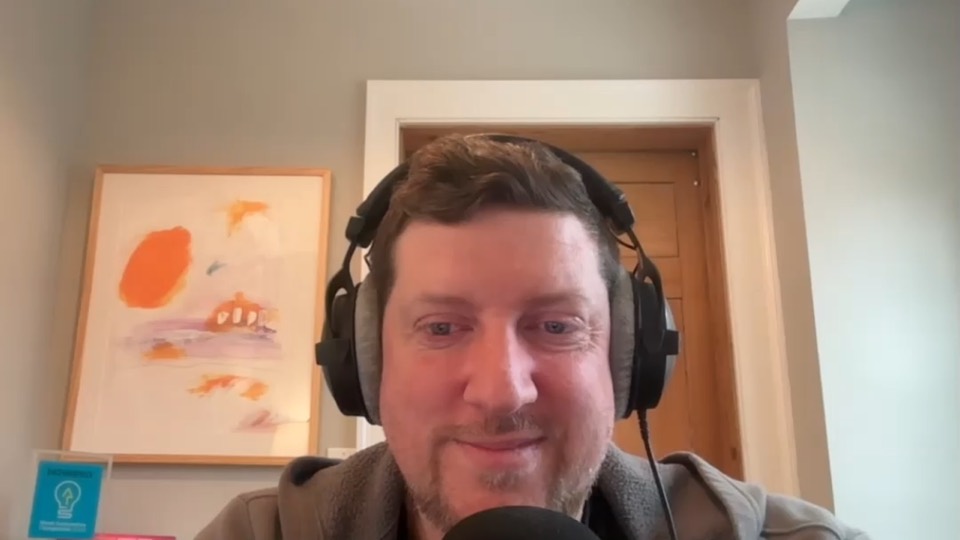
Brandon Barton, CEO at Bite, is the guest on episode 49 of the Restaurant Tech Trends podcast, hosted by Justin Foster.
 Play episode
What Brandon and Justin discuss
- Why kiosks drive ~20% higher check averages when personalization and upsells are done right (and where brands go wrong)
- Why "anti-hospitality" is the wrong framing for kiosks and how choice (cashier + kiosk) is what guests actually want
- How Bite thinks about kiosk UX differently than mobile or web, down to finger usage and screen real estate
- Why voice AI on kiosks isn’t a guest or brand priority yet
- The biggest reason kiosk pilots fail (hint: it's not the hardware)
Also in this episode
- Secret menus, Shaq at Big Chicken, why pop-ups should be banned forever, and Brandon’s unfiltered take on POS complexity and integrations.
Episode notes from the host
RESTAURANT KIOSK NINJA ALERT
On today's Restaurant Tech Trends, I sat down with Brandon Barton, CEO of Bite. Brandon's bar-none one of the most experienced voices in restaurant kiosks and in-store digital ordering. He's been in restaurant tech for 20+ years and has had a front-row seat as kiosks shifted from "nice to have" to mission-critical infrastructure across both QSR and fast casual. This conversation goes well beyond surface-level kiosk hype.
This is a must-listen for anyone building in the in-store ordering space.
Huge thanks to Brandon for the candid, thoughtful conversation!
Transcript
Full transcript (5,288 words)
Machine-generated transcript; names may be misspelled.
0:00 Hey, everyone. Welcome to Restaurant Tech Trends, where we explore restaurant technology trends with some of the industry's biggest movers and shakers in a rapid fire short interview format. This podcast is produced by Incept AI. Incept AI takes restaurant orders over the phone and in noisy drive-thrus with friendliness and precision. Learn more at Incept.ai. Today, I am joined by Brandon Barton, CEO of Bite. Brandon has been involved in restaurant technology for 20 years now. He's a self-proclaimed elder statesman in the space. Bite has been one of the most visible players in restaurant kiosks as well over the last several years, working with brands across QSR and fast casual as operators rethink labor, throughput, and the role of in-store digital ordering. And as kiosks move from being a nice to have to a mission critical infrastructure, the questions in the industry are changing around ROI, menu strategy, guest behavior, and how kiosks fit alongside things like voice AI, mobile, and the drive through. Brandon has had a front row seat to that evolution. And today we're going to dig into what's working with kiosks and the future of this channel. Brandon, welcome to the show. Justin, thanks so much for having me. A pleasure to be here.
1:24 I'm excited to have you on. I'm looking forward to learning a bit more about Bite. And let's go ahead and start there. Sure. Can you give us the quick overview of of Bite? You know, kiosks, it's a booming space, it's competitive. What is it that really makes Bite stand out in this rapidly evolving segment of the industry? Yeah, Bite, you know, when I started at Bite, and I say I started at because I did join the two founders, the thing that impressed me most about what we were doing was kiosks were just starting out. McDonald's and Shake Shack were both using kiosks and they had both built their own. So did Panera, built their own as well. And what Stas and Jeff and I realized was everybody else in the middle between Shake Shack at that time, which had 100 stores, and McDonald's, which was the largest restaurant group in America, was going to need kiosks. And what impressed me about what they had built was that it already at that point, 2017, 2018 was built with AI as a basis for the product. We called it machine learning back then because nobody knew what AI was. But the personalization, the whole story of Bite was built out of the idea that we would go to fast casual restaurants and people wouldn't recognize us. I went to the same, let's just call it breakfast concept, that was in between the subway and where I worked every single day when I worked at Resi for, I don't know, probably three straight years. And only once was I recognized with a smile and like, hey, good to see you again. Okay. And so initially, one of the big parts of Bite was the fact that we had facial recognition built in. We still do. I think it's a little downplayed and the whole biometrics is actually probably coming back. But moreover, personalization, the things that I have ordered in the past and making suggestions to me was all the AI that was built into the product.
3:19 Still what differentiates us today, we feel we have the best algorithm for personalization. We make the guest feel best. This is something that's lost in the world of digital is, oh, how do I make sure they have less this and less that or more of this? How does the guest feel when they walk out of that experience? And so we are obsessed with the guest. I worked for an operator that everyone knows, Danny Meyer, who's obsessed with hospitality. We put that into the product. And so between the personalization through the AI algorithm and the guest obsession that we have, we feel that's what differentiates our product when it comes to kiosk. And I'd also state that we are kiosk experts. This is the thing. This is 98% of our business is kiosks. And it's all we care about is this digital in-store experience, not apps, not this, not that. It's just kiosk.
4:10 Well, I want to dive into that a little bit deeper, especially on the AI and the personalization piece, because there are some people in the industry, even today that consider kiosks to be an anti-hospitality type of technology. And you talked about facial recognition and all of the depersonalization. How do you really transform this experience of interacting with a kiosk to be something that's friendly and approachable that guests like to interact with and not something that just creeps them out or makes them feel like, hey, this brand is just trying to shove a machine in front of me when I want to talk to a person? Yeah. Well, let's first start with our recommendation for most brands is to have cashiers and kiosks. Okay. Give choice. And when people have choice, you'll see close to 50% of people will choose to use the kiosk. There's a William Blair survey that comes out every quarter where that number keeps creeping up on the percentage of people who say they prefer using kiosks. The last number I saw was in the high 70s, 76% or something like that. So yet there are going to be people who are like, man, I don't want to use a kiosk today or for whatever reason. And I think it's, and this is the funny part. It's the same guest. If I'm by myself and I'm listening to a podcast, I want to walk in and use a kiosk and not talk to anybody. I'm listening to the latest episode of restaurant tech trends. Why do I need to be interrupted? Okay. But if I'm maybe with my kids and like we're deliberating what we need and we need to figure out if something has gluten in it, because there's a gluten allergy or whatever, maybe I'll go over and talk to a cashier. Both things can be true.
5:46 Let guests decide. And I know that through the time that we've, we've had bite, the trend has only been up and to the right with regards to guests wanting to use self-assisted ordering, self-assisted checkout and so forth. So, so I challenge anybody who, who thinks that the hospitality is not there. It reminds me of like these silly things where restaurateurs want to impart hospitality the way they want to impart it rather than listening to guests and understanding what they want. Okay. But even so, um, that doesn't mean that every kiosk is the same. Um, just because something's a touch screen and allows you to order doesn't mean it's a good experience. And so this is where it matters to us to optimize what is a, uh, a kiosk UX. And so, you know, I always suggest to people that kiosks are a third thing. If you were to order something online via your computer, you're going to be typing with your fingers on a keyboard. If you're ordering something online on your phone, you're using your thumbs. Well, on a kiosk, you typically are going to use your pointer finger on your strong hand, usually your right hand. And just thinking of that context alone means you have to have a UI, uh, that's, that's the specified for kiosks in a way that understands that that's, you know, you're using your pointer finger. You're using one finger. You can't be left and right side like you can with your thumbs. Um, and so just a simple example of the depth that we go to, to understand how to make this special, not to mention the software itself. And I know we'll talk about it a little bit later, but it could be fun. It's a screen. You could do whatever you want. You can have cartoons. You could have things running around. You could have circles. You could have question marks all through it. You could have emojis. Like it can be fun. So I think that's a little bit of what we go towards.
7:34 I do definitely want to make sure we spend a bit of time, uh, and a little bit talking about the future interfaces on, uh, kiosks, but there is something, of course I have to ask because we're in the voice AI space. So sometimes we get asked, Hey, what about voice AI on kiosks? And I'm just going to be honest with you. My, my opinion on this is I'm really not sold on it. I think people, when they go to the kiosk there, they are expecting to interact with this screen using their dominant hand index finger using the UI that's like specially designed for kiosks and not with their voice. I'm sure you hear about this too. Maybe you're even doing it right now. What do you think about the intersection of voice AI and kiosks? Is it really there or just like a phantom, you know, wish that some people have that, you know, maybe some time off in the future will be everywhere. Look, my opinion is close to yours. Um, there's, but, but honestly your opinion, my opinion doesn't matter. There's two opinions that do what are the brands want and what does the guests want? Okay. And so, so far I haven't seen any people picketing restaurants because they don't have voice AI on kiosks so far. I don't know if, you know, I haven't checked the news today. Okay. Um, and frankly, I haven't heard restaurant tours asking for it as well. And I haven't heard brands asking for it. Um, I here's, here's what I would, why I would deduce from the fact that that doesn't exist yet. Um, you know, one inside of restaurants is noisy, good voice AI. And you tell me you're the expert starts with good microphones, making sure you're hearing the right person. The right voice might even be as, as high as like directional microphones and things like that.
9:15 That's expensive technology. The second part, as you're also alluding to is this almost like, um, anonymity in terms of what you're ordering, right? Like the privacy of it. Um, the point of potentially ordering off a kiosk is not having to say, I would like the double, you know, the double cheeseburger with extra cheese. Um, you know, give me two sauce on the side. I'd love a barbecue sauce. I need double fries with double protein. Oh, and like, you're saying that out loud and the person next he's looking at you like, maybe you shouldn't do that. No, that the point is you can have privacy, um, in terms of what you're ordering. And so maybe that interaction is just you touching a screen rather than, um, you know, you broadcasting to the entire restaurant that that's the case. Um, either way, uh, we haven't heard had people asking for it. And so while we are ready to accept the, you know, whatever becomes the best voice AI there is, you know, incept we're ready, you know? Uh, but at the same time, we don't hear it as a, uh, as a cry from customers or brands yet. Yeah, we, we definitely don't hear it as a cry from customers. There are a few brands that have been interested in it, but I wouldn't say they're, you know, dying to get it right away or anything like that. Um, let's double click a little bit on privacy. I had a Leon from Dave's hot chicken on here a while back and he was talking about a kiosk rollout that they were running. And he gave me a very similar example to what you just shared, which is, you know, people sometimes can be embarrassed to talk to a cashier about maybe getting like some, you know, a triple whopper or something like that, or, you know, extra mayonnaise or something on a, on a sandwich. Um, is that like a real thing?
10:53 Do you see that when people order with kiosks checks actually are higher because people are less afraid to articulate maybe some of their less healthy dining options when they're just tapping on a screen? Absolutely. I'm sure that that's part of it. Our, our check average is typically 20% higher than the in-store average check. And we have the industry leading average check higher than what is going on over at Leon's and Dave's. Uh, Leon's a good buddy. So a shout out to you, buddy. Um, uh, yeah. And look, I think part of it is, uh, the freedom, uh, for people to get whatever they want without having to fear, uh, any shame or, or, you know, judgment. Um, I think also it's easier to click and buy things than it is to say things. Look, when the old line of, do you want fries with that is one moment where you get to upsell somebody? If you go to the movie theater, they say, do you want to, you know, do you want your popcorn to be an extra large? You can't say that after every item that somebody orders. And so, but the kiosk can, and the kiosk can sit there and present options to you. Like, do you want to add extra sauce? Do you want to add, um, extra cheese? Would you like to add, double your protein, all those things. Um, the kiosk can do that without having to ask and interrupt your ordering flow. And so inherently, if you are making the right suggestions to the people at the right time with things like bite lift, our algorithm, um, you will actually see a much greater increase in average check. And I think what's most important, Justin, is there is a limit to this. You don't want somebody who expected to come in and spend $25 for two to three people to spend 40. Okay. And so there is a really important barrier that you cannot cross where the value is going to start to be, um, degraded in the experience. And so we understand that wholeheartedly because we have the most brands in the country that are working with our kiosks. Okay. Well, I think this is a good segue into maybe some of the reasons why kiosk rollouts or pilots don't always go, uh, according to expectations. So you gave one example right here of excessive upselling. And I, and the reason I'm smiling at this, by the way, is because we have a similar thing in the voice AI space. There are brands that want after every item that upsell added, it's, it can sometimes be a challenge to have those discussions.
13:16 So that could be one reason, maybe too heavy upselling. Like what are some other reasons that you've seen kiosk pilots or rollouts eater out or just not meet expectations? And what do you do to try to counter that? Yeah. Look, I mean, um, I think there are two major things. Um, one, probably the most important one is that the brand doesn't adopt kiosk correctly. Okay. And so what does that actually mean? Um, if you don't have proper conversations with your team and your staff and adjust your steps of service to include kiosk as a major component of it, it will fail. Imagine if you had a restaurant and then, you know, operated it for years and then threw a drive-through in and didn't tell anybody that you were throwing a drive-through in, how would that go? Um, and so we mitigate that because we have an entire, uh, launch team that does the training. We do the manual for you. We incorporate the restaurants materials into the manual that we have or that we create for them that now incorporates kiosk as a part of steps of service. I know this because I ran restaurants and you know, the idea that you could just put a piece of technology in is not it. It's all the change management that goes along with it. So restaurants that are not willing to help with that change management with their team are going to fail at any technology, nevermind kiosks. Um, other, other than that, there are some brands that I would consider that kiosk is not a good fit. Um, we have actually found funny enough that there are some brands that, um, the, the proper guest experience or the most ideal guest experience is for people to go look at the food before they purchase it. I'll give you an example. Um, you know, uh, you know, barbecue restaurants, if you've ever been to Austin or you've ever been, you know, to, uh, man, North Carolina, you want to go over and watch them cut the meat that you're, that you're ordering.
15:15 And that's, that's a, that's a part of some fast casual QSR experiences where ordering off a screen doesn't do that, right? It's not going to show you the exact thing that you're getting. Do I want a little bit of this? Do I want a little, do I want to cut from the end or do I want to cut from the middle? So there are certain examples of this where kiosk just doesn't make sense, but, um, you know, it's something that we've found over the years and it's few, but I think that's still true. Ultimately, you know, for me and for bite, what we care most about is that we can push this industry forward. It's not making sure that every restaurant has a kiosk and if they don't fit, they don't fit. Yeah. All right. Well, again, we're going to, we're going to spend a bit more time talking about the future, but I want to dive first into, uh, one of your customers, big chicken. So I was reading a little bit about some things that you guys did with their secret menu. Can you tell us a bit about what that is? Yeah. So, you know, look, I, uh, I had some, I had a, um, a great experience, uh, living on the West coast for a little bit. And I was introduced as wonderful brand in and out and anybody who's anybody, this is back in the day. Now everybody knows about it, but if you didn't know what animal style was, you just were like, it's the original, if you know, you know, right. And, um, and it's just the coolest thing. And, and we spend so much of our time at bite thinking about how do we take things that exist in the real world and make them digital.
16:37 And that was one of those things that we came up with and said, we should be able to have a secret menu. And that menu should be, you know, whether it's a celebrity that's associated to the restaurant or it's the, um, the top instructor at the yoga class next to the juice, uh, you know, the juice concept, um, you know, what is their smoothie, right? Um, or, you know, you see this in full service where you sometimes have cocktails that are named after the regulars, um, all of this stuff, right. It could be secret. It could be there. Uh, and so we, we, uh, we approached a big chicken with this because there's no bigger celebrity to me than Shaquille O'Neal. And I mean that physically, as well as, you know, uh, you know, his persona, right. Um, and, uh, you know, they, they were so caught Josh and the team and Perry were so great. Um, said, this is a great idea. Got this together. We got Shaq, uh, you know, uh, Pepsi had actually come in and done, um, some video. So we had gifts of Shaq doing a whole bunch of things. And so we just infused Shaq into the kiosk. And one of those things was the, the, the, you know, the secret menu where the way Shaq and Lucille, uh, and his family, Lucille's his mother, um, the way they love their, their big chicken meals, right. Um, so a little extra sauce here, a Sprite here, whatever. And, um, it was just really cool to be able to do that.
17:59 We've done it a couple other times. We've launched a secret menu with Portillo's and a couple other brands as well. But, um, again, how do you take these unique things that exist in the real world and then put them into the kiosk? Uh, you know, and you do it with class and hospitality. Yeah. Uh, I, I love that story and I want to hear more about the Portillo's example too, but my brain is instantly going to, uh, POS, uh, providers with the secret menus and how you get the special items on how you manage that with the kiosks. And, you know, I think we're in maybe a bit of a similar space to you guys. We're an order ordering channel. And so we have the great fortune of working with many different, uh, point of sale providers. Are there any in particular in the industry that you want to shout out as being particularly easy to work with? And are there any where you might want to call out, they could up their game a little bit. Yeah. You know, uh, the call out should probably go to our CTO sauce, uh, who has created an incredible system that it doesn't matter if the point of sale is a great point of sale, a bad point of sale, the API is good or bad, um, that we ingest the information and can translate it into the bite backend all the same across, you know, and it's not just point of sales, right? It's, it's going on the rails of Olo or Lunchbox or Deliverect or Otter too, right? Those are all quote unquote point of sales in a way. Um, and, uh, you know, look who does what bad and good that changes by the minute. Um, it's, it's really interesting, you know, I, on my podcast, the simmer, you know, Kristen and I often talk about the POS wars that are happening right now. And, um, it's interesting to watch as, you know, brand older brands are being renewed and some of the newer upcomers are, uh, taking market share and, um, you know, it's, it's fun to, uh, be on the fly on the wall that not in that competition. Uh, but we play neutral with everybody and, um, you know, I've enjoyed, I've enjoyed a lot of the friendships and partnerships that we've made over the years with those, uh, with the POS, the online ordering providers and so forth.
20:08 Yeah. That's a very diplomatic response. And obviously it's the truth. You know what though, you know what, just, it's the truth though, because they all, they all have hair on them in some way or another. And, and, uh, it's, it's like the, their function is not to be rails for you or I, uh, you know, I, uh, it's like their function is to be the core system within the restaurant. Yeah. Yeah. For sure. Um, I am curious, what do you think about what the guys over at toast are doing? They've definitely been making a lot of inroads, I think mid market in enterprise. I've been really impressed with what I've seen over there. Yeah. I mean, I think this has been a long time coming. I mean, it was a point at which there was a layoff in 20 or 21 where a bunch of the enterprise team went away and then they've come back. Uh, I think it's smart that they've been flexible. Uh, I would say flexible, not, you know, not, not agnostic, but flexible on the idea of payment. Um, when they've come up market, um, look, this is part of, this is one of those battles. You got toast, you got NCR, you got Q, you got par, right? They're all fighting. You got square who's trying to come back into the enterprise. Um, they're all trying to fight for the same customers. And, um, you know, uh, you know, some of the, some of the players have been taken off the board, like a revel, right? Like, uh, uh, they've gone away. So created a void this, uh, you know, it's interesting. Um, uh, I appreciate, I appreciate Kelly and the team. Uh, Oh, revels not gone away.
21:38 Well, sky tab. Well, there's your form. And you could say, you know, you could make the argument people go to shift for them and then they go away, but no, the, no, the product itself is they're no longer supporting the, you know, I don't know if this breaking news, but they're not, they're not trying to, uh, in continue to have people use revel. They're trying to move people over to shift for, to, to sky tab. Yeah. So revel as a brand is gone. Yeah. For sure. All right. Well, um, let's get off the subject of POS is we could, we could talk about this for an hour or if you've felt fallen asleep during that segment, wake up again.
22:17 Well, we're going to talk about the future of kiosks, right? So I sort of, uh, lumped in the voice AI thing a little bit earlier on, you were talking about different types of things you can do with kiosk interfaces. Where do you see this space going say five years, 10 years from now, are kiosks going to look the same? Are people going to be interacting with like robots? Are there going to be like, you know, avatars that are on the kiosks? Um, where do you see it going? Yeah. Um, I'll start with saying something I hope is, uh, not where it goes. Uh, I've seen kiosks that have been put out there where you're talking to somebody who's probably in, uh, uh, you know, a country where you can pay them a lot less money. And all of a sudden you have, you know, American work in this case, or, or, you know, that's taken over by somebody in a different country and probably underpaid and, you know, not familiar with the brand and that experience. I hope that's not what it, I hope this isn't just a, a FaceTime call with a cashier that's a thousand, you know, several thousand miles away. Um, I do think kiosks are going to be a persistent part of the industry the same way that drive-through is. Um, I don't, I don't believe that guests will ever 100% order ahead and which invalidates the argument that, uh, that, Oh, we're all just going to do this by the phone. I love when people tell me they have a kiosk in their pocket and I'm like, like, do you have any spontaneity in your life? Have you ever walked past a restaurant and wanted to go into it? Um, because I have, and, and then you have a choice once you're in this restaurant that you've never been to and you didn't order ahead, you have a choice. Do you need, you want to talk to somebody about it or do you not? And I think there are so many different ways that you can impart sometimes better hospitality via a kiosk, uh, be more informative via a kiosk than you can with somebody. And I want people to have both choices. Nobody forces you. Uh, there are some concepts that are drive-through only fine, but for the most part, the industry doesn't force you when you drive into the parking lot, you have to go through the drive-through. That's the only way we're going to serve you. No, it's an option or you can park and go inside or you can order ahead or you can order up a kiosk. It's just another channel.
24:33 Yeah. I totally agree with your perspective, by the way, a hundred percent. And as you were saying that I was thinking to, uh, a post that's some neat over at park made the other day, not about kiosks, but about voice AI being everywhere. And like the drive-through is going to go away. It's just going to be a pickup window. And it's like, no, it's convenient. People want to order right when they're there. People are spontaneous. Plus our industry, let's be honest, it just moves a little bit slow. So maybe sometime way off in the future, but I don't see that for drive-through. I definitely don't see that for kiosk. Yeah. Yeah. All right. Well, we are about out of time here, Brandon. So before we go, we do a little thing here on this podcast called rapid fire questions. So for everyone that is still watching or listening to Brandon and I chat right now, Brandon has no idea what these questions are that I'm about to ask him. I have not shared them in advance. The rules of engagement, Brandon are try to answer each one of these questions with one word. If you can one sentence, if you can't, are you ready? Okay, sure.
25:38 Don't worry. I'm not going to trip you up. One word, one word. If you can one sentence, if you can't, your favorite guilty fast food pleasure.
25:49 Big check.
25:52 What is one feature operators ask for with kiosks that sounds good, but rarely works? Upsell.
26:02 Oh, interesting. That's very interesting. I wasn't expecting that one. What is the most underestimated deployment challenge?
26:12 People.
26:15 Okay.
26:17 Thing about kiosks, hardware innovation or software innovation? Where's the real moat? Software.
26:26 Right. And last, well, we'll do two more. What is the biggest misconception operators still have about kiosks? I'll do a sentence that guests don't want them. Every guest wants a kiosk option.
26:50 Right. And last one. What is one thing that you would ban from kiosk UI design forever if you could? Pop-ups. Pop-ups. Well, gosh, yeah, that is a good one. Who likes pop-ups? Well, that's, so that's the, when, when I said upsell, that's what I mean is they all want something that pops up to upsell. Pop-up. And it's just like internet from the freaking 90s. No. Okay. So let's real quick before we, before we wrap, what is the right way to do it? So you, you add, let's say a burger to your cart and you want to do extra meat or you want to add cheese or something. So straightforward. Just give people that you're talking, you're never talking about a 3.5 inch screen from the phone. You're talking about a 15, 22 inch screen. There's plenty of space to give people options. Give it to them. Give it to them on the sidebar. Give it to them on the bottom. Give them options. You don't need to stop them in their tracks and make them close something to get to the next screen.
27:53 Got it. Makes sense. Well, Brandon, I want to thank you for joining me here today. Really appreciate your time. This was enlightening. Thanks, man. But this is the longest we've ever sat down and chatted as well. Yeah, yeah. So everyone, Brandon Barton, CEO of Byte. Thanks, Brandon. Cheers.