Episode 48 · December 30, 2025
Danny Klein
VP of Editorial · QSR & FSR
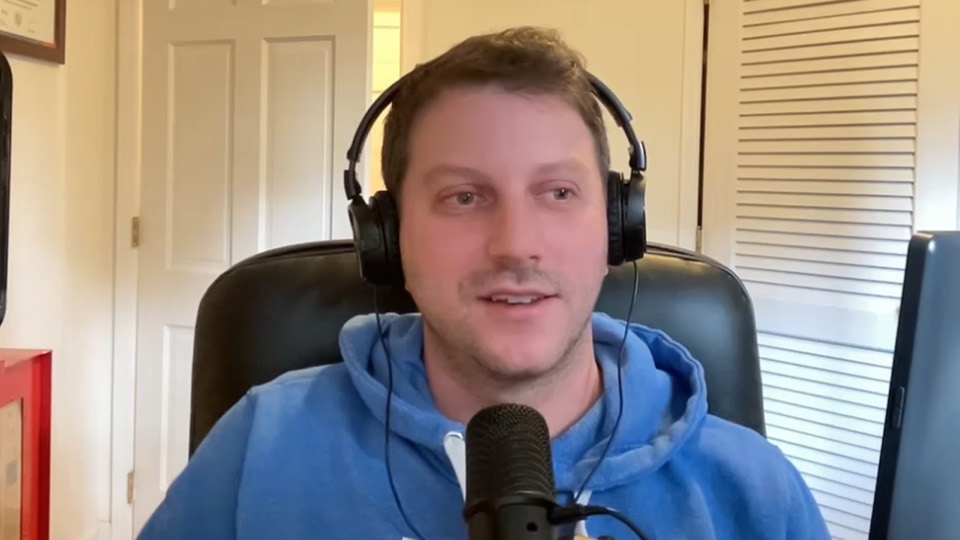
Danny Klein, VP of Editorial at QSR & FSR, Producer at QSR Evolution Conference, Originator at Women in Restaurant Leadership, is the guest on episode 48 of the Restaurant Tech Trends podcast, hosted by Justin Foster.
 Play episode
What Danny and Justin discuss
- Why Danny believes the #1 threat to QSR over the next 5 years is… QSR itself (and how brands get in their own way)
- The real story behind Women in Restaurant Leadership (WiRL), how it went from an "accidental" networking event to a 500-person conference and full media platform
- What’s changing at QSR Evolution 2026: new venue, upgraded production, and a keynote lineup that includes CEOs from White Castle, Shake Shack, Texas Roadhouse, and more
- Danny’s candid take on AI in restaurants: where it’s delivering ROI, where the hype got ahead of reality, and why small, practical wins matter more than moonshots
Also in this episode
- Danny shares his unfiltered view on the explosion of restaurant podcasts and the simple reason voice AI on the phone may be one of the most underrated opportunities in restaurants
Episode notes from the host
RESTAURANT INDUSTRY HEAVYWEIGHT ALERT
Today on Restaurant Tech Trends, I sat down with Danny Klein, VP of Editorial at QSR & FSR Magazine and producer of the QSR Evolution Conference - among his many pursuits.
If you pay attention to where this industry is headed, Danny is clearly at the tip of the spear of the conversation. Don't miss this one.
Huge thanks to Danny for the thoughtful, honest conversation and for everything he does to elevate this industry. If you care about QSR, the media in this industry, or where restaurant tech is headed, this one’s worth your time.
Transcript
Full transcript (4,862 words)
Machine-generated transcript; names may be misspelled.
0:00 Hey everyone, welcome to Restaurant Tech Trends where we explore restaurant technology trends with some of the industry's biggest movers and shakers in a rapid fire short interview format. This podcast is produced by Incept AI. Incept AI takes restaurant orders over the phone and in noisy drive-thrus with friendliness and precision. Learn more at Incept.ai. My guest today is truly a man who does not need any introduction. I think pretty much most people in the industry are going to be a little bit better. I'm going to let you know who he is already, Danny Klein, VP of Editorial and QSR & FSR and producer of the QSR Evolution Conference. Danny oversees influential programs like Women in Restaurant Leadership, drives editorial insight on fast food and fast casual trends, and builds community in our industry that helps shape the future of restaurants. Today, we're going to dig into what Danny's up to these days and what's next for QSR brands in 2026 and Beyond. Danny, welcome to the show. Yeah, thank you for having me. I have to record that introduction for myself. I appreciate the kind words. Well, I know I'm missing about 30 things in that introduction, but we got to keep them kind of short. We've only got 15 minutes here. First, before we really dig in, I want to know what I think a lot of people wonder about you, which is how do you do everything that you do? The writing, the research, the thought leadership, putting together a massive conference, women in restaurant leadership. I see you everywhere all the time. Do you ever sleep? And do you have any tips for the rest of us?
1:42 Man, yeah, it's a lot of stuff. I think in this industry, you know, I often mention this, but people who are in it and get involved, they're always doing a million different things. And you have to love hospitality and sort of the chaotic energy. And I think I'm one of those people. So I kind of feed off the multi-faceted world of trying to produce all these pieces of content. But I will say, I mean, this is probably a little bit lame and cliche, but I am at a point in my career where this happened maybe two years ago, where I had a staff full of people who I have hired all of them. And that is the first time I always kind of was in a situation where I was either working my way up or I was inheriting folks and whatever. And having that group of people who all came in and now are working really well together, that's really made what you said possible because we all spread so much. Like a lot of what you see me post on LinkedIn, I mean, I didn't write every single one of those articles. A lot of them were written by my colleagues, Ben or Sam or Callie or Satine. And then when it comes to conferences, you know, we're out there spreading those titles and, you know, things in moderation and tasks and all that.
2:58 So it really is a group effort. And for us, I think we're unique in the way that the five of us really like one another. We had a team bonding experience in Disney World a couple of years ago, and that was one of those things that I think was pretty amazing, the fact that we would even want to do that and spend time. So we understand the mission and we all care about this industry. And that's really why I'm able to seem like I'm in a bunch of places at one time, just because I'm really kind of riding the coattails of their work. And they understand that. So, you know, all the shout out to them as well as me trying to balance my personal life of having small children and doing all this at the same time. So, yeah, it's always fun and that makes it worth doing. Well, I love the humility and I love the gratitude and the shout outs. Definitely hallmarks of hospitality, right? You certainly appear to be everywhere, though. That is definitely the view from the outside. Let's start off and let's talk a bit about women in restaurant leadership. Right now, the year is wrapping. It's December 2025 as we're recording this. I'd love to learn about the progress that you're proudest of so far with this organization and how you see the initiative evolving next year.
4:21 It also would be great if you could maybe just share a quick overview of what it is for those out there who may be watching or listening that might not know about it. Yeah, so I'll be cognizant of the fact that we're supposed to do this in 15 minutes because I could talk about this for a while. So this platform is – I mean, I guess I'm trying to explain it quickly. It came to life at our other conference, our QSR Evolution event, in the opening year when we were going to do a panel on just the subject of women in restaurant leadership. And in my outreach efforts, I just got way too much interest for a panel. And it was one of those things where you didn't really want to be like, no, you can't speak on this. So I was like, okay, I'm going to take this panel. I'm going to turn it into a roundtable of 25 people. That 25 people kept getting larger. And then suddenly I had a networking event for 55 people, which ended up being 155 people. And then a lot of complaints of like, hey, I couldn't bring my friend. And, you know, why are you making this very inclusive concept, you know, so not inclusive? And I'm like, well, I literally just don't have room in the room that I reserved. So it wasn't like I'm trying to kick people out. But like I wasn't planning for a giant women in restaurant leadership networking hour.
5:36 But, you know, with that said, obviously, you know, there was a lot of learnings from that experience that came, you know, both from what we did correctly, which was just create a concept for this. And then what we did incorrectly, which was not have any content and not have enough space. As a lot of women in the industry who attended the cocktail hour let me know. And so later on, we were planning kind of our next year initiatives. This was something I brought up to our CEO at the time that I said, you know, this seems to have legs to me. I think we can make it larger. I don't really know what that looks like, but I would like to try. And so I really tapped a lot of the women who had told me what we did incorrectly. I like to say in a very positive manner that they bullied this thing into existence. And, you know, brought them onto a board for what we called women in restaurant leadership. And just a quick backstory there. I had tried to come up with something more creative, just really couldn't, and then realized that I probably shouldn't if I can't think of anything better. And then it became what we call Whirl or what other people started to call Whirl, which ended up being great because it has all these puns like Whirl Power and things that it's turned out to seem like a really great genius name.
6:53 When it was really just me not having the creative ability to come up with anything else. And so anyway, that turned into a conference that we launched in five months. And 300 people in year one, year two, closer to 500 people. And it just keeps growing. The third version of it is coming up here in February. I don't know how many people are going to come just yet. But that said, it has spanned into a lot of different tentacles beyond the conference. I was able to hire Satine, who I'm sure anyone who's familiar with myself on LinkedIn has come across her as well. She's done an amazing job just, you know, curating that network and listening and responding. So she's in charge of Whirl at this point. I am just kind of helping her, which is a much more natural and better way to go about it. And she has really been able to spend her whole time on it versus it kind of being something I was trying to do in addition to other stuff. So that said, it's a media platform now. It's a separate vertical in our business. It has its own webinar series. It has virtual hangouts. It has content. It has a monthly column in each one of our magazines. We are going to have entire issues dedicated to it, which we did for the first time last year.
8:15 And so, yeah, it's really become one of those things that I'm just trying to figure out how to harness the interest, which is a great place to be because normally it's trying to create a lot of it. And it's just been – I don't know where it's going to go. And that's an exciting thing. But I can tell you right now where it's going in 2026 is to Charleston, South Carolina in February. So if you want to come, please let me know. Your registration is still going. Where can people go if they want to learn more?
8:47 Yeah. So, I mean, if you follow myself on LinkedIn or Satine or our Women in Restaurant Leadership page, which has went past 10,000 followers in a really fast period of time, those are all places you'll see this content constantly. But womenleadrestaurants.com is where the actual conference itself exists in terms of registering. But, again, if you're just on social media and you see the two of us or that page, you will see us talk about it quite often and see links to register and all that kind of fun stuff. I love the origin story. And I love seeing all the growth happen and all of the success. It's awesome. And one other thing, Danny, I'm also a huge fan of very simple names. I couldn't think of a name for this podcast. I'm like, it's restaurant technology. Let's just call it like restaurant tech trends. You know? My guinea pig when I was a kid was named Guinea. I had a bunny. Its name was Bunny. Just not that great. Yeah, it really works. I mean, a lot of people have created swag and merch from it. You know, last year when people came to the conference, we had a world power like rubber bracelet. That has been like a hashtag that someone on our board created, and she creates like jewelry with world power on it. So it's all these things that they're like, wow, that was a genius acronym.
10:02 And I'm like, I just called it Women in Restaurant Leadership because I just did not know what else to say. And that was exactly what it was. And, yeah, it's been amazing. Well, I think the origin of it was at the QSR Evolution Conference, right? That's where the initial panel, and then you had the networking happen. Right. That was the origin, correct? Correct. So that was the networking reception is where it began. Very cool. Well, let's talk a little bit more about the upcoming QSR Evolution for next year. Any big headliners you want to announce? Are there any big changes that you're planning on for next year? Tease us something. Yeah, so I can announce some things that I'm working on. There are going to be a lot of changes. I'm just going to throw that at you because we have a lot of new staff. We have a new VP of events who has really elevated a lot of what we're doing logistically from having producers to AV to the space itself. We're moving to a different hotel in Atlanta, the Hyatt Regency, that it's going to look entirely different. Instead of having tables, we're going to have booths and tables and all sorts of kind of activations. The first couple of years, I guess three years, there's been definitely a sense of it was pretty bootstrapped.
11:21 We were figuring it out. And a lot of that was awesome. But you'll see an elevation in terms of like our just structure this year that's going to be very unique. But in terms of content, which is where I'm living at this point, I am now handing a lot of those other things to her and to other people who are more qualified, which I think is good for everyone. I will say, you know, on the general session side, this is the earliest in the time I've been doing this that I actually have the keynote lineup set.
11:54 You know, I haven't really announced a lot of this because I'm in the process of, you know, normally I don't really do it until I have the ability to also register because I don't want to just like blow all the good news out the door. And then you can't do anything with it. But from a verbal standpoint, happy to sort of say that, you know, well, we're going to have if you've come to the last two years, you've seen like we've done this sort of roundtable style opening keynote, which was really born of the idea that it's not that easy to have like one big headliner. Right. Because if you go for like one person every year, you're like, well, how do I keep getting a person that's bigger than the other person? Right. Right. Like that's not really how you want to operate. So for me, I was like, well, I'll just put a lot of people up there. And then you have like this. So like we're hitting you in the face with like a hammer of insight. Right. So year two, we had the RBI panel, which was the four presidents. Last year, we did one with Yum Brands, which was on kind of the marketing side. And so this year we're going to do something with Inspire, although I'm not going to really say who it is yet, but a similar setup of like having multiple people. And then we're also going to have the CEO of White Castle that afternoon.
13:10 We're going to have the CEO of Shake Shack the following morning. And then we're probably going to have the CEO of Texas Roadhouse at the end. So those are things that I'm just going to caveat, always subject to change to some extent, because that's how this world operates. But I'm relatively confident and excited about all those folks coming and speaking. So, again, way more to come on the details of those things. But I'll give you a little bit of a preview I haven't shared before of who's going to be taking that big stage.
13:41 Well, thanks for dropping a few. I appreciate that. It's always great doing this event in Atlanta, too, because there's so much talent you can pull from in that town, in this industry. Let's talk a little bit more about content. You said that's where you're living right now. I'm curious, as a small podcaster, what do you think about the proliferation of all these industry restaurant podcasts? I mean, there's probably like 50 of them now, or maybe there's even 100 there. They seem to be like everywhere. It seems like everyone's got a podcast. And you're like a legit, real media person. Like, how do you perceive like all these little podcasts? How does that impact the media landscape for you guys?
14:21 You know, I don't really. I mean, first, I don't find it to be like an imperative or negative at all. The more, the better, especially in the podcasting space. I, you know, it's funny, like I've been on a lot of these that you mentioned, including this one now, thankfully. You know, and from a production standpoint, it's been interesting because they do it a lot better than I do. And so like I, I actually thought about that about four or five months ago because I got this review from someone that was like, hey, you sound like a guy in his basement. This seems surprising for a B2B publication. And I was like, well, they're not like super far off. I'm a guy in his closet. But I didn't have like really good equipment because I guess unlike maybe some of the other podcasts out there, it was definitely a side hustle for me in terms of content. It was like seventh down the ladder. So I really wasn't. And I actually called it uncut in the, at the very start when I decided to do it because I wanted to kind of give this signal that I wasn't really going to curate it very tightly and then also not edit it very much. So my predecessor was, was a really prolific podcaster.
15:36 I was doing an amazing job and it took me, it took me a couple months to decide if I even wanted to get back in there. Um, but eventually I did decide I should do that because I was getting a lot of, a lot of pitches from brands about being on the podcast. And then I'd, I'd reply back like, oh, that podcast actually doesn't exist anymore now that he's not here. And at some point that started to feel a little weird. So I was like, okay, I'll just go launch this one. I'm going to call it uncut. I'm going to let people know it's a little bit casual like myself. I'm not going to send them questions. I'm not going to edit it. Who knows what we're going to talk about. And that's been kind of the spirit of it. I've had a lot of crazy conversations on there. I mean, talked about aliens and, you know, who knows what, I mean, I, I, so, but to your point, like, were I to, you know, really, and maybe this will change in time, but like, other than I got better equipment recently, um, you know, trying to differentiate in that field. Yeah. You know, it's probably something to think about at some point, but, but at the same token, I do think our industry is compared to some others out there, pretty collaborative. And I, I think that, you know, we do view a lot of the conversations that are happening across the board as a little bit of a, a tide lifter.
16:55 So I, I think it's cool that everyone has one. Do I listen to all of them? No, we don't have time. Um, I don't even listen to mine. Um, we have three ourselves as a media organization right now on the QSR side. And then we also have a pizza one and a C store one. So we have five podcasts just internally in our food service division. So, so yeah, I, I, you and I were talking a little offline about this. I really just like the conversations and I like getting to know people who maybe I wouldn't have interviewed before. So that, that to me is the point of it. I I've really gotten to have a lot of conversations that would not have been the type of thing I would have done if I was trying to write an article. So I've really enjoyed that. I'm 200 and something episodes in. So that's a lot of people to have met, you know, and, um, that's what I take from it. Right. Well, I aspire to be you. I think I'm 50. And in fact, I think this one might be number 50. So yeah, you'll get there. It'll happen. Gonna take a, gonna take a while. And I love the idea, by the way, of not editing. That's a, that's a fantastic idea. I may have to think about that. Yeah. It doesn't always, doesn't always happen that way. Um, but I, I just like setting a certain expectation of like, I'm not going to go in there and edit out every single little like silence or, um, or whatever.
18:18 Like if you say something horrible that you want me to go cut, I'll do it. But otherwise it's uncut. All right. Well, this podcast is called restaurant tech trends. So we got to talk a little bit about technology in the restaurant space. I'm curious to learn for QSR specifically. What technologies do you personally see as most transformative or disruptive? AI, robotics, edge computing, something else entirely. Yeah. What is it? Well, I'm writing a, I'm at that point of the year. I'm writing a lot of these types of stories. Um, and you know, I don't know that I have an answer for that exactly because it's just so nuanced and expansive. I do think that AI is the way that I've seen it in the last three or four years is it kind of went from like in the early days, it was this really big, crazy idea. Um, and it was encompassing a lot of stuff that we were sitting there going like, is that going to happen? And it kind of didn't. And now we're at the point where, you know, I was at the restaurant association shows past year. It was a finally seeing versions of it in action. And so now it's a lot of people telling me like how they're using it. And that has definitely changed the conversation of where we're going. And when it comes to the kind of phrasing of like agentic and generative and so on and so forth, like I will fully admit, I don't understand what we're talking about.
19:43 You know, I'm just here to be the kind of mouthpiece and regurgitate their insight. Like if you go and you look at my trend pieces, I'm really just unfiltering the stuff that they're saying. But what I, what I think most of us understand is that it's being used now to become more efficient. You know, it's not replacing labor. It's just making labor more useful in the places that it has the better ROI. And that's the best way I would probably describe it. You know, like I, I had this, um, I know this is kind of in the space that you're in, but someone the other day was giving me this prediction about just using voice AI on the telephone. And, you know, how we don't talk about that enough because the type of person who's calling the restaurant to place an order, the conversion process is, is so much different than, you know, if we're talking about on the website, because I mean, they're absolutely going to, they want to order, right? Like as long as you can make it easier for them to order, that is a customer that's probably going to spend money. And so why aren't more restaurants spending time thinking about this kind of concept? Because we all know that we either don't answer the phone because we're busy or we answer the phone when we're busy and we're rude and we miss here and all these types of things. So in all the worlds in the AI is happening, you know, this person I was talking to was just like, well, here's what we do on the phone, you know, and like, why don't you pay attention to the consumer that, you know, is going to actually buy something.
21:08 And here's this very small little thing that can make this huge difference. So that's a lot of kind of in the scope of like what I'm hearing now is this real application version of technology versus the sort of what I would might call like the chaos paralysis of the last few years when we were all racing to get a hundred solutions for a hundred different things because the consumer was no longer walking in the door. So you have so many different channels now and creating that omni-channel vision actually comes down to figuring out where you want to invest in the places that are actually going to matter. I think on the AI point in particular, particularly any AI that touches a guest interaction directly, this is one of the central challenges that the industry faces is having AI enhance hospitality rather than getting in the way of the guest. I still don't think the technology is all the way there. It's definitely evolved a lot in the last 12 to 24 months and even really just in the last few months. But that's one of the things that I'm most interested in in following that over, you know, for our business and then just industry-wide in 2026. All right. Well, we're 22 minutes into our 15-minute podcast here.
22:24 So it's time to move to our rapid fire question. So for everyone that is listening or watching, the rules, Danny, for the rapid fires are I'm going to fire off some questions. Danny has no idea what these questions are. Try to answer with one word if you can, one sentence if you can't. Okay. Are you ready? I'm ready.
22:44 All right. What is the number one threat to QSRs in the next five years? Labor, regulation, tech disruption, something else? I would say themselves.
23:01 I think this is what happens in our industry really quickly. I know it's one word, but the cost of entry as a business relative to other things is actually pretty low. And we often end – that's why the traffic is generally such a struggle is that there's just too much inventory for the amount of occasions. That's been going on even before inflation. So that's often what happens is I think there are too many people in this world who think they could run a restaurant and they can't.
23:30 So I think a lot of times QSR gets in its own way. It gets over-transactionalized, if that's a word. You got to still just pay attention. If you look at every brand that's successful, they usually say the same kind of things. It's like back to basics or not losing sight of who they are or not drifting from their core. And it's like you look at Texas Roadhouse and Chick-fil-A and some of these successful brands in McDonald's. It's like they innovate, but they don't become unrecognizable. So we have too many stories in this restaurant world, not just QSR, of like people saying, I got to get back to how we used to be. And as my friend Paul, who's the CEO of Bennigan's, always says, it's like, why'd you stop?
24:15 So anyway, that's my longer-than-one-word answer to that question. Well, I'll remember the one word, which is themselves. Yes. Next one, what is most important in a drive-thru, speed or accuracy? Accuracy, I would say.
24:33 Right.
24:34 For the upcoming QSR Evolution Conference, what's one panel you want to see that doesn't exist yet?
24:42 Ugh. Well, they all exist. I have already finished that. So I am trying to make something happen at the end of it that I can't talk about yet, that I want that to happen. And if that happens, it's going to change so many things. So that's all I'm going to say. All right. What's your favorite QSR meal that you're still proud to eat when you travel?
25:13 Oh, man. Well, it's a tough one. I like, you know, I do go to CAVA quite often.
25:21 There are not a lot of QSRs by where I live. It's this whole uninteresting story about drive-thrus not being allowed here. But CAVA, of like the ones in my vicinity from like a how I feel about myself perspective, is probably the best, I would say. But I go to all of them. It's tough. You have to try to be a little bit fair in that answer, too. Yeah, yeah. I mean, I have, well, it's easier for me to answer because I have literally four. I have like Chipotle, CAVA, Chopped, and that's actually kind of it. So I go to all of those. And I just, I would say I probably go to CAVA the most of those three. But yeah, I don't know. Shout out to CAVA. Yeah. All right. I want to thank you very much for being generous with your time. You ran over by a little bit. Everyone, Danny Klein, VP of Editorial of QSR and FSR, producer of the QSR Evolution Conference. Thanks, Danny. Thank you for having me.