Episode 50 · January 20, 2026
Anthony Presley
CTO · CBS NorthStar
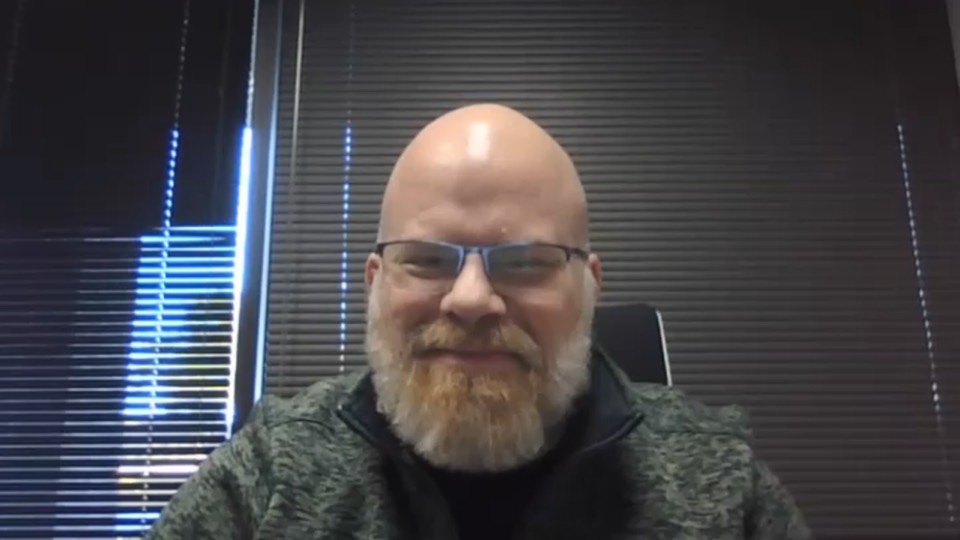
Anthony Presley, CTO at CBS NorthStar, Co-Founder at TimeForge, is the guest on episode 50 of the Restaurant Tech Trends podcast, hosted by Justin Foster.
 Play episode
What Anthony and Justin discuss
- What Kitchen AI really means in practice: predictive cook times, real-time promise accuracy, and why static Excel-based prep times are still killing guest experience
- How NorthStar is using predictive kitchen timing to prevent Friday night meltdowns when dine-in, online, and delivery all collide
- Anthony’s candid take on AI scheduling: why black-box schedules fail, and why AI should nudge, suggest, and pre-populate instead of fully replacing managers
Episode notes from the host
NEW RESTAURANT TECH TRENDS EPISODE DROP
Today on Restaurant Tech Trends, I sat down with Anthony Presley, CTO at CBS NorthStar and Co-Founder of TimeForge Labor.
Anthony has been building restaurant tech for decades and it shows. This conversation cuts straight through the noise on POS, kitchen AI, labor, and why “all-in-one” isn’t always the answer.
• The most common (and costly) mistakes multi-concept operators make when selecting a POS
• Where automation belongs in restaurants and where humans will always win
Transcript
Full transcript (4,036 words)
Machine-generated transcript; names may be misspelled.
0:00 Hey everyone, welcome to Restaurant Tech Trends where we explore restaurant technology trends with some of the industry's biggest movers and shakers in a rapid fire short interview format. This podcast is produced by Incept AI. Incept AI takes restaurant orders over the phone and in noisy drive-thrus with friendliness and precision. Learn more at Incept AI. Now to today's guest. I'm joined by the one, the only Anthony Presley. Anthony Presley, Chief Technology Officer of CBS NorthStar, the cloud POS and restaurant tech platform behind hundreds of restaurant brands and kitchen footprints across the US. Anthony also co-founded workforce management firm TimeForge, and now he leads product and engineering at NorthStar. Under his watch, the company has rolled out innovations like KitchenAI, which we'll talk about in just a little bit. It's a predictive kitchen timing engine. Plus, he's launched new partnerships for digital digital signage, voice AI, voice AI, and omni-channel ordering. We'll talk about how NorthStar builds tech that actually moves the needle for operators and not just shiny new features. Anthony, welcome to the show. Anthony Presley, thanks for having me. Excited to be here.
1:29 Thanks for having me.
2:29 Integrations to third-party delivery and online ordering. And also, we're going to be the best at calculating your taxes on those transactions and managing your kitchens. And it's a huge technology landscape to try and own and be the best at all of it. And so what are we doing differently? Well, we know, or we believe we know, that every operator that we run into knows this thing that makes their brand best, right? Whatever the thing is, it's how we greet the tables. It's how we bring the food out. It's how we greet the guests. They've got their things. And then the technology is really, should be a way to amplify that experience. And if you're an all-in-one system that doesn't have really any major extendability, then you really force the operator to operate the way your technology works rather than the other way. Which is a long way to say we're a fan of best-of-breed solutions. And so we believe that the POS should be the best possible thing in your restaurant that has probably hundreds of configuration options, because that's what we have. Because we want to be able to operate the way your business operates, not changing the business to operate the way that our software works. Which again, is a lot easier to do when you take a best of breed solution approach. And so that allows our tools, our software that we produce to operate the way and be configured in a way that whoever the restaurant brand is can then make their business go around it. Again, rather, we don't want to wrap the business around the tech. We want to go the other way. Does that make sense? It does. And I mean, this is obviously a huge point of discussion in the industry right now is you do see a lot of these POS providers that are moving more toward building that massive integrated solution. But I think especially as you look more at like mid-market and you go enterprise, more brands are really looking for that best of breed because it turns out you can build a lot of stuff, but you can't build a lot of stuff and be the best at all of that stuff.
4:46 So I like your approach. It makes a lot of sense to me. I'd like to learn a little bit more about something we talked about in the intro, which is kitchen AI. What exactly is kitchen AI? Why do operators need it? And where does it still need to improve? Yeah. So kitchen AI, it came from a discussion with three of our largest customers. We're talking about hundreds or thousands of locations. And an interesting thing happened at the end of COVID. And at the end of COVID, as some of these brands, I think a very large format table service brands, where you might order online on a Friday night, you're going to, we did that during COVID, right? These brands pivoted. And so now you go into one of these brands and you go, Hey, you order online and you say, Hey, I'd like my food. And so that now comes into the kitchen. But in the meantime, Justin, you've gone in, you've taken your spouse, you're going in on a Friday night, you've got a movie date night, you're going to go hang out. And they were not expecting 25% lift on a Friday night in the kitchen because of these online orders. So you thought you were going to be there for an hour. And really, they start fulfilling orders from these online orders from third party delivery. And now they really don't know, A, how to prioritize those items. B, when to turn off the online because maybe they get overwhelmed. So they turn it off, they forget to turn it back on. In the meantime, you're sitting there, you're frustrated, you've missed the start of your movie. And so, you know, generally, nobody had a great experience. And so the whole idea behind kitchen AI is how do we streamline that?
6:31 Because restaurants are really real-time manufacturers, right? They're making food in real time with very small margin of error. And so we want to go, hey, how do these orders come in from all these various places and get organized in a way that the promised times can be delivered? And to do that, we have to predict what's going on in the kitchen. We have to know how long food takes. We need to know how long something is going to sit at a particular make station.
7:01 And so all of those things turn into this predictive model, an AI model, if you will. And we feed all of this data in. And now I can say, hey, is the kitchen ahead or behind? How long will this ticket take? If I change the ticket from a medium rare steak to a well-done steak, how much longer is that going to take? Is the pasta station a problem? And then we can visualize all of that in a user interface so that they can streamline operations. They can deal with the fact that some orders are behind or some orders are ahead. And we can alert customers to tell them, hey, we know that that online ordering platform told you it'd be ready in 45 minutes, but it's really going to be 53 minutes. And those seven minutes or eight minutes actually matter because my food's going to be cold and I'm going to have a bad experience. That's all kitchen AI. One big algorithm with some communication preferences.
7:57 You know, it just, it never ceases to amaze me how there are some huge restaurant chains, and I'm not going to name who any of them are, that are still delivering promise times based on like an Excel spreadsheet. And it just gets managed like a static promise time, regardless of how busy the kitchen is, regardless of like how many people are working the make line, regardless of where orders are coming in from. It's just, it's pretty shocking. So anyway, I know you know this, but I still find it unbelievable. There are some very large chains that operate that way even today. Go look at the publicly traded companies. You'll grab a list of them. I guarantee you that more than 80% of them. That's how they go. We can do 10 orders a minute or 10 orders every 15 minutes online. And each order is going to take us, you know, whatever, whatever the wind blows, it's going to take us 20 minutes to fulfill. And then they type that in and to a large degree, it's not their fault because the online ordering system, that's all they can handle. They're, they're not, they're not necessarily doing all kinds of dynamic timing. No, they're not. All right. Well, let's shift gears and talk about something else. So you also co-founded Time Forge. So you've got this background in labor management, and I'd like to understand a bit from your perspective, how you see point of sale in labor management and front of house culture coming together next year or in the years. Yeah.
9:29 We'll just be more general. Yeah. Yeah. Labor management, you know, it's, it's one of these things in the industry that, you know, is an evergreen topic, right? I mean, it's, you never can find enough people when you do find enough people, then you've got this other problem where you want to, how do you keep the best people, right? How do you weed out some of the people maybe you don't want, they're not the right culture fit or whatever. So it's kind of an, it's an interesting topic that just never ends. When you solve on one end, it becomes another problem on the other end, right? You know, now we're, there's a lot of discussion with the current Gen Z, Gen A in the, in the market. How do you gamify work? Like, how do you, you know, what does that look like? Like I did my job, I sat on my tables, where's my $5 gift card to Starbucks? Like, you know, so there's some very interesting motions in the industry, you know, Amazon and, and Uber have created a whole, a whole generation of workers that are expecting to get paid when they get done with their shift. Like they're not waiting for payday. They want to be paid before they get their car, right? So there's some, yeah, same day pay, earned wage access, all, all of these things have come about in the last five or six years and continue to be difficult in a lot of ways to manage because, because they take time and effort. And again, you got to go dust off the technology.
10:58 And then, you know, it's, it's some tools that maybe haven't all caught up with everything we're doing right now in the industry. But, and now I've been, Oh, go ahead. Sorry. I thought you were done. No, I'm done. I forgot the core of the question, but I think we got there. I was just going to ask your thoughts on AI scheduling. Like, where do you see that right now? Do you, this is like another kind of hot topic in the industry right now. It's how do you just totally take away from like the GMs, the power to schedule, you click a button, it like schedules everyone automatically. How much editing control should GMs have? Is this like a fad? Is it going away? What do you think? Yeah. Um, man, time forge has had AI scheduling since 2007. So, um, you know, that's been, that's a long time. Um, we've refined all the algorithms. We continue to build pretty cool algorithms. I will tell you this. Um, and time forge operates in a couple of industries, so I'm not picking on the restaurant folks, but, um, it's hard to trust a black box. So when AI is a black box and you put in all the things, your labor costs, your sales, your availability, your labor needs, all of that, you put in the top of the black box and then you wait a few seconds and then out comes this perfect schedule. I don't trust it. You don't trust it. GMs don't trust it. So everybody wants to go tweak it a little bit. Um, and that, you know, then now the trust factor goes away. So I, I really think it's going to be AI scheduling. What we've seen over the years is, you know, AI that nudges, AI that suggests AI that pre-populates and then let the manager make changes and then goes, Hey, Anthony, you're, you're making more than 10 changes here. Do you really want to make those changes? Those are the things where AI is going to get into involved. Um, I think, again, it's very hard to trust unless you have great systems and procedures to just trust something that just says, bam, this is, this is it. And I think you have the same problem in inventory, right? You have the same problem with suggested inventory, like, you know, get three cases of this, like, well, I don't know. Well, how did it come up with that number? Like, what if it's wrong? And anyway.
13:17 Yeah. What I've heard from a lot of folks is it really just comes down to trust over time too, and showing the numbers and comparing those schedules with completely manually, uh, created schedules. So over time proof is in the pudding. Look at the numbers. Yeah. Um, let's switch away from, uh, scheduling and labor for a second and talk a little bit about POS and just some big errors that you see multi-concept operators making when they're evaluating POS vendors. You know, the POS is probably the single most important piece of technology in any restaurant. And there are still a lot of mistakes that are made today. What are some of the most common ones, little red flags you think people should look out for? That's a great question. Um, let me take a quick note here. The common mistakes. The first one I would say, um, is anytime you hear somebody say, well, POS should have that or that's table. Um, I would challenge that, um, usually the, the, the wrong purchase gets made or the wrong decision gets made when someone has not fully vetted out the replacement technology. And it's so hard to do. It's just so time consuming to go stand up a lab.
14:40 I mean, you probably see this on with the technologies you've been involved with, right? You're going to go replace something. You got to stand up a lab. You got to go through 1600 variations of an order. Um, you've got to go make sure that everything works the exact way you thought it would. And you're like, well, what, you know, I thought this report should look at, you know, differently because it's, you know, I've used the report for 20 years and it doesn't look like that. And so I think that, um, you know, we had a brand recently that told me, you know, Hey, well, that's just, just table stakes. And then we go find the top five or six POS is based on install counts and none of them have that feature, but this feature they have from 20 years ago that they custom had written, um, three generations of it leaders ago, you know, that they think is table stakes. And so I think that's probably the number one thing that we run across is people who just think because they used one system or two systems that all systems have that. Um, but I've seen that over my years in tech with around ERP systems and back offices. I mean, you know, it's just a common thing that, uh, people will step over cause they, they think it should be there. Um, that's my, my biggest, what's the biggest in your, your, I mean, is that similar? Do you see the same thing?
15:56 I mean, I think the biggest mistake in our industry that we see is operators believe that, so we're in the voice AI space, right? And I think the biggest misconception about AI in general is that AI starts working on day one. And I think about AI more like it's, uh, like a child that you have to raise, right? Your child doesn't know how to read and write and speak the very first day that they're born, right? They have to be taught these things. And so I think kind of in our neck of the woods, that's really the biggest misconception that we see with AI is that it's not like software where you can just turn something on and it works. It can take a little bit longer. Um, I think that's probably the biggest one that I see. Yeah. Yeah. That makes sense.
16:43 Um, well, since we're talking a little bit about AI now, anyway, let's take a great step back and look at the trend between automation and human service. How do you envision this changing broadly over the next three to five years in the restaurant space? Are there any, you know, rollouts or experiments that you've been a part of where you've seen, you know, maybe a shift to automation that didn't quite go so well, or there's room for improvement. And then do you think we are actually on this push toward more automation? Are we going to see humanity kind of take a little, take a little bit, uh, bigger step forward? You know, there's a lot of people now that talk about there's so much technology in restaurants and restaurants are about people making food for people and people serving people. It's very easy for technology to get in the way. So I'm curious to hear what you think about this topic. Yeah, I think, um, you know, I spent a number of years in the grocery sector. Um, and we still operate time forge operates in grocery CBS. We have a number of grocery customers where we do kiosks and, uh, power their food service operations. Um, and one of the things that we've seen there that is maybe a larger parallel to what is going on in the restaurant industry is, um, the concept of self-checkout, right? And you've probably used self-checkout in a grocery store and it's, it's polarizing, right? It's polarizing to people. If they will go through, uh, uh, old school lane, they want to have an interaction. They want to talk to the cashier. They want to hear about their day. They want to talk about their kids. It's after church. There's like very hardcore. I am going to go hang out with the cashier, uh, when I go through here, if they may tip them, right? Like there's a, there's definitely that. And then there's folks who are like, I'm going, and I'm going to go through a self-checkout. In fact, if you don't have self-checkout, I'm not going to your store, right? I'm, um, I'm not even going to mess with it. Um, and even if I have 200, items in my cart, I'm going through self-checkout. Um, right. And Walmart went one step further and said, here's this app. You can do self-scanning in Sam's club and never talk to any. And so never talk to a single person, right? So it's very polarizing. And so having self-checkout or not having self-checkout will get you a plus or minus of 15% of your sales. And some stores it's more and some stores it's less, but it's interesting. If you don't have self-checkout, you don't have that option, right? So the shopper that only wants to do self-checkout doesn't have that option.
19:21 So I think in a lot of ways, we're seeing similar things go on with tech in restaurants, right? There's a kiosk. Not everybody wants to use the kiosk, right? You've got a big digital menu board. You've got lots of stuff on there. Maybe I've got some way to scan a QR code and do ordering on my phone. Not everybody's going to do that. But if you don't have that, if you don't have that convenience, if you don't have that feature, if you will, then I may not shop there. I may go somewhere where I, that's the way I want to order. That's the way I want to be interacted with. But I think that longer term, if we're going to zoom out, I think that people will adjust, right? Restaurants will adjust. They'll adjust their footprint. They'll go down. They'll go up, as the case may be. So that whatever they want to be known for, they want to be known for people serving people, to your point, then maybe they don't have a kiosk. But maybe they don't need an area for people to queue around the kiosk so they can lose 200 square feet, right? And so now the new format, smaller, it's more cash efficient. Does that make sense? Yeah, true. It does. I mean, this is a subject that I think about all the time because we're like right there in the guest interaction. And, you know, probably one of the biggest things that I hear about from operators is, you know, they just don't want to introduce more automation into that core guest experience. They really want to have, you know, people interacting with guests.
20:40 So we'll see. I think it will change over time. I think there will be more and more automation over time, but I think it's going to take a while. So at least in our space. I agree with you. I did a forum on AI with UT Dallas a couple of months ago. And one of the interesting things as we went around, there were 300 retail leaders in the room. As we went around and talked to everybody, you know, what are the things that tech is never going to replace? And I would argue that AI and technology can never replace soft skills, right? It's never going to know the empathy. It's never going to know. It's just not, right? It's not going to be able to look at somebody in the face and talk to them. So we can automate all the other things, but if the core of the interaction is around the soft skill and a human interaction, then, you know, you're going to have to still have those pieces. I agree. I don't know that it will never happen, but I think it is going to take a long time for it to happen. Right. I definitely do believe today for a lot of different types of AI that are guest facing. One of the biggest weaknesses is the inability to read a room. Right. AI is just not good at that right now. Right. It's just not good at it. So, yeah. All right. Well, Anthony, it's time for our rapid fire questions. So for everyone that is watching or listening right now, the rules of engagement for the rapid fires, Anthony, are I'm going to give you a question, try to answer with one word. If you can't answer with just one word, one sentence, we'll do it. Are you ready? I am ready. All right. Here we go. If you had to pick one of these two things, solving for labor efficiency or for guest experience, which one gets the priority?
22:23 Guest experience.
22:27 Why is that? In one sentence. In one sentence.
22:34 You can work your way out of it if you have happy guests. Okay. That's great. What is more painful for operators? Menu updates or labor scheduling? Oh.
22:53 Rob, are we talking about a full wholesale menu change? It's probably a menu update.
23:02 Not specific. Yeah. I'm going to go with menu update. All right. Yeah. Yeah. Getting those right across all your channels.
23:12 Yeah. Yeah, for sure. Yeah. All right. Well, let's talk about POS vendors and how they structure contracts with operators. Should POS vendors ever lock operators into long-term contracts? Yes or no?
23:27 Yes. If it's mutually beneficial. Best ROI driving feature in a point of sale system? Speed, data analytics, or flexibility of integration?
23:43 For enterprise, it's integration, hands down. For smaller operators?
23:53 Probably the data.
23:56 Data. All right. Well, you heard it here first, folks. Anthony, I want to thank you very much for your time today. This has been a real pleasure. I learned a lot. Everyone, Anthony Presley, CTO at CBS North Star, and co-founder of Time Forge. Anthony, thank you. Thank you. It's great to be here.