Episode 60 · June 9, 2026
Andrew Pudalov
Founder & CEO · Rush Bowls
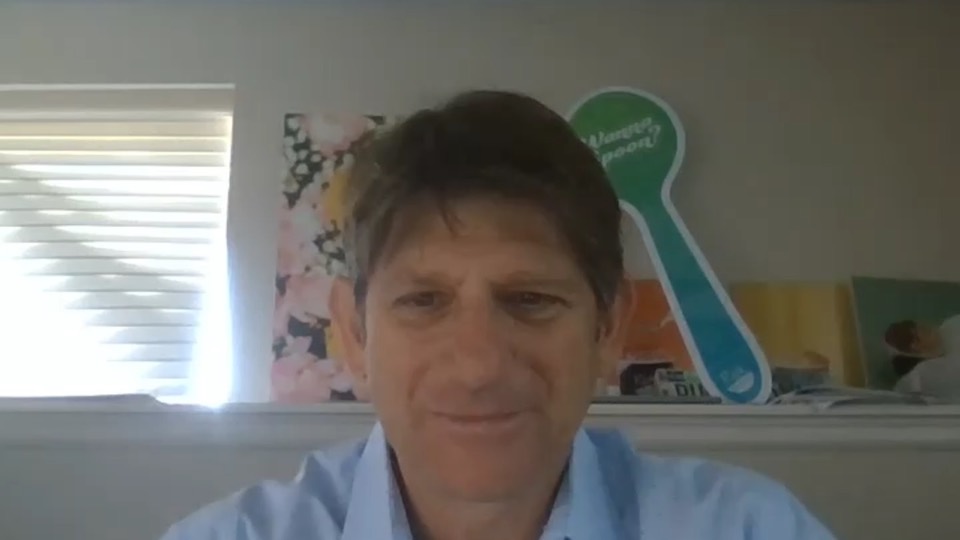
Andrew Pudalov, Founder & CEO at Rush Bowls, is the guest on episode 60 of the Restaurant Tech Trends podcast, hosted by Justin Foster.
 Play episode
What Andrew and Justin discuss
- How a math geek's obsession with hard ratios (e.g. COGS 25% or less, labor 22-25%) built a low-waste, low-labor model that corporate refugees are lining up to franchise
- Why Andrew stayed 100% independent - NO PE - and runs his franchise system like a trading desk
- Where Rush Bowls is going ALL IN on non-traditional
- Andrew's take on AI: why he's not throwing hundreds of thousands of $ just yet
Also in this episode
- Why off-prem now runs as high as 60% of sales, the surprising day part that's growing, and a friendly debate on voice AI + kiosks
- Rapid fire gold, including the one fruit Andrew would vote off the menu forever and a moment of total alignment on a certain pizza topping debate
Episode notes from the host
FROM WALL STREET TO HEALTHY BOWLS
Today on Restaurant Tech Trends I sit down with Andrew Pudalov, Founder & CEO of Rush Bowls. After 15 years trading derivatives at firms like Morgan Stanley, Andrew walked away from finance, bet on himself, and opened a tiny 400-square-foot bowl shop near CU Boulder in 2004. Twenty-two years later that store is still kicking and Rush Bowls has grown to 50+ locations across 25 states with 100+ more units in the pipe.
Thank you Andrew for the discussion and for proving that betting on yourself, and on real food, pays off.
Transcript
Full transcript (7,202 words)
Machine-generated transcript; names may be misspelled.
0:00 Hey everyone, welcome to Restaurant Tech Trends where we explore restaurant technology trends with some of the industry's biggest movers and shakers in a rapid fire short interview format. This podcast is produced by Incept AI. Incept AI takes restaurant orders over the phone and in noisy drive-throughs with friendliness and precision. Learn more at Incept.ai. My guest today is Andrew Pudalov, founder and CEO of Rush Bowls. Andrew spent 15 years on Wall Street trading derivatives at firms like Morgan Stanley before 9-11 changed everything. He walked away from finance, moved his family to Boulder, and in 2004 opened a tiny bowl shop near the University of Colorado that customers lined up out the door for. 20 years later, he's grown Rush Bowls into more than 50 locations across 20 plus states and helped pioneer the healthy bowl category. Andrew, welcome to the show. Justin, thank you for having me on your show. I'm excited to have you here. I want to learn all about Rush Bowls and so does our audience. So let's talk a bit about the origin story. Take us back to 2004. You were on Wall Street. You were doing derivatives trading, which is, I think, about the furthest thing that I can imagine away from the restaurant industry. And you walked away from all of that stuff. So tell us, what was going through your head back then when you decided that healthy bowls in Boulder was your next chapter?
1:39 Well, certainly, I worked at Bear Stearns, Morgan Stanley, Crite Lane was global head for National Australia Bank. And I was a betting man. So I took very large derivative positions, institutional positions for the banks. And I did that very well for the banks. And 9-11 hits. My wife was in a tower in 93, the first time they bombed it. It's her first day back from maternity. We're living in New York City. And I'm in Midtown. She's in the 20s. She literally sees the plane crash. And one of my good friends ends up jumping. It was catastrophic for us. So I kind of, and my wife and newborn, we decided very, very early on, hey, I'm really good at what I did, but I want to do something else. I was getting burned out from it also. And if I'm going to bet on something, let's better myself. So I quit my job, which is always terrifying, and moved to Boulder, bought a house and started a business. Now, for any of your audience, not probably the smartest way to do it. I was lucky, but definitely not the easiest or the smartest way of going about it. But I really wanted to bet on myself. And I wanted to do an industry that I had no knowledge about. And the one thing I really missed was I wanted to interact with consumers. When you're trading in a large trading desk, you have a sales team, you say jump, they say how high, and it's really different environment. I wanted to change that environment where I could really talk to people and see their likes and what they were looking for. So that was really important to me. And I wanted to move to Boulder for lots of reasons. So here I was 2004. I bought the house and opened the store basically. And that's still store 22 years later is still there kicking around. So something I'm very proud about. That's amazing. I love that story. And by the way, I know you said it was not the smart way to do it. But almost every successful entrepreneur that I've met has a story where they just decided to take the leap. It's the ones that are like kind of doing it on the side a little bit and like not quite able to like let go of the thing in the past that I think struggle a bit more.
4:10 So I don't know. I think it's a smart way to do it. But I love it. So let's talk a bit more about that first store. I think it was on the hill. It was 400 square feet. You know, you obviously were not a restaurant guy. You know, you hear all the time restaurants are a really crazy hard business to get into. So given that is background, what did you get right at the beginning? And then what did you really have to learn the hard way in those first couple of years?
4:46 I will say there's a couple of things. I started doing bowls. That was our concept. No one was doing bowls. So I was a little bit in the education business of what a bowl was or is, which you never really want to be in the education business. So that that was a challenge. Being a background of entrepreneurship, because if you're running a trading desk, you're betting on yourself. So I already had an entrepreneurship mentality. And I knew math really well. Right. I'm a real math geek. Right. So I set up hard ratios of where labor should be, where cogs were. And the business model that I created was really to limit risk too. Because so like our cogs are 25% or less, our labor is 22% to 25%. So these are hard numbers. And I really cared about those numbers to make sure it made sense. And in that, you know, there was no real food spoilage. We're different than most other companies. We focus on health and wellness. So no sorbets, no added sugars, just real fruit, vegetables, blended, very delicious flavors, you know, meal. So our number one time of day is noon. So it was really focused on a lunch crowd and sometimes late night crowd, but really focused on a healthy meal. So our competitors would be like Subway, right. Or Chipotle or stuff like that.
6:19 So really targeting that in an area that really wasn't being done at the time. So that was what I got right. Right. It just, it took time to get everything situated correctly. But the key on the success of it is really understanding the numbers. So, you know, you can replicate it that these numbers work, but you got to prove it out first. Yeah. Bit of a sidetrack, but obviously we are living in an inflationary environment right now, both on the food side and then also with labor. Have you been able to keep your numbers there despite inflation over the last several years? Yeah. I mean, you know, even before COVID, when there was a shortage of packaging based on my knowledge and everything else, I was fortunate enough to switch all our production in the U.S. before anyone really was producing much of this stuff in the U.S. So when there were shortages because of packaging with COVID, we didn't have any of those telltale issues. And on top of that, I really have negotiated massive contracts with, you know, the manufacturers directly. So we're in 25 states. So you got to make sure everyone has the same products and everything like that.
7:38 Yeah. And it's probably one of my real skill sets for the organization was to make sure that we have the best possible lines of distribution and pricing. Okay. Well, we've talked about some things that you did right. What are some things that you did wrong? Like, what are some lessons, some hard lessons you learned along the way? I'm sure it wasn't all just up and to the right the whole time. No, no, definitely. When you're in the education business, you really had to explain what a bowl was. No one knew at the time, adding granola and different things to it. People did not like, it wasn't like all of a sudden you're open and everyone's, oh, great. You know, you had to build it. You had to get the messaging out. We still are in certain areas of the country that we're still getting that message out, right? It takes time. I started a wholesale company in 2010 that I had, you know, closed in 2017. So we're in 40 states with whole foods and, and we're in areas with Costco and H-E-B and a lot of different things with frozen bowls, right? So we had a whole frozen line and my co-packer went out of business overnight and he and 12 brands that he was producing all different things. Couldn't, no one could get their stuff out. So that really impacted my business. So a couple of things I learned, A, always have contingencies, right?
9:01 We do that on distribution, but it's really important. And you learn that the hard way, right? Oh, I'm out of something. I can't get it. B, especially in franchising, making sure you pick really good partners, right? Yeah. They may interview well, they may say the right things, but you will got to really make sure you pick a partner. That's really a partner, right? And we treat our franchisees as partners. I think that's really, really important. And that was later, but, I would say you have to have an open mind and listen to the consumer. Because if you asked a customer in your store, is that delicious? They'll probably say yes, even if they don't like it, you know, eye to eye contact people. But what you got to really see is, are they reordering? Are they, you know, being at your business is super important to me. And I was lucky I was there, but you got to really listen to the customer and be aware of what they're trying to tell you, even if it's not so obvious. I want to, I want to put a pin on that because I want to come back and talk about how you're using data to track these things and, you know, yes, back and making menu changes and things like that. But you earlier were talking about franchise franchisees and choosing the right franchisees. And I think this is actually a good segue to talk about how you branched out from just operating the one store and moving into the franchising world. So you operated that first store, I think for a really long time before you decided to franchise. Why did you stay focused on the one store for so long? And what changed? So you said you had this wholesale business and that might've been even before you started with rush bowls. So what changed that made you say like, this is the time for us to start franchising. This is the time to grow.
10:55 Yeah. So I met someone who was a franchisee of some big brands and he was on top of me at a franchise. He was like, Hey, you got a franchise, you got a franchise. And I was always a little skeptical about franchising because quite frankly, you have to, you know, you're as good as your worst employee and you're as good as your worst franchisee in a way. Right. So, and, um, so once I was really building a crazy, strong foundation, what makes you rush bowls unique is a, everyone tries to copy us. So we're doing something right. But B, um, I have a foundation that is insanely good. So everything we do is made this videos, explanations. There's everyone, every franchisee has everyone who works for me cell phone. Right. Cause things happen outside of hours. Right. So, um, I run this, like I ran a trading group, right? So super duper franchisee is our customer in this case, customer friendly, um, a lot of communication going back and forth. And I see it as a team effort, right? So making sure that they're supported in every which way. Um, part of the reason that we don't, you know, our, our cogs and everything are lowers because I'm not greedy, right? Like I want things good for them. I'm not looking to make money on things that most private equity would want to.
12:28 I'm also unique to the fact that I'm not private equity. I own the company, right? So a hundred percent, which is rare in this type of day and age. So my focus is success. Their success is our success opposed to I'm going to buy and sell this every two or three years and play hot potato with other concepts. Well, you are right about that size where I'm sure you have PE knocking at your door pretty regularly these days. Uh, you plan on keeping it independent or someday, maybe who knows?
13:00 Well, if I ever go in that direction is would be to acquire other companies. So to roll them in, um, and to get larger. So nothing, uh, you know, at the time has to be right on all entity on all ways, but certainly as long as I'm running the company, it's going to be run this way. And, um, that's something I'm really proud about. And if I ever have a partner, they're going to know that's the, that's the way we're going to want it run.
13:27 I love it, man. That's awesome. I love the confidence too. That's great. Um, well, when you started franchising, uh, what surprised you about it? I mean, you're obviously a very quantitative guy, numbers guy, you build these systems, you have these training systems, you run a super tight ship. That's really obvious, but there had to be something that surprised you about franchising that you didn't know about. Like, was it harder than running stores yourself? Was it easier? How was it different?
13:58 Um, it's harder because you're not running it. Right. So, you know, in a way it pulled me back of the, cause you're dependent on a franchisee who's dependent on an employee, right? And certain things that we have very strict protocols and this and that, but it's still their business to run. We're giving them the outline of how to run a successful business. Right. And it's very detailed. Um, but you know, if a franchisee comes and says, well, I want to close for the weekend because I have a party, well, that's, I'm sorry, you gotta be open. Yeah. So, uh, you know, I think it's, it's, I think there's nothing that was surprising where I think it was surprising is the amount of material. Like we're independently ordered it every year. Right. Um, legal is we have to, we're in a tons of registration, non-registration states. So, you know, the barrier to entry is really on the legal side. You know, there's a franchise agreement you're updating every year. There's, you know, there's a lot of legal work involved and, um, that's heavy lifting, especially for new companies. Um, fatuidously it's not new to us, but that that's, you know, I'm always, always never a fan of a lot of legal. So, but this is legal in a good way. Right. So you're saying the protocols, making sure everyone's on the same page, but that was surprising to me, amount of legalese involved in franchising in general. And that's not unique to rush or any, uh, any, uh, any franchise system. Yeah. All right. Well, I, I think you guys have like maybe a hundred plus units in the pipe right now. Is that right? Um, that's insane by the way.
15:44 Congratulations. Uh, first of all, um, you're really kind of blowing up pretty quickly right now. What has enabled you to grow this fast? Was there like one particular lesson that you learned along the way that you wish someone had told you earlier on, or is this just a natural progression of the business and not being greedy and not skimming in places where PE might want you to, and had just having your franchisees love you. Is it, you know, you figured out some kind of secret sauce to finding the right franchisee partners. Like it's crazy growth, man. Yeah. I think, I think a bit of it is running a system that is super easy and friendly. Right. So I think what's going on economically speaking is a lot of corporate people losing their corporate jobs. Right. But want to get into the restaurant industry, QSR like we are. And in our business, there's no cooking, there's new food waste because everything's IQF flash frozen, like fresh fish, same process, right? Um, no waste, which is really important to me and low labor count. So, um, that business model really stands out. And since we're, you know, our build outs, you know, are very low cost relative to our competitors and relative to the industry as a whole. So this is a great first step to kind of run your own business.
17:08 Um, so I think we have a lot of success within that, those factors for people wanting a real taste of something different and having it their own. Um, so that's helpful in it, uh, in the growth. I also, we're a health and wellness company, health and wellness, as you know, is like everyone uses the word health, but we truly are healthy, right? No surveys, no added sugars. I see tremendous growth in that area. And, you know, like Europe is ahead of us. The rest of the world is actually ahead of us. So catching up and knowing what's in your food is, is I think really important. And it sets us apart, certainly from our major competitors out there that use surveys and junk, um, that are cheaper. Um, yet their cogs are higher. So something I extremely proud about. Well, health and wellness, I think just more broadly across North America and the United States in particular is a sort of a mega trend. Are you seeing this trend, um, being evenly adopted throughout the United States, or are you definitely seeing like pockets? So, you know, historically, you'd have like the Southeast might lag behind a little bit. Some areas like where I'm from in the Pacific Northwest. I, you know, that's a fantastic question. It's really hard to tell, but there's certain markets that are definitely pick up on it faster. Like we have a lot of very successful stores in California, Colorado, obviously Massachusetts. Um, so, you know, I think, I think, yeah, I think there would be some more educated based items that people are more, more interested in health and wellness, but I see that trend continuing across the nation. As you can see, you know, you can see the food companies are changing their formulation, right? RFK with a lot of his stuff, um, whether you agree with him or not, he's bringing attention to what's in your food. Um, and I don't see that changing at all. And certainly I think we'll follow Europe. What we've seen askew to later eating also, which is a European S kind of model. So it's all really interesting, um, on that side of things, but we see a major continuation of this trend. I don't even see as a trend anymore, right? When you're open for business for 22 years, you can't say it's like, uh, just a little trend, you know, I think, I think it's a long-term trend and, and I, I'm really proud of that fact because everyone should know, you know, what's in their food. And if you really want to look into it, like most of your food is produced, 99% of food is produced by like seven companies. So, you know,
19:51 these little companies like us and others can really make a big difference in, in how people are eating and what they're eating. Um, one thing I wanted to follow up on there that you mentioned is you said, you're seeing a trend toward people eating later that I hear that right. Like later in the day, are you talking about like a 2 PM to 5 PM day part? Are you talking about like later in the evening? Like seven to nine. I see. So after they work out or having as a late dinner from work or whatever it is. Okay. So yeah. Um, let's talk a little bit more about just some of the nuts and bolts of the business. Um, you've talked publicly about how, uh, between 30 and 60% of your sales are off-prem. First of all, I'd like to get a little bit more accurate and figure out which side of that it's on. Uh, is this something that you deliberately focused on or was this something where COVID just kind of forced you into this? Um, what did you have to get right to really make off-prem work for a product that I think in a lot of people's minds is kind of like a dine in or like a grab and go type of a product? So the, the number is accurate. I know it's a wide berth there, but the recent buying is really seasoned. It's not seasoned. It's really sector specific, like where it's located. If more people, you know, are ordering it and there's a seasonal factor to it too. Right.
21:19 In almost in the winter, you get more in, in office catering. Um, what's unique about it is our product, right? So if you have, if I'm taking bananas, mango, whatever else, pure acai and blending it, it's very fibrous. It holds together really well, right? It won't degrade very quickly. It takes a long time to degrade. If I'm taking a sorbet with tons of sugar and just water and fruit juice, it degrades right away. So our product holds really well for an extended period of time. So it's easy for us to do a lot of these catering and a lot of these, you know, takeout orders or, you know, you know, office deliveries of product like that. And we see continued growth in that area. And matter of fact, we have our own catering site. We're integrated with easy cater now via, uh, via, uh, Olo. So, um, I see a lot of growth in those sectors and that's something we're really focused on as people want ease. They want to eat it at their home office or wherever else.
22:24 And they want a product that's not going to degrade so quickly. And, you know, that's what we have. What do you think about drive-through?
22:32 It's hard to get, you know, um, you know, our, our business model is like a thousand square feet, you know, really about efficiency. It's hard to find those drive-throughs. I love drive-throughs, but you know, we haven't really found the one where I think the business model may adjust a little bit is more of that like drive-through food court ask model, right? Like that they can get multiple different concepts through a drive-through. I know people playing with it, but I think as time goes on more of that, um, you know, food halls, business model may extend itself into a lot of different venues. So people can, you know, have a lot of different products, uh, that they want. Like for us, we're gluten-free dairy, free vegan, whatever you want, it's custom ordered. Yep. Another thing with not using sorbets, everything, you know, is healthy and custom ordered. So you can have it for any dietary restriction, you know? So, so if you have someone that wants a hamburger, God bless, we all love hamburgers, but I want a beach bowl, right? You can go in an environment that has both. Well, I think that's a good segue to talking about non-trad. So where do you see non-traditional, you know, playing a role in your growth plans? Are you seeing a lot of interest from franchisees in non-trad opportunities? Are you guys like going into airports? You know, you talked about food courts and things like that. Um, where are you looking there? We're all in on non-trad right now. Actually, we just added to our franchise, uh, disclosure doc and franchise agreement, a mobile option, whether it's a, uh, you know, food truck itself or a cart that you're pulling around. Um, so we're all in on like for events, you know, there's music venues that someone can do huge numbers at for a weekend, right? So we're going strong into that arena. We feel that there's a lot of opportunity there in arenas, airports, certainly airports are like an inside game a little bit. So it's a different process. It's a little more of a license agreement. So we are always trying hard to get into that, um, uh, venue, but we're in grocery stores. We're in, um, we're launching in a gym in Illinois. Um, they're building it from the ground, right? So we, we feel that there's tremendous opportunity in that arena to supplement a regular store. So if you have a regular store and want a food truck, we're, we think that's ideal,
25:08 right? Cause you, some districts require a kitchen, the store acts as the kitchen, and then you have a food truck that can go anywhere within, you know, approved range. So we're all in on this and we're really, uh, optimistic about the outcomes of it. Um, okay. Let's click down one level on being all in. So we talked about the a hundred plus units and the pipe, you know, what percentage of those are non-trad and like, what are you seeing right now in terms of your AUVs for traditional versus like non-trad? I think there's a lot, there's, it's a lot of diversion, right? So it depends on location. Um, if it's in a store, the AUVs will be low, but if it's in like a food hall, AUVs may be really high. Um, so it really depends on, on it. Um, cause an AUV within a food, uh, hall could be the same or higher than a store. You know, we have, we have it, you know, a food hall and a store could be two miles apart from each other. Um, and we have that in, in Boise actually. So, you know, I think again, it's not one or the other, it's really how the business is run, how they're reaching out to the community, how big or unpopular those halls are. You know, some people don't, it's not just about the AUVs. They want more people coming into their stores and we're in a small grocery store. So it's driving more traffic to the grocery store, let alone for bowls and smoothies. So it depends on the purpose.
26:44 Uh, I would say. Fair answer. If that makes sense. Yeah. It makes, it makes sense. I get it a hundred percent. Um, I do want to shift gears a little bit. This podcast is called restaurant tech trends. So we got to talk a little bit about technology here, right? Um, you know, you're a founder, uh, you're not a CTO, but I would say pretty much every multi-unit operator today is also a tech buyer, you know, whether you like it or not. So I'd like to learn a little bit more about your philosophy on tech at rush bowls. Um, like when you lean in, when you say not yet, and then I want to maybe bracket that through the lens of how you're using technology to enhance hospitality rather than get in the way of hospitality. That's a theme I'm just super interested in. Um, there's a big debate just going on in the industry in general about when technology helps versus when it hurts. So yeah, just love to get your philosophy on tech. So we're pretty tech heavy, right? So we have a loyalty program via Cuomo. We have Olo. Um, we have a gift card program, value tech. Um, so, and we have a point of sales system, Revel, which is switching the shift forward. So we have that. I think you need that to properly run a business. Honestly. Um, I think technology is incredibly important.
28:13 When I look at it and something that's really was interesting to me, and this is top of mind is kiosks in general and how that integrates into a store. Because I always wanted our employees to customer service, you know, here's a sample of peanut butter because we grind our own peanut butter fresh in store and we do other things that businesses don't do. But when you look at the demographic and we skew generally younger, so, you know, our customer is 15 to 40 generally, or 50, but like a younger demographic, a demographic that everyone's trying for. And we're 50, 50 for men and women, basically. Oh, wow. But the one thing I really learned, which was some people, especially the college kids, they don't want to interact with anybody. So a kiosk system they prefer, which the benefit of a kiosk system is that you're going to generally get 10% higher because it's going to kind of kind of ask you for all these different extras, basically. Um, so I always wanted to interact. I still prefer to interact, but it can't be by what I want, right? It's what does the customer want? And I think there's a, there's a customer aspect to it, Kane, that they don't want to interact. Kind of like King Soopers is really, you know, I use King Soopers or Kroger markets, which the automated, people are getting more and more used to automation and no interaction. And I think at some point that will change the restaurant industry. I wouldn't say for the better, but I think it will change it and, and certainly be less labor, which everyone wants because labor is costly. Um, and I think there's positive negatives to it. Um, but we're dialing into that a little bit more and testing that area, which is, I think is easy to test. All right. Um, this is a super random question, but it's one, I have a definite opinion on it and I'm just curious to hear where you fall on it.
30:12 Um, cause you were talking about kiosks. What do you think about the marriage between voice and kiosks? Do you think there's a marriage there or is that just not destined to end up well?
30:26 I think there has to be a marriage there because people are used to talking, right? Interesting. Um, uh, but you know, even when I was a young, um, not young, obviously they were talking, I think it was dragon slayer was a program to convert language and dialects. And it was really hard. I think, I think it's way better now, obviously. Yeah. It still has time to get that interaction going, but I think people are more comfortable talking. Uh, so I think there's an interaction. Uh, I'm, I'm in the voice industry and I, I don't really see it. I mean, maybe it, I'm, maybe I'm just too old or something, but, uh, I just feel like people are trained on kiosks. Like they're just trained to know that like, that's the interface and you just tap it. And I don't know, it just feels like it's a, it's a big shift in consumer behavior, but there's a lot of really smart people that agree with you. I'm still trying to figure out if it's, if there's something really there or not. So anyway, that was a total sidebar. Um, let's talk a little bit about AI. Of course, that's the big topic in technology. Generally, certainly it's pervasively discussed throughout our industry. Um, your mobile app uses AI to segment customers, um, personalized offers. Um, but I'd like to know from the seat of a founder, what is the most useful thing that AI is actually doing for your business today versus where do you just see like a bunch of hype out there, but you know, AI is not actually moving the needle for you? Well, I think it's early, right?
32:05 So certainly there's some basics like for AI, I think it's integration is crucial for success. So I want to start there. How it's being used. I still, as people are figuring out, right? So I will tell you basic functions, job workflows, um, communication, all should be through AI and kind of assist, insist on that at my company. Um, in terms of offers, what hits, what doesn't is all AI driven. It's hard to like, they'll give you the data on it. I think we're at like step one of a hundred steps, uh, of AI. Um, um, all in, but I'm not investing, you know, hundreds of thousands into it. I think that there's an investment to be made and, um, you know, I think as it gets better, that investment criteria will come down. Um, and I think it's going to be crucial for our success. So I have to be invested into it. Um, but you know, I think time will tell and it's going to change, you know, early on, I think it was my space then became Google, right? So no one heard of Google and my space and all those others were out there or Yahoo. No one does Yahoo anymore. Right. So I'm bringing this back to when the web got launched, imagine the web being launched at a hundred times level. And that's how I view AI. Yeah.
33:32 But I don't know who's the winners. I don't know who's the losers. And I promise you there'll be winners and losers. Yeah. And you know, I think just a general adoption use cases for it and then see where it flows. So, um, um, testing it, we play with it. We use it obviously for loyalty and stuff like that. Yeah. Um, but it's kind of a amorphous answer quite frankly, until it gets really truly figured out. No, it's a, it's a fair answer. Um, what about customer data platform? Are you guys using customer data platform to help you with like menu decisions or pricing decisions or recognizing trends in, you know, what people are buying? Uh, and if, if not, why not? Are you planning on it? Yeah, we definitely are using it for menu decisions, flavor decisions, names of menu items, um, look and feel of menu items, um, pricing. We haven't really used it for that. I will tell you, um, it's really, I think that's more economically driven. So people look at products and, you know, Erewhon is a great one because we're, our products more like Erewhon than any of the others. So, you know, Erewhon's priced at, you know, super high, like whatever is $25 and our smoothies are say $10. Right. So, and we're 24 ounces. So we're a big smoothie. So the, you know, I think AI is not quite there with where pricing should be in this and that. And people generally have a Walmart mentality also. So, which meaning cheaper is cheaper is better. Right. Um, but you don't see that on the sales. And I tell my franchisees, we sell more product at higher prices.
35:23 Of course, people, uh, people appreciate the better quality and they're going for lunch. They want better quality. They don't want ice cream with fruit on top of it, basically. So I think pricing AI and pricing is not so, so easy or simple. Um, so I think it's more subtle and it's not there yet to figure out. Okay. Um, how about on the labor side, like scheduling, um, are you in, if you're using it for scheduling, like how much do you trust it versus how much are you having your GMs at the stores own that piece? Well, I've been doing this for a long time. I have yet to figure out like the ideal labor times or when I'll tell you a quick, really funny story, certain days of the week, certain flavors, like not flavors, but certain berries are more popular. So I'll say Tuesdays, people order more raspberry baseballs or smoothies, right. Or, you know, every other Friday, everyone loves blueberries. I can't tell you why, but running these stores and being in that in them for so long, it is so true. So I can't expect AI to really figure that out yet, but I do think it will. Um, but I don't think we're there yet. All right. Um, well, just a couple more. Let's talk about the future. Um, we've talked a bit about how you're scaling up pretty rapidly right now. What is the biggest challenge that the brand is facing as you race toward activating all these units that are in the pipe? Well, I think it's the biggest challenge most franchisors have is making sure the franchisees are operating the store. Well, you know, you're as good as your worst employee if you want to know the truth. So that's really a challenge, right? So making sure the product quality, especially when our stuff is handmade, right. It's not scoopable junk. So making sure sure that everything is the right texture properly made right formulation. Um, that's, and the proper interaction, that's our, always our biggest challenge. That's why we dig so deep on a infrastructure, um, and a platform that anyone can access on at any time to see any asset or any formula or a video of it. That's our biggest challenge. The standardization of it. Um, I had a guy on here.
37:51 He's the founder of a company called Harmonize. They do like AI driven, uh, franchise business consultant support where they basically like analyze like the PNL and the point of sale data and gives you a bunch of recommendations for your FPCs to like coach franchisees on. How are you guys doing that right now? Is there automation built in that process? Do you have just like traditional franchise business consultants that are working with the franchisees? What like mechanically are you doing to like systematize those interactions? Well, we, like I said, based on this platform, everything's videoed, everything said interactions are taped and encouraged at a certain level. Um, so every aspect of that business, we have an asset for people to use and we encourage them. What we do a little different than most is we dig deep into training, right? So we actually fly people out to the location of the store and not bring them here. So to make them very much more comfortable in their environment. So we can also assess their employees, tell them because it's their employees, but assess the customers and everything else to work more, uh, positively in that environment to make sure that franchise owner is doing everything they can to really have success. You know, bottom line on a lot of this is, is how they're reaching the community, right? The really good franchisees are out in the community because they love being in their community. The ones that may struggle is they don't want to be in the community. They don't want to run the business. And that's where you got to figure out who's good and who's not, because that's not who we want in our network.
39:32 Got it. Well, we could probably spend 30 minutes and talk just about that, but unfortunately we're almost out of time. So just, um, one more before we move into our rapid fire segment, uh, as you look five years into the future, where does rush bowls need to be in order for you to feel like you've built out what you set to achieve? Well, I set goals pretty high. So we're a health and wellness brand. So not only do I want, you know, you know, 200 to 500 stores open, we're launching like an energy drink. We're doing all these different things. So I look at us as CPG company, which I want to, we're going to relaunch into CPG, but also just, you know, beyond stores as rush bowls, people know that it's authentic. It's real. Just like me, our products are delicious. And that whatever has that rush bowl label on it is good to eat. And even if it's a shirt that says rush bowls, it's a better cotton. So, um, I really see us as a, you know, national brand, not just a food brand. All right. I dig it. Well, we are out of time for our scheduled questions and now it's time to move into our rapid fire segment as we conclude this interview. So for everyone that is watching or listening, Andrew has no idea what questions I am about to be throwing at him. Andrew, the rules of engagement for rapid fire are try to answer these questions with one word if you can. And if you can't try to keep it to one sentence, are you ready? I'm ready. Nervous, but ready.
41:20 All right. Acai. Am I even saying it right? And does it matter? Perfectly.
41:28 What is the most underrated topping that deserves way more love?
41:36 Organic hemp granola. All right. And honey too. And honey. Okay. We'll give you two on that one. Uh, on your day off, Boulder hike or Boulder brewery? Hike. Right. Uh, be honest. Have you ever eaten a competitor's bowl?
41:57 Yeah.
41:59 What's your favorite bowl?
42:02 I have a few. I make my own, but the summit is, is one of mine, uh, beach peanut butter and jelly. They're all delicious. All right. Uh, working the derivatives desk or morning rush behind the blender. Which one is more stressful?
42:23 Definitely derivative desk, which is pretty stressful behind the blender. I must say, especially if there's a line, people watching you. Pineapple belongs in a bowl. Defend or deny? What does, I'm sorry. You cut out. Pineapple. Does it belong in a bowl? Defend or deny? All right. A hundred percent. I think it adds a nice texture to it. A. B. Has a good flavor.
42:56 Um, you know, I think the challenge would, on a pizza, I would say no.
43:01 We are aligned on that one. No pineapple on the pizza. Come on, people. Get together. Get together. Great minds. What's the move? Granola on top or hidden in the middle?
43:16 On top. Because then you have more control of it. All right. Now I'm asking on this one for your personal preference, not for a strategic financial decision. What is one fruit that you would vote off the menu forever if you could?
43:34 Um, wow. Kiwi.
43:41 All right. Andrew, I'd like to thank you for joining me here today on Restaurant Tech Trends. Everyone, Andrew Pudalov, founder and CEO of Rush Bowls. Andrew, thank you. Thank you so much for having me. This was fun. Thank you.