Episode 55 · April 7, 2026
Zach Richard
Sr. Director of Data Science · McDonald's
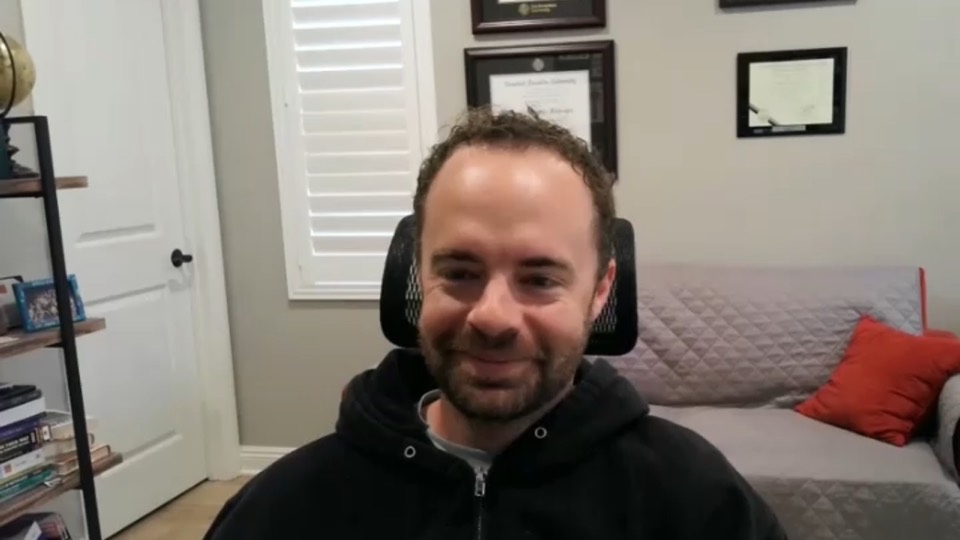
Zach Richard, Sr. Director of Data Science at McDonald's, is the guest on episode 55 of the Restaurant Tech Trends podcast, hosted by Justin Foster.
 Play episode
What Zach and Justin discuss
- How Zach helped build McDonald's data science function from the ground up - including the messy reality of centralizing analytics inside a 75-year-old, heavily franchised global organization where even basic data like "does this location have a drive-thru?" wasn't always reliably available
- Why McDonald's treats its business as a three-legged stool of customers, crew, and corporate - and the hard lesson Zach's team had to learn about why the math alone will never be enough to move the needle at scale
- The surprising insight hiding inside McDonald's AI drive-thru data: it's not just an ops play. Voice AI can generate a never-before-available direct signal into customer behavior - what people order, what they ask for when it's unavailable, and whether LTO availability windows are actually calibrated correctly
- Why Zach believes the real long-term value of generative AI isn't just the solution you deploy - it's the novel data that gets created as a result, and how smart operators will use that data to drive decisions across menu, marketing, and supply chain
- The edge computing vision Zach is most excited about: AI-powered crew enablement tools that let a crew member snap a photo of a broken piece of equipment and instantly get the exact fix they need - right on their phone, without leaving the floor
- Why Small Language Models (SLMs) may outperform large ones for restaurant ops - and Zach's bold prediction that in two to three years, agile 10-20 unit operators could actually have a technological edge over the big chains
- The one restaurant tech trend Zach thinks the industry is sleeping on and why the ROI math and the all-or-nothing mindset of large chains is holding it back
Also in this episode
- Rapid fire! Zach's go-to McDonald's order and his prediction on whether a human will still be taking orders at the front counter in 2035.
- Shoutout to Zeke, Zach's 15-year-old deaf dog who made a surprise cameo mid-interview by jumping onto the couch behind him. Legend.
Episode notes from the host
THE GOLDEN ARCHES PULLED UP TO THE PODCAST
Today on Restaurant Tech Trends I sit down with Zachary Richard, Senior Director of Data Science at McDonald's. If you've ever wondered what it looks like when the world's most recognized restaurant brand puts serious firepower behind data and AI... this is the episode for you.
Thank you, Zach! One of the most substantive conversations we've had on the show. If you care about where AI is headed in QSR - not the hype, but the reality - this one's a must-watch.
Transcript
Full transcript (5,015 words)
Machine-generated transcript; names may be misspelled.
0:00 Hey, everyone. Welcome to Restaurant Tech Trends, where we explore restaurant technology trends with some of the industry's biggest movers and shakers and a rapid fire short interview format. This podcast is produced by Incept AI. Incept AI takes restaurant orders over the phone and in noisy drive-thrus with friendliness and precision. Learn more at Incept.ai. My guest today has spent the last five plus years building one of the most sophisticated data science and AI practices in the restaurant industry, and he's doing it at the biggest QSR brand on the planet. As Senior Director of Data Science at McDonald's, Zach Richard led the charge on personalization, customer segmentation, and AI-driven restaurant operations at global scale. Zach, welcome to the show. Justin Foster, Incept AI, Microsoft Mechanics Thanks, Justin. Thanks for having me. I am super excited to have you on today. Thanks so much, by the way, for coming to the dinner the other day in Costa Mesa. That was a lot of fun. We had a pretty rambunctious group down there. Yeah, that was fun outside of my comfort zone, but it was a good time. Anyway. I think people were really glad to see you representing McDonald's and, you know, we had a, of course, we talked a bunch about AI and I'm excited to dive into that a little bit more today. But before we get into that, let's talk a little bit about the path that led you to McDonald's. Was the restaurant industry like always on your radar or a newer thing for you?
1:31 A newer thing for me. So I think I came out of school and my first career was in kind of web software engineering. So I wasn't super familiar with data science wasn't even a thing at the time. Right. So it was not on my radar. But after some years doing doing software development, some years getting into analytics and teaching business analytics at the University of Notre Dame, I ended up in a consulting role where my primary client happened to be McDonald's. So I was very focused on kind of startup world consulting. And then when my primary client was McDonald's, I it was it was my it was by far the largest business I'd ever worked with or for or in partnership with. And when they decided to centralize their analytics capabilities and bring me on as one of the first folks in that effort, it was just a great opportunity that I couldn't pass up. So not was not really familiar with the restaurant industry prior to that. But I mean, it sounds like a once in a lifetime type of an opportunity. Obviously, McDonald's a global brand, everyone worldwide recognizes this brand. And you've now been there for several years. And as you said, you know, you're one of the first people on this team or in this group, you've basically helped build a data science function basically from the ground up. What did that look like when you first started? And how has the team evolved over the last few years?
3:14 Um, yeah, I mean, McDonald's is a large, sophisticated organization. But one of the areas where we probably don't have sophistication as a result of our scale is data standardization and analytics. And so this was right now we're on a journey where we're at, we have dedicated transformation teams and I'm bringing stuff together. But five to seven years ago, when I joined and started this, that wasn't true. So we, we hit the ground, we hired a bunch of really great people. But then the data and the use cases weren't there to like, those people take advantage of it. So we were running around a little bit like chickens with their heads cut off. Just finding people to kind of work with us and build credibility and, you know, try to drive home the idea that analytics and data and data science is a useful thing that can be, that can be applied to the restaurant industry and to McDonald's. So we're in a very different spot now. We're almost working exclusively on kind of major enterprise, you know, priorities. But seven years ago, it was kind of just scraping from the bottom of the barrel to, to prove credibility and to get traction. Can you tell us a little bit more about, you said the data wasn't there and the use cases weren't there? Like, can you share any examples of where there weren't use cases or where you needed to get data? Well, so, I mean, it's a, it's a 75, year old restaurant company that's operates heavily in a franchise model, right? So, so a lot of the owner opera, a lot of the franchisees or the markets own and are responsible and have always been responsible for the data. So even simple things like, does your store have a drive-through or not? Technically there is a database that exists for that, right? But they're not all, their stewardship isn't always there, right? Because it just depends on the market and whether the franchisee is keeping their systems updated, et cetera. So we're in the, you know, we've been able to resolve some of that. And then also in the past, I think just understanding again, analytics was a very federated operation and our specialty was not within the business. It was within the math. And so an operations leader, like the VP of operations or chief operations officer is going to be much more
5:52 comfortable going to their operations analytics team, who is maybe not a bunch of PhDs, right? But definitely has a deeper expertise in operations and how operations within the organization works to answer their questions. And those are dedicated resources that are on call to answer my questions anytime I need. So from a centralization standpoint, you have to, we had to compete with that, right? With that, like, Hey, we're not here to answer your immediate question about what drive-through times looked like yesterday. But if you want to know how are, how the, how the coupons that are a little bit confusing with regard to coffee, because at some point we had like 30 ways to say coffee, um, you know, are impacting your speed of service in the drive-through, we can do that decomposition for you and we can recommend specific changes to the operating model to make sure we're harmonizing the marketing and operations side of stuff. So, um, just to disconnect between the way people were used to doing business and how you can work with advanced analytics and AI to kind of move the needle.
7:05 Right. Well, you've already shared a couple of, I think valuable lessons that you've learned here. One is operating in this heavily franchised environment where you have federated management of analytics data. And then obviously, you know, as you're trying to centralize this function, building the internal credibility and support for the group that you're building was, were those the hardest lessons that you've learned so far, or was there something else that you think was just something totally brand new? You had no idea, uh, when you first joined McDonald's. Uh, no, I mean, I think McDonald's is a, is a people like all restaurants, McDonald's is a people business. Um, right. We operate at a much different scale than a lot of other places, but at its core, it's about people, customers, crew members, the people in the offices. Um, and so I think, um, that we had a bit of a journey to arrive at that, right. Uh, you know, the data science team to realize, well, people aren't just mechanically looking at the numbers and executing by that. There's all these other considerations about customer experience and crew experience, and this all needs to be kind of carefully managed. Cause if any one of those, you know, uh, three legs of the stool as we call it kind of fall down, the whole thing tips over. Right.
8:25 So, um, I think it was a, it was a bit of a journey on both sides and I think now we've, we've started meeting in the middle, so it's been great. Awesome. Well, let's, uh, pivot a little bit and talk a little bit more deeply about some of the stuff that you're working on right now. I know that, uh, voice analytics is a big part of what you're working on today. Voice is obviously a pretty hot area in restaurants in general, but QSR specifically. And, um, I want to understand from your perspective, what the real value is that sitting inside voice recordings that you might, uh, get from a drive through or transcripts. Um, what is something that you think most people just don't really appreciate about the data that you can collect there and how you can analyze it? Uh, so this is McDonald's second, at least since I've been here, second go around at the, uh, the AI in the drive through or the voice ordering in the drive through. Uh, the first time we partnered with, uh, a startup and then that became IBM. And now we're working closely with Google, which has been a great partnership. And I think they have a much more, um, comprehensive view of kind of the AI landscape, which has been super helpful for us.
9:45 Um, the, the first time around, uh, and, and even this time to a, to a certain extent, it was treated as a operations, um, play, right? This is going to free up time for the per the crew member, uh, who normally has to be dedicated to taking the order. It's, they're supposed to be dedicated. That's not always true because restaurants tend to be understaffed. So, you know, they're, they're manning the, the drive through station, but also they're, you know, filling drinks and, and doing some other side things as well. So how can we, how can we de-stress the crew is, is the, um, and speed up orders, uh, is the kind of initial theory. I think what we've found is that does, that does happen. Um, but you also can't control crew behavior. And so the crew is going to jump in and escalate when they feel is necessary, which is more often obviously than any of our lab experiments or any of our simulation stuff. Right. So, um, but what we, an interesting kind of artifacts that we've found is we get a lot of novel data just from the interaction itself. Um, we get data about whether people are adhering to kind of training standards and recommendations. We get data about what our, um, what our customers are asking for when they're in the drive through and if they cannot get what they're looking for, what are they trading down into, or what are they ordering instead?
11:21 Um, we also have interesting information about whether customers are ordering based on our expectations for LTOs or limited time offers. So we have, you know, dedicated marketing and availability windows for these things. We haven't really had a direct line of information into whether those are the correct windows. We just kind of measure an AB test and stuff in it. Um, we'd come back with some stuff, but now for the first time we have clear signals of, well, are people ordering the McRib a week after the availability has gone away? Is that number meaningful? Are they trading down or not getting anything, um, when they can't get these items? Uh, so from a marketing standpoint and a menu and availability standpoint, it's provided a, um, really robust data set that I don't think we were like expecting. It just wasn't how we were thinking about the question going in. Um, but it's provided to be extremely valuable in terms of the insights we can derive. Yeah. I'd like to dive into that a little bit more because, um, you know, you mentioned something similar to what you just said here at the, at the dinner in Costa Mesa. I want to understand if you think it is incorrect to position voice AI in the drive-through as an ops play. Um, and if it is correct to position it more as an analytics play, or is it a hybrid of both of those? And if it's not correct to position it as an ops play, do you think that that is largely a result of what you just said, like not being able to predict crew behavior and when people are going to escalate or does it also potentially have to do with like the evolution of the technology and just where the technology was a few years ago and where the technology is now? I think it's, I think it's partially from the technology, although, although to be honest, I think that's, um, the smallest sliver of, of change that's occurred. Um, I think, um, I think it's okay to position it as an operations player. I think you can have operations gains. You have more con you can have more consistency. It can speed up standard orders, right? That don't have any issues or that are not, um, kind of deviating. Um, it, uh, it can help from an operations standpoint.
13:45 It can also help, um, training, training, right? You understand how your crew is matching up with your training standards or your expectations. Um, assuming the crew jumps in, right? And because you get that information, but if it's just the voice, it's, it's kind of purely the operations side. Um, you also get, um, you also get a constant upsell, right? The, the, the machine is much more consistent at upsell. Um, so I, you know, depending on whether you categorize that as an operations thing or a, or a menu or marketing thing. Um, but I do think, and this is true in my opinion for generative AI in general, it's, it's very, it can be very useful. It's a very good agent. There's a lot of like search potential around it. Um, but it also produces a lot of unique data, right? Whether that's synthetic data that it can create very quickly, or whether it's, um, this, uh, you know, marketing or analytic data that we're talking about. I think as we consider as an industry deploying artificial intelligence, don't just consider the solution you're solving for, consider what data is going to be created as a result of this. Um, and you're going to use it.
15:05 Yeah. You know, I personally have believed for a very long time, the true value in voice AI does lie in the data and how that data can be used to drive decisions in the organization. So that's kind of where I want to go next, which is how is this data that you're capturing actually flowing into decision-making around like menu ops, even supply chain. Would you say it's like at a very nation stage right now where we're still in like an information gathering type of a phase, or is this really, truly driving changes around menu? Is this data, you know, feeding into like demand forecast models? Um, are you in the early innings of that or is it much later on? So we're still in the early stages. There's not, um, the deployment of the solution is not broad enough. We cannot capture the kind of geo local specifications on kind of how people order or timing or things. Um, so yeah, I think we're still in the early stages. Um, we'll, we're, we're figuring out simultaneously. We're also kind of revamping our supply chain technology. So I think there's an opportunity to kind of merge it in there and see, um, see what happens next, but we're still early stages for the deployment.
16:26 All right. Well, let's, let's keep talking about early stages. Another hot topic in the industry today is around edge computing. Um, and as you look over the types of AI technologies that can effectively run at the edge, which are you most excited about today and in the years to come in specifically on voice, I would love to learn any thoughts you might have there.
16:55 Um, I think I'm super excited about crew enablement, like restaurant enablement. So there's a lot of, I mean, everybody likes to laugh at the ice cream machine situation at McDonald's and how there's, they're never available, but, um, and there's a lot of reasons for that, but there, what we're trying to use AI and edge deployments to enable the crew, right? So a lot of, a lot of like knowledge management, um, right now, these back office systems are hosted on like one PC that you'd have to step out of line to go log into, to search for your documents, or it's on a physical like binder in the back, right. And full of like manuals and equipment information and stuff. So how can we use AI to get that information in front of crew members on their phones, take a picture of the machine, tell me what's wrong with it. It'll pull up the exact information you need when and where you need it. Um, we've already got examples of, um, of technology like that operating in China and other areas of the world. We're trying to pull inspiration from that and, um, kind of standardize that capability. Cause I think we as an organization really feel strongly that enabling the crew enables better customer experience, enables a better business leads to the guest count sales, all the things you want at a restaurant organization. Got it. Um, trying to think about how to phrase this because for a long time, um, it was very difficult to pull a lot of AI enabled functions work locally because the models themselves are just so large and require vast amounts of computing power, which is made it economically very challenging to do on a unit basis. Um, when you talk about like enabling things in restaurant ops and you've written about small language models. This is an area that I'm particularly interested in as well, um, outperforming large ones for agentic AI when it comes to structured and repetitive enterprise workflows. I'd like to know from your perspective, how does that philosophy apply specifically to restaurant ops? Where do you see the opportunities for SLMs to drive efficiencies in ops?
19:22 Yeah, uh, it's a good question. I think, um, I, I can't, I can't remember exactly, I'm trying to remember exactly what you're referring to, but I think, um, my general attitude is most, most restaurants are relatively simple, right? Most menus are small. Um, most customer interactions are fairly predictable. You're, you're ordering an item off your predefined menu, um, or you're, you're solving a solution that is, that tends to be, uh, common within the restaurant, right? Cook, cook temp, cook or temperature issues, um, experience issues, no, you know, it's too loud in here, that TV's on, the bathroom's dirty, whatever. So whether it's, whether you're solving that problem in the restaurant or whether it's a call center situation, you don't need a large language model trained on all of the internet to kind of grab this information, right? Um, and so you, you can, you can leverage smaller, more, um, more efficient language models to solve your specific, um, solution. And the, and the model you use and the type of data you train it on is obviously going to depend on, on your situation. But when you deploy a on my dog jumped into the background, nice. When you deploy these things, uh, um, I think you, especially on the edge, right? So if you're trying to solve this knowledge management situation on the edge, you should look at solutions that can be focused and trained on your knowledge systems, not the entire, you know, internet Wikipedia situation, right? It just needs to be relevant to you and your right. Um, two questions. First, what's your dog's name? I know what's the name is Zeke. He's like 15 years old. He's deaf. So he's just, he's cute. I've got an 11 year old dog. So starting to go downhill a little bit. It looks like Zeke's doing pretty good. He got up on that couch.
21:25 Yeah. Um, okay. So I'm going to try to get a little tiny bit more specific on the small language models. Like, are you, is there one particular thing that like you're excited about there or not really? It's just all these different use cases you talked about. Uh, I think, I think I'm most excited about the ability to like containerize and deploy locally in a low cost environment, right? So like we are partnering with Google on these, this massive edge compute, um, uh, building of a building of a virtual private, both virtual and physical private network that includes all these GPs and stuff. And, um, this is all online if people want to read about it, but, um, you don't need that to be successful, right? You don't need the, and even we struggle with, you know, when we deploy this stuff, we're only going to have so much room for all the things that we want to plug into this server on the edge to do all the inference and all the things we want, right? So how do you find space for all this stuff that you want to do? And it's going to involve and restaurants. We, at least we experienced this connectivity issues with right. Franchisees may or may not always be online. You can't always count on being able to refer back to the cloud. So you're going to have to have some containerization on the edge. Um, so there's a lot of things now that require large language models. I think as we, as an industry and on the tech side progress and get better at it, all of these capabilities, whether it's AI drive-through or whether it's, um, the computer vision models to do all of the kind of research and studies, uh, these models are getting better at, um, taking low res video and, uh, uh, specific cameras designated just for the computer vision inference. Now these models are getting better at, um, taking low res video and kind of converting it and optimizing it and making it usable for kind of inference stuff. If we can continue to miniaturize the models and the edge deployment containers that are required to do this, I think you're gonna, you're gonna see a situation where actually large restaurants are at a bit of a disadvantage because we're not as agile and sure we can deploy all the high powered stuff we want, but the person who's running 10, 15, 20 unit business, who's able to kind of adjust on the fly, rip out these super expensive old, um, models and plug in like much lighter weight, but equally as
24:08 performative kind of, um, capabilities. I think you'll see, uh, you'll see, uh, interesting swings and shifts in which companies are technologically advanced and which ones are, are dragging a little bit. How far away do you think we are from that being like the common state of the industry? Do you think we're like, is this a year away, two years, three years, six months? I don't think six months. I think, I think I would say two to three years and I don't think restaurants are solving it on their own. Right. But if you look at, um, like incept or, or similar organizations out there, there's tons of smaller groups who are solving for these individual use cases, whether it's voice or video or knowledge management, um, or POS systems or, or, or media networks, right. Or whatever, whatever it is that are going to use generative AI on the edge. Um, I think you'll slowly see these vendors move from, Hey, look at all the capabilities we have, because eventually capability, those capabilities are going to become commoditized. Right. And just ever, and you're already seeing it with the actual models themselves, right. The models are just commodities within a broader, um, genre of, of capabilities.
25:31 So it'll, it'll start to be about, well, you know, you're, you don't just have to give us a million dollars and we'll give you this high powered ability. We will give you this super efficient, you know, super cost effective, low maintenance, low, um, you know, thing that you can do. So I think, and, and, and, you know, integrate that into your systems locally. So I think that's where it's headed, but I think it's, it'll take a couple of years. All right. Well, uh, let's step back even further. What is one restaurant tech trend you think the industry is like sleeping on right now? You think of one? Um, um, I think, I think there's lots of, uh, there's lots of interesting work being done around individual like equipment automation, uh, somewhere in the restaurant.
26:27 I'm not, I think people are sleeping on it because it's expensive. It's expensive to place your equipment. Um, and also when, when places like McDonald's think about automation, we want to automate it all at once. Right. Where, uh, whereas I think if, if you took a more modular approach, um, to automating kind of individually, um, that would be, you know, you might be able to see more, more interesting games, but I, I, I think the ROI on that is also pretty low. Right. So, uh, yeah. So I think, I, I think it'll be interesting to see as we move through this AI modernization stuff and it gets more and more, I mean, eventually we're going to move from pure software to more like a gentic integration with hardware. So as we move that it's going to impact automation and it'll be interesting to see how that changes the math on all the like big equipment automation plays. Yeah. Yeah. Definitely the next chapter. I, I, it's been a struggle for the industry to date. I mean, there's been a, I mean, even think about like the fry flippers and stuff, right? I mean, pretty repetitive task, but still it's, it's tough to do at scale. It's still expensive. Yeah. All right. Well, Zach, we're out of time for our standard interview questions. Uh, and so it's now time to move on to our rapid fire segment. And for everyone that might not be familiar with our rapid fire segment, I'm going to ask Zach a series of questions. He has no idea what these questions are.
27:58 And your challenge Zach is to try to answer these questions with one word. If you can, if you can't answer with one word, try to answer with one sentence. Are you ready? Right.
28:10 All right. What was your first job?
28:15 Lab analytical lab technician at a bio facility. You know, that tracks, that tracks a hundred percent, uh, McDonald's or Chick-fil-A.
28:29 Oh, McDonald's.
28:32 Smart man, smart man. All right. If you had to eat one thing off the McDonald's menu for the rest of your life, what is it? Oh, so I love a, uh, McDouble with Big Mac sauce.
28:50 Double Big Mac sauce. I like it. Ketchup or no ketchup.
28:54 Ketchup. All right. Notre Dame or Oberlin. Oh, Oberlin.
29:02 Are you a musician? I am not. My wife, that was the first thing my wife asked when we met, because she knew we were talking and she knew I went to Oberlin and she asked me what, uh, instrument I played. And I said, oh, I played football. So no, I think that's pretty rare for Oberlin, isn't it? And aren't most people? Yeah. It's a really bad football team. Uh, but they played division three football. It was fun. Yeah. We weren't any good, but it was a fun time. So that's awesome. One of my best friends from high school went to Oberlin. Uh, what is a data science term you wish people would stop overusing? Regression, probably. Like not everything could be a regression.
29:48 Uh, what tech that exists today do you think is way more overhyped than it deserves to be? What tech exists today? Um, Um, well, I think there's a lot of hype around gen AI and, and, um, achieving artificial general intelligence. I think that's much further away than people would like to think.
30:15 Okay. Yeah. I would tend to agree with you on that one, but who knows, man, things are changing pretty fast right now. Uh, will there still be a human taking orders at the counter in 2035? No, no. All right. I, do you think it'll be like a robot avatar or something like that? Yeah. I think, uh, if you go into a lot of our stores and our competitors stores today, there's a lot of places that the front counter is not staffed and you only have the kiosks. Um, and it generally has not impacted, uh, customer sentiment, especially once people get used to it. So I just think as we, as technology progresses and people become more comfortable, there's more valuable things for crew members to spend their time on than taking orders at the front counter. So there'll be someone available, but I, that won't be their dedicated job. Yeah. Got it. Well, we'll see. Time will tell. Zach, I wanted to thank you very much for your time. Uh, everyone is always curious to see what McDonald's is doing. Obviously you're working on some really cutting edge stuff, very exciting times. Um, everyone, Zach Richard, senior director of data science at McDonald's. Thanks Zach. Justin, appreciate it.
31:32 Thank you.