Episode 65 · July 2, 2026
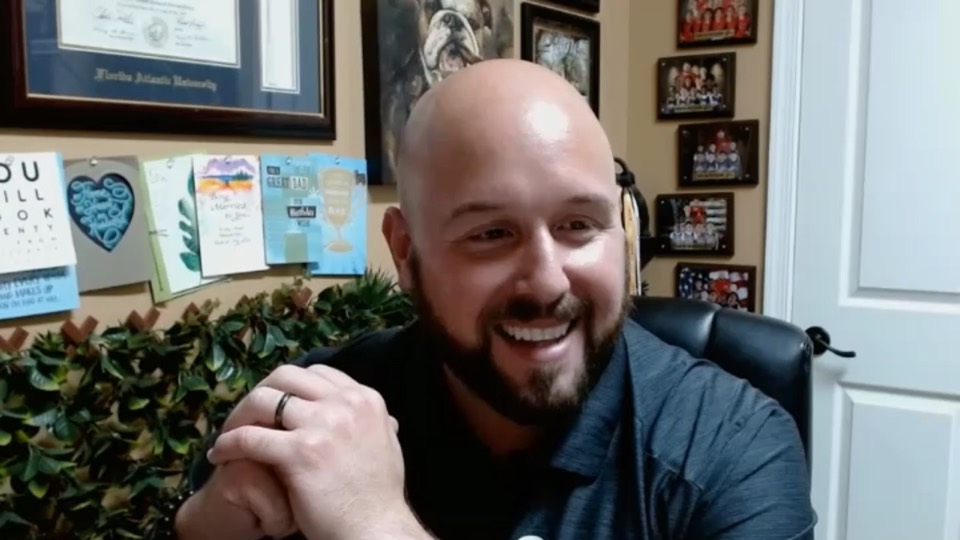
Adam Robin
Chief Operating Officer · Virtual Dining Concepts
Adam Robin, Chief Operating Officer at Virtual Dining Concepts, is the guest on episode 65 of the Restaurant Tech Trends podcast, hosted by Justin Foster.
 Play episode
What Adam and Justin discuss
- What it actually takes to build a virtual brand that breaks through the noise, and why so many of them flame out fast
- The hard lessons Adam carried over from his Reef Technology days about ghost kitchens, delivery economics, and what really moves the needle for operators
- How VDC thinks about pairing the right celebrity or creator with the right concept, and why star power alone is never enough
- Where Adam sees the next wave of virtual brand growth heading, and which pieces of the model are finally maturing after the early hype
- What separates a flash-in-the-pan concept from one with real staying power, drawn from Adam's 20+ years in food and beverage
Also in this episode
- Adam's take on where tech fits into the future of virtual dining, and the one thing he wishes more operators understood before jumping in.
Episode notes from the host
On today's Restaurant Tech Trends we go inside the wild world of virtual brands with Adam Robin, Chief Operating Officer at Virtual Dining Concepts: the company behind some of the most talked-about names out there, from MrBeast Burger to Man vs. Fries.
Thank you Adam for the behind-the-curtain look at how VDC is reinventing what a virtual brand can be.
Transcript
Full transcript (5,369 words)
Machine-generated transcript; names may be misspelled.
0:00 Hey everyone, welcome to Restaurant Tech Trends where we explore restaurant technology trends with some of the industry's biggest movers and shakers in a rapid fire short interview format. This podcast is produced by Incept AI. Incept AI takes restaurant orders over the phone and in noisy drive-thrus with friendliness and precision. Learn more at Incept.ai. My guest today is Adam Robin, Chief Operating Officer of Virtual Dining Concepts. The company's company behind some of the most talked about virtual restaurant brands out there, from Mr. Beast Burger to Man Vs Fries. Adam brings more than 20 years of experience in food and beverage with stops at Reef Technology and his own hospitality consulting practice before helping VDC reinvent what a virtual brand can be. He's leading the charge on turning delivery only concepts into real revenue for brick and mortar operators, including a new on-premise twist that's adding thousands per store per week. Adam, welcome to the show. Adam Robin, Welcome to the show. Adam Robin, Welcome to the show. Justin, really great to be here with you today. How are you? I'm doing great. I'm really excited to have you on the show because virtual dining and ghost kitchens is like an area that I know very, very little about. So I'm planning on learning a lot through our interview today. For the people that don't know about virtual dining concepts or VDC, give us the quick rundown of what it is that you guys do. Help us understand what you're doing.
1:30 Understand the business model, who your customers are, like host restaurants versus your brand partners. And tell us, like, how does the money actually flow here? Yeah, no worries at all. You're definitely not alone in trying to understand that there is this new way of the world working that every restaurant out there is utilizing an additional brand or is delivering additional concepts from what you see on the outside of the building. I was just talking to a friend the other day as we were out to breakfast right after one of our son's basketball games and they said, Oh, I had this really wonderful meal just the other day at a burger concept. I forget the name of it. And they told me the name and I said, That's, that's Denny's. We were at Denny's. I said, That's Denny's. Denny's sends you out that burger. And so if you like that burger, you probably order a burger here today and you're really gonna enjoy it. So no, it was called something else. I said, Yeah, I know that's Denny's delivering under the heading of an additional company that they have, because they have multiple virtual brand that they're executing out of their kitchens. So you're not alone in not focusing or not understanding or not knowing that a lot of these restaurants do have additional concepts. We are the most prevalent additional concepts that restaurant partners are utilizing today.
2:46 So yes, we have a ton of partners like IHOP, Chuck E. Cheese, California Pizza Kitchen and some other really big names that have hundreds and thousands of locations that are executing our brands out of. So we own all of our brands, whether that is Mr. Beast Burger, that is Pardon My Cheese Steak, Man vs. Fries, Muck Bang Burger, Burrito Cartel, just to name some of the biggest. And we've created these brands in coordination with our partners. We fully own these brands and we are marketing them on social media out in the real world. And then, of course, all over the DSPs and Uber Eats, DoorDash, GrubHub, Favor, Seven Now, so many others. And we manage all of the storefronts on our partners' behalf. So we're driving all of the sales. We're driving all of the orders. And in 90-plus percent of the cases, we integrate directly into our partner's POS. So it's going directly into the POS of IHOP. Their order is coming straight into their kitchen like it would any other order. They're executing the product for delivery. They're packaging the product. They're putting it on the counter and it's going out via DoorDash, GrubHub, Uber Eats driver, who's picking it up for delivery.
4:02 Now, you can also always get it through any of our websites, right? PardonMyCheesesteak.com, ManVersusFries.com. That's a much smaller percentage of orders and usage as opposed to everyone going the convenience route nowadays, right? Like this is what people learned since the pandemic, that they had this convenience route. And it's never going to change. So now where people used to have and partners used to have 8%, 10% of off-premise orders and digital orders and delivery orders, they're seeing 40% now. It's absolutely wild to me to hear that from our partners that the entire industry is seeing 30%, 40%, even more in some cases of their orders that are for off-premise. Yeah, it is nuts. It's grown like crazy. But just like super stepping back, like the idea here is like there's spare capacity in the kitchens. You guys are helping fill the void and you're keeping the kitchens busier. So it's more revenue for the restaurant. I always wondered, though, on the menu piece of it, how does that work? Because, you know, you've got crews, they're trained to like prep off of the menu for the brand that they're working for. And you guys come in with these concepts and they're totally different menus. How does the training aspect work here?
5:17 Yeah, that's a great call out. So this is where my 25 plus years in this industry come into play. All of my time has been spent in the back of the house, in the kitchen, then in the front of the house, really focusing on a P&L purpose, right? I have always thought in any position that I've been in my entire career of, if I can't have an item on my menu be cross-utilized at least three times, I need to cut it off my menu, right? You don't bring in unique SKUs and unique items for one use or one menu item. So we've taken that into account with all of our menus and the way that we've created our products. But even more thoughtfully, we have integrated into our partner's operations very closely. So we digest everything that they have, right? They're going to give us, here's our portioning, here's our operating procedures, here's our recipes. And then we're going to adapt our recipes for them. So someone says, hey, we use LBA, liquid butter alternative, instead of oil that you have in your recipe. We can modify that to reflect liquid butter alternative or butter versus oil. And they say, all right, we actually traditionally use a three and a half ounce scoop of cheese where you have portion 3.2 ounces.
6:34 We'll modify it to say, we want to fit into your operations. We will use the extra 0.3 ounces of cheese because it fits into your portioning. So we take that into account. We modify all of the materials. We rework the brand, taste it, work with our partners to find the right mix and balance. Then we change the materials. We provide them with all oversized build guides that they can post up that are hard laminated. We provide them with videos. We provide them with all of the training material that they will ever need. The training videos are a real big part. We give them access to our online learning portals. We give them access to a culinary verification site. We go above and beyond to make sure that they have everything they need to be uberly successful with our brands. All right. Is there like a theoretical limit for how many virtual brands can be supported by any one brick and mortar restaurant? Like what's the most you've ever seen before?
7:29 Those are two different questions, right? Is there a theoretical limit? No, depending upon the partner. Is there a suggestion that I would give? Absolutely there is, right? I wouldn't necessarily suggest any more than three call it virtual brands, depending upon how they fit into your concept and your location, right? If this is your brand and you said, I'm going to segment off my quesadillas and my burgers and my chicken tenders into different virtual brands, even though I offer all of them, that's very easy. That's a very low lift for you, right? That's also a big part of how we try and choose our partners. We talk about for man versus fries. If you already have fajita chicken, fajita steak, tortillas, french fries, you can execute this brand. Guacamole, you can execute this brand already. So we try to approach and target partners who already have all those products. So we're not bringing in new items. They're used to building and making and rolling burritos every day, right? So in order to stuff that huge two-pound burrito, you should already know how to roll a burrito. So we're not partnering with people who have never rolled a burrito before to make this brand. Yeah. But in that, if, again, depending upon how similar the brands are to your current core product, probably three, four maybe is the absolute limit.
8:47 But to your point, I have seen partners, independent partners that have seven, eight, being able to do that in a single location.
8:56 All right. Well, we'll take three or four as the advisable limit. Let's talk a little bit about Mr. Beast Burger. So you guys were an early mover here. I think you've hit over 1,500 locations now. I'd love to hear the latest count. But that's, like, completely nuts. What were some of the most important lessons you guys learned in launching that brand? Yeah. Mr. Beast Burger was, you know, one of the first movers and probably still one of the most well-known virtual brands in the entire world. We're still growing that brand today. That brand still has new homes all over the world. So we branched out internationally with that brand as well. So whether it's some of the several hundred upcoming locations that are being opened in KSA, Kingdom of Saudi Arabia, or the locations in China that were previously opened, the locations that we have in Spain, in Brazil, in Peru. It's all over the world. Right? France, Italy as well. That brand is all over the world. So we had an opportunity to grow that brand everywhere. What is wild for people to hear now is the fact that our Pardon My Cheese Steak brand with Barstool Sports and Pardon My Take Podcast and those gentlemen, we've increased the number of that and expanded that brand into almost 2,000 locations.
10:20 So that even further surpassed Mr. Beast Burger in a number of locations. And then we had brands like Man vs. Fries and Muckbing Burger that came on that further surpassed Mr. Beast Burger in total sales just because they have a higher per sales store average. So, you know, we have seen early movers like Mr. Beast Burger be a huge jumping off point for brands. Again, we're going back to 2019, 2020. Yeah. Six, seven years later, we're seeing the fact that we have new and exciting brands that are really focused on, you know, new age products and the new clientele, the Gen Z clientele that are out there ordering every day. So we've seen additional brands grow beyond Mr. Beast and we've seen additional brands that have higher per store sales averages grow and surpass Mr. Beast as well. We're very happy to say that we have all those within the portfolio. I'd like you to take us back to this first wave. Like, let's go all the way back to like 2019, 2020. There was a lot of hype around ghost kitchens right when COVID just hit and celebrity ghost kitchens in particular. And then there was a bit of a shakeout in the industry.
11:35 I think there has been a lot of skepticism around this concept in general. Tell us, like, what is the real story on which virtual brands work and why they work long term and which ones don't?
11:51 Great question. I never shy away from this conversation or this question or this answer because you're absolutely right. In a time where virtual brands were coming on board prior to the pandemic, right? But obviously the pandemic supercharged these, right? The whole world shuts down. Convenience and ordering online becomes this new thought process for so many. So again, it supercharged not only us and our business, but so many others in the industry. To your point, this is where some of the skepticism comes in because you had so many other companies that were testing the water that saw this as an opportunity that were tech forward companies that didn't know food service, that didn't know restaurants, and they wanted to dip their toes into this area as well. So not to specifically call any of them out, and I hope this isn't new information, but there's a lot of companies like Nextby or Kitchen United or so many others that were very large that had a big splash that are not here anymore. And the reason that is is because they didn't have the background and the 25 years for myself, but for the rest of the company and our founder and our CEO and our chairman, you know, 70 plus years in this industry. Collectively, a couple hundred years in this industry, just from our executive team.
13:06 So our focus was always food service first, right? Restaurant service first. Focus on the P&L and the product first. Focus on the guest experience first. And because we've always had that thought process, we have not only survived, we've thrived where we've seen so many others not make it. And I get it. We are paying a little bit for the sins of those companies and the fact that they weren't focused on these things. But again, our lasting is a testimony of the way that we focus on our brands. All right. Food service first. It's interesting. My last guest on the podcast was Atul Sud. He helped raise the $100 million for Kitchen United. So I love Atul. We're great friends. We actually just texted this week together. So he knows nothing against Kitchen United or otherwise. We were always great friends during that time. And we've always continued to communicate. But we just know, right? There was a lot of companies that were grown out of this tech forward thinking that didn't spend as much time developing the brands for longevity like we have. All right. Well, let's talk a bit about what a successful host restaurant looks like. You've got some pretty tier A partners.
14:24 Operationally, what does a good host restaurant look like? What do you look for when you're partnering? This is a big part of why we've been successful as well, right? We target specific partners that we want to work with. Okay. I have a huge list of large enterprise partners that I want to work with each and every single day. I still talk to them. I still reach out. And even if they're not involved in virtual brands or delivery, I think they would be fantastic or perfect for it. There's still partners out there that don't do any type of delivery even for their own brick and mortar concept today. There's some that really only want to focus on allowing partners to eat within their four walls because they believe that their experience is going to be the best there. And it is, right? You're going to have a fantastic experience if a manager can come over if you have a concern and said, I wasn't supposed to have mushrooms on my burger. I can fix that for you right now. Here, let me take that away and take care of it for you, right? If you forgot to take mushrooms off of your burger for delivery, unfortunately, you're stuck with it. So that has been a big part of the way that we choose who we want to work with. And our partners are fantastic, whether that's Review Tuesday or TGI Fridays or IHOP or Chuck E. Cheese or California Pizza Kitchen.
15:41 These partners have done so well because they are all open to the conversation and suggestion learnings of best practices that we focus on for delivery. We have, in some cases, really upgraded their to-go packaging because we tell them, hey, listen, we've seen french fries serve best in this product, in this packaging, right? It is rigid on the bottom, so it allows heat to escape and a little bit of condensation to escape. It has vent holes on it, so it's going to allow those french fries to be crispy and not just steam and become a pile of mush. We know restaurants traditionally don't think about that as much as we do. And because we're focused on delivery first, we've had to make those changes. So it's the way that we connect with our partners. We share data and information and performance information constantly with them. We see an issue on a review or a secret shop that we perform on all of our concepts every single month. We let them know. In some cases, we tell them some things need to be changed in the way that they're operating or the products that they're sourcing or the right spec product wasn't used. It's the same way that you would do in any brick-and-mortar location, having them secret shopped and getting the feedback of the guest, of the customer, of the clientele.
17:00 We do the same thing, and we work with our partners very closely and have great communication across the many people on my team that are always communicating with these partners. All right. Fair answer. Well, this podcast is called Restaurant Tech Trends. So we're interested in restaurant technology. And you guys sit across thousands of host kitchens, and they've all got different point-of-sale systems, different KDSs, different delivery integration setups. How do you make that work technically? Did you guys build your own tech here, by the way, or did you partner for some of that integration tech? Both. So we use very much an industry standard bearer, which is Olo. We integrate via Olo into most of our partners, especially into our large integrated partners, the ones that we mentioned, like IHOP or CPK or otherwise. It makes it much easier, especially if they already have an existing relationship with a partner like Olo into their integration or aggregation software. But yes, to your point, this is called Tech Trends. We have built and acquired tech companies, brands, and products for years now. It was a huge focus of VDC, especially since I joined in 2023. And it was, okay, we have created these great brands.
18:17 We have a focus on how we integrate with partners. We know the products and prices and clientele. Now, how can we support our restaurant partners, our execution partners, with the tech that they'll need to survive? Since that time, there's been huge changes in the industry. You had to start making sure that you are having a revenue recapture product, right? You are disputing the missing and incorrect items that are being reported. You're having to dispute the refunds that are being given back. You have to work and check on your cancellations. You have to ensure your uptime is always focused. You have to have a product deployed to change all of your online menu management and listings management. So that, along with marketing AI, one of the products that we offer as well, the way that we can, throughout the time of day, throughout a day part, throughout every hour, change the promotion and modify a sponsored listing with our partners. We have the ability to do things that no one else in the industry does. And that's because we targeted and acquired three different brands, three different companies, brought them into the fold, and then continued to improve upon their products with the thought process of, we're going to use it for our locations first.
19:37 But now, luckily enough, we've created such a wonderful product that we have large enterprise partners that don't even utilize us or don't know us for brands, right?
19:49 Red Robin doesn't use us for brands. P.F. Chang's doesn't use us for brands. Several others. But they utilize our technology, especially for their 3PDs and third-party delivery. Interesting. That's super, super cool. You know, we didn't talk about this before, but I'm curious, obviously, you know, AI is everywhere these days. It's probably the hottest topic in restaurant tech right now. How or do you guys use AI when you're standing up a new brand? It's very important to us that we utilize it to look through our marketing capabilities to understand what time of day, what day part, what pricing information, how we're going to reach those potential customers, right? As I started to mention specifically with either sponsored listings, carousel placement, or promotion offerings. That's extremely important to us as we look for how are we going to generate the highest revenue for our partners? How are we going to acquire the most customers? How are we going to do it in a manner where it has the best return for us? Because we're always very considerate of our partners who share in these expenses and costs with us, acquire customers, and to offer a discount or a promotion. The wild thing is that it doesn't matter who you are today.
21:07 It's become so competitive on the DSPs in the landscape. You open up the app and you're immediately competing with McDonald's offering a BOGO, Burger King offering a BOGO, Wendy's offering a BOGO, Chick-fil-A offering a huge promotion, Chipotle offering a tremendous promotion. Now, when you have that type of power offering those type of opportunities and promos, you have to make sure that you are optimizing your options the best that you can. So we have to deploy that each and every single day. Got it. Do you guys use AI at all on the creative side, just in like menu design or like, you know, product photos or anything like that? Yeah, funny enough, we were creating a couple of one pagers for some partners and even creating some new background images or hero images for some of us of our brands. So, yes, it's integrating, of course, all the real food photography, but for changing the background, changing the logo or the imagery or the color. Absolutely. I think everyone finds a way to do that now. It's so funny that you even mentioned it. I just got a, I woke up to a message from our CEO, Robbie Earl, this morning, and we were passing back and forth a few different turns on a product. And we were utilizing AI to make some of the changes to the background.
22:26 And his final response, I think about one in the morning, because we're always working even up until that time, was AI for the win. And it's true. We have to. We find ways to use it in our products and our tech products. But, yeah, we use it on the creative side as well. All right.
22:43 We've talked a little bit about the delivery aggregators. And in your model, you know, DoorDash, Uber Eats, Grubhub, they basically own the customer relationship. And this is a really intensely hot topic right now in the industry. A lot of effort is going into first-party ordering right now. There's a lot of tiredness with needing to pay, like, all of the commissions. But more than that, it's really ceding control of the customer relationship and getting access to data about customers that are ordering from your restaurant. How do you and your brand partners build real customer connection through this channel? How are you doing it? Well, you know, this is a focus for everybody. It's a focus for us as well. Yeah. We have first-party opportunities. You can, as I mentioned, go on mrbeastburger.com or pardonmycheesesteak.com in order. Or you're going to have a little bit of a different experience than you would going on to Grubhub, DoorDash, or Uber Eats. And we want it to be that way, right? We want to have a different way to communicate with you, a different way to talk to you and see if you enjoy it, to see your sentiment and your feedback.
23:55 And I suggest everyone, every brand in the world, focus on how they can always acquire that first-party user and to ensure that their customers are happy and satisfied. And it is really difficult to know and to understand that these third-party delivery companies are going to continue to own the partner. The best way that we see we've been able to help is communicating with them even on these platforms. So we communicate with every person who orders on DoorDash, on Grubhub, on Uber Eats. We see every single review. We offer an opportunity to come back if it wasn't something that you really enjoyed. We try and get back to them and say, hey, how can we help? You can call us. You can text us. You can email us. We would be happy to help in any way for an additional order or to try and make it better for you. So to your point, you always have to find ways to improve your communication with independents, with the customers. It is difficult. You want to try and get as many people onto first-party ordering as possible. But there's not going to be a way around it today and now and in the future. These companies are going to continue to have the bulk of those orders. And you have to find ways to integrate into those orders. All right. Well, let's take a step back even further and just look at the industry five years from now.
25:15 What do you think this virtual brand space looks like? Is this like a permanent layer in the industry? Does it consolidate into just a handful of winners? Where do you see it? How do you see it playing out? Yeah, I think we alluded to it earlier in the conversation. It already has consolidated quite a bit. I think there could be some further consolidation.
25:34 If you're asking my opinion, which you are, I definitely think that I see VDC continuing to be at the forefront of this opportunity. I think there's probably a few other players in the market that we'd like the opportunity to improve their products and improve the way that they work with their host kitchen partners and the way that they take care of their ultimate customers, the people who are ordering the food. We see an opportunity for improvement. So, again, we can improve the overall public's view of virtual brands and further bring it out into the sunlight so everyone knows. In case there's someone out there who doesn't know what a virtual brand is today, which I know there are, another five years, they will 100% know. So, I see off-premise delivery, digital orders continuing to grow. Like I said earlier, 30%, 40% in some cases. I think we'll find a balance with that with more locations getting to that number in the next several years. And we will continue to consolidate in this space. And I think we'll continue to be the ultimate winner by helping our customers. All right. No bias, though, right? No, not at all. All right. Last question before we move to our rapid-fire segment. What is one thing that you wish more restaurant operators understood about delivery-only brands and how they actually work and how to evaluate whether one is really worth running out of their kitchen?
26:58 It's always the conversation of the incremental value and the fact that you already do have these set costs. You are paying for that individual, that labor that's going to be there sitting in your restaurant on the cook line, ready to execute, ready to send out some products. You're paying for that individual whether you have one order coming in in the next hour or you have 10 orders coming in the next hour. That's always what we've tried to explain and to suggest, right? You do have spare capacity. There's very few restaurant partners that don't have spare capacity. Listen, if you're Texas Roadhouse and you're absolutely killing it from the moment that you're open until the time that you close, you know, bless you, you're doing phenomenal. And there's not much that we're able to offer you and able to fill that spare capacity, right? But if you are everybody else, you have spare capacity. Yeah. So you're going to be paying for that person regardless. Get some additional orders in. Get some additional revenue in. Don't think of it as I have labor and I'm going to have to associate labor. So because there's additional costs associated with the commission that has to go out to the Uber Eats, the DoorDash, the Grubhubs of the world, that's going to be additional dollars that you want to have that you would have had the expense already, right? The expense is not being taken out.
28:15 Get yourself some higher revenue. Raise that revenue so you are reducing the percentage of those expenses. Cost of the expenses are there. Reduce the percentage of those expenses for yourself. All right. Sounds like a good pitch. I'm buying it. Okay. Well, Adam, we are done with the formal questions for this interview. It's time to move to our Rapid Fire segment. So for everyone that is watching or listening, the questions I'm about to ask Adam, he has no idea what they are. Adam, the rules of engagement here on Rapid Fire are try to answer each one of these questions with one word if you can, one sentence if you can't. Are you ready? Let's do it. All right. What's the best food city in America?
29:05 Miami.
29:07 Interesting choice. Mr. Beast Burger or Man vs. Fries? Choosing between my children, Man vs. Fries. Man vs. Fries. All right. What is the one virtual brand you wish you had invented?
29:25 Oh, that's tough.
29:30 I got to tell you, Sunny and Fines. All right. Here's a softball for you. Drive-thru or delivery?
29:40 Delivery.
29:44 Flamin' Hot Cheetos. Pro or con? Pro. What is the most underrated menu item in your entire portfolio?
29:56 Fried Oreos.
30:00 Are you a coffee guy or an energy drink guy?
30:05 Energy drink guy. All right. What is the celebrity you would most want to build a brand around next?
30:14 That's tough. This is probably not a huge well-known celebrity, but we've been talking to an individual, General Ock up in New York, that we would love to have a part of one of our brands. We'd love to show him how we could do the Ocky way across one or two of our brands. I think it would be a phenomenal collaboration. And I'm going to forward him this clip once it comes out. I'm going to make sure that he sees this to let him know we're still thinking about him. All right, guys. You heard it here. Adam, I really want to thank you for sharing your time with us today. I learned a lot about this space. This is, like I said at the beginning, this is not a space that I understand very deeply. And I'm walking away with a great understanding of what it is that you guys do and the space in general. So everyone, Adam Robin, Chief Operating Officer of Virtual Dining Concepts. Thank you, Adam. I appreciate it, Justin. It was a blast.