Episode 10
Ron Dorsten
fmr Chief Ops Transformation Officer · Steak 'n Shake
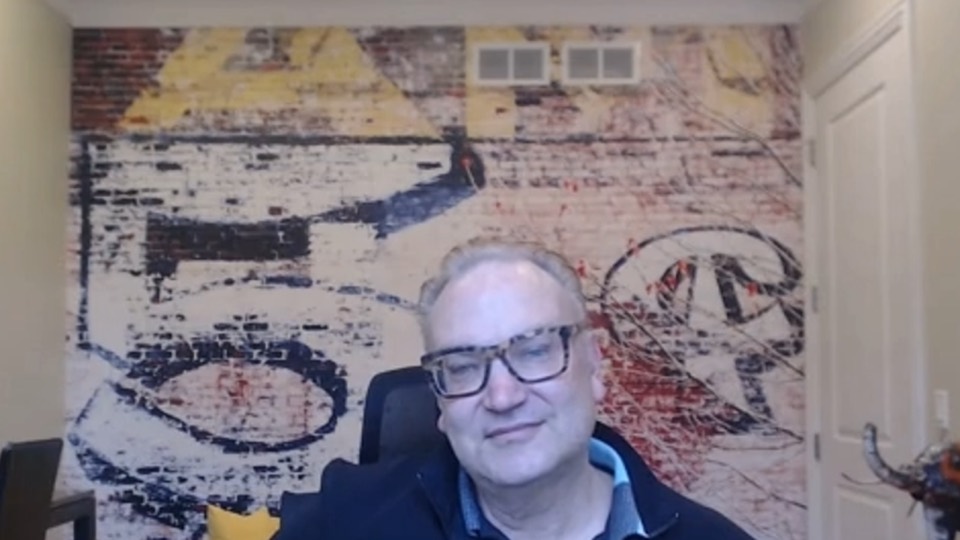
Ron Dorsten, fmr Steak 'n Shake Chief Ops Transformation Officer, is the guest on episode 10 of the Restaurant Tech Trends podcast, hosted by Justin Foster.
 Play episode
What Ron and Justin discuss
- How McDonald's leveraged investments in frontier technology to create lasting value for the chain
- Why Ron thinks the industry should take a simpler approach to robotics in the back-of-house
- Why you need to think from an operator's perspective first whenever launching new tech
Episode notes from the host
On today's Restaurant Tech Trends, Justin Foster connects with Ronald Dorsten, former Chief Operations Transformation Officer at Steak n Shakeand former Director of Worldwide Innovation at McDonald's!
Transcript
Full transcript (2,833 words)
Machine-generated transcript; names may be misspelled.
0:00 Hello, welcome to Restaurant Tech Trends where we explore restaurant technology trends with some of the industry's biggest movers and shakers in a rapid fire short interview format. Today, I'm joined by Ron Dorsten, who is the former Chief Operations Transformation Officer at Steak 'n Shake. And prior to that, he was in various technical leadership roles for nearly 20 years at the biggest QSR of them all, McDonald's. And aside from that, Ron is just an amazingly cool guy. And I am super happy that he was able to give a few minutes of his time today. Welcome, Ron. Hey, thanks Justin for having me. I'm excited to have this conversation with you. Absolutely. 100%. So Ron, one of the things I wanted to ask you about was how you made this transformation into the transformation role from engineering leadership roles at McDonald's. What was that like for you? And how was the role different for you? Steak 'n Shake are really almost like a whole lot of the business. Steak 'n Shake are really almost any restaurant chain. The problems are very simple. You're trying to solve. You have ever growing competition, tightening labor markets, external factors that show up, whether it's COVID, tariffs, or new competition coming into the marketplace. So you've got to be kind of adaptive in what you're looking at. And then customers, they're becoming more demanding. They kind of want things where they want them, when they want them, and how they want them.
1:22 You know, so those problems don't really change no matter what, what chain you're working for. For me, it's always about how do you just focus on the restaurant and solving the restaurant problems. And then taking it from there and putting it through some similar filters of, is the solution that we're looking for to solve that problem? Is it going to be a technical solution? Can you actually technically do it? Is it feasible to do? And then can you afford it? Is it something that will fit within that particular chain's financial model? McDonald's and Steak 'n Shake, just a little bit different model there in terms of overall store volume and stuff so they can afford different things. And then at the end of the day, can you scale it? Is this something that's going to work for one store? Is it going to work for all the stores or a subset of the stores? I used to think about things in those terms. So the transition honestly wasn't that hard. The biggest thing that was difficult for me was going from a place where you had a lot of resources to someone that has to wear multiple, multiple hats and be a little bit more entrepreneurial in the way that you approach things. So you got to be a little more creative. You got to be a little bit more hustle, hustle to it. And you can go, oh, I need to go get someone from operations. It's like sometimes you were operations in IT. So you had to kind of think about problems in a little bit different way, in a little bit broader way. So that was probably the biggest transition. And I think actually learning about the business in a broader sense, not just a very technical sense or strictly operations, but really looking at it from a financial standpoint and the business aspects of it as well was probably the other thing that's probably the hardest transition.
2:47 Well, I know in both chains, you were involved in projects that involved scaling out technology. And so I'm really curious to learn what are some of the programs that you either spearheaded or that you were involved in that you're especially proud of at McDonald's and or Steak 'n Shake? Yeah, so I would say probably two. So at McDonald's over 20 years ago, being part of the first automated restaurant. So we were really on the bleeding edge of automation. We were on the bleeding edge of some technology like kiosks, implementing those. We were able to have customers come in and put their own orders. And then from there, actually cooking the hamburgers, cooking the French fries, cooking the chicken nuggets all automatically and having them all kind of finished and then just assembling the products for the crew. I'm doing that, you know, over 20 years, I guess 22 or 23 years ago now. That was really cool. Now, it never scaled, but the learnings that came out of it were really great. So I kind of looked at it as like a moonshot and we got Tang out of it. So we got things like a frozen fried dispenser that improved the yield to the French fries out of it. Oh, cool. It also made it easier for the crew to operate. We learned things around cooking of beef that led to technology and two-sided clam cooking that gave us multiple gap grills.
4:05 So we found out that by releasing pressure, we could actually get a better, more juicy hamburger out of it. So we learned a lot of things from taking that moonshot and bringing it back in and then scaling other things that were actually probably more cost effective for the restaurant. And then learning about in automation what works and doesn't work. So we learned a lot about that because automation comes up over and over again and it's big right now. And then at Stake and Shake, really delving into AI and the capability of AI and the different use cases for it. We were exploring looking at voice AI, which I know is near and dear to your heart, and really learning about what would work for a company like Stake and Shake. The biggest thing there is understanding the financial model. So two things, the financial model is, you know, can we afford the zap fees in our restaurants when it's a penny profit business? And then the other thing is, does it match with our brand in terms of the type of experience we want our guests to have? We want to have that kind of authentic personal connection. And how do we make that happen with something like voice AI? So that was a new technology from USA to go learn a lot about it. So thanks to Justin and some of the education he's provided me along the way. So those are kind of the two cool things I'd say. Yeah, those are awesome. And, you know, working on those things are things you can always kind of look back and be proud of.
5:21 So two quick comments. First of all, I definitely agree with you, Ron, that unit economics are one of the most challenging problems facing voice AI. And hopefully we're about to see some big changes happening in that over the next year or two. And then the second thing is I wanted to ask you a question about the automated restaurant at McDonald's because, you know, now there's flippy, dippy, skippy, all these different like robots that, you know, can make fries and can flip burgers and things like that. How far off do you think we really are from having robotics take over in the back of house? Do you think we're 10 years out, five years out? What are the big challenges you see there? I think the biggest challenge is the industry may not be going about it the right way. So when you see a lot of robots and stuff in restaurants, A, you don't have necessarily the service network to support them moving forward. So you have to build that all up. You know, and what you're trying to do is replicate human movement. You might be better off taking a more simpler approach of what am I really trying to do? I'm trying to move something from point A to point B and is there a simpler way to do it than a really complex multi-dimensional robot that takes up a lot of space. Right. You know, so look at what, look at White Castle, for example. They've been in the process of trying to do, I think it's flippy, where they're doing it with, where they're frying station.
6:42 You know, they have a big order, I think, with Miso Robotics, but it's been a really slow migration because it doesn't fit in the restaurant because it takes up too much oil. I see. You have to do a rebond while they go with it. So that creates a scalability problem. So when you go back to those initial filters I was talking about, is that the right solution for that problem? Or can you do it in a different way that fits in the footprint that could allow you to scale much faster? And that's what I think the industry should be thinking about and looking at. So look at like Sweetgreen and their automation. It seems to be integrated well with their food items. It fits in the footprint they're doing. It makes sense for them when it's an assembly thing. It's just putting different lettuce combinations together and does a really good job. So I think simpler automation is something that the industry needs to be thinking about. Robots are cool and exciting, but are they the right application? In some cases, yes. And in other cases, no. So you have to think about the problem first, not the cool technology. Well, I think this is actually a really great segue into my next question. You gave the example of robotics and White Castle and making sure that you're thinking through that the robot can actually fit within the footprint of the restaurant. Well, you've been involved in deploying a lot of different technologies. So what would you say is like the most important thing to consider when you're going to be launching a new technology successfully at a QSR brand?
8:05 So great question. So start with the operator first. First and foremost, you know, does it make the ship manager's job easier is a great question to ask. Does it improve throughput during peak capacity? You know, it's kind of a quick checklist might say, is it faster service? It's easier training, fewer touches. That's kind of the minimum bar. From there, then you have to think about does it drive measurable business impact? You know, examples of that might be faster throughput, something like AI scheduling, optimizing labor spend, you know, so you're not over scheduling, under scheduling, and you're scheduling at the right time and you're getting the right people in and tying that into training. So you get the right people in, not just people in. And then the next thing I would say is important is piloting in real world conditions, not optimal conditions, you know, so put it in that worst case scenario. Put me in a Friday lunch or, you know, it depends on what your business is, Friday lunch or a weekend lunch. Do it with your short three people because three people called in sick that day. You know, put it in those conditions depending on what the solution is and then keep it as simple as possible. My example around automation, these really complicated robotic arms, you don't have the service network necessarily to do it or you have to build one up, you know, make it simple automation.
9:27 So like when I talked about at McDonald's, things we got out of it was like a frozen fry dispenser. It was a really simple automation that made the cruise life easier and more accurate in terms of what was going into the fry basket. So again, it kind of hits on those things, right? The same things. And then after you keep it simple, you know, think about simple in terms of if I have an inexperienced crew person, can they learn it and be a proficient in it in like 10 minutes? You know, they've never been trained on it before. So think about if you have a teenage kid, could they go in there and do this in 15 minutes with minimal training? Or in there, I'd say, does it align with the brand experience? So like it's take and shake with the voice AI. Wanting to have those authentic human interactions. Is that what their brand experience, you know, that way you get tech aligned with that. So like, for example, I think Chick-fil-A does a great job of that with their outside order taking. It feels like it's truly authentic to them with their guest experience that they're trying to provide with those connections with their crew people. That's a good way of saying tech and the brand is well aligned. And then layer in more value later. Chick-fil-A would say my pleasure.
10:34 Exactly. Well, just one more question for you, Ron. Those are great words of wisdom, by the way. I love that. It was a super comprehensive answer. And it just goes to show it's not incredibly simple, but it sounds like you've developed a playbook. You've seen this happen and you know how to launch successfully. Now, as you look out across the industry, what are some of the technologies that you're the most excited about? Where do you think the QSR of the future five years from now is going to be substantially improved through the use of technology?
11:13 Yeah, so probably three areas that I'm kind of trying to keep an eye on. Embrace artificial intelligence. So there's voice AI. There's camera combined with AI. There's a lot of computing power. There's things where I can take inventory with my camera just by using a handheld and go back. I can count everything for me and tie it into my ordering process. So I think how do you use AI and its computing power to help you get more efficient with your indirect labor activities, get a better experience for the guest in direct labor activities? So voice AI, if you make a really good communication system, you can get to the guest faster. You know, they don't have to wait to be responded to, especially in situations where there's low labor, where they're doing multiple things. It frees them up from doing those things. So that's probably the first one is how do we embrace AI and use it and do the right use cases to solve the right business challenges. Next, I would say digital ordering and delivery. Again, is, you know, people are getting more comfortable with things like phones and personal devices. And they want more convenience. You know, they want it to be seamless. They want it on their terms. So how do you tie that together and then connect that into the restaurant so that it makes it more efficient and seamless for the customer and easier for the crew?
12:31 And then also getting smarter so you can be more personalized in your approach. So it knows that I like these three orders and it asks me, do you want those three orders? So I don't have to search through a big menu. Again, making it easier for me. And then automation robotics, but I think it's about how do you make it simple and easy and intuitive? Labor's getting more and more challenging. So how do you make it more cost effective? How do you get more out of your labor? Or what are the things that you can do to not necessarily get rid of labor, but repurpose the labor to be on those things that are really important to your business, which is customer facing things? And how do you make it so that it's easy for them to do and maintain and provide great service? So those are the three, I think, big macro trends that I'm kind of keeping an eye on and looking at saying, how do we get better at those things and how fast are they coming? I think some of the AI ones are coming faster. I think robotics, because of the physical cost, will take longer. And people will have to look at those in terms of how much labor does it save and how do you financially rectify that doesn't take a person off the floor, but it extends the time between when you need to bring someone else on. So you have to be creative and help me look at it from a financial standpoint. Well, Ron, it's always a pleasure speaking with you. You are one of the smartest people I know in this entire industry.
13:48 And more than that, you're just a great guy. And I'm really looking forward to seeing what comes next for you. And thank you for sharing a few minutes of your time today. Thank you.