Episode 9
Phil Crawford
former CTO, CKE · Adyen
Phil Crawford, Adyen (former CTO, CKE), is the guest on episode 9 of the Restaurant Tech Trends podcast, hosted by Justin Foster.
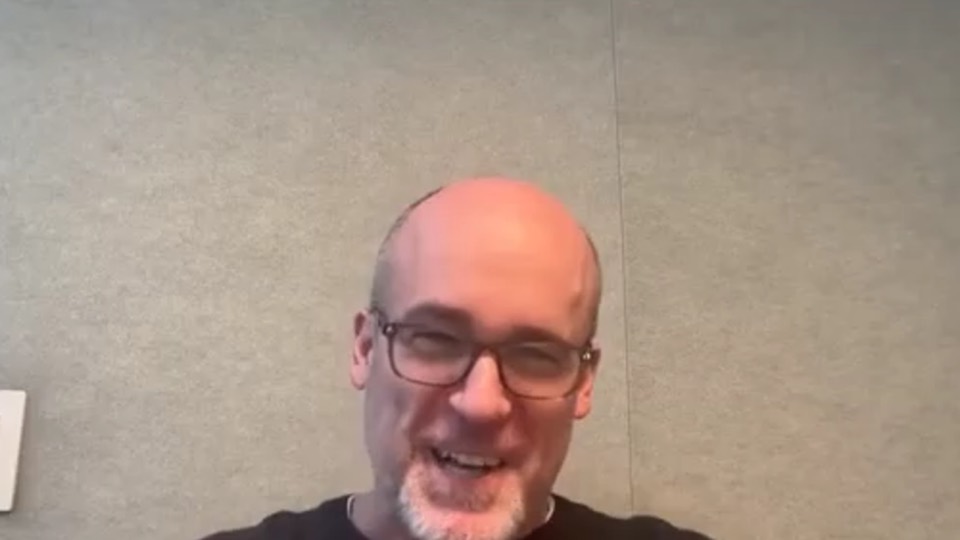 Play episode
What Phil and Justin discuss
- Phil's hot take on Wonder's $600M raise and the DoorDash acquisitions of Deliveroo ($3.9B) and SevenRooms ($1.2B)
- What Phil sees as the single greatest technology challenge facing restaurants today
- Which technology Phil sees as an overrated short-term play, but may pan out in the long run (hint: it's not AI)
- Phil's take on how CTOs should balance accepting the stability of legacy infrastructure while leaving room to innovate
- What prompted Phil to *make the leap* from the technology C-suite to running an entire business unit on the green side ()
Episode notes from the host
Phil Crawford is undeniably one of the most influential figures in restaurant & hospitality tech.
He is currently the Global F&B + Hospitality Head of Unified Commerce at Adyen, and previously was the CTO at CKE Restaurants, Inc. and CTO/CIO at Godiva Chocolatier, Shake Shack, and Yard House Restaurants.
Lucky us: he joined Incept AI's co-founder Justin Foster to share his thoughts on the technology and business strategies needed to win in this fast-changing industry.
Transcript
Full transcript (2,580 words)
Machine-generated transcript; names may be misspelled.
0:00 Hi, everyone, and welcome to Restaurant Tech Trends, where we explore restaurant technology trends with some of the industry's biggest movers and shakers in a rapid fire short interview format. Today, I am overwhelmingly lucky to be joined by Phil Crawford, who is the global food and beverage hospitality head of Unified Commerce at Adyen, a global technology and payments company. And when I think about rock stars in the restaurant industry and in restaurant tech specifically, Phil is at the very top of that list. Prior to his time at Adyen, he was the chief technology officer at CKE Restaurants, which is the parent company of Carl's Jr. and Hardee's Brands. And prior to that, he was the CTO at Godiva. And prior to that, he was the CIO at both Shake Shack and Yardhouse restaurants. So that is a lot of time in the C-suite and pretty impressive resume, if I do say so myself. Welcome, Phil. Thanks, Justin. Always humbled by the intros. I've been doing this a while and have been blessed to work with a lot of great companies, but also a lot of great peers and mentors. So look forward to our little chat today. Awesome. Thanks so much for joining. Well, let's start off with some current news.
1:15 We have a couple of really big announcements that have happened the last couple of weeks. Yeah. The first is I'd love to get your thoughts on Wonder. They announced that they've just raised another $600 million. They plan to double in size. They own Grubhub, PaceMade, Blue Apron, and they're now valued at over $7 billion. Are these guys the next big thing in restaurants? Yeah, there's been a lot of news, you're right, about M&As, about raisings and so forth. Look, I think Wonder is building a comprehensive, call it mealtime super app or platform. By acquiring Grubhub, they obviously gained a massive delivery infrastructure. Tastemade bring them content and customer engagement opportunities. Blue Apron, direct-to-consumer meal kits. Look, are they next big thing? Man, it's so early to say definitively, but there are a lot of factors in there working in their favor. Obviously, the funding of $600 million. Money in the bank always helps, right? They have some seriously experienced leadership with Mark Lohr there, building successful businesses. They have, I think, their vertical integration, owning part to the value chain, meal kits, content for restaurants and delivery, gives them more control and potential efficiency gains.
2:30 They have an adaptive model, I think, really. It's just from solely mobile kitchens to also include physical food and other adaptive strategies. I think also they're addressing consumer trends. They're tapping into demand for convenience, variety, quality, and delivered. But like anything, you know, a lot of these have challenges too, right? You take money on, you get a profitability of delivery. You obviously have execution risk with rapid expansion. It's a highly competitive space in food delivery. So I think, yeah, it's time to tell, but I'm optimistically optimistic, if that's the right way to say it, about where they're going in the future. Well, this vertically integrated model is definitely something that's pretty unique out in the space. And you mentioned food delivery, so that's a great segue to the other big news of the week, which is DoorDash making a couple of acquisitions, Deliveroo and Seven Rooms. What do you think about those? I mean, DoorDash has got two big ones, right? What, seven rooms for $1.2 billion? I mean, that's a monster. And before that, they acquired Caviar in 2019 and Chowbotics and BeBot in 2022. Like, Seven Rooms is particularly significant because it moves DoorDash deeper in, I think, in corporations and customer relationship management, or CRM as we call it, for full service restaurants. And also hospitality venues like hotels, which I oversee here at Adyen, right?
3:46 Seven Rooms is a well-regarded platform for reservations, wait lists, table management. The list goes on and on and on. So I think by acquiring Seven Rooms, they expand their offering to restaurants. They have now more tools outside of just delivery for restaurant managers to manage in-house operations and guest experiences. They're going to deepen those relationships with those restaurants. They now have more access to valuable guest data, more insights in consumer behavior to complement the delivery data, potentially enabling more sophisticated personalization. It's also a competitive play with other hospitality tech providers against companies that offer a wider suite of restaurant management tools. And now it also gets into new verticals, right? Seven Rooms presence in hotels and other hospitality, as I alluded to, now opens up potentially markets for DoorDash. And then also Deliveroo, they just bought for $3.9 billion, right? Which expands a global footprint into Europe, Asia, and the Middle East. So San Francisco DoorDash is now everywhere globally, which is amazing. I know. These guys are on an acquisition rampage right now. Well, we'll see how it all plays out. Yeah. Time will tell. Well, Phil, you and I, we worked together for a brief time when you were at CKE. That's actually how we got to know one another. And now you've moved over to the dark side, which I think gives you a really unique perspective on restaurants and restaurant technology in particular.
5:08 The green side. I'm curious. The green side. That's right. The green side. Adyen definitely understands green, for sure. Yeah. Better than pretty much anyone else out there. I'm curious to learn, though, now that you've moved over here, what do you see as the biggest tech challenge today that restaurants are facing? And what are the challenges that brands are most underestimating on the tech side? Yeah. So first, you know, Adyen is a global fintech company platform for provides restaurants and hospitalities payments, right? It's finances, accelerates growth. You said it. We're a payments processor. What makes us unique is that we're an acquired all in one. We simplify what it typically is a complex process of handling transactions across different channels and geography and simplifies it. But that doesn't mean there's not already there's not existing tech challenges. Right. And so the electrons in and of themselves putting payments to the side, like they underestimate the complexity and the criticality of integrating all these desperate systems. You and I have lived that in previous lives. Right. There's so many different technologies over time. New PLS. New AI. Like new loyalty. New scheduling tool. Like there's all these different solutions that are trying to solve a specific problem. But there's a lack of seamless integration between these solutions and that creates amazing inefficiencies.
6:28 Data siloed. Workflows are clunky. Never get a single view of the customer. And then the brands often underestimate the resources and times or to connect them all. And then obviously it leads to a whole slew of other messes. Poor data utilization. Manual work arounds. Fragmented customer experience. So, man, there's just a lot of different things that play into the biggest challenges that they underestimate. Right. And then it comes down to like if they can't talk and you can't automate it, are you better off with a new solution or are you better off just finding what you already had and modifying it? So, and a lot of, you know, decision matrixes have to come into the entirety of the matrix per se. So, the short version is we got to fix the glue. We got to make the glue work. We got to make everything work well together. And this might be a good segue into my next question, which is about unified commerce at Adyen. So, as you mentioned, Adyen's mainly known as a payments company, payments processing company. You're leading unified commerce. I'm curious, what does unified commerce mean for Adyen and what does it mean for restaurants? And how do you see restaurants today really using payments as a strategic customer experience tool?
7:43 Yeah, look, Adyen's key differentiator is that we're a single platform that handle online, mobile, in-store, plus, plus, plus transactions. And that allows for the glue, in essence, what you just used to use your own verbiage, a business is that the businesses to have a consolidated view of all the transactions and consumer data, right? That becomes a very big part of our ecosystem, quite frankly, right? I think additionally, outside of that, like payments used to be purely transactional, right? Now it's strategic because now we're looking at seamless and varied payment options. We have payment methods are foundational. Contactless, tap to pay, mobile wallets, QR payments. The goal is once again, is to remove friction and allow customers to pay however they want to. Quicker, easier, in-hand, off-hand, whatever kind of terminology you want to use. Like additionally, like payments also now directly linked to loyalty programs, right? That's a powerful strategy. When customers pay, their loyalty count is automatically recognized. Points are earned, redeemed, personalized offers can be applied. But then now we go back to this data capture and personalization. Payment data, which I'm really keen on, provides a wealth of information about customer behavior, what they order, when they visit, how much they spend.
9:02 And we can use that data as restaurants, integrate with other systems. Hopefully they're not desperate systems. They're integrated. Like POS and CRM to personalizing in those offers, marketing message, and even in-store experiences through all these different feedback loops. Got it. Well, let's transition a little bit to just general restaurant trends that you see out there today. What are some of the things that you see in this space that are the most overrated? And what do you think is most underrated? We're not going to use the AI word. I think the biggest thing that's overrated right now is kitchen robotics for complex tasks. I think it's overrated. Why it's impressive, it demonstrates and potentially used for high repetitive simple tasks like flipping burgers in my previous life. Right? The widespread implementation of that is so complex and so diverse in the restaurant environment, it's faced significant hurdles. The cost, standardization, handling varied ingredients. Like, and again, there's some brands that have done it well. I think from the overall uniformity implementation, it's hard. Underrated, and I'm going to dip on this again. Right? Is like data analytics and business intelligence platforms are completely underrated.
10:17 And I think they're getting pushed to the sides. So unfortunately, restaurants collect all this data, a vast amounts of data from various systems, but they don't effectively, effectively analyze or act upon it. And as a result, we have underrated technology focuses that brings data together in a meaningful way to provide actionable insights. All right. Well, when you were at CKE, you had to manage a ton of different technologies, right? You had a lot of legacy tech and then you had a bunch of new stuff that was coming in. And as a CTO, how do you manage the balance of maintaining stability in your systems while innovating? It's a balancing act, right? It's like juggling balls. You have to maintain pushing stability, but also pushing for change when dealing with those legacy systems. But like it's access and prioritization. Like how you conduct a thorough audit of what you've got and understand the dependencies. How do we isolate and integrate like rather than attempting to complete risky and rip and replace? Like how do we focus on those components that need to be changed or building APIs? Like how do we phase in modernization, implement changes in phases, start with less critical to more specific functionalities? Like how do we invest in integration layers, develop robust integration layers?
11:33 More importantly, how do we build a business case for modernization and get the entire business behind us to show the benefits? And last but not least, how do we foster a culture of continuous improvement that encourages mindset for ongoing evaluation? And I'm curious, let's dive on that one a little bit deeper. Building a culture of continuous improvement in organizations in the restaurant industry. The restaurant industry historically is a pretty slow moving, slow to change industries, particularly when it comes to technology. How do you do that? How do you build a culture of continuous improvement? How do you build a culture of innovation, maybe an environment that might be more resistant to change? Look, I think it's like ongoing evaluation and improvement and then it's recognizing technology is consistent and evolving. And that modernization, not one project at a time, but a continuous process. So it's a continual education and movement. I wanted to learn a little bit more about what prompted you to make this leap over to Adyen. And now that you're at Adyen, how has that changed your perspective on restaurant technology generally? That's a great question. It's been one that's been brought up in a variety of conversations in the past. And the question is why? Right. Why would you move from being a CTO, a CIO of some major brands into a fintech space?
12:53 Right. I think first and foremost, it's a challenge to myself. I get sometimes put in these boxes, a technology innovator. But I also want to explore how I could be better as a human, but also challenge myself as I've actually want to be a CEO of an organization. How can you get outside the technology bubble and run an entirety part of our business, not just from technology, but also from a sales and marketing and commercial and strategy and use all the years of wisdom I have from the restaurant space in those C levels. And then also then help an emerging company like Adyen inside of food and beverage and hospitality and basically run this department in this division and the end. And some people would say, you're right, you went to the dark side. And I made the joke earlier, I went to the green side. Because there's so much headroom here, both professionally, personally, but also from the company. It was one of those moments in time that I had. I don't want to be 10 years down the line, have this conversation with Justin with you. Like, remember that time I had the opportunity to go to a different industry and leave change and leave a flag and plan a mark. And I didn't do it. I didn't want to have a moment of could have, should have, would have. Well, I'll just say purely from the sales and marketing perspective, you have really increased the visibility of Adyen.
14:11 Adyen, Adyen, because I heard you say Adyen, so I'm changing from now on. Adyen, you have really grown the footprint of this brand in the restaurant technology space. I mean, I saw you at the restaurant leadership conference. I see the brand at multiple different events that are out there. So I think purely from a marketing perspective, you're absolutely crushing it. So I wish you nothing but continued success, Phil. I'm really thankful that you were able to take a few minutes to chat with me here today in two different locations. Change. Change, that's right. Everyone, Phil Crawford, the global food and beverage and hospitality head of Unified Commerce at Adyen. Thanks to all. Thanks, Justin. Good to see you as always.