Episode 1
Randy Barnett
Chief Technology Officer · The Melting Pot
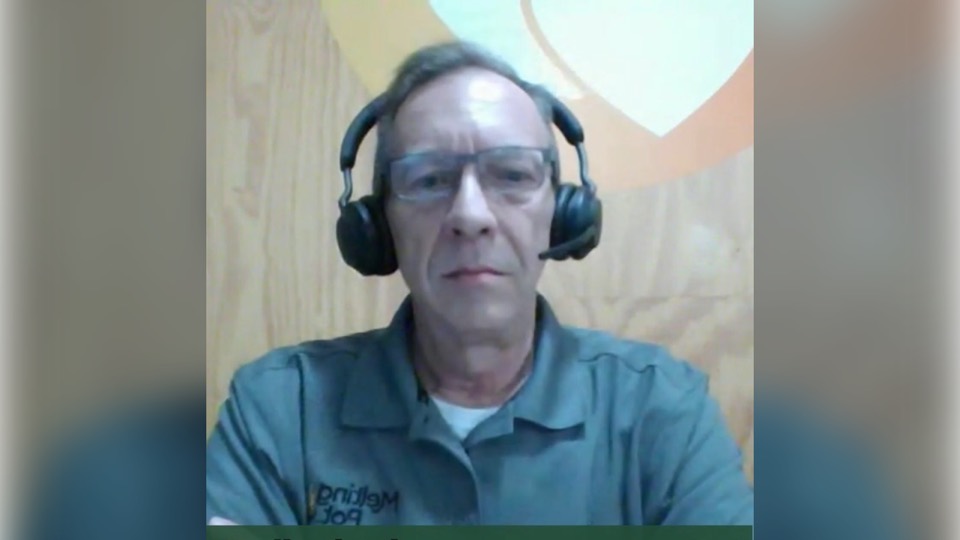
Randy Barnett, Chief Technology Officer, The Melting Pot, is the guest on episode 1 of the Restaurant Tech Trends podcast, hosted by Justin Foster.
 Play episode
What Randy and Justin discuss
- How to build a tech-forward culture with operators & execs
- Which technologies are ready for prime time, and which may be a little more on the horizon
- Why it's important to have a strong technological foundation before innovation can flourish
Episode notes from the host
Welcome to Restaurant Tech Trends, Episode 1! We don't know if this will end up as a podcast or just a collection of LinkedIn video interviews. What we do know is that we want to talk with innovative restaurant tech pros and get the word out to help execs and operators make smart decisions when it comes to all things restaurant tech. Randy Barnett, VP Innovative Technology, Systems, and Data at The Melting Pot Restaurants is our first guinea pig guest (Thanks, Randy!). Our Co-Founder & CRO Justin Foster hosts.
Transcript
Full transcript (2,608 words)
Machine-generated transcript; names may be misspelled.
0:00 Hey, everybody. Welcome to the very first episode video installment of Restaurant Tech Trends. I'm still not exactly sure what this is going to be. It might be a podcast, maybe just some videos that I post to LinkedIn every now and then. But I do know that the point of it is to meet with innovative leaders in restaurant tech, pick their brains, learn about what's going on in the industry, and learn a little bit more about some of the projects that they're working on. Today, I'm joined by Randy Barnett. Who is the Vice President of Innovative Tech Systems and Data at The Melting Pot. And for those that don't know, I would say The Melting Pot is either is a fine dining or a highly elevated casual dining chain known mainly for serving fondue and delivering an interactive dining experience. Welcome, Randy. Thanks for having me, Justin. Glad to be here. Yeah. Melting Pot. We've been around for about 50 years. So a lot of people know who we are. For sure. You definitely have very strong mind share out there. So I was just thinking, Randy, about how we met. We actually really haven't known each other for that long. I think it was just last summer, right as we were in the early stages of getting Incept AI off the ground. And I actually think we met here on LinkedIn. And you were one of the very first members of our advisory board.
1:19 I just want to say, I really believe a big part of who we are in general is a result of the people that we choose to surround ourselves with. And Randy, I am so glad to have met you and to have you be one of those people I surround myself with. And I just wanted to start by thanking you for all of your help as we launch this new startup. Getting off the ground is definitely one of the hardest parts. Yeah. Thanks for saying that, Justin. You know, this goes both ways. I've learned so much from you guys and and really impressed with what you're doing. And I'm happy to be along for the ride. Thanks, man. Maybe Randy, can you start us off and just tell us a little bit about your role and your time in the restaurant industry? Yeah. You know, I had the technology department up over here at Melting Pot. We're 90 plus locations. So, you know, the entire tech stack is it falls under me for both the restaurant support center and all of our restaurants. You know, that includes implementing, supporting and future proofing the business. Business, you know, applications is a big part of what we do. So business systems, POS, reservation systems, back of house systems, all of those things and supporting those is a big part of what we do as well.
2:44 So. Yes, that's kind of a nutshell. I've been in the tech world for 35 plus years, probably probably longer than you are old. But no, not quite. You know, the last close to 20 years has been primarily in restaurant and retail. Did a stint with a with a company called Zoe's Kitchen, which was a publicly traded company back in the day. Did some work with a company called My Fit Foods, which was sort of a hybrid at the time between restaurant and meal prep. There's a lot of those out there now. This is probably one of the first. So. So, yeah. So that's my background. Awesome. Well, it's really cool that you're leading the whole tech department today at the Melting Pot. I am very interested in the fact that you have this word innovative in your title. I would imagine that that exposes you to a lot of emerging trends in the space. And I'm curious what you see today as some of the most important tech trends in restaurants. Yeah, I'm not sure if the title is one of those things that you have to live up to. Right. For sure. Every day we put forth whatever we think is the best.
4:02 But, yeah, you know, everything we do has to be foundational at its core. But, yes, the innovation is something that we're always striving to do better, particularly, you know, the restaurant business has traditionally been slow to adopt technologies of any kind, quite frankly. Right. Within the last within the last five or six years, it's getting a lot better. So we've we've actually, you know, gotten elevated to some degree by necessity. But a lot of it, I think, is what we bring to the table. So, you know, we're partnering with our marketing teams. We're partnering with our operations teams, which which has helped us. You know, we're not just the guy sitting in the corner anymore, you know, fiddling with switches and routers. We're actually bringing something to the table for the business. So I want to actually dive into that a little bit more because you mentioned that restaurants are historically or have been historically slow to adopt technology. I see that same trend as well or that same just sort of industry factoid. What are some of the things that you've done to work with ops, to work with marketing, to partner with other executive leadership to create a forward leaning technology culture or an openness to adopting technology within a restaurant team?
5:28 Well, it doesn't hurt that we've got a really good team here. Our team at the Restaurant Support Center is fantastic. But, you know, I think, you know, early on, since I've been here, you know, it's the first thing was partnerships and trust. You know, you have to align yourself with the right people at the right level up and down the up and down the chain. But, you know, look, you can do anything you want, but if it doesn't work and you can't put something out there that's that's that's viable to the business and helps move it forward, it doesn't matter. So I think that's that's been something that I've really, really worked hard on building those relationships and building that that level of trust. I mean, you know, we involve as many people as we possibly can with all the decisions that we make. We like to make sure that, you know, our restaurant operators are involved in those things. So, you know, as they feel a piece of ownership, you know, it helps with that adoption. Right. Right. You know, they all have contributed in some way. So, yeah, it's been very it's been very helpful to do it that way. Just out of curiosity, what are some of the things that you do to help your operators get involved? Just seeing them out in the field or do you have like, you know, conference or meetings that you do?
6:45 What are some of those things? Yeah, we do all of that. Of course, you know, we have a an annual conference, which most restaurant organizations do. But I think really what's important for us is when we take on, you know, a project of any size, let's for example, let's let's say a POS rollout. Right. Back in twenty eighteen, we formed a task force to help us understand what the needs were and help us, you know, make that decision. So, you know, to me, that was critical. And again, you got buy in because they feel a sense of ownership. And quite frankly, you know, you're getting information from them that we might not have. Or sure we don't pretend to know everything that happens all day long, every day inside the four walls. So if you if you keep that communication up, it works. And we've done a couple of those over time when we do an RFP of any sort. We we involve our restaurant operators and our franchisees. Awesome, man. Well, you mentioned the the POS rollout. That is obviously probably one of the largest technology initiatives that happen at any restaurant. I am curious to learn a little bit more about either whether it's POS or it's been another tech initiative that you've worked on at the melting pot. You know, what is one that's been really successful?
8:02 And maybe you can share with us why and then maybe what's one that you thought might be successful. But for whatever reason, you know, it just didn't generate those results that you'd hope for. And what are maybe some tips you can give to, you know, other restaurant tech executives so they don't make those same mistakes? Well, you know, POS was foundational. I mean, if we didn't have that to begin with, we weren't going to get anything afterwards. And we all knew that when I came on board eight years ago, we had multiple POS systems out in the field. They were working. They were fine in a lot of ways. But, you know, it limited us in some of the things that we could do and that we knew we wanted to do in the future. So, you know, that was a big, big part of where we are today was building that foundation. So I would absolutely recommend having that good, solid, you know, infrastructure in place, if you will, from a business perspective. For sure. Again, formed a task force, took our time, did a pretty extensive pilot. We piloted at three locations, which is, you know, it's common within the restaurant industry that, you know, you do pilots and you take your time. And it's sometimes it takes a little longer to do it that way. But you learn things along the way that you might not have otherwise learned.
9:20 And again, you're building that trust. You've got something that you can show, hey, this works. We're not just going to ram something down your throat. You know, your peers are using it and it's and it's the right thing to do. You know, along the way, obviously, we've learned a lot of things. You know, I wouldn't say we've had anything that's just crash and burn, but we've had several things that. Yeah. Well, yeah. Yeah. But but, you know, there's always something that that doesn't, you know, work quite like you would hope that it would at least initially and you have to tweak it. So just be prepared to make adjustments sometimes on the fly. Don't be closed minded if if something comes up later. You know, don't don't be so narrow in your focus that you can't think of, you know, outside the box a little bit and say, hmm, maybe there is a better way to do that. Listen, right. Listen to people, listen to your partners, have good partners along the way that you can trust to give you really good advice and not just try to sell you something. For sure. I'm curious, as you look at, you know, innovation in this space in general, what are some of the technologies that you think are the most promising and really ripe for adoption today?
10:36 And then what are some of the technologies that you see that you would characterize as being sort of more on the horizon or they're very interesting, but might not really be ready for prime time? You know, I think I think the answer to both of those questions may be the same thing, quite honestly, but it's just pieces of it. So, you know, AI, for example, I think there's there's a lot of promise there. You know, interest in AI has has increased interest in data as well. So, you know, people that that want to want to have AI in their in their system for analysis, you know, they got to have really good clean data. So that's also helped elevate, you know, the interest in data. I mean, seven, eight, nine years ago, you couldn't find good, good, clean data anywhere. Right. You were trying to pull it from 50 different places, but now that's helped that. So that's sort of helped, you know, a lot of things. Right. You know, with with that interest of of AI has has has really opened up people's eyes as to what the possibilities are. You know, I think you have to first invest in the data in order for AI to really help you from particularly from a reporting perspective.
11:52 So I think there's a lot of promise there, a lot of different things. I think some of the things that aren't quite ready, at least from my perspective, the drone, the drone food delivery, I'm not 100 percent sold on that yet. I think it's I think it's working. I think it's going to work at some point. But, you know, you've you've we've all seen the news. You've got air traffic regulations, safety concerns, weather limitations, all of those things with drone food delivery that, you know, somebody is going to figure that out. But I think, you know, some of the early adopters, you know, just, you know, just didn't get just didn't get that right. Yeah. You know, I mean, I just see so many different applications and I think it can be really confusing to know which ones are actually there. I mean, some of the cool ones I see are like, you know, you've got guys that are doing, you know, vision, AI for inventory management. You've got vision, AI for tracking like walk offs and, you know, guest behavior inside the restaurant. You've got like we're doing voice, AI for ordering. You've got AI for, you know, helping to, you know, order the right amount of food at the right time. I don't know. I'm just I'm not really sure which one of these things are all the way there.
13:08 I think I totally agree with you on the drone piece certainly being really, really early. I'm not sure. Yeah. I think the vision, AI is interesting that you brought that up. You know, I think it's got a lot of potential. There's some big names that are that are using it. I think CAVA just announced this week that they were doing some some a really big play there. There's probably more there's there's probably more for their kitchen. But, you know, I've I've seen and heard other things that are that are happening with with the video, I I I don't know that it's quite there yet. I mean, particularly for us as a as a whole service restaurant, you know, some of the things I'd like to see happen with with with video. I just haven't quite matured enough yet. For example, you know, I might want to use it to understand when a guest is ready for their next course or when a guest needs a drink or something to that effect. And it's it they're working on it. It's just not quite there yet. I think it's I just don't think it's has the ability to hit widespread adoption just yet.
14:23 You know, never a dull moment. Things are always changing. Randy, I want to thank you for being my guinea pig here on our restaurant tech trends. Really, really excited to be working with you. Want to thank you again for all of your help and looking forward to collaborating with you in the future. Thank you so much. Thank you, Justin. Have a great day. Talk to you soon.