Episode 2
David Bloom
Chief Development Officer · Capriotti's Sandwich Shop and Wing Zone
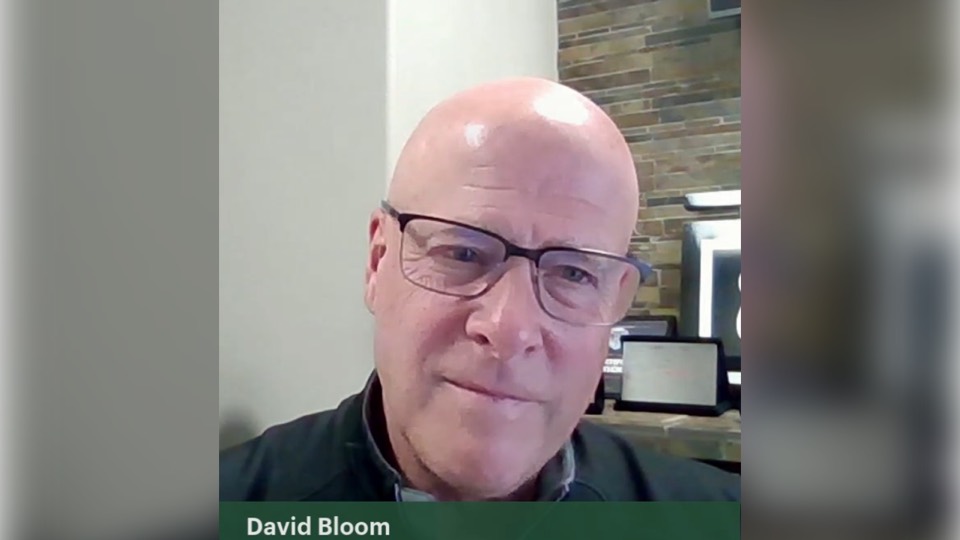
David Bloom, Chief Development Officer, Capriotti's Sandwich Shop and Wing Zone, is the guest on episode 2 of the Restaurant Tech Trends podcast, hosted by Justin Foster.
 Play episode
What David and Justin discuss
- How and why restaurant tech will continue on its convergence path
- Tips for successfully positioning tech for adoption with franchisees
- Which AI is creating value today for restaurant operators
Episode notes from the host
WOW! David Bloom, Chief Development and Growth Officer at Capriotti's Sandwich Shop and Wing Zone joins Incept AI Co-Founder Justin Foster for a quick-hit Restaurant Tech Trends interview
Transcript
Full transcript (2,641 words)
Machine-generated transcript; names may be misspelled.
0:00 I'm Justin Foster, and today I'm joined by David Bloom, the Chief Development and Growth Officer for both Capriotti's Sandwich Shop and Wing Zone. David, welcome. Thank you, Justin. I want to congratulate you on all of your success with both of these brands. I know Capriotti's is expanding domestically. Wing Zone is expanding a lot internationally. I'm curious, as you look forward into 2025, how are you continuing to plan that? How is that expansion looking over this year? Yeah, I mean, I think both of our brands are growing exponentially, as you said, both domestically and internationally and sort of for different reasons. Capriotti's has been around. Next year will be our 50th year. So, you know, we've been around and this success has taken a long time to build, but we're in the next year. It's taken a long time to build, but we're in about 30 states in the U.S. We'll open about 25 or 30 brick and mortar locations in the U.S. this year, which is good for us. And that's awesome. We continue to see record revenues and record growth year in and year out, despite all of the headwinds that probably everybody on us listening to this podcast already knows about interest rates and economic uncertainty, all those kind of things. We just keep growing through all of that. And I think it's... It has a lot to do with having a great product that people love and are very loyal to.
1:32 And we built a strong customer base. And so entering new markets is always a challenge. And we're entering new states and new markets literally every week. And we opened in Hawaii and saw record revenues in Mobile, Alabama.
1:48 Aside from all the kind of core markets that we're looking to grow in. So that's great. And WingZone, as you said, we're growing very fast internationally. We acquired the company about four years ago. We're also doing some virtual kitchens, some ghost kitchen tests that we just rolled out almost 40 of them two weeks ago. And virtual and ghost kitchens, they're doing really well. And we're excited about that and continue to open up in brick and mortar locations. We'll open a dozen this year. Plus, we have some nontraditional locations that, you know, both of our brands were based in Vegas. And so we're in a number of the casinos and see huge outsized performance there.
2:32 Incorporating the brands together, doing some sort of co-brandings is turning out to be a little interesting. So we're playing with both of them, but both of them are doing really well. That's awesome. I'm excited for the first next Capriati to open in the Sandal area where I'm based. So it's really, really amazing all of that growth. So, David, you and I, we know one another because you're helping to advise my startup and SEPT AI. I'd like to thank you, by the way, for all of your support, especially as we came out of our fundraise. You're obviously super plugged into the restaurant tech scene. And I'm really curious when you think, maybe starting with Capriati's, when you think about the Capriati's of the future, and then maybe the wing zone of the future after that, what's different? What stays the same? And how do you really see technology shaping the future of those brands?
3:24 Well, I think what we've seen and what we try to do, what I try to do, at least is kind of be somewhat on the forward edge of technology, not necessarily the bleeding edge, just because that can be expensive and, you know, very costly. And secondly, I'd say it's for us, in our size, it's often about finding the right partner. That's why I was interested in Incept and AI. But, you know, having the right partners is critical because, you know, restaurants today are probably maybe 30% a technology-enabled business, right? Like, that percentage is just going to increase over time. So, again, mostly through partnerships. These are not technologies that we've built ourselves. It's, you know, maybe being the, you know, the beta test for companies like Olo, Rails, and things like that. Testing robotics. We started probably four or five years ago testing robotics. Back-of-the-house automation certainly is where we're seeing, where we saw the most innovation and the biggest payback. On the marketing side, you know, content development, AI, and all that kind of stuff is really impacting content development and business intelligence about getting to know your customer and deliver them very customized ad and strong nurturing programs and loyalty programs and things like that.
4:52 So we're seeing it in different, you know, sort of tranches of the business. What we do see long-term, I think, for both Capriottis and WingZone, is we live in an age of convergence, right, where all of these technologies will come together. Whether it's AI or robotics or, you know, autonomous vehicles or whatever it is, they're all going to come together and they all have to talk to one another because the customer experience has to be seamless, right? The customer can't feel a very clunky, you know, experience. They want to still be talking to people, having that good experience. So making that all together, integrating all those things is really complex, and I think it's taking a while. I think, you know, the cost of capital in the last two or three years slowed people down a little bit. Yes. And investors became a little risk-averse for a period of time. That seems to be cycling back out. And so we're seeing things ramp up a little bit, whether through traditional capital raises or crowdfunding or what have you that's coming back. And so I think it's going to be just a continuation of what we have seen, maybe an acceleration, as, you know, because that seems to be the technology curve as adoption accelerates.
6:15 And so I think it's really a super interesting time. I agree. And there are two things that you mentioned that really stood out to me. The first is I totally agree that all of these technologies are going to be converging. Sometimes to talk about like the restaurant brain of the future, you're going to have all of these front of house, back of house, business intelligence tools are all going to be working harmoniously with one another. I think we're still a ways out from that, but I definitely see the space going that way. I'm curious. You mentioned backup house as an area where you saw a lot of innovation. Where particularly are you seeing a lot of return there? Is it on the robotic side? Is it meal prep automation? Like what, where are you seeing a lot of innovation in that part of the business in particular?
6:59 Well, certain, certain functions are like much easier to replicate from a automation or robotic standpoint.
7:09 You know, operating a fryer is easy to automate, but operating the end to end, dumping a product, frying, putting in a, putting in a package or, sourcing it and delivering it to a customer is much more complex. Yeah. Again, we have friends and people that we know in the industry that are on the front end of doing that, but they're being very focused on the type of products that they, they carry and, or handle things like assembling a bowl is easy.
7:39 Assembling a sandwich is hard. So we're seeing some returns on, you know, sort of the automating the most simple things, but I, you know, who on this call, who listening to this doesn't have a Roomba or an iRobot in their house, right? That's like, you can clean your floors and you mop your floors in your restaurant using a Roomba, right? Like that's robotics. So, you know, it's, I think that's, we often think of a very humanoid, you know, thing operating in our kitchen. And some people I know in the industry say, no, that's not how it's going to show up. That's like, that's a, that's an expensive thing to build. Whereas a little box that does one thing is very mechanical and even a little clunky. That's what, you know, you can produce very cost effectively and efficiently and get a really good return. So I think that's kind of how we'll see it rolling out. And it's going to be iterative. Like it's not going to be an overnight change. It's going to be little incremental changes that just speed up over time. I see. I think that's.
8:49 Well, I'm guessing we'll be talking a little bit more about returns here in just a second, because I know that you work very closely with both new franchise partners and existing franchise partners for both Capriati's and WingZone. And I'm really curious when you're talking about technology with your franchise partners, what are some of the ways that you secure their buy-in? How do you position technology internally within the system? And then just kind of related to that, you know, what are some of your franchisees, you know, most excited about right now when it comes to tech?
9:26 Sure. You know, I think number one, the reason people join a franchise organization is often because they align with the franchisors, you know, sort of values around being technology forward and, you know, taking sort of, I'll call it taking the arrows, figuring out what's going to work and what's not going to work and making those investments and testing it out in their own restaurants or their own businesses and proving out the returns. And that's, that's what we do. And that is actually one of the things that attracts people to us is they know we're focused on that. They know we're competent. Our president has a degree in, aside from an MBA as a, you know, master's in computer science and mathematics.
10:14 And, you know, all of us have strong technology related or backgrounds aside from deep experience in the restaurant business. So I think that's number one, what, what draws people to us is we've been around a long time. They love the fact that we're a little bit old school in terms of our thinking. We're still in a people business and all about the food and all about the product, but they also want to know that we're on that forward edge. And what they expect from us, again, is to thoroughly test and vet and figure it out and not, not expose them to the risks until we've proven it out. But I will say, on the other hand, we have franchisees that come to us and they want to test things. It could be simple, you know, AI scheduling tools, right. To help them figure out how to optimize their labor.
11:05 And so we will often partner with them and, you know, have them do it and figure out how we can support that either financially or, you know, technologically or what have you and, and test integrations and things like that. So it's a, it's a partnership. It's a figure it out. And it's don't get too, you know, far ahead of your skis.
11:29 Because I go back to it. Like making sure we have the right partner is probably the most important things. Cause we're going to make mistakes. It's going to be bumpy. You know, there's going to be problems. So making sure, you know, we have a trusted partner that's going to stick around through all of that is step one. For sure. And I like how earlier you also said, you don't, you're on the leading edge of technology, but not the bleeding edge of technology, which can always be a little bit dangerous. And that kind of brings me to my, my last question for you, which is, it seems like when it comes to, you know, restaurant tech specifically, but just technology more generally, pretty much every technology provider is now an AI company. And so I'm curious what you see right now is some of the most interesting applications of AI for restaurants. You know, what are some of the technologies that you think are really creating value now? And then what are some of the ones that are kind of interesting, but, you know, the returns are far off on the horizon?
12:35 Well, first of all, I would say, this is an area where I think people really need to educate themselves because it's possible to get left behind very quickly.
12:48 And so people that are kind of saying, well, I'm going to wait till it all gets proven out and then I'm going to adopt it are at risk of getting left behind. So for sure, I would, I would recommend, you know, kind of getting a deeper understanding about this. And I think there's some great resources. I think there's a book called the future is faster than you think that I always recommend to people. And it really talks about, you know, how AI technology, et cetera, is going to impact supply chain. And, you know, just think about autonomous vehicles, which continue to, you know, come out. Tesla's launching their robo taxi program. Those, right. Those vehicles are going to talk to your, can talk to your potential, your POS system and your, you know, like all of your internal programs and geofences, like having all those things integrated is where I think AI is going to be adopted. I think early on, we've already seen a lot of disruption on the marketing side of the business.
13:49 Used to cost a hundred grand to produce a, you know, a commercial. Now you can literally sit in your office in a half hour and do it. Yeah. To know the difference. And so I think certain industries, marketing, advertising, et cetera, anything visual, but also business intelligence. I think AI is getting much better at handling math. And so, you know, sort of enabling small companies to have business intelligence and do a deep dive into the data and coming up with some thoughts or ideas or pieces is coming up. And then I do still think robotics is going to, particularly in the back of the house, be a thing.
14:34 It has to get, get proven out. But I think it will. And then anything that makes the consumer experience, you know, whether it's voice AI or, you know, just literally, I mean, I've seen, I've seen holographics that have facial recognition in it. So you walk in as a consumer and literally looks like you're talking to a person and they recognize you if you've ever been in the door before. They know what your order is and they can, they can say, Hey, would you like to order the same thing? Would you like to pay with the same, you know, Hey, would this time, would you like to add a dessert or what have you? And like, all of those things are coming again, faster than people think. They're not ready for prime time yet, but when they are, there's going to be people that adopt them really quickly and are set up to integrate. And there are going to be people that it's going to be a huge power time shift and it's going to be a lot harder.
15:27 Awesome. Well, David, really appreciate all of your insights. Thank you for joining me for this quick little interview again. Thanks for all your support. Congratulations on all of your success. And I look forward to maybe seeing you around the trade show circuit this year. Thank you. Sounds good. Thanks. Take care.