Episode 22
Leon Davoyan
Chief Technology Officer · Dave's Hot Chicken
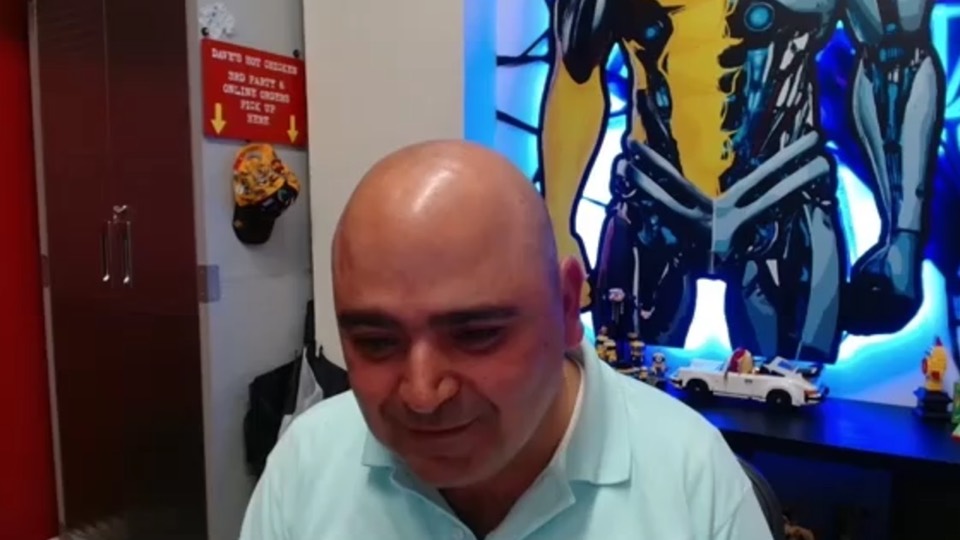
Leon Davoyan, Chief Technology Officer, Dave's Hot Chicken, is the guest on episode 22 of the Restaurant Tech Trends podcast, hosted by Justin Foster.
 Play episode
What Leon and Justin discuss
- How Leon sees Roark Capital's $1B acquisition impacting the brand and its tech plans moving forward
- Why and how Leon changed his mind on the role of kiosks for taking guest orders
- Which AI technology Leon sees as the biggest 'game changer' for the QSR segment - and why.
- Why you need to master the 4 'F's of selecting technologies for your brand, OR ELSE...
Episode notes from the host
INCREDIBLE! Leon Davoyan, EMBA, the Chief Technology Officer of Dave's Hot Chicken sits down with our own Justin Foster to discuss how he's using technology to electrify growth at arguably the QSR industry's hottest brand.
Transcript
Full transcript (2,606 words)
Machine-generated transcript; names may be misspelled.
0:00 Welcome to Restaurant Tech Trends, where we explore restaurant technology trends with some of the industry's biggest movers and shakers in a rapid fire short interview format. Today, I'm joined by Leon Davoyan, the Chief Technology Officer at one of the hottest and fastest growing QSR brands on the planet, Dave's Hot Chicken. Leon actually started his career in theme parks, and he's since occupied leadership roles in quick service, fine dining, gaming, nightlife, and hotels. And he's helped three different companies grow from startups to global brands, which is pretty impressive. In his current role, he's leading technology strategy to scale the business and maintain its position as the fastest growing chain in America, leveraging innovation to stay relevant with core customers. Welcome, Leon. Thank you. Thank you. Boy, that was a great intro, man. Thank you so much. I'm so honored. I'm super honored to have you, man. This is like awesome for me to be able to talk to you like this. Let's go ahead and start off and talk a little bit about Dave's Hot Chicken. Obviously, the big news here a couple months ago was the Rourke acquisition, the billion dollar acquisition. And I can imagine with any acquisition like that, there's probably some changes going on in the business.
1:17 And I'm curious to get your perspective on what this acquisition means for the future of Dave's. And then, you know, maybe more granularly what it means for the future of technology adoption and rollout at Dave's Hot Chicken. For Dave's, it's a really big thing and a really great acquisition. If I had to personally choose myself, I would choose Rourke. I think what they're going to bring to the table first and foremost and very quickly is our international expansion. We've sold most of the nation, right? It's just a matter of time before the franchisees find the real estate and open their stores. So next, we were looking at international and what better company other than Rourke to come in that has brands that are global, where they handpick franchisees and say, hey, you got to focus on these countries. And these are the top franchisees running the show. And so I think it's going to do, I mean, it's going to absolutely supercharge our growth. And that's very exciting to me. Well, that's awesome. And how about technology? Is this going to impact the technologies that you're looking at? Or is there basically no change there? It's going to, it's going to impact some things, right? For instance, until right now, I've been an only child, right? I make all the decisions for the business.
2:33 And now I suddenly inherited, I married into a big family and I have all these cousins and brothers and sisters and all these leaders that I can bounce ideas off of, collaborate with. So I think it's going to be a great thing for us all together. Got it. Well, I want to talk about one particular strategy. I actually went to your session, Leon, at the Mertex show earlier this year, and you talked a lot about how Dave's Hot Chicken has had some success rolling kiosks out. And I wanted to ask, you know, why kiosks? How are you measuring success? What early results have you seen? And what is the future of kiosks at Dave's Hot Chicken? It's a really hot topic in the industry right now. It's a very hot topic. And it's a big topic that's near and dear to my heart because initially I didn't want to roll out kiosks. Oh. And the reason why I didn't want to do that is because I didn't want the brand to turn into McDonald's or Taco Bell where there's no cashier and everyone's forced to go to a kiosk. Right. That's my biggest nightmare. Right. And being in a franchise system where each franchisee owns their own business, you can try to control that, but you're not going to be able to control that very well. So we were very cautious about entering into the kiosk space. But once we rolled out the kiosks to the test, what we found out is that our young demographic loves to just go straight to the kiosk.
3:59 For sure. Sometimes they don't want to talk to a cashier and that gives them the ability to place their order at a Dave's without talking to a cashier. And although we're missing out on one guest touch point, we make sure that the pickup experience at the pickup counter is a great touch point with the guest. Right. So we've done a really good job at maintaining that touch point with the guest. But all in all, kiosks have been a huge success for us. We entered into the space just to give the guest another way of ordering Dave's the way they want to order Dave's. And so the idea was to never remove the cashier from the station. And what we find is that sometimes there's we typically have two kiosks at a store. There's a kiosk. Both kiosks are taken up and the cashier is available. Third person walks in. They make eye contact with the cashier and they just stand in line for the kiosk. So for sure those are working. And on our kiosk platform, we're not doing any suggestive sales or any upcharging or anything like that. Not yet. I don't know if we will. But what we find is that our average check is significantly higher on the kiosk. And so just on average check alone, that incremental checklist, the kiosk program is basically paying for itself within a sub one year ROI.
5:23 And that includes the cabling, right? Because you have to get power and data there. So we're talking about retrofitting the store, buying the kiosks, getting them installed. And we're right under the one year mark on the ROI. That's really impressive. And I want to ask you about that increase in check size. Do you think it's due to guilt food ordering where people will order things at the kiosk that they might feel guilty telling a cashier that they would order? Are you seeing people just order way more? They do order more food for sure. But initially, there's that thought of it's guilt free ordering, right? And I wanted to really find out what it was that caused that checklist. Sure, we looked at the data. But I went and talked to guests about it. And I said, what do you like about about kiosks? Because these guys are a younger generation. We know they think differently and behave differently than us. I'm the old guy now. I can't believe I'm the old guy. But when I talked to them, they said, listen, I like the kiosk because it allows me to browse the menu. Sometimes I don't quite know what I want to get. And I don't feel the pressure that I feel at the cash register because it's like I'm talking to a human and I need to commit more to what I'm buying. So the kiosk gives me the ability to add some items, change my mind, delete some things, add a bunch of or the Amazon way of shopping. That's one of the things I found out is that, you know, when you shop on Amazon or most people do, they add a bunch of things to their cart and then they go, OK, I don't want that. I don't want that. I want to save that for later. And then they check out.
6:54 So they do that at the kiosk also. And so all of that is resulting in a higher check average. Got it. Well, let's shift. At Dave's Hot Chicken, I know third party delivery is obviously really big, as it is with many QS. What are you seeing as some of the big trends going on in that space right now? And what are you currently taking advantage of in third party delivery or will you be taking advantage of in the future that you might not be right now?
7:21 Listen, 3PD is a necessary evil, right? Left of the restaurant brands, we all want to do first party delivery. We want to own the data. We want to own that guest. And we don't have that yet, right? The 3PDs are not very good about sharing that data about the guest. And what I can tell you is that, in my opinion, our 3PD guests are completely different guests than the in-store and digital first party guests, right? They have different buying behaviors. They have different likes and dislikes. And so what we're missing is really that data from those third party guests and the behavior stuff, right? Because it's really hard to tie that information to our CDP with just getting what we get through our POS and KDS. And one of the trends that I'm seeing really is that a lot of the brands are starting to push on these third party delivery providers for the data. At least tell me that guest XYZ is guest XYZ that's ordering this many times. You don't have to share their name, last name, email address, but at least give me some kind of a marker that says this guest that ordered a week ago is the same guest that ordered from you today. So that we can track their evolution of ordering and what's happening with them. So that's one of the big things that I'm seeing with the 3PDs that all the restaurant brands are really pushing hard for.
8:41 Savneet, the CEO of Par, had a really interesting post on LinkedIn a couple of weeks ago where he talked about the rise of agentic AI and what this could possibly mean for the future of 3PD. Because a huge reason why consumers, you know, DoorDash, Uber Eats, et cetera, is because it's convenient and there's many different restaurants there. It's really a convenience factor. But of course, it's more expensive. Do you think the rise of agentic AI where we're going to just like, you know, go into ChatGPT or some similar type of program and say, hey, order Dave's Hot Chicken, figure out the cheapest way to get that to me. Do you think that's going to cause a decline in 3PD and get more first party orders or really sure yet? I mean, it's definitely jury is out. This is really early stuff right now. Listen, I think it will to some degree. But as I think of myself and the younger generation that I've talked to and the reasons behind why they order from 3PD, it's all linked. On Friday night, I just had a full week of work. And the last thing I want to do, I just got home and I switched into my sweats. And all I want to do is just veg out and I get hungry and I don't care how much I have to pay.
9:57 If as long as I get what I want delivered to my doorstep and hand it to me. So I think that use case will not change unless there's a shift in first party delivery. Now, we don't do first party delivery. We have some ideas of what first party delivery looks like for us. But the technology that we want to use for first party delivery doesn't quite exist yet or it's there, but it's not easy to operationalize. A lot more has to happen in addition to agentic AI. But I do think that eventually the 3PDs will start hurting a little bit. But it's for now and for the foreseeable future, they have a stronghold on the lazy Friday night leons. Yeah, I totally agree with you on every single point you made there. This space is like super interesting for me. I'm going to watch it really closely over the next couple of years. And that actually brings me to the segue for our next question, which is AI is obviously a hot topic, not just with restaurants, but in pretty much every industry. And as someone responsible for all of technology, you see lots of use cases for AI, right? You know, demand forecasting, labor forecasting, food prep, order taking, inventory, etc.
11:12 What applications of AI are you most excited about for Dave's Hot Chicken? What do you see moving the needle the most? I think the one piece of technology that every restaurant brand needs is vision AI that tracks order accuracy, right? As the product is being produced and packaged, right? And the reason for that is because as time progresses, digital orders are going to become a bigger fraction of your total orders, right? Today, we have 40% of our orders that are digital, right? And it's going to continue to grow. And the difference between digital and in-store is that in-store, if you screw up the order, the guest comes up and they say, Hey, I didn't order this or I asked for no pickles. You put pickles on there. You give them a bounce back reward and you remake it and off you go. But with digital, excuse me, if you get the order wrong, you just ruined dinner for somebody. So you need something like vision AI to basically tell you that you've made things incorrectly based on the order that came in. And I think that's going to be the biggest positive move in the industry. Obviously, a lot of the forecasting tools and things like that that are being built are also going to be helpful.
12:27 But the game changer is going to be vision AI on order accuracy. Well, we have just about left. So I wanted to ask as my closing question, what is your philosophy to evaluating technology generally, right? You've got vendors that are barking at you all the time, always with the shiny new objects. How do you and your team whittle down what's worth looking at a little bit more deeply? And what process do you go through to figure out when something is worth actually piloting?
12:57 I smile because I did a whole talk on this. So we have the four F methodology, right? The first F is that is the technology a good fit for your brand? It might be good technology, but it might not be a good fit for your brand. The second one, is it a fad or is it for real? Because a lot of things that look sexy might be a fad that might not be a fit later on. The third F is that is it financially feasible to put the technology? And a lot of technology is expensive and may not be financially feasible. So you have to weigh that. And then the fourth and last one is that does it fix something, right? Because sometimes technology doesn't really fix a problem that you already have. So it's better for you to focus on technology that's going to fix something. And then the last thing that I want to leave you with is that if one of the four Fs is a no, then you're F. Oh. Don't be F'd. I get it. Don't be F'd. I'll put that to heart. That's a good one to read. Well, Leon, I wish we had a little bit more time, but unfortunately we're limited to 15 minutes here. Leon Davoyan, Dave's Hot Chicken. Thanks for having me. Thank you.