Episode 23
Josh Boshard
COO · Savory Fund
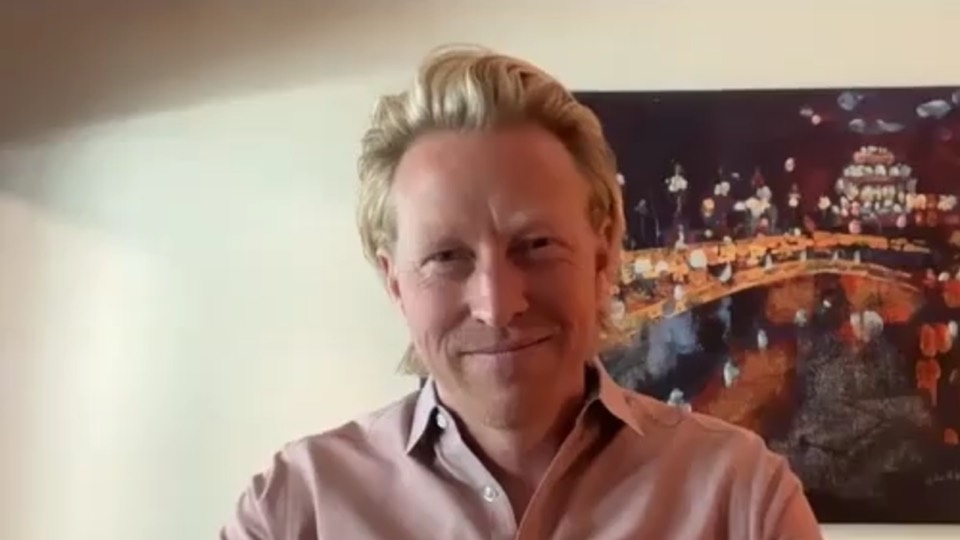
Josh Boshard, COO Savory Fund, is the guest on episode 23 of the Restaurant Tech Trends podcast, hosted by Justin Foster.
 Play episode
What Josh and Justin discuss
- Why having the right foundational tech is so important to reaching the next level of scaling: we discuss recent acquisitions including Hawkers Asian Street Food and Bonrue Bakery. Shout outs to Toast and Olo!
- What common mistake restaurant founders make before they realize it's time to scale up - and what you can do to avoid it. HINT:
- We discuss a shared conviction that leads to success in the space: if you're a restaurant tech company, do you agree???
- What bleeding-edge tech WOW'd the chessmasters at Savory and why... shout out to Loop AI - Delivery Intelligence Platform
- What Josh sees as the BIGGEST tech differentiator restaurants can embrace over the coming 2-3 years
Episode notes from the host
Next up on Restaurant Tech Trends, we get schooled by Restaurant PE LEGEND Josh Boshard at Savory Fund as we discuss Savory's recent acquisitions and its philosophy around scaling restaurant brands - plus the role of tech in bringing their portco's to the next level.
Transcript
Full transcript (2,361 words)
Machine-generated transcript; names may be misspelled.
0:00 Hey everyone, welcome to Restaurant Tech Trends where we explore restaurant technology trends with some of the industry's biggest movers and shakers in a rapid fire short interview format. I'd like to give a quick shout out to today's sponsor who, who would have guessed it, also happens to be my company, Incept AI. Incept AI is focused on taking restaurant orders over the phone and in noisy drive-thrus with friendliness and precision. Learn more at Incept.ai. Now onto the show. Today's guest is Josh Boshard. Who's operating partner and COO at Savory Fund, the restaurant focused PE firm scaling brands like Swig, R&R BBQ, and most recently, Hawker's Asian Street Food. Josh spent two decades as a multi-unit operator before moving to the investment side, taking concepts from single stores to regional powerhouses. Now he pairs capital with on the ground playbooks, rolling out dynamic kitchen automation, supply chain discipline, and culture systems that keep flavor first. If you want to hear how to turn a 10-unit darling into a 100-unit rocket ship, stick around. Josh, welcome to the show. Justin, it's so nice to be on your show. I keep hearing about all the people you're talking to and good things. Yeah, there's a lot of great folks out in the industry. It's really nice to have this community of people supporting and rising tides for everyone.
1:20 Let's start out with some current news. The big, most recent news is the Hawker's Asian Street Food investment. You just partnered with Hawker's this month. What convinced you that the brand was really ready for National Lift, and where does tech fit into its near-term expansion plans? Yeah, Hawker's is a dynamite brand, and the passion of the founders is what started all this. We've been talking to the Hawker's team for a couple years, and just loving what they're doing, seeing their growth was so exciting. Caleb Allen and Wayne, they love being a part of the industry and bringing what they have, which is so special, to everyone that they can. This acquisition and working with them and building them as partners is something that I'm really excited about because we couldn't have a better foundation layer of tech. Toast and Olo, it fits right into what Savory's doing. Now we add some of the secret sauce on top of that. That's amazing. And there's been even more activity in the world of Savory Fund. I think a week earlier, you announced the Bon Roux acquisition, which is a chef-driven Utah bakery. Tell us a little bit more, what's different about scaling a high craft bakery versus a fast casual chain, and how are you going to protect the artisan DNA that's there?
2:41 All right, I'm going to tackle your protecting the DNA first, because that is the most important part of what we do. At Savory, we partner with founders. Those founders care more about what they're doing and how they're doing it. They're just missing some key strategies, capital, and basically refinement to get to that next level. For us, protecting that DNA is huge. We actually, we started our restaurant journey in bakery. So we had 50 scratch baked cafes, bakery cafes, and it was scratch baked. So from 4 a.m. to 10 p.m., all pastries and breads. So we lived that for a lot of years. And now we feel like we've found something that's so unique and christenly just founders and partners that they wanted to get to every place in the United States. And we're just trying to help them do that. That's great. And you talked about protecting the DNA and how that's so important in the close relationship that you have with founders. For other restaurant founders that might be seeking additional capital to grow, I'm curious, when you're in diligence, or maybe even before you're in diligence, what are some of the first operational or even cultural cues that really give you pause and make you want to pump the brakes on a potential opportunity?
4:03 For the last four years, we've been hitting every restaurant group that we can. We want to see what they're doing, every brand out there. And a lot of times we're finding line out the door and they're doing great things. But as we get into the details, we start seeing that contracts, some of their systems are actually holding them back. But that's not a deal killer. A deal killer is founders who don't really want to see things move forward. And for us, they just want to get to the point of, I'll sell this off and be done. That's not our model. Our model is taking something really great and then just amplifying it. And if I could give any advice to a founder today, a brand that's growing, make sure that you're looking at your contracts. Sign contracts that don't have teeth that are long-term. Because at some point, you're going to want to get to the next level of tech. And you'll want to have things that allow you to grow and scale. And if you're signing personal guarantees that are 10 years, you're not allowed to do that when you get to the point that you want to be. You said that very oftentimes you will see systems holding back some of these founders.
5:19 And obviously, long-term contracts can be really deleterious to scaling up. I'm curious, when you make an acquisition, what are some of the first technologies or process upgrades that you're typically pushing for that you think are most foundational in really aiding in that scale-up process? Yeah, this is the place that I love. Coming in on the acquisition and finding efficiencies. We actually sit back and we don't change anything. We don't change anything when we start the process. And a lot of the times it's because of those PGs that founders have signed and their contracts that they're on. We do have a Savory tech stack, but we look at it and say, okay, you have some really great tech and we have some really great tech. It actually allows us to see into the restaurant system better than I would say a lot of people. Because we're A-B testing this customer sat piece versus Savory's customer sat. And what can we learn from that as we get into it? Sometimes we're seeing bleeding edge tech that's blowing away everything that we're doing at Savory. And so we'll opt that into what we're doing. A good example of that is Loop AI and figuring out how to make sure that all those chargebacks and the data that comes from that long term.
6:39 That's something that we took from one brand that we acquired and we have it in all of our brands. That's great. Now, let's talk a little bit more about your operator days and how that influences helping scale some of your portfolio companies. Having run Swig and R&R BBQ, what lessons did you really take that you think are most valuable as you scale these portfolio brands?
7:04 It's an interesting space to be growing brands for this long. I've been in this game for 15 plus years. My background is actually in tech and insurance. And when we first started going, we were doing everything and building restaurants. There was a time that I was in a walk-in box cleaning the walk-in box before our grand opening. Some subs had thrown a bunch of stuff in there. And so I was down in my hands and knees scrubbing. And at that point, I was so thankful to be doing what I was doing because it made an impact. And I was very hands-on and not what it looks like today, right? Like I was there working. And I just remember praying, being so happy about being able to make a difference. And that's always carried with me as we've gone down this road, how hard it is to do the jobs that are needing to be done. And so that's why we try to get back in the stores as much as possible. And our tech stack is a tech stack that thinks about the general manager or the frontline employees, their experience first. And if we can make their experience that much easier, we'll make it hard here at Savory. But we'll make their experience just easy as can be. That's when you win.
8:20 It's so funny, but I feel that from the vendor's perspective, I feel exactly the same way. I feel like any vendor in this space that has been truly successful really gets what it's like to be a frontline worker and is so focused on the experience of those people. And time in the restaurant, nothing beats it. Nothing beats like, for us, it's like going in and like picking up the phones or like hearing like when someone complains about something or wearing the headset and hearing the order gets screwed up. You just, you can't truly feel the pain unless you're there in the box. Couldn't agree more. Now let's move back to looking at restaurant brand founders. We've made many acquisitions. What one discipline would you say is most oftentimes missing in that founder DNA? Is it finance? Is it HR? Maybe not operations, hopefully, but could be ops, engineering. What would be the one skill that you wished more restaurant founders would master a bit earlier on?
9:23 Yeah, I think founders do an extremely good job at understanding their employee. But I don't think that they do a good job at deploying tech that enables their employees. I see. And so you think about, I like one of the most important pieces to restaurants right now and today is that employee journey. Yeah. From sourcing where they come into the system to onboarding to compliance to how they ask for time off and their schedule. It needs to be so simple and seamless for them. And you need to be understanding what that employee's feeling. Week one, day one, how was their experience? Are they getting their schedule on time? Is it coming two weeks before? Are they getting it the night before? That's a very big differentiator for turnover rates. And so if you look at that employee journey, that's what founders need to be putting in place is the right type of tech to enable their employees to carry their vision as a founder. Got it. Let's dial a little bit more on the tech then, shall we? So there's a lot of technology in the restaurant space. There's a lot of hype that's out there as well. There's drive-through vision AI. I was just interviewing someone yesterday talking about vision in restaurants.
10:40 There's voice bots, robotic make lines. What do you see right now as being mostly hype versus imminent reality in the next two to three years? There's so much tech. I believe the biggest differentiator is going to be visualization of all of your disparate systems that you have. So you have Toast, great. You have Ovation. You have Harry. You have all of these great systems out there that has all your data. Bringing that data together and consolidating that into a place that you can then take action and then run it against LLM. So then you're understanding, okay, if we did these things differently, this is what would happen. If we apply this marketing, this is what it would look like. And that technology is out there, but I don't think that it's being utilized the way that it should. What's really interesting is early in my career, if you would have said, how do we deploy AI? I would have been like, I don't even know what you're talking about. Like I remember being back in the days when we would get a fax for a catering order, like that was technology. So obviously I'm old, but you look at when I was training people through double drive-thrus with two windows. I would have loved to have something that automated that process or helped us through there, but it was just difficult as can be.
12:02 And you talked about taking phone orders, but you're on the phone, plus you're taking a drive-thru. That's a reality of a restaurateur today. So how do you take automation and technology to be able to empower you? That's where Incept AI comes in, obviously. But I think those pieces are important to making that customer experience just dynamite. It has to win. And customers expect more than anyone these days. They care about their experience. And if it's seamless, they're going to be coming back. Your return rates are going to increase. You're going to have more sales. You're going to drive traffic. You don't that new technology and customers are going to see that. They're going to expect more than they ever have before. I agree with that. Expectations are always rising. And thanks for the shout out, by the way. I appreciate that. All right. We're almost wrapped up. So we're going to do a few rapid fire questions. One sentence or less. What's your current go-to meal when you're on the road? Rice and chicken. I love it. All right. Easy enough. One word. What's your go-to fast casual brand when you're not at a portfolio brand?
13:12 In and out. All right. Favorite leadership book or podcast right now?
13:19 This one's tough. My favorite leadership. I love Gary V. He just makes me laugh. And I like taking the craziness of what he does and then applying some of the pieces. All right. I like it. One word. Biggest restaurant trend that's overhyped? Third party. All right.
13:38 Which is more important? Speed of growth or quality of operations? Quality of operations. Absolutely. That's the foundation. All right. Josh, thanks. Threw some curveballs at you there at the end. Great answers. Everybody. Today's guest is Josh Boshard, operating partner and COO at Savory Fund. Josh, thanks for your time. Appreciate it, Justin. Thank you.