Episode 15
Jake Simon
Founder/CEO · ConnectedFresh
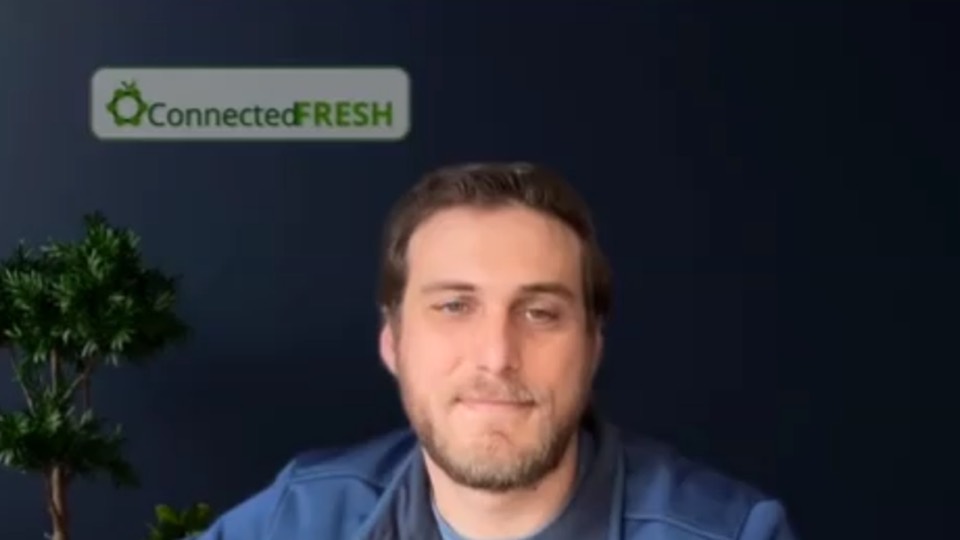
Jake Simon, Founder/CEO at ConnectedFresh, is the guest on episode 15 of the Restaurant Tech Trends podcast, hosted by Justin Foster.
 Play episode
What Jake and Justin discuss
- How sensors extend far beyond temperature to help operators solve their most pressing problems
- Why a connected sensor ecosystem dramatically improves logging, helping catch problems earlier while aiding in compliance (15% --> 98% improvement!)
- Notification best practices: why summarization and aggregation helps operators fight noise fatigue
- PLUS, Jake shares some entrepreneurial lessons learned along the way as ConnectedFresh moved from the garage into early scaling mode.
Episode notes from the host
On today's Restaurant Tech Trends, we sit down with ConnectedFresh Co-Founder and CEO Jake Simon to talk about all things connected sensors. Temperature, fill, leaks, cool down logs... we've got you covered. Jake covers:
Transcript
Full transcript (3,003 words)
Machine-generated transcript; names may be misspelled.
0:00 Hey everyone, welcome to Restaurant Tech Trends where we explore restaurant technology trends with some of the industry's biggest movers and shakers in a rapid fire short interview format. Before we dive in today, I'd like to give a quick shout out to our sponsor, which entirely coincidentally happens to be my company, Incept AI. And for those of you who don't know, Incept AI is focused on taking restaurant orders over the phone and in noisy drive-thrus with friendliness and precision. Learn more at Incept.ai. All right, let's get on to the real reason why you're here today, today's guest. I'm excited to be joined by Jake Simon, who is co-founder and CEO of ConnectedFresh, the Internet of Things platform that's turning every walk-in, prep table and delivery door into a real-time data point. Sounds pretty exciting. Before Jake launched ConnectedFresh, he built smart manufacturing solutions at Deloitte Consulting, which was an experience that fueled his obsession with operational efficiency in food service. Today, the ConnectedFresh sensor network helps national restaurant chains, grocers and hospitality groups automatically log temperatures, detect leaks, and catch equipment failures before they become costly food safety violations. Jake is also a well-known thought leader in the industry, and I'm excited to dig into what's working and what's next, both at ConnectedFresh and in the broader restaurant tech industry. Welcome, Jake.
1:28 Thanks so much, Justin. Excited for this.
1:31 Excited to be chatting with you here today. Let's talk a little bit about the origin story of ConnectedFresh. I think what started as an easy-to-install temperature monitoring kit, like what was the aha moment that, or market gap, that convinced you that this was a problem worth solving that was also worth quitting your day job for? Yeah, there's a lot to summarize it. We're building these types of solutions of real-time data. How can I look at data coming off of machines in a factory or production setting and be able to identify issues and the risks as they're happening so I can prevent it from actually creating an issue downstream for the actual operations, prevent the line from going down or anything like that? So we were looking around. A lot of these are very costly projects, and while they make a huge difference, there wasn't really anything accessible to the food service industry in terms of price and ability to execute and easiness and that kind of stuff. So we had a friend that was in the produce industry, had a bunch of coolers that were aging and were holding tomatoes, and things went out in the summer in St. Louis and, you know, costing them tens of thousands of dollars just in losses. It was totally preventable, and that was the big thing, is that, like, you have this low-hanging fruit, sometimes literally, that are, you can just prevent the issue from happening if you knew. So that was where the temperature stuff started happening, and then we started getting into different types of sensors and sensor technology and things that were five to ten years on a single battery charge and things like that.
2:56 And then we didn't want to do just a temperature platform, right? Like, temperature is everywhere. Temperature is the least differentiated thing that we do, right? We do it in a different way than most people do it, right? In a more advanced analytics-driven machine learning way. That's not our differentiator, right? Our focus is, how can you have that kind of base platform of connectivity to allow you to solve for many different solutions across the organization? Fill levels, water leaks in quality, doors, fully automated cool-down logs, all these different things, but in a, let's solve a challenge that you're having, not just give you a digital restaurant for digitization's sake, right? Solve specific challenges, and hey, two years down the road, if you need help with this, okay, great, pull a sensor and do something with that. Got it. I'm going to ask you to walk us a little bit through the evolution of the platform, but first, help us understand your wedge. Who were the first two or three restaurant groups that actually paid you? How did you get in the door? And what did that MVP look like compared to today's multi-sensor platform? Yeah, so it was, to answer the second part first, it was just a lot more limited, right? We didn't have a ton of different types of sensors, right? We were just trying to go in with temperature and do it really well, identify issues and risks, notify the right person at the right time so they can fix it. But it was really focused on, like, temperature monitoring for a cooler, pretty basic stuff.
4:14 We originally started with that produce organization that I was talking about, but we also started with some Chick-fil-A franchisees, right? So we were introduced to them, and they had this need. They actually had a solution in place for temperature monitoring, and things were going wrong. They were receiving alerts for things that weren't real, batteries were dying, it became a huge headache to manage. And so we actually went and ripped that out, put what we had in. But at the end of the day, we had an MVP, call it a POC MVP, in February of 2020. And we all know what happened to the restaurant industry immediately after that, right? So we kept our day jobs, kept building it, kept trying to get some early customers, right? And just focus on what's going to drive the value for people, what other use cases, right? Because they're all off-the-shelf sensors, so we're not going for years at a time trying to produce a specific sensor, right? We're just pulling them off the shelf. So that's what allowed us to really grow. But in the early days, the timing was not optimal, but let us grow a bit more steady, which is definitely today's standard, right? We're not trying to be this massive thing that's going as fast as possible and getting people to sign up just for sign-up's sake. We're really genuinely trying to solve the problems. I know all about tough timing starting startups. My first startup was started in March of 2008 in the retail industry. Yeah, that'll do it, huh? Right.
5:29 Yeah, you know what they say. The strongest companies are built in those times. It forces you to be really creative. Necessity is the mother of invention. Now, you talked about several use cases today that ConnectedFresh handles. What convinced you that you needed to build a multi-sensor platform as opposed to going at this problem with a bunch of different point solutions? So I know I keep going back to temperature, but it's a really good example for this question, right? Because you see temperature monitoring, like monitor a cooler, tell me what the temperature inside is, right? That was one of those use cases where a lot of people were doing it, but it was kind of a bolt-on to an existing capability, right? So take HACCP checklist software or quality management software, right? You're basically taking a value and filling a line item automatically. Instead of that person having to go in and check what's the temperature, write it down, what's the temperature, write it down, or use a tablet. It was just automatically fulfilling that need, right? But with that was that at the end of the day, I always say, look at the core business of the company that you're working with. Their core business was checklist logs. It wasn't sensors. It wasn't connectivity. It wasn't all this kind of stuff. It wasn't anomaly detection or machine learning. It was really checklist platforms, which is those are huge, a huge need and a huge saver and problem solver for people. But at the end of the day, people were getting a temperature sensor.
6:45 They were putting it in. The notifications, it would send them notifications for things that weren't real, right? False positives or false negatives, right? And it was just becoming a headache of notifications. And as soon as notifications aren't correct, as soon as you're seeing more than what's actually, it's noise. And it's a boy who cried wolf kind of scenario, right? We saw this so many times, but the most important thing that really the crux of it all was the ability to expand, right? I know I need temperature today. These operators are paying attention to so many different things in so many different domains. The point was, we'll build a platform approach so that you have the ability to keep expanding and build it on low code. So we have the ability to really execute fast. So we know that energy consumption monitoring and things like that is coming down the line because we experienced that in the industrial side. That user doesn't need to be thinking about energy consumption now, right? They just need to know that they're with a platform that can keep expanding as they need it to. Were you feeling pull, though, from your customers? Or are you just going out and you're anticipating you know that these are going to be needs in the future? I think it was a combination of validation from customers. I didn't know that now that I hear about it. I hear that it makes sense, right? Because they didn't necessarily know what questions to ask. For the longest time, our goal with meetings with people wasn't, hey, can you buy something from me? It was, I just want you to know what's out there so that you can be asking the right questions.
8:03 If you ask the right questions and it magically turns into, hey, yeah, we check all the boxes. Great. But if you want to go with someone else, that's fine. And we just want you to know what to be asking because people have just had such a negative experience with some of these types of implementations. And that's a lot of the reason why. Got it. Let's take a step to the side. And I'd like to understand a little bit better the regulatory environment that you're operating within. I know the FDA really stresses continuous temperature monitoring. How are insurers or franchisors using compliance data with your product? Do you foresee a future where there's lower premiums or royalty rebates that might hinge on verified sensor feeds?
8:46 Yes, there already are today. And the opportunity for this is just ever growing, right? Because this digitization of the restaurant industry is not that old, right? Yeah, we've had computer systems and things like that for a long time, right? But like a lot of these things have been manual entry data. Yeah, you need to keep all your temperature records for a cooler or all your cool down logs. Is it reaching the right temp by the right time? All that kind of stuff. You had to keep these, but people largely kept them in a binder at the location. If you were pulling things up to the corporate level, the amount of effort to digitize, combine, use those types of records was almost impossible. Being able to do that now is incredibly easy. So I think that it's unlocking some abilities that people didn't already have before, right? For example, one of our customers that has cool down logs across their organizations, right? They went from, they had a 15% pass rate on their third party audits for cool down logs. And that doesn't necessarily mean that everything was failing, right? But people don't take logs. These things have to be checked every 30 minutes across a course of six hours for everything that you're cooling down, right? You can go over multiple shifts overnight, things like that. Very complex environment. And it's very difficult to keep those records. Within a quarter of implementing, we were able to bring them from 15% to 98%, right?
10:02 Wow, that's crazy. Yeah, 98%. And the ability to help their organization, they were just blown away. They did not expect that this was going to transform it as much as it actually did. The ability to give them this data and say, here are all the other things that you can be doing with it. Just because you have a door sensor on the back door, you're paying all this money for pest control services. Tell me when someone's opening the door. You're not necessarily sending someone a notification every single time the door is open. Maybe that person who's receiving the notification is the one dropping the door open. It's not always about notifications. It's about looking at things in aggregate, right? Instead of spending all this money on a training platform across all your organizations because you failed an inspection, all your locations because you failed an inspection because there were rodent droppings and things like that, right? And you know that they're coming through the door. You can just focus on the locations that you're able to see through the data that may need some improvements. And it's really meant to be a teaching mechanism more than anything else. So there's a lot of things having to do with regulation that the regulation is becoming more specific. But the ways that these types of systems are able to save them time, energy, be able to combine things together, right? It's vastly outpacing the amount of restrictions that are coming in. Got it. Let's look at the future of the technology in this space. As you consider sensors moving forward, do you think the restaurant of the future is going to have denser sensor networks?
11:24 Is there going to be computer vision that's like replacing some sensors? Or do you think there's going to be more like predictive AI that tells a general manager at a restaurant what to fix before it actually fails? What's your personal moonshot for kitchens in 2030? Okay, so it's a really good question because it's the future, it's unknown, and it's very specific on individual needs, right? Not every organization is going to have the same needs. I will start off by saying that our view is not that you need a digital restaurant. It's not, hey, how many things can I connect in your restaurant and therefore you have all this data? Data for data's sake is not a good thing, right? It's what you actually do with the data and what it can impact that actually drives the value and the ROI, right? This can't be an additional expense, right? The ROI has to make sense for each individual use case, right? So I'll call that out and say just because we have fill level sensors that can detect when a trash can is overfilling, right? That's not right for every trash can in an organization. It's not right for every organization. It's really about what's the challenge, here's a solution instead of here's a digitized restaurant. With that, there are so many different types of technologies that are coming into the restaurants. And I mean, everything from Incept to the video side to all these kinds of things. I think the future is just making it so easy for tech-enabled companies to be able to operate more effectively, not just efficiently, but effectively, like for that person, making that person's job better, right?
12:46 Like just taking the example of temperature logs or cool-down logs or whatever it is, that person doesn't want to be taking that log, right? They can be spending their time on something more impactful and that it's a quality of the role kind of thing, especially in this labor environment. But at the end of the day, we are focused on like, how do we build this together with others, right? We are not, we are a down with the silos kind of company, right? Our mantra with customers' data, it's your data, where do you want it? So making it super, super easy to send it to other platforms to make those platforms better, right? So a quality management system, a corrective action system for food safety, now has that live view with sensor data to be able to tell you things that you otherwise would never be able to do. There are so many things, but they depend on partnerships. A little bit of a stay in your lane. What is your core competency? What do you do best? So like for us with the video analytics software, right? They can tell when a refrigerator door is open if the camera happens to be pointing in that direction, right? But they can't see what the temperature is inside. If the temperature goes over, we can trigger an event to that platform. And then it keeps the people using the platform that they're already using today. Sure. Yeah, we can act on our own. You can use us for everything. But as much as possible, I don't want to introduce another login for another piece of software doing another thing. We want to be able to work with those other platforms. I totally agree with you 100%.
14:03 And I do think that moving forward over the next, not even five to 10 years, but two to five years, we are really going to start to see a consolidation of a lot of these platforms working together more harmoniously with one another to solve exactly the problem that you're talking about. No operator wants to be logging into six different platforms in order to find something out that they need to know. Jake, it was amazing chatting with you here today. I wish we had time for even more questions, but unfortunately, we're limited by LinkedIn's 15-minute rule. Everyone, Jake Simon, co-founder and CEO of Connected Fresh. Thanks, Jake. Thanks so much.