Episode 35 · September 11, 2025
Joseph Ortiz
President & COO · Farmer Boys
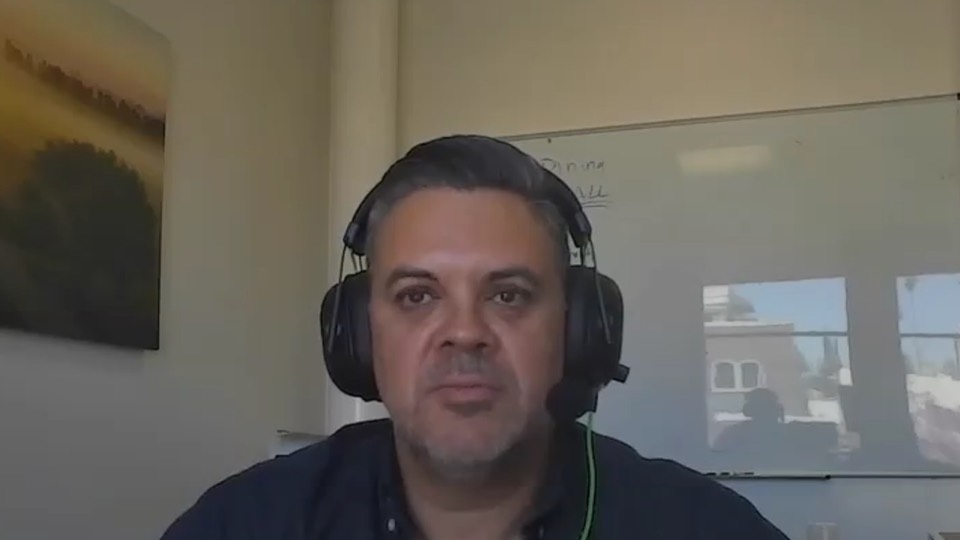
Joseph Ortiz, President & COO, Farmer Boys, is the guest on episode 35 of the Restaurant Tech Trends podcast, hosted by Justin Foster.
 Play episode
What Joseph and Justin discuss
- How Farmer Boys cut its drive-thru times by 3 minutes without chasing flashy new gadgets and how better use of data and operational focus made it happen
- Lessons learned revamping loyalty: from heavy discounting (free burger abuse) to smarter guest engagement with PAR Punchh and consultants helping to drive real retention gains
- Where Farmer Boys is placing early AI bets (including feedback analysis with Chatmeter, future labor scheduling with UKG) and where they’re holding back (drive-thru voice ordering… not yet)
Also in this episode
- Joseph shares which underrated piece of tech he swears by, what Farmer Boys’ next big growth markets are (hint: Arizona now, Utah/Colorado/Texas ahead), and his go-to menu item that made me hungry just hearing it. We need a Farmer Boys in Seattle!
Episode notes from the host
RESTAURANT INDUSTRY NERD ALERT
My absolute favorite kind of guest - a self-described restaurant industry nerd. Today on Restaurant Tech Trends we’re talking with Joseph Ortiz, President & COO at Farmer Boys, the Southern California-based fast casual chain known for farm-fresh burgers and all-day breakfast. YUM.
Thank you Joseph for the candid conversation and for sharing a peek behind the curtain at how Farmer Boys is modernizing while staying true to its roots.
Transcript
Full transcript (2,632 words)
Machine-generated transcript; names may be misspelled.
0:00 Hey everyone, welcome to Restaurant Tech Trends where we explore restaurant technology trends with some of the industry's biggest movers and shakers in a rapid fire short interview format. Today's podcast is produced by Incept AI. Incept AI is focused on taking restaurant orders over the phone and in noisy drive-thrus with friendliness and precision. Learn more at Incept.ai. Now onto the reason why we're here. I'm thrilled to be joined by Justin Foster of Incept.ai. Joseph Ortiz, who is president and COO of Farmer Boys, the Southern California based fast casual chain known for farm fresh burgers and all day breakfast. Yum. Joseph stepped into the role in November of 2022 after serving as the brand's VP of finance and accounting where he also oversaw IT and helped shape growth strategy. Before Farmer Boys, he held leadership roles at Bakemark and CKE, which is the parent company of Carl's Jr. and Hartston. And under his leadership, Farmer Boys has continued modernizing the guest experience, strengthening franchisee partnerships, and earning loyalty with a focus on quality and consistency. I am thrilled to have you here, Joseph. Welcome to the show.
1:16 Great to be here. Thank you for having me. Absolutely. Well, let's talk a little bit about how you transitioned into this role at Farmer Boys to start. You moved from the VP of finance and accounting where you oversaw IT. As I just mentioned, into the president and COO role. And I'm curious to learn, what did you learn in that finance and tech hybrid role that prepared you most for the top operational seat? You know, to be honest, not a lot. It's very different than I would have ever imagined what I deal with day to day versus in that role. But I'm a career restaurant industry nerd. So I've been in this space a long time and I've done a lot of different things and actually started out in operations. So it's really going back to my roots with just general management, you know, managing people, looking at our guests, loving them and doing all these great things. So it's very, very different than what I was doing before. And I think for me, probably the main thing that I took from that role to this one is just being very detail oriented and being very focused on understanding what's the problem that we're trying to solve and making sure that we're always focusing on the correct problem. Got it. And I'm curious, you know, what have been really your top priorities when you started and then just over the last year? And has there been any initiative that you've worked on that has proven a lot trickier than maybe you thought?
2:41 I think our tech stack was probably the first thing that I worked on coming into this role. So when I started with the brand, we were working on launching our native online ordering and app. And, you know, two years after being here, we just really didn't have a lot of progress on it. There were a lot of challenges. And when I stepped into this role and really had more autonomy to make change and strategically what we were doing, I took a much more direct and involved approach in being able to call out the fact that what we were doing wasn't working and that we needed to shift and take a different direction. So at the time I was managing technology, but that particular project wasn't under me, it was under a different function, which didn't really make a lot of sense. But I took it over and we were able to get the thing launched within six months, which was great. Oh, wow. Yeah, that's, that's crazy. I'm curious to dive a little bit into loyalty. So Farmer Boys is recognized for having great guest loyalty. What changes did you make to drive loyalty up for your program? Was it better use of data, special offers? What really made the biggest difference in impacting the guest journey there? We did a kind of a full scale, you know, soup to nuts brand audit of our loyalty and found out that there were a lot of things that we had set up without really knowing about loyalty from a guest perspective and how the functionality of it's intended to work.
4:06 So we brought in some outside consultants to work with us to really fine tune our program and get it more appropriate for our guests and getting it more consistent with industry. So where we were giving away a lot of discounts, they weren't getting us the right action and sort of commitment from our guests. And in doing so, we changed some things and our guests have been happy with the changes that we've made. So with loyalty, we had a great app, great partner, but we weren't using it the way that was best. Got it. And you mentioned you were doing a lot of discounting and maybe that wasn't being applied in the correct way. Were there certain specific changes you made around discounting that made a difference for you? We were doing a lot of discounting. So like if you were a new member of the program, you would get a free burger or something of that nature. Giving such a heavy discount just to join encouraged people to try to game the system. So we had a lot of ghost accounts that weren't active, but people would just make up new accounts so that they can get free burgers. And that isn't what we want. We want you to be loyal, but we want you to be engaged over time and be involved and really give us a chance to say thank you for being a consistent patron of ours.
5:22 So in doing so, we've done better, I think, at giving our guests the ability to earn and to use their earnings the way that they want to while changing the sort of heavier discounting and offers at the onset. You have any vendors or consultants you want to shout out that helped you out with that? So our partner for the loyalty, we utilize Punch and our vendor partner. It's RLS Consulting and the gal that runs the team over there. Her name is Olga. Right. Sounds good. Let's shift gears away from loyalty a little bit. As you know, we're very tech focused here and I'd like to talk a little bit about your drive-through experience. You focused a lot on improving the drive-through experience in recent years. What measurable outcomes convinced you to scale those investments and what technology did you invest in? We didn't invest in a lot of new technology. We invested in making sure our technology was appropriate and it was working and we were using it correctly. So we really haven't gone from guardrail to guardrail with tech in our drive-through, right? We're still pretty normal, I would say, for the industry. As a brand, we never really thought of the drive-through as a necessity. We thought of it as a luxury for our guests because we've always focused more on a dining experience with a drive-through.
6:43 And it's always worked for us. And then COVID happened and it changed the world. And we thank the Lord that we had drive-throughs and we had an ability to get a lot faster. So I would say our total time in a drive-through average pre-COVID is probably nine and a half minutes, which is very slow. Now it's probably six and a half minutes. And our times at the order board and the window are much closer to industry. And we're looking for ways to get them smaller every single day without trading off who we are, right? Our food is made fresh. It's made to order. It's high quality. It's customized a lot of times. That's in our DNA. That's what guests come to us for. So we likely won't ever be as quick as McDonald's or those guys. And that's good for them, right? That's their model. It's not ours. But we're always going to look for ways to leverage technology to make ourselves stronger and faster. So a lot of the data and how we're using it and making sure our teams understand what are the right metrics and why are we tracking certain things and how those metrics tie back to the actions that they do in the restaurants and what they can do to keep that line moving as consistently with a consistent flow, right?
8:04 It's always about don't have any stops. You don't want cars to go out your drive-thru and come back in because we forgot something or it was made wrong. Those are the things that kill us. And in a place where we're challenged because we're so complex and everything's made to order, we don't have time for things to come back. We have to get it right the first time.
8:25 Yeah, it makes sense. Well, I think shaving three minutes off your total speed of service is a huge accomplishment. That's crazy awesome. And you basically are saying it is just better use of data. That's what's helping the lines move faster. There weren't any operational changes made in the kitchen to help with that too? Or were there operational changes too? There were some operational changes more about our drive-thrus. So just making sure that, you know, things were stock correctly, we were staffed correctly. The people that worked the drive-thru understood more so how to think about a drive-thru versus an extension to the dining room with our kitchens, you know, focusing on the team understanding, hey, the people that dine in have chosen to come and sit down for a meal. The people in drive-thru, their time constraints are different, right? So making sure that culturally also our team understood that our people in the drive-thru have a little bit of a different ask of us than the people that are in the dining. Right. Well, let's talk about some more change coming in the future and that magical word AI. How is Farmer Boys using AI today? Where do you see the most valuable applications of it? Where are you holding off? So I would say AI in the drive-thru with the drive-thru ordering systems is where we're kind of holding off on.
9:43 That one seems to still have a lot more work to do and cost of it at this point makes it a bit of a challenge as well. We're definitely using AI in better understanding our guest feedback. So, you know, in the old days you would do guest surveys and they would kind of, you know, you'd give them some food and they'd give you some answers. Now that we have so much data coming in from all the reviews from different places, from social media, we're beginning to use AI to really go through that data and tell us at a restaurant level, what are the trends in this restaurant? And then aggregating that to a brand, you know, are there brand perception issues? So we're using AI for that. For labor scheduling, our labor systems are pretty old school, but we're actually in the process now of doing an implementation in a new system that has that capability. I'm curious, what are you using on the technology side for your guest feedback management, as well as the new scheduling AI stuff that you're looking at right now? For the guest feedback managing, we're utilizing a tool called Chat Meter. So it aggregates all the different systems that we have and we're beginning to work with them and the tools that they have to take the data and the service that they provide, which is they do the first level response to anything that we get through these different channels.
10:59 And then say, okay, now how do we take this data and begin to push it back to our system and utilize it more to things that are more actionable? On the labor scheduling side, we're implementing a new payroll system called UKG. And within UKG, to process the payroll, they have a labor scheduling module that allows us to create an algorithm-based output that will predict for our managers how much they should be scheduling based on their historical sales and their historical hours. I love it. Before we move into the rapid fire, I'd like to talk a little bit about your growth up ahead. I think you're looking to bring on some more franchisees perhaps or grow the footprint of maybe some of your existing franchisees. What does that look like over, say, the back half of 2025 and into 2026 in terms of where are you trying to expand? How many new locations are you trying to open? The back half of this year, we'll probably open another five locations. I think we have one opening up next week in our core market. But the bulk of our growth right now is in the Phoenix market where we opened our third restaurant about a month ago. We have another probably three opening up by January of next year.
12:15 They will open and we probably have another six or so on top of those that will be built in that market probably over the next two to two and a half years. So really focusing on Arizona and Phoenix and then beginning to look down into Tucson. We've also begun to look at markets beyond that into potentially up into Utah, into Colorado, and into Texas. Those are probably, you know, two to three years out at this point because there's more challenges with growth. And that's sort of out of our core market because California is more of a tough place to do business. But that said, we're also growing here as well, right? So we have new restaurants in development in our core markets as well. We go up as far north as Lodi, California, but we're beginning to look beyond that as well. So we think we have a great brand and a great investment opportunity for folks. And the more that people learn about our brand and learn about what we're doing, the more and more they're excited and think there's something here that's unique and special and that they can grow with. So we're almost out of time. Let's go ahead and move to our rapid fire segment. So for everyone that's watching or listening, Joseph has no idea what these questions are that I'm about to throw at him.
13:30 The rules of engagement are try to answer with one word if you can, one sentence if you can't. Are you ready? Sure. All right. First, what is one book or podcast you'd recommend listening to or reading to folks that are in the restaurant industry? The goal.
13:49 Was your first job in restaurants, retail, or something else? At a McDonald's that I oddly live a mile from now. So restaurants when I was 15 years old. That's cool. Build or buy? What's your default bias? Buy.
14:10 Your favorite Farmer Boys menu item? Sourdough chicken avocado sandwich. Sandwich. Making me hungry. What is one operational habit you wish every restaurant owner adopted? I wish everybody looked at their restaurant from the eyes of their guest.
14:31 Right. And last one. One word that describes Farmer Boys next year? Growth.
14:39 All right. Growth. All right. Joseph, I want to thank you again for joining me here today. Everyone. Joseph Ortiz, president and COO of Farmer Boys. Thank you, Joseph. Thank you, Justin. Appreciate the opportunity. Thank you.