Episode 25 · July 14, 2025
Jordan Lomas
former SVP Information Technology · Darden
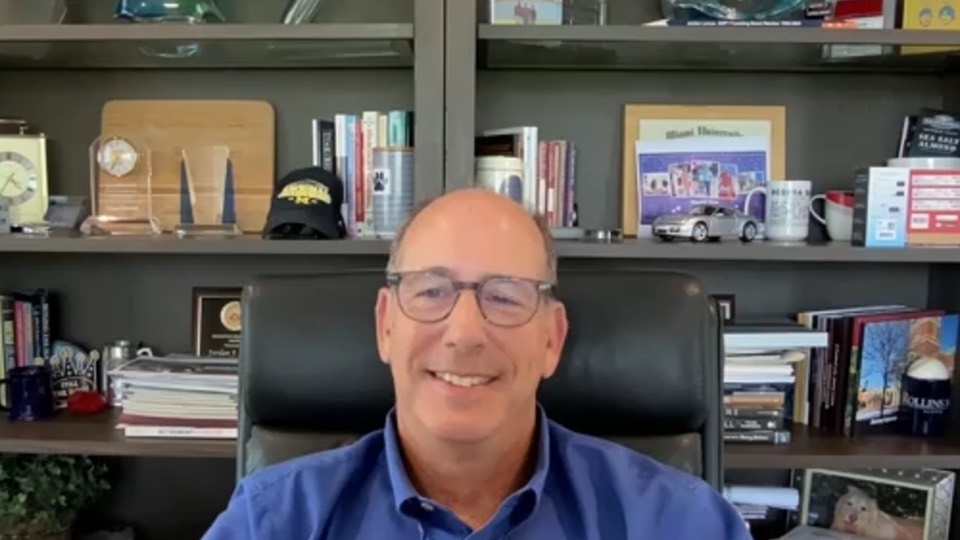
Jordan Lomas, former SVP Information Technology at Darden, is the guest on episode 25 of the Restaurant Tech Trends podcast, hosted by Justin Foster.
 Play episode
What Jordan and Justin discuss
- What best practices and leadership principles Jordan used to guide Darden's 9 brands to achieve technology harmony and longevity
- What smaller to midsize chains (50 units+) need to tackle on DAY ONE to ensure they don't fall victim to ransomware or other cybersecurity threats
- Which technologies Jordan is most excited about (*spoiler* - it's AI) but which applications he's surprised about might surprise you
- The one project Jordan wishes he could hit the reset button on. We've all been there!
Episode notes from the host
On today's Restaurant Tech Trends, we chat with Jordan Lomas, former SVP Information Technology at Darden. It's hard to encapsulate the key tech learnings from a storied 18 year run at one of the restaurant industry's most iconic companies in a 15-minute podcast, but we gave it a go.
Thank you, Jordan!
Transcript
Full transcript (2,371 words)
Machine-generated transcript; names may be misspelled.
0:00 Hey everyone, welcome to Restaurant Tech Trends where we explore restaurant technology trends with some of the biggest movers and shakers in the industry in a rapid fire short interview format. Today's episode is sponsored by Incept AI. For those who don't know, Incept AI is focused on taking restaurant orders over the phone and in noisy drive-thrus with friendliness and precision. Learn more at Incept.ai. Today, we're joined by Jordan Lomas, who until mid 2024 served as Senior Vice President of Information Technology, at Darden Restaurants, which is the parent company of Olive Garden, Longhorn Steakhouse, The Capital Grill, and seven other brands. During his 17 year tenure, Jordan directed enterprise tech and cybersecurity initiatives that modernized more than 2000 company owned restaurants, empowered 190,000 team members, and supported the group's growth to over $11.5 billion in annual sales. He now shares those insights as an adjunct professor of analytics and technology at Rollins College and is an advisor to emerging restaurant tech startups, including our very own Incept AI. Jordan, welcome to the show. Hey, thank you, Justin. Glad to be here. Really appreciate your support and I'm glad you're able to take some time off the links to join us here today. So I'm just kidding, of course. So Jordan, by the time you retired in July of 2024, Darden had grown to 2000. Plus company-owned locations supported by roughly 190,000 team members, as I mentioned earlier.
1:37 How did you architect platforms that could flex across such a diverse portfolio of brands without diluting each one's personality? Yeah, great question. So if you think about Darden, Darden is driven by scale. Scale is one of the four main strategic advantages. So we had to have platforms that scaled across all the brands and all the restaurants. And so we would think about it in terms of business requirements, use cases, things that you typically think about when you're going to architect a new system. And Olive Garden being more than half the revenue of the company, right, plays a very key role in that. And if it's going to work well for Olive Garden, it's probably going to work well for the other casual dining brands. So whether we're building a system or buying something off the shelf, it has to be able to be configured. And so that configuration is key. So being able to build once, buy once, and then configure for different brand needs is really what drove us from an architecture standpoint. So no hard coding for brands, no custom code, but make it work through configurations. And sometimes it meant that for some of the fine dining brands, they might have to look for a different solution from time to time. But if we can get it to work well at a brand like Olive Garden, we knew it would work well for most, if not all the brands. And just out of curiosity, did that extend to POS?
3:11 A hundred percent. So we were in a great position. We had our own POS and we could configure for each of the brand needs and did so. Got it. Well, I know one of your expertises, Jordan, is in cybersecurity. And I'm sure you dealt with a lot of that during your time at Darden. You know, large restaurant chains process, millions of card transactions daily, and are really juicy targets for bad actors. What were some of the toughest security challenges that you tackled? And what practical guardrails would you advise to say a smaller brand, like a 50 unit and up brand to get taken care of on day one? Yeah, great question. So if I think about my Darden tenure, if you go back 10 years ago, senior executives, boards were definitely not as focused on cyber. So I think, you know, one of my biggest challenges was education and getting buy-in from the senior leaders, then ultimately the board that we needed to up our game in cyber. And we did that. And we had to address emerging challenges just like we do today, but especially ransomware. That was so impactful to so many organizations. So getting the buy-in, that was one. And our CEO at the time, Gene Lee, was very clear. It's not a matter of if you're going to get hit, it's a matter of when. And so I think the second challenge was being prepared, making sure that we had a response plan and a recovery plan that would serve the business well. Because again, if it's not a matter of if, it's a matter of when, then you have to be prepared. I think for a restaurant company today, as you know, maybe a smaller number of units, maybe even a bigger restaurant chain, you still have to be brilliant with the basics. So you must have a point of sale system that is secure, that is PCI compliant.
5:06 You have to do the basics like segmenting your network. So if you have an issue at one location, it doesn't affect more than one location. Patching, keeping current with your software, you know, again, a basic, but something that a lot of companies miss. As I mentioned before, having a response plan and a recovery plan is key. Training your staff, there's no substitute for training. And I think lastly, making sure that you know where your data is. We work in a world today where we're using so many vendors and software as a service all over the place. Knowing where you have your data and making sure you vet those vendors is absolutely critical. So I'd say those are the top ones. That's great. You mentioned two things I want to follow up there on. So as a small technology vendor in the restaurant tech ecosystem, I'm dealing with people like you, Jordan, because we're going through our SOC 2 compliance process right now, which is loads of fun, let me tell you, but super important. You mentioned education and communication as being especially important in bringing people together to deploy systems. I think I'd like to segue from there and talk with you a little bit more generally about leadership principles. What do you think were some of the most important leadership principles out Darden that proved the most effective in aligning operators, brand presidents, all the corporate IT stakeholders around a common roadmap, especially when you would be introducing a system that meant disrupting well-honed restaurant practices?
6:46 Yeah, great question. And a big challenge, right? When you have nine plus brands, which is nine different brand presidents and brand leadership to work with. So I think number one is involvement and including those leaders in the decision-making process. So when we would put together our annual IT plan and usually on a semi-annual basis or every other year basis, putting together an updated IT strategy, we involved all of those brand presidents in the work we were doing to understand what was important to them, what were their business priorities, and then how does that translate into systems and technology? And obviously, you know, I mentioned Olive Garden before, right? When you have one really large brand, you have to make sure that the Olive Garden leadership team's on board. So it's involvement, it's inclusion, and then it's working together with that leadership team on prioritization and asking them to help us to drive the message, right? Because there are great people in operations all over the country that have ideas, and we can't address all of those ideas. We've got to stay focused on the top two or three things that we've committed to. So making sure that leadership team is driving the message down and through the organization that these are the three priorities or however many there are, and this is what we have to stay focused on. I think that's gaining the alignment up front is key. I'd say the second thing though, is that whenever we're working on a technology project, you have people that you need to help make it happen. And so identifying those people who has to help make this happen versus the people who can just let it happen. And where it goes wrong is when you have somebody that you need on the team to make it happen, and they're in the mode of, well, I'm going to just see what happens, or I'm going to let it happen. I don't necessarily want to be part of this. That's when you have a big problem trying to bring the change to life. You need those people on board, and they need to understand their role and how to make it happen. I can tell that that was a hard lesson learned at at least one point in your career.
9:02 So I think that actually transitions well to what I'd like to get at next, which is you've probably had some failures on some projects in the past. If you could hit reset on any one project, you know, whether that was like an ambitious moonshot, or it might have just been like a quick win that suddenly spiraled unexpectedly out of control into something much bigger, what would it be? And what did it teach you about innovating at scale? Yeah, great, great question. I think, you know, you learn more sometimes from a failure than you do from a success. But I remember early in my career at Darden, we were going through a supply chain transformation, great project that delivered great business results. Part of that transformation was to implement a new forecasting system, right? So this is around product forecasting for supply chain. And the process had been very manual, very spreadsheet oriented. And so we did our typical RFP, we bought software off the shelf, and we were pretty excited about the capabilities of the software. But when it came to implementation, all we did was take all the work we did in the spreadsheet, and we made the software do that work for us. And we didn't gain the business value we could have, by leveraging the inherent capabilities of the software in ways that that it was meant to do. And so we kind of bent it to our own way of doing things. And I think that lesson was around making sure we have a compelling business problem to solve, and a problem that everybody's on board, and recognizes we need to solve it. Now having said all that, we used the system for 10 years, in the end, I think it all worked out. But we really were hunting a mosquito with an elephant rifle at that point. Got it. Well, let's talk a little bit more about solving compelling problems. As someone sitting on the brand side for the majority of your career, I'm sure you had no shortage of different technologies to look at, vendors to look at, there are a ton of problems that need to be solved today in the restaurant space. But if you were to look at technologies specifically, what is maybe one or two technologies that you think will redefine or have the capability of redefining restaurant operations over, say, the next five years? And why do you think those technologies are game changers? Yeah, you know, this is going to sound bad, I think, but it's about AI. And so AI is the technology that's going to have the biggest impact now and going forward. And I think you guys are well positioned to help companies take advantage of
11:42 that. But if I think about AI, especially in the forecasting space, being able to do predictive analytics with AI, especially around guest count forecasting, preference forecasting, and then translating that into order management, usage and inventory management, I think that's going to help companies generate significant profit margin improvements. And I think that, you know, companies that aren't already looking at this and finding vendors that are good at this to learn from and to incorporate into their systems are missing a great opportunity. I think the other thing we need to look at is what are the technologies that are going to make a difference to the team members, right? So labor is a critical input and component of restaurant costs. It's the, to me, the difference maker when I go out, whether it's casual dining, fine dining, or even quick serve, it's the people you deal with make a big difference. And so how can we use AI to do better scheduling and to facilitate a better team member experience? Because if we can do that, and then that translates, let's say to even small improvements in retention, that's huge gains for companies going forward. Absolutely. Well, Jordan, we're almost out of time. So I like to finish our interviews with a series of a few rapid fire questions. I haven't seen these in advance. So these should be answered with no more than one word or one sentence at the most, starting with this, looking at POSs, cloud POS, edge POS on-prem or brand new POS install. What's your instinctive pick? I think it's edge. I think edge has a lot of advantages. You can, you can still do things on-prem, but, but I think edge is the future. All right. What is the most underrated metric a restaurant CIO should track weekly? You know, I think that the two, the two metrics are guest satisfaction and employee satisfaction. We need to be doing things that address both of those. All right. And last question of all, what's one gadget or app you personally can't travel without? Well, I, I can't go anywhere without Waze, the Waze app on my iPhone. That's, that's a game changer for me. I haven't had any speeding tickets since, since I got that app.
14:16 That's true. That's true. All right. Well, everyone, Jordan, thank you for being here today. Jordan Lomas, the former SVP of information technology at Darden restaurants. Jordan, thanks for sharing some of your time today. You're welcome. Thanks for having me.