Episode 26 · July 22, 2025
Antonio Cianflone
President · Pizza Hotline
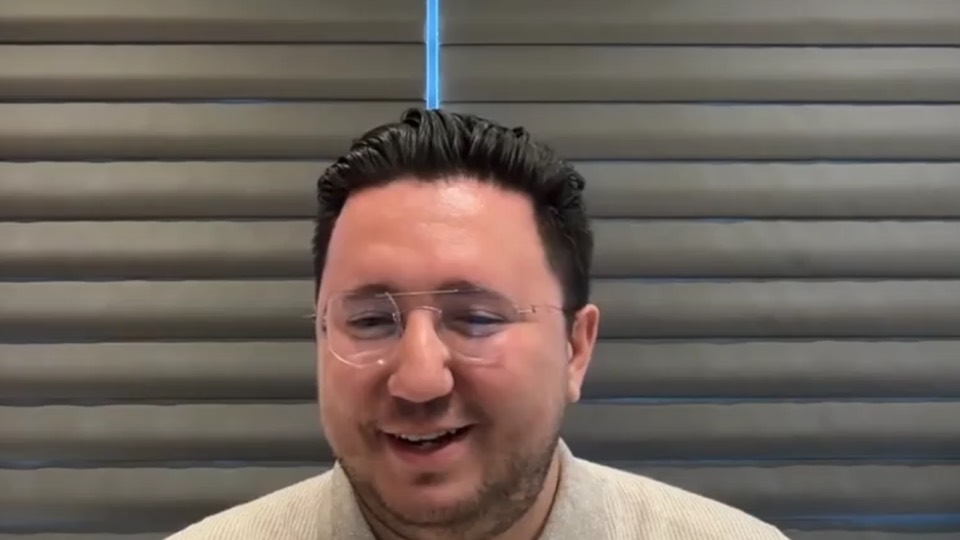
Antonio Cianflone, President at Pizza Hotline, is the guest on episode 26 of the Restaurant Tech Trends podcast, hosted by Justin Foster.
 Play episode
What Antonio and Justin discuss
- What Pizza Hotline's secret weapons are to driving sustainable growth
- How this chain has turned the humble phone into an efficient, streamlined operations powerhouse with more muscle than most brands could ever dream of. It's so good they offer it as a service to others!
- Magic unlock to get buy-in at stores and throughout the system to achieve rapid technology adoption and improvement. Way more old-school than you may think but it WORKS.
- The RIGHT way to position AI with the team to generate enthusiasm and results
Episode notes from the host
It's time for the newest Restaurant Tech Trends! If you want to hear from one of the BEST pizza operators we've ever met, don't miss this. Pizza Hotline's President Antonio Cianflone shares his secrets to achieving longevity and growth in this cutthroat space. Culture, operations, and leaning into tech are
Thank you, Antonio!
Transcript
Full transcript (2,538 words)
Machine-generated transcript; names may be misspelled.
0:00 Hi, everyone. Welcome to Restaurant Tech Trends, where we explore restaurant technology trends with some of the industry's biggest movers and shakers in a rapid fire short interview format. Today's episode is sponsored by Incept AI. For those who don't know, Incept AI is focused on taking restaurant orders over the phone and in noisy drive-thrus with friendliness and precision. Learn more at Incept.ai. Today, we're joined by Antonio Cianflone, second generation of Winnipeg's Pizza Hotline. Antonio literally grew up in the business. His father and mother, Jerry and Teresa Cianflone, founded the company and opened the first shop in 1986 and grabbed Canada's attention with that unforgettable 222 2222 hotline backed by one of Western Canada's first centralized call centers all the way back in 1993. After earning a business degree at the University of Manitoba, Antonio now steers a 30 unit chain in the pizza space that pairs great pies with cutting edge technology. And the result is a family run company quietly shaking up the Canadian pizza space. Antonio, welcome to the show. Thank you for having me. Absolutely. I've been looking forward to this for a long time, ever since we met in Mertech in Las Vegas earlier this year. Well, let's talk about let's let's talk about dominance, right? So Franchise Canada reported this year that Pizza Hotline is ready to be a to share its slices with a wider audience across the country. So I'd like to know from your perspective, what does national domination look like on your 24 month roadmap? Is this like multi unit franchise deals? You doing ghost kitchens? Or are you guys doing something totally different? Yeah, good question. The answer is a little bit of everything. But the most important piece to it, I think is really the people. Pizza Hotline has been around for a long time now, as you said, we've really grown with some incredible operators, franchise operators, corporate operators in our company. So national dominance to me, means continuing to expand that circle of hardworking, passionate, really in the game people, we can grow anywhere, our operations are such that we've got that stuff figured out, we put a lot of time into really making sure that we're training and cultivating great talent. And we're giving people real opportunities to change their lives.
2:29 And to move on to accomplish that next goal. And we really believe that if we do that, we won't just scale across Canada and then have to deal with Canada wide headaches, we'll scale and will endure and will continue to grow and will continue to create these incredible opportunities. So that's really what it's about for me. Well, I know you guys have incredibly sharp operations. That's definitely a secret weapon to scaling out. I am really looking forward to talking with you when you're at 200 units or three or 400 units, I know it's going to happen. So let's talk a bit about how Pizza Hotline blends technology with growth. You have, as I mentioned in the intro, you've got that 222, 2222. Back when you first got that number, you were already blending branding with technology. And I want to know what you learned from building this call routing system that you guys have. And how is that really shaping your roadmap going forward today in 2025? Yeah, it's a really good question. And you're right. We built our first contact center in 1993 to take advantage of this new technology wasn't really being used by anyone, especially not in the restaurant space, especially not in Western Canada.
3:47 But my parents at the time really thought that it was going to be a unique differentiator. And it just operationally made so much sense. Not that it was easy to do, but if they had it, the synergies, the efficiencies, the ability to better service customers would just be so superior to what else was going on in the space. And we quite literally developed not just a contact center, but an extremely efficient contact center. So we didn't really know just how good it was until a few years ago when we actually started to look at it as not just a piece of our existing business, but as a business in its own right that could offer services. And that you do the actual market assessment, you realize, wow, in order to pick up a phone in no more than five seconds, have an average call time of no more than a minute and a half, get an error rate of virtually zero and take something as complicated as a pizza order, massively customizable. Right. You really have to build something good and enduring. And so we just we did it out of at the time part necessity. We needed a way to differentiate ourselves in part just wanting to figure out the best way forward. And so a lot of those lessons continue to be part of our culture today.
5:06 We look at all technology through that same lens. Don't judge yourself versus your direct competitor. Direct competitor, judge that piece of the experience versus whoever might be doing it the best anywhere. Right. So the classic today, it's kind of cliche if you want if you want to assess your product packaging, compare it to Apple, not to the company that's also in your space. But taking that position and then building that technology, that feature, whatever it may be from there is really something we try to do. And we it's become a part of who we are now. Yeah, well, let's talk a little bit more about building technology. I think that's a really good segue right now in the industry. So many brands are trying to push more and more orders to digital. I know phone is a huge platform for you at Pizza Hotline. I'd be curious to know the phone, you know, digital mix that you've got right now. But if we look specifically at online ordering, I know that you've invested a lot in your online ordering platform. You built a feature so that guests can now follow their driver on a live map, which is pretty cool. And they can choose fully contactless drop off. What integrations or custom builds were required behind the scenes to make that sort of Uber style transparency possible?
6:23 Yeah, quite a bit. Again, for us, it starts right at the baseline of what kind of relationship do we have with our technology partners? We couldn't do half of the things we do if we didn't have real foundational relationships in place. The partners that we work with on our point of sale, the partners that we work with on those track your order functionalities. Everybody has to come together and manage that project and take total ownership. So that is massive. And then we needed to develop a system that was easy, user friendly for our consumers to be able to interact with on their own terms. And the other piece to technology rollout that I think a lot of companies gloss over, and it really does make probably the biggest difference, are the people that are going to be using it. So I say at our store level, we needed operations really tight. I'm not just talking about we need one standard system. We have standardized systems that everyone has to use at all times so that we can move quickly and we can adapt and we can change things. But even under that, we have owners, operators, managers, drivers, kitchen staff that actively buy into participating in using that system.
7:38 So our bugs are found out immediately. Anything that is misfiring is really brought right to the top level in real time. We have, again, our contact center on standby to hear issues, questions, concerns. So you have to make sure that everybody's bought in and that everything is flowing in the right direction. And I see a lot of organizations, they develop great technical systems in a vacuum, and then they try to get people to adopt it in the real world. And all of a sudden it's clunky and a lot of stuff doesn't work. So I think for us, that's been something we really try to keep as a core kind of competency. And it works. It helps a lot. So how do you create that buy in though? Do you just introduce systems like in one location to start? Are you talking with like the GMs? Are you talking with the crew? How are you getting that feedback and how are you institutionalizing that buy in so that it's actually part of the culture? Because so many brands really struggle with that big time. Yeah. In our industry, like in the pizza industry and in the franchising industry, buy in is almost, it can become a little cliche. So we have our AGM where we get everyone involved and look, we're such a great company. And then if the rest of the year, don't talk to us, don't call us or whose job is it?
8:55 I, we really take a, it's an approach. It's a macro approach that is informed by a thousand little mini approaches, right? It really starts with mutual respect. You have to know why you're in that arrangement. Why are you choosing as a franchisor to work with franchisees? And why would a franchisee be choosing to work with you? If you both recognize that you are part of a greater, bigger picture, it makes everybody optimized just at a base relationship. If I call operators that are part of our chain or they call me, we both know why we're there. We both know how we're helping and that's huge. And that's true for when you're working with kitchen team members, delivery drivers, general managers, any other position. Again, our contact center is a huge asset. Any issue, big or small can be reported in real time to someone who knows what's going on and can help you troubleshoot and knows when they need to kick that up. So it's like a virtual open door policy. Okay. But you also know if you're walking into, if I'm walking into Justin's office to ask him about something, I know Justin is very competent and capable in what he's doing. And that's what I'm doing because we've worked together so many other times in so many other ways that I also have to bring my A game.
10:11 And it's let's get together. Let's discuss what's going on. Let's roll it out. And let's make sure that we always bring our best to the table. We talk about good operations being key to scaling, but having a good culture just as important. Let's shift to AI, shall we? Because can't talk about restaurant tech without talking about AI. There's so many things you can use AI for. Where do you see AI driving the biggest near term lift at Pizza Hotline in particular? You could use AI systems for demand forecasting, staffing, ordering food. You can have cameras on top of make lines and you can do like voice ordering, like what we're doing here at Incept. What of those applications do you think are the biggest opportunity? Everything. You mentioned demand forecasting with AI is I think a really uniquely good example. Yeah. Because it's contextual knowledge that really makes like when you're making a schedule or you're making an inventory purchasing list. Let's talk schedule. The thing that affects your schedule are more the intangibles than the tangibles. You can make a schedule, take last week's sales and this week, last year's sales, average them out and say, here's what I made.
11:26 Here's how many people I need to make that. There's my schedule. It won't work because the weather will affect it. The sporting event down the street will affect it. The person who always calls in sick on Tuesdays is going to call in sick next Tuesday, even though that's not your data anywhere. And the manager knows all of that as a person, as a human, and does that extra little human fix makes your schedule. That's the side that AI is getting increasingly good at understanding now. And so again, I go back to what's your goal. If your goal is replace managers because AI is going to make my schedule, you're probably still a little ways away from that being your reality. But if your goal is take the manager, say, instead of doing this administrative task, I'm going to free up 10% of your time, 50% of your time, whatever it is, by using an AI model to inform you. And you're going to take that time and accomplish your primary goal, which is something else. You're definitely there. You can do that today. And so it's a great example. It's something that we use. My manager in my store, Vance, for example, their primary goal is to be a human, to be a person, to interact with other people, motivate our team, make sure that our team feels happy coming to work every day, functions well, understands what they can accomplish in the chain by doing that, and make sure that our customers feel like every experience is exceptional.
12:54 It's not necessarily to make the perfect schedule. That's a necessity that goes into accomplishing the primary goal. So when you use that kind of framework, AI can and does do a lot to give those extra couple seconds back to that person to go be a person. And so that's how we try to think about it. I love it. There are so many people that are in restaurant technology that sometimes forget that restaurants are about people helping people making food for people. And it's about those personal connections and those personal relationships. And technology should be an enabler. It shouldn't be something that's getting in the way. That was really, really refreshing to hear you say that. Well, we're almost out of time. So I want to do a few rapid fire questions for you here at the end. Try to answer each one of these questions. And for everyone, Antonio has not heard these in advance. Try to use no more than one sentence. If you can answer in one word, even better. So first one, let's do your signature slice. If you could recommend just one pizza hotline topping combo, what is it? Pepperoni, pineapple, green pepper, white onion.
14:11 I think I've ordered that since I was five. All right. I've never tried that combo before. I've got to give it a go. All right. One Canadian city that's on the top of your list for the next pizza hotline opening. Saskatoon. Are most pizza orders going to come in by phone? Web or voice assistance? My gut says voice assistance. Okay. Well, we'll see. Never know. All right. Antonio, really want to thank you for your time here today. Everyone, Antonio Cianflone from Pizza Hotline. Thank you so much, Antonio. Thank you, Justin. This was great.