Episode 51 · January 28, 2026
Jim Taylor
Founder & CEO · Benchmark Sixty
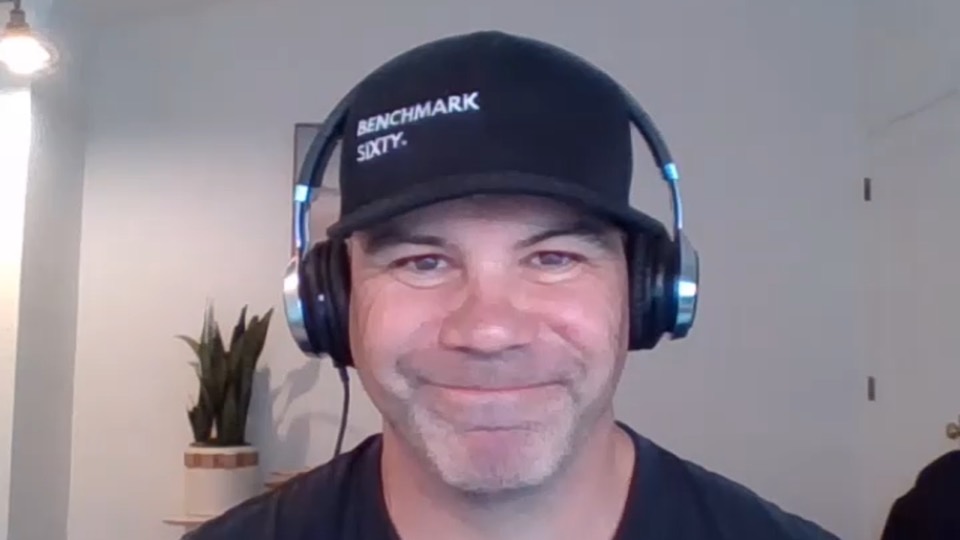
Jim Taylor, Founder & CEO at Benchmark Sixty, Author of Bold Operations: Building The Foundation Of Strategic Excellence In Restaurants, is the guest on episode 51 of the Restaurant Tech Trends podcast, hosted by Justin Foster.
 Watch this episode on Spotify
What Jim and Justin discuss
- Why most operators measure labor the wrong way, and why labor % is a result, not a strategy
- The 4 data points Jim asks for in every engagement and how they unlock productivity fast
- How a 26-unit restaurant group saved $600K in one year without cutting teams or burning people out
- The difference between high productivity and unhealthy workload, and why crossing that line drives turnover
- Why covers per labor hour may be the most underused metric in restaurant ops
Also in this episode
- Jim’s take on where AI actually delivers ROI today vs where it’s still early, why prescriptive analytics is the next big unlock for labor management
Episode notes from the host
RESTAURANT OPS KNOWLEDGE BOMB
Today on Restaurant Tech Trends, I sit down with Jim Taylor, Founder & CEO of Benchmark Sixty Restaurant Services and author of Bold Operations: Building The Foundation Of Strategic Excellence In Restaurants.
Jim has spent 20+ years helping restaurant operators cut through noise, rethink labor, and build calmer, more profitable shifts using people-first, data-driven playbooks. If you run restaurants and feel like labor metrics create more stress than clarity, this episode is for you.
Huge thanks to Jim for a thoughtful, practical conversation that every operator should hear.
Transcript
Full transcript (2,878 words)
Machine-generated transcript; names may be misspelled.
0:00 Hey everyone, welcome to Restaurant Tech Trends, where we explore restaurant technology trends with some of the industry's biggest movers and shakers in a rapid fire short interview format. This podcast is produced by Incept AI. Incept AI takes restaurant orders over the phone and in noisy drive-thrus with friendliness and precision. Learn more at Incept.ai. Today, I am joined by Jim Taylor, founder and CEO of Benchmark Sixty and author of Bold Operations, Building the Foundation of Strategic Excellence in Restaurants. Jim has spent more than two decades helping operators cut through the noise with people-first data-driven playbooks that improve productivity, reduce turnover, and boost profit. We'll dig into why most teams measure labor the wrong way, how workload drives retention, and what a modern operations blueprint actually looks like. If you run restaurants and want clearer metrics and calmer shifts, this one's for you. I'm excited to chat with you. I think this introduction came via Jordan Bush, another shared great connection. So I'm curious to learn about what you guys are doing at Benchmark Sixty. So why don't we start there? Tell us, when you're starting an engagement, what are the first things that you're asking for and why?
1:18 Are you looking for P&Ls, clock-ins, item-level sales? And maybe even before that, give us just a quick overview of Benchmark Sixty. Yeah, sure. Thanks for the opportunity. Benchmark Sixty exists to help restaurant operators make more money. We're really just trying to help them interpret data and interpret information so they can make better decisions faster. To answer your question, when we start a new engagement, there's only actually four things that we ask for. We don't need a P&L, we don't need a tour of the restaurant. We don't need to meet the whole team. We need information on how many guests are you serving? How many employee hours are you using every week? What's your average guest check? And what's your average employee wage? That's it. Okay. And why are those the things that you're asking for? Because what we're trying to understand is, as you mentioned, productivity is an important thing in the industry right now. What we're trying to understand is how productive the business model is. And those are the four pieces of data that will give us a way to measure it. All right. Well, makes sense. Simple enough. Why don't you maybe walk us through like a recent win? Like, what were the baseline metrics before you came in? Exactly what was the intervention? What did you do? And what was the measurable lift? The interesting thing is that most people understand the concept of productivity, how productive is my business is something they've probably had a discussion about. What they may not understand is actually how to measure it, or what the data is telling them. So we take those four pieces of information. We understand how productive the business is, even though this is something that may not have been measured before, or looked at before, or had a metric attached to. And then from there, we can say, here's what's happening, even though you weren't looking at this. And here's what is possible when we move the needle on certain pieces of those, of that, you know, that metric or that equation. A recent win we had was a 26 unit restaurant group, nationally across the Canadian market. They have a couple locations in the US, but they're a Canadian brand. You know, close to 30 restaurants across the country. All we helped them do was better understand how productive their business was and what they could do a few simple things every day in their decision making to improve it. They save $600,000 in one year.
3:27 Wow. I hope you weren't just being paid hourly on that, but you took a cut. Well, speaking of cutting, the best part about that result was that it wasn't just about them going and cutting. It wasn't just about trying to find savings in their P&L or cut hours. It was actually improving and optimizing the business model.
3:50 All right. Well, you know, you work with a lot of different operators. I'm sure you probably see some trends across different restaurants. Where do you see operators today wasting the most money without really realizing that they're even wasting money there? Is it like prep, station layout? Is it menu complexity, staffing mix? Like what is it? Are there a few like common things you didn't see a lot? Yeah. In staying with this concept of business productivity, it's kind of a buzzword, right? A lot of companies are trying to figure out how to be more productive. They're trying to figure out how to get more out of their people. They're trying to use technology and AI to improve efficiency and productivity. One of the things that they don't understand in a lot of cases that we see is they don't understand where the threshold is between good productivity and unhealthy workload. So one of the mistakes that they actually make is in within the business operation every day, trying to be as productive as they possibly can in order to save money while they're actually operating in what we call unhealthy workload. And it causes burnout. It causes declining levels of customer service. It causes opportunity to actually get in front of your customer and sell them more, you know, the customer service experience of it as we articulate it is if a few people are sitting around a table having dinner in a restaurant and one person says, should we stay and have another round or have dessert or something like that? And the response is typically from somebody else in the group. We haven't seen a server or a bartender or a staff member in 15 minutes. Maybe we should just go somewhere else. The team is spread too thin.
5:24 They can't even sell. Yeah, it makes sense. And I think this is a really good segue into this next question because you mentioned AI and automation. You know, AI is creeping into restaurant operations all over the place, right? It's, you know, ordering, it's back of house, it's forecasting, it's scheduling even. Where do you see today like real ROI coming from AI and or automation versus what do you think today is just kind of early or not quite there enough yet? Or maybe you just see it as complete hype? You know, I think the automation side of the industry is it's like you said, it's coming fast. It's it's everywhere. It's in every component of the business. If you specifically look at the back of house, it's really doing good things to help with ordering accuracy. It's doing really good things to help speed up process in terms of in some cases, inventory or even actually the prep, the time that it takes to prep food. If they have better detailed information about how much to make and how long it takes and so on and so forth, it's really improving that where there's still, you know, maybe it's a bit early or we encourage operators to just make sure they give a lot of thought when it comes to operations is making sure that they understand if this is helping our customer have a better experience, our employee have a better experience, or our business be more productive without crossing that threshold, it's likely a win. But they have to go through that framework.
6:57 Got it. Have you worked with any operators that are utilizing robotics in the kitchen today? Or is that still pretty early? Absolutely. It's it's coming. I mean, it started with Chipotle and their avocado, avocado peeler, right, where they're starting to make guacamole at scale, because they partly because they have to, but it's definitely something that we see coming. And if it fits the menu engineering, if it fits the labor model, if it fits the concept itself, robotics is something that can definitely help speed up and improve productivity in the kitchen for sure.
7:33 Well, let's keep looking into the future. And as you're working with multiple different operators and seeing all these different technologies, let's just go 12 months into the future. What single systems change do you think has the best potential to separate like the top quartile operators from the rest of the pack? I think in that case, it comes down to prescriptive analytics.
7:58 As there's a lot of a lot happening in tech around predictive. Here's what's been happening. So here's what we think will happen, right? Scheduling or ordering or those types of things. There's lots of that predictive stuff happening where we see the biggest advancement coming that will save the industry a ton of money is in the prescriptive side. Here's not just here's what might happen, but here's what likely will happen. And here's why.
8:28 Okay. And so let's talk about a couple of examples of that. Is this like labor forecasting, demand forecasting? Where do you see the biggest application of? Yeah, I think it comes in revenue. I think it comes in labor cost management. You know, specifically one example in the labor side of things where we spend a lot of time is, you know, maybe things like your percentage, your labor cost percentage was high last week. Maybe that's not a bad thing, which is counterintuitive compared to what most operators would think. If my labor is high, that's that something's wrong, but it might actually be the labor cost jumped by 2% because your average guests spent 15% less than they normally do. So that's what we're going to do. Meaning that it might actually be a marketing conversation or a sales training conversation and not a management operations discussion. So helping to point more prescriptive. This is why it happened. Here's what to do about it. Type thing is going to be really valuable for the industry.
9:26 Makes sense. Well, let's shift gears a little bit and talk about your book, Bold Operations. I know you've written a couple of books and I think bold operations might have been the first one. A few things that you talked about in there. I'd like you to dive into what strategic excellence means in day-to-day ops and what is the first brick in that foundation from Bold Operations. Yeah, strategic excellence in terms of, you know, how we talk about it in the book is really around a couple of things. It's about people first leadership in hospitality. There's a lot of discussion in that book about making sure that we're actually looking for ways to protect people. Workload is part of that. Productivity concepts, all of these are part of that. The first sort of brick or nugget that I would encourage people to look for in that book if they get a chance to read it is talking about the concept of measuring covers per labor hour. Covers per labor hour will give us an indicator similar to sales per labor hour, but more customer and people centric. So it will tell us how many people does it take to take care at a high level of the number of guests you're serving, rather than just an output or throughput metric. And what it'll also tell us, and I use the analogy all the time, every professional sport league has a load management strategy in place to protect their athletes from burnout and injury. And covers per labor hour is a simple way to start doing that same thing to protect restaurants biggest asset, which is their people from an execution perspective.
10:54 Right. It makes sense. And I like it. And I'm sure there's a lot of crew members that love to see this metric getting put in place. I think this may actually be the answer to the next question, but I'm not sure. So you've argued that labor percentage is like the wrong metric to be using. Is this covers per labor hour, the correct metric and how do you calculate it? Or are we talking about something totally different here? It's definitely part of the silver bullet for sure. Labor percentage is a result. It's not a strategy.
11:21 And got it. Sorry. Yeah. And covers per labor hour is a, it's something that forces operators to compartmentalize data. Like I said, if our average check declines, our labor cost is going to go up percentage wise. If our average wage increases because of overtime, our labor cost percentage is going to go up. If the business is less productive or more productive, the labor cost percentage will you know, move in, in connection to that. Yep. I get it. Um, well, let's keep the focus on workload. And, uh, I'd like to learn a little bit more about, um, predicting turnover, right? You know, restaurants, very high turnover industry. It might even be the highest turnover industry. I'm not sure about that. How can you define workload in a restaurant context to predict turnover and the impact on guest experience? Sales per labor hour is a very common metric. It shows up in every POS. It shows up in most, you know, reporting and whatnot, but it doesn't talk about what happens day to day or shift to shift or any of those things. It just says, here was, here's what happened. Here's what the weekly number was. Maybe it was a hundred dollars in sales per labor hour last week. Well, if a hundred dollars is the target, $110 is probably fine. $120, maybe there was some long ticket times, but everything's probably still relatively okay. 130 and someone's stressed out, 140 and someone's crying in the walking cooler, 150 and you're replacing your team.
12:51 I see. So is that, I mean, you just gave an example there of a 50% increase. Is that the magic number or is that arbitrary? It's just an example. The number would be different for literally every single restaurant. There's a process to go through to figure out what the target should be, but the concept of understanding how to take that, what is a productivity number and actually reverse engineer it into what it means from a workload perspective is how we actually intentionally and, and strategically lower turnover in restaurants.
13:24 Right. Well, let's look at labor from the perspective of a GM, um, and maybe just give like a couple of practical tips. Like what are a few things that GMs can do to help boost retention that you've seen, you know, things that are particularly. Yeah. If you're a GM, get a napkin and a pen, um, make it really simple. Go through last week, count, get the number of guests or covers that you served each day of the week by day, and then find out the number of employee hours you used each day of the week, divide guest count or covers by employee hours, and that will give you a ratio. And the first thing I guarantee you will see is completely different scores each day of the week. The first thing that presents an opportunity is just to create some more consistency because that number reflects guest experience. It reflects employee experience. It reflects profitability. It connects to all these different things. So the first thing I would do, divide covers by hours, figure out what the number is, create some more consistency around it, and other things will start to pop up for you. Right. Well, we are out of time, Jim, for our regular questions. It's time to move into our rapid fires. So for those of you that are watching or listening, Jim has no clue what these questions are that I'm about to ask him. Jim, the rules of engagement are, try to answer these questions with one word. If you can, one sentence, if you can, are you ready?
14:47 If your book bold operations were a sandwich, what's on it?
14:54 Just cheese. All right. Dive in a little bit on that. Because everybody loves a cheese sandwich. It's simple. It's easy. It's consistent. You go to it when you need it. Just cheese.
15:12 Makes sense. What's one restaurant metric that you'd banish forever if you could? I don't know if it's a metric. It's a statement. I would banish industry standard forever.
15:26 Right. What is your coffee order to power your spreadsheet productivity? Great Americano. All right. And if you could pick only one secret ops superpower of these ones, or you can give another one, which would it be? Forecasting, scheduling, or training? Training.
15:52 All right. And let's see. I'm going to pick another one here. What is your go-to celebration meal after a great month? Rib-eye.
16:05 Rib-eye. I didn't catch that there. All right. Well, Jim, I want to thank you very much for joining me here today and sharing all of these insights with the restaurant community. Congratulations on all of your success and your books. Everyone, Jim Taylor, founder and CEO of Benchmark 60 and author of Bold Operations. Thanks, Jim.