Episode 20
Wade Allen
President · Costa Vida
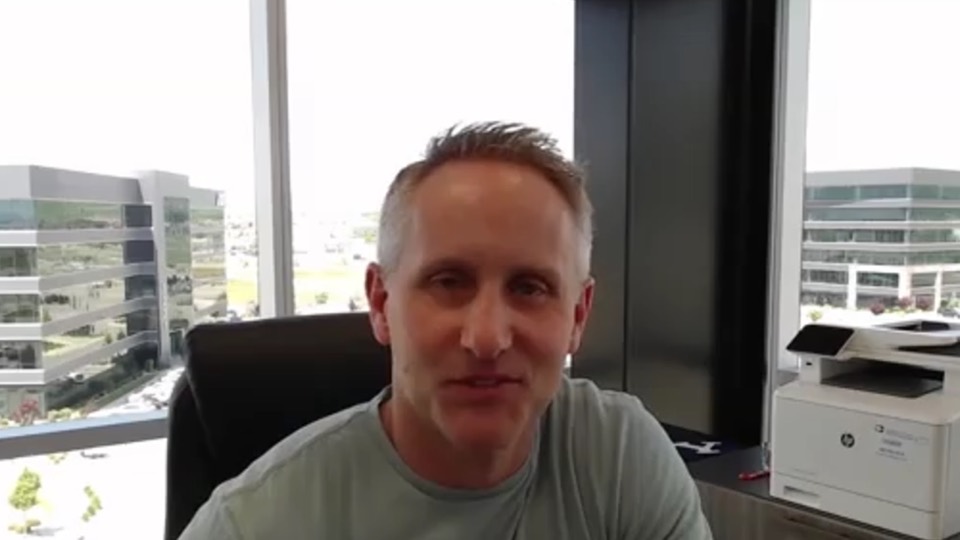
Wade Allen, President Costa Vida, is the guest on episode 20 of the Restaurant Tech Trends podcast, hosted by Justin Foster.
 Play episode
What Wade and Justin discuss
- How Wade made the leap from senior restaurant tech exec to President of one of the coolest fast casual restaurant brands - and where he's beefing up his skills to ride the wave moving forward
- How Wade sees the 1st party ordering vs. 3rd party delivery landscape shaping up over the coming years. Controversial? Could be!
- Wade's hot take on whether it's better to take a best-of-breed approach to tech vendor mgmt vs. looking for all-in-one platforms (hint: it's a little different than how Troy Hooper sees it... will be interesting to watch this play out over the next couple of years!)
- Which tech suppliers are crushing it at Costa Vida (nice shout outs to Olo, Braze, Sparkfly, Paylocity, and Toast!)
- The ONE technology every emerging restaurant brand should be experimenting with right now. Hint?
Episode notes from the host
When we think of strengthin the restaurant tech world, Costa Vida, Fresh Mexican Grill President Wade Allen comes to mind! Dedicated to innovation and leading by example, Wade is propelling this fast-casual fresh-mex leader to new heights. Our co-founder Justin Foster sat down with him to catch up on the latest.
Transcript
Full transcript (2,949 words)
Machine-generated transcript; names may be misspelled.
0:00 Hi, everyone, and welcome to Restaurant Tech Trends, where we explore restaurant technology trends with some of the industry's biggest movers and shakers in a rapid fire interview format. Today, I am elated to be joined by Wade Allen, who is the president of Costa Vida Fresh Mexican Grill. Wade has been the president at Costa Vida since June of 2024, but he has a really strong background in tech, which is one of the reasons why I thought it would be great to have you on here. Wade, prior to serving as president, he previously led IT, he led off-prem and analytics at Costa Vida. And then prior to that, he spent nine years at Brinker, where he was the chief digital officer and also headed off-premise there as well. Wade, I know you as a huge supporter of startups in the restaurant tech ecosystem. That's actually how we met. And I'm really grateful for your willingness to spend a few minutes here with me today. Thanks, man. I'm super pumped, Justin. It's always good to connect. And I know we're friends outside of everyday kind of work-related stuff, so I'm just pumped to be on the show. Well, let's start off with some current events. We've had a couple big announcements this week. Probably the biggest announcement that we heard in the restaurant tech world was the DoorDash acquisitions of both Deliveroo and Seven Rooms.
1:18 I'm curious, what do you think about these acquisitions? Well, first of all, I actually had a unique opportunity back in 2019 to meet Tony Hsu, the CEO of DoorDash, personally, and kind of spend some time with him as I was putting the integrations together at Brinker prior to COVID. And he is such a humble, down-to-earth guy. But, man, I always do root for DoorDash and that team. Not that I'm against any third-party other group, but DoorDash is near and dear to the heart because of that experience. So I think the decision they've made, they're actively trying to bolster that portfolio to be more than just delivery, right? Which is one of the key acquisitions that they made in this bigger acquisition play. But also their kind of strength in the European market is going to be really interesting, right? So I give them kudos. I heard, and I can't remember, it was like some outrageous number that the total purchase was. I can't remember what it was. I don't want to say too many. I think it was $3.9 billion. I was going to say $4 billion or something. So, wow. Kudos to them. I think it's going to be a game changer. I think DoorDash is a force to play with. I think they're going to continue to strengthen their portfolio to be other business-related aspects that kind of center around restaurants. So, you know, they're not going away anytime soon.
2:35 Yeah, for sure. I'm going to ask you a little bit later about some of the tensions between third-party delivery and first-party online ordering. So we'll get there in just a minute. But before we do, I'd like to hear just more generally. You've been president at Costa Vida since June of 2024. I'd love to learn. What have you learned since you started as president? What are some of the things that you're most excited about? And what are some of your top plans for the brand in 2025, moving into 2026? So I think what I've learned in the last year is I didn't know as much as I thought I did. That's what I'll say. President role is a different, unique animal. I love it. I love the pace of it and the speed of it. But I didn't know as much as I thought I did specifically around some of the, I'll say, softer metrics and softer things related to being a president. When it came to metrics and business and strategy and kind of driving traffic and sales, I knew that in spades. I'd come from that world. Even tech stacks and understanding the importance of the finance aspect of the business felt very comfortable. It's the personnel side. It's the culture side. It's these other things that I'm being shaped and I'm learning. So that was a big transition for me. And I'm still on that journey. Super hip on a book called Trust and Inspire by Covey.
3:52 And I'm implementing that culture here in my restaurants and in my support center. And I really believe in becoming a trust and inspire leader. So if you want to know more, let me know. I'm happy to share the book with you. But it's been a great journey so far. I think for our business, some of the key things that I'm hyper focused on is I want to take Costa to be a billion dollar brand. I think a lot of people don't know Costa outside of the Western US. And for me, it's about an opportunity to unleash this amazing food that is scratch, that competes head to head, in my opinion, with nobody. It's so much above some of the other concepts out there. But how do I unleash it? How do I get there? What do we need to do from a business standpoint to go down that path? We've got our marketing tech stack in place and we're ripping now from a technology standpoint. Very comfortable with the stack we've put together and the results we're getting. I think Cinco de Mayo, we were up 100% in our digital world year over year. So we just absolutely crushed it. So I've got that in place. And now it's really about establishing a culture, shooting for that moonshot of a billion dollar brand, and then putting the mechanics in place over the next five to seven years to accomplish that. Well, I think you're definitely doing something right from the cultural perspective. Not only I think you had Stephen Covey in or something as a leadership speaker.
5:09 Yeah, that's awesome. But also I saw you, the team just went to Puerto Vallarta in Mexico, which is crazy. So that's awesome. Yeah, that's one way to take him to Mexico on an all-exclusive vacation. So that's a good way to do it. Exactly, exactly. It's a good way to make friends. Well, you talked a little bit about having your Martech stack completely in place, you're like ripping on technology. And that I think is a good transition into my next question, which is, you have a background in technology, both from your previous time at Costa Vida, but also from the time that you spent at Brinker. And I'm curious how what you learned in both of those past roles have shaped your approach to deploying technology today as president. Oh yeah, 100% shaping of me from the, I'll call it the institution or the education I gained at Brinker. And then even the one year in a fast casual concept where I became kind of the lead on the Martech stack and on marketing on analytics. I think some of the things I bring brought to bear is the importance of making sure that even though it is more complex to put together a stack of best in breed, it always will serve you better than a one out of the box serves all in my opinion. And again, I know there's differences of opinion, but that's where I play because I know exactly who I need to engage with when something in that tech stack doesn't work correctly.
6:27 So for me, the world is going to this integrated model and I want to control and have control over that integration so that if something happens with a vendor that I don't get along with or something changes or they get purchased or an M&A transaction happens, that I can unplug that vendor and plug in another vendor partner right into that same, you know, the analogy is the search protector. So that's the approach I've taken. But I also am big on ensuring we've got, I'd say, modernized tech stacks, cloud-based technology that actually takes a lot of the liability and onus out of our teams of the security aspects and puts them back on our providers who are much better positioned to help us and secure us. I see. It's really interesting to see the dichotomy between different folks in this space about this best of breed approach with tight integrations versus going with platforms that just have everything all bundled in. People are all over the spectrum, but I definitely do see there are some platforms that are trying to grab more of that vendor tech pie. And that brings me to my next question, actually, which is, are there any particular, you know, technology investments that Costa Vida has made that you're particularly proud of or excited about, you know, over the, let's just say, like over the last year?
7:47 And I'll give a shout out to some of our partners. First of all, we have great partners all across the board from all of our suppliers, whether it's food suppliers or technology suppliers or even marketing agencies. But the ones who I'm very, they just deliver day in and day out, right? I will say our above restaurant POA system is Olo and they're solid. I just have, you know, Noah and I have been acquaintances for probably the better part of a decade now. They're a solid organization and they deliver. Been really pleased with the Olo Pay aspect as well. We moved to Olo Pay and that's been a really big win for us. Toast is very solid in our restaurants from our, in restaurant POS. I'm very pleased with Toast. We've been a part of their world for a long time here at Costa Vida and they have done a phenomenal job and I continue to get great results from them.
8:32 I've recently been crushing on Sparkfly. I think they do a great job. We took a risk a little bit on them and brought them in from a loyalty provider and they've done a great job of delivering for us. And it's part of the reasons our technology is doing so well in that tech stack. Braze is a great partner in that tech stack. I'm very pleased with them. And then we, you know, we moved to Paylocity recently in our HR system and I've been very pleased with the results from Paylocity. They have a ton of integrations. We're still learning the system, but that's kind of the sweet spot that I see. And I apologize to any vendors that are listening to, if you're part of our portfolio, we love you just as much. But these are the ones that really come to mind that we've implemented in the course of the last maybe 18 months that have impacted our business.
9:14 Wade, you're always so generous toward your vendor partners and giving shout outs. I've noticed that when I've seen you on stage at various different events. So it must be great to be a Costa Vida vendor partner. Well, you mentioned Olo. So let me just throw the Olo question out. There've been some rumors swirling recently that Olo might potentially be up for sale. What do you think about that, if anything? Yeah, I've been at a list on my desk somewhere of the organizations that I think that would actually have been on that transaction. Look, I think it could be toast, right? I have them on my list. Before DoorDash made this transition, I thought it might be DoorDash as well. That was an interesting one, right? I actually think it's an interesting move. It'll be interesting to see who actually gets a hold of them. You know, if it's a legacy POS system like an Aloha or an Oracle or some of these other groups, it'll be really interesting to see how they put their arms around that and what that looks like. If it's already kind of a modernized tech group that is complementary or Olo could expand the book of business for enterprise customers, that could be a big win too. So my mind always goes to somebody who's trying to expand their book of business into the enterprise space of which what Olo has and it's complementary services. Or it's an older POS system that needs a modernized online ordering capability that they're going to go grab and get a hold of.
10:29 But that's my two cents on it. Well, we'll see what happens. No one knows at this point. So I mentioned at the beginning, I was going to talk a little bit more about third-party delivery. So I'm curious to learn from your perspective, how do you view the role of first-party versus third-party ordering platforms today? And what are some of the things that Costa Vida is doing to maximize control over your customer data and ensure a strong guest experience? Yeah, Justin, this is a really interesting topic. And I think it's not talked about enough openly. For a long time, I think third-party providers and first-party data and transactions were kind of at odds with each other. And they kind of competed against each other. And there was kind of who could get a leg up. I think post-COVID, we're kind of settling into a world where restaurants have now taken what I think is the rightful position of taking back the customer.
11:21 And I think that will be what the world will look like, is that first-party data will be the primary lean-in for restaurants to drive because it's their brand, it's their experience. Third-party will be a very solid partner in this that will then kind of mop up the remaining 30% or 40% that will help drive that brand's visibility to an audience that can otherwise not have brand in hand. I always look for my phone and their app on their phone. And I think that's the rightful way it should be done. I think pre-COVID and during COVID, it flipped so hard the other direction. And because those technologies were ready and in place, and a lot of people didn't have their first party in place as well, that's why it shifted. But I think the pendulum's kind of coming back. It's going to be this 60-40, 70-30 split at some point. And it's going to settle into that. And I think for me, that's the right model. And then I view them as partners. I don't view them as competing against me. And I think that the smart ones will work with us holistically to grow overall share as opposed to try to still share back and forth between first and third. Got it. Well, wait, I wish we had more time because I have a ton of questions. But I think I'm going to ask you just one more. I'm curious, if you were to pick any technology out there, what is one technology that you think every emerging restaurant brand should be experimenting with right now in mid-2025?
12:48 Yeah, and this is going to be the try to answer, but it's AI. I had a meeting just before this with Josh Bouchard from Savory and one of the senior VPs at a grocery group here in Utah.
12:59 And AI is changing everything. It's changing support centers. It's changing call centers. It's changing ordering. It's changing business and presentation development. It's changing creativity. It is going to rock the entirety of everything that we know today. And the brands that are smart aren't sticking their head in the sand and ignoring it. They're actually trying to get their arms around a little bit and dabble with it so that when this continues to bloom, and it will bigger and bigger, that they're part of the journey not getting left behind. So if you're not messing with AI, if you're not playing with AI, if you're not putting in a call center, if you're not using it in some kind of test for your drive-through, if you're not playing with it at your support center, you need to. You need to get after it. Is there one particular AI use case that you think is most impactful? Is it demand forecasting for labor or for ordering product? Or is it ordering? Or is it inventory management? Is there one use case that you see as the big one? I mean, I don't know. I wish I had it because the ball knew. We are still on the infancy of trying to get into demand forecasting, right? That's where we need to be in inventory. We're playing it in call centers. We're playing it in the lowest hanging fruits, right? Business, presentation aspects, creativity, marketing aspects. We're using it there, which is just kind of the lowest hanging fruit.
14:15 So my recommendation is, look, there's probably a million use cases. I think the most important use case to the people that hear this should be the easiest one that they could get implemented as fast as they can because they'll learn from it and it'll allow them to move into other areas of the business to make them successful. Better to do something than just sit on the sidelines and talk about it all day long. Wade, thank you so much for sharing a few minutes of your time today. Wade Allen, the president of Costa Vida Fresh Mexican World. Thanks, Justin. Appreciate it, man.