Episode 44 · November 17, 2025
Mike Lukianoff
Founder/CEO · Signalflare
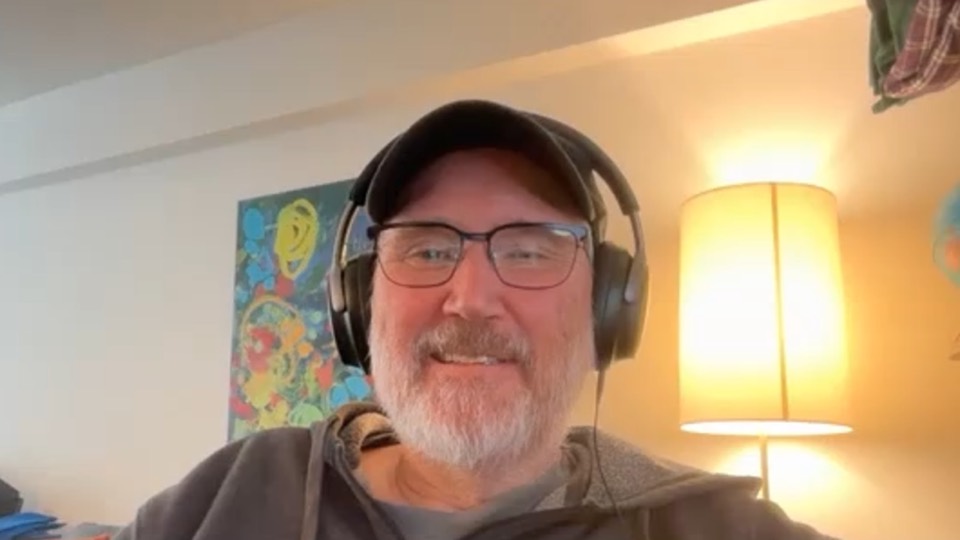
Mike Lukianoff, Founder/CEO at Signalflare, is the guest on episode 44 of the Restaurant Tech Trends podcast, hosted by Justin Foster.
 Play episode
What Mike and Justin discuss
- Why the “last mile” of analytics has always been the industry’s Achilles’ heel and how Signalflare’s new Navigator product turns messy, multi-source data into simple, actionable decisions for non-technical operators
- How mobile data, credit card panels, and true trade-area modeling reveal that restaurant overcapacity and margin compression are structural problems, not temporary ones
- Why Mike believes most enterprises will need to rethink old data warehouse assumptions and why the next generation of restaurant tech requires a clean-slate approach to learning systems
- How AI becomes smarter only when operators treat it like a learning partnership rather than a one-click magic solution. It is not plug and play. It is raise and teach.
Also in this episode
- Mike explains why mispriced add-ons quietly destroy margins, why menu architecture deserves more attention, and why every great operator should use AI to learn, not to automate.
Episode notes from the host
Today on Restaurant Tech Trends we sit down with one of the sharpest minds in restaurant analytics: Michael Lukianoff, Founder and CEO of SignalFlare.ai. If you care about pricing, menu architecture, or the future of decision intelligence in restaurants, this episode is a must-watch.
Huge thanks to Mike for breaking down how decision intelligence is evolving and what restaurants must do to stay ahead in a demand-shifting, overbuilt market. This one is packed with clarity and operator-first insights.
Transcript
Full transcript (2,299 words)
Machine-generated transcript; names may be misspelled.
0:00 Hey everyone, welcome to Restaurant Tech Trends, where we explore restaurant technology trends with some of the industry's biggest movers and shakers in a short interview rapid fire format. This podcast is produced by Incept AI. Incept AI takes restaurant orders over the phone and in noisy drive-thrus with friendliness and precision. Learn more at Incept.ai. Today, we're joined by Mike Lukianoff, who's founder and CEO of SignalFlare, a decision intelligence platform that turns messy restaurant data into clear actions across pricing, menu, marketing, and site strategy. Mike has spent decades building analytics that many chains now use every day, and he's been vocal about capacity, consumer demand, and how AI can give operators faster, more predictable decisions. We'll dig into what actually moves sales, protects margins, and helps leaders act with confidence. Mike, welcome to the show. Thanks for having me, Justin.
1:01 Let's talk a little bit about SignalFlare. To start, you recently had an announcement that you launched a product called Navigator, and you positioned it as a decision intelligence overlay that finally closes the gap between data and action. Tell us a little bit about Navigator, and then help us understand what were some of the biggest product or conceptual challenges in making that leap from analytics to decision engines. I think the biggest difficulty in applying analytics to restaurants, as long as I can remember, is that last mile. You're taking very complex ideas and trying to present it in a way that's really easy for a non-technical audience to be able to put it into action. And one of the big advantages of AI is that it can actually reduce it to very consumable, very easy to understand concepts. This has really only been able to be done with hand-holding from humans and very consulting-heavy infrastructure in the past. And really, my past companies have really had a very heavy consulting layer in previous iterations of what I've been doing. We still have some really great analysts and consultants who will help our enterprise accounts, but being able to have AI in the mix has really changed how you can actually scale that both down to smaller restaurants, streamlining what the recommendations are, analyzing massive data sets. It's really completely changed what that paradigm is. Got it. And the decisions that you're primarily helping restaurants with, are these like menu pricing decisions or where is the core? It's menu pricing, what we call menu architecture, how you display things, how do you choose what to merchandise, how big should your menu be, how many items do you need to have to reach the maximum number of customers. Also, understanding how to get to the right customers within the marketplace. How do you target people? So there's a pretty broad swath of things that we're doing because we're melding the customer's point of sale data. So we understand the behavior that's happening inside of the restaurant, but we're also taking in the mobile data. So we understand how people are navigating their communities with credit card sampling data.
3:18 So we know how much people are spending at other restaurants and retailers, as well as all the local macro and microeconomic data. So we're really understanding all the fundamentals of demand around restaurants. This is one of the coolest and hottest areas right now for using AI in restaurants. I think it's awesome what you guys are doing. You've talked recently on LinkedIn about restaurant overcapacity and margin compression as real structural problems. Can you tell me, how is Navigator designed to help brands navigate overcapacity traps in saturated markets? Yeah, I think one of the biggest just structural changes in the industry happened as we came in and out of the COVID era. Because we saw a huge number of restaurants close, of course, but then a whole lot of restaurants being rebuilt. But what happened was that even though the sort of aggregate statistics came out and said, oh, we've got just as many restaurants and even more that got rebuilt, the restaurants didn't get rebuilt in the same way. They got built in different areas, different parts of the trade area. And there was a massive rebuilding of limited service and not as many in full service.
4:35 So now you've got this disequilibrium of limited service restaurants in many areas. It's way overcapacity and not enough people to support them. And in other areas, you may have full service restaurants where there's very few. So you see in some areas where there's lines out the door and you can't get a table reservation for a full service experience in a lot of communities. And we haven't found that equilibrium yet. So it's just a classic supply and demand issue. But for the average restaurateur, it's not easy to be able to understand that because you're still not quite sure exactly where your customers are coming from. And this old concept, let me just look at the circle graph and say, how many people live X distance away? We're using mobile data to say, okay, how far are people actually coming? You know, how many customers really are coming? And maybe your customers aren't living close to where they eat. Maybe they're coming from 20 miles away or how many people are commuting and then coming from work. So really understanding what that real trade area is gives you a completely different understanding as to what the total population is that's coming to your restaurant and what the true competitors are that are their total dining options. Let's talk about the restaurant tech landscape in general.
5:56 So there's a lot of consolidation that's happening now, probably will be a lot more consolidation that happens over the next few years. And at least one thing that I've noticed is I see a lot of investors that are favoring more integrated tech stacks. And just before we came on, we were talking about some of the investments that you're making. So I'm curious to hear from you, how do you have a platform like Navigator stay differentiated and avoid being swallowed by some kind of a super stack in the future?
6:28 One of the things I've learned as an entrepreneur and having gone through being purchased and owned by larger companies is that larger companies have a very difficult time innovating. And if there's any single way to eliminate your technical debt, start a new company. And that's the advantage that we have over the super stacks is that when you look at how these new technical stacks need to be done, the old data warehouse compared to what this new learning structure needs to be, looks absolutely nothing like what the future is going to bring. The sunk cost fallacy, it's like, no, you're probably going to be much better off starting over from scratch because the way that a lot of these old warehouses and infrastructures were designed, it might be just cheaper and more efficient just to start from scratch because it's really about, it's about the data and how it interacts and how you're integrating both the unstructured and the structured data to be able to create a context layer and a semantic layer and then create something that learns ongoing. This is very new and it's not just about the technology, it's cultural, right? It really is. And that's not just about the restaurants, it's about these technology organizations where there are people, engineers, who just have a fixed mindset on how databases need to be structured and how the technology needs to be. And that's tough learning.
7:57 Yeah, for sure. Well, this is a great segue. Let's continue with the theme of learning because you talk a lot about learning organizations and AI enabling internal capability, not just tools that you build. How are you balancing at SignalFlare making your product powerful versus making your clients more capable over time? Yeah, I think, and you've read some of my blog posts. I think this is a really important thing and also it has to do with culture and realignment. There's been so much written, especially over the last couple of decades about knowledge organizations and knowledge workers and so forth. And it's all about amassing the information and it's all about the IT information technology. And it's and that whole paradigm is shifting to learning technology because that's what all of this infrastructure is about because the knowledge and the information is if it can sit there idle and that's not the hard thing to get a hold of anymore. Right? Anybody now can amass the information. But what are you going to do once it happens and how much effort are you going to put into making sure that you're actually activating it and putting it through that loop so that it gets smarter over time?
9:15 Because that's where the real benefit of it happens. This mindset is still, hey, let me try it out. And they think that they're going to do an AI implementation and it's going to do something wonderful right off the bat. And that's the wrong way to think about it because it's going to learn. You got to think about it like raising a child, you know, it's, you know, bad baby. It's like, you know, you, you, it's a dirty diaper. You know, I thought you were smart. Why are you putting mashed potatoes in your eye? That's not very smart. That's not intelligent. And it's like, well, you know, you need to, you need to spend time with it and you need to teach it and you need to make sure that the systems that you have don't just, you know, the knowledge and the memory don't evaporate into the ether. Right. And that's part of what, as we build Navigator, we're saying, well, we're not just going to mimic what the LLMs are doing. We need to build in persistent memory and ongoing learning and make sure that the customers that we're working with understand that they need to interact with it. And as they interact with it, it's remembering for them, right? Not for the universe, right? But it's storing their sessions and their enterprise memory within their secure environment so that it becomes a part of their institutional knowledge and learning. Definitely a problem. We also deal with every single day in the voice world. It doesn't start perfect. It has to learn to get there, but we also know that AI can make mistakes, right? Sometimes this learning process, the recommendations or answers that are provided are not always correct. So I would love if you could share with us maybe just one example of a time when SignalFlare provided a recommendation that was wrong or was rejected by a customer. What was it?
11:04 And how did you learn from it to improve? Every single day, Justin, like probably every hour of every day, right? So what do you do to make sure that the QA process is built into it? So it goes back to learning and what's your process. You were taught back in school, you don't give anybody your first draft. Who's reading it and how do you actually put it into a process? Even like when I'm using LLMs, and this is how we're actually using our agents, for instance, right? If you do use it for writing, can you pass it through all of the LLMs to do fact checking, right? And fact checking, QA checking, right? And draft checking so that then you can summarize what's right and wrong for a human to check. And you've got to have humans in the loop. You know, AI should be a human-machine partnership. It's not to replace humans, right? That's really the best use case for it is actually to augment the efficiency and the effectiveness of human decision makers and human strategy, not to replace it. All right. Well, Mike, we've reached the end of our regular questions. We're going to be moving into our rapid fire segment now. So for everyone that's watching or listening, Mike has no idea what these questions are that I'm about to ask him. The rules of engagement, Mike, are try to answer with one word. If you can, if you can't answer with one word, try to keep it to a sentence. Are you ready?
12:29 I hope so. All right. Number one, if Signal Flare had a mascot, what would it be?
12:36 Dog. All right. Any particular breed?
12:41 Golden Retriever.
12:44 That's my favorite breed, man. That's awesome. All right. Number two, what's more fun to analyze? Menu pricing or customer traffic?
12:53 Menu pricing.
12:55 Okay. If you could instantly download one skill like Matrix style, what would it be?
13:04 Foresight.
13:07 What do you listen to when you're crunching data? Silence, music, podcasts, or something else? Music. Okay.
13:18 What's more dangerous to margins? Broad discounting or mispriced add-ons? Mispriced add-ons.
13:26 Which business function should own decision intelligence? Finance, marketing, ops, new team?
13:36 It's cross-functional. No way around it. Okay. Complete this sentence. Great operators use AI to blank, not to blank. To learn, not to automate. Okay. That makes sense. And last one. What is one book or one podcast you would recommend for those that are in the restaurant tech industry? One podcast I would recommend is if you haven't watched Brandon Barton's podcast.
14:12 He did a really good one recently that was a deep dive into reservations. We can find it with Brandon Barton. Mike, I want to thank you for sharing your time with us here today. Everyone, this is Mike Lukianoff, founder and CEO of SignalFlare. Mike, thank you. All right. Thanks, Justin.