Episode 72 · August 11, 2026
Ted Hardy
Sr. Director Tech Transformation · Topgolf
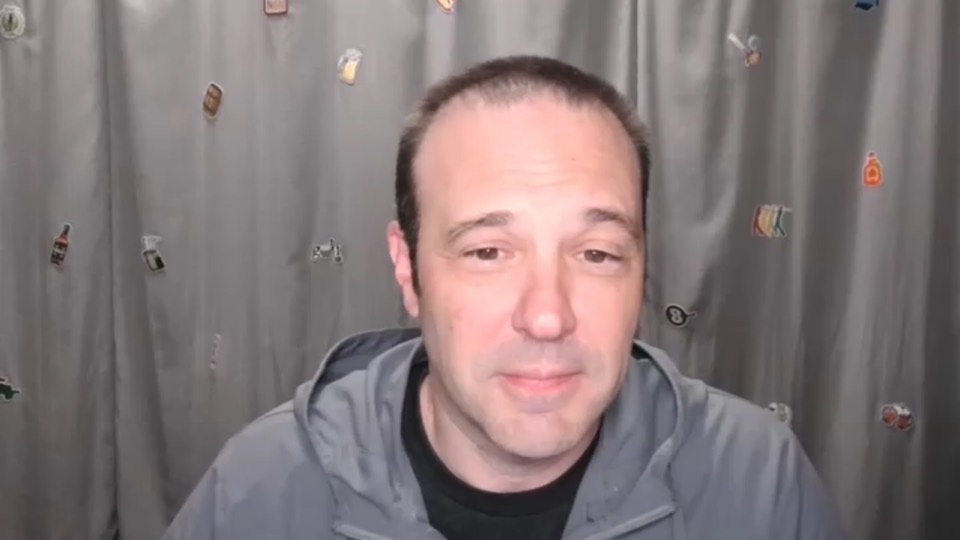
Ted Hardy, Sr. Director Tech Transformation at Topgolf, is the guest on episode 72 of the Restaurant Tech Trends podcast, hosted by Justin Foster.
 Play episode
What Ted and Justin discuss
- Why the "point-of-sale project" he was hired for turned out to be something WAY bigger
- Why a Topgolf venue has to network more like a PHONE than a PC - and what that ruled out
- The counterintuitive fix that made thousands of order line items just… disappear
- The daily admin grind he killed at every venue - one employee literally teared up
- His contrarian 5-year bet: the tech everyone's hyping that he says is oversold (and the vendors he thinks are in trouble)
Also in this episode
- The rapid fire round, where Ted names the most OVERHYPED tech in restaurants, his build-it-or-buy-it gut instinct, and the operator mentor he still texts every few months.
Episode notes from the host
He doesn't golf... but he rebuilt the tech behind Topgolf!
Today on Restaurant Tech Trends I sit down with Ted Hardy, Senior Director of Technology Transformation at Topgolf - the entertainment destination where gameplay, food, beverage, and events all run under one (very loud) roof. Ted spent two decades at the forefront of restaurant tech before this, with senior product and engineering roles at KFC and digital strategy at Papa John's, plus his own consulting firm and early days at Oracle and Lexmark.
Ted and I discovered we're both former music students who wandered into restaurant tech - and it turns out "helping other people be great" is the same job in both worlds. Give it a watch and let me know what you think
Shout out to Toast for the tech-stack love along the way (plus Toptracer, Topgolf's own in-venue tech).
Transcript
Full transcript (8,366 words)
Machine-generated transcript; names may be misspelled.
0:00 Hey, everyone. Welcome to Restaurant Tech Trends, where we explore restaurant technology trends with some of the industry's biggest movers and shakers in a rapid fire short interview format. This podcast is brought to you by Incept AI. Incept AI takes restaurant orders over the phone and in noisy drive-thrus with friendliness and precision. Learn more at Incept.ai. My guest today, I'm very excited to have you on, Ted Hardy. He is a senior director of technology transformation at Topgolf. Super interesting concept, where you lead a large team modernizing the entire restaurant tech stack across the venues, driving real cost savings and labor efficiencies along the way. Before Topgolf, Ted spent years at the forefront of restaurant product and digital innovation, including having held senior product and engineering roles at KFC and digital strategy at Papa John's. He also ran his own consulting firm and cut his teeth early at Oracle and Lexmark. Ted, welcome to the show. Hey, thanks. Glad to be here. Appreciate it. I'm glad to have you here. Learn all about what you're doing. Learn all about the unique tech stack at Topgolf. But before we dive into that, I would like to learn a little bit more about your background. So you spent over two decades in restaurant and hospitality tech.
1:23 We talked about KFC, Papa John's, Guest XM. You did your own consulting firm. How did you end up making technology transformation your life's work? You know, I somewhat just walked into it. I didn't ever really intend on this. People that know me know the joke is my first years in college, I was a music major. I graduated with a business degree. I've had three tech classes in my life, was bored out of my mind in all of them. It's just one of those things that kind of works for me. And I can't explain why, but it does. So yeah, it was many years into my career before I even realized that like, hey, this is what I was actually doing. It's like, I walk in, see the problems, figure out like, what needs to happen, not only just from the tech itself, but like thinking about process and people and being able to look out into the future and go, look, here's the place that it makes sense for us to be. How do we walk into that and get there? And so for me, I just ended up being in a few projects early on where that was what I was asked to do and suddenly became a realization that I knew I was good at it. Let's figure out what other brands I can go help out next. And that's kind of the way my career has taken off.
2:41 That's awesome. I love that you mentioned that it's so rarely about just the technology. It is about processes and people and bringing the right people to the table, figuring out the little political fault lines and how you've got to persuade different individuals. So it is quite a unique skill set. But before we go deeper into this, tell me more about the music degree. Okay. What was your music degree in? You a singer, instrumentalist, like what, tell us about that. So I was a vocal major, but I ended up being in more instrumental ensembles than I was vocal. Honestly, I love the process of music. I love the output of it. But what I really realized was I don't actually enjoy the creative process of creating it on my own. I enjoy very much the whole side of like production and trying to see and bring others' vision to life. I was never that great of a musician. I'm just not. So it was more around the things of like helping other people be great at it is what I really loved. And it's probably the thing that I've taken away from it the most, besides just an appreciation for what it takes to actually do it. That's awesome. I did not know that about you. It's very cool. I was also a music major, by the way. My wife and I met in university orchestra.
3:57 Oh, that's amazing. That's really cool. Where our paths start and where they wind up, you know, could have never predicted, I'm sure, back then. So. No, no, definitely not. Okay. Tell us a little bit more about your transition into Topgolf. So obviously Topgolf is not just like a QSR, fast casual. You went from the QSR side into Topgolf. You guys are like an entertainment destination. You've got food and beverage as well. You've got all that tech running under one roof. What in particular drew you to Topgolf and what surprised you the most about the operation when you landed there? So the first I'll say is I don't golf. And in 2019, when I went as a player for the first time, I was like, this is the dumbest thing. Why are we doing this as a team building? And I got there and we played for a couple of hours and I walked away going, that was really fun. And I cannot believe I just said that. And I was like, you know, I just got to keep my eye on this, but I didn't really think anything of it. It was five years, almost to the day that I started at Topgolf after that experience. Really? It came down to like, when I was talking to a friend of mine who worked at the company and was hiring for the role that I'm in. And I was trying to help him out because I knew a lot of people in the area, but I don't live near the office. And I was like, how can I help you find somebody for this role? He told me what he wanted. And after like a half an hour back and forth, I was like, this is awesome. And I just made a joke. I said, I'd be really cool, but you know, I don't live anywhere near you guys. Otherwise I'd have to consider it. And he just goes, dude, you want the job? Cheers. Just tell me. Are you serious? Yeah. Well, now I have a problem because I was loving what I was doing at the time. And it really just came down to, it's like, to the point you brought up of like, we are so different in what we do. How many opportunities do you get to do that many things and interact in that many different ways? And it just is such an interesting concept. I was like, I love, I just love hard problems. And this felt like all of them all at once. And it kind of has been. And don't get me wrong. I did have to do an interview. I had to go through a lot of them, but obviously I passed.
6:15 So here we go. That's awesome. I love that story. Gosh, you sure don't hear too many stories like that though, where you just get that verbal offer on a random conversation. Definitely not.
6:26 Okay. Well, let's talk a bit about the problems. So you're leading a large team, modernizing Topgolf's F&B tech stack. When you walked in, what problems did you see? How did you prioritize like where to start? What did you fix first? Give us the lay of the land back then. So I was hired to do a point of sale project, but that kind of undersells it a little bit of like, you know, the company had realized that their legacy partners just weren't getting it done. And they had tried to think about how they redid everything from a point of sale standpoint. They very much wanted to move to ordering in the bays, both from a server standpoint and from a customer standpoint and realized that the tech they had just couldn't do it. What the reality was though, I walked in and went, that's cool. We can solve that. But the real challenge was the things around it. What they had built in the past really was trying to put a lot of things in point of sale that shouldn't have been there. And they just didn't work right. And some of the processes on how to execute these things, especially when you got into the event side of the business, just didn't work. And they were either highly unreliable or when they did work, the data was always wrong and required a ton of manual intervention. So I walked in going, point of sale. And what I quickly realized is, no, this is a full ecosystem change. So not just the typical thing that you think of in Topgolf. If you show up, you play for two hours, you eat and drink and leave. But everything that touches all the way through the kitchen, the event ordering flow or the event planning flow, all the checkout, all of the flows all the way back into the financial systems, all of it had to be rethought. All of the provisioning from our HR system and payroll, time clocks going back, everything had to get rethought because none of it was working in a very optimal way.
8:21 Things that would take hours and hours of manual work. I just walked in and I'm like, why are we doing this? This got to be a better, faster, easier way to do this that's more reliable, that doesn't require people just to brute force this thing across the line. So let's dive into that a little bit more. Why was it done that way? Was this a result of just trying to shoehorn things into technology that wasn't designed for it? Is this technology limitations, like the platform just wasn't good enough or it needed to be more custom for the business? How did it get to that state? I think there was a couple of different things here. One, some of the tech decisions that were made that in the past, and I'm not going to be the person to like, oh, these people before me didn't know what they're doing. They're very smart individuals, but the tech wasn't there and ready. And then the implementation side was looked at of like, well, hey, if the point of sale can't do it today, let's have the vendor extend it and build more stuff on it. And then from there, they'll support it. Well, they didn't, to be really honest about it. Like they got us through the sales cycle. We got implemented. It didn't ever quite work. And then it really just kind of went, well, see you. Have a good time. Have fun rolling it out.
9:38 And really the reality of it was it just didn't ever work the way people thought it would or should. And then over time, as the business was focused on growing, rightly so, because the concept was exploding, no one cared and fed and maintained and put those right processes in place to make sure that as the business changes, you can actually have a product that continues to grow with you. The joke inside of Topgolf is the company reinvents itself about every two years. And so what we do is totally different again. And it just wasn't ever set up to be able to handle that level of change at that speed. And it just ended up, we ended up outgrowing the things that never really worked right. And the problems just get compounding and kept getting worse. All right. Well, I'd like to learn a little bit more about the tech stack specifically. What was swapped out? What did you swap in? How did you run this evaluation? When you're plugging in all of these different components, making sure that you're, I'm assuming part of this did involve a POS change as well. How do you make sure that that POS system has the extensibility that you need with some of these other systems that you're talking about? Walk us through that. Yeah. So a couple of things. One, we had a set of core principles that we were going after. It's like, you know, it has to have some great support for mobile and being able to walk around the venue. I mean, our venues are huge and you know, yeah, you got wifi, but like, that doesn't necessarily mean it's real. It's consistent and reliable, even if you own it all yourself. So you have to be able to think about like, how do you make sure that you have a system that not only can work wirelessly and is designed from that way from the ground up, but also one that is resilient to when connections don't work well, you can still operate the business.
11:24 And so from that standpoint, it was like, Hey, this is just a core tenant of what we need to do. Who does that the best? And there were a few. Um, but really what you come down to is many of the more, what I would say is more traditional point of sales consider like, you know, your four walls and they assume that you have an ethernet connection and that they have a stable and reliable connection. We just went, we don't, we're never going to have that in the same way. So the concept has to be, it's gotta be more like networking on a phone than it does networking on a PC. You just have to think about it in a different way because of the, the, the venue itself is so different than, than what you're traditionally doing. So from our standpoint, that was key. Once we got there, it was, look, you now have to think about how do we get things in and out easily. So it has to be a modern platform. Like that is again, with some of the legacy systems, like we, we, we knew that we, uh, integrate our golf system with the point of sale to feed charges over for gameplay. We need a very reliable, stable, um, rock solid way to do that. And we also need to do it consistently across, because it's not just that system that feeds in. It is our event sales system and, and our digital system, and they all are going to feed in through this one channel.
12:45 So you're going to have a lot of in and out. We need something that has a very modern API based structure. Otherwise that just isn't going to work. And when you start really looking at those things, you quickly narrow down that field to just a small number of players that can truly do what you need. And so from us, it then became a relationship question. Who do we, who fits with us the best? Who is coming to us with the right solution that really fits to solve those problems and can do it as a great partnership. And that's how we ended up picking where we went.
13:21 And who do you pick? Can you say? Oh yeah, we can say, uh, we pick toast. Um, a lot of people might even look at that and go like, really? Like you pick the little SMB point of sale. First of all, I think that's underselling what they do. I understand that the reason people think that because yes, historically that is where they have come from. But over the last few years, they have improved those capabilities a lot. But again, it's, what are we looking to do? We looked at how do we take an order? How do we make sure we can fulfill it? That's their bread and butter. And so from that standpoint, you know, the devices, they're basically cell phones with big batteries on them. Their, their platform is relatively new compared to most anyone else out there. They had all the needed capabilities that we have because we were not, and I say this again, putting all the things in it that shouldn't be there. You don't want to make it try to do part of your event sales. Like it is, should be about fulfilling drinks during the event, but like, we're not talking about sales systems here. That's a different thing. Don't try and build some of that into what just the point of sale is. That's just a losing game. Okay. So that was actually going to be my next question because I, when you were describing this rollout, you mentioned that you had the event sales system now feeding into this new platform. So this was basically before it was part of the POS. You ripped that component out of the POS. You said, nope, we're going best of breed. We're going to get this event sales platform. We need that to play nice with toast. What did you use for the event sales side?
14:52 So slightly differently. So we kept our sales system the same. Yeah. So we actually did have a sales system, but what we didn't do before versus what we do now, one of the big problems was, you know, when you think about a, like a worst case scenario is a full, full day, full venue buyout that in the sales process can be hundreds of lines of things, delivering new set of food every two hours, all the drinks. And you've got to think if you have that many people in a venue, you know, 102 bay venue, basically six people per bay. If you're there all day, you more than likely have several shifts going in. So you're talking to tens of thousands of people can theoretically come through that venue. They could be ordering drinks all day long. When you think about the amount of data and the complexity of insight and order at that point, that's really hard to manage. So one of the things I sat down and I said to the team, I said, when you really think about it, what are we doing? We're selling gameplay. We're selling event rental space. We're selling food packages. We're selling drink packages. We're selling four things. And when you look at the financial systems and what we feed over, we consolidated all down to those systems, or we were consolidating it down to those when we fed it into the financial system. I was like, why don't we just push that back further? As it comes out of the sales systems, don't feed us thousands of lines. Feed us four.
16:19 I see. The accounting doesn't change. But now we're trying, we're moving from a, hey, we can change whatever happens in the sales system now to be whatever we need it to be. And you broke the hard one-to-one tie of line items between the sales system and point of sale. Everything summarizes based on category coming in. As long as you make sure that if you add a new category, you just add that, things all just work. And whereas before we constantly had failures because we were trying to maintain thousands of different one-off free items and we just couldn't. Okay. I mean, I can clearly see the efficiencies here and that is actually a great segue into the next question, which is you have talked about using technology to deliver cost savings, labor efficiency as well. I'd like to talk a little bit about that and then revenue recovery. Can you give us some specifics here? Like where has technology actually moved the needle? Are you able to share any numbers with us? I think we would love to hear that stuff. Numbers would be challenging, but I can talk in some generalities of like, you know, there are some things that we would watch. Like I would go in and like, as you look at our processes for the amount of time it took to close out an event the day after, even at the point of sale side was closed, when you do the reconciliation and that kind of stuff, it was a very manual labor intensive process for our admin team at the venue to do every day.
17:50 So we kind of took it a little bit of a different approach. We said, okay, this is one of the things that takes the most amount of time. It's very hard and cumbersome to do. What do we do to solve that? Funny enough, it was the exact same thing as what we just did about the injection side of it. It's like, how do you simplify this? How do you make it to where the things that they see that are needed to reconcile are separated from the other things? Like those four line items, they're the same. They don't change. So we made sure no one ever touched them. What does change is, hey, I need to know what things that were ordered that are during the event that are not part of what was originally sold. And then do we charge for those or did we not? Because there's some things like, hey, I want to go buy a dozen golf gloves to give my team right now that we might charge for. But like, if you bought food and you were still hungry, man, just bring some more food up. We're not going to worry about that. So it was things like that about, whereas before it was a, hey, every single line is going to be tick, tick, tick. It's like, no, it doesn't. When you really think about it, you're only concerned about certain categories of things. How do we make that easy? And so those are the type of things that we looked at. And we removed many hours of labor at the venue every single day in administrative tasks just by simplifying those processes. And when you do 101 venues, 365 days a year, you can count up to some big numbers.
19:15 All right. Well, everyone is always interested in labor savings. So can you tell us, did you actually save the labor or did you reallocate the labor to other tasks? I'm going to say this. It depends. So some of those tasks were done by hourly employees. Those that we did save the labor. Now, we may have turned around and chosen to spend that labor on something totally different. But in terms of, if you look at the actual spend on the, some of the administrative stuff, yes, it went down. Now, in terms of managers type stuff, yeah, there's a little bit more, it's more of reallocation and focus because they don't have to worry about those things anymore. And I remember one of our office people at the venue, she literally, it was one of our early on ones. She actually cried. She looked at me and she goes, you, because I showed her what she needed to do. And she's like, well, it has to be more than this. And I was like, it's not, this is all it is. And she literally teared up and she's like, you got to understand what a game changer this makes to my job. Every day, knowing that this is so much easier, I cannot tell you how much I appreciate this. And it truly, one of those moments that you'll just never forget. So walk us through how that translates to the venue's operation. So if you're saving several hours on these administrative tasks, where did you deploy the labor instead?
20:37 Honestly, it was a free give back. So from that standpoint, like we did not add in other areas. My comment that I made to the team, I said, our goal was, I said, overall, we have to get better for everybody. No one can get worse than this. Now that doesn't necessarily mean that every area got the same. You know, there are some areas in our teams that did not see a lot of savings out of it because they were already fairly efficient in it. But the goal was everybody has to stay at a parity or go better. So then we just basically said to the operations team, here's all the areas that we've given back. You all go right ahead and figure out how you want to deploy it to do other things. And so that was not on us to figure out. We definitely laid that on them to say, you all tell us what you need. Okay, fair answer. Well, you know, we can't have an interview without talking about AI in restaurants, because that's what everybody is talking about these days. First of all, are you guys using AI for anything? Or have you deployed it in a large way in any particular part of the business? Is it actually earning its keep somewhere? Are you just kind of testing stuff out? Um, and I'd also like to find out from you, where do you think there's future promise and potential, but we're just not really there today yet? So we are. It also, to me, goes back to the question of like, what do you mean by AI? Like we've had machine learning in our venues for a very, very long time on the golf platform side. You know, we own a tech company called Top Tracer. And it's in our venues.
22:12 It's also used all around the world for Greengrass Golf. So from that standpoint, we have been doing this for a long time. Now, is that AI as people are talking about it today? Well, it's a little different. Yeah, I get that. But a lot of it is built in some of the core fundamentals, and how you think about the models that you need. We are looking at things like, you know, Toast obviously has a product. And we definitely are focused on looking at that several other of our vendors do as well. And we are looking at some of those. And then internally, what are we doing? Like on the corporate side? Yes, we are definitely doing a lot in terms of our data warehousing side of things, our financial analysis, and then obviously our software development, we are using it extensively as well. So yeah, there you go. Well, let me let me toss up a few softballs for you. Okay, so we're just going to do a little bit of a laundry list on some of the things that I'm hearing people talk about. So demand forecasting, you know, how much food, how much alcohol drinks do you need to order using AI to manage that? So that's one, we've got labor scheduling, you know, how much are using AI to like set the schedules versus like relying on GMs. We've got CDP stuff where you're looking at like, menus, and you're trying to figure out like, which menu items are driving the most like repeat visits or the highest, you know, lifetime value for customers. You've got obviously, ordering as well. So like voice ordering what we do, there's a lot, a lot of other ways that you can filter AI into ordering, such as by like making recommendations when people are ordering off kiosks or stuff like that. So those are just like a few of like the little cases that I see out there. Are you guys doing any of that stuff? Guest feedback is another one too, taking all the guest feedback and like aggregating all that stuff and trying to figure out patterns and surfacing, you know. I think you hit a few of them that we're looking at.
24:10 So from a standpoint of, again, back to the themes of what am I good at? It's how do I get rid of some annual work? So, you know, when you think about as many business lines as we have in terms of walk-in reservation, events, retail sales, the sales projection side of things can be very, very challenging. There are some better tools that have come available, but the reality of it is given our number of businesses that we go into, they're very different in terms of their demand planning. So that is definitely an area of active work that we're looking at right now of like, hey, how do we make this thing less manual? So that's a big area. Obviously, accuracy, all those type of things go into it as well. But it's definitely a significant challenge for us that is different than, you know, when I, my time in QSR, what happened? You had front counter and you drive through and it's basically, it's a throughput game because you have one make line. At some point, that conversation is not that hard. So this is definitely a great difference. So definitely those type of things. In terms of the the menu and analysis, I, that I lumped out a lot of that into our financial system. Yes. Our financials group, they do a lot of that analysis for us. And so working very closely with them on that kind of stuff as well. Not really on the ordering at this point, but it's, it's just a different, really your model. Yeah. They're so loud. Like, man, like that's one of the most fun things about going to our venues is just seeing how excited and happy people get.
25:38 But that also means they get really loud and the music is really loud. It is, it makes those things a little bit more of a challenge at times. All right. Well, let's move off of AI, unless your next example happens to be AI. All of us in technology, we've all rolled stuff. Not everything has worked out as promised. You gave the example earlier on of the event sale stuff that was tied into POS, but that wasn't under your watch. So let's hear about something that you've rolled out. It could be a Topgolf could be earlier in your career where you had expectations that were not really met. Tell us about that experience and what you took away from it.
26:22 Yeah. So how about we just go all the way back to my very first project in my career? Let's just start at the beginning. We were supposed to roll. I was put on to do a, some testing and some training material in case, kind of like UAT type stuff for my prior role. And it bombed. The whole thing just died. That project got canned, got reloaded and moved to a completely different vendor. Why? What I would say is there was a couple of things. One, there was a bad decision made to begin with to think that that technology that we had selected could even do the work. It couldn't. So the decision, people making the decision of it should not have been making the decision. You know, it was one of those that got picked up at the executive level. And then when it was handed to us to implement, it was like, there's no way this can work. Like you all don't understand the business at all. So, so that was one thing. Fail as long as time. Yeah. You know, to that point though, like why did, why did it fail beyond that? Like we had a running gag that we were working with some consultants and whenever a new version would come out, we'd all go to training together. And guess what? They'd be sitting in the room with us learning it at the same time we were. And it's like, hold on a minute. How are you going to help us if you A, don't know our business and B, don't know the software? We picked bad implementation partners as well. And really what it comes down to is, you know, they didn't really know at that company exactly how to run large initiatives. And, you know, we would spend 18 months on projects and barely get things out the door and they'd be broken. And we would spend the next 18 just fixing them. And the reality of it is some of that is the time because that was, you know, early 2000s. We just didn't know what we didn't know. The processes that we'd ran on were not as, as well thought through as they are today. And the tooling wasn't there.
28:19 And then when you have bad decisions that you make at the start, sometimes these things are just not recoverable. Yeah. Well, you may have the same answer for this next question, but I'm hoping we can bring it maybe a little bit more into the modern era. Yeah. You have gone through a big technology transformation here at Topgolf, you know, talked about bad implementation partners, consultants not understanding the business, executives not understanding the business. What is the biggest mistake you see today when restaurant brands want to modernize? You've gone through a huge modernization here. Are there just like one or two blind spots that you think, hey, if I'm going to call out one or two, these are going to be them? Yeah. A couple of things. And I'm going to go back to my, my, one of my prior lives here. It is a lot harder to do this when you're in a franchise environment. Just full stop. And, and please don't think that's me saying franchisees are awful. That that's not the case at all. It's they're running their business. It is misalignment amongst what corporate wants and what franchise wants. Both want sales, both want a better platform. It's the, what's the priority on this?
29:35 It is very hard to, to merge that. And what you a lot of times find sometimes, well, you find several different ways that this can fail. You can find brands that are saying, we're going to force and push this without partnership. And you know what that means? Franchisees are going to push back in other areas. If you try that, if you don't bring them along, they don't have their voice heard, that's going to be a problem. I'd also say on the other side of it, it's a lot of times people come in from outside the industry to do, to be in leadership roles and just assume like, Oh, what's no problem. Because you know, I did ERP at some manufacturing, this point of sale thing will be real easy and don't have the, um, don't take the time to really get into the domain knowledge enough and that they oversimplify or over believe what a vendor tells them that they can actually do. So to me, it's those kinds of things of like, ask questions, get in, learn more. Those will get in a restaurant and see how it actually works. That's the things that are always going to help you. I totally agree with this last point. Um, I think, you know, I've not been in the restaurant industry for that long. I joined in 2022. And I think one of the things that surprised me the most about this industry is just how operationally intense the industry is and how everything just has to work all the time. It has to be completely flawless and reliable and scalable and small changes in ops can have big impacts on guest experience, crew retention, um, crew satisfaction. Um, so I, I totally agree.
31:15 And I see that happen time and time again, especially with people coming outside of the industry. Yeah. I always like to say, spend time in the stores, spend time in the restaurants, can't spend too much, right? Talk to people that are bagging the food, making the food, watch the kitchens run, look at every single little line on your KDS, look at how people are queuing things into the POS, like all those little things make a big difference. All right. Anyway, exactly. Get a good operations partner that is willing to invest in you and that you can throw ideas off of that. They can understand that you care about them. That is the best secret to success. And I tell it to every one of my people that comes in from outside the industry. How do you get successful at this job? Go find a good operator. That's the best. Totally. A hundred percent. A hundred percent. All right. Well, we've got time for only two more questions before we move into our rapid fire segment of this podcast. So let's take a step back and talk about larger technology shifts that are going on. If you had to bet on just one technology shift that is going to define hospitality over the next five years, what would that be? I think from my standpoint, I'm not really big on ways in which a lot of the things that we're being told technology will do for us when they interact with the physical world, that digital physical divide.
32:50 I feel like there's a lot of overselling right now in that area.
32:56 That's not to say that 20 years from now it won't be, but five, I have a hard time looking and seeing that's there. So I discount a lot of those things because I think at the end of the day, this is still largely a human to human type business. Yeah. So I'm thinking of things like robotics. I'm thinking of things that are technology interacting with guests like avatars and things like that. Are these like some of the areas that you're specifically referring to? So I will set those off. I think those are longer term bets. I don't think they're wrong bets. They're just not here today. To me, it's the things that like, what can you do within the digital realm? So as we look at like, like I look at when I went into Papa John's, that was 2007, you know, our digital sales at that time were single digits. But by the time I left, we were in the 50 and they're now way higher than that. I have no idea what the current number is, but that's a massive transition. So you think about what that did at the restaurant. It went from phones ringing all the time to silence. Yeah. What is going to impact the rest of us? I really look at it. I go, I feel like there is a, what I call it with the rise, especially of AI coding tools, the ability for brands to walk in and things that they used to have to pay for that were specialty things they can just walk away from. So in some ways, brands were, will be able to build themselves things at a lower cost that they could have ever done before. And I really feel like it's not going to impact the small mom and pops who don't have time.
34:30 It's not going to impact the enterprise. They were already doing it anyway. But in the middle, what I see is a lot of those things that were applications doing things to help automate and push that were, that we were, brands are spending a lot of money on will get brought in house and easier. And I really think that the, that those vendors who service that model directly will have some of the hardest time in the next five years. So how does that define hospitality? My hope is that what you see is brands have a lot more tailored experiences that really fit into who they are, because they actually are in the control to go do that now. Now, what does that look like on a day to day basis? I don't know, but I really feel like that we're getting to a realm where you're putting a lot more things in the brand's control to control their experience than they've had in the past. Yeah. I like to talk a lot on here about this idea of platform consolidation and, you know, death by like a million different SAS fees. And this kind of fits that overall theme. Can you just share though, like a couple of specifics, like what are a couple of the categories that you think are most at danger of just being, you know, clotted out?
35:45 Let's, let's talk a little bit. Let's even stay at a restaurant for a second. My sister's a dentist. And we were talking recently about, um, her having a problem with counting inventory. And I was like, don't you, doesn't your dental software provide that? And she's like, no. And I really sat down and thought about it for a quick moment. I said, you know, if you gave me a week, I could probably build you an inventory solution. Um, just give it what I know to solve all the problems that you have. And she just looked at me like, are you for real? And so it's, so it's things like that of like, I don't think you're going to like, you could build a point of sale until you realize you have to integrate payment. That's a different animal. The things that you do on voice, voice is really hard to get right and to done well. I don't think the coding agents are there to do that. But when you get into things that are more like traditional, um, you know, crud applications of just like, I'm going to, I need a data management tool that connects to all the APIs and does pricing updates. Yeah. Yeah. As long as you've got API access to your systems, you could do that and not that hard. Um, so it's things like that. I look at and go like, like if you wanted to build your own, uh, sales flow, like, do you need Salesforce anymore? Not really. You could probably build your own depending on how complex things are. It's those kinds of things that I look at and go, man, or like just ways in which you interact with your franchisees. Do you need a big, do you need to go spend a million dollars on buying portal software now to do a communication platform?
37:15 No, you really don't. Those are the kinds of things that I think will really be different. Oh gosh, man. I wish we had more time to talk about this. Cause I feel like we could do an entire podcast episode, like just focused on that. Um, but we don't have the time. So last question. Yeah. One specific problem inside top golf that you would love to crack in the next 12 months, but you haven't yet. Um, I think on the labor side, well, let me say that. When you think about a top golf, where are all the computers? Most of the traditional computers like pieces, they're down in the office where most of the people, where's the work go on? It's, it's out on, it's on the venue. You know, when you think about a QSR or something like that, the office is right there next to the kitchen. Usually it is, it is like, if you need something, you can lean over and touch it. That is not golf at all. So my thing that I really have been thinking about is more, how do we bring insight and action all the way out to the front line? When no, when someone doesn't have a computer now, I know you're thinking, well, you got a, you got a toast handout, you get, you got a cell phone in your pocket and you absolutely do, but it's a different mindset and a different, uh, mentality to think about how you do that at scale.
38:31 When you've got 400 people in a venue and you're running how many shifts, uh, in terms of like different job, you know, cause you've got people in the kitchen who need different things from people in retail who have different things to the bar or the Bayhost, uh, or the food runner. They all have very different needs in terms of data. And you're right. We're probably not going to send it to give a dashboard to a food runner, but you know what? That food running lead might need something. How do you do that at scale and very personalized? Those are the things that I really feel like are of interest and a lot of, um, capability around real time. Uh, like how awesome would it be if somebody books online and the moment that they come in and get laid into their Bay, the Bayhost gets a notification that reminds them to say, Hey, it's John's birthday today. Like how awesome feel to John. So those are the kinds of things that I'm really thinking about and looking about about how we make things better in those areas. I love that example. That's definitely a way of technology enabling hospitality rather than getting in the way of it. Yeah. All right. Well, Ted, we're out of time for our standard interview questions. It is time for us to move to our rapid fire segment. So for everybody who's watching or listening, Ted has no idea what these questions are that I'm about to put in front of him. The rules of engagement, Ted, on these questions are try to answer each one of these questions with one word. If you can one sentence, if you can't, are you ready? Let's do it. All right. Let's make it happen. Do you like to hit balls or watch from the couch? Are you actually any good at top golf? Watch. I actually, um, I'm sad to say I don't play.
40:12 I don't play top golf. Don't get me wrong, but like green grass, well, you said you didn't play earlier, but then you're like, Oh, I did top golf. And like, now you're like, maybe you are playing now. Who knows? I do have clubs now, but I really don't use them. I'm just reality. All right. I can appreciate the honesty. What is one word your team would use to describe you?
40:40 Oh man, this is, this is a tough one for me. Cause there are, cause I, I think there are a lot and some good, some not so good. I'll just be honest. Um, you know, not every, not everybody's great in every way. Um, I think they would probably look at me and for lack of any other word, innovative. I, ideas are cheap. They flow constantly. All right. Well, that's a great word to describe someone that's built their career in technology transformation. So good for you. Uh, most overhyped technology and restaurants today. Robotics, man. Like again, today, 10 years from now, maybe not, but the, the investment is just too high for versus labor costs and Texas isn't as good just in there. Okay. Um, who's one mentor you've had in your career that you'd like to shout out?
41:28 Ooh, fascinating. I'm going to go operator route. Uh, I text him about every three, four months and say, Chuck Simon, thank you for being an amazing partner and for teaching me everything I know, man. You, I couldn't have been where I am without you. Awesome. One vendor you couldn't live without. Hmm. I mean, let's just be honest. It's toast. Um, they have done amazing things for us and, um, uh, can't say enough good things about the partner. All right. Awesome. How many top golf venues have you set foot in ballpark? About 25. Uh, I, I traveled to about 20 last year for the rollout. And so I have been to a lot. Okay. Build it or buy it. What's your default instinct? I would say generally build it. And I know that is weird giving, we just sit in how much time talking about toast and other things. There's some things I don't think it's, it's the right thing, but at the, at my heart, I'm a builder. I just damn, I love making great things. Um, and that's just what I love doing. All right. Last one. Finish the sentence. The restaurants that win in the next decade are the ones that blank.
42:45 The ones that really care about their guests. End of the day. Like if you don't like, man, and it's, and I hate it in a way cause it sounds like such a pat answer. I love like, oh, he didn't really think that through, but I truly don't think a lot of concepts do really care about their guests in the way they think they do. Um, and I've worked with that too, not, not top golf.
43:08 This is the hospitality industry, man. I mean, you know, at the end of the day, that's really what it's all about. Yeah. You know, look, if you can't get into it and care about making the lives of the people that work in the restaurants better so they can turn around and make the lives of the guests who come to visit them better, like what, what are you doing? Why are you here? Like don't, this is the industry for you. Totally agree. Ted, I really want to thank you for your time today. I appreciate you coming on. Glad we finally had the opportunity to do this. I learned a lot about top golf. I learned a lot about your career path and some of the innovation that you're helping to drive here. Everybody, Ted Hardy, Senior Director of Technology Transformation at Topgolf. Thank you, Ted. Thank you, Justin. Appreciate it, man. It's great fun. Thank you, Ted Hardy.