Episode 6
Donagh Herlihy
fmr CIO and CTO · Subway
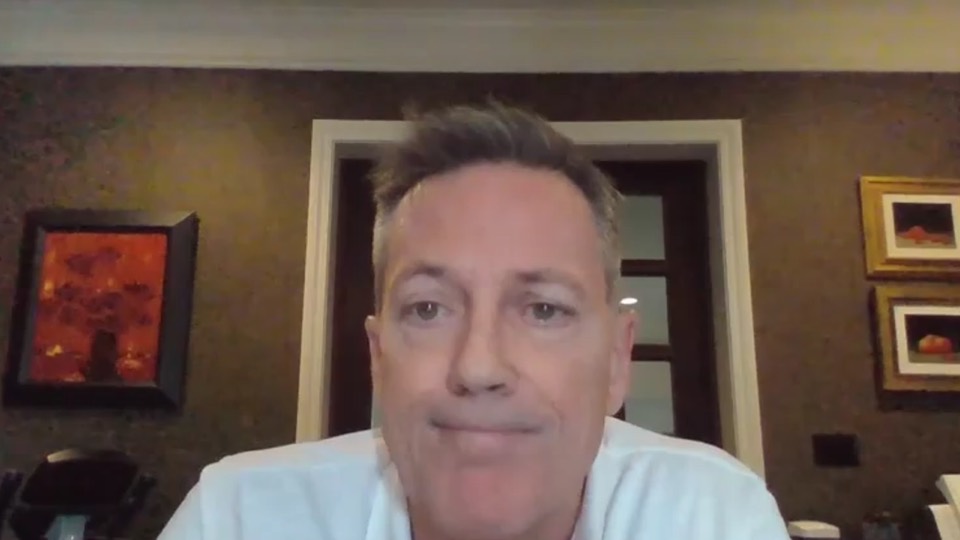
Donagh Herlihy, fmr CIO and CTO at Subway (PART 2), is the guest on episode 6 of the Restaurant Tech Trends podcast, hosted by Justin Foster.
 Play episode
What Donagh and Justin discuss
- Donagh's picks for the top technologies creating a positive impact on the restaurant guest experience today, and the reason he thinks these platforms work.
- Why it is MISSION CRITICAL to pay just as much attention to how technology impacts your frontline workers as it does your guests
- Donagh's sage advice for restaurant tech companies that don't want to be condemned to the dustbin of history
- Why Donagh thinks NOW is the best time ever to be a CIO. Hmm, maybe you'll be pulled out of retirement, Donagh?!
Transcript
Full transcript (1,650 words)
Machine-generated transcript; names may be misspelled.
0:00 In your experience, what technologies or platforms or products today would you say are having a meaningful impact on the guest experience? And then on the flip side of that, maybe what are some of the technologies that you looked at that you thought would be more impactful on guest experience but turned out to not work out how you thought they might? You know, things that are actually, I think, giving guests a positive impact are always platforms that will give them control over their experience. The broadest choice, the greatest convenience. That's why apps are still relevant, you know, 10, 15 years on to be able to control what you're ordering, when you get it, how you get it, how you pay for it on your phone. Great guest experience when done well. In restaurant kiosks, you know, ubiquitous in parts of Asia and Europe, you know, you can't really go into a QSR in Europe and talk to a human anymore to place your order, pay for your order. Not so ubiquitous yet in the US. Very, very relevant, certainly in the right context. They're having a really big impact, both on the guest experience and the brand ability to understand, get to know that guest and give them better service.
1:22 The whole AI wave that started, I think for all of us, probably about 18 months ago. And so my last year at Subway, we had a number of AI related initiatives, pilots, some super promising. So I always say the guest is unlikely to have a better experience in the frontline worker. And it's tough to be that sandwich artist or that server in a restaurant. And we're doing super interesting things now across the industry with AI, but simple things like an intelligent assistant for a sandwich artist. So the thousands of pages of content in ops manuals, training videos, et cetera, can be easily digested and interacted with natural language in the moment. Anything that makes life easier for the frontline makes the experience better for the guests. And I think we got to be careful to attend to the frontline as much as we attend to the guest experience directly. I see. Well, if the frontline worker can't take care of their job, then guests are going to have a poor experience. It's going to be longer wait times. They're going to walk out. Their sandwiches are not going to be made properly.
2:37 So I think that makes a ton of sense. No, and I mean, to go to your question, when I've seen things go badly, you know, I'll take an example. A loyalty program that is hard to explain to a guest or where earning or redeeming points or whatever it is has friction in the moment. No matter how well it's built digitally, it's not going to take life. Right. Right. And so you've really it goes back to the three constituencies at the beginning. Is it a win for the brand? Is it a win for the guests? But also, is it a win for that frontline worker? I refer to this phenomenon as guests feeling like they're being data warehoused or playing some kind of game to redeem points. It's not simple and straightforward and they can't figure it out and they feel like they're being gamed for every little penny. They're not going to sign up. Yeah. And if that frontline worker is going, oh, my God, this is added complexity to my already difficult job. They're not even going to talk about the program. And so it won't come to life. All right. Well, let's pivot a little bit to some of your work with startups. You've been around long enough. You've seen startups come and go. You've seen the successes, a lot of failures. In your opinion, what is it maybe specifically for the restaurant tech industry specifically that separates the winners from the losers?
4:00 And I'm also curious, what drew you to advising startups now in your newly minted retirement? Well, advising startups is just a joy because I'm learning and I'm staying connected as the industry changes. And it changes so quickly if you disengage for a year. Just imagine the amount of change if you disengage for a year. So it's a joy. It's a joy to work with you and your team. And it's impressive what I learned from you along the way. You know, it sounds too obvious, but is the startup solving a real problem that is a significant pain point for the operator? Is the startup grounded in understanding the operations of a restaurant? Do they have people on their team who've had to walk in the shoes of the operator? That's really reassuring when somebody walks in, speaks your language, understands your issues, not from an academic perspective or a theoretical perspective, but from real life experience. And then is the solution going to coexist peacefully and integrate well with all of that legacy stuff? You know, I had a meeting a few weeks ago with an individual who basically said, hey, we should put POS on an app on the phone and everybody should use the same platform and we can get rid of all the legacy stuff.
5:27 And it was an interesting idea from a consumer of the restaurant industry, but no operating experience as to what really happens in a restaurant. And so that relevance is really, really important. That ability to go in, test the idea. You know, we get hamstrung and we get paralyzed by debating, is this a good idea or a bad idea? Will it work in our business? Will it not work in our business? Make it easy and quick to test the concept in restaurants so that you can go, okay, it wins and it has value. It doesn't win. It doesn't have value. We'll move on. You know, there's some of the things I'm definitely looking for. In a bigger brand, you're always looking for the ability to scale. Sure. You know, so you come to a brand like Subway. Can you scale to 17, 18 billion dollar business with nearly 40,000 restaurants in 100 countries? How do you handle that? Don't go in when you're not ready for those conversations because that's what people in the bigger enterprises worry about is scaling. There's a lot of risk involved. Sure. Well, and I think you mentioned earlier on at Subway, you would start with one restaurant and then move to five. And then you would have to get out to 500 before you would consider something even more broadly.
6:45 Yeah. Maybe in a smaller context, one restaurant to two to three and then do all 10. But in some way, you're managing the risk as you go through the process of learning. And of course, in that time period, you are learning the law of unintended consequences that you didn't capture in the lab. You didn't capture on the whiteboard. But in the real life interaction, you get to also optimize your solution before you roll it out so it lands better. Makes sense. Well, let's pull it back and finish with a general question. How has the role of a CIO evolved over the last five to 10 years? And where do you think the role of CIO is headed next? It's so interesting. So, Justin, my first global CIO role was in 2000, so 25 years ago. And back in the day, and this was true even 10 years ago to a large extent, tech was largely an instrument of operating efficiency within businesses, less so an instrument of connection engagement within consumers. But that obviously grew over time with the web and then with mobility and then with cloud. And I think for CIOs, this is the best time yet to be a CIO, but it gets better every year because the footprint, the impact keeps going broader from internal operating efficiency and security and compliance type things to growth initiatives to business model innovation.
8:21 And I think we're in an era of business model innovation because there's no innovation in business today that I can think of that isn't powered by tech and digital. Where does that put the CIO? It puts them at the center of the future business model of whatever industry they're in. You bring AI into it. I saw a really interesting article yesterday about a company where they're merging the role of the head of HR and the head of technology into one role. Really? They see the impact of AI being so significant on the nature of work, the type and nature of talent that's needed, and the size of the workforce that's needed, that they've merged those two roles, which is fascinating to me. So where does it go? Don't have a crystal ball. What I can tell you is every year, the CIO, CDO, CTO, call them what you want to call them, have a bigger impact and a bigger opportunity to drive growth and prosperity for their businesses. So I'm super excited for people working in the industry. Yeah, I totally share that sentiment. The pace of technological change right now is just exponential, and the impact that technology is having on businesses of all stripes is doing nothing but increase.
9:42 So, Donna, I really want to thank you for your time today, sharing this knowledge with a broader community of startups and those that are in the restaurant tech ecosystem, as well as the operators that listen to this. Thank you so much for your support, everybody. Donna Harelhy. Hey, thanks, Justin. Thanks for having me on your advisory team and for, you know, keeping me up to date with all the wonderful work you are doing. So it was my pleasure.