Episode 5
Yaro Tsyhanenko
Founder and CEO · Pickpad
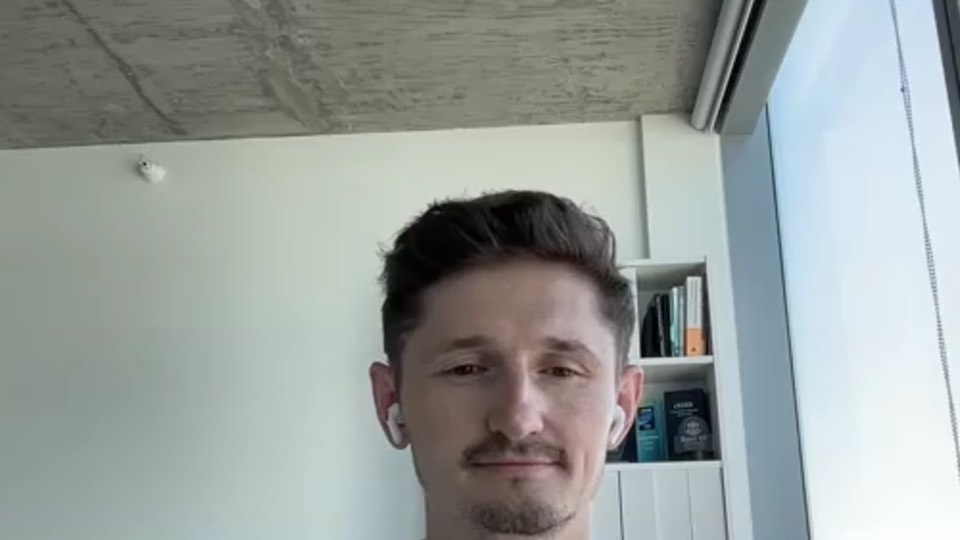
Yaro Tsyhanenko, Founder and CEO, Pickpad, is the guest on episode 5 of the Restaurant Tech Trends podcast, hosted by Justin Foster.
 Play episode
What Yaro and Justin discuss
- How Pickpad uncovered the opportunity and why their model is uniquely compelling for restaurant operators
- The two C's that are most important for tech startup founders and go-to-market pros to master when selling in the restaurant industry
- Why AI can help, but can't solve scaling an early stage venture in the restaurant tech and foodtech markets
Episode notes from the host
I had an opportunity to interview my good industry friend, murtec2025 Startup Alley winner and Pickpad Founder/CEO Yaro Tsyhanenko on Incept AI's Restaurant Tech Trends to discuss the future of restaurant order pickup and why this intersection between the physical and digital worlds is ripe for disruption.
Transcript
Full transcript (2,114 words)
Machine-generated transcript; names may be misspelled.
0:00 Hi, everyone, and welcome to Restaurant Tech Trends, where we explore restaurant technology trends with some of the industry's biggest movers and shakers in a rapid fire short interview format. Today, I'm really excited to be joined by my friend and fellow restaurant tech entrepreneur, Yaro Tsyhanenko. Yaro is the founder of Pickpad, which is working to reinvent order pickup. He'll be telling us a little bit more about Pickpad in just a little bit and what reinventing order pickup actually means. But I'll just say Pickpad, it's not even a year old, and it's already making a lot of waves in the industry. I think Yaro was honored already with a CES Innovation Award. His company actually won the Mertex Startup Alley Award, beating out other startups, including my own. No hard feelings, though, Yaro. You totally deserve to win. And I'll also say this is actually, Pickpad is not Yaro's first foray into building restaurant tech startups. Before he moved to the United States, he actually founded and led two different restaurant tech startups that I'm aware of. One was a food delivery marketplace, and the other was a white label digital platform for restaurant brands.
1:17 And Yaro, it's great to be chatting with you here today. Yeah, thanks a lot, Justin. Thanks for kind words. And yeah, happy to be here with you today.
1:26 Absolutely. Well, first, why don't you just tell us a little bit about why you started Pickpad? What was the reason there?
1:35 Yeah, sure. Like in SAP AI, we are trying to solve real world challenges for the industry. And this industry is moving towards digital super fast, which means a lot of people are changing their behavior. And they are starting to order online using kiosks or apps or websites. And all of these changes are influencing the processes in the restaurant industry. And there are a lot of new kind of problems are happening at the intersection of digital and physical worlds in the restaurant space. And this point of intersection is pickup area. So we are trying to make this point of intersection super efficient. And we are on a mission to help millions of people ordering their food and drinks online every day, make their lives more convenient, happier. So that was the main reason why we are doing this. Okay, well, tell us a little bit more about, you know, what does the product actually do? And what is the ideal restaurant concept to adopt this type of product? We are using sensors and machine learning to seamlessly upgrade any store's pickup area to a smart station.
2:51 We have a modular system of smart pads, and every pad is equipped with sensors. It can upgrade any racks or shelves or countertop existing solution for pickup and delivery to smart station. Okay. And this station is fully integrated with the POS system. It doesn't change any processes or store design. And using sensors, it double checks every order, accuracy, updates statuses, notifies customers, and it looks beautiful. And it shows customer names, creating personalized, incredible customer experience. So yeah. Well, I would agree the pick pads are extremely elegant and beautiful. And this may be one of the differences between this type of a solution and, you know, the more traditional food locker types of solutions. But I'm curious, how do you position this product compared to restaurants that might be looking, you know, more like those food lockers? Yeah, it's a great question. And I believe lockers is an absolutely great solution for the retail industry. And talking about the restaurant industry, I think that this industry needs one more angle and one more solution to solve modern restaurant challenges in slightly different way. And comparing to lockers, we have a lot of differences. And this difference is, I believe, very crucial.
4:18 Very critical for restaurants. And I believe that because of these reasons, the restaurant industry hasn't adopted this kind of like a solution from the past because lockers, it's interesting fact, lockers were created and invented 120 years ago for the restaurant space. And the first locker was launched in Manhattan 120 years ago. And you could put your nickel and got your food from this locker. But there are some like reasons why lockers haven't been adopted. And comparing to lockers, Pickpad doesn't change any processes. It doesn't require a store design. It's super space efficient.
5:03 It doesn't cost a lot because restaurant equipment usually costs a lot. And Pickpad is a pure subscription model. It also can double check every order accuracy. And of course, I believe the main reason, why Pickpad is because it provides just like a different level of experience for customer, not just like a transactional experience, because I believe the interaction between the restaurant and customer is not a transaction. Yeah, I believe Pickpad provides this kind of hospitality and personalization that industry needs. Okay. Well, Yara, let's take a step back from Pickpad a little bit and just talk a bit about some of the lessons that you've learned scaling your latest business here in the United States. How is that experience been compared to Ukraine? And what are some of the lessons that you've learned along the way so far? Yeah, thanks for this question. I believe moving to the States is like moving forward, like a five years forward in time machine. Because this industry, the restaurant space is so well developed here in the US. And all the probably formats and trends, the majority of all kind of like trends are born here. And for me, it's kind of like being here is a great chance to like a be part of this community to talk with very smart people to understand the industry trends and to have a chance to create next trend not to follow. So yeah, I believe that's the biggest difference.
6:36 And yeah, really excited about this community of very smart people operators vendors, great restaurants. Well, I definitely think one of the reasons why Pickpad has won so many awards so far and why you're getting such strong early traction is because you do have something that is truly innovative and is truly different. I have not seen anything else out in the market like what you're doing today with Pickpad. And I think it's super exciting to see new people come into the space and launch these disruptions. And I know the future is extremely bright for Pickpad. But let's talk about how you actually can break in as a new entrant, right? So Pickpad and Incept AI were both very similar in that both companies were started a year ago. We're both new startups, we're trying to make it in a very competitive industry. It's extremely hard to cut, you know, just cut through the clutter with all of the existing players that are out there. There's so much noise. What have you learned, you know, a tip or trick that you would share with other, you know, tech entrepreneurs in this space or go to market professionals that are looking to make it in the restaurant tech space? Maybe what's one or two things that have worked well for you? Yeah, I wish I have a great answer for this question. I'm still learning how it works. And of course, I'm trying to different hypothesis in terms of call to market, how to get in front of our ideal customers. How can we start piloting products with piloting product with the brands we love and we want to pilot with and works well for me personally is probably it's probably content. I'm trying to just share what I'm building what I'm working on. And we are like early stage startup founders. And it's kind of journey, right? And a lot of things are going on around and you are constantly moving through challenges. And you are looking for interesting like kind of like solutions or answers. Why not sharing this with people who can be potentially interested. And yeah, I'm just trying to create this kind of like a content around what I'm building and sharing this content on LinkedIn. And I believe you're doing the same. And I really enjoy your podcast and the strategy probably works well for you as well. So yeah, I guess the content piece is important. And probably the second one is community. So just be part of this community,
9:14 visit different shows and different events, just meet with people and talk with people and share ideas. And I believe it helps. Yeah, I'll just make a couple of comments on that. First of all, I completely agree with you 100%. The restaurant industry is a relationship driven industry. And your reputation in this industry is incredibly important. And the relationships that you make really can really make or break your business. I believe that firmly. So I'm with you 100% on the community piece. On the content piece, you know, for me doing these podcasts, I do it mainly because I'm relatively new to the restaurant tech space. I've only been in the space since 2022. So I learn a lot just by talking to people about what they're doing. But I also think it's a great way to make relationships with folks that are really moving the industry forward. I'm curious if you can dive a little bit deeper onto the content work that you're doing. Is there a specific type of content format channel? You know, is it white papers? Is it going on podcasts? Is it doing promotional content? Is there one thing that has worked better than the rest? Or is it more about layering it all in together, putting together a content calendar, making sure you're always releasing new stuff? What are you seeing? Yeah, I'm still learning, trying to understand how all these algorithms work, what actually what kind of content is interesting for, for the audience. And from my experience, I'm not doing any, like a paid content or something like that. I'm trying to do real life content, different pieces of text or images or video, just describing the some ideas, some like a product progress, some stuff around founders, more all about like a real life, like things. And yeah, the second probably is the consistency. I'm trying to do it super consistent, posting something two or three times per week. And yeah, working this piece of content to be interested. Got it. One more question before we go. I've been really impressed with the market research that you conducted prior to launching Pickpad. Can you share with whoever's listening right now? What did you do to understand the problems that these restaurant operators were having? How did that inform your launch of Pickpad? And maybe take us one step further. How important is it for founders of restaurant tech companies to be on the restaurant floor to see how
11:57 customers are engaging with their products? Yeah, sure. I like, I believe that we have to build a product.
12:07 Just understanding how it is used by your customers, in our case, restaurants and people ordering their food and drinks. And before building Pickpad, I visited more than 100 different restaurants, like a fast food, fast casual restaurants, sitting in those stores with my stopwatch, making notes, talking to many general managers, just to better understand their real life problems and challenges. Because we can build anything right now, especially with new technologies and AI and everything. But does it mean it can't help anyone to solve any problem. Right. And for that reason, I believe we just have to be as close to our customer and real world scenarios as possible to better understand behaviors and reasons behind some kind of problems. And then probably make a lot of iterations to make something that solves real problem. So that's why I try to get my product in front of real customers and restaurants as fast as possible. We moved from concept to the first station launch in just three months. And we are improving our hardware piece and software piece. And we are trying to iterate super fast to get better fit towards those problems we're solving. So yeah, just trying to be as like realistic in terms of my presence and product as possible. And just try to be there where our product is.
13:59 Awesome. That's a great answer. Everyone, Yaro Tsyhanenko. Yaro, really appreciate your friendship. And I am looking forward to seeing Pickpad. Go to the moon. Thank you. Thank you. Thanks.