Episode 28 · August 12, 2025
Abhinav Kapur
Co-Founder & CEO · Bikky
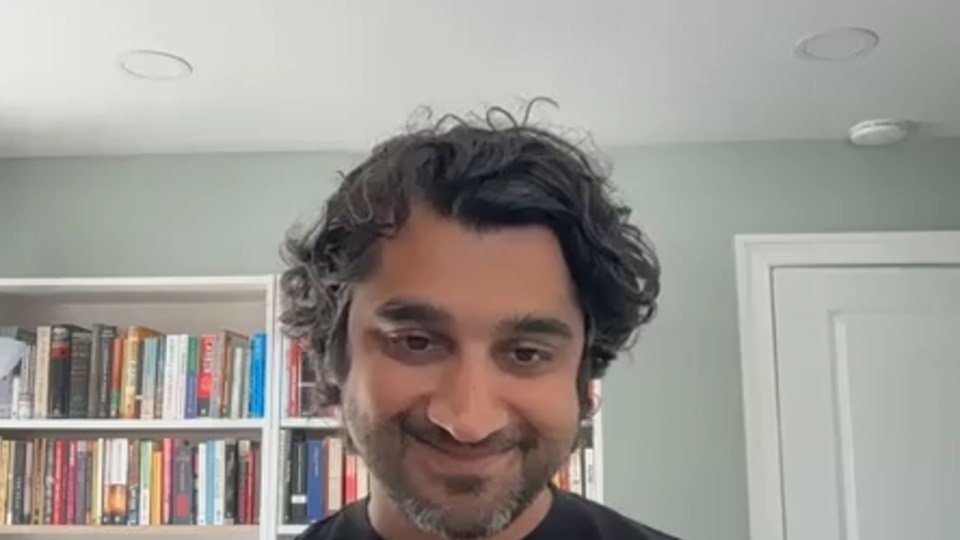
Abhinav Kapur, Co-Founder & CEO at Bikky, is the guest on episode 28 of the Restaurant Tech Trends podcast, hosted by Justin Foster.
 Play episode
What Abhinav and Justin discuss
- How a CDP bridges the gap between top-line sales data and loyalty platform data to help restaurant operators make smart decisions
- What Dave's Hot Chicken did to turn a cauliflower product launch into a smokin' hot menu update in more ways than one
- How Bikky uses a partner-first mindset in the loyalty game to create win-win-win outcomes for restaurants, guests, and ecosystem players
- Why Bikky's new Data Assistant is "ChatGPT on top of your Bikky data" and how that helps operators get answers to complex questions in minutes that would otherwise have taken hours or even weeks!
Episode notes from the host
Today on Restaurant Tech Trends we're getting into CDP-land with Bikky Co-Founder & CEO Abhinav Kapur! Abhinav is at the forefront of this rapidly evolving space and on this episode he shares lots of helpful, real-life examples of how CDP tech can help restaurant operators increase guest visit frequency while goosing sales of menu winners!
Shout outs to former guest Adam Kinsinger in this video. Also shout out to Leon Davoyan, EMBA for continuing to crush it over at Dave's!
Transcript
Full transcript (2,879 words)
Machine-generated transcript; names may be misspelled.
0:00 Hi, everyone. Welcome to Restaurant Tech Trends, where we explore restaurant technology trends with some of the industry's biggest movers and shakers in a rapid fire short interview format. Today's podcast is produced by Incept AI. Incept AI is focused on taking restaurant orders over the phone and in noisy drive-thrus with friendliness and precision. Learn more at Incept.ai. Now, onto the reason why we're really here, our guest. Today, I'm chatting with Abhinav Kapur, who's co-founder and CEO of Bikky, the restaurant company's business. A customer data platform that ties transactions to real guests and shows how marketing menu and ops decisions impact frequency and retention. Bikky works across fast, casual and full service, and they serve brands including Dave's Hot Chicken and Robex. Abhinav's path into restaurant tech was actually inspired by his mother-in-law, which is pretty cool. She runs a restaurant in New York City, and that helped ignite a mission to turn first party data into profitable, personalized hospitality. Abhinav, welcome to the show. Abhinav Kapur, welcome to the show. Thanks for having me. Good to be here. I'm excited to meet you. I've had a couple guests on before, as I mentioned earlier, that say great things about Bikky, so I'm excited to learn about some of the cool things that you guys are doing. I told you, you're interviewing the right people. That's all it comes down to. So, selection bias.
1:19 I'm trying, man. I'm trying. I'm giving it a go. Well, let's start off with a more general question, right? It's mid-2025 right now, and I feel like I shouldn't even need to ask this question, but there are still restaurant operators that say, hey, why the heck do I need a CDP? I've got a loyalty platform. I've got POS. What is it that an operator gets from a CDP that they would not get from just loyalty or POS? Yeah, I mean, for what it's worth, I don't think it's a small minority of people. I think, to a certain extent, CDP has been an emerging category in restaurant tech for a few years now, and it's still very much, I wouldn't say, mainstream, although it increasingly feels like more people understand and want a CDP, which we've been a beneficiary of, of course. At a high level, the way we think about it is, you know, restaurants, when it comes to really understanding what's happening inside their business, they really have two sources of data. They either have the 10 to 20% of guests in their loyalty program, or they have top-line sales. And so, you know, whether you're a one unit, like my mother-in-law, when she ran her restaurant, or thousands of units, something that we see is a brand saying, I launched a menu item, I ran a marketing campaign, I raised my pricing, I launched drive-through locations for the first time. And the thing that they would look at, again, is the small subset of, you know, your most valuable, but also highly biased and highest frequency guests like your loyalty program, which is 10 to 20%, or you just look at sales.
2:42 And you're like, sales went up, I guess it worked. But what that leaves in the middle is this giant gap of really understanding how did each of those decisions impact customer acquisition, retention, frequency, lifetime value, the things that ultimately drive top-line sales in the first place. That's where a CDP comes in. We can pull in data across all those channels, basically build profiles on guests across every transaction source. And so when you pull one of those levers to grow the business, instead of looking at top-line sales, we can say, no, you launched that menu item and here's how many new customers bought it. Here's how many of them came back. Here's their frequency. Here's what else was on the check. Here's what it cannibalized. All the tertiary things that brands care about. I think that's probably the most succinct explanation of the value that a CDP can bring to a restaurant operator that I've ever heard. We've been working at it for a while.
3:32 Well, I recently actually was interviewing one of your customers, a guy named Adam Kinziger at Waba Grill. And he talked about... Yeah, we love Adam Kinziger. Yeah, he's a cool guy. He was talking about a specific use case. I think they had had shrimp with pails on their menu for a long time. And they started working with Bikky and they noticed that, you know, guests were ordering this and they were not coming back and ordering it again. And Bikky provided them with this insight that they might want to be able to make... They might want to make a change to this menu item. They took the tails off the shrimps and then they ended up... You know, the frequency started to increase. They started to see that menu item perform on par with other items on the menu. I'm curious from your perspective, as you look across all of your customers, you know, what is an example of something like that that's maybe had a larger scale impact? Whether that's, you know, menu specific or more, you know, ops just more generally. Yeah, I think, well, it's a great call. Let's stay with the menu specifically because it took me a little while to realize this. But in hindsight, it's pretty obvious where our menu item tools and how people use Bikky to specifically analyze the success of the menu. Bikky is probably one of our most valued and used feature sets, I would say, because the menu is the restaurant's product, right? In hindsight, it's obvious, but it literally is the thing that they serve to attract and retain and build relationships with their guests.
4:52 And so sticking on the menu theme, you know, we work with Dave's Hot Chicken, as you called out, and they had a really successful LTO limited time offering with their cauliflower product. And typically when restaurants run LTOs, it's the same sort of core playbook. They'll test it in a few locations and they're like, it's 4% of sales. And the percentage threshold that they use is kind of arbitrary because, again, it's like we're selling X amount. I guess we should put it on the menu and roll it out to the rest of the system. But when you're pulling all of this underlying customer data and you're pulling basically the behavior that underpins that sale in the first place, with Dave's Hot Chicken, similarly, they launched a cauliflower menu item in a couple markets. They tested it. It was a certain percentage of sales. And everybody across marketing, menu, ops, franchisees all had different opinions about, is this a successful menu item? Should we roll it out nationwide? And the thing they found through our platform is the majority of guests who ordered it had never been to the brand before. You might say, hey, that's obvious. Of course, we're attracting vegetarians with a vegetarian menu item. But the really cool insight was typically when a guest came back for their second visit, they came back faster than someone who ordered a core chicken menu item, number one. Number two, when they came back, their average check was higher because they were multiple entrees on the check.
6:09 So they were bringing people with them. So basically eliminating the veto vote. And number three, there was a tendency for a cauliflower menu item, someone who orders cauliflower on their first visit, to order chicken on their second visit. And so you're basically attracting a flexitarian, someone who is coming to Dave's Hot Chicken now for multiple use cases, not just for the hot chicken, but also maybe for a lighter, quote unquote, more healthy cauliflower item. So you go from this one extreme of 4% of sales, 5% of sales, whatever is that good, to realizing with Bikky that this menu item brings in new guests. They come back faster, they spend more money, and they stick around longer. This thing that is maybe only a few percentage points of sales is actually a home run and is driving thousands of dollars of incremental revenue for our franchisees per store per week. We should roll it out nationwide. And so that sort of data around the test gave them the confidence to scale it across their entire system. Again, unlocking higher same store sales growth and more importantly, money into their franchisees' pockets, which again, for franchise concepts is kind of what it's all about. So I think that's one of the projects that we were most proud to work on. I love that story. That's probably one of the coolest examples that I've ever heard of introducing a new menu item and really seeing it blow up.
7:25 It's also, I think, the very first time I've heard anyone mention the word healthy in the same sentence as Dave's hot chicken, but that's a totally different story. Healthier, let's say.
7:36 Let's look a little bit more. Let's talk a bit about TechStack. And, you know, CDP is taking data from multiple different data sources, collecting data independently. What do you see today as the minimum viable tech stack for, let's say, a 50 to 250 unit brand? Is it you got a POS, you know, online ordering, loyalty, reservations, payment? What is it that you really need to have in order to get that true single customer view? Yeah, I mean, the cool thing is, is like, again, by being a CDP that's focused exclusively on the restaurant industry, we've pretty much built, you know, all the most slash all the integrations we need across all those different systems that you mentioned. But, you know, I think, again, we, our whole purpose and our philosophy as a business is we want to slot into the channels or the pieces of technology that they're already using to serve guests to pull data from those. So point of sale, maybe bundled with payments, doesn't have to be. We also integrate directly and can pull data directly from the payment processors or payment gateway as well. Online ordering, of course, loyalty, which I feel like we're very complimentary with because what we find sometimes is a guest who maybe is on the loyalty program.
8:51 Sometimes when they come back, they don't check into loyalty when they come back. And so you still want to pull in that data and have a comprehensive look at their full ordering behavior to understand if they're truly lapsed or not. But all the all the points that you mentioned, you know, cloud based POS is better just because the integration path is easier. Online ordering right now is, you know, I would say is table stakes for brands as loyalty feels like it increasingly is table stakes for brands. And so, you know, I would say those are probably the core the core aspects that we look at. Just out of curiosity, diving into loyalty specifically, what are your ambitions in that area? Are you a partner first approach? Are you planning on building more loyalty capabilities directly into Viki? What's the future look like there? Definitely partner first. I think, you know, I think we work with and have integrations with almost all of the big loyalty providers. And again, like the beautiful thing about that, about that relationship is that a CDP is very complimentary to loyalty. To give you an example, we work with a 60 unit brand and they're on one of the big loyalty providers. And they built a campaign to say, we want to target everybody who hasn't visited in over 200 days. And in the loyalty provider, it was 500,000 people in that segment. And in our system, it was 300,000 people in that segment. Because what we found was almost 50% of guests who were in the loyalty program were still coming to the brand.
10:08 They just weren't using the loyalty platform. Interesting. And so, with our segmentation pushing to the loyalty provider, we are ensuring mutual success for our customer to make sure that they're targeting, one, the right guests with relevant messaging. Two, they're actually increasing the ROI on the promotion that they're attaching to that message. And three, again, they're driving incremental visits to the brand, which is win-win-win for the customer, for the loyalty provider, and for us. And so, we are very much complimentary to loyalty. There's so much to do around data itself that I feel like we don't need to go into what is the sweet spot of the loyalty provider, which is building a digital experience, marketing automation, doing promos, etc. We want to help the restaurant better target those efforts and then better measure the ROI or the efficacy of those efforts. Cool. Makes sense. And I love that ecosystem mindset as well. I find just in this industry, it's a great way to drive growth for companies like ours. Maybe all things to all people. That's when you get in trouble from a product standpoint. Exactly. All right. Well, let's talk about something that Bikky has just released. I think you just introduced something called Data Assistant. I'd like to learn a little bit more about what is that? You know, why now?
11:24 Do you have any examples of customers that have, you know, they asked this, they did that, they got X result, anything like that? Yeah. Yeah, absolutely. Yeah. So, Data Assistant, as you mentioned, we just publicly announced, I think, one or two weeks ago. It's been in beta for a couple of months now with our customers. And it's already become one of the main ways in which our customers are actually engaging with the platform. We have, of course, all these great dashboards and visualizations for deep analysis. But sometimes you're in a meeting and you just want a quick answer. And so the way to think about Data Assistant is it's essentially chat GPT on top of all of your Bikky data. Right. It's like it's a way to chat directly with your data to get, I would say, relevant fact-based answers to questions that operators have in seconds. A really great example that I think I saw this morning or over the weekend, we had a customer that was asking a question. And she was like, we just launched, you know, the specialty beverage on August 2nd. How many have we sold? At what locations have we sold them? What percentage of total beverage sales is it? What percentage of total P-Mix is it? What is average check with or without this menu item? How many items are on the check in addition to this beverage? And so think about, again, like measuring the success. When you make a decision, like launching a menu item, launching a beverage, running a marketing campaign, there are so many secondary questions that come up to get to the answer of like, did this work?
12:47 Was it good? And so like that's a really tactical example where you can hone in on something super specific, ask a bunch of questions, go really deep and get quick answers to actually understand the success of some of these decisions. And so that's a great one that I love because it would have taken her probably two to three weeks, honestly, in terms of exporting data, putting in a spreadsheet to answer a question like that. And again, we've taken three weeks worth of effort and compressed it into, you know, basically 20 minutes worth of chatting with the data. And so it's a huge amount of time savings and that leads to better decisions, faster decisions, and of course, more opportunities to actually grow the business. Very cool. I love it. Well, we're almost out of time and I like to finish these interviews up with a series of rapid fire questions. So rapid fire questions, you have to answer each one of these questions with no more than one sentence, one word if you can do it. All right. So let's go ahead and let's start with number one. What one lesson from your mother-in-law's restaurant shows up most in Bikky's product roadmap today? Try to figure out why.
13:53 All right. What's one metric that every operator should be checking daily aside from sales?
14:00 Guess retention. What is a small A-B test any brand can run next week? Running a lapsed marketing campaign with a menu item in the picture and without a menu item in the picture. All right. Interesting example. The coolest use of AI you've seen in restaurants this year that's not Bikky related?
14:25 Voice ordering.
14:27 All right. Now, last one. Your favorite New York City neighborhood spot that you recommend to data nerds and foodies alike? Oof.
14:42 Grupo Pizza on Avenue B and 6th Street in East Village. What was the name of the place? Grupo. G-R-U-P-P-O. Thin Crust Pizza in the city. All right. Abhinav, want to thank you very much for your time here today. Everyone, Abhinav Kapur from Bikky. Thank you.