Episode 29 · August 15, 2025
Jordan Boesch
Founder/CEO · 7shifts
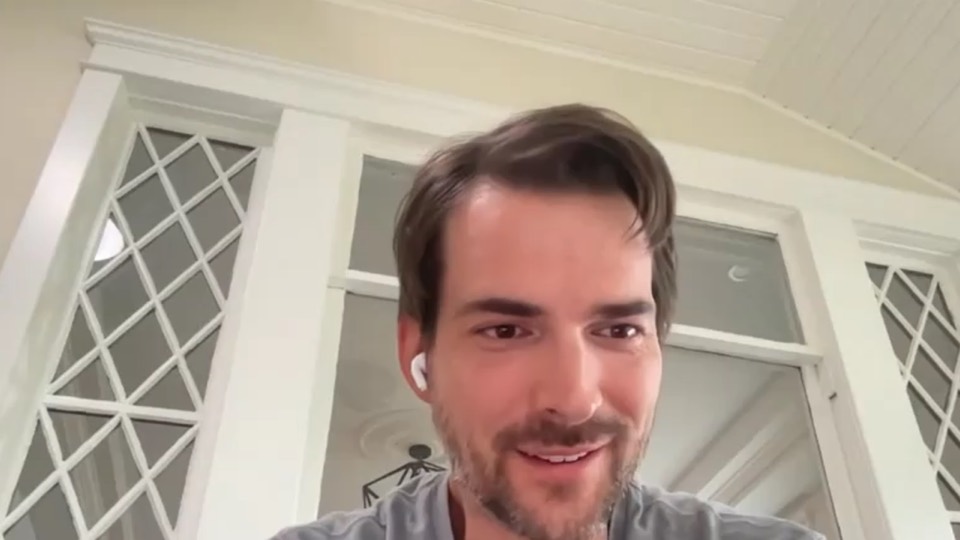
Jordan Boesch, Founder/CEO at 7shifts, is the guest on episode 29 of the Restaurant Tech Trends podcast, hosted by Justin Foster.
 Play episode
What Jordan and Justin discuss
- How 7Shifts emerged from Jordan helping his dad solve a scheduling problem he faced at his Quiznos locations and into an industry behemoth serving 50,000 restaurants today
- Which magic key the company relies on to amp its scale-up, and why it's so important for restaurant tech companies to remain hyper-focused in this area
- How and why 7shifts is running a total in-house vertical integration of the HR stack, including entering a payroll space dominated by giants like ADP. And why Jordan thinks it will work.
- How AI can and should be used WISELY to create schedules: lessons from the ground
Episode notes from the host
UN-BELIEVE-ABLE guest! On today's Restaurant Tech Trends we are discussing restaurant labor. Scheduling, time-tracking, payroll, and beyond. Jordan Boesch, Founder/CEO of restaurant tech heavyweight 7shifts is with us. With $128M raised to date, this company is defining the future of how restaurant operators manage and excel at HR.
Plus, if you're ever in Saskatoon, Jordan has a great restaurant reco! Thank you for coming on, Jordan!
Transcript
Full transcript (2,524 words)
Machine-generated transcript; names may be misspelled.
0:04 Hey everyone, welcome to Restaurant Tech Trends where we explore Restaurant Technology trends with some of the industry's biggest movers and shakers in a rapid fire short interview format. Today's podcast is sponsored by Incept AI. Incept AI is focused on taking restaurant orders over the phone and in noisy drive-thrus with friendliness and precision. Learn more at Incept AI. Now, onto the real reason that we're here, our guest. Today, I'm joined by Jordan Boesch, founder and CEO of 7shifts, the restaurant team management platform used by thousands of operators to handle scheduling, time tracking, team communication, tip pooling, plus now payroll and workforce analytics. Oh my gosh, that was a lot of stuff. And I think I even left some things off of there. Jordan started 7shifts to solve real world problems he saw in his family's restaurants, and he's since helped teams run leaner and keep staff happier. We'll dig into where labor tech is headed and what operators can do today to build durable, high-performing teams. Jordan, welcome to the show. Thanks for having me, Justin. I'm really excited to have you on here. I've always been a huge admirer ever since we met earlier this year at RLC.
1:15 I think I want to start off with a founder kind of a question. I'd like to learn a little bit more about what led you to start 7shifts. I heard it started in a sandwich shop, back office as a scheduling tool, and today it's obviously way, way more than that. I wonder, you know, how much of your original focus does the company maintain today, and how do you see that changing moving forward?
1:40 Yeah, the company did get its start in the back office. My dad ran some Quiznos locations that I would, I got gladly and I don't know if forcefully is the right word, but almost felt like I had to work in, given it was in the family. So it was a great experience working in these quick service restaurants and learning to work with others, learning to work with customers. One of the things that I noticed was a lot of the time that my dad spent in the back office on his desk was around scheduling and managing shifts. And it was really then when I thought that this could be a really great opportunity to try and help him solve a problem. And well, lo and behold, turns out the entire industry had this problem and still does suffer from this problem. So that's really where we got our start. And moving forward, how much of that remains a focus? You're offering so much more now. Is scheduling still, you know, 95% of the focus at 7shifts or has it become more like 10%? No, scheduling has been the core focus for a while and we're now used by 50,000 restaurants. And I think if you were to ask any of these restauranteurs, what does 7shifts do? The vast majority of them would say scheduling and you'll get some team management, you'll get some HR responses as well.
3:00 But that's really our bread and butter and what we're most known for. But it's certainly not how we're continuing to evolve. We've always had broader vision around kind of going big on restaurant HR, which is connecting these pillars that we refer to as hiring, training, scheduling, paying, and then retaining your staff. And different companies have different views of that landscape and how they define it. But that's how we look at it and how we define it and how we think about the products that we build into. And that sort of shapes a lot of our decision making and how we want to help operators run more efficiently. Got it. Well, you mentioned that you're now serving 50,000 plus restaurants, which is just insane, by the way. And as an entrepreneur, I have mad respect. You've been able to scale out the business to be that huge. It's just incredible. But there had to be a lot of changes in the product as you grew. I'm curious for others that are in the restaurant tech space, what did you have to change from an onboarding perspective, your architecture, customer support, customer success, as you have continued to grow? And also as you've started to move a little bit more upmarket and now support multi-unit franchisees?
4:18 So since day one, we've really strived to just maintain as much simplicity in the product as possible. And I think that's where a lot of companies struggle. As you get more customers, they request more things and you build more things and now it becomes more convoluted and less simple. So I think maintaining that simplicity is really difficult and we have to be very intentional about that. And even to the extent of taking things away, which is very hard to do in a lot of cases. But in terms of onboarding and architecture and customer success, I would say that we've gone through so many learnings with that. Some of the recent learnings with customer success have been just around the urgency of requests that have to do with pay. Any pay related requests are just always urgent. And so if you think about our core business was historically just scheduling and communication, there wasn't like mission critical urgency around that. But as soon as you start adding things like time and attendance, someone's time clocks and making sure those are right and then how those feed into payroll, well, that introduces some urgency around it if that's wrong.
5:35 But now you add your own payroll system that's doing all of these calculations and paying these people and filings.
5:44 And yeah, most of the stuff that comes in around payroll is urgent. And so we've had to really rethink and almost run payroll in some ways like a separate business so that we can do some independent learning to understand how we better serve our customers because it may not fit into the exact mold of how we've built the core foundations of the company.
6:06 Right. I want to talk with you a little bit more about payroll in just a minute. But you said something that really perked my ears a little bit, which is you said, it's very difficult to design a product for simplicity. And sometimes you have to take things away. Can you think of an example where you had to remove something from the product and it was a really difficult decision to do that or bury it somewhere? What was that? I think there's been some instances of just things on our dashboard. Like we may have added some functionality that was specifically for a customer or a few customers. And I think whenever you're doing that, you sort of got to check yourself a little bit. And I think that that's probably more common in businesses that are selling to the enterprise where there is a lot of custom work. But when you're serving sort of an independent SMB market where you're dealing with sort of high volume of restaurants being onboarded, those things can sort of be death by a thousand cuts if you start doing that. So we had instances where we would pull out things that were maybe on our dashboard that were more custom built. But I would say that it's good hygiene to sort of evaluate different parts of the product that are not being used to the level that you hope they would.
7:26 And find out why. And it could be a really great opportunity to sort of addition by subtraction, sort of reduce to get that simplicity back and maintain it. Well, you mentioned payroll earlier and how whenever you're involving people's pay, all of a sudden decisions become very urgent and critical. I think payroll is a newer addition to your product line at 7shifts. And I wanted to ask, you know, why add payroll? And what about what it is that you're offering, which is an embedded payroll engine, is better than just, you know, exporting data to like ADP or others? Yeah. So the first question of why payroll specifically? I think in isolation, scheduling and payroll could live in isolation and they have for many years. But the way we view our landscape is there's really not there's really isn't a solution that truly goes end to end from hiring, training, scheduling, paying and retaining. And we think that the sum of all of these parts within 7shifts are greater than they are standalone.
8:39 So to us, it's less of can we build a great payroll company that goes as deep as some of the multibillion dollar payroll players? It's not really about that. It's can we build a seamless integrated experience that gets you 60, 70 percent of the way there? But that that tradeoff is that you're you're sort of getting that continuous flow of information, that seamless experience where it isn't one product. And we've been finding that that tradeoff is absolutely worth it for restaurant operators, because similar to, I don't know, a Microsoft product. Like how much do you actually use in Microsoft Word? Like, right, how much how much of that functionality do you actually use? Like you probably use the save function. You probably use the new document function and like some text alignment. But there's but there's an infinite amount of features within that. And so I think that that that has been a worthwhile tradeoff from our customers perspective is that it's all in one. It's seamless. It's simple. It takes me five minutes to run payroll are things that our customers are quoted saying to us. So that makes us feel really good and that we're actually on the right track to solve some of these headaches and making things easier for them.
9:57 Makes sense. Well, I'd like to learn about a couple of additional products that you offer. And I was struck by these ones because whenever we do these interviews, I always like to talk about AI because that's like the hot thing. Everyone wants to talk about AI and restaurant tech right now. But I think you've got auto scheduler and you've got optimal labor. I'm curious about what powers these tools. And I, you know, when you're using AI to create schedules, what are managers doing to check and make sure that there's nothing insane going on there? We have this challenge where folks wanted to, more of the higher level call, like the VP of operations or someone that's director of operations wanted to set these rules by in which, you know, you make this much. You have this many drinks sold that equals this many people that you need to have staffed. And we want to do it by half hour increments. And it was sort of like a activity based forecasting type of algorithm. And we built that. And what we found was that the ops leaders really loved that. But all the managers that were actually on the floor building schedules hated it. And they always changed it. And it's because it was missing so much of the context that these managers had on the floor in the daily basis.
11:15 And so we approached it a bit differently using some machine learning and AI around looking at, okay, at the end of the day, you want to hit a labor target. What does that labor target look like? Maybe it's over the week. The course of the week, you want to hit 20% labor target. Do you care down to the like minute detail what happens? Or do you just care that you hit your target for the week? And by and large, most people said, I just care that I hit my target for the week. Okay, great. Well, we can work with that. We can now take the schedules that managers have been building, understand what are the common trends that we can sort of repeat. And where are the areas that we can shave off 15 minutes here, 15 minutes there, or move this here, such that when they get the output of our schedule that we're giving to them, that it doesn't look so different than what they would normally do.
12:05 There's something psychologically where, as a manager, if it looks too different than what they normally do, even if it's right, they don't believe it. So you have to balance the psychological aspects of building a schedule whenever you use any type of automation. It's what we believe. And from that, we saw more success. All right. Well, we've got time for only one more question before we move into our rapid fire. So I wanted to ask, if you had to do it all over again with 7shifts, what is one decision that you would make differently the second time around? I would say I wouldn't. Early days, I feel like we had a good flow of traffic, organic traffic. We focused a bunch on content and SEO. Like, we were four people. But we started thinking about, and I became really focused on, how do we open more channels? We've got to open more channels and do all these different things. Because I think if we just doubled or tripled down on the channels that were working, that would have probably been a more effective use of time than trying to figure out, how can we open five more channels? All right. I love it. Well, we're down to our rapid fire segment, Jordan. So in rapid fire, I'm going to give you a question. You should answer each question, if you can, with one word, but no more than one sentence.
13:21 Ready? Yeah.
13:24 Let's do it. Question number one, what today is your favorite restaurant right now? And what's your go-to order? I would say my favorite restaurant is Odd Couple here in Saskatoon. It's an amazing sort of like fusion restaurant. And I'm not a vegan, but their vegan spring rolls are off the charts.
13:47 Is it a chain or independent? No, it's an independent restaurant. Yeah. Okay. Of course, a 7shifts customer as well. Oh, of course. Yes.
13:56 All right. Well, what app or tool that's not 7shifts or POS do you think restaurant owners can't afford to live without today? Oh, man. I feel like restaurant managers would have a hard time living without some sort of understanding of their inventory and invoicing and sort of like ins and outs of bringing product and food in and sort of estimating costs there. All right. Last question. In three words, what is the future of restaurant labor? Floor management automation.
14:38 All right. You heard it here. First, folks. Jordan, I want to thank you again for your time. Thanks for letting me have a little bit of fun with the questions at the end. Everyone, Jordan Boesch, founder and CEO of 7shifts. Thanks, Jordan. Thank you.