Episode 31 · September 2, 2025
Sai Alluri
Co-Founder & CEO · Momos
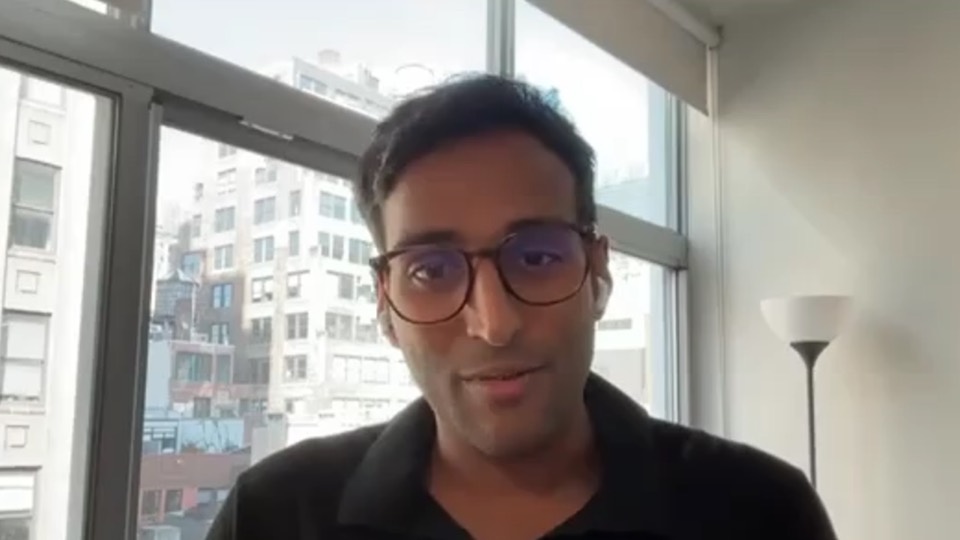
Sai Alluri, Co-Founder & CEO at Momos, is the guest on episode 31 of the Restaurant Tech Trends podcast, hosted by Justin Foster.
 Play episode
What Sai and Justin discuss
- Learn about Momos' journey from enabling 3PD / reviews for restaurants, to aggregating feedback across channels, to leveraging AI to pinpoint location-specific problems among thousands of survey responses and reviews so operators can quickly identify what's most important and make needed improvements
- How to move from getting 20%-30% survey reply rates to close to 100% response rates in just 90 days
Also in this episode
- Meet Alfie and Rockie! And get Sai's hot take on the future of platform consolidation in the industry and which non-Momos AI technology he's most excited about. HINT:
Episode notes from the host
We recently had the opportunity to connect with Momos' Co-Founder and CEO Sai Alluri and on today's Restaurant Tech Trends Sai shares a bit about the company's evolution and how he sees AI-powering the future of growth in his space. This is one you don't want to miss!
Thank you, Sai!
Transcript
Full transcript (2,865 words)
Machine-generated transcript; names may be misspelled.
0:00 Hey, everyone. Welcome to Restaurant Tech Trends, where we explore restaurant technology trends with some of the industry's biggest movers and shakers in a rapid fire short interview format. Today's podcast is brought to you by Incept AI. Incept AI is focused on taking restaurant orders over the phone and in noisy drive-throughs with friendliness and precision. Learn more at Incept.ai. Now, on to our guest and the reason that we're all here. Today, I'm chatting with Sai Alluri, who is co-founder and CEO of Momos, the AI customer platform for multi-location restaurants that unifies guest feedback, service, and marketing into a single system. Their AI co-pilots help teams respond faster, personalize outreach, and measure impact. Before Momos, Sai built Grab Kitchen, Southeast Asia's largest cloud kitchen network, and he also helped launch Uber Eats across the Asia-Pacific region. Sai, welcome to the show. Thanks for having me, Justin. Great to be here. I'm excited to chat with you. I think the last time that we talked, we were in fundraising mode and really appreciate all of your support and help in that journey. Because that's the context for how we met, I thought I'd start with a bit of a founder question for you.
1:17 And that is, what are some of the lessons that you learned from Grab Kitchen that either shaped Momos' roadmap or informed you, gave you a lesson learned that helped you actually found Momos? Definitely. Yeah. So thanks for having me again, Justin. So Grab Kitchen, I launched that in Southeast Asia and Singapore and Indonesia. And prior to that, I was at Uber where I built out the food delivery business. So I've been in restaurants for the last 10 years. And I think the interesting piece of Grab Kitchen and Cloud Kitchens overall is you actually work with a lot of different restaurants you bring on to these Cloud Kitchens. And your main problem that you're trying to help solve once they're at the kitchens is how do you help them grow on the different food delivery platforms? And one of the things that comes through as you scale is you're getting a lot of feedback from customers on what's working, what's not working. And at Grab Kitchen, not only did we bring on other restaurants, we also built our own brands, fried white labeling a few products and launched it. And the thing that we struggled a lot with was trying to figure out how do we improve at every single location and keep the consistency and the quality and the experience really, really good as you scale and as you grow. And there just wasn't a lot of tools trying to, that helped you consolidate it. And even more, once it's consolidated and the feedback's there, trying to use that feedback to figure out what you can fix and how do you fix it and improve from there. So Momos actually came as an idea from my time over there. And we started the company in COVID when a lot of the restaurants were quarantined. We were struggling to like figure out how to grow from there and expand their businesses.
2:51 And a lot of the software that you needed to not only grow and understand the feedback was missing. So we came up with the idea with Momos. I mean, we're almost five years in, into launching the company. There's been a lot of ideas, evolutions, iterations, and not all of them have worked, but I think we keep learning from the feedback that we get and we keep growing. So I'm curious if we could dive into that just a little bit more, because I think classically some folks think about Momos as a, like a guest experience feedback platform. And I know that you're doing a lot more than that today. Walk us through like the 50,000 foot view, like the evolution of Momos. Where are you now?
3:26 Yeah. So I think when we first started, we predominantly just started with focusing on food delivery platforms and then with reviews. And then we've taken on, as we started doing that, a lot of our customers told us it's like, in addition to feedback, just reviews from food delivery platforms, we care about our dine-in, our pickup, our digital first party orders. It's not just 3PD. A lot of the majority of the business actually comes from these other sources. And as we started looking at the feedback channels, it wasn't just reviews that it was coming from, right? You had surveys that you can get feedback, support tickets that could be coming through email, through your website or your phone. And there's just so many different platforms that come in and it's very fragmented in terms of where all this information comes in. So we set out in the early years to just like bring all this information into a single platform. And we were one of the first platforms to do that and consolidate it. So it's just easier for you to get all this information, respond back to your guests, recover your guests. And I think what's been really exciting is once everything's come together, there's a lot of insights that you can use to improve everyday operations, right? So because your guests are telling you every day what's working, what's not working, it's hard to understand because there's so much feedback coming in. And this is where AI comes in and supports you to be able to get the key takeaways at a location level, at a city level, and use that to really fix it immediately.
4:46 And we've seen actually a lot of progress come through as you fix these incidents and your customer satisfaction goes up and your customers tend to come back at a faster clip and revenue drives up as well as the results. So it's all connected, but it starts with consolidating that feedback and utilizing that data. All right. Well, let's say that, you know, I'm an operator and I'm running a 50 unit restaurant brand and I want to onboard with Momos. What do the first 90 days of that look like typically? Is there like a playbook that you see with brands that consistently produces ROI?
5:19 Yeah, I think the great thing about Momos is you can get onboarded within 30 minutes. So we get you set up within 30 minutes, within 24 hours, all your data is coming in. And we actually believe very closely in giving a dedicated account management service for a lot of our partners. The first 30, 60 days are very important to understand, utilize a platform. So we spent a lot of time with trainings and going through the entire platform. And within 30 days, a lot of our customers go from having maybe 20, 30% reply rates to close to a hundred percent reply rates across all channels. We started helping recover guests and starting tracking recovery end to end. And even more importantly now, a lot of the operators and the franchisees on the ground would basically get access to daily, weekly reports on what specifically customers are saying, what's working, what's not working. And you can see all that information directly in the email without having to even like go into your laptop. So, so all those things combined by month three, we see a pretty significant improvement, not only in engagement, but also the customer satisfaction scores, the number of Google reviews you're getting, the rating you're getting on Google and online platforms, all of those start trending up just as you start getting visibility in a more seamless way. Got it. Well, we can't have a conversation about restaurant technology with talking a little bit about AI. And I think I'm talking with a great person to dive into this topic a little bit more.
6:44 You mentioned a while back, back when GPT-3 came out, that you were involved in the beta program. And now Momos is explicitly marketing itself as an AI customer platform. You have these AI co-pilots. Obviously, we had the big news from last week with the launch of GPT-5. How are you really threading AI throughout your product? And where do you see human involvement as still essential?
7:14 Definitely. Great question. And yeah, it's been a very fun, exciting, crazy three years in terms of like AI. We've been fortunate enough to be part of the early GPT-3 beta program since 2021. So we've been working with the models since the early days. And yeah, very early days. And the level of improvement that we've seen every single year has been fascinating, incredible to watch. And for us, I mean, I think it's like a very transformational area in terms of how you think about developing software, the link product, because AI interfaces are very unique and different in their own way. And at Momos, we want to make sure that it's like driving value. We're not doing AI AI just for the sake of doing AI. And in the places that we use it so far, we've seen a lot of tremendous value and our customers love it, is helping engage and respond back to guests much quicker in a much more personalized way. If you're getting thousands of feedback every month, and you have one or two people respond, it's very difficult to respond to everyone, engage them, give them personalized experiences and offers. So our Alfie co-pilot really helps you manage all of those responses and engagement very easily. And then on the second place is synthesizing and analyzing all that data that you're getting, right? So prior to this, you'd have to have full-time data analyst, or you have to go through every single review, manually categorize it into different buckets and figure out themes that you need to do. Now, our Alfie co-pilot basically just gives you an email report that is for your brand, for your location, for your franchisee, daily, weekly, monthly on what specifically is not going well, or what's working. And we have a lot of plans over there to help you develop additional guidelines about how to fix those incidents and make it much more brand specific. So it's just a lot more scalable. I think what we're starting to see is for situations that require human touch, there will always be a situation that require it. Like the 10% of tickets are extremely complex where an AI response is not good enough, right? You need a human to go in, talk to that customer, understand what their issue is and give them like a human approach response or action to that customer. For that, we see AI can help you assist the human a lot better in terms of what exactly are the guidelines, how to do it.
9:26 So we think like the heaviest hospitality touches will still be human oriented, but AI can help assist and can help you be more productive. I want to dive into that just a little bit more, particularly on the different channels that you're using to respond to guests when they have feedback, and then how you determine when a human needs to be involved. Are you detecting like sentiment of the interaction or are there specific keywords that you're looking out for where you're deciding like, hey, I'm not going to have AI issue an automated response to this person. I'm actually going to involve like a customer service agent. Yeah. Yeah. And we've gotten like more, like as AI models got and GPT-5 just came out, like you mentioned, we're moving away from just having to use specific keywords where a lot of our customers actually write down specific scenarios with full details about what this specific scenario is, right? So for example, if it's a food poisoning issue related to raw fish, right, you can describe all of that. And for all those tickets, we don't let the AI respond and it gets immediately escalated to the corporate team or the franchisee to step in and respond back to that. So you can always add in these different escalation layers, depending on what you're trying to look into as well. I see. Okay. Well, let's talk a little bit more about tech stack in restaurants. And I bring this up because I see Momos is also positioning itself as a CDP in the space.
10:48 Where do you see this stack evolving in the future? What's the minimum viable tech stack that is required today? Like POS, online ordering, social loyalty, like what do you need in order to have a useful single customer view? Is this all just going to be Momos in the future?
11:08 I mean, I think the one thing that you learn about the restaurant stack, just as you know, is there's so many different pieces to it. It's probably like out of all the industries that worked in, it's one of the most complicated, complex industries between what you need. But we're also starting to see restaurants wanting to consolidate, right? Like I think gone are the days of when you just want one point solution for a single feature, right? It's expensive, the data doesn't talk to each other, and you can't draw the same insights as you can before. And I don't think any operator or franchisee wants to have 15 apps for 15 different features talking about the same thing, right? So we're moving towards a world where there's a lot more consolidation. And with the consolidation, restaurants want the best product also, right? It's not like, hey, just because you're consolidating that you can have features that are average or just above average, right? So you have to build the best and it's fully consolidated as well. So I think for us specifically at Momos, what we're trying to focus on is anything that can do with customer experiences and customer satisfaction, which sits across the entire feedback stack from service experience and marketing, we want to bring in-house into one stack. And we're also very partnership friendly. We integrate with the biggest POSs, loyalty platforms, marketing solutions as well. And we focus on specific things that we can do really well. So the goal is at least you can get that viewpoint in Momos from your customer interactions, customer profiles. And then from there, depending on the sophistication that you want to use, you can use Momos or we also have connectors or APIs to other platforms that you can connect to and share that as well. One of our philosophies is making it very open for the data. So we believe the restaurant fully owns their data. So we make it as easy as possible for them to get all the data from Momos.
12:52 If they want to do their own BI, if they want to do marketing from the data that's within Momos, we make that fully accessible as well. I don't know how well you know Troy Hooper at Pepper Lunch, but I think you guys have a very similar philosophy around consolidation and subscription fatigue and openness. So it's really cool to hear that. All right. Definitely. Well, we're almost out of time. So I like to end these talks with a few what I call rapid fire questions. So you're supposed to answer these questions with no more than one sentence, even one word if you can. Let's go ahead and start off with question number one. What is your favorite restaurant to grab an amazing lunch at? L'Industry in New York. Is it a chain or mom and pop? It's two locations. You get it just a slice pizza. If you go during peak times, it's a long wait, but if you go during off peak times, it's best slice in the city. All right. Noted. Next time I'm in town, I'll have to check it out. If you could ban one vanity metric in restaurant marketing tomorrow, what would it be? Probably just clicks or views. I think, yeah, I can explain more on why, but everything should be oriented about what's helping you drive direct visits or revenue. And I think there's a lot of metrics around clicks or views that might not lead to the final input of driving more revenue.
14:12 All right. Fair enough. What is the coolest non-MOMO's use of AI you've seen in restaurants in the past year? I think it has to be, I mean, this might be, I'm not trying to do a plug here, but like voice AI has actually been very interesting. And I think it's been crazy to see how fast the agents are starting to start like humans when you're making orders or when you're calling for support. And I think there's been a lot that's come through that's happened. Awesome. I love it. Sai, I want to thank you very much for your time here today. Everyone, Sai Alluri, co-founder and CEO of Momos, the AI customer platform for multi-location restaurants. Thanks. Awesome. Thanks, Justin. Thanks, Justin.