Episode 13
Mike Chorey
Sr Product Manager, AI & Innovation · Wendy's
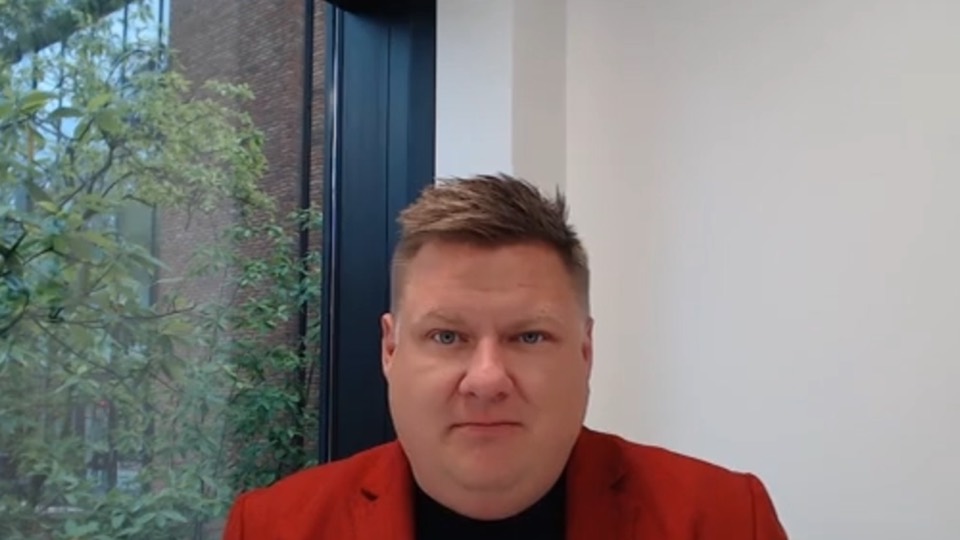
Mike Chorey, Sr Product Manager, AI & Innovation at Wendy's, is the guest on episode 13 of the Restaurant Tech Trends podcast, hosted by Justin Foster.
 Play episode
What Mike and Justin discuss
- How FreshAI grew from its humble beginnings in Mike's garage into a program scheduled to launch in 500-600 Wendy's restaurants by the end of 2025
- What Mike thinks has propelled FreshAI to success. [Hint: if you think it's technology, you'd be wrong].
- How Wendy's and Google split the load of running FreshAI
- The approach Wendy's took when involving humans in processing AI orders [and we agree it's the only correct way to tackle this problem, btw]
- Mike's hot take on the accuracy of the Wendy's FreshAI agent
Episode notes from the host
PART 1: Although we are in the restaurant voice AI space ourselves, we believe in rising tides; that's why Incept AI's co-founder Justin Foster sat down with The Wendy's Company's Michael Chorey to talk about the success Wendy's is having with its FreshAI rollout in partnership with Google. Without a doubt, Wendy's is a huge champion of voice AI technology. More importantly, this is a brand that champions authentic, meaningful, on-brand guest experiences. This wide-ranging interview is presented in two parts.
Transcript
Full transcript (2,691 words)
Machine-generated transcript; names may be misspelled.
0:00 Hi, everyone. Welcome to Restaurant Tech Trends, where we explore restaurant technology trends with some of the industry's biggest movers and shakers in a rapid-fire short interview format. Today, I'm excited to sit down with Mike Chorey, the Senior Product Manager for AI and Innovation at Wendy's and the founder of FreshAI, a generative AI agent powering Wendy's drive-thrus. In December of 2023, FreshAI was deployed in four restaurants. Now, Wendy's plans to scale the technology to between 500 to 600 locations by the end of this year, a rollout the company's leadership calls a proof point for AI's future in fast food, and I call that very impressive scaling. Beyond FreshAI, Michael leads the broader innovation portfolio at Wendy's. That's everything from working on agentic AI, autonomous device and delivery work, Internet of Things, Vision AI, and other things impacting the future of a digital connected restaurant. Michael's insights on building, scaling, and governing AI at a 55-year-old global brand are a must-hear. It's great to be chatting with you today, Michael. Thank you, Justin, for having me. I'm really excited for this conversation. Absolutely. Well, let's start out and maybe you can share with us just a little bit more about what FreshAI is.
1:22 Well, I think before I dive into what FreshAI is, it's important to go back to the very beginning of the story. And I think it's important to understand that that starts with our founder, Dave Thomas, in 1969. Dave started Wendy's not to create the flashiest burger chain ever, but to create a restaurant that he could serve food that he was proud to to his family, but also be able to treat people with dignity and respect, whether it was the guests or the crew. And I think the thing that would really surprise most people is that Dave actually invented the modern drive-through that we all know and are used to across the world today. That drive-through revolutionized the fast, convenient and consistent experience that we all love. Over the past 55 and pushing 60 years, we've all learned to use that drive-through. But over time, to be honest with you, the world has changed a lot. It's gotten faster. And that drive-through had an opportunity to be looked at again. And so who else, besides the team and the company that created the drive-through in the first place? And so we looked at how do we take this great innovation and how do we evolve it for the future? And so that was a deep responsibility that me and my team had. And it wasn't just about reimagining it and bringing cool technology, which we call FreshAI now.
2:41 It's about being there for our guests and supporting our crews. And so the story about what FreshAI is really starts over three years ago. And it's when a partner and I asked the first question, could a large language model be used to take orders and to take orders the Wendy's way? And so FreshAI is a large language model. It is the first generative AI order-taking agent in the world to be deployed and deployed at scale. And so that kicked off a massive journey that we embedded ourselves in a restaurant for over a year, working with our crew, talking to customers, observing, and listening to tens of thousands of orders to make sure that we really understood the frustrations, the frictions, the flow of the restaurant. Where are the positive things, the things that work well still, and where were those areas of opportunity? And that really led us down the road to, again, build FreshAI. And it started with a very first prototype. That prototype was at our restaurant here in Westerville, Ohio, just outside of Columbus, where our headquarters are. And we took a really scrappy startup approach to building this thing that we call FreshAI.
3:58 We started it in my garage that was just down the street from our very first restaurant. And we'd build a prototype. And that prototype, we'd haul into somebody's back of somebody's truck. We'd strap it down. And we'd drive it up the street to the very first Wendy's, where we implemented FreshAI. And we'd try to get customers to come out of the main lane into our test lane to try FreshAI. We'd give them a gift card. They'd give us feedback. We'd go back home. We'd iterate quickly, tune, fine-tune, adjust, and make updates. And we'd go back until we built the viable product that we were really proud of. Took a couple weeks, a couple months to get to that point. And that kind of takes us to where you mentioned, like at the end of 2023, when we scaled it out to four restaurants and where we are today. We are pushing hundreds of restaurants. We should be in 500 to 600 restaurants by the end of the year. And this is an experience that everyday people use. You know, right now, there's college students, grandparents, you know, ordering from the agent as you and I talk. So you mentioned that you listened to tens of thousands of orders. And you talked about it at the very beginning, you know, strapping the unit on your truck down to the first restaurant to use FreshAI and handing out the gift cards. Can you tell us a little bit more about some of the planning that went into FreshAI?
5:15 And what are some of the biggest obstacles that you faced along the way and some of the lessons that you've learned? The reason I opened up the story with kind of that background and where we first started is we really started in two areas. One, it was, again, about who we were as a brand and our values and where we started. A lot of times, teams or companies will just dive into the solution. And we knew that that was not the right approach. And so we had to build a deep understanding of, you know, the experience that our guests were going through in the drive-through and the experience that the trigger effects or the paired experience that our crew members have. And so FreshAI is not just a technology product. It is a collaboration between the people that run our restaurants, the people that hand you the bag and greet you and say hello and say see you tomorrow for breakfast. And so a lot of the energy about why we listen to tens of thousands of orders was not just to research what we needed to do from a technology perspective, but to also understand the environment we were walking into. We couldn't just ask them to change. We needed to be able to really understand how to solve the problem. The other thing I would say is that this is a very difficult problem, more than most people think.
6:34 Most of us tend to order the same thing or we have a few go-to kind of meals and you go to your favorite fast food restaurants. And so it feels probably pretty easy. But when we started working with our co-innovators, Google, on this, a lot of them said, oh, this will be pretty simple. We'll solve it in a couple months. Now, talking to them in reflection, they'll talk about openly how this is probably one of the hardest things that Google ever worked on, which has really surprised them and would probably surprise most people watching right now. But the reason why it's hard is our classic Dave's double. It's our double cheeseburger. It's amazing. It's like my number two go-to when I order food. But there are over 200 billion ways to order that sandwich. And then you think about the nuances of how people speak or how they order. You know, no pickles, remove the pickles. I don't want the pickles. None of the green stuff. And then you have the nuances of regional dialects. It gets super complicated. And so the AI needs to understand all of those situations, not just the happy paths of how a normal person would go and interact in order. And so listening to those tens of thousands of orders was to help us understand how complex and nuanced and each order is truly unique.
7:50 And that's why we leaned in and asked the question in the first place, could a large language model do this? Our journey started before the explosion of ChatGPT and the push for everyone to adopt generative AI. And we did this because we knew that a traditional conversational AI agent, rule and flow based, wouldn't be able to solve that. We'd have to account for all 200 billion ways for that. With the large language model, it understands natural human language. What we had to do was teach it how to be a really good Wendy's employee, a Wendy's kind of person, as we like to say it. Teach it how to create the right experience that would be consistent on brand, remove the friction, and be a great experience to give our customers confidence and our crew members the ability to focus on what matters most, connecting with our customers at the pickup window. All right. Well, let's dive a little bit more into the technical weeds here. You mentioned that Wendy's co-innovator on this project is Google. And I know that Wendy's has invested some pretty substantial resources into deploying fresh AI. How are you dividing that labor between the Wendy's team and the Google team in terms of who's updating the models, you know, speech, who's handling menu, POS integration?
9:08 What have you kept in-house versus farming out? Yeah. I'll get into answering some of those questions in a second, but I always come back to, like, what are the foundations and what is the intent of why we're doing this and kind of how these journeys and paths start? And when I talk about a question like this, a deep partnership and the innovation partnership between Wendy's and Google, I will say on this topic, like, Wendy's wouldn't have been able to do it by itself. And to be honest with you, neither would have Google. We came together in what is a true co-innovation partnership, but it's really important to be clear. The story doesn't start because the technology was ready. It started because we were ready. We were ready to look at how to make a better experience for our customers. So as I mentioned, long before the TTT and generative AI boom, you know, we asked that question, could you use a large language model? And the answer was yes. But at that point, nobody had built a viable enterprise generative agent at scale used by millions of people across the country, across the globe. Fresh AI is the first generative AI agent in the wild to be scaled to a level of this nature. And so this didn't exist just because of tech.
10:26 It existed because Wendy had a vision, the values, and the deep operational understanding to bring this to life. Google Cloud has incredible strengths. They have their foundational models, speech-to-text, scalable infrastructure. They literally created and defined this space. So there was no other partner to look at on this journey besides them. But the reason I've teed it up this way is it's really important to understand how important that vision, that understanding of the customer and where we're going to go is and answering this part of the conversation. That's what Wendy's owns. We own the guest experience. And we build the logic to understand how and why the agent does what it does. It's not some generic voice or bot. And so we've developed the brain, the behavioral layer, the integrations with the POS. And we believe that the tech helps support the brand and the identity moving forward, not the other way around. And so, yes, Google has the technology. They're amazing at it. But again, it took us and this environment to bring something useful, meaningful, that was grounded in hospitality to the real world. And so if you think about the balance between the two, like Wendy's sets the experience. When you roll up to a Freck AI agent or a drive-through, everything that you're experiencing is really what is owned by Wendy's.
11:48 The outcome, the experience, the consistency. They bring the amazing power and tools of that core generative agent. But we are the ones leading the rest of the space. Got it. And I'm curious if you can share. But there are a couple of different approaches to implementing generative AI agents for taking orders. One is you completely rely on the agent. And if the agent cannot process the order, you have the restaurant staff take over. Another approach is if the agent can't process the order, you have people that will basically kind of in the background, not at the restaurant, that can complete the order. And only if they can't do it, you push to the restaurant. What is your approach here?
12:27 I'll be honest. Our agent is very good at taking orders. We have restaurants where you take 85% to 95% of every order that comes through with no human interaction from our crew. Which, again, frees them up to be more engaged at the pickup window to make sure that the food is hot and accurate and right just for what the customer is looking for. But in those edge cases where there is a need for a person to jump in, one, our crew are always listening to the order. And the reason they do that is because the crews listen to the orders before the fresh AI agent was there. So when you had your human crew member taking orders, the rest of the crew was listening. They're building food. And it just helps everyone stay on the same page. So it was important for us to, again, keep that same behavior in place. We weren't going to change the way the restaurant worked just because we were bringing AI. And where some brands send it off to a call center somewhere in the world, we felt that that wasn't the right approach. Again, your local Wendy's knows you the best. I mean, they live around there. They're part of your community. And so if there's a reason where you need to hand over to a human crew member, it's really kind of a customer experience situation at that point.
13:45 And who better than the people that know you best? And so the crew members in the restaurant will jump in and they know the context of where you're at in the order. And they'll continue to make it a great experience from that point on. But I will stress, our agent, she's very good. She takes the vast majority of the orders. But there's always some use cases here and there where, you know, the crew member jumps in. By the way, I agree with everything that you said about the approach that you're taking and having that be the right approach to escalate to the restaurant when needed in those edge cases for the exact reason that you said. It really is about who knows the guest best in turning this into the best possible guest experience. All stress decision came from the time we spend at the restaurant. Like your restaurant employees that work at your local restaurant, they deeply care about how good your experience ends up being. And often in those really unique situations, they're the ones that know best. And so, again, we wouldn't have if we just were at the corporate office and built this. We probably wouldn't have been able to make that decision or maybe wouldn't have made it. It's the engagement with the actual people that run the restaurants, live in the restaurants, resulted in us making the best decision for both them and the customer. We'll see you next time.